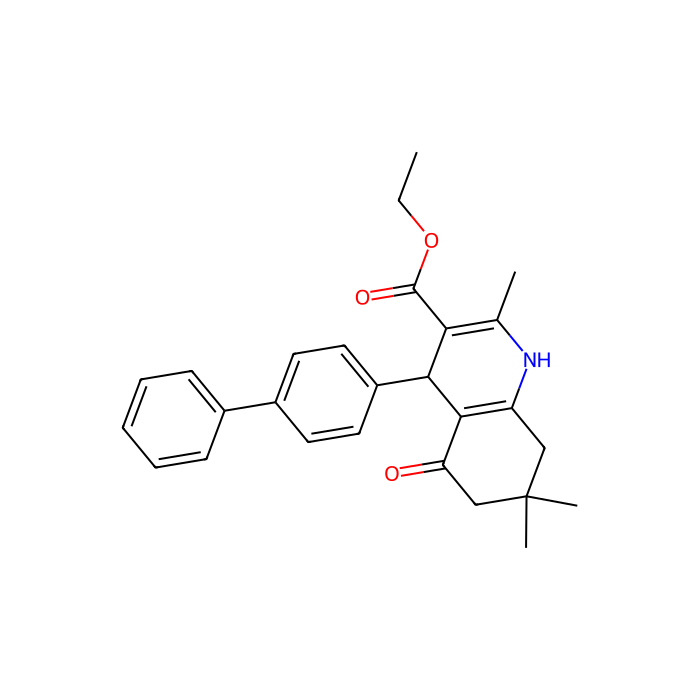
Selective inhibitor of TGF-βsignaling (IC50= 0.85μM); displays little or no inhibition of activin, Wnt or BMP signaling pathways. Induces proteasomal degradation of the TGF-βtype II receptor. Inhibits TGF-β-induced mesoderm formation from mouse embryonic
Storage
Store at -20°C
Shipped In
Ice chest + Ice pads
This product requires cold chain shipping. Ground and other economy services are not available.
This compound belongs to the class of organic compounds known as phenylquinolines. These are heterocyclic compounds containing a quinoline moiety substituted with a phenyl group.
External Descriptors
Not available
1. Djoumbou Feunang Y, Eisner R, Knox C, Chepelev L, Hastings J, Owen G, Fahy E, Steinbeck C, Subramanian S, Bolton E, Greiner R, and Wishart DS. ClassyFire: Automated Chemical Classification With A Comprehensive, Computable Taxonomy. Journal of Cheminformatics, 2016, 8:61.
Determine the necessary mass, volume, or concentration for preparing a solution.
Dilution Calculator
Determine the dilution needed to prepare a stock solution.
Reconstitution Calculator
Reviews
Customer Reviews
Application Protocols
No item-specific, validated application protocols are provided in the current product data.
General protocol framework for small-molecule tool compounds:
Stock preparation: Dissolve in anhydrous DMSO to 10–50 mM. Vortex and, if necessary, sonicate briefly. Sterile-filter for cell-based assays (0.22 μm PTFE/PES) if compatible.
Dose–response: Prepare serial dilutions (e.g., 1:3 or 1:2) to cover ≥8 concentrations spanning expected activity. Keep final DMSO constant across all wells (e.g., 0.1–0.5% v/v).
Incubation: Typical exposure times range from 0.5 to 48 h for cells and 5 to 120 min for biochemical assays; optimize per endpoint.
Readouts: Use orthogonal endpoints (e.g., luminescent/fluorescent reporters, immunoblotting, qPCR) to confirm effects. Include counterscreens for assay interference and aggregation.
Data quality: Include plate controls (positive/negative, Z′-factor assessment), replicate wells, and independent repeats. Document compound lot, stock age, and storage history.
For any specific assay system or target pathway, consult primary literature references associated with CAS 1099644-42-4 and adapt conditions to your laboratory SOPs.
Biological Roles
Research-use context only: This product is a bioactive small molecule intended for in vitro/in vivo research and laboratory studies. No medical or clinical claims are made.
Literature context (non-item-specific, to guide experimental design):
The name “ITD-1” appears in the literature as a small-molecule tool compound reported to modulate Transforming Growth Factor-β (TGF-β) pathway components, often discussed in the context of receptor trafficking or signaling regulation. Researchers have used such compounds to probe pathway dynamics, crosstalk, and transcriptional outcomes.
Typical experimental readouts when studying TGF-β signaling include SMAD phosphorylation status, reporter assays (e.g., CAGA-luc), EMT marker expression, and transcriptomic signatures. Appropriate controls and pathway-selective counter-screens are recommended to confirm specificity.
Good practices for biological evaluation (general):
Establish dose–response curves across multiple cell types to capture context-dependent effects.
Confirm on-target action with genetic perturbation (siRNA/CRISPR) or orthogonal chemical probes.
Assess potential assay interference (fluorescence/absorbance overlap) and compound aggregation; include low levels of nonionic detergents where compatible.
Item-specific biological activity, targets, EC50/IC50 values, and selectivity are not provided in this listing; consult the primary literature associated with CAS 1099644-42-4 or the product CoA for authoritative data.
Buffer Applications
This product is not a buffering reagent. However, buffer composition is critical to successful use of small-molecule tool compounds in biochemical and cell-based assays.
Practical guidance (general):
Vehicle control: Match the final DMSO (or other solvent) percentage in all wells/tubes (commonly 0.1–0.5% v/v) to control for solvent effects.
Protein binding and solubility: Include 0.1–1% BSA or low nonionic detergent (e.g., 0.01–0.1% Tween-20) where compatible to minimize nonspecific adsorption and aggregation.
pH and ionic strength: Maintain physiological pH (7.2–7.4) for cell culture; for biochemical assays, choose buffers (HEPES, Tris, phosphate) that do not interfere with detection or target activity.
Adsorption mitigation: Use low-bind plastics or glass vials for hydrophobic compounds. Pre-rinse tips/vials with buffer containing a small amount of DMSO to reduce loss.
Recipes: Not applicable—no specific buffering system is associated with this compound. Formulate buffers according to your assay’s validated SOPs and maintain constant solvent fractions across controls and treatments.
Green Alternatives
For small-molecule screening compounds, the environmental footprint is primarily driven by solvent choice and process scale rather than the compound itself.
Greener solvent considerations (general):
Prefer water as a diluent whenever feasible; maintain DMSO at the minimum effective final concentration (e.g., ≤0.1–0.5% v/v in assays) to reduce solvent burden.
Consider 2-propanol or ethanol over DMF for certain preparative steps where solubility allows; both are generally less hazardous.
For analytical workflows, acetonitrile consumption can be reduced via shorter columns, higher temperatures, or water-rich gradients; consider methanol when compatible with detection and separation.
Small comparison (general):
DMSO: High solvency, low volatility; persistent in waste streams—minimize volumes.
DMF: Effective but reproductive toxin concerns—avoid when alternatives suffice.
Ethanol/Isopropanol: Lower hazard profiles; may not dissolve highly lipophilic compounds at needed concentrations.
Operational choices:
Use microvolume plates and miniaturized assays to cut solvent usage.
Implement solvent recycling where validated for analytical instruments.
Plan batch preparation of aliquots to reduce repeated dissolutions and waste.
Note: No item-specific green manufacturing data are available for this product; these are general laboratory sustainability practices.
Pharmaceutical Uses
This product is supplied strictly for research use only and is not intended for human or veterinary use, diagnostic procedures, or as a drug substance or excipient.
Formulation-related considerations for research models (general):
Preclinical dosing vehicles (for animal studies, where institutionally approved) often include combinations of DMSO/PEG-400/saline or Tween-80/captisol systems. Selection depends on solubility, stability, and tolerance. Validate any vehicle in your model system and follow all ethical and regulatory requirements.
For in vitro work, prepare DMSO stocks and limit the final solvent fraction in culture media to levels demonstrated to be nonperturbing in your system.
Pharmacopeial status: Not specified for this item; no compendial monograph is indicated in the provided data.
If you require GMP- or GLP-grade material, or expanded impurity profiling for regulated applications, contact us with your specifications; this catalog listing is intended for discovery research contexts.
Physical Properties
Item-specific physical constants are not provided in the current listing.
Appearance: Not specified for this item; refer to CoA/Spec Sheet.
Melting point (literature/computed): Not available here; consult CoA or peer-reviewed sources tied to CAS 1099644-42-4.
Boiling point (literature): Not typically applicable for screening solids; consult CoA if relevant.
Density: Not specified for this item; refer to CoA/Spec Sheet.
Solubility: Not specified for this item; refer to CoA/Spec Sheet. General practice for bioactive small molecules is stock preparation in DMSO, with subsequent aqueous dilution.
LogP/logD, pKa, refractive index: Not specified for this item; refer to CoA/Spec Sheet or cheminformatics predictions from curated databases using the listed CID.
General guidance (not item-specific):
Many library compounds are moderately to highly lipophilic; solubilization is often best in anhydrous DMSO or DMF, followed by stepwise dilution into assay buffers containing carrier protein or surfactant (e.g., 0.01–0.1% Tween-20) to mitigate precipitation.
For analytical characterization, LC–MS-friendly diluents (acetonitrile/water with 0.1% formic acid) are commonly used. Always confirm compatibility with your detector and column chemistry.
Always defer to the product’s SDS/CoA for authoritative physical data and handling recommendations.
Quality & Grades
Grade/Purity: Not specified for this item; refer to CoA/Spec Sheet for HPLC purity, residual solvents, identity confirmation (e.g., LC–MS/NMR), and any stabilizers.
How to interpret common grades (general guidance):
Screening/Library grade: Typically provided at sufficient purity (often ≥95% by HPLC) for biochemical and cell-based assays. Exact threshold varies; confirm on the CoA.
Analytical/Reference standard grade: Comes with robust characterization and uncertainty budgets. If required for quantitative bioanalysis or as a system suitability compound, ensure the supplied documentation meets your QA needs.
What to check upon receipt:
Confirm purity, identity method, and water/volatile content if your assay is sensitive to these parameters. If UV work is planned, request UV spectrum or low-UV-absorbing solvent compatibility.
If the item contains a stabilizer or is supplied as a salt/solvate, this will influence solubility and molecular weight calculations; verify with the CoA.
Documentation:
For regulated work or plate-based screening, retain batch-specific CoA, SDS, and any analytical chromatograms. Record storage conditions and freeze–thaw history to ensure data integrity.
Reaction & Applications
This product is positioned as a bioactive small molecule for research and screening; it is not typically used as a synthetic reagent or catalyst.
Research-facing applications (general for small-molecule tool compounds):
Target/pathway interrogation in cell-based assays with appropriate vehicle controls and dose–response designs.
Phenotypic screening in 2D/3D cell culture or organoid systems; time-course studies to capture onset/offset kinetics.
Biochemical assays (enzyme or receptor binding) to derive IC50/EC50/Ki values—ensure protein/assay buffer compatibility with the solvent system.
Orthogonal validation using complementary readouts (e.g., reporter assays, phospho-protein immunoblotting, transcriptomics) to confirm on-target activity.
Practical tips:
Prepare concentrated DMSO stocks, aliquot to minimize freeze–thaw, and record lot numbers and preparation dates.
Establish a solubility ceiling empirically (serial dilution with visual inspection and LC–MS check for precipitation) before scaling assays.
Include counter-screens to evaluate assay interference (fluorescence quenching, aggregation—test with low nonionic detergent, or use DLS/SPR as appropriate).
If your intended use is synthetic (e.g., as a building block), verify reactivity/stability in your conditions with a small pilot reaction; however, this is outside the typical scope for this catalog item.
Reaction Conditions
Not typically applicable. This product is supplied for use as a bioactive small molecule in biological/biochemical assays rather than as a stoichiometric reagent or catalyst.
If employing in exploratory chemistry (non-standard use), adopt a risk-managed, data-driven approach:
Solvent and temperature: Begin with mild conditions (room temperature, polar aprotic solvents) until stability is established. Escalate cautiously if necessary.
Atmosphere: Use inert atmosphere (N2/Ar) if the compound is suspected to be air/moisture sensitive; verify by small-scale tests and LC–MS monitoring.
Time and monitoring: Short reaction times with frequent analytical checks help avoid decomposition.
Workup: Prefer neutral workups; avoid strong acid/base unless the scaffold is known to tolerate them.
No item-specific reaction conditions, catalysts, or yields are provided in this listing. Consult the CoA/Spec or primary literature for any published transformations of the specific scaffold corresponding to CAS 1099644-42-4.
Safety & Handling
Hazard classification details are not included in the present data sheet.
GHS classification: Not specified for this item; refer to SDS.
Signal word / Pictograms / H-statements: Not specified for this item; refer to SDS.
General laboratory safety (applicable to small-molecule screening compounds):
PPE: Wear lab coat, safety glasses, and appropriate chemically resistant gloves (e.g., nitrile). Handle powders in a fume hood to avoid inhalation of dust/aerosols.
Avoid skin/eye contact and ingestion. Wash thoroughly after handling. Do not pipette by mouth.
Storage incompatibilities: Keep away from strong oxidizers, strong acids/bases, and ignition sources. Avoid prolonged exposure to moisture and light unless stability data indicate otherwise.
First-aid overview: If inhaled—move to fresh air. If on skin—wash with soap/water. If in eyes—rinse cautiously with water for several minutes; remove contact lenses if present and easy to do. If ingested—rinse mouth; seek medical attention. Always follow your institution’s EHS protocols.
Waste: Collect organic solutions and contaminated disposables as hazardous chemical waste per local regulations.
Authoritative safety information is in the SDS. Consult the SDS before first use and train staff on safe handling and spill response.
Solvent Selection
Because item-specific solubility data are not provided, select solvents using general best practices for small-molecule tool compounds.
Primary solvent (general): Anhydrous DMSO is the default for preparing concentrated stocks (e.g., 10–50 mM). Filter-sterilize if aseptic conditions are required for cell-based assays.
Alternative solvents: DMF, ethanol, or acetonitrile can be used depending on compatibility with assays and downstream dilutions. Avoid high percentages of organic solvent in biological systems; keep final DMSO ≤0.1–0.5% v/v unless validated otherwise.
Aqueous dilution strategy: Add the DMSO stock slowly into vigorously mixed buffer or media to reduce precipitation. Include solubilizing excipients as appropriate (e.g., 0.1–1% PEG-400, low levels of nonionic surfactant) if permitted by the assay.
Polarity and miscibility (general profiles):
DMSO: Highly polar, fully miscible with water and most organics; excellent for initial solubilization.
DMF/Acetonitrile: Polar aprotic; miscible with water; useful for analytical dilutions and LC–MS.
Ethanol: Protic and volatile; often acceptable for biochemical targets but can affect cells at >0.5–1%.
Comparison tip:
Choose DMSO for maximum solvation capacity and biological compatibility at low percentages. Choose acetonitrile for analytical workflows (LC–MS), and ethanol when lower toxicity to certain enzymes or cells is desired at low final concentrations.
Storage & Reconstitution
Item-specific storage information:
Storage conditions: Store at -20°C (as provided in Product Data).
Shipping: Shipped in ice chest with ice pads (as provided).
General best practices for small-molecule solids and DMSO stocks (not item-specific):
Protect from light and moisture. Keep container tightly closed under inert headspace or with desiccant if hygroscopicity is a concern.
Upon first opening, allow vial to equilibrate to room temperature in a desiccator before unsealing to minimize condensation.
Reconstitution: Prepare a concentrated stock solution in anhydrous DMSO (e.g., 10–50 mM), vortex to dissolve, and, if needed, sonicate briefly. Filter sterilize for cell culture applications if compatible (0.22 μm PTFE/PES).
Aliquoting: Dispense single-use aliquots to avoid repeated freeze–thaw. Store aliquots at -20°C or -80°C as appropriate. Record preparation date and concentration on each aliquot.
Stability: Avoid prolonged exposure to room temperature. Limit freeze–thaw cycles; thaw on ice and return unused portions promptly to storage. Inspect for precipitation or discoloration before use.
Note: Where stability, solubility, or concentration limits are critical, consult the batch-specific CoA/Spec Sheet for definitive guidance.
Structure & Identity
Brief overview: ITD-1 (SKU I302185) is supplied as a research-use small molecule in our small-molecule/compound library category. Item-specific structural identifiers are limited in the current listing.
CAS: 1099644-42-4 (item-specific)
PubChem CID: 44135961 (item-specific)
InChIKey: 362763 (as provided in Product Data)
SMILES: Not specified for this item; refer to CoA/Spec Sheet.
Molecular formula: Not specified for this item; refer to CoA/Spec Sheet.
Molecular weight: Not specified for this item; refer to CoA/Spec Sheet.
Structural features (general comment):
Item-specific functional groups, ring systems, and stereochemistry are not provided in the current data package. For precise structural description, consult the product’s CoA/SDS or the referenced CID in curated databases.
2D structure (descriptive):
Not specified for this item; refer to CoA/Spec Sheet.
Notes on identity verification (general best practice):
Cross-check CAS, CID, and InChIKey on receipt against the container label and the accompanying CoA.
If your workflow requires spectral confirmation, verify by LC–MS (exact mass), 1H/13C NMR, and HPLC purity per your internal QC SOPs.
Synthetic Utility
This catalog item is offered as a bioactive small molecule and is not typically employed as a general synthetic reagent or building block.
General considerations if used in synthesis (non-standard use):
Unknown reactive handles: Without an item-specific structure, no guidance can be given on functional group compatibility or derivatization strategies. If derivatization (e.g., to make a probe/biotin conjugate) is desired, obtain the full structural data and map potential sites for modification.
Stability: Assess thermal and chemical stability by small-scale tests before planning protection/deprotection or coupling steps.
Analytics: Use LC–MS and NMR to confirm integrity after each transformation; many bioactive scaffolds are sensitive to strong acids/bases or prolonged heating.
If you seek a functionalized analog for linker attachment or SAR exploration, please reach out—custom sourcing or analog recommendations may be available once target structural details are defined.
Target Specificity
Item-specific target data are not provided in this listing.
Target(s): Not specified for this item; refer to CoA/Spec Sheet and primary literature.
Mechanism of action: Not specified for this item; refer to CoA/Spec Sheet and primary literature.
Selectivity panel and off-targets: Not specified for this item; refer to CoA/Spec Sheet and screening reports.
General recommendation:
Establish target engagement using orthogonal assays (biochemical activity, cellular target occupancy, CETSA/DSF, or reporter assays) and confirm with genetic perturbations.
Include appropriate negative/positive controls and measure cytotoxicity independently to decouple on-target effects from general stress responses.
We use cookies to ensure the website functions properly and, where permitted, to improve your experience. You can manage your preferences at any time in Settings. Learn more in our Cookie Policy.
Shall we send you a message when we have discounts available?
Remind me later
Thank you! Please check your email inbox to confirm.
Products are supplied to verified businesses, institutions, and qualified professionals for research and development use only. Not for use in humans, animals, diagnosis, or therapy.

 K2229705