Ki16425 - Moligand™, ≥98% , Antagonist of GPR87;Antagonist of LPA 1 receptor;Antagonist of LPA 2 receptor;Antagonist of LPA 3 receptor, CAS No.355025-24-0, Antagonist of GPR87;Antagonist of LPA 1 receptor;Antagonist of LPA 2 receptor;Antagonist of LPA 3 receptor
Ki16425 - Moligand™, ≥98% , Antagonist of GPR87;Antagonist of LPA 1 receptor;Antagonist of LPA 2 receptor;Antagonist of LPA 3 receptor, CAS No.355025-24-0, Antagonist of GPR87;Antagonist of LPA 1 receptor;Antagonist of LPA 2 receptor;Antagonist of LPA 3 receptor
GRADE & PURITYMoligand™?Moligand™ — Aladdin's line of ligands and bioactive small molecules. Use for receptor, pathway, and binding studies needing defined small-molecule tools.≥98%
Moligand™, ≥98% Moligand™ for sensitive chromatographic and analytical workflows requiring minimal baseline interference.
🌡
Storage & shipping
Store at -20°C Ships Ice chest + Ice pads Check lot-specific COA for exact specifications.
📋
Quality documents
SDS, COA, datasheet, and spec sheet available for download. Lot-specific COA accessible via lot number lookup.
📚
Literature proof
Cited in 0 peer-reviewed publications across chromatography, organic synthesis, and cross-coupling reactions.
Overview
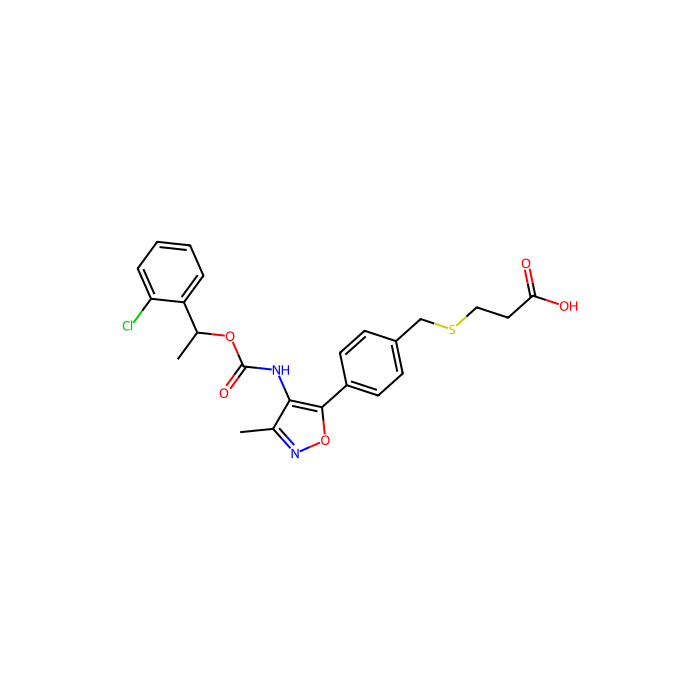
Ki16425 is a competitive, potent and reversible antagonist to LPA1, LPA2 and LPA3 with Ki of 0.34 μM, 6.5 μM and 0.93 μM in RH7777 cell lines, respectively, shows no activity at LPA4, LPA5, LPA6. A competitive inhibitor of EDG-2, EDG-4, and EDG-7.
Antagonist of the lysophosphatidic acid receptors LPA1and LPA3(Kivalues are 0.25 and 0.36μM respectively, in a GTPγS binding assay). Blocks LPA-induced dephosphorylation of Yes-associated protein (YAP) and WW domain-containing transcription regulator prot
Storage
Store at -20°C
Shipped In
Ice chest + Ice pads
This product requires cold chain shipping. Ground and other economy services are not available.
Grade
Moligand™
Action Type
ANTAGONIST
Mechanism of action
Antagonist of GPR87;Antagonist of LPA 1 receptor;Antagonist of LPA 2 receptor;Antagonist of LPA 3 receptor
This compound belongs to the class of organic compounds known as benzyloxycarbonyls. These are organic compounds containing a carbonyl group substituted with a benzyloxyl group.
External Descriptors
Not available
1. Djoumbou Feunang Y, Eisner R, Knox C, Chepelev L, Hastings J, Owen G, Fahy E, Steinbeck C, Subramanian S, Bolton E, Greiner R, and Wishart DS. ClassyFire: Automated Chemical Classification With A Comprehensive, Computable Taxonomy. Journal of Cheminformatics, 2016, 8:61.
Solvent:DMSO, Max Conc. mg/mL: 47.5, Max Conc. mM: 100; Solvent:1eq. NaOH, Max Conc. mg/mL: 9.5, Max Conc. mM: 20
Refractive Index
1.63
Boil Point(°C)
623.7° C at 760 mmHg
Melt Point(°C)
59.5-60.5°C
Molecular Weight
475.000 g/mol
XLogP3
4.500
Hydrogen Bond Donor Count
2
Hydrogen Bond Acceptor Count
7
Rotatable Bond Count
10
Exact Mass
474.102 Da
Monoisotopic Mass
474.102 Da
Topological Polar Surface Area
127.000 Ų
Heavy Atom Count
32
Formal Charge
0
Complexity
619.000
Isotope Atom Count
0
Defined Atom Stereocenter Count
0
Undefined Atom Stereocenter Count
1
Defined Bond Stereocenter Count
0
Undefined Bond Stereocenter Count
0
The total count of all stereochemical bonds
0
Covalently-Bonded Unit Count
1
Solution Calculators
Molarity Calculator
Determine the necessary mass, volume, or concentration for preparing a solution.
Dilution Calculator
Determine the dilution needed to prepare a stock solution.
Reconstitution Calculator
Reviews
Customer Reviews
Application Protocols
No tested applications or validated protocols are provided in this listing for Ki16425.
Recommended dilutions, assay formats, or positive-control conditions: Not specified for this item.
General guidance (non-validated, for planning only):
Prepare a concentrated DMSO stock and serially dilute to achieve the desired concentration range; maintain constant vehicle across wells/samples.
Include vehicle controls and, where appropriate, orthogonal readouts (e.g., reporter assay and biochemical endpoint) to corroborate findings.
Verify solubility and absence of precipitation at the working concentration in the chosen assay buffer/media.
Users should develop and validate protocols under their specific laboratory conditions.
Biological Roles
Context and mechanism (general, literature-based):
Ki16425 is widely cited as a small-molecule antagonist of lysophosphatidic acid receptors, particularly LPA1 and LPA3 (LPAR1/3). These GPCRs respond to the lipid mediator LPA, which modulates cytoskeletal dynamics, proliferation, survival, and motility in diverse cell types.
Utility as a research tool:
By attenuating LPA-driven signaling, Ki16425 enables dissection of receptor subtype contributions in pathways such as Rho/ROCK activation, ERK phosphorylation, and calcium mobilization (assay/system dependent). It is often used alongside genetic tools (e.g., receptor knockdown/knockout) to strengthen causal attribution.
Selectivity profiling in the literature informs choice of concentrations that preferentially engage LPA1/3 while minimizing off-target effects; users should consult primary references and verify in their system. Item-specific potency/selectivity values are not specified in this listing.
Experimental considerations:
When moving from biochemical to cellular systems, consider protein binding, membrane partitioning, and potential adsorption to plasticware, which can reduce free concentration.
Maintain consistent vehicle (DMSO) controls. Titrate across a suitable range (e.g., sub- to supra-potent levels based on literature) and fit concentration–response with appropriate models (four-parameter logistic), accounting for baseline drift.
Note: All uses are for research only; no medical or clinical use is implied.
Buffer Applications
This product is not a buffering agent and is not used to set or maintain pH. Consequently, classic buffer-system recipes (e.g., phosphate, HEPES, Tris) are not applicable.
Practical notes for assay buffers (general guidance):
When dosing Ki16425 into aqueous assay buffers, maintain low co-solvent fractions (e.g., ≤0.1–1% DMSO, system dependent) to preserve cell health and assay performance.
Choose buffers that minimize compound precipitation and nonspecific binding. Phosphate- or HEPES-based buffers at physiological pH (7.2–7.4) are commonly used in GPCR cell assays; verify compatibility.
Surfactants at very low levels (e.g., 0.01–0.1% polysorbates), when compatible, may help reduce adsorption/aggregation for hydrophobic ligands.
Item-specific buffer capacities, pKa, or recipes: Not specified for this item; refer to CoA/Spec Sheet for any additional handling notes.
Green Alternatives
Greener practice for this item focuses on solvent and process choices during solution preparation and assay workflows, since the compound itself is a fixed structure.
Prefer low-toxicity, high-boiling polar aprotics for stock preparation (e.g., DMSO) and minimize volumes to reduce waste. DMSO is commonly accepted for bioassays and is less volatile than DMF or acetonitrile.
Where possible, use aqueous buffers with minimal co-solvent (≤0.1–1% DMSO, assay-dependent) to limit organic solvent use.
For cleaning and sample preparation, consider ethanol or isopropanol in place of chlorinated solvents when compatible with residues and instrumentation.
Illustrative comparison (general):
DMSO (preferred for stocks): High solvency for hydrophobic ligands; low volatility; favorable EHS profile relative to DMF.
DMF (alternative): Similar solvency; reproductive toxicity concerns and higher regulatory burden; avoid when not necessary.
Acetonitrile (analytical use): Useful for HPLC; volatile and flammable; limit bulk use to analytical workflows.
Operational tips:
Consolidate stock solutions for multiple assays to reduce redundant dissolutions and container waste.
Employ microdosing and acoustic dispensing to limit DMSO volume in screening campaigns.
Dispose of organic wastes through appropriate hazardous-waste streams; segregate halogenated and non-halogenated waste.
Pharmaceutical Uses
This product is supplied strictly for research use only and is not intended for human or veterinary use, diagnostic procedures, or as an active pharmaceutical ingredient.
Regulatory status: Not a pharmacopeial excipient or approved drug substance.
Typical role in R&D: Employed as a reference/benchmark antagonist in exploratory pharmacology, target validation, and SAR campaigns involving LPA receptors (general, literature-based).
Formulation notes for research studies: For in vitro work, DMSO stock solutions are commonly used and then diluted into aqueous media. For any in vivo research, users must develop their own formulation strategies and conduct appropriate stability and compatibility assessments; no recommendations are provided or implied in this listing.
Manufacturing/CMC considerations:
No GMP grade is indicated. Moligand™ designates a research-ligand grade suitable for laboratory studies, not for clinical manufacturing.
Specifications such as residual solvents, heavy metals, bioburden/endotoxin, and stability-indicating methods are not specified for this item; consult the CoA if available or qualify the material internally for your intended research application.
No therapeutic claims are made or implied.
Physical Properties
Item-specific physicochemical parameters are not provided in this listing. Where applicable, consult the product CoA/SDS for authoritative values.
Appearance: Not specified for this item; refer to CoA/Spec Sheet.
Melting point: Not specified for this item; refer to CoA/Spec Sheet.
Boiling point: Not applicable for a high–molecular mass, nonvolatile solid; specific value not specified for this item; refer to CoA/Spec Sheet.
Density: Not specified for this item; refer to CoA/Spec Sheet.
Refractive index: Not applicable (solid); not specified for this item.
Solubility:
Water: Typically low for hydrophobic aryl carboxylic acids (literature, qualitative). Item-specific solubility not specified.
Organic: Commonly prepared as DMSO stock solutions for bioassays (literature practice). Item-specific solubility not specified.
pKa (carboxylic acid): Carboxylic acids often show pKa ~4–5 in water (general literature guidance). Exact pKa for this compound is not specified for this item.
logP/logD: Not specified for this item; literature describes hydrophobic character for related analogs.
Due to hydrophobicity and acidity, Ki16425 is frequently handled as concentrated DMSO stocks that can be diluted into assay buffers with co-solvent (e.g., ≤0.1–1% DMSO final) to maintain activity while limiting precipitation. Verify compatibility with your assay system.
If solid is hygroscopic or forms aggregates (not specified), gentle warming of DMSO (≤37 °C) and brief sonication can aid dissolution; avoid prolonged heating. Always verify integrity by analytical methods (HPLC/LC–MS) as needed.
Quality & Grades
Grade/Purity: Moligand™ (as provided)
What Moligand™ implies (general description):
Moligand™ denotes a research ligand/chemical probe quality suitable for screening, target engagement assays, and exploratory SAR in discovery workflows. While exact purity specification and analytical thresholds are not listed here, Moligand™-class materials are typically controlled for identity (e.g., NMR/LC–MS) and chromatographic purity suitable for biochemical and cell-based assays. For precise assay suitability, consult the CoA.
Key notes for this item:
Item-specific purity (%) and impurity profile: Not specified for this item; refer to CoA/Spec Sheet.
Residual solvents, water content, metal content, and stabilizers: Not specified for this item; refer to CoA/Spec Sheet.
UV cutoff/fluorescence background: Not specified for this item; users running optical assays should pre-screen background absorbance/fluorescence of the solvent stock.
Practical guidance for assay use:
Verify identity/purity by in-house LC–MS/HPLC if your assay is highly sensitive to impurities.
Prepare fresh DMSO stocks when possible; track freeze–thaw cycles to maintain consistency across experiments.
If conducting quantitative pharmacology, calibrate concentration by weight and, where available, by quantitative NMR or UV assay with an appropriate extinction coefficient (not specified for this item).
Reaction & Applications
This product is primarily a bioactive research ligand rather than a synthetic reagent. As such, it is not typically employed as a stoichiometric reagent or catalyst in preparative organic synthesis.
Widely used as a tool compound in studies of lysophosphatidic acid (LPA) receptor signaling. Researchers employ it to probe receptor-dependent pathways in biochemical and cellular systems, to benchmark assay performance, and to contextualize structure–activity relationships (SAR) of next-generation analogs.
Practical tips for experimental use (general guidance):
Prepare concentrated DMSO stocks to minimize vehicle volume; ensure thorough mixing upon dilution into aqueous buffers.
Verify compound integrity by LC–MS/HPLC when initiating a study or after extended storage. Many aryl-ether carboxylic acids are stable under neutral conditions but can hydrolyze under strong acid/base; avoid extreme pH during handling.
In receptor pharmacology, include appropriate controls (vehicle, non-specific reference ligands) and verify vehicle compatibility with assay readouts (e.g., GPCR signaling reporters, calcium flux, impedance assays).
If considering chemical modification:
Although not a typical building block, medicinal chemistry programs may derivatize the acid function (e.g., amide/ester formation) or alter aryl substituents to probe SAR. Any transformations should be performed on separate synthetic intermediates rather than the catalog material intended for bioassays.
Reaction Conditions
Not typically applicable. This product is supplied as a research ligand rather than as a reagent or catalyst; therefore, standard “reaction condition” guidance (solvent, temperature, catalyst loading, yields) does not apply.
Practical experimental conditions (general, literature-based for bioassays):
Stock preparation: Dissolve in anhydrous DMSO; protect from moisture and light as sensible precautions for aromatic ligands. Concentration limits are assay- and solubility-dependent; item-specific limits are not specified.
Assay dosing: Dilute into buffered media with constant vehicle percentage across conditions. Mix thoroughly and allow adequate equilibration with cells/proteins before readout (time scales depend on assay format and target kinetics).
Stability checks: Periodically assess solution integrity by LC–MS or HPLC after storage or repeated freeze–thaw to ensure consistent potency.
For synthetic chemists considering scaffold preparation, consult primary literature for reaction-specific parameters; none are provided or implied for this catalog material.
Safety & Handling
GHS classification and specific hazard statements are not provided in this listing. Always consult the official SDS for authoritative and up-to-date safety information before use.
Signal word, pictograms, H-statements: Not specified for this item; refer to SDS.
Likely hazards (general for small bioactive organics): May cause skin/eye irritation or respiratory irritation if dusts/aerosols are generated. Avoid ingestion and inhalation.
Use in a fume hood to minimize exposure, especially during weighing and dissolution.
Handling practices:
Avoid dust generation; use antistatic tools and weigh boats.
Prepare solutions in well-ventilated areas or fume hoods; cap vials promptly to limit DMSO vapor release.
Incompatibilities (general): Strong oxidizers and strong bases/acids may affect stability of aryl-ether carboxylic acids; avoid reactive metals and reducing agents unless compatibility is known.
First-aid overview (general):
Eye/skin contact: Rinse cautiously with water for several minutes; remove contact lenses; seek medical attention if irritation persists.
Inhalation: Move to fresh air; seek medical attention if symptoms develop.
Ingestion: Rinse mouth; do not induce vomiting; seek medical attention.
Fire safety: Treat as combustible organic solid; use CO2, dry chemical, or foam. Thermal decomposition may generate irritating fumes; firefighters should wear SCBA.
Waste disposal: Collect organics as hazardous chemical waste per institutional and local regulations.
Solvent Selection
Use-case driven selection for Ki16425 centers on preparing reliable assay stocks and ensuring compatibility with aqueous systems.
Polarity and miscibility (general, literature-based):
The scaffold is largely hydrophobic with one carboxylic acid; neutral form is sparingly water-soluble. The deprotonated form has improved aqueous compatibility but may alter assay behavior. DMSO offers strong solvating power and is miscible with water, making it the typical primary solvent for stock preparation.
Recommended approaches (general guidance):
Primary stock: Anhydrous DMSO. Concentrations commonly used for tool compounds are in the 1–50 mM range (literature practice). Item-specific solubility limits are not specified.
Aqueous work: Dilute DMSO stocks into buffered media keeping final DMSO low (e.g., ≤0.1–1% v/v, assay-dependent). Gentle vortex and brief sonication can help avoid precipitation. Filter sterilize through 0.22 µm if required for cell-based assays, provided the compound remains in solution.
Alternative co-solvents: DMF or ethanol may dissolve the compound but can be less desirable for biological systems; test carefully. For high aqueous content, inclusion of nonionic surfactant (e.g., 0.01–0.1% Tween 80) can reduce aggregation (literature practice) if compatible with your assay.
Comparison notes:
DMSO vs ethanol: DMSO generally affords higher solubility and better stability for hydrophobic acids; ethanol can simplify evaporation but may offer lower solubility.
DMSO vs DMF: Similar solvency; DMSO is more common in bioassays; DMF can be considered for synthetic manipulations if applicable.
Storage & Reconstitution
Storage conditions: Store at -20°C (as provided). Protect the closed container from moisture and light as general good practice.
Shipping: Ice chest + ice pads (as provided).
Reconstitution and handling (general guidance):
Solvent: DMSO is commonly used to prepare concentrated stocks of hydrophobic research ligands. Item-specific solubility limits are not specified for this item; determine empirically.
Procedure:
Allow vial to equilibrate to room temperature in a desiccator before opening to minimize moisture condensation.
Add a measured volume of anhydrous DMSO; vortex thoroughly. Brief sonication and gentle warming (≤37 °C) can aid dissolution if needed.
Aliquot stock into small, airtight vials to minimize headspace and freeze–thaw cycles.
Storage of solutions: For DMSO stocks, store at -20°C or below, protected from light. Avoid repeated freeze–thaw; thaw on ice and refreeze promptly. Aqueous working solutions are typically prepared fresh; stability is assay-dependent and not specified for this item.
Item-specific stability, shelf life, and concentration guidance: Not specified for this item; refer to CoA/Spec Sheet and verify experimentally (e.g., HPLC/LC–MS).
Structure & Identity
Brief description: Ki16425 is a small-molecule research ligand commonly used as a tool compound in lysophosphatidic acid (LPA) receptor studies. The listing does not include a full structural description; consult CoA/SDS for definitive identifiers.
SKU: K126742
Product name: Ki16425
CAS: 355025-24-0 (literature identifier)
PubChem CID: 10367662 (literature identifier)
InChIKey: 202601 (as provided; note: typical InChIKeys are 27-character hashes; verify on CoA/SDS)
SMILES: Not specified for this item; refer to CoA/Spec Sheet.
Molecular formula: Not specified for this item; refer to CoA/Spec Sheet.
Molecular weight: Not specified for this item; refer to CoA/Spec Sheet.
Structural features (general, literature-based):
Ki16425 is widely referenced as an aryl-alkoxy-aryl propionic acid derivative bearing a terminal carboxylic acid and halogenated aryl functionality (literature). This implies:
Presence of an aromatic ether linkage (Ar–O–Ar′) and a carboxylic acid (–CO2H).
Predominantly hydrophobic scaffold with one acidic handle, often enabling DMSO stock preparation (literature practice).
2D structure in words (generalized, literature-based):
A biphenyl/aryl system connected via an ether oxygen to a para-substituted phenyl; a three-carbon chain ending in a carboxylic acid extends from the aromatic core (literature). Exact regiochemistry should be confirmed from primary references or the CoA.
Synthetic Utility
Ki16425 is a final-stage bioactive ligand and is not typically used as a synthetic building block or reagent.
General retrosynthetic context (literature-based, not item-specific):
Similar aryl-ether propionic acid scaffolds are commonly assembled via:
Formation of aryl–O–aryl linkages (e.g., Mitsunobu etherification with phenols, nucleophilic aromatic substitution where activated, or Ullmann-type C–O coupling).
Construction of the propionic acid side chain through alkylation, Michael addition, or homologation, followed by oxidation/carboxylation.
Late-stage halogenation or cross-coupling on aryl rings to install substituents.
If derivatization is desired for probe development:
The carboxylic acid can serve as a handle for amide coupling (e.g., HATU/EDC chemistry) or ester formation to generate prodrugs or affinity tags for chemoproteomics (general concept). Such work typically utilizes bespoke synthetic intermediates rather than modifying the catalog material that is intended for direct biological testing.
Conclusion: Treat this material as a terminal tool compound for assays rather than as a reagent for transformations. For synthetic campaigns, begin from appropriate starting materials to assemble the scaffold de novo.
Target Specificity
Target specificity data (e.g., target name, binding constants, selectivity profile) are not provided in this product listing.
Item-specific target annotations: Not specified for this item; refer to primary literature or your in-house profiling.
Note: This section typically applies to biologics (e.g., antibodies) where clone, isotype, and species reactivity are defined. For small-molecule tool compounds, users should consult peer-reviewed reports or databases for potency/selectivity and confirm in their own assay system.
Need help choosing the grade?
Our grade selection guide covers purity, stabilizer status, and application suitability for all variants in our catalog.
We use cookies to ensure the website functions properly and, where permitted, to improve your experience. You can manage your preferences at any time in Settings. Learn more in our Cookie Policy.
Shall we send you a message when we have discounts available?
Remind me later
Thank you! Please check your email inbox to confirm.
Products are supplied to verified businesses, institutions, and qualified professionals for research and development use only. Not for use in humans, animals, diagnosis, or therapy.

 H2112135