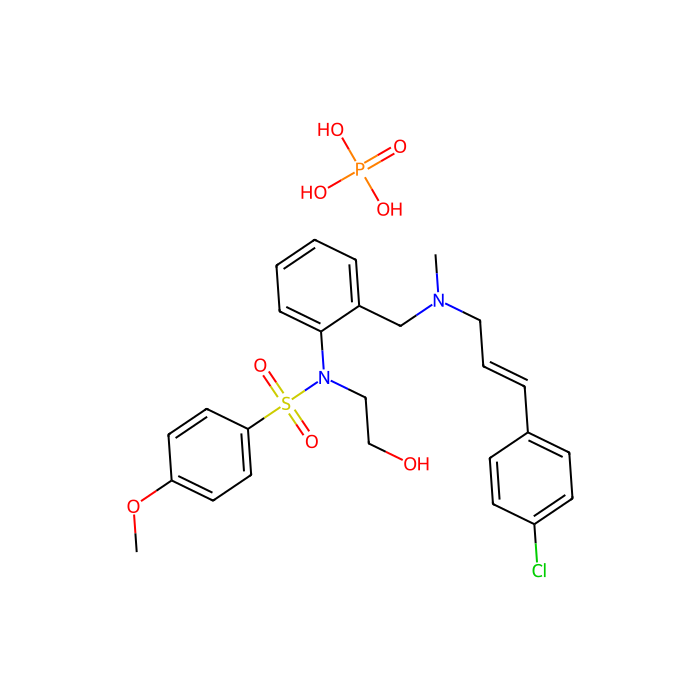
Potent, specific and cell-permeable calmodulin-dependent protein kinase (CaMK) II inhibitor (IC 50 = 370 nM). Also a potent and direct extracellular open channel voltage-gated potassium channel blocker (IC 50 = 307 nM for Kv1.5).
Storage
Protected from light,Store at -20°C,Desiccated
Shipped In
Ice chest + Ice pads
This product requires cold chain shipping. Ground and other economy services are not available.
Action Type
INHIBITOR
Note
Wherever possible, you should prepare and use solutions on the same day. However, if you need to make up stock solutions in advance, we recommend that you store the solution as aliquots in tightly sealed vials at -20°C. Generally, these will be useable for up to one month. Before use, and prior to opening the vial we recommend that you allow your product to equilibrate to room temperature for at least 1 hour. Need more advice on solubility, usage and handling? Please visit our frequently asked questions (FAQ) page for more details.
Determine the necessary mass, volume, or concentration for preparing a solution.
Dilution Calculator
Determine the dilution needed to prepare a stock solution.
Reconstitution Calculator
Reviews
Customer Reviews
Application Protocols
No tested application protocols, recommended concentrations, or assay formats are provided for this specific item.
General starting points (research-only, not item-specific):
Stock solutions: Prepare at 10–50 mM in DMSO under low light. Aliquot and store at −20 °C. Thaw on ice or at room temperature, minimize air/light exposure, and avoid repeated freeze–thaw cycles.
Working concentrations: Establish empirically via serial dilution in your assay. Employ constant final DMSO (e.g., 0.1–0.5% v/v) across all wells/tubes, with matching vehicle controls.
Aqueous handling: If direct dissolution in buffer is desired, begin with mildly acidic buffer and increase ionic strength gradually; sonication can assist dissolution. Filter solutions if compatible with the assay.
Controls: Include solubility/precipitation checks (visual inspection, light scattering), and counterscreens to identify redox/aggregation/fluorescence artifacts.
Documentation:
Record lot number, solution preparation dates, and storage conditions for reproducibility. Confirm purity and identity against the CoA when initiating critical studies.
Biological Roles
Item-specific biological targets, modes of action, or pathway interactions are not provided in the Product Data and are therefore not stated here.
General notes (for research-only use; non-clinical):
As a small-molecule organic phosphate salt intended for inclusion in small-molecule/compound libraries, this material can be used as a chemical probe candidate in basic research settings, subject to validation of potency, selectivity, and off-target profiles in the user’s laboratory.
Phosphate salt forms are frequently chosen to improve aqueous compatibility and handling for in vitro assays (e.g., biochemical enzyme assays, cell-free systems). Actual biological activity and selectivity are compound-specific and must be established empirically for each experimental context.
When using in cell-based experiments, confirm vehicle compatibility, maximal tolerated solvent percentage, and potential salt effects from the phosphate counterion using appropriate controls.
Best practices:
Independently confirm identity and purity prior to biological testing (HPLC/UPLC, NMR, HRMS).
Establish dose–response curves de novo in your assay system; literature values may vary by method and conditions and should not be assumed transferable.
Implement orthogonal assays to control for fluorescence quenching, redox cycling, aggregation, or assay interference phenomena that can confound interpretation of small-molecule screening data.
Buffer Applications
This item is a small-molecule phosphate salt, not a classical buffering reagent. It is not typically used to establish or maintain pH like phosphate, Tris, HEPES, or acetate buffers.
Practical notes:
If dissolved directly in aqueous media, the phosphate counterion may contribute negligibly to buffer capacity compared with dedicated buffers; do not rely on this material to control pH.
Prepare solutions in a validated buffer system appropriate for your assay (e.g., phosphate-buffered saline, HEPES) and treat the compound as a solute. Verify pH after addition to ensure assay conditions remain within the desired range.
Green Alternatives
As a discrete small-molecule research compound rather than a process solvent or reagent, “green alternatives” primarily concern its handling solvents and diluents rather than substitution of the compound itself.
Greener solvent choices for solution preparation (general guidance; not item-specific):
Prefer water or aqueous buffers when feasible to minimize organic solvent use. The phosphate salt form often supports improved aqueous compatibility compared with a free base.
If an organic cosolvent is required, consider ethanol as a renewable alternative to DMF or NMP where solubility and assay requirements permit.
Use minimal DMSO percentages consistent with assay performance; DMSO is widely accepted but aims should be to reduce volume and ensure proper waste segregation.
Comparison (general):
Water/buffer: Lowest environmental impact; may limit solubility for hydrophobic scaffolds.
Ethanol: Biobased option; lower toxicity profile relative to DMF/NMP but weaker solvating power.
DMSO: Excellent solvency and low volatility; persistence in waste streams requires appropriate management.
Operational strategies:
Prepare higher-concentration master stocks to reduce total solvent volume and shipping footprint (balanced against stability constraints).
Employ closed, light-protective containers to extend solution lifetime and reduce waste from degradation.
Plan small-scale solubility screens to identify the least hazardous solvent system that meets experimental needs.
Pharmaceutical Uses
No pharmacopeial status, excipient role, or GMP manufacturing information is provided for this item. It is supplied strictly for research use only (as stated in the Product Data) and is not intended for human or veterinary use.
General research-formulation considerations (non-clinical, not item-specific):
Salt selection studies in pre-formulation often compare free-base versus phosphate (and other) salts to evaluate solubility, dissolution, and solid-state stability; such studies are relevant to research-scale formulation and in vitro dosing solution preparation.
For in vitro work, concentrated DMSO stocks are commonly diluted into buffered aqueous media. Validate absence of precipitation and confirm final solvent content across test and control conditions.
If lyophilizing aqueous solutions, confirm that the phosphate salt does not undergo acid/base exchange or hydrate formation under the chosen conditions (analyze by 1H/31P NMR and HPLC after reconstitution).
Regulatory note:
No claims are made regarding compliance with USP/EP/JP monographs, residual solvent limits, elemental impurities, or endotoxin/bioburden. For any regulated application, obtain and review a detailed CoA/Spec Sheet or source a GMP-grade material as appropriate.
Physical Properties
Item-specific physico-chemical specifications were not provided in the Product Data.
Appearance: Not specified for this item; refer to CoA/Spec Sheet.
Molecular weight: Not specified for this item; refer to CoA/Spec Sheet.
Melting point, boiling point, density, refractive index, pKa, logP/logD, water content, and UV cutoff: Not specified for this item; refer to CoA/Spec Sheet.
General/literature-level considerations for phosphate salt forms (not item-specific):
Phosphate salts of amine-containing small molecules are often solid, non-volatile, and exhibit enhanced water wettability versus corresponding free bases.
Aqueous solubility can be substantially higher in mildly acidic media due to protonation of the amine and ion pairing with phosphate; however, solubility is compound-specific and must be verified experimentally for this item.
Thermal behavior: Organic phosphate salts typically decompose rather than boil; DSC/TGA can be informative for handling limits and stability screening.
Spectroscopic signatures: 31P NMR typically shows a resonance in the orthophosphate region (general), while 1H/13C NMR report on the organic cation; IR shows strong PO stretching bands in the 900–1200 cm−1 region (ranges are general, not specifications).
Practical notes (general):
Hygroscopicity may be higher for some phosphate salts; the provided storage “Desiccated; protected from light; −20 °C” supports precaution against moisture and photolysis. Confirm exact properties from the item CoA.
Quality & Grades
Grade/purity: Not specified for this item; refer to CoA/Spec Sheet for assay, residual solvents, and chromatographic purity.
Interpreting common grades (general guidance; not item-specific):
Research grade: Suitable for discovery biology/chemistry and screening; typical documentation includes HPLC purity, identity (NMR/HRMS), and water/ash on request.
Analytical grade: Tight control of inorganic/organic impurities aligned with analytical applications; low background in spectroscopic methods.
Bioactive/screening library grade: Focus on identity confirmation, high purity by HPLC/UPLC (often ≥95% area), and stability/solubility data in DMSO or aqueous media when available.
Documentation to consult for this item:
Certificate of Analysis (CoA): Confirms batch-specific purity, analytical methods (HPLC/UPLC), and identity spectra (1H NMR, possibly 13C NMR/HRMS). Any residual counter-ions, salt stoichiometry, and water of hydration (if present) should be specified.
Specification Sheet: Acceptance criteria for purity, identity, and appearance; may include limits for water, residual solvents, and metals. If not listed here: Not specified for this item; refer to CoA/Spec Sheet.
Stabilizers/additives:
Not specified for this item; refer to CoA/Spec Sheet. If no stabilizer is listed, handle under the provided storage conditions to maintain integrity.
Practical QC tips:
Verify salt stoichiometry by 1H NMR integration and 31P NMR; confirm HPLC purity using the same method as reported on the CoA to ensure comparability.
Reaction & Applications
This product is positioned as a small-molecule research compound within a screening/compound library (Category: 小分子和化合物库). It is typically not employed as a stoichiometric reagent or catalyst in synthetic transformations.
Research applications (general, non-therapeutic):
Chemical biology and assay development: Utilized as a defined small molecule in target-agnostic phenotypic or biochemical screening. The phosphate salt form is often preferred for preparing aqueous-compatible stocks for in vitro workflows.
Method development: Serves as a representative, drug-like scaffold for validating LC–MS/MS methods, HPLC retention modeling, or stability-indicating methods under stress conditions (acid/base, oxidative, photolytic) in the context of analytical R&D.
Reference material in formulation studies: Comparing solubility, dissolution rate, and stability of salt vs. free-base forms to guide selection of solvent systems and excipients for research formulations (no clinical use implied).
Practical handling tips (general):
Prepare concentrated DMSO stock solutions, aliquot, and store at −20 °C protected from light to minimize freeze–thaw and photodegradation.
When diluting DMSO stocks into aqueous buffers, add slowly with mixing to prevent local supersaturation and precipitation. Maintain consistent final DMSO content across controls.
Track exposure to humidity; phosphate salts may be more hygroscopic than the corresponding free-base forms. Use desiccated storage and reseal promptly.
Reaction Conditions
No reaction condition data specific to this item were provided. Because KN-93 Phosphate is primarily a research compound used as-is, standardized “reaction conditions” are generally not applicable.
General guidance if conversions are attempted (not item-specific):
Salt cleavage to free base: Dissolve in water and basify carefully (e.g., with NaHCO3/Na2CO3) to liberate the free base, extract into an organic solvent (EtOAc/MTBE), dry, and concentrate. Re-form the phosphate salt by treatment with phosphoric acid in an appropriate solvent system if needed. Confirm by 31P and 1H NMR.
Derivatization: Conduct small-scale scouting reactions to evaluate stability toward bases, acids, and oxidants; monitor by LC–MS/HPLC and NMR. Many drug-like scaffolds are moisture/air stable but may be light sensitive—protect from light as per storage guidance.
Solution preparation for assays: Typical stock concentrations for small molecules in DMSO range from 10–50 mM (literature guidance). Filter sterilization may be used for cell-free assays, subject to compound stability.
Always tailor conditions to the confirmed structure and functionalities of your specific batch, and consult the CoA/SDS for constraints and incompatibilities.
Safety & Handling
Authoritative safety information must be taken from the SDS for this specific item.
GHS classification, signal word, hazard statements, and pictograms: Not specified for this item; refer to SDS.
General laboratory precautions for organic phosphate salts and small-molecule screening compounds:
PPE: Use lab coat, safety glasses or splash goggles, and appropriate chemically resistant gloves. Avoid inhalation of dust and contact with skin/eyes. Handle solids in a fume hood to minimize dust exposure.
Storage incompatibilities: Segregate from strong oxidizers and strong bases/acids until compatibility is established. Phosphate counterions are generally compatible, but the organic cation may have specific incompatibilities—consult SDS.
Light and moisture sensitivity: Follow provided conditions—store desiccated at −20 °C and protect from light. Allow vials to equilibrate to room temperature in a desiccator before opening to reduce moisture condensation.
Spill/first aid (overview; defer to SDS):
Skin/eye contact: Rinse with water for several minutes; remove contaminated clothing; seek medical attention if irritation persists.
Inhalation: Move to fresh air; seek medical attention if symptoms occur.
Ingestion: Rinse mouth; do not induce vomiting; seek medical attention.
Waste: Dispose according to institutional and local regulations for organic laboratory chemicals; phosphate content does not inherently neutralize organic hazards.
Note: Risk of peroxide formation is not typically associated with phosphate salts; no special peroxide controls are implied.
Solvent Selection
Item-specific solubility and solvent preferences are not provided here; confirm with CoA or test on small scale.
General guidance for dissolving small-molecule phosphate salts (not item-specific):
Aqueous media: Many amine–phosphate salts dissolve better in water or buffered aqueous solutions at mildly acidic pH. If solubility is limited, consider minimal DMSO cosolvent (e.g., 1–5%) before dilution into buffer.
Polar aprotic solvents: DMSO and DMF frequently afford high solubility for drug-like organics irrespective of salt form; they are common for preparing screening stocks.
Alcohols: Methanol/ethanol can aid dissolution when water alone is insufficient; final assay media may then be prepared by dilution into buffer.
Avoid strong bases if maintaining the phosphate salt form is important; basification can convert to the free base, altering solubility and assay behavior.
Comparison (general, not item-specific):
Water/buffer (pH 4–7): Maximizes ionization and minimizes precipitation in many salts; lowest organic content but may limit long-term stability for some scaffolds.
DMSO: Highest solvating power; enables concentrated stocks (e.g., 10–50 mM typical for screening, literature-level guidance) with excellent freeze–thaw stability.
Store at −20 °C, protected from light, desiccated.
Shipped in an ice chest with ice pads.
General handling and reconstitution (not item-specific):
Allow the sealed container to warm to room temperature in a desiccator before opening to prevent moisture condensation. Reseal promptly after dispensing and return to −20 °C.
For solution stocks, DMSO is commonly used. Prepare concentrated stocks (e.g., 10–50 mM as general literature guidance), aliquot in amber vials or foil-wrapped tubes, and store at −20 °C. Avoid more than 3–5 freeze–thaw cycles; use single-use aliquots for critical assays.
For aqueous solutions, use amber containers or protect from light; consider adding inert atmosphere headspace if long-term storage is required. Verify stability by periodic HPLC/UPLC.
Stability notes:
Appearance, solubility, and assay response can change upon moisture uptake or prolonged light exposure. Discard solutions showing precipitation, color change, or significant potency drift in internal controls.
Specifications not provided:
Hydration state, residual solvent levels, exact solubility, and stabilizers: Not specified for this item; refer to CoA/Spec Sheet.
InChIKey: Not specified for this item; refer to CoA/Spec Sheet. (Note: a truncated code “243041” was provided and does not conform to standard InChIKey format.)
SMILES: Not specified for this item; refer to CoA/Spec Sheet.
Molecular formula: Not specified for this item; refer to CoA/Spec Sheet.
Molecular weight: Not specified for this item; refer to CoA/Spec Sheet.
Structural features (general, literature-level context for KN-93 chemotype):
KN-93 is a small-molecule, drug-like organic scaffold. The phosphate designation indicates a phosphate salt form, typically improving aqueous compatibility relative to the neutral/free-base form (general statement; not item-specific specification).
Expected features of a phosphate salt: presence of a protonated amine counterbalanced by phosphate anion; no stereocenters are typically implicated for the phosphate counterion. Detailed ring systems and exact substitution patterns are not specified in the provided product data.
2D description (general):
Cationic organic framework paired with an inorganic phosphate anion. The organic cation commonly contains aromatic rings and a basic nitrogen capable of forming a stable salt with phosphate. Exact ring connectivity and functional groups for this catalog item are not provided here and should be confirmed from the product CoA/Spec Sheet.
Identity confirmation guidance (general):
Recommended orthogonal checks: HRMS of the organic cation, 31P NMR for phosphate, 1H/13C NMR for the organic moiety, and HPLC purity profiling. Source definitive identifiers and structure from the CoA.
Synthetic Utility
KN-93 Phosphate is supplied as a finished small-molecule salt for research use rather than as a general-purpose synthetic building block. As such, it sees limited use in multistep organic synthesis compared with commodity reagents.
General considerations (not item-specific):
The phosphate counterion can be exchanged under basic conditions to regenerate the free base, which may then participate in derivatization (e.g., acylation, alkylation) if a nucleophilic amine is present in the scaffold. Any such transformations should be validated for this specific structure.
The organic cation portion (structure not specified in Product Data) may contain aromatic rings and heteroatoms common to drug-like scaffolds; standard electrophilic aromatic substitutions or cross-couplings would require confirmation of suitable handles and protection strategies.
Purification: Salt-to-free-base interconversion can aid in purification by toggling aqueous/organic partitioning. Ion-exchange chromatography or pH-adjusted liquid–liquid extraction may be used to manipulate the salt form.
Practical tip:
If synthetic modification is intended, first determine the exact salt stoichiometry, presence/absence of hydrates, and any labile functional groups by comprehensive NMR (including 31P), HRMS, and elemental analysis.
Target Specificity
Target, selectivity profile, and bioactivity data are not provided in the Product Data for this item. Accordingly, no target-specific claims are made here.
Guidance for users (general, research-only):
If using as a chemical probe in biological experiments, independently confirm target engagement and selectivity in your assay system using orthogonal methods (e.g., enzymatic activity assays alongside counterscreens for common off-targets and assay interference).
Reference any literature data you may consult as context only; do not assume direct transferability across systems, expression constructs, or assay conditions.
We use cookies to ensure the website functions properly and, where permitted, to improve your experience. You can manage your preferences at any time in Settings. Learn more in our Cookie Policy.
Shall we send you a message when we have discounts available?
Remind me later
Thank you! Please check your email inbox to confirm.
Products are supplied to verified businesses, institutions, and qualified professionals for research and development use only. Not for use in humans, animals, diagnosis, or therapy.

 D2418078