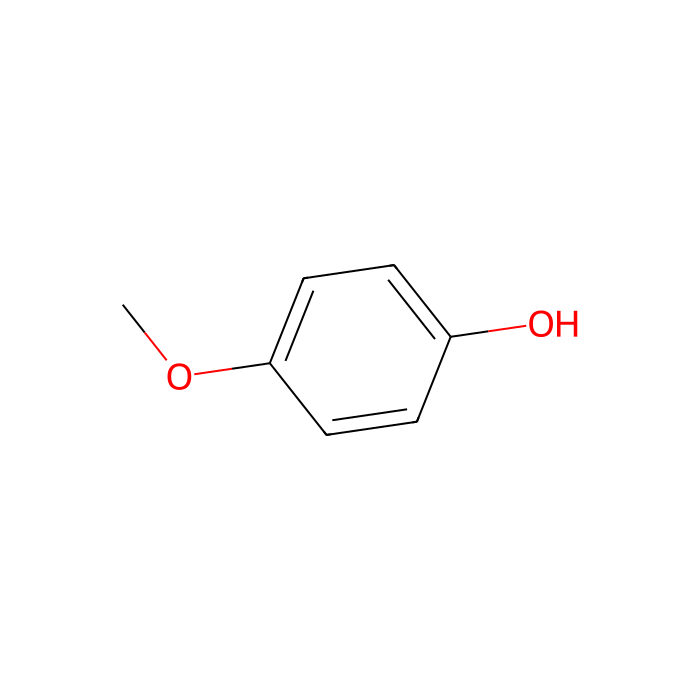
Mequinol - 10mM in DMSO , CAS No.150-76-5

CAS: 150-76-5 Cat. No.: M408201 Formula: CH3OC6H4OH Molecular Weight: 124.14 Beilstein Registry Number: 507924 EC Number: 205-769-8
AVAILABLE TO ORDER
GRADE & PURITY 10mM in DMSO
Synonyms
Phenol, 4-methoxy-
Storage
Store at -80°C
Shipped In
Dry ice packs + Cold packs
★
Size
Germany (EU)
USA*
Price
Qty
1ml
M408201-1ml
—
2 In stock

€19.87

€23.34
Save €3.47 (14.87%)
Enter a quantity for the sizes you want to add.

Overview

Information

Mequinol (4-Methoxyphenol) is a depigmentation agent.
In vitro

Mequinol, diluted in the culture medium or used topically at the top of the RE, leads to a decrease in pigmentation with a diminished melanin transfer human keratinocytes and melanocytes. Mequinol induces a diminution of dopa-positive melanocyte counts. Mequinol is available in the United States in 2% concentration and is commercially marketed as a prescription skin lightener in combination with 0.01% tretinoin, functioning as a penetration enhancer, and vitamin C, in the form of ascorbic acid and ascorbyl palmitate, to enhance skin lightening. Mequinol is a substrate for tyrosinase thereby acting as a competitive inhibitor in the formation of melanin precursors.

In vivo


Cell Data

cell lines:

Concentrations:

Incubation Time:

Powder Purity:≥99%

Specifications

Synonyms
Phenol, 4-methoxy-
Specifications & Purity
10mM in DMSO
Biochemical and Physiological Mechanisms
Mequinol (4-Methoxyphenol) is a depigmentation agent.
Storage
Store at -80°C
Shipped In
Dry ice packs + Cold packs
This product requires cold chain shipping. Ground and other economy services are not available.
Action Type
ACTIVATOR
Product Properties
ALogP
1.3
Names and Identifiers
Isomeric SMILES
COC1=CC=C(C=C1)O
WGK Germany
1
RTECS
SL7700000
UN Number
3335
Molecular Weight
124.14
Beilstein
507924
Reaxys
507924
Reaxys-RN_link_address
https://www.reaxys.com/reaxys/secured/hopinto.do?context=S&query=IDE.XRN=507924&ln=

Advanced Data

Certificates (CoA,COO,BSE/TSE and Analysis Chart)
C of A & Other Certificates(BSE/TSE, COO):
Analytical Chart:
Chemical and Physical Properties
Flash Point269.6 °F
Flash Point>110℃
Boil Point243°C
Melt Point55-58 ℃
Safety and Hazards(GHS)
Pictogram(s)
Signal
Warning
Hazard Statements

H302:Harmful if swallowed

H317:May cause an allergic skin reaction

H320:Causes eye irritation

H402:Harmful to aquatic life

Precautionary Statements

P261:Avoid breathing dust/fume/gas/mist/vapors/spray.

P264:Wash hands [and …] thoroughly after handling.

P270:Do not eat, drink or smoke when using this product.

P272:Contaminated work clothing should not be allowed out of the workplace.

P273:Avoid release to the environment.

P280:Wear protective gloves/protective clothing/eye protection/face protection.

P302+P352:IF ON SKIN: wash with plenty of water.

P305+P351+P338:IF IN EYES: Rinse cautiously with water for several minutes. Remove contact lenses if present and easy to do - continue rinsing.

P333+P313:IF SKIN irritation or rash occurs: Get medical advice/attention.

P337+P313:IF eye irritation persists: Get medical advice/attention.

P362+P364:Take off contaminated clothing and wash it before reuse.

P501:Dispose of contents/container to an approved waste disposal plant.

P301+P312+P330:IF SWALLOWED: Call a POISON CENTER/ doctor if you feel unwell. Rinse mouth.

WGK Germany
1
RTECS
SL7700000
Reaxys
507924
Reaxys-RN_link_address
https://www.reaxys.com/reaxys/secured/hopinto.do?context=S&query=IDE.XRN=507924&ln=
Class
9
Documents & Articles
Photo-Crosslinking and Patterning of PEG-Based Hydrogels (2D/3D): Principles, Method Comparisons, and Product Selection Guidelines
Haloheterocycles and Cross-Coupling: A Research-Oriented Selection Framework from Substrate Identification to Bond-Forming Routes (Including Product Navigation and Tables 1–5)
Structural and Performance Design of Acrylic Resins for Coatings: Monomer Composition, Key Parameters, and Film Formation/Curing Mechanisms
Vinyl Ester Resin Systems: Structural Features, Curing Mechanism, and Key Application Considerations
Phenylethyl Resorcinol (377): Structural Characteristics, Melanogenesis-Regulating Mechanisms, and Related Applications in Formulation Research
How to Bypass α-Fluoride Elimination: Bromine-Transfer Capture and Oxidative Coupling of α,α-Difluorobenzylic Anions
From Temporary Covalent Assembly to Intramolecular Smiles Aryl Migration: DCPDC-Mediated Phenol–Primary Amine C–N Cross-Coupling
Citations of This Product
Solution Calculators
Reviews

Customer Reviews

Shall we send you a message when we have discounts available?

Remind me later

Thank you! Please check your email inbox to confirm.

Oops! Notifications are disabled.