MLN120B - Moligand™, 10 mM in DMSO , CAS No.783348-36-7

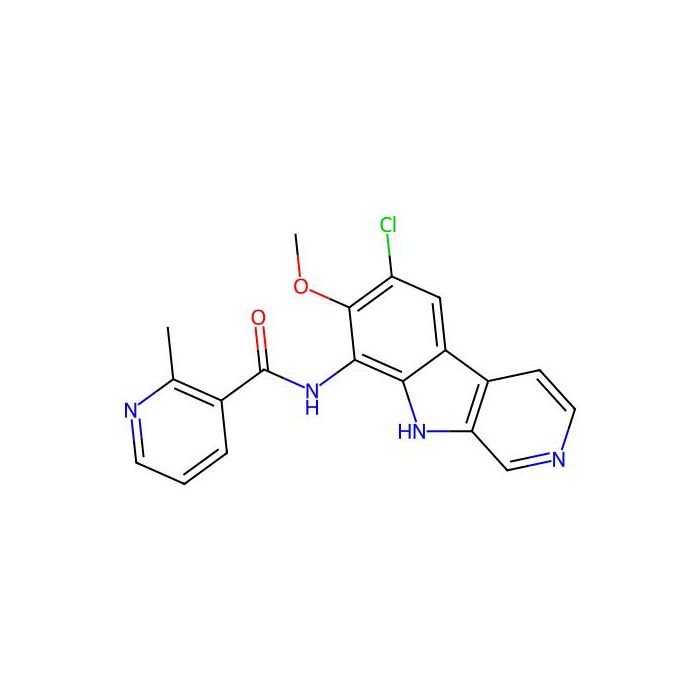
CAS: 783348-36-7 Cat. No.: M1498033 Formula: C19H15ClN4O2 Molecular Weight: 366.8 EC Number: 809-486-6
AVAILABLE TO ORDER
GRADE & PURITY Moligand™ ? Moligand™ — Aladdin's line of ligands and bioactive small molecules. Use for receptor, pathway, and binding studies needing defined small-molecule tools. 10 mM in DMSO
Storage
Store at -80°C
Shipped In
Dry ice packs + Cold packs
★
Size
Germany (EU)
USA*
Price
Qty
1ml
M1498033-1ml
Made to order · 8–12 wks
€132.68
Enter a quantity for the sizes you want to add.
🧪
Why this grade

Moligand™, 10 mM in DMSO Moligand™ for sensitive chromatographic and analytical workflows requiring minimal baseline interference.

🌡

Storage & shipping

Store at -80°C Ships Dry ice packs + Cold packs Check lot-specific COA for exact specifications.

📋

Quality documents

SDS, COA, datasheet, and spec sheet available for download. Lot-specific COA accessible via lot number lookup.

📚

Literature proof

Cited in 0 peer-reviewed publications across chromatography, organic synthesis, and cross-coupling reactions.

Overview

MLN120B (ML120B) is a potent, ATP competitive, and orally active inhibitor of IKKβ with an IC 50 of 60 nM. MLN120B inhibits multiple myeloma cell growth in vitro and in vivo and also can be used for the research of rheumatoid arthritis .

Specifications

Specifications & Purity
Moligand™, 10 mM in DMSO
Storage
Store at -80°C
Shipped In
Dry ice packs + Cold packs
This product requires cold chain shipping. Ground and other economy services are not available.
Grade
Moligand™
Action Type
INHIBITOR
Names and Identifiers
Isomeric SMILES
CC1=C(C=CC=N1)C(=O)NC2=C3C(=CC(=C2OC)Cl)C4=C(N3)C=NC=C4
Molecular Weight
366.8
Reaxy-Rn
10379640
Reaxys-RN_link_address
https://www.reaxys.com/reaxys/secured/hopinto.do?context=S&query=IDE.XRN=10379640&ln=

Documentation

📋 Safety Data Sheet (SDS)

Comprehensive hazard, handling, storage, and regulatory compliance document.

<<<<<<< HEAD Download SDS → ======= Download SDS → >>>>>>> release248-p3

✅ Certificate of Analysis (COA)

Lot-specific quality data. Enter your lot number to retrieve the exact COA.

Look up COA →

📊 Datasheet

Quick-reference summary of product specifications and applications.

View datasheet →

🔬 Specification Sheet

Full quality attributes and acceptance criteria for this grade.

View spec sheet →

Advanced Data

Certificates (CoA,COO,BSE/TSE and Analysis Chart)
C of A & Other Certificates(BSE/TSE, COO):
Analytical Chart:
Documents & Articles
Solution Calculators
Reviews

Customer Reviews

Application Protocols

No tested applications, recommended dilutions, or assay protocols are provided in the product data for MLN120B.

General protocol framework (to be adapted by the user):

  • Stock solution: Prepare 10–50 mM in dry DMSO. Aliquot and store at −80°C to minimize freeze–thaw cycles. Thaw on ice before use.
  • Biochemical assay dosing: Serially dilute stocks in DMSO, then transfer to assay buffer to reach final test concentrations while maintaining constant DMSO (e.g., 0.1–1% v/v). Include vehicle controls and reference standards where applicable.
  • Cell-based assay dosing: Add compound last to pre-warmed media to minimize precipitation. Confirm final DMSO tolerance for the specific cell line and readout.
  • Data quality: Run in technical replicates (≥3) and biological replicates as needed. Include counterscreens to detect assay interference (aggregation, fluorescence, redox cycling) when relevant.

Users should establish and validate their own protocols according to their experimental system and quality standards.

Biological Roles

Item-specific biological targets or mechanisms are not provided in the product data for MLN120B. The following are general considerations for research ligands of this class and should be corroborated with your own validations and primary literature.

  • Functional characterization: For bioactive small molecules, establish mechanism of action in your system using orthogonal assays (e.g., enzyme activity assays, target engagement/thermal shift, CETSA, cellular reporter assays). Include counterscreens against related pathways to assess selectivity.
  • Physicochemical liabilities: Evaluate potential assay interference from aggregation, redox cycling, fluorescence/absorbance overlap, or metal chelation. Employ detergent controls, redox quenchers, and spectral scans as appropriate.
  • ADME-relevant properties (in vitro, general): Determine permeability (PAMPA/MDCK), metabolic stability (microsomes/S9), and protein binding if you aim to relate nominal concentration to free concentration in complex media. These are experiment-specific and not provided with this item.
  • Off-target assessment: Construct a small panel of related enzymes/receptors for selectivity profiling at representative concentrations. Consider computational docking only after confirming the exact structure (salt, tautomer, protonation state) from CoA.

Note: No clinical or therapeutic claims are made. This product is supplied strictly for research use to facilitate biochemical and cellular studies when used with appropriate controls.

Buffer Applications

MLN120B is a discrete small-molecule ligand rather than a buffering agent. It is not typically used to prepare buffer systems or control pH.

Practical notes for use in buffers (general):

  • When dosing into aqueous buffers, pre-dissolve in a miscible organic solvent (commonly DMSO) and add slowly with vortexing to minimize precipitation.
  • Maintain constant vehicle percentage across control and treated samples to avoid confounding effects. Many biochemical assays tolerate 0.1–1% v/v DMSO; verify for your system.
  • If precipitation occurs, explore modest cosolvent levels, surfactants compatible with your assay, or adjust ionic strength/pH if the compound is ionizable.

For actual buffer preparation guidance, refer to dedicated buffering agents (e.g., phosphate, HEPES, Tris) rather than this product.

Green Alternatives

This product is a discrete small-molecule research ligand, not a bulk process solvent or reagent. Green chemistry considerations therefore focus on how you use and handle it, not on substitution of the active itself.

Practical improvements (general, non-spec):

  • Solvent footprint: Prefer greener diluents where feasible (ethanol, water with minimal DMSO), while maintaining assay fidelity. For initial dissolution, DMSO is often unavoidable; minimize final DMSO percentage to ≤0.1–0.5% when biology permits.
  • Microscale operations: Run screen assays at minimal scale with low-dead-volume plates and acoustic dispensing to reduce material and solvent waste.
  • Waste management: Consolidate organic waste streams; avoid chlorinated solvents unless necessary for analytics.
  • Energy use: Store as directed (−80°C) but avoid unnecessary ultra-cold storage time by planning experiments and aliquoting to reduce repeated door openings and freeze–thaw cycles.

Comparison of common stock solvents (general):

  • DMSO: High solvency, broad compatibility; not particularly green but used in microliter quantities. Avoid skin contact due to transdermal transport.
  • Ethanol: Greener, renewable; may limit solubility for hydrophobic ligands.
  • PEG 400 or aqueous surfactant vehicles: Can improve apparent solubility for in vitro work; verify biological compatibility.

Where synthesis or scale-up of analogs is planned, apply green chemistry principles to route selection (safer reagents, catalytic steps, minimal protecting groups), but such details are outside the scope of this catalog item.

Pharmaceutical Uses

This product is provided strictly for research use only. No pharmacopeial status, excipient role, or clinical use is stated or implied for MLN120B in the provided product data.

General notes (non-clinical):

  • In pre-formulation research contexts, small molecules like this may be evaluated for solubility, stability, and compatibility with typical excipients. Such evaluations are project-specific and are not included in this catalog listing.
  • If performing formulation-relevant experiments (e.g., solubility in biorelevant media, amorphous dispersions), ensure regulatory separation from any clinical supply chains and rely on internal QA/QC specifications.

Do not use this material in humans or animals for therapeutic, diagnostic, or other clinical purposes.

Physical Properties

Item-specific values (specifications):

  • Appearance: Not specified for this item; refer to CoA/Spec Sheet.
  • Melting point: Not specified for this item; refer to CoA/Spec Sheet.
  • Boiling point: Not applicable for most high-MW small molecules; specific data not provided. Refer to CoA/Spec Sheet.
  • Density: Not specified for this item; refer to CoA/Spec Sheet.
  • Solubility: Not specified for this item; refer to CoA/Spec Sheet.
  • LogP/pKa: Not specified for this item; refer to CoA/Spec Sheet.
  • Refractive index: Not applicable (typically solid). Not specified.

General guidance (literature/practice; not product specifications):

  • Bioactive screening compounds similar to MLN120B are commonly hydrophobic and are routinely prepared as DMSO stock solutions (e.g., 10–50 mM) for biochemical or cell-based assays. Conduct a small-scale solubility screen (DMSO, DMF, ethanol, aqueous buffer with cosolvent/surfactant) before committing to scale.
  • Solid-state properties (polymorph/hydrate/solvate) can influence apparent solubility and dissolution rate. If assay variability is observed, assess form by DSC/TGA or PXRD.
  • For quantitative work, measure actual concentration by UV–Vis or quantitative 1H NMR, since nominal DMSO stocks can deviate due to hygroscopicity or partial insolubility.

Note: When precise thermophysical data are critical (e.g., formulation or material science contexts), obtain and rely on the batch-specific CoA/Spec Sheet or measure directly under your laboratory conditions.

Quality & Grades
  • Grade/Purity: Moligand™. The Moligand line denotes small-molecule ligands delivered for research and screening applications. It typically emphasizes structural fidelity and suitability for SAR, assay development, and target validation workflows.
  • Item-specific assay/purity details (e.g., HPLC area %, NMR, water/peroxide content, metal analysis, salt form) are Not specified for this item; refer to CoA/Spec Sheet.

What Moligand-grade implies (general guidance; not a specification):

  • Intended for discovery research: compound screening, mechanistic biochemistry, and chemical biology. Lots are commonly accompanied by identity confirmation (e.g., LC–MS and/or NMR) and a chromatographic purity value on the CoA.
  • Appropriateness for sensitive assays: Users typically verify background absorbance/fluorescence and potential assay interference (PAINS/REOS filters) in their specific assay matrix.
  • Stabilizers/additives: Not specified for this item; refer to CoA/Spec Sheet. If none are listed, assume neat solid. If an inert carrier or counterion is used, it will be declared on the CoA.

Recommendations for users:

  • For HTS or profiling, request or download batch CoA and any available QC chromatograms/spectra.
  • For quantitative biology, confirm potency/response with fresh dilutions and consider orthogonal readouts to rule out aggregation or redox cycling artifacts when applicable.
Reaction & Applications

Manufacturer application note: Not provided. The following guidance reflects typical research uses for catalog Moligand small molecules and does not constitute product specifications.

  • Use case: MLN120B is supplied as a research-use-only small molecule for chemical biology, target engagement studies, and phenotypic screening. It can serve as a tool compound in pathway interrogation and SAR benchmarking when compared alongside structural analogs.
  • Assay contexts: Commonly evaluated in biochemical enzyme assays, cellular reporter assays, and target occupancy/thermal shift assays. Include appropriate positive and negative controls and validate readouts against orthogonal methods.
  • Practical tips:
    • Prepare concentrated DMSO stocks (e.g., 10–50 mM), filter if needed (0.2 µm PTFE) to remove particulates, and verify concentration by UV or qNMR when quantitative dosing is required.
    • Avoid freeze–thaw cycling by aliquoting. Track cumulative DMSO exposure to air to limit water uptake.
    • Check for compound aggregation in assays (use detergent controls or DLS as needed) and evaluate redox interference for peroxide- or metal-coupled assays.
  • Data integrity: For structure–response consistency, confirm the exact lot identity (salt form, polymorph, hydration) and ensure consistent vehicle percentage across conditions.

Note: Specific biochemical targets, potencies, or mechanisms are not provided in the product data; consult primary literature and your internal validations for mechanistic conclusions.

Reaction Conditions

This catalog item is not a reagent for promoting chemical reactions; therefore, there are no typical “reaction conditions” associated with its use.

General guidance for preparing and using solutions in research assays:

  • Stock preparation: Dissolve in anhydrous DMSO to a convenient concentration (e.g., 10–50 mM). Warm gently (room temperature to 37°C) and vortex/sonicate to aid dissolution. Avoid prolonged heating.
  • Filtration: If particles remain, pass through a 0.2 µm PTFE syringe filter. Avoid cellulose ester filters with strong organic solvents.
  • Working solutions: Dilute into assay buffer or media with vigorous mixing to the desired final concentration, keeping vehicle percentage constant across samples.
  • Stability checks: Evaluate short-term stability at bench and in autosampler conditions by LC–MS or HPLC. Monitor for precipitation or color change.

If you intend to use MLN120B as an internal standard or reference in analytical chemistry, develop method parameters (mobile phase, gradient, detection wavelength/mass transitions) empirically; no item-specific chromatographic conditions are provided in the product data.

Safety & Handling

GHS/SDS information:

  • Signal word: Not specified for this item; refer to SDS.
  • Hazard statements/pictograms/classification: Not specified for this item; refer to SDS.

General laboratory precautions (good practice; not a substitute for SDS):

  • Handle in a chemical fume hood and avoid inhalation of dust or aerosols. Use appropriate PPE: lab coat, safety glasses, and disposable nitrile gloves. Change gloves frequently when working with DMSO solutions, which can enhance dermal absorption.
  • Avoid contact with strong oxidizers, strong acids/bases, and reactive acylating/alkylating agents unless compatibility is confirmed. Most drug-like organics are combustible; keep away from ignition sources and hot surfaces.
  • First aid (general): In case of skin or eye contact, rinse with copious water for at least 15 minutes and seek medical attention. If inhaled, move to fresh air. If swallowed, rinse mouth; do not induce vomiting; seek medical attention. Always follow your institution’s exposure-response protocols.
  • Waste disposal: Collect solid and solution waste in labeled, compatible containers for hazardous organic waste disposal according to local regulations.
  • Transport/stability: Product is shipped on dry ice packs + cold packs and should remain cold; minimize time at ambient to reduce risk of degradation.

Always consult the official SDS provided with the shipment for authoritative hazard, toxicology, and handling guidance.

Solvent Selection

Item-specific solubility is not provided. Use the following general, practical approach for drug-like small molecules:

  • Primary stock solvent: DMSO is commonly preferred due to broad solvating power and assay compatibility at low final percentages (typically ≤0.1–1% v/v). Verify compound stability in DMSO over your intended storage horizon (freeze–thaw cycles, light exposure).
  • Secondary solvents: DMF and acetone (anhydrous) can be used for initial dissolution; ethanol or methanol may work but assess stability and assay interference. For aqueous systems, consider co-solvent systems (DMSO 5–20%) or surfactants (0.01–0.1% Tween-80 or Pluronic) as permitted by the assay.
  • Buffer compatibility: Many hydrophobic ligands precipitate upon dilution into high-ionic-strength buffers without cosolvent. Pre-dilute DMSO stocks into media while vortexing; add last to protein solutions to reduce local supersaturation.
  • pH effects: If the molecule bears ionizable groups (check CoA or literature), solubility can change sharply with pH. Perform a small pH–solubility scan if you observe precipitation.

Quick comparison (general):

  • DMSO: highest solvency; compatible with most biochemical assays at low %.
  • DMF: similar solvency; less favored biologically, hygroscopic.
  • Ethanol/MeOH: greener but may limit achievable concentration and affect cells/enzymes at lower %.

Always confirm with a small solubility/stability screen under your exact assay conditions.

Storage & Reconstitution
  • Storage conditions (from product data): Store at −80°C.
  • Shipping (from product data): Shipped in dry ice packs + cold packs to maintain low temperature during transit.

Reconstitution and handling (general guidance; not a specification):

  • Reconstitution solvent: Use anhydrous DMSO to prepare concentrated stocks (e.g., 10–50 mM). If needed, gently warm to room temperature or 37°C and vortex/sonicate to dissolve. Do not overheat.
  • Aliquoting: Dispense single-use aliquots in inert, low-bind tubes under dry conditions to minimize moisture uptake. Flush headspace with inert gas if long-term storage is planned.
  • Storage of solutions: Keep frozen at −80°C, protected from light. Avoid repeated freeze–thaw cycles; thaw on ice and use promptly. Track cumulative time at ambient.
  • Stability: Item-specific stability data are Not specified for this item; refer to CoA/Spec Sheet. Perform periodic QC (HPLC/LC–MS) on long-stored stocks.
  • Aqueous working solutions: Prepare immediately before use. If precipitation occurs upon dilution, adjust cosolvent percentage or add compatible surfactant as permitted by your assay.

Always consult the batch CoA and SDS included with your order for definitive guidance on storage, stability, and safe handling.

Structure & Identity
  • Product name: MLN120B (SKU: M1498033)
  • CAS: 783348-36-7
  • CID: 9929127
  • Molecular formula: Not specified for this item; refer to CoA/Spec Sheet.
  • Molecular weight: Not specified for this item; refer to CoA/Spec Sheet.
  • SMILES: Not specified for this item; refer to CoA/Spec Sheet.
  • InChIKey: Not specified for this item; refer to CoA/Spec Sheet.

Structural description (general):

  • MLN120B is a cataloged, drug-like small molecule supplied under the Moligand line for research and screening. The definitive functional groups, ring systems, and stereochemical elements are not provided in the current product data; consult the CoA/Spec Sheet for an authoritative structure representation (SMILES/InChI) and any stereochemical annotations.
  • If using cheminformatics tools (e.g., docking, QSAR), obtain the supplier structural file (SDF/MOL) or verify via public databases (cross-check with the listed CAS/CID) to ensure exact tautomer/protonation state and salt form before modeling or ordering analogs.

Item-specific identity controls:

  • Verify identity upon receipt via orthogonal methods when critical: LC–MS (exact mass), 1H/13C NMR, and HPLC retention time compared to the CoA reference. Where applicable, confirm salt/solvate content and polymorph by PXRD or DSC if these parameters matter to your workflow.
Synthetic Utility

MLN120B is a finished, discrete small-molecule ligand intended as a tool compound, not a general synthetic building block or reagent. As such, it is not typically used to form new bonds in routine organic synthesis.

Useful considerations for chemists working with the compound (general):

  • Reference/benchmark: It can serve as a reference standard in analytical methods (e.g., LC–MS method development, retention-time benchmarking) or as a comparator in SAR studies against proprietary analogs.
  • Derivatization: If structural modification is of interest, consult the literature for known cores and accessible substitution vectors. Prior to derivatization, verify exact structure and functional group tolerance from authenticated records (CoA and primary literature). Any semisynthesis or late-stage diversification should be guided by stability testing.
  • Analytical development: Develop stability-indicating methods (RP-HPLC/UPLC with PDA and MS) to track degradation pathways under stress (light, heat, oxidative, hydrolytic), which informs handling and storage.

If you require a synthetic precursor or handle for library expansion, consider sourcing core scaffolds or intermediates rather than modifying the finished ligand directly.

Target Specificity

Target, selectivity, and mechanism-of-action details are not provided in the product data for MLN120B and therefore cannot be stated here. For research planning:

  • Consult peer-reviewed literature and your internal data to determine putative targets and off-target profiles relevant to your assays.
  • Validate target engagement with orthogonal methodologies (e.g., biochemical potency, CETSA or DARTS for binding, target occupancy assays, or genetic knockdown/knockout studies for pathway confirmation).

Only rely on the official CoA/Spec Sheet and SDS for product-identifying information. Do not infer biological targets from the catalog name alone without direct evidence.

Frequently Asked Questions

What is Moligand??
Moligand? is one of Aladdin Scientific's premium product lines, formulated for high-purity applications across multiple workflows. Compared to standard grades in the same workflow, Moligand? products typically offer tighter specifications, more rigorous QC, and stronger lot-to-lot consistency.
How should this product be stored?
Store at ?80 °C. Ultra-low temperature storage is required to maintain the specified shelf life.
How is this product shipped?
This product ships frozen with dry ice and cold packs. Unpack on arrival and transfer it to the storage condition stated above; handle dry ice with insulated gloves in a ventilated area.
What are the CAS number, molecular formula and molecular weight?
The CAS Number is 783348-36-7, the molecular formula is C19H15ClN4O2, and the molecular weight is 366.8 g/mol.
What documentation is provided?
Available product documentation, including Certificates of Analysis (COA), Safety Data Sheets (SDS), and specification sheets, is shown in the product document area. Document availability and access follow the current site policy.

Need help choosing the grade?

Our grade selection guide covers purity, stabilizer status, and application suitability for all variants in our catalog.

View Moligand™ grade guide →

Shall we send you a message when we have discounts available?

Remind me later

Thank you! Please check your email inbox to confirm.

Oops! Notifications are disabled.