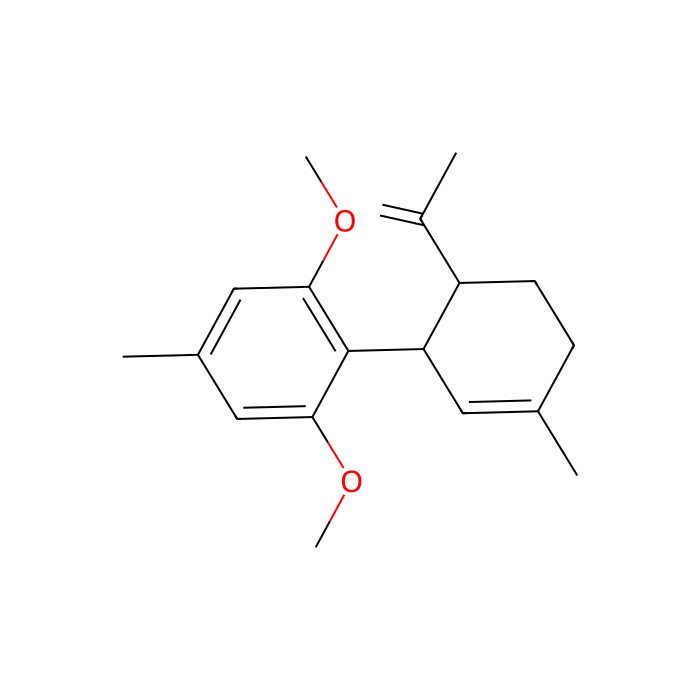
Biological description': "Silent antagonist of the non-CB 1 vascular cannabinoid receptor (the 'Abn-CBD' receptor recently reported to be GPR18). Cannabidiol antagonist. Blocks Abn-CBD induced potentiation of a Ca 2+ -activated K + current in human umbil vein endothelial cells.
Storage
Store at -20°C,Argon charged
Shipped In
Ice chest + Ice pads
This product requires cold chain shipping. Ground and other economy services are not available.
Action Type
ANTAGONIST
Note
Wherever possible, you should prepare and use solutions on the same day. However, if you need to make up stock solutions in advance, we recommend that you store the solution as aliquots in tightly sealed vials at -20°C. Generally, these will be useable for up to one month. Before use, and prior to opening the vial we recommend that you allow your product to equilibrate to room temperature for at least 1 hour. Refer to SDS for further information. Need more advice on solubility, usage and handling? Please visit our frequently asked questions (FAQ) page for more details.
Determine the necessary mass, volume, or concentration for preparing a solution.
Dilution Calculator
Determine the dilution needed to prepare a stock solution.
Reconstitution Calculator
Reviews
Customer Reviews
Application Protocols
Tested/validated application protocols are not provided in the Product Data for this SKU.
Recommended dilutions, assay types (e.g., WB, IHC, IF, FC), and positive controls: Not applicable to this small-molecule tool compound and not specified for this item.
Guidance: Consult peer-reviewed literature for protocol frameworks relevant to your biological system, and perform in-house optimization (vehicle controls, concentration–response, time courses) under your institutional SOPs.
Biological Roles
Biological/biochemical context (literature; not product claims):
O-1918 is frequently described as a tool compound used to interrogate atypical or endothelial cannabinoid-responsive signaling that is distinct from canonical CB1/CB2 pathways. Studies have employed it to modulate responses attributed to targets such as GPR18 or related non-classical cannabinoid-sensitive mechanisms, though target assignments can be system-dependent and remain an area of active research.
In vascular physiology research, O-1918 has been used in antagonist paradigms to evaluate endothelium-dependent relaxation responses triggered by atypical cannabinoid agonists (e.g., abnormal cannabidiol analogs). Readouts include smooth muscle tone, intracellular Ca2+ handling, and kinase pathway activation.
In cell-signaling contexts, it is leveraged to dissect GPCR-coupled cascades (cAMP, ERK/MAPK), ion-channel modulation, and cross-talk with endocannabinoid metabolites.
Important notes for experimentalists:
Tool compounds can exhibit off-target effects at higher concentrations; include concentration-response studies, orthogonal chemotypes, and genetic controls where possible.
Confirm absence of interference with assay reporters (e.g., fluorescence/absorbance) by running solvent-matched blanks and spectral scans.
This product is provided strictly for research use. It is not intended for diagnostic, therapeutic, or other clinical applications.
Buffer Applications
This compound is not a buffering agent and is not used to set or maintain pH in biochemical systems. Consequently, there are no canonical buffer recipes or pKa-driven buffer guidance specific to this item.
Practical notes for assay buffers (general):
When dosing hydrophobic small molecules into aqueous buffers, include a minimal amount of a compatible solvent (e.g., 0.05–0.2% DMSO or ethanol) and consider carrier proteins (e.g., 0.1% BSA) or cyclodextrins to improve apparent solubility and reduce nonspecific binding.
Verify that the final vehicle composition does not perturb the physiology of your model system; always include vehicle-only controls.
Green Alternatives
While O-1918 itself is a fixed structure, the choice of solvent systems and formulation vehicles can meaningfully impact the environmental and safety profile of your workflow. The following are general greener-choice considerations (not product specifications):
Prefer lower-toxicity, biodegradable solvents where compatible with solubility:
Replace chlorinated solvents with ethyl acetate or 2-MeTHF for workups and extractions when handling hydrophobic ligands.
For dissolution stocks, evaluate bio-based dipolar aprotics (e.g., Cyrene) versus DMSO where assay tolerance allows, noting differing viscosity and miscibility.
Minimize DMSO/DMF volumes in cell-based assays; small final v/v (≤0.1%) reduces both cytotoxicity and solvent waste.
For in vivo formulations, consider PEG 300/400 and aqueous cyclodextrin vehicles over high percentages of ethanol or propylene glycol, balancing animal welfare and solubility.
Illustrative comparison (general; selection depends on your assay):
Ethanol: renewable, low persistence; limited solubility for very lipophilic analytes.
2-MeTHF: greener ether for extractions; not typically used for dosing stock solutions.
Cyrene: bio-derived; higher viscosity and different polarity can limit utility but may be viable in some analytics.
As always, verify compound stability and assay performance when changing solvents or vehicles.
Pharmaceutical Uses
No pharmacopeial status or excipient role is provided for this item. It is supplied for research use only and is not intended for clinical or diagnostic applications.
Research/formulation context (general guidance; not product specifications):
O-1918 is commonly handled as a reference/tool compound in preclinical method development. Typical activities include developing bioanalytical assays (LC–MS/MS calibration standards), assessing receptor-pathway engagement in cell-based systems, and exploring structure–activity relationships in medicinal chemistry programs.
Formulation for experimental dosing (if performed within approved research frameworks) often employs co-solvent vehicles (e.g., ethanol/PEG/saline, or DMSO/Tween/saline). Verify compound stability and absence of precipitation over the intended dosing window.
For bioanalytical workflows, prepare gravimetrically verified stocks and store as single-use aliquots to minimize freeze–thaw and adsorption losses.
Physical Properties
Item-specific physicochemical specifications (MP, BP, density, solubility limits, pKa, logP, refractive index) are not provided in the Product Data for SKU O274716.
Melting point (MP): Not specified for this item; refer to CoA/Spec Sheet.
Boiling point (BP): Not specified for this item; refer to CoA/Spec Sheet.
Density: Not specified for this item; refer to CoA/Spec Sheet.
Solubility: Not specified for this item; refer to CoA/Spec Sheet.
LogP, pKa, refractive index, UV cutoff: Not specified for this item; refer to CoA/Spec Sheet.
General/literature guidance to aid planning (not product specifications):
Tool compounds in the O-1918 class are typically lipophilic and poorly soluble in water; DMSO or ethanol are commonly used to prepare concentrated stocks for bioassays, followed by dilution into aqueous buffers containing carrier proteins (e.g., 0.1% BSA) or solubilizing excipients (e.g., cyclodextrins).
Hydrophobic small molecules can adsorb to plastics; glass vials or low-bind plastics are preferred for accurate dosing at low nanomolar concentrations.
Light sensitivity is sometimes reported for cannabinoid-like scaffolds; amber vials and minimized light exposure are prudent precautions during handling and storage (general practice, not a product-specific requirement unless stated on the CoA).
Quality & Grades
Grade/purity: Not specified for this item; refer to CoA/Spec Sheet for assay method, purity %, and acceptance criteria.
Appearance: Not specified for this item; refer to CoA/Spec Sheet.
How to interpret typical information you will find on the CoA (general guidance):
Assay/purity: Often determined by HPLC/UPLC or GC; values indicate overall chemical purity but do not specify bioactivity.
Identity: Typically confirmed by NMR and/or MS. Ensure the data match the expected structure for O-1918 for your application.
Residual solvents/metals/water/peroxide: Not specified for this item; check CoA/Spec Sheet. If required for sensitive assays, request an extended specification from Technical Support.
Grade meaning: In the absence of a stated grade (e.g., “analytical,” “HPLC,” or “biological”), treat as a research-grade reference compound intended for in vitro/in vivo research method development, not for clinical use.
Stabilizers/inhibitors:
Not specified for this item; refer to CoA/Spec Sheet. If present, stabilizers may affect UV absorbance or certain biological assays; plan controls accordingly.
Documentation:
Each lot ships with or is linked to a CoA. For regulated workflows (GLP/GMP), verify that the provided documentation meets your internal QA requirements before use.
Reaction & Applications
Manufacturer Applications: Not specified in the Product Data for this SKU.
Research applications (literature context; not product claims):
O-1918 is widely used as a pharmacological tool compound to probe atypical/endothelial cannabinoid-responsive pathways in vascular and cellular systems. It is often employed in antagonist paradigms alongside agonists (e.g., abnormal cannabidiol or related ligands) to dissect signaling components.
Common experimental readouts include Ca2+ flux, membrane potential assays, vasorelaxation in isolated vessel preparations, and GPCR-signaling reporters (e.g., cAMP, ERK phosphorylation) depending on the system studied.
Experimental design tips:
Prepare concentrated, filter-sterilized stock solutions (e.g., 10–50 mM in DMSO or ethanol). Verify absence of precipitate after dilution into assay buffer/media.
Include vehicle controls matched for solvent content, and—when feasible—orthogonal antagonists to confirm pharmacology.
Consider time-dependent adsorption and plastic binding with hydrophobic ligands; pre-equilibrate dosing vessels where necessary.
Synthetic/reagent applications:
This compound is principally a bioactive standard and is not typically used as a general synthetic reagent. For synthetic building-block needs, consider purchasing defined intermediates with known functional handles.
Reaction Conditions
Reaction conditions in the classical synthetic sense are not typically applicable to O-1918, as it is used mainly as a pharmacological tool compound rather than as a reagent.
Experimental handling conditions (general guidance; not product specs):
Stock preparation: Dissolve in anhydrous DMSO or absolute ethanol to 10–50 mM; mix thoroughly. Gentle warming or brief sonication may assist dissolution. Filter sterilize through 0.22 µm PTFE if sterility is required for cell assays.
Working concentrations: Determined by assay; literature ranges from low nanomolar to tens of micromolar depending on system and endpoint. Always conduct concentration–response evaluation in your model.
Vehicle limits: Keep final organic solvent content minimal (e.g., ≤0.1–0.2% v/v in sensitive cell-based assays) to avoid vehicle effects.
If you require chemical transformation conditions for analog generation, consult primary synthetic literature specific to the scaffold; such protocols are not part of the specifications for this catalog item.
Safety & Handling
Authoritative safety information must be taken from the Safety Data Sheet (SDS) for the specific lot.
GHS classification: Not specified for this item; refer to SDS.
Signal word, hazard statements (H-phrases), and pictograms: Not specified for this item; refer to SDS.
General laboratory precautions (good practice):
Handle in a fume hood or well-ventilated area. Avoid inhalation of dust/aerosols and skin/eye contact.
Recommended PPE: lab coat, safety glasses, and suitable chemically resistant gloves (e.g., nitrile). Wash hands thoroughly after handling.
Storage incompatibilities: Keep away from strong oxidizers and strong acids/bases unless compatibility is confirmed. Protect from moisture and prolonged light exposure as a precaution for hydrophobic aromatics.
First aid (overview; see SDS for details): if on skin, wash with soap and water; if in eyes, rinse cautiously with water for several minutes; if inhaled, move to fresh air; if ingested, rinse mouth. Seek medical attention if symptoms occur.
Spill/cleanup: Absorb with inert material (e.g., vermiculite), collect in appropriate waste, and ventilate area. Avoid generating dust.
Waste: Dispose of according to institutional and local regulations for organic laboratory chemicals.
Note: No medical or clinical use is intended or permitted. For research use only (Product Data).
Solvent Selection
This product is a hydrophobic small-molecule research tool (general/literature context). Item-specific solubility limits are not provided; select solvents with appropriate polarity and biocompatibility for your workflow.
Likely solvent choices for stock solutions (general practice):
DMSO: common for 10–50 mM stocks; mix well and warm gently if needed.
Ethanol (absolute) or isopropanol: suitable for 10–50 mM stocks; often diluted into aqueous media immediately before use.
Co-solvent systems: ethanol:PEG 400:water, or DMSO:Tween 80:saline for in vivo dosing (ensure compliance with institutional guidelines).
Aqueous media: Direct water solubility is typically low for cannabinoid-like scaffolds; use co-solvents, cyclodextrins, or serum proteins to aid dispersion (literature guidance).
Adsorption considerations: Use low-bind plastics or glass to minimize loss of hydrophobic analytes at sub-µM concentrations.
Comparison (general guidance; not product specs):
DMSO vs ethanol: DMSO maximizes solubility; ethanol offers lower cytotoxicity at equivalent v/v in some cell systems. Keep final DMSO ≤0.1–0.2% where sensitive.
PEG 400: Good carrier for oral/gavage formulations; viscous and may require warming.
Propylene glycol: Useful co-solvent, but watch for precipitation upon dilution with saline.
Always perform a small-scale solubility check under your exact assay conditions before committing valuable samples.
Storage & Reconstitution
Storage conditions (Product Data):
Store at −20°C.
Argon charged.
Shipped in an ice chest with ice pads to maintain a low-temperature chain of custody.
Good practice for handling/reconstitution (general guidance; not product specifications):
Upon receipt, allow the sealed container to equilibrate to room temperature before opening to minimize moisture condensation. If supplied under inert gas, reseal under inert atmosphere after use when feasible.
Prepare concentrated stock solutions in anhydrous DMSO or absolute ethanol. Mix thoroughly to ensure complete dissolution; gentle warming or brief sonication may help. If sterility is required, pass through a 0.22 µm PTFE filter.
Aliquot stocks into amber, solvent-resistant vials (glass recommended) to avoid repeated freeze–thaw and light exposure. Store aliquots at −20°C or below, consistent with the Product Data.
Avoid extended exposure to ambient light and air. Record preparation dates and solvent lots; implement periodic visual inspection for precipitation or discoloration prior to use.
Stability/shelf life: Not specified for this item; refer to CoA/Spec Sheet and lot-specific SDS for any additional handling instructions.
Structure & Identity
A research-only small molecule standard offered under SKU O274716.
Molecular formula: Not specified for this item; refer to CoA/Spec Sheet.
Molecular weight: Not specified for this item; refer to CoA/Spec Sheet.
SMILES: Not specified for this item; refer to CoA/Spec Sheet.
InChIKey: Not specified for this item; refer to CoA/Spec Sheet.
Structural overview (general/literature context):
O-1918 is widely cited in the literature as a non-classical cannabinoid-related tool compound used to interrogate atypical/endothelial cannabinoid signaling pathways. Specific structural descriptors vary by source; consult primary literature and the item’s CoA for definitive structure.
As commonly reported for this chemotype, the scaffold is hydrophobic and aromatic, consistent with the need for organic solvents for stock solutions (literature context).
2D structure description (general):
Not specified for this catalog item. For definitive atom connectivity, stereochemistry, and functional group annotation, please refer to the Certificate of Analysis (CoA) or Specification Sheet accompanying the lot you receive.
Synthetic Utility
This product is primarily a bioactive research tool and is not generally employed as a synthetic reagent or building block.
General considerations (for chemists exploring derivatization; literature context):
If analog synthesis is contemplated, cannabinoid-like scaffolds often tolerate diversification around the aryl ring and lipophilic side chains. Strategies include electrophilic aromatic substitution on suitably activated rings, cross-coupling from aryl halide precursors, and late-stage alkyl/aryl ether modifications when functional handles are present in the parent scaffold.
Protecting-group strategy and minimization of oxidative degradation are important during multi-step sequences with phenolic/benzylic motifs typical of this class.
However, for routine organic synthesis needs, dedicated building blocks with defined functional handles (boronates, halides, aldehydes, amines) are more appropriate than a finalized tool compound like O-1918.
Target Specificity
No antibody/biologic targeting information is applicable to this small-molecule product.
Target specificity data (clone, epitope, species reactivity, isotype): Not applicable.
Literature note (context only, not a product claim): O-1918 is often employed as a tool compound in studies of non-classical/endothelial cannabinoid-responsive pathways; however, definitive, universal target assignments can vary across systems and are not specified for this catalog item.
Frequently Asked Questions
What is the purity of this product?
This product is supplied at ≥97% purity (chemical assay). Lot-specific values are stated on the Certificate of Analysis.
How should this product be stored?
Store at ?20 °C under argon. It is supplied under an argon blanket; reseal under inert gas after each use.
How is this product shipped?
This product ships in an insulated container with ice pads. Unpack on arrival and transfer it to the storage condition stated above.
What are the CAS number, molecular formula and molecular weight?
The CAS Number is 536697-79-7, the molecular formula is C19H26O2, and the molecular weight is 286.41 g/mol. InChIKey ICHJMVMWPKLUKT-UHFFFAOYSA-N.
What documentation is provided?
Available product documentation, including Certificates of Analysis (COA), Safety Data Sheets (SDS), and specification sheets, is shown in the product document area. Document availability and access follow the current site policy.
We use cookies to ensure the website functions properly and, where permitted, to improve your experience. You can manage your preferences at any time in Settings. Learn more in our Cookie Policy.
Shall we send you a message when we have discounts available?
Remind me later
Thank you! Please check your email inbox to confirm.
Products are supplied to verified businesses, institutions, and qualified professionals for research and development use only. Not for use in humans, animals, diagnosis, or therapy.