GRADE & PURITYMoligand™?Moligand™ — Aladdin's line of ligands and bioactive small molecules. Use for receptor, pathway, and binding studies needing defined small-molecule tools.≥98%
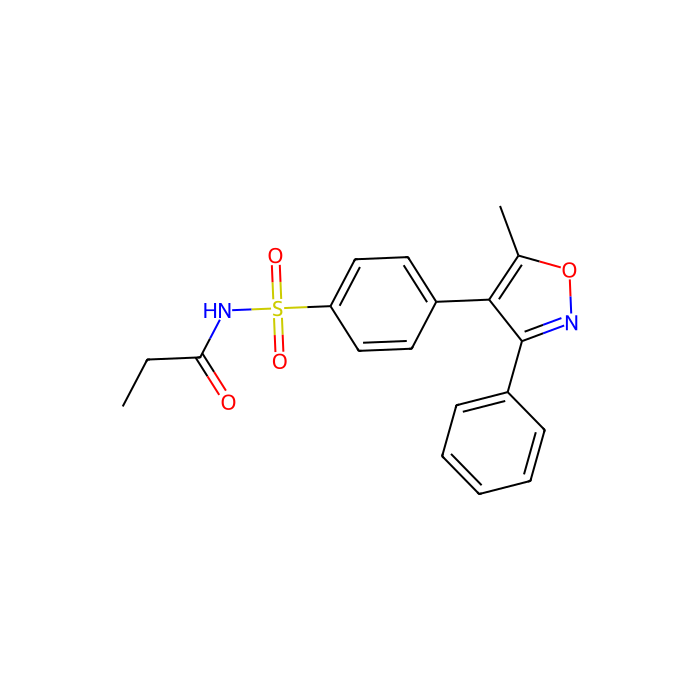
This compound belongs to the class of organic compounds known as benzenesulfonamides. These are organic compounds containing a sulfonamide group that is S-linked to a benzene ring.
External Descriptors
sulfonamide - isoxazoles
1. Djoumbou Feunang Y, Eisner R, Knox C, Chepelev L, Hastings J, Owen G, Fahy E, Steinbeck C, Subramanian S, Bolton E, Greiner R, and Wishart DS. ClassyFire: Automated Chemical Classification With A Comprehensive, Computable Taxonomy. Journal of Cheminformatics, 2016, 8:61.
Determine the necessary mass, volume, or concentration for preparing a solution.
Dilution Calculator
Determine the dilution needed to prepare a stock solution.
Reconstitution Calculator
Reviews
Customer Reviews
Application Protocols
The Product Data does not provide tested application protocols. The following are general, literature-based examples for research use only; adjust to your system and consult relevant SOPs.
Preparation of stock solution
Weigh compound quickly to minimize atmospheric exposure. Dissolve in anhydrous DMSO to 10–50 mM. Vortex and, if needed, gently warm (<40°C) briefly to complete dissolution. Aliquot and store at –20°C; avoid repeated freeze–thaw.
Enzyme inhibition assay (COX-2)
Prepare serial dilutions of the DMSO stock in assay buffer to achieve a range of working concentrations with final DMSO ≤0.1–0.5% v/v. Include solvent-only and COX-1 counter-assay controls. Incubate with enzyme per kit/manufacturer instructions; quantify prostaglandin formation by colorimetric/fluorometric or LC–MS readouts.
Cell-based assay
Add compound last to pre-equilibrated media to minimize precipitation. Common working ranges are selected based on assay sensitivity and solubility; perform a small solubility/viability pilot to define the upper limit. Maintain constant DMSO across all wells.
Analytical reference standard
Prepare 1 mg/mL DMSO or acetonitrile standards for LC; dilute into initial mobile phase. Use amber vials to limit photolysis. Verify stability over the analytical sequence.
These are examples, not specifications. Validate each step in your laboratory context.
Biological Roles
Literature context (for research use only; no clinical claims):
Mechanistic class
Parecoxib is a prodrug that is biotransformed to valdecoxib, a diarylheteroaryl sulfonamide that selectively inhibits cyclooxygenase-2 (COX-2), reducing the conversion of arachidonic acid to prostaglandins in COX-2–driven contexts.
Pathway relevance
COX-2 is an inducible isoform upregulated in response to cytokines, growth factors, and stress. Modulating COX-2 activity enables interrogation of eicosanoid signaling, inflammation-related transcriptional networks (e.g., NF-κB–linked outputs), and feedback regulation of prostaglandin E2 (PGE2) biosynthesis.
Biotransformation
In biological matrices, enzymatic and chemical hydrolysis cleave the pro-moiety of parecoxib to yield valdecoxib; consequently, observed biological effects in cells and lysates often reflect valdecoxib exposure. The rate/extent of conversion depends on matrix, species, and experimental conditions.
Selectivity considerations
Compared with nonselective COX inhibitors, COX-2–selective ligands allow selective interrogation of COX-2 without strongly inhibiting COX-1 at appropriately chosen concentrations, aiding target deconvolution in complex systems.
Experimental cautions
Verify compound conversion and target engagement via analytical controls (LC–MS for parent/metabolite; activity assays for COX-1 vs COX-2). Maintain consistent solvent controls and include pathway-orthogonal probes to exclude off-target interpretations.
Buffer Applications
Parecoxib is not a buffering agent and does not form a standard buffer system. For experimental use, it is typically dissolved in an organic co-solvent (e.g., DMSO) and then diluted into pre-existing biological buffers.
Practical guidance (general)
Prepare concentrated DMSO stocks; dilute into assay buffer (e.g., phosphate, HEPES) to the desired working concentration, ensuring final DMSO is within assay-tolerated limits.
To mitigate precipitation in aqueous buffers, consider adding the compound last, with vigorous mixing, or use a small amount of co-solvent/surfactant validated not to affect your assay.
If you require information about buffer composition or pH ranges, refer to the specific biological assay you are conducting rather than to this compound.
Green Alternatives
Because parecoxib is a specialized bioactive small molecule rather than a process solvent or commodity reagent, “green alternatives” pertain mainly to dissolution media and formulation choices for laboratory use.
Prefer greener co-solvents where feasible
Replace DMF/NMP with DMSO or ethanol for stock solutions when assay-compatible.
Use aqueous buffer with minimal DMSO carryover (≤0.1–0.5% v/v) to reduce organic solvent load.
Formulation aids (literature)
Hydroxypropyl-β-cyclodextrin (HPβCD) or small amounts of nonionic surfactants can improve apparent solubility, reducing organic solvent usage. Validate for assay interference.
Comparison (general guidance)
Option: DMSO stocks
Pros: High solvency, miscible, widely accepted in bioassays
Tradeoffs: Cytotoxic at high %; hygroscopic; requires careful control of final concentration
Option: Ethanol/water cosolvent
Pros: More benign solvent profile
Tradeoffs: Lower solubility; potential precipitation on dilution
Option: Cyclodextrin inclusion
Pros: Enables aqueous delivery with less organic content
Tradeoffs: Potential binding/assay interference; adds components to systems
For process greenness (if preparing standards), employ microscale, closed systems, and waste segregation to minimize environmental impact.
Pharmaceutical Uses
No medical or clinical claims are made. The following notes concern laboratory/formulation contexts only (literature-based):
Role in research formulations
Parecoxib is commonly studied as a prodrug that converts to valdecoxib; salt forms (e.g., sodium) are used to improve aqueous handling. In research, investigators may prepare aqueous or mixed-solvent formulations for dosing in non-clinical models; such use requires institution-specific approvals.
Reference standard
Used as a chemical reference in analytical method development (e.g., LC/LC–MS) for COX-2 inhibitor quantification or stability-indicating assays, including forced degradation studies to understand hydrolytic conversion to valdecoxib.
Excipients/compatibility (general, literature)
Cyclodextrins, polysorbates, and buffered saline are often explored to achieve acceptable solubility and stability. Compatibility with container materials (glass vs. polyolefin) should be verified to minimize adsorption or conversion.
Item-specific pharmacopeial status, impurity profile, and residual solvent limits are not specified for this catalog entry; consult the CoA/Spec Sheet if you intend to use this material as a reference standard within regulated workflows.
Physical Properties
Item-specific specifications are not provided in the Product Data. Do not treat the following as specifications; consult the CoA/Spec Sheet for values applicable to this lot.
Appearance: Not specified for this item; refer to CoA/Spec Sheet.
Phase at RT: Typically a crystalline solid (literature, for parecoxib free base/salt forms).
Melting point: Not specified for this item; refer to CoA/Spec Sheet. (Reported literature values vary depending on salt form.)
Boiling point: Not applicable for decomposition-prone solids; not typically distilled (general note).
Density: Not specified for this item; refer to CoA/Spec Sheet.
Solubility (qualitative, literature)
Parecoxib free base is sparingly soluble in water; the sodium salt shows markedly enhanced aqueous solubility. Both forms are soluble in polar aprotic organics (DMSO, DMF). Exact solubility depends on form and counterion.
pKa/logP: Literature reports indicate behavior consistent with an arylsulfonamide/amide-containing, moderately lipophilic COX-2 ligand; exact values vary by form and medium and are not specified for this item.
UV/Vis: Diaryl heteroaryl sulfonamides typically absorb in the near-UV due to conjugation; no item-specific UV cutoff provided.
Practical note: For assay stocks, dissolution in dry DMSO (e.g., 10–50 mM) followed by dilution into buffered media is common (literature practice); confirm compatibility with your assay matrix.
Quality & Grades
Item-specific grade
Grade/Purity: Moligand™ (from Product Data). Specific purity metrics and analytical limits are not provided for this item; refer to the CoA/Spec Sheet.
About Moligand™ (general description)
Moligand™ denotes a research-grade small-molecule line intended for laboratory use in chemical biology, assay development, and reference studies. While typical control parameters may include identity (NMR/HRMS), purity (HPLC/UPLC), and residual solvents, the exact test suite and acceptance criteria for this catalog item are not specified here.
What this means for your work
Expect research-use quality suitable for screening, enzyme/cellular assays, or as a reference standard, subject to verification of purity and identity against the CoA for your lot.
If your application requires special attributes (e.g., ultra-low water, residual solvent limits, bioburden/endotoxin), contact Technical Support for a targeted specification; such attributes are not specified for this item.
Stabilizers/additives
Not specified for this item; refer to CoA/Spec Sheet.
Documentation
CoA and, where available, a technical data sheet should be reviewed prior to critical use (e.g., quantitative potency benchmarking or regulatory submissions in non-clinical contexts).
Reaction & Applications
This compound is primarily used as a biochemical tool compound rather than as a synthetic reagent. Accordingly, there are no standard roles in classical organic reactions (e.g., cross-coupling, Grignard). The following focuses on research uses in chemical biology (literature-based; not item-specific):
Enzymology and target validation
Selective COX-2 pathway probe: Parecoxib is converted in biological systems to valdecoxib, which binds the cyclooxygenase-2 active site. Researchers use it to modulate prostaglandin synthesis in enzyme or cell-based assays.
Assay development
Positive control/benchmark inhibitor for COX-2 inhibition assays (e.g., recombinant enzyme assays, microsomal assays). Enables evaluation of assay dynamic range and specificity.
Pathway studies
Tool to interrogate COX-2–dependent signaling, eicosanoid profiles, and downstream inflammatory mediators in cell lysates or tissue homogenates.
Analytical reference
May serve as a system suitability or identity reference in LC/LC–MS method development targeting COX-2 inhibitor classes (retention behavior of a diaryl heteroaryl sulfonamide; fragmentation includes sulfonamide and heteroaryl signature ions, literature).
Note: If you require a reagent for synthesis, see “Synthetic Utility” for limited uses as a reference standard; parecoxib is not typically employed as a building block due to its complexity.
Reaction Conditions
Not typically applicable: parecoxib is used as a finished bioactive tool compound, not as a general synthetic reagent. Nevertheless, the following literature-oriented notes can aid method development and analysis involving this compound:
Stability screening
Perform small-scale forced degradation under acidic (e.g., 0.1–1 M HCl), basic (e.g., 0.1–1 M NaOH), oxidative (e.g., 3% H2O2), thermal, and photolytic conditions to map degradation and conversion to valdecoxib. Sample at defined time points and analyze by LC–UV/LC–MS.
Analytical method conditions (general examples; adjust as needed)
RP-HPLC: C18 column, aqueous buffer (e.g., 0.1% formic acid in water) with acetonitrile or methanol gradient; detect in UV near 210–280 nm based on conjugated aromatic chromophores. Validate for linearity and recovery with your matrix.
LC–MS: ESI+ and ESI– can both provide signals; expect characteristic fragments from sulfonamide and heteroaryl units (literature patterns).
Solution handling
Prepare DMSO stocks; filter (0.2 µm PTFE) if particulate persists. Avoid prolonged exposure to strong base or high temperatures during sample prep to limit pro-moiety cleavage.
All numeric conditions above are illustrative literature practices and are not item-specific specifications.
Safety & Handling
GHS/CLP information (item-specific)
Signal word: Not specified for this item; refer to SDS.
Hazard statements: Not specified for this item; refer to SDS.
Pictograms/classification: Not specified for this item; refer to SDS.
General laboratory precautions (good practice; defer to SDS for authoritative guidance)
Handle in a fume hood to avoid inhalation of dust or aerosols. Avoid skin/eye contact. Use appropriate PPE: lab coat, safety glasses, and nitrile gloves. Wash thoroughly after handling.
Avoid ingestion and injection; use closed systems for biological assays. Prevent environmental release of solutions.
Incompatibilities and stability (general)
Stable under recommended storage (see Storage tab). Avoid strong oxidizers and strong bases/acids that may hydrolyze amide/sulfonamide linkages. Protect from prolonged light and moisture.
First-aid overview (general)
Inhalation: Move to fresh air; seek medical attention if symptoms occur.
Skin/eye contact: Rinse with water for several minutes; remove contaminated clothing; seek medical advice for persistent irritation.
Ingestion: Rinse mouth; do not induce vomiting; seek medical attention.
Waste disposal
Dispose of unused material and solutions as organic laboratory waste in accordance with institutional and local regulations.
Always consult the product’s SDS for definitive hazard and first-aid information.
Solvent Selection
Parecoxib is a hydrophobic arylsulfonamide prodrug; dissolution behavior strongly depends on form (free base vs. salt). Because item-specific solvent data are not provided, use the following literature-based guidance.
Polarity/miscibility (general)
DMSO: Excellent solvating power; common for preparing concentrated stocks (10–50 mM). Fully miscible with water and many buffers upon dilution.
DMF, NMP: Good alternatives for pre-dissolution; consider cytotoxicity of co-solvents for biological assays.
Aqueous buffers: Free base shows low solubility; salt forms (e.g., sodium) are more water-soluble. Surfactants (0.01–0.1% Tween 80) or co-solvent systems may aid dissolution.
Alcohols: Methanol/ethanol can dissolve moderate amounts; compatibility with bioassays must be validated.
Practical selection tips
For biochemical/cell assays: Prepare a DMSO master stock; keep final DMSO ≤0.1–0.5% v/v in assay wells to minimize solvent effects.
For in vitro enzyme work: Confirm buffer compatibility (avoid precipitation upon dilution; add compound last with vigorous mixing).
For analytical reference: Use HPLC-grade solvents; filter through 0.2 µm PTFE before injection. Monitor for adsorption to plastics at low µM or nM concentrations; glass vials recommended.
Comparison notes
If high aqueous solubility is essential, consider using the appropriate salt form (literature) or formulate with cyclodextrins; verify that such excipients do not interfere with your assay readout.
Storage & Reconstitution
Item-specific storage and shipping (from Product Data)
Storage Conditions: Store at –20°C.
Shipped In: Ice chest + ice pads.
General storage guidance
Keep container tightly closed in a dry, inert atmosphere. Protect from light and moisture. For frequent use, prepare single-use aliquots to minimize freeze–thaw cycles. Allow container to equilibrate to room temperature before opening to reduce condensation.
Reconstitution (general, not item-specific)
Preferred solvent: Anhydrous DMSO for master stocks (e.g., 10–50 mM). Mix thoroughly to ensure complete dissolution. For aqueous use, dilute the DMSO stock slowly into buffered media with mixing; confirm absence of precipitation.
Working solutions: Prepare fresh on the day of use when possible. If short-term storage is necessary, keep at 2–8°C protected from light and use within 24–48 h, monitoring for precipitation or degradation.
Stability notes
Avoid prolonged exposure to strong acids/bases or elevated temperatures that may promote hydrolysis of the pro-moiety. For long-term archival storage, maintain desiccated at –20°C and verify integrity periodically by HPLC.
Research Use Note
For research use only. Not for human or veterinary use.
For any additional item-specific reconstitution instructions or specifications, refer to the CoA/Spec Sheet.
Structure & Identity
Item-specific identifiers
CAS: 198470-84-7 (Parecoxib)
InChIKey (from Product Data): 354241 (note: truncated/non-standard; refer to CoA/SDS for definitive identifier)
SMILES: Not specified for this item; refer to CoA/Spec Sheet.
Molecular formula: Not specified for this item; refer to CoA/Spec Sheet.
Molecular weight: Not specified for this item; refer to CoA/Spec Sheet.
Literature structural description (for reference only)
Parecoxib is a diaryl heteroaryl sulfonamide prodrug that is enzymatically converted to valdecoxib. The core framework comprises a heteroaryl ring conjugated to a para-substituted phenyl bearing a sulfonamide; the sulfonamide nitrogen is further acylated (prodrug handle) to modulate solubility/activation. No stereocenters are typically present (achiral). Functional groups include: aryl rings, an isoxazole-type heteroaryl (literature), a sulfonamide (–SO2–NH–) and an amide (–CONH–) linkage.
2D structure in words (literature)
A para-substituted phenyl sulfonamide connected through the sulfonamide to an amide “capping” group, and, on the other side, a heteroaryl ring (commonly isoxazole) para to the sulfonyl on the phenyl ring, yielding a rigid, planar, diaryl system with electron-withdrawing sulfonyl and amide functionalities.
Parecoxib is not typically employed as a synthetic building block due to its complexity and specific biological design. However, in a synthetic/analytical context it can have the following roles:
Reference/benchmark compound
Serves as a standard for validating synthetic routes to COX-2 inhibitor scaffolds (e.g., confirming construction of diaryl heteroaryl sulfonamides and prodrug amide linkages) and for calibrating analytical methods (HPLC retention, MS fragmentation) within this chemotype.
Degradation/biotransformation studies
Used to study prodrug cleavage pathways, informing design of amide/sulfonamide masks and assessing stability under acidic, basic, or enzymatic conditions (literature). These experiments illuminate structure–liability relationships rather than providing direct synthetic transformations.
SAR comparator
As a representative of a selective COX-2 chemotype, it can anchor structure–activity relationship matrices when synthesizing analogs that vary heteroaryl identity, sulfonamide substitution, or pro-moiety attributes.
For routine synthetic methodology (cross-couplings, condensations), it is advisable to work on simpler intermediates en route to parecoxib/valdecoxib rather than attempting to use parecoxib itself as a reagent or coupling partner.
Target Specificity
Item-specific immunochemical details (clone, isotype, species reactivity) do not apply; this is a small-molecule compound, not an antibody.
Literature context
Primary target class: Cyclooxygenase-2 (COX-2) enzyme (prostaglandin-endoperoxide synthase 2). Parecoxib acts as a prodrug; its active form valdecoxib engages the COX-2 active site within the cyclooxygenase channel.
Selectivity rationale: The diaryl heteroaryl sulfonamide motif exploits COX-2 secondary binding pocket features, affording selectivity over COX-1 at appropriate concentrations (qualitative literature consensus). Actual selectivity ratios and IC50 values depend on assay format and are not specified for this item.
Off-target considerations
As with many arylsulfonamide inhibitors, off-target interactions may occur at high concentrations. Include COX-1 counterscreens and unrelated enzyme controls to confirm on-target effects in your system.
For definitive potency/selectivity values relevant to your assay, consult primary literature and determine empirical values under your specific conditions.
We use cookies to ensure the website functions properly and, where permitted, to improve your experience. You can manage your preferences at any time in Settings. Learn more in our Cookie Policy.
Shall we send you a message when we have discounts available?
Remind me later
Thank you! Please check your email inbox to confirm.
Products are supplied to verified businesses, institutions, and qualified professionals for research and development use only. Not for use in humans, animals, diagnosis, or therapy.

 L2413111