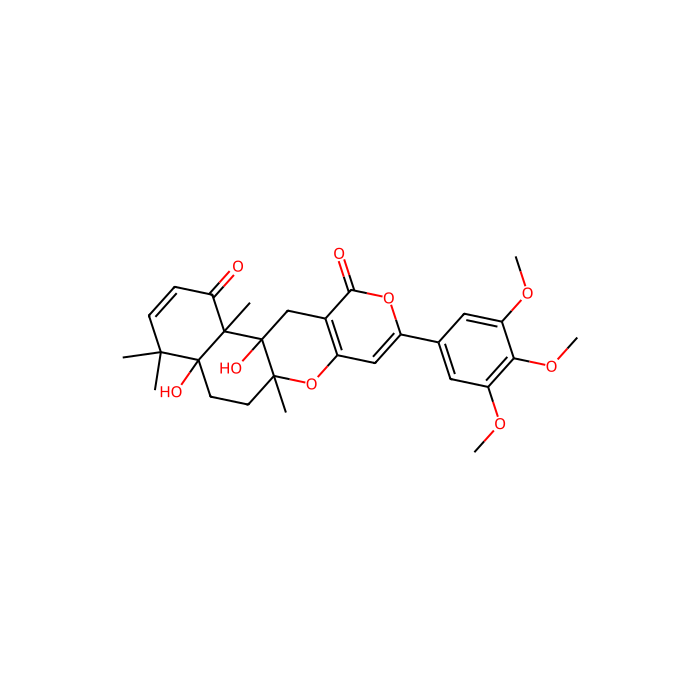
Potent and selective irreversible AChE inhibitor (IC 50 = 8 nM). Binds to the P-site and A-site of AChE. Potentiates ACh-induced neuronal current. Shows antifungal and cholinergic effects in vivo . Orally active.
Storage
Store at -20°C,Desiccated
Shipped In
Ice chest + Ice pads
This product requires cold chain shipping. Ground and other economy services are not available.
Note
Wherever possible, you should prepare and use solutions on the same day. However, if you need to make up stock solutions in advance, we recommend that you store the solution as aliquots in tightly sealed vials at -20°C. Generally, these will be useable for up to one month. Before use, and prior to opening the vial we recommend that you allow your product to equilibrate to room temperature for at least 1 hour. Toxic, refer to SDS for further information. Need more advice on solubility, usage and handling? Please visit our frequently asked questions (FAQ) page for more details.
This compound belongs to the class of organic compounds known as naphthopyrans. These are compounds containing a pyran ring fused to a naphthalene moiety. Furan is a 6 membered-ring non-aromatic ring with five carbon and one oxygen atoms. Naphthalene is a polycyclic aromatic hydrocarbon made up of two fused benzene rings.
External Descriptors
Not available
1. Djoumbou Feunang Y, Eisner R, Knox C, Chepelev L, Hastings J, Owen G, Fahy E, Steinbeck C, Subramanian S, Bolton E, Greiner R, and Wishart DS. ClassyFire: Automated Chemical Classification With A Comprehensive, Computable Taxonomy. Journal of Cheminformatics, 2016, 8:61.
Determine the necessary mass, volume, or concentration for preparing a solution.
Dilution Calculator
Determine the dilution needed to prepare a stock solution.
Reconstitution Calculator
Reviews
Customer Reviews
Application Protocols
No vendor-validated application protocols are provided in the Product Data. The following are general, non-item-specific examples to assist with planning; adjust to your system and verify experimentally.
Example A: Preparation of a research stock solution
Warm container to room temperature in a desiccator. Weigh the required amount quickly.
Dissolve in anhydrous DMSO to 10 mM. Vortex until homogeneous. If needed, brief sonication can aid dissolution.
Aliquot into amber microvials (low-binding). Store at −20°C, desiccated. Avoid repeated freeze–thaw by using single-use aliquots.
Example B: LC–MS calibration curve (matrix-matched)
Prepare serial dilutions in MeCN:H2O (50:50, 0.1% formic acid) from a DMSO primary stock to bracket the expected concentration range.
Spike blank matrix extracts post-extraction to prepare calibrators and QC levels.
Inject using a C18 column with a water/MeCN gradient and MS detection in appropriate ion mode. Assess linearity (R2), accuracy (85–115%), and precision (<15% RSD) per your SOP.
Example C: Enzymatic assay dosing
Dilute DMSO stock into assay buffer to ≤1% DMSO final. Include vehicle controls and a reference inhibitor/control where relevant. Monitor for precipitate or turbidity.
Origin: Territrems are fungal secondary metabolites, classically associated with Aspergillus species. They belong to the broader family of bioactive meroterpenoid/polyketide metabolites.
Reported activities: The territrem series has been described in the literature as tremorgenic mycotoxins. Territrem B, in particular, has been studied as a potent bioactive small molecule in neurochemical contexts. Some studies report interactions with cholinesterase enzymes and neuronal signaling pathways. Such findings are context-specific to experimental systems and should not be construed as therapeutic or clinical claims.
Research utility: Because of their potency, territrem compounds are used as reference materials and as molecular probes in enzymology and neurobiology to interrogate signal transduction, synaptic function, and toxicity mechanisms.
Environmental/food chemistry: In mycotoxin research, territrem standards support surveillance, method validation, and occurrence studies in substrates susceptible to fungal growth.
Caveats:
Mechanism, potency, and selectivity can vary with assay format, protein source, and matrix composition. Always benchmark against authenticated standards and include appropriate positive/negative controls.
Handle with elevated caution given potential neuroactivity at low concentrations; adhere strictly to laboratory safety protocols and institutional approvals.
Note: This product is intended strictly for research use in controlled laboratory settings.
Buffer Applications
Territrem B is not a buffering agent and is not typically used to prepare or maintain pH in biochemical systems.
Practical note:
If used in biochemical assays, it is introduced as a solute from an organic stock (commonly DMSO) into an existing buffer system (e.g., phosphate, HEPES, Tris). Maintain low organic cosolvent percentages to preserve buffer capacity and biomolecule stability.
Select the buffer appropriate to the biological target under study; the compound itself does not define buffer pH ranges or recipes.
Green Alternatives
As a specialized natural product standard, Territrem B itself does not have a “green alternative” in the sense of interchangeable reagents. However, greener choices can be made in the handling and analytical workflow.
Greener workflow considerations (general):
Solvent selection: Prefer acetonitrile, ethanol, or ethyl acetate over chlorinated solvents for sample preparation, where analytically feasible. Replace dichloromethane with EtOAc in liquid–liquid extraction when recovery is acceptable.
Minimizing DMSO load: Use the minimal DMSO percentage compatible with assay solubility and stability; consider MeCN/aqueous cosolvent systems for LC–MS to reduce toxicity and improve volatility.
Microscale methods: Reduce solvent consumption by using microflow LC or UPLC and microscale extractions (e.g., µSPE, SPME) for method development.
Waste management: Segregate halogenated from non-halogenated waste; deploy solvent recycling for MeCN and alcohols if institutional infrastructure exists.
Illustrative comparison (general, literature):
Dichloromethane vs Ethyl acetate: EtOAc offers lower toxicity and environmental impact but may provide slightly lower extraction efficiency for highly hydrophobic analytes.
MeCN vs MeOH: MeCN is often preferred for LC–MS (lower viscosity, better chromatographic performance), whereas MeOH is less toxic and may be preferred for UV-only methods.
Always confirm that greener substitutions maintain recovery, peak shape, and analyte stability.
Pharmaceutical Uses
No pharmaceutical or excipient uses are specified for this item. Territrem B is offered solely for research applications.
Context and boundaries:
This product is not a drug substance, excipient, or compendial standard in pharmacopeias according to the Product Data provided.
Typical laboratory uses include acting as a reference compound or probe in analytical and biochemical studies related to fungal metabolites and mycotoxins.
Formulation notes for research settings (general):
For in vitro studies, prepare concentrated DMSO stocks and dilute into assay media immediately prior to use. Avoid adsorption losses by using low-binding plastics and appropriate glassware coatings when necessary.
For in vivo or formulation research (non-clinical), ensure all studies have ethical and institutional approvals; vehicle composition (e.g., PEG400/saline, Captisol, or lipid-based vehicles) must be justified by solubility and stability data. No in vivo claims or uses are endorsed by this listing.
Reminder: Research use only. No clinical, diagnostic, or veterinary applications are implied or permitted.
Physical Properties
Item-specific physico-chemical specifications are not provided in the Product Data.
Item-specific values:
Appearance: Not specified for this item; refer to CoA/Spec Sheet.
Melting point: Not specified for this item; refer to CoA/Spec Sheet.
Boiling point: Not applicable/unknown for a nonvolatile polyfunctional natural product; item-specific value not specified.
Density, refractive index, logP, pKa: Not specified for this item; refer to CoA/Spec Sheet.
Solubility: Not specified for this item; refer to CoA/Spec Sheet.
General expectations (literature, non-item-specific):
State: Typically isolated as a solid (often off-white to pale) for the territrem class; individual appearance varies with purity and handling.
Solubility profile: Territrem-type metabolites are commonly soluble in polar aprotic organic solvents (e.g., DMSO, DMF, MeCN) and moderately to sparingly soluble in alcohols (MeOH, EtOH); low aqueous solubility is typical. Actual solubility should be experimentally confirmed for the supplied lot.
Stability considerations: Polyoxygenated natural products may be sensitive to light, elevated temperature, strong acids/bases, and prolonged exposure to air/moisture. The provided storage guidance (−20°C, desiccated) is consistent with preserving integrity.
Note: For quantitative use (e.g., standard curve preparation, LC–MS calibration), determine solubility and extinction coefficients empirically in the chosen solvent system and consult the item’s CoA for any available lot-specific properties.
Quality & Grades
Item-specific grade/purity is not provided in the Product Data. For exact purity, stabilizers, residual solvents, and analytical acceptance criteria, refer to the CoA/Spec Sheet.
What the listing specifies for this item:
Storage: Store at −20°C, desiccated.
Shipping: Ice chest with ice pads (cold chain maintained).
Research Use Note: For research use only.
Guidance on grades and implications (general):
Research grade natural products are typically qualified by identity (NMR/HRMS/LC–MS) and purity by chromatographic area percent. If HPLC/UPLC purity is stated on the CoA, it reflects the detector conditions used; orthogonal techniques (qNMR) provide mass purity.
Absence of a listed stabilizer: No inhibitor/stabilizer is specified in the Product Data for this item. Unless otherwise stated on the CoA, assume no intentional additives.
Trace metals/UV cutoffs/water content: Not specified for this item; refer to CoA/Spec Sheet.
Recommended quality verification upon receipt (best practices):
Inspect integrity of cold chain and desiccation.
Allow to equilibrate in a desiccator before opening to prevent condensation.
Verify identity/purity by your intended method (e.g., LC–MS with reference ion, 1H NMR in DMSO-d6 or CD3OD). Document retention time and spectra for future comparability.
Reaction & Applications
This product is primarily used as a bioactive reference standard and research probe rather than as a synthetic reagent.
Research and analytical applications (literature, general):
Reference standard: Useful for developing and validating extraction and LC–MS/LC–UV methods targeting territrem-class mycotoxins in culture extracts or environmental/food matrices. Typical workflows include solid-phase extraction, reversed-phase separations, and MS detection using characteristic ions.
Mechanistic probes: Territrem-type metabolites have been studied for interactions with neuronal targets and enzymes; Territrem B is reported in literature as a tremorgenic fungal metabolite. When designing biochemical assays, control vehicle and protein binding carefully.
Stability assessments: Conduct forced-degradation studies (light, pH, temperature) to profile degradation pathways and to set method specificity.
Practical tips:
Prepare concentrated DMSO stocks, aliquot, and minimize freeze–thaw.
For quantitative work, calibrate using bracketing standards and matrix-matched calibration to mitigate ion suppression in LC–MS.
If comparing across lots, normalize by qNMR-determined mass purity to correct for nonchromophoric impurities.
Note: Because item-specific reactivity and functional group details are not provided here, this product is not recommended as a general synthetic reagent without consulting the primary literature and verifying compatibility.
Reaction Conditions
There are no item-specific reaction conditions provided, and Territrem B is not commonly used as a general-purpose reagent. The following guidance addresses handling and analytical preparations rather than synthetic transformations.
General preparation conditions (research use):
Stock solutions: Dissolve in anhydrous DMSO at a defined concentration (e.g., 5–20 mM, as solubility permits). Vortex and, if necessary, sonicate briefly. Filter through 0.2 µm PTFE for particulate removal if compatible.
Assay dilutions: Add stock to buffered media to achieve target concentrations while keeping final DMSO ≤0.5–1% v/v. Mix gently; avoid foaming. Verify absence of precipitation visually and by light-scattering measurements when feasible.
LC–MS sample prep: For reversed-phase methods, typical mobile phases are water with 0.1% formic acid (A) and acetonitrile or methanol with 0.1% formic acid (B). Start with a 20–80% B gradient over 10–20 minutes, adjusting for retention and peak shape. Use low micromolar to nanomolar on-column loads for linear response.
Stability checks:
Perform short-term stability at bench-top and autosampler (4–10°C) and freeze–thaw stability in the chosen solvent. Protect solutions from light.
Note: Any chemical transformations or derivatizations should be developed de novo with small-scale trials and real-time analytical monitoring, given the potential lability of polyoxygenated scaffolds.
Safety & Handling
GHS and hazard statements are not specified in the Product Data for this item. Always consult the SDS for authoritative hazard classification.
General safety guidance (for tremorgenic/mycotoxin-class natural products; literature, non-item-specific):
Potential hazards: Fungal secondary metabolites of this class may be bioactive and neuroactive at low doses. Treat as toxic upon ingestion, inhalation, or skin contact. Avoid aerosols and dust formation.
Engineering controls: Handle in a certified fume hood or ventilated enclosure. Use closed containers and secondary containment for weighing and transfers.
PPE: Lab coat, disposable nitrile gloves (double-glove for bulk handling), splash goggles. Consider a particulate respirator if dust generation cannot be avoided (follow institutional risk assessment).
Storage incompatibilities: Avoid strong oxidizers, strong acids/bases, and prolonged light exposure. Keep dry; moisture can promote degradation or hydrolysis in polyoxygenated scaffolds.
First aid (overview): If inhaled—move to fresh air; seek medical attention. Skin contact—wash with soap/water; remove contaminated clothing. Eye contact—rinse cautiously with water for several minutes. Ingestion—rinse mouth; do not induce vomiting; seek medical attention. Provide SDS to responders.
Spill response: Avoid dust. Gently cover with absorbent, collect as hazardous chemical waste. Decontaminate area with suitable solvent/detergent while minimizing spread.
Note: This product is for research use only. Follow institutional biosafety and chemical hygiene plans; dispose of residues as hazardous waste.
Solvent Selection
This item is a complex, relatively nonvolatile organic small molecule rather than a solvent. Selection of a solvent pertains to dissolving Territrem B for assay, stock preparation, or analytical workflows.
General solvent guidance (literature, non-item-specific):
Primary stock solvents: DMSO is commonly preferred due to high solvency and compatibility with bioassays after dilution. DMF can be used for analytical preparations; MeCN is often suitable for LC–MS.
Secondary options: Methanol or ethanol for spectroscopic work; ethyl acetate or dichloromethane for sample cleanup/extraction in method development. Aqueous solubility is typically low; use cosolvent strategies.
Cosolvent systems: For biological assays, prepare concentrated DMSO stocks (e.g., 10–20 mM), then dilute into buffer while keeping final DMSO ≤0.5–1% v/v to limit vehicle effects. Inclusion of a small percentage of nonionic surfactant (e.g., 0.01% Tween 80) can mitigate aggregation, if compatible with the assay.
Filtration: Use low-protein-binding 0.2 µm PTFE or PVDF filters for organic solutions; avoid nylon with strong hydrogen-bonding solutes if adsorption is observed.
Comparison (general):
DMSO: maximum solvency; may affect some enzyme assays at >1%.
MeOH/EtOH: spectroscopic convenience; risk of transesterification/acetals under acid/base.
Always confirm solubility and stability empirically in your chosen solvent system.
Storage & Reconstitution
Item-specific conditions (from Product Data):
Storage: Store at −20°C, desiccated.
Shipping: Ice chest with ice pads (maintain cold chain).
Research use only.
Best practices for storage:
Keep container tightly closed in a dry, inert atmosphere. If available, store under nitrogen or argon after initial opening to limit moisture and oxidative exposure.
Protect from light; use amber vials or foil wrapping.
Allow vial to equilibrate to room temperature in a desiccator before opening to prevent condensation.
Reconstitution guidance (general):
Solvents: DMSO is typically preferred for primary stocks due to high solvency; MeCN or MeOH can be used for analytical dilutions. Aqueous solubility is expected to be low—use cosolvent systems for working solutions.
Stock preparation: Target 5–20 mM in DMSO (as solubility permits). Record exact concentration gravimetrically or by qNMR/UV if applicable.
Aliquoting: Dispense into single-use portions to avoid repeated freeze–thaw cycles. Store aliquots at −20°C or below, desiccated.
Stability: Verify stability in chosen solvent and at intended storage temperature with periodic LC–MS or HPLC checks; discard solutions showing degradation or precipitation.
Disposal: Dispose of unused material and solutions as hazardous organic waste in accordance with institutional and local regulations.
Structure & Identity
Territrem B is a complex fungal secondary metabolite offered for research use as part of a small-molecule/compound library.
Item-specific identifiers (from Product Data):
CAS: 70407-20-4
PubChem CID: 114734
InChIKey: 273427 (as provided)
SMILES: Not specified for this item; refer to CoA/Spec Sheet.
Molecular formula: Not specified for this item; refer to CoA/Spec Sheet.
Molecular weight: Not specified for this item; refer to CoA/Spec Sheet.
General structural notes (literature, non-item-specific):
Territrems are polyoxygenated fungal metabolites produced by Aspergillus species and related genera. They are categorized as meroterpenoid-type mycotoxins with multiple fused rings and embedded oxygen functionality.
Typical features in this family include dense stereochemistry, an aromatic/heteroaromatic moiety appended to a polycyclic terpenoid-like scaffold, and several hydroxyl/ether linkages. Exact stereochemical configuration depends on the specific analog and must be confirmed from spectral data or reference standards.
A compact, polycyclic core bearing multiple oxygen substituents (alcohol/ether/carbonyl motifs) attached to an aryl-like segment; stereocenters populate the fused-ring framework. For this catalog item, explicit atom connectivity and stereochemistry are not provided in the listing and should be verified from an authenticated structural file (SDF/MOL) or the CoA.
Synthetic Utility
Territrem B is not typically employed as a reagent or building block; rather, it serves as a complex natural product target/reference. Nevertheless, several synthetic and analytical considerations can be relevant in research:
General synthetic context (literature):
Total synthesis target: The densely functionalized, polycyclic, oxygen-rich scaffold makes the territrem family a benchmark for method development in stereoselective synthesis, oxidative coupling, and late-stage functionalization. Studies often focus on constructing the fused-ring system and controlling multiple stereocenters.
Derivatization: Limited, carefully selected modifications (e.g., protection/deprotection of phenolic/alcoholic functions, formation of acetate or carbonate derivatives) may be used to probe structure–activity relationships or to improve chromatographic behavior. Reaction conditions must be mild to avoid degradation.
Analytical chemistry utility:
Serves as a marker compound to validate extraction efficiency, matrix effects, and instrument response in LC–MS-based mycotoxin panels.
Cautions:
Without item-specific structural details in this listing, plan any chemistry only after confirming connectivity and stereochemistry from primary literature and the CoA. Reactive functionalities in polyoxygenated natural products can undergo unwanted rearrangements or hydrolysis under harsh conditions.
Conclusion: Treat Territrem B primarily as a reference/target molecule; employ derivatizations sparingly and with rigorous analytical confirmation.
Target Specificity
No target specificity, antigen information, clone/isotype, or species reactivity is provided in the Product Data for this item. This product is a small-molecule natural product standard and not an antibody or biological reagent with defined immunochemical specificity.
If used as a biochemical probe, target engagement, potency, and selectivity must be established experimentally under your assay conditions, using appropriate controls and orthogonal confirmation methods.
Frequently Asked Questions
What is the purity of this product?
This product is supplied at ≥95% purity (chemical assay). Lot-specific values are stated on the Certificate of Analysis.
How should this product be stored?
Store at ?20 °C, desiccated. Keep the container tightly closed with desiccant — the material is moisture-sensitive.
How is this product shipped?
This product ships in an insulated container with ice pads. Unpack on arrival and transfer it to the storage condition stated above.
What are the CAS number, molecular formula and molecular weight?
The CAS Number is 70407-20-4, the molecular formula is C29H34O9, and the molecular weight is 526.57 g/mol. InChIKey PBXNNDFKPQPJBB-VJLHXPKFSA-N.
What documentation is provided?
Available product documentation, including Certificates of Analysis (COA), Safety Data Sheets (SDS), and specification sheets, is shown in the product document area. Document availability and access follow the current site policy.
We use cookies to ensure the website functions properly and, where permitted, to improve your experience. You can manage your preferences at any time in Settings. Learn more in our Cookie Policy.
Shall we send you a message when we have discounts available?
Remind me later
Thank you! Please check your email inbox to confirm.
Products are supplied to verified businesses, institutions, and qualified professionals for research and development use only. Not for use in humans, animals, diagnosis, or therapy.