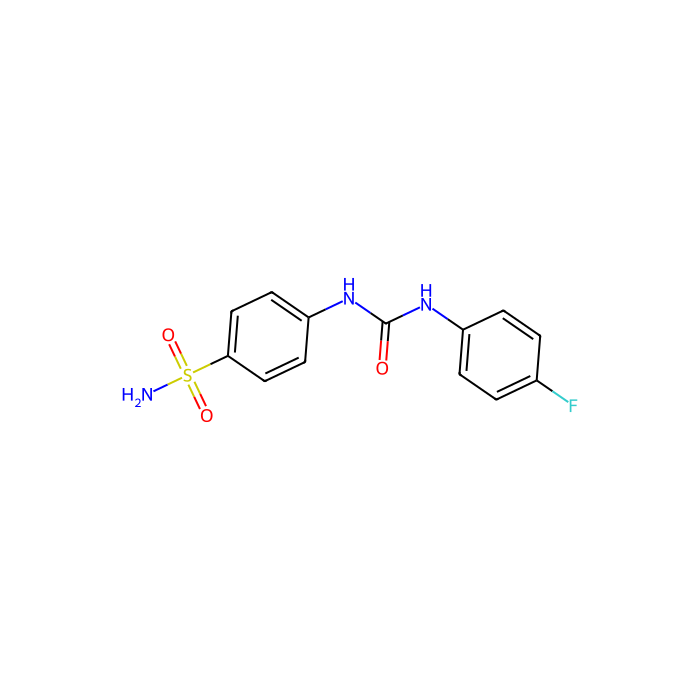
U-104 - Moligand™, 10mM in DMSO , Inhibitor of carbonic anhydrase 1;Inhibitor of carbonic anhydrase 12;Inhibitor of carbonic anhydrase 9, CAS No.178606-66-1, Inhibitor of carbonic anhydrase 1;Inhibitor of carbonic anhydrase 12;Inhibitor of carbonic anhydrase 9
U-104 - Moligand™, 10mM in DMSO , Inhibitor of carbonic anhydrase 1;Inhibitor of carbonic anhydrase 12;Inhibitor of carbonic anhydrase 9, CAS No.178606-66-1, Inhibitor of carbonic anhydrase 1;Inhibitor of carbonic anhydrase 12;Inhibitor of carbonic anhydrase 9
GRADE & PURITYMoligand™?Moligand™ — Aladdin's line of ligands and bioactive small molecules. Use for receptor, pathway, and binding studies needing defined small-molecule tools.10mM in DMSO
Moligand™, 10mM in DMSO Moligand™ for sensitive chromatographic and analytical workflows requiring minimal baseline interference.
🌡
Storage & shipping
Store at -80°C Ships Dry ice packs + Cold packs Check lot-specific COA for exact specifications.
📋
Quality documents
SDS, COA, datasheet, and spec sheet available for download. Lot-specific COA accessible via lot number lookup.
📚
Literature proof
Cited in 0 peer-reviewed publications across chromatography, organic synthesis, and cross-coupling reactions.
Overview
Information
U-104 (MST-104, NSC 213841, SLC-0111, WBI-5111) is a potent carbonic anhydrase (CA) inhibitor for CA IX andCA XIIwithKiof 45.1 nM and 4.5 nM, respectively, very low inhibition for CA I and CA II. In vitro
U-104 (50 \u2009μM) blocks the mesenchymal phenotype in the cancer stem cells population in hypoxia condition of 4T1 cells. U-104 (<50 \u2009μM) significantly reduces migration in a dose-dependent manner in metastatic MDA-MB-231 LM2-4Luc+ cells , with cells growing as compact colonies similar to parental MDA-MB-231 cells. U-104 possesses aromatic groups at the second nitrogen ureido group.
In vivo
U-104 (38 mg/kg) inhibits primary tumor growth in the mice implanted orthotopically with MDA-MB-231 LM2-4Luc+ cells. U-104 (19 mg/kg) inhibits metastases formation in the 4T1 experimental metastasis mice model. U-104 (38\u2009mg/kg) significantly delay primary tumor growth and reduces cancer stem cell population in NOD/SCID mice orthotopically implanted with MDA-MB-231 LM2-4Luc+ cells. U-104 (5\u2009mg/mL, oral gavage) shows a significant delay in tumor growth in Balb/c mice orthotopically implanted with 4T1 cells. Cell Data
U-104 (MST-104, NSC 213841, SLC-0111, WBI-5111) is a potent carbonic anhydrase (CA) inhibitor for CA IX and CA XII with Ki of 45.1 nM and 4.5 nM, respectively, very low inhibition for CA I and CA II.
Storage
Store at -80°C
Shipped In
Dry ice packs + Cold packs
This product requires cold chain shipping. Ground and other economy services are not available.
Grade
Moligand™
Action Type
INHIBITOR
Mechanism of action
Inhibitor of carbonic anhydrase 1;Inhibitor of carbonic anhydrase 12;Inhibitor of carbonic anhydrase 9
Names and Identifiers
Isomeric SMILES
C1=CC(=CC=C1NC(=O)NC2=CC=C(C=C2)S(=O)(=O)N)F
WGK Germany
3
PubChem CID
310360
Molecular Weight
309.32
Documentation
📋 Safety Data Sheet (SDS)
Comprehensive hazard, handling, storage, and regulatory compliance document.
Solubility (25°C) In vitro DMSO: 4 mg/mL warmed with 50ºC Water: bath (11.61 mM); Water: Insoluble; Ethanol: Insoluble;
Solution Calculators
Molarity Calculator
Determine the necessary mass, volume, or concentration for preparing a solution.
Dilution Calculator
Determine the dilution needed to prepare a stock solution.
Reconstitution Calculator
Reviews
Customer Reviews
Application Protocols
No tested applications or protocols are specified for this item. The following are general best practices for small-molecule assay use and do not constitute product-specific performance claims.
General small-molecule assay handling
Stock preparation: Dissolve accurately weighed material in anhydrous DMSO to a convenient concentration (e.g., 10–50 mM), vortex and, if needed, mild sonication. Filter through a low-binding 0.22 μm filter only if validated not to adsorb the compound.
Aliquoting: Dispense single-use aliquots (e.g., 10–50 μL) in inert, low-bind tubes or plates to avoid freeze–thaw.
Plate setup: Maintain constant final DMSO across wells; include vehicle controls and orthogonal counterscreens to detect assay interference.
Stability checks: Confirm stability in assay medium and over expected incubation times by LC–MS or HPLC.
Assay types (examples, non-exhaustive)
Enzymatic inhibition/activation assays, receptor-binding assays, or phenotypic cell-based assays, provided solvent and concentration windows are validated in your system.
Consult the CoA/SDS for any item-specific cautions and adjust protocols accordingly.
Biological Roles
This listing does not specify a biological target, pathway, or mechanism for U-104. Therefore, no item-specific biological roles can be stated.
General context for screening ligands (informational; not product-specific claims)
Small molecules in discovery libraries may act as enzyme inhibitors/activators, receptor ligands, or modulators of protein–protein interactions. The exact role depends on the compound’s structure and assay context.
If correlating U-104 with external literature via CAS 178606-66-1 or CID 310360, verify registry consistency with this lot and confirm salt/tautomeric state. Only then interpret reported ADME, target class, or cellular phenotypes.
Experimental recommendations
Conduct orthogonal assays to validate any observed activity and exclude artifacts (e.g., redox cycling, aggregation, fluorescence interference). Employ counter-screens such as detergent sensitivity, light-scatter monitoring, and redox controls.
Confirm stability in the biological medium (pH, serum content) and assess potential nonspecific binding to plastic or proteins by recovery assays.
For research use only; no therapeutic or diagnostic claims are made or implied.
Buffer Applications
This product is a small-molecule ligand rather than a buffering reagent. No item-specific buffer system parameters (pKa, buffering range, formulation recipes) are provided or implied.
Practical notes for assay buffers (general; not product specs)
When preparing assay plates with DMSO stocks of small molecules, ensure the final DMSO percentage is consistent across wells and kept as low as biologically tolerable (commonly ≤0.5–1% v/v).
Use buffering systems appropriate to the biological assay (e.g., HEPES, phosphate, Tris) and verify compound stability in the chosen buffer by short-term incubation tests and analytical checks (HPLC/LC–MS).
If the compound has ionizable groups (unknown here), buffer pH may affect solubility and apparent potency; confirm pH dependence experimentally after retrieving pKa data from the CoA/SDS or trusted databases.
Green Alternatives
Green-chemistry substitution is generally discussed for solvents and bulk reagents. U-104 is a discrete screening ligand, not a process solvent, so classical “green alternative” analysis is not typically applicable.
Practical considerations
If your workflow uses organic solvents to formulate U-104, consider greener solvent choices where compatible with solubility and assay biology:
Replace DMF or dichloromethane in preparation steps with ethanol, isopropanol, or acetonitrile when feasible.
Use minimal DMSO concentration in assays (e.g., ≤0.5% v/v) to reduce solvent burden and potential biological confounding.
Adopt micro-volume dispensing and sealed plates to minimize solvent emissions and waste.
Waste minimization
Aliquot to avoid repeated thawing and disposal of partially degraded stocks.
Consolidate and segregate halogenated vs non-halogenated solvent waste streams where applicable.
Note: No greener “alternative compound” can be proposed without a defined target or mode of action. For target-based sustainability considerations (potency/efficacy vs dose), consult your program’s eco-design framework after confirming the exact identity and properties from the CoA/SDS.
Pharmaceutical Uses
No excipient role, pharmacopeial status, or formulation use is specified for U-104 in this listing. This product is supplied strictly for research use only.
Context (general, non-clinical)
In early discovery settings, small molecules may be evaluated in pre-formulation screens to understand solubility, stability, and compatibility with common vehicles. Such work is outside the scope of this product documentation and requires structure-specific data.
Compliance note
Do not use in humans or animals for therapeutic purposes. No clinical, diagnostic, or therapeutic claims are made. For any translational work, obtain appropriate grade, documentation, and regulatory review separate from this research-only material.
Physical Properties
Item-specific values are not provided in this listing. Do not assume specifications; use the CoA/Spec Sheet for lot-resolved data.
Not specified for this item; refer to CoA/Spec Sheet
Molecular weight: Not specified for this item; refer to CoA/Spec Sheet.
Molecular formula: Not specified for this item; refer to CoA/Spec Sheet.
Appearance: Not specified for this item; refer to CoA/Spec Sheet.
Melting point, boiling point, density, refractive index: Not specified for this item; refer to CoA/Spec Sheet.
Solubility (water/organic), logP/logD, pKa: Not specified for this item; refer to CoA/Spec Sheet.
General laboratory guidance (literature/good practice; not product specs)
Discovery-library ligands are often formulated as DMSO stocks (e.g., 10–50 mM) due to broad solubilizing power; aqueous solubility varies with structure and pKa. Verify actual solubility for U-104 from CoA or a small-scale solubility screen.
If the compound contains ionizable groups (unknown here), solubility can change sharply with pH; screen buffers spanning ±2 pH units around the relevant pKa(s) once known from the SDS/CoA or database.
Hygroscopicity, polymorphism, and hydrate/solvate state can affect handling and apparent solubility; check lot notes.
Do not use any literature-derived constants as working specifications; always defer to the CoA for this exact item/lot.
Quality & Grades
Grade: Moligand™
What Moligand™ typically signifies (program-level guidance)
Intended for discovery screening, target validation, and medicinal chemistry workflows. Materials are generally QC-checked for identity and purity suitable for biochemical/cell-based assays and follow-up SAR, but without imposing chromatographic baseline or spectrophotometric absorbance criteria associated with analytical/HPLC grades.
Item-specific notes
Purity, residual solvents, water content, and stabilizers: Not specified for this item; refer to CoA/Spec Sheet. Do not infer ppm/UV-cutoff or metal limits.
Format and fill: Library compounds are commonly provided in small-quantity vials optimized for single-use to limit freeze–thaw cycles; verify net fill and any pre-dissolved format in the packing slip/CoA.
Implications for use
Suitable for in vitro research applications, assay development, and fragment/ligand screening. If your application is highly sensitive (e.g., LC–MS quantitation, photophysics), confirm UV background, residual solvent profile, and counterion content from the CoA.
Documentation
For regulatory or GLP-like contexts, retain the lot-specific CoA and SDS. Analytical traceability (identity confirmation, purity method, and reference standards) should be cross-checked before critical experiments.
Reaction & Applications
This product is offered as a Moligand™ small-molecule ligand for research screening and discovery. It is not positioned primarily as a synthetic reagent.
Applicable uses (research/discovery)
High-throughput screening (HTS) or targeted profiling as a test article in enzymatic, receptor-binding, or phenotypic assays.
Secondary assays for mechanism-of-action studies once the biological target is identified from your program or literature.
Not typical applications
Named reactions or stoichiometric transformations in synthetic chemistry are not typically relevant for this SKU, and no such use is specified.
Good practice for discovery workflows
Prepare DMSO stock solutions under dry, inert conditions if the compound is moisture/oxygen sensitive (status not specified; check SDS/CoA).
Minimize freeze–thaw by aliquoting single-use volumes. Track cumulative time at ambient temperature during plate preparation to limit degradation.
Verify identity and purity against the lot CoA before critical decision-making experiments (e.g., hit triage or SAR inflection points).
Caveat
No target, pathway, or mechanism is specified in this listing. If you correlate to external literature via CAS 178606-66-1 or CID 310360, ensure the registry record matches this lot’s identity and salt form before extrapolating application details.
Reaction Conditions
Not typically applicable. U-104 is not provided as a reagent for performing named synthetic reactions, and no item-specific reaction conditions are supplied.
If your work requires chemical modification (general, non-item-specific guidance)
Solvents: Select anhydrous solvents (e.g., DCM, THF, ACN, DMF) matched to the functional groups present, once the structure is confirmed from the CoA/SDS.
Atmosphere: Employ inert gas for air/moisture-sensitive motifs; add molecular sieves if water-sensitive couplings are anticipated.
Temperature/time: Start with mild conditions and scale cautiously; monitor by TLC/HPLC/LC–MS due to unknown stability profile.
Workup/purification: Use minimal aqueous workups if hydrolytic lability is suspected; consider reverse-phase prep-HPLC for polar or salt-form samples.
Always determine true conditions experimentally after confirming the exact identity and functionality of U-104.
Safety & Handling
Authoritative safety information is provided in the SDS for this product/lot. The following guidance is general and does not replace the SDS.
GHS classification and hazard statements
Signal word: Not specified for this item; refer to SDS.
GHS classification: Not specified for this item; refer to SDS.
H-statements/Pictograms: Not specified for this item; refer to SDS.
General laboratory precautions (good practice)
Use in a chemical fume hood or well-ventilated area. Avoid inhalation of dust/aerosols and contact with skin/eyes.
Wear appropriate PPE: lab coat, safety glasses or face shield, and chemical-resistant gloves compatible with expected solvents (e.g., nitrile for DMSO/organics).
Prevent environmental release. Collect all waste according to institutional and regulatory requirements.
First-aid overview (general)
Skin/eye contact: Rinse with water for at least 15 minutes; remove contaminated clothing; seek medical attention as needed.
Inhalation: Move to fresh air; support breathing; obtain medical advice.
Ingestion: Rinse mouth; do not induce vomiting unless directed by medical personnel; seek medical attention.
Storage and incompatibilities
Store at −80 °C as specified. Keep container tightly closed, desiccated, and protected from light if the compound is photosensitive (status not specified; consult SDS/CoA).
Avoid strong oxidizers/reducers and reactive acylating/alkylating agents unless compatibility is known.
For research use only. Not for human or veterinary use.
Solvent Selection
Item-specific solubility data are not provided. Use the CoA/Spec Sheet or perform a small-scale solubility screen before preparing assay stocks.
General guidance for small-molecule screening ligands (literature/good practice; not product specs)
Primary solvent: DMSO is typically preferred for preparing concentrated stocks (e.g., 10–50 mM), due to broad solubilizing capability and compatibility with many biochemical assays at ≤0.5–1% v/v final concentration.
Secondary solvents: DMF, ethanol, or acetonitrile can assist with co-solubilization; ensure biological assay compatibility and volatility if drying films.
Aqueous buffers: Solubility may be limited for hydrophobic chemotypes; consider pH adjustment or co-solvents. For ionizable compounds, select pH to favor the ionized form for higher aqueous solubility (once pKa is known from the SDS/CoA or databases).
Volatile-organic options: If films are prepared, use ACN/MeOH/EtOH for rapid evaporation under nitrogen, then reconstitute into DMSO.
Quick comparison (general)
DMSO: highest solvency; hygroscopic; low volatility; assay-compatible at low %.
DMF: strong solvent; higher toxicity concerns; less favored in bioassays.
Ethanol/MeOH: miscible with water; moderate solvency; higher assay percentages may affect biology.
Always verify actual solubility and chemical compatibility for U-104 rather than assuming behavior by analogy.
Storage & Reconstitution
Item-specific storage
Storage condition: Store at −80 °C (per Product Data).
Shipping: Shipped with dry ice packs + cold packs to maintain low temperature during transit.
General handling
Upon receipt: Keep frozen. Allow container to equilibrate to room temperature in a desiccator before opening to prevent moisture condensation.
Light/air sensitivity: Not specified for this item; refer to CoA/SDS. As a precaution, minimize exposure to light and air until sensitivity is known.
Reconstitution (general best practice; not product specs)
Solvent: Use anhydrous DMSO to prepare concentrated stocks (e.g., 10–50 mM), unless the CoA specifies otherwise. Verify complete dissolution visually and, if needed, by analytical assay.
Aliquoting: Prepare single-use aliquots in low-bind vials or plates; store at −80 °C. Avoid repeated freeze–thaw cycles.
Working solutions: Dilute into assay buffer immediately before use, keeping final DMSO ≤0.5–1% v/v or as tolerated by your system.
Stability
Shelf life and thaw stability: Not specified for this item; refer to CoA/Spec Sheet. If stability is unknown, use freshly thawed aliquots within the workday and discard residuals.
For research use only. Not for human or veterinary use.
Structure & Identity
Overview: U-104 (SKU U408035) is supplied as a Moligand-grade small molecule intended for screening and discovery workflows. Limited item-specific structural details are provided in this listing.
Item-specific facts (from Product Data)
Product name: U-104
CAS: 178606-66-1
PubChem CID: 310360
Grade: Moligand™
Storage: −80 °C
Shipped on: Dry ice packs + Cold packs
Not specified for this item; refer to CoA/Spec Sheet
Molecular formula: Not specified for this item; refer to CoA/Spec Sheet.
Molecular weight: Not specified for this item; refer to CoA/Spec Sheet.
SMILES: Not specified for this item; refer to CoA/Spec Sheet.
InChIKey: Not specified for this item; refer to CoA/Spec Sheet.
Appearance: Not specified for this item; refer to CoA/Spec Sheet.
Structural features (general guidance)
Functional group classes, ring systems, and stereochemistry cannot be asserted without the structure. Consult the CoA/SDS or authoritative databases (cross-referencing the CAS or CID) to extract the exact 2D/3D structure, functional motifs, and any chiral centers.
How to describe/verify the 2D structure (general)
Retrieve a 2D depiction via PubChem using CID 310360, confirm the registry alignment to CAS 178606-66-1, and document key motifs (aromatic/heteroaromatic cores, heteroatoms, H-bond donors/acceptors). Ensure the structural record version matches your CoA for this lot.
Synthetic Utility
U-104 is offered as a Moligand™ screening ligand and is not positioned as a synthetic building block or reagent. Without structural details, no reliable commentary can be made on functional group compatibility or derivatization strategies.
If derivatization is intended (general guidance)
Retrieve the exact structure (from CoA/SDS or databases via CAS/CID) and assess handles for analog synthesis (e.g., aryl halides for cross-coupling, amines/acids for amide coupling, heteroaromatic cores for N-oxidation or SNAr). Confirm the salt form and tautomeric state.
Establish stability toward common conditions (acid/base, oxidative/reductive, metal-catalyzed) via microscale tests before route design.
If the compound contains photo- or redox-sensitive motifs, protect from light and oxygen during transformations.
Absent item-specific reactivity data, treat this SKU primarily as a test article for bioassays rather than a starting material.
Target Specificity
No target information is provided for U-104 in this listing.
Not specified for this item; refer to CoA/Spec Sheet
Target class/name: Not specified.
Species selectivity: Not specified.
Binding constant or potency metrics: Not specified.
Epitope/clone/isotype (antibody-style attributes): Not applicable.
Recommendation
If correlating to literature using CAS 178606-66-1 or CID 310360, verify registry alignment and lot identity before assigning any target specificity. Confirm with primary data in your assays.
Frequently Asked Questions
How should this product be stored?
Store at ?80 °C. Ultra-low temperature storage is required to maintain the specified shelf life.
What is Moligand??
Moligand? is one of Aladdin Scientific's premium product lines, formulated for high-purity applications across multiple workflows. Compared to standard grades in the same workflow, Moligand? products typically offer tighter specifications, more rigorous QC, and stronger lot-to-lot consistency.
How is this product shipped?
This product ships frozen with dry ice and cold packs. Unpack on arrival and transfer it to the storage condition stated above; handle dry ice with insulated gloves in a ventilated area.
What are the CAS number, molecular formula and molecular weight?
The CAS Number is 178606-66-1, the molecular formula is C13H12FN3O3S, and the molecular weight is 309.32 g/mol.
What documentation is provided?
Available product documentation, including Certificates of Analysis (COA), Safety Data Sheets (SDS), and specification sheets, is shown in the product document area. Document availability and access follow the current site policy.
Need help choosing the grade?
Our grade selection guide covers purity, stabilizer status, and application suitability for all variants in our catalog.
We use cookies to ensure the website functions properly and, where permitted, to improve your experience. You can manage your preferences at any time in Settings. Learn more in our Cookie Policy.
Shall we send you a message when we have discounts available?
Remind me later
Thank you! Please check your email inbox to confirm.
Products are supplied to verified businesses, institutions, and qualified professionals for research and development use only. Not for use in humans, animals, diagnosis, or therapy.