
Forkhead Box (FOX) Protein Family: Structural Basis, Subfamily Functions, and Disease Mechanisms
Forkhead Box (FOX) Protein Family: Structural Basis, Subfamily Functions, and Disease Mechanisms
The Forkhead box (FOX) family comprises transcription factors characterized by a conserved Forkhead DNA-binding domain. These proteins are extensively involved in embryonic development, tissue differentiation, metabolic homeostasis, cell proliferation, stress responses, and immune regulation. Although different FOX members share a similar basis for DNA recognition, they differ substantially in tissue expression, upstream signaling, coregulatory factors, and target gene networks, thereby forming a multilayered regulatory system encompassing chromatin opening, cell fate determination, metabolism, and immune homeostasis. FOX dysfunction is closely associated with cancer, metabolic disorders, immune dysregulation, neurodevelopmental abnormalities, and various genetic diseases.
Keywords: Forkhead box; FOX protein family; FOXA; FOXO; FOXM1; FOXP3; FOXC; transcriptional regulation
1 Molecular Basis of the FOX Protein Family
1.1 Definition and Classification of the FOX Family
The FOX family derives its name from the Drosophila fork head gene. Subsequent studies identified numerous vertebrate transcription factors containing a homologous Forkhead DNA-binding domain, which were collectively designated Forkhead box (FOX) proteins. The human FOX family comprises 50 FOX genes and is divided into 19 subfamilies, from FOXA to FOXS, according to sequence homology within the Forkhead domain. FOXA proteins primarily participate in pioneer transcription and tissue lineage establishment; FOXO proteins connect insulin signaling, nutrient status, and cellular stress; FOXM1 controls the cell cycle and mitosis; FOXC and FOXF participate in vascular, mesenchymal, and organ development; and FOXP proteins are closely associated with immune homeostasis and neurodevelopment. Members of the FOXG, FOXJ, FOXK, FOXL, and FOXN subfamilies exhibit greater tissue or functional specificity.
Subfamily | Representative Members | Core Functions | Major Biological Roles |
FOXA | FOXA1, FOXA2, FOXA3 | Pioneer transcription, chromatin opening | Endoderm development, hepatic and pancreatic differentiation, hormone responses |
FOXO | FOXO1, FOXO3, FOXO4, FOXO6 | Nutrient sensing, metabolism, stress regulation | Insulin signaling, antioxidative responses, aging |
FOXM | FOXM1 | Cell cycle, mitosis, replication stress response | Proliferation, genomic stability |
FOXC | FOXC1, FOXC2 | Vascular development, mesenchymal programs | Vascular and lymphatic development, cell migration |
FOXP | FOXP1, FOXP2, FOXP3, FOXP4 | Lineage-specific transcriptional regulation | Immune tolerance, neurodevelopment |
FOXF | FOXF1, FOXF2 | Mesenchymal and organ development | Lung and vascular development, tissue homeostasis |
FOXG | FOXG1 | Neurodevelopment and cell fate | Forebrain development, neurogenesis |
FOXJ | FOXJ1, etc. | Motile ciliogenesis | Differentiation of ciliated epithelia |
FOXK | FOXK1, FOXK2 | Regulation of metabolism and cellular states | Glucose metabolism, proliferation, differentiation |
FOXL | FOXL1, FOXL2 | Tissue-specific transcriptional regulation | Ovary, mesenchyme, and tissue homeostasis |
FOXN | FOXN1, etc. | Epithelial and organ development | Thymic epithelium, immune system development |
1.2 Forkhead DNA-Binding Domain
The Forkhead domain generally consists of approximately 100 amino acids and forms a winged-helix structure containing α-helices, β-sheets, and wing-like loop regions. The recognition helix primarily enters the major groove of DNA and recognizes specific cis-regulatory sequences, whereas the wing regions help stabilize protein–DNA interactions. Although this domain is highly conserved among FOX proteins, actual target gene selection is also jointly influenced by adjacent DNA sequences, chromatin accessibility, nucleosome organization, nonconserved regulatory regions, and cell-specific cofactors.
1.3 Basis of Functional Diversification Among FOX Proteins
(1) Differences in regulatory domains
Outside the Forkhead domain, different FOX proteins contain distinct transcriptional activation domains, transcriptional repression domains, and protein-interaction regions. FOXP proteins possess structural features that support dimerization and transcriptional complex formation, whereas FOXM1 contains regulatory regions closely associated with cell cycle-dependent transcriptional activation.
(2) Differences in signal responsiveness
FOXO proteins contain phosphorylation sites regulated by AKT and other kinases, allowing their functions to change in response to insulin, growth factors, and cellular stress. FOXM1 is regulated by cell cycle-related kinases such as CDKs and PLKs, whereas FOXA proteins possess pioneer transcriptional activity that enables them to access certain relatively closed chromatin regions.
(3) Differences in tissue expression
FOX proteins exhibit pronounced tissue and lineage selectivity. FOXA1 is important in hormone-responsive epithelial transcriptional networks, FOXA2 is closely associated with endoderm-derived tissues, FOXP3 is concentrated in regulatory T cell (Treg)-related immune programs, FOXG1 and FOXP2 have prominent neurodevelopmental functions, and FOXN1 primarily participates in establishing thymic epithelial cell identity.
2 Core Transcriptional Regulatory Mechanisms of FOX Proteins
2.1 DNA Recognition and Transcriptional Regulation
FOX proteins bind promoters, enhancers, and other cis-regulatory regions through their Forkhead domains and form various combinations with coactivators, corepressors, and chromatin-regulatory complexes. FOX proteins can either promote gene transcription or repress specific gene programs, depending on the binding site, cofactor composition, and cellular state. The same FOX protein may use different enhancers and target gene sets in different tissues, making its function strongly dependent on cellular context.
2.2 FOXA-Mediated Pioneer Transcription
(1) Chromatin opening
FOXA1 and FOXA2 can bind certain nucleosome-occupied and relatively closed chromatin regions and increase the accessibility of local regulatory regions. This pioneer transcriptional activity enables FOXA proteins to establish an initial enhancer environment before extensive binding by other lineage-specific transcription factors.
(2) Lineage establishment
During the development of the endoderm, liver, and pancreas, FOXA proteins enter tissue-specific regulatory networks at an early stage and establish binding conditions for subsequent transcription factors such as HNFs, thereby participating in the continuous process from germ-layer formation to the establishment of mature organ functions.
(3) Cooperation with hormone receptors
In tissues such as the breast and prostate, FOXA1 can influence the repertoire of enhancers accessible to the estrogen receptor (ER) and androgen receptor (AR). Changes in FOXA1 status can reshape nuclear receptor transcriptional networks, making FOXA1 an important lineage-regulatory factor in hormone-dependent tissues and tumors.
2.3 PI3K–AKT–FOXO Signaling Axis
One of the major regulatory mechanisms of FOXO1, FOXO3, and FOXO4 is signal-dependent nucleocytoplasmic translocation. Following activation of the PI3K–AKT pathway by insulin or growth factors, AKT phosphorylates these FOXO proteins, enhances their binding to 14-3-3 proteins, and promotes their translocation from the nucleus to the cytoplasm, thereby reducing nuclear transcriptional activity. FOXO6 is regulated differently: AKT-dependent phosphorylation can inhibit its DNA-binding and transcriptional activity without inducing the typical nucleocytoplasmic translocation observed for FOXO1, FOXO3, and FOXO4. When nutrient availability declines, growth signaling decreases, or cells enter specific stress states, AKT-mediated inhibition is attenuated and nuclear FOXO activity increases, allowing the re-regulation of programs related to metabolism, antioxidative defense, autophagy, the cell cycle, and cell death.
Insulin/growth factors → PI3K → AKT → FOXO1/3/4 phosphorylation → nuclear export → decreased transcriptional activity
2.4 Post-Translational Modifications and FOX Activity
(1) Phosphorylation
AKT-mediated phosphorylation of FOXO proteins generally restricts their nuclear activity. Under energy stress, AMPK can reprogram FOXO-mediated metabolic and stress-response programs. FOXM1 is regulated by kinases such as CDKs and PLKs, resulting in enhanced cell cycle-related transcriptional activity during the G2/M phase.
(2) Acetylation and deacetylation
CBP/p300-mediated acetylation and SIRT family-mediated deacetylation can alter FOXO DNA-binding capacity, protein interactions, and target gene selection, thereby aligning FOXO transcriptional programs with metabolic status and the redox environment.
(3) Ubiquitination and protein stability
The ubiquitin–proteasome system controls the stability and duration of action of multiple FOX proteins. Abnormal stabilization of FOXM1 can prolong cell cycle-related transcriptional programs, while certain FOXO proteins may also undergo ubiquitination and protein degradation under specific signaling conditions.
2.5 Crosstalk Between FOX Proteins and Other Signaling Networks
(1) FOXO and nutrient-sensing networks
FOXO proteins receive signaling inputs from PI3K–AKT, AMPK, mTOR, and SIRT networks, converting insulin levels, energy status, and cellular stress into metabolic and stress-related transcriptional programs.
(2) FOXA and nuclear receptor networks
Through its chromatin occupancy, FOXA1 influences the genomic regions bound by ER and AR, thereby coupling hormone signaling with cellular lineage states.
(3) FOXC and TGF-β-related programs
FOXC2 can participate in TGF-β-related mesenchymalization and cell migration networks, reapplying mesenchymal transcriptional programs used during development to tissue remodeling and certain tumor states.
(4) FOXP and immune transcriptional networks
FOXP3 can cooperate with regulatory proteins such as NFAT and RUNX to maintain Treg-specific transcriptional programs, whereas FOXP1 participates in lineage-associated transcriptional control in lymphocytes and neural cells.
3 Major FOX Subfamilies and Representative Members
3.1 FOXA Family: Pioneer Transcription and Tissue Lineage Establishment
(1) FOXA1
FOXA1 can preoccupy certain enhancer regions and regulate local chromatin states. In hormone-responsive tissues such as the breast and prostate, it is closely associated with ER and AR transcriptional networks. Changes in FOXA1 expression, mutation status, or chromatin occupancy can reshape hormone-responsive programs, and their biological effects exhibit clear tissue and tumor lineage dependence.
(2) FOXA2
FOXA2 participates in embryonic axis formation, definitive endoderm establishment, and the development of endoderm-derived organs such as the liver and pancreas. Early chromatin occupancy by FOXA2 establishes a regulatory environment for subsequent tissue-specific transcription factors, making it an important connecting node between endoderm formation and mature organ differentiation.
(3) FOXA3
FOXA3 primarily participates in the differentiation and functional maintenance of the liver, adipose tissue, and other metabolism-related tissues. It is associated with hepatocyte maturation, lipid metabolism, and energy homeostasis, extending the functions of the FOXA family from early lineage establishment to metabolic regulation in mature tissues.
3.2 FOXO Family: Regulation of Metabolism, Stress, and Cell Fate
(1) FOXO1 and metabolic homeostasis
Hepatic FOXO1 participates in gluconeogenesis-related transcriptional programs involving genes such as PCK1 and G6PC. After feeding, elevated insulin activates AKT, which promotes FOXO1 phosphorylation and nuclear export, thereby reducing gluconeogenesis-related transcription. During insulin resistance, this inhibitory effect is weakened, allowing FOXO1-associated gluconeogenic programs to remain active. FOXO1 also participates in adipocyte differentiation, immune cell migration, and lymphocyte fate regulation.
(2) FOXO3 and oxidative stress
FOXO3 participates in the regulation of antioxidant genes such as SOD2 and CAT while also influencing autophagy, DNA damage responses, and the cell cycle. Under moderate stress, FOXO3 can enhance antioxidative defense and damage adaptation. Under persistent or severe stress, it may also participate in cell cycle exit and cell death through programs involving BIM and related factors.
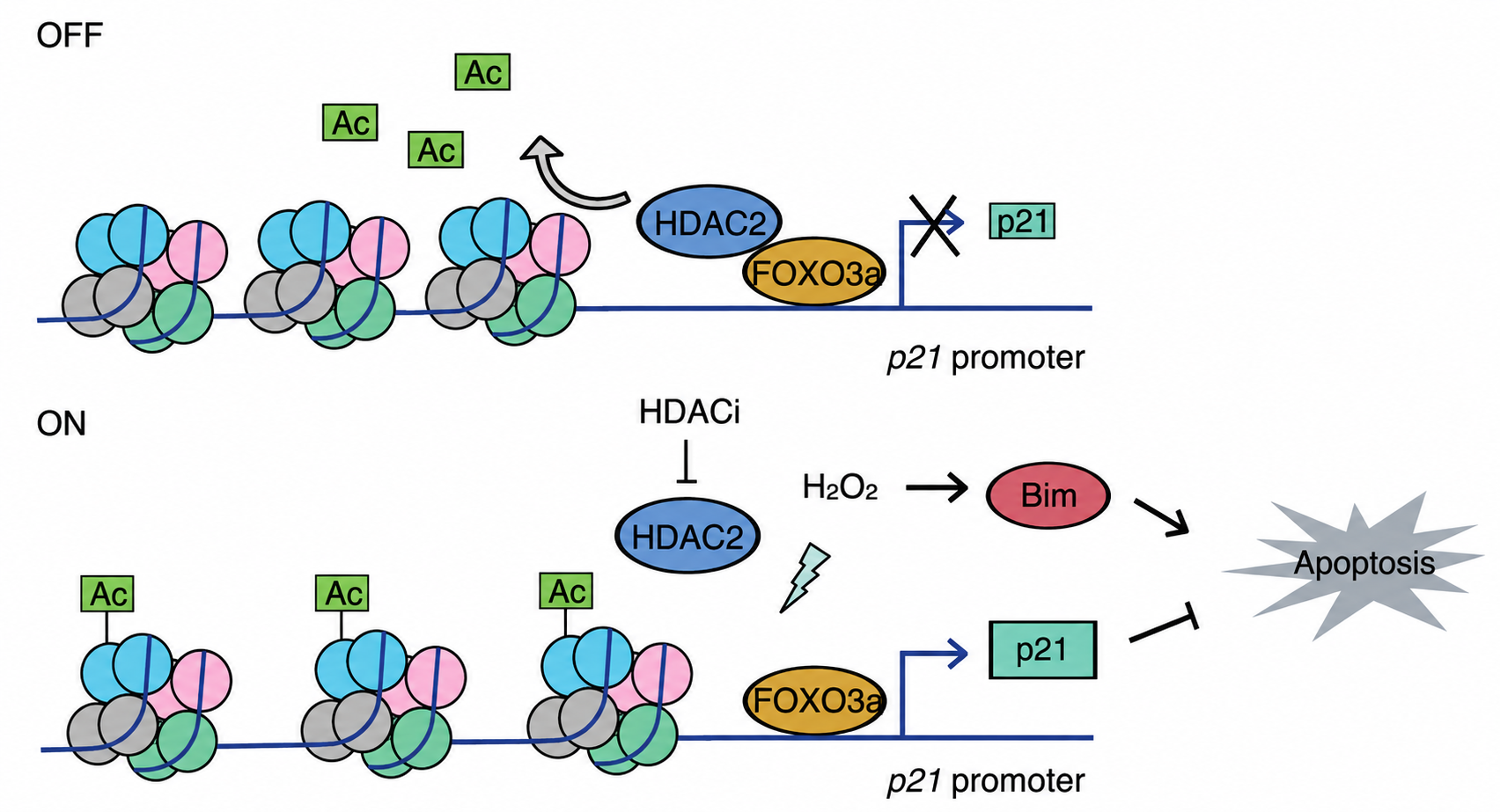
Figure 1. Schematic illustration of the HDAC2/FOXO3a/p21 axis in the regulation of oxidative stress-associated apoptosis
(3) FOXO4 and cellular senescence
FOXO4 can interact with p53 and influence the survival state of senescent cells. The FOXO4–p53 axis extends FOX regulation from conventional DNA binding to the level of protein–protein interactions, making FOXO4 an important member in studies of cellular senescence and the persistent survival of senescent cells.
(4) FOXO6 and neural function
FOXO6 is prominently expressed in the brain and certain other tissues and is associated with neural function, memory, and metabolic regulation. Its tissue distribution and certain regulatory characteristics differ from those of FOXO1 and FOXO3, reflecting further functional diversification within the FOXO subfamily.
3.3 FOXM1: Regulation of the Cell Cycle and Replication Stress
(1) Cell cycle and mitosis
FOXM1 is a typical proliferation-associated FOX transcription factor with high activity during the S/G2/M phases. It regulates CCNB1, PLK1, AURKB, and multiple genes associated with centromeres, the mitotic spindle, and chromosome segregation, thereby supporting the G2/M transition, mitosis, and cytokinesis.
(2) Replication stress and DNA damage responses
FOXM1 also participates in certain DNA damage-response and genomic stability-related programs. Sustained FOXM1 activation enables rapidly proliferating cells to maintain strong cell cycle progression and adaptation to replication stress. In multiple cancers, it is associated with high proliferation, chromosomal instability, and resistance to certain therapies.
3.4 FOXC Family: Vascular Development and Mesenchymal States
(1) FOXC1
FOXC1 participates in the development of the anterior segment of the eye, skeleton, vasculature, and other tissues and regulates cell migration and tissue morphogenesis. In certain tumors, abnormal FOXC1 activation is also associated with lineage plasticity, invasion, and metastasis.
(2) FOXC2
FOXC2 plays an important role in vascular and lymphatic development and can also enter TGF-β-related epithelial–mesenchymal transition (EMT) networks, altering programs associated with cell adhesion, the cytoskeleton, and migration. Sustained FOXC2 activation is closely associated with mesenchymal-like states and metastatic capacity in certain tumors.
3.5 FOXP Family: Immune Homeostasis and Neurodevelopment
(1) FOXP3
FOXP3 is an important transcription factor for regulatory T cell (Treg) identity and immunosuppressive function. It cooperates with regulatory proteins such as NFAT and RUNX to establish Treg-specific transcriptional networks and influences immunoregulatory molecules such as CTLA-4 and IL2RA. FOXP3 dysfunction can disrupt peripheral immune tolerance, whereas enhanced Treg-associated FOXP3 programs within the tumor microenvironment may suppress antitumor effector immunity.
(2) FOXP1
FOXP1 participates in B-cell and T-cell differentiation while also influencing nervous system development and neuronal function. Its target genes are strongly tissue-dependent, making FOXP1 an important FOXP family member for maintaining the states of different cellular lineages.
(3) FOXP2
FOXP2 participates in nervous system development, motor learning, and the formation of language-related neural circuits. Specific FOXP2 genetic variants are associated with language and speech motor disorders, making it a representative neurodevelopmental regulator within the FOX family.
3.6 Other Representative FOX Proteins
(1) FOXF1 and FOXF2
The FOXF family primarily participates in mesenchymal, vascular, and organ development. FOXF1 is particularly important for pulmonary mesenchymal and pulmonary vascular development, and its abnormalities can cause severe pulmonary developmental phenotypes.
(2) FOXG1
FOXG1 is an important transcriptional regulator of forebrain development and participates in neural progenitor cell proliferation, neuronal differentiation, and forebrain morphogenesis. FOXG1 dysfunction is closely associated with severe neurodevelopmental abnormalities.
(3) FOXJ1
FOXJ1 is a key transcription factor for motile ciliogenesis. It controls multiple genes associated with ciliary structures and motility machinery and plays important roles in tissues such as the ciliated respiratory epithelium and ventricular ependyma.
(4) FOXK1 and FOXK2
The FOXK family participates in the regulation of cellular metabolism, proliferation, and differentiation and can connect glucose metabolism, mitochondrial function, and changes in cellular state. Abnormal FOXK regulation has attracted attention in studies of metabolic reprogramming and cancer.
(5) FOXL2 and FOXN1
FOXL2 maintains ovarian granulosa cell identity and ovarian function and is an important transcription factor in gonadal development. FOXN1 controls thymic epithelial cell differentiation and the establishment of the thymic microenvironment and is essential for normal T-cell development.
4 Core Biological Processes Involving the FOX Family
4.1 Embryonic Development and Cell Fate
(1) Lineage establishment
Through pioneer transcription, FOXA proteins establish certain lineage-specific chromatin environments. FOXC and FOXF participate in vascular, mesenchymal, and organ morphogenesis; FOXG1 regulates forebrain development; and FOXN1 and FOXJ1 control thymic epithelial and motile ciliated cell programs, respectively.
(2) Maintenance of cellular identity
The functions of FOX proteins are not limited to embryonic development. FOXL2 continuously maintains ovarian granulosa cell identity, FOXP proteins participate in the stability of immune and neural cell lineages, and FOXA proteins contribute to tissue-specific transcriptional programs in mature tissues such as the liver.
4.2 Metabolism and Nutrient Sensing
(1) Responses to nutrient signals
The FOXO family directly connects insulin, growth factors, and cellular energy status. Under nutrient-rich conditions, PI3K–AKT signaling restricts FOXO activity. As energy stress increases, FOXO proteins cooperate with AMPK, SIRT, and other networks to regulate glucose metabolism, lipid utilization, autophagy, and antioxidative programs.
(2) Metabolic tissue function
FOXA2 and FOXA3 participate in the development and mature functions of metabolic organs such as the liver and pancreas, while the FOXK family can also participate in metabolic transcription and cellular energy utilization. The regulation of metabolism by the FOX family encompasses both short-term nutrient responses and long-term tissue homeostasis.
4.3 Cell Proliferation and Stress Adaptation
(1) Proliferative programs
FOXM1 promotes the expression of genes associated with mitosis and the cell cycle and serves as an important transcriptional node in rapidly proliferating cells. Certain FOX proteins also indirectly alter proliferative capacity by influencing cellular lineage and metabolic states.
(2) Stress-response programs
FOXO1, FOXO3, and related proteins regulate antioxidative responses, autophagy, cell cycle arrest, and cell death programs according to oxidative stress and nutrient status. FOXO4–p53 interactions further connect the FOX family with the persistent survival of senescent cells.
4.4 Immune Homeostasis and Immune Tolerance
FOXP3 maintains Treg-associated immune tolerance programs, while FOXP1, FOXO1, and other FOX proteins also participate in lymphocyte differentiation, migration, and functional states. Abnormal FOX regulation may result in insufficient immune tolerance and chronic inflammation or, in environments such as tumors, generate strong local immunosuppression.
5 FOX Family and Disease Mechanisms
5.1 Tumorigenesis and Cancer Progression
(1) FOXM1 and sustained proliferation
Abnormal FOXM1 activation can enhance cell cycle, mitotic, and certain DNA damage-response programs, allowing tumor cells to continue proliferating under high replication stress. High FOXM1 activity is associated with rapid growth, genomic instability, and resistance to certain therapies in multiple cancers.
(2) Dysregulation of the PI3K–AKT–FOXO axis
Persistent PI3K–AKT activation can restrict nuclear FOXO functions and weaken certain cell cycle-restrictive and pro-death programs. Under therapeutic or metabolic stress, however, FOXO proteins may support the survival of certain tumor cells through antioxidative responses, autophagy, and metabolic adaptation. Their functions are strongly dependent on tumor type and disease stage.
(3) FOXA1 and hormone-dependent tumors
FOXA1 can alter the chromatin regions accessible to ER and AR. Changes in its expression, mutation status, or chromatin occupancy can reshape hormone receptor transcriptional networks in breast and prostate cancers, thereby affecting tumor lineage states and hormone responses.
(4) FOXC and invasion and metastasis
FOXC1 and FOXC2 participate in mesenchymalization, cell migration, and tissue remodeling programs. Tumor cells can reuse these developmental transcriptional networks to enhance cellular plasticity, invasion, and metastatic capacity.
5.2 Metabolic and Age-Related Diseases
(1) Metabolic abnormalities
FOXO1 is an important transcriptional node connecting insulin signaling with hepatic gluconeogenesis. During insulin resistance, AKT-mediated inhibition of FOXO1 is weakened, potentially allowing hepatic gluconeogenesis to remain active. The FOXO family also participates in the metabolism of adipose tissue, pancreatic β cells, and skeletal muscle, collectively influencing systemic glucose and lipid homeostasis.
(2) Cellular senescence and age-related changes
FOXO3 participates in antioxidative responses, autophagy, and DNA damage responses, whereas the FOXO4–p53 axis is associated with the persistent survival of certain senescent cells. Abnormalities in FOX networks can affect the accumulation of cellular damage, metabolic adaptation, cell cycle arrest, and tissue homeostasis.
5.3 Immune and Inflammatory Diseases
FOXP3 dysfunction can disrupt Treg establishment and peripheral immune tolerance, leaving autoreactive immune responses insufficiently restrained. FOXO1, FOXP1, and other FOX proteins also participate in lymphocyte development and functional states. Conversely, Treg accumulation and enhanced FOXP3-associated immunosuppressive programs in the tumor environment can restrict effector T cell-mediated antitumor responses.
5.4 Neurological and Genetic Developmental Disorders
(1) Neurological abnormalities
FOXG1, FOXP1, and FOXP2 participate in neurodevelopment and the establishment of neural circuits, whereas FOXO3 and FOXO6 are more extensively involved in metabolic and stress regulation in mature neural cells. Abnormalities in different FOX proteins can separately affect early neurogenesis, neuronal differentiation, and mature neural tissue homeostasis.
(2) Abnormal organ development
FOXC1 abnormalities can affect the formation of the anterior segment of the eye and other tissues. FOXF1 abnormalities are associated with severe developmental defects of the lungs and pulmonary vasculature. FOXN1 deficiency can impair thymic epithelial and immune system development. FOXL2 abnormalities affect ovarian and granulosa cell function, whereas FOXE1 is closely associated with abnormalities in thyroid and craniofacial development.
6 FOX Family-Related Products
6.1 Products for FOXO Family Regulation and Detection
Catalog # | Product Name | Grade & Purity | Mechanism of Action |
AS 1842856 | ≥98%(HPLC) | A small-molecule FOXO1 inhibitory tool that can reduce FOXO1-associated transcriptional activity and affect downstream metabolic and cell fate programs | |
FOXO1-IN-3 | ≥99% | A FOXO1-related inhibitory compound used to regulate FOXO1-dependent transcriptional functions | |
FOXO4-DRI | ≥99% | A D-retro-inverso peptide tool that can disrupt the FOXO4–p53 protein interaction and affect related cell survival programs | |
FOXO4-DRI acetate |
| The acetate form of FOXO4-DRI, used to regulate FOXO4–p53 interaction-related processes | |
Recombinant FOXO1 Antibody | KD Validation | Specifically recognizes FOXO1 protein and is used to analyze FOXO1 protein expression and associated functional changes | |
Recombinant Human FOXO1 Protein | ≥90%(SDS-PAGE) | Recombinant human FOXO1 protein that can be used for protein recognition, binding, and related in vitro studies | |
Recombinant Mouse FOXO1 Protein | ≥90%(SDS-PAGE) | Recombinant mouse FOXO1 protein that can be used for mouse FOXO1-related protein studies | |
Human Forkhead Box Protein O1 (FOXO1) ELISA Kit | BioReagent | Quantitatively detects human FOXO1 protein through specific immunorecognition | |
Mouse Forkhead Box Protein O1(FoxO1) ELISA Kit | BioReagent | Quantitatively detects FoxO1 protein in mouse samples | |
Recombinant Human FOXO1A Protein | Carrier Free, His Tag, ≥90%(SDS-PAGE) | His-tagged recombinant human FOXO1A protein that can be used for protein binding and related in vitro studies | |
Recombinant Human FOXO3 Protein | ≥90%(SDS-PAGE) | Recombinant human FOXO3 protein that can be used for FOXO3 protein recognition and interaction studies | |
Mouse Forkhead Box Protein O3 (FOXO3) ELISA Kit | BioReagent | Quantitatively detects FoxO3 protein in mouse samples | |
Recombinant FOXO3A Antibody | Carrier Free, Recombinant, ExactAb™, Azide Free, Validated, PBS Only, See COA | Specifically recognizes FOXO3A protein and is used for FOXO3A-related protein expression studies | |
Recombinant FOXO3A Antibody | Recombinant, ExactAb™, Validated, See COA | Specifically recognizes FOXO3A protein and can be used to study FOXO3-associated stress and metabolic regulation | |
Recombinant Forkhead Box O3 Antibody | KD Validation | Specifically recognizes FOXO3 protein and is used to analyze FOXO3-associated functional changes | |
Recombinant FOXO4/AFX Antibody | Recombinant, ExactAb™, Validated, See COA | Specifically recognizes FOXO4/AFX protein and is used for FOXO4-related protein analysis | |
Recombinant Forkhead box O4 Antibody | KD Validation | Specifically recognizes FOXO4 protein and is used for FOXO4-related expression and functional studies | |
Recombinant Forkhead Box O4 Antibody | KO Validation | Specifically recognizes FOXO4 protein and is used for FOXO4-related protein studies |
6.2 Products Related to FOXA, FOXC, and Other FOX Proteins
Catalog # | Product Name | Grade & Purity | Mechanism of Action |
Recombinant FOXA1 Antibody | Recombinant, ExactAb™, Validated, 1.0 mg/mL | Specifically recognizes FOXA1 protein, which is closely associated with pioneer transcription and hormone receptor-related regulation | |
Recombinant Forkhead box A1 Antibody | KD Validation | Specifically recognizes FOXA1 protein and is used to analyze FOXA1-associated functional changes | |
Recombinant FOXA2 Antibody | Recombinant, ExactAb™, Validated, See COA | Specifically recognizes FOXA2 protein, which is associated with lineage regulation in the endoderm, liver, pancreas, and other tissues | |
Human Forkhead Box Protein A2 (FOXA2) ELISA Kit | BioReagent | Quantitatively detects human FOXA2 protein through specific immunorecognition | |
Recombinant FOXC1 Antibody | Recombinant, ExactAb™, Validated, 0.6 mg/mL | Specifically recognizes FOXC1 protein, which is associated with vascular development, mesenchymal states, and cell migration | |
FOXG1 Antibody | See COA | Specifically recognizes FOXG1 protein, a FOX protein associated with forebrain development and neural cell fate | |
FOXJ1 agonist 1 |
| A FOXJ1 agonism-related research compound used to regulate FOXJ1-associated transcriptional programs | |
FOXK1/MNF Antibody | Carrier Free, ExactAb™, Validated, 1.0 mg/mL | Specifically recognizes FOXK1/MNF protein, which is associated with the regulation of metabolism, proliferation, and cellular states | |
Recombinant FOXL2 Antibody | Recombinant, ExactAb™, Validated, 1.28 mg/mL | Specifically recognizes FOXL2 protein, which is associated with ovarian granulosa cell identity and gonadal function |
6.3 FOXM1-Related Products
Catalog # | Product Name | Grade & Purity | Mechanism of Action |
FOXM1 Antibody | Validated, 1.0 mg/mL | Specifically recognizes FOXM1 protein, a FOX protein associated with the cell cycle, mitosis, and proliferation | |
Recombinant Human FOXM1 Protein | Carrier Free, His Tag, ≥90%(SDS-PAGE), See COA | His-tagged recombinant human FOXM1 protein that can be used for protein recognition, binding, and related in vitro studies | |
FOXM1-IN-1 | Moligand™, 10 mM in DMSO | A small-molecule FOXM1 inhibitory research tool used to reduce FOXM1-associated transcriptional functions | |
FOXM1-IN-1 | ≥99% | A FOXM1 inhibitory research tool that can be used to regulate FOXM1-associated proliferation and cell cycle programs | |
FOXM1-IN-2 |
| A FOXM1 inhibitory research compound used to regulate FOXM1-associated transcriptional programs | |
RCM 1 | ≥96% | A FOXM1-related inhibitor that can suppress FOXM1-associated transcriptional activity and downstream proliferative programs |
6.4 FOXP Family-Related Products
Catalog # | Product Name | Grade & Purity | Mechanism of Action |
Anti-FOXP1 antibody | Carrier Free, ExactAb™, Azide Free, Validated, See COA | Specifically recognizes FOXP1 protein, which is associated with transcriptional regulation in immune and neural lineages | |
Forkhead Box P1 Mouse mAb | KD Validation | Specifically recognizes FOXP1 protein and is used to study FOXP1-associated expression and functional changes | |
Forkhead Box P1 Mouse mAb | KD Validation | Specifically recognizes FOXP1 protein and is used for FOXP1-related protein studies | |
Recombinant Forkhead Box P1 Antibody | KD Validation | Specifically recognizes FOXP1 protein and supports studies of FOXP1-associated transcriptional functions | |
FoxP3 Mouse mAb | Carrier Free, ExactAb™, Azide Free, Validated, High Performance, PBS Only, ≥95%(SDS-PAGE), 1.0 mg/mL | Specifically recognizes FOXP3 protein, a core transcription factor associated with Treg identity and immune tolerance | |
Recombinant FOXP3 Antibody | Recombinant, ExactAb™, Validated, 0.5 mg/mL | Specifically recognizes FOXP3 protein and is used for studies of FOXP3-associated immune regulation | |
Recombinant Human FOXP3 Protein | Carrier Free, Azide Free, His Tag, ≥90%(SDS-PAGE) | His-tagged recombinant human FOXP3 protein that can be used for FOXP3 protein recognition and related in vitro studies | |
Human Forkhead Box Protein P3 (FOXP3) ELISA Kit | BioReagent | Quantitatively detects human FOXP3 protein through specific immunorecognition | |
Mouse Forkhead Box Protein P3 (FOXP3) ELISA Kit | BioReagent | Quantitatively detects FOXP3 protein in mouse samples | |
Rat Forkhead Box Protein P3 (FOXP3) ELISA Kit | BioReagent | Quantitatively detects FOXP3 protein in rat samples |
The FOX family shares the conserved Forkhead DNA-binding domain as its common molecular foundation and forms highly diverse regulatory networks through pioneer transcription, signal-dependent nucleocytoplasmic translocation, post-translational modifications, and cooperation within transcriptional complexes. Different FOX subfamilies connect developmental, metabolic, proliferative, stress-response, and immune processes, and their dysfunction can further contribute to cancer, metabolic diseases, immune dysregulation, neurological abnormalities, and genetic developmental disorders.