Human IgG4-kappa - Anticuerpo de control isotípico, IgG4

Cat. No.: Ab139408
Disponible para pedir
CALIDAD & PUREZA Carrier Free ? Carrier-free — supplied without added carrier protein/stabilizer. Use when carriers (e.g. BSA) would interfere with conjugation or sensitive assays. Recombinant ? Recombinant — produced via recombinant expression for defined sequence and consistency. Use for reproducible, animal-free proteins of known origin. ExactAb™ ? ExactAb™ — Aladdin's antibody line emphasizing precision and validated quality. Use for reliable, specificity-validated antibody applications. Low Endotoxin ? Low-endotoxin grade — endotoxin reduced to low controlled levels. Use in sensitive biological work where high endotoxin would interfere. Azide Free ? Azide-free — without sodium azide preservative. Use in conjugations, cell work, or assays where azide is toxic or inhibitory. Validated ? Validated grade — performance confirmed in defined applications before release. Use when you want documented assurance the reagent works as stated. PBS Only ? PBS-only formulation — supplied in phosphate-buffered saline with no other additives. Use when you need a clean PBS buffer free of stabilizers/carriers. ≥95%(SDS-PAGE&SEC-HPLC) See COA
Application
Flow Cytometry, Functional Assay
Host species
Humano
Reactive species
Humano
Isotype
Human IgG4
Clone Number
IB4
Conjugation
Unconjugated
★
Talla
Alemania (EU)
USA*
Precio
Cantidad
100μg
Ab139408-100μg
—
7 Disponible
51,98€
1mg
Ab139408-1mg
—
1 Disponible
242,88€
5mg
Ab139408-5mg
—
1 Disponible
937,07€
Enter a quantity for the sizes you want to add.
🧪
Por qué esta calidad

Carrier Free,Recombinant,ExactAb™,Low Endotoxin,Azide Free,Validated,PBS Only,≥95%(SDS-PAGE&SEC-HPLC),See COA Azide Free,Carrier Free,ExactAb™,Low Endotoxin,PBS Only,Recombinant,Validated para flujos de trabajo cromatográficos y analíticos sensibles que requieren una interferencia mínima de la línea base.

🌡

Almacenamiento y envío

Store at -20°C,Avoid repeated freezing and thawing Envío Ice chest + Ice pads. Consulte el COA específico del lote para conocer las especificaciones exactas.

📋

Documentos de calidad

SDS, COA, ficha técnica y hoja de especificaciones disponibles para descargar. COA específico del lote accesible mediante búsqueda por número de lote.

📚

Prueba documental

Citado en 0 publicaciones revisadas por pares sobre cromatografía, síntesis orgánica y reacciones de acoplamiento cruzado.

Descripción general

Human IgG4-Kappa, Recombinant (IB4), Isotype Control, could be used for Flow Cytometry, Functional Assays and so on.

Especificaciones

Product Name
Human IgG4-kappa - Anticuerpo de control isotípico, IgG4
Sinónimos
Human IgG4 Isotype Control | Human IgG4 antibody | Human IgG4 Isotype Control antibody | Human IgG4
Especificaciones y pureza
Carrier Free,Recombinant,ExactAb™,Low Endotoxin,Azide Free,Validated,PBS Only,≥95%(SDS-PAGE&SEC-HPLC),See COA
Especies hospedadoras
Humano
Conjugación
Unconjugated
Grado
Azide Free, Carrier Free, ExactAb™, Low Endotoxin, PBS Only, Recombinant, Validated
Isotipo
IgG4
Tipo de cadena ligera
kappa
SDS-PAGE
150kDa
Método de purificación
Protein A purified
Concentración
See COA
Product Line
Productos biológicos
Almacenamiento y envío
Forma
Liquid
Condiciones de almacenamiento de almacenamiento
Store at -20°C,Avoid repeated freezing and thawing
Enviado en
Ice chest + Ice pads
Estabilidad y almacenamiento
Store at 4°C short term (1-2 weeks). Store at -20°C long term (12 months). Upon receipt, it is recommended to aliquot. Avoid freeze/thaw cycle.
Imágenes

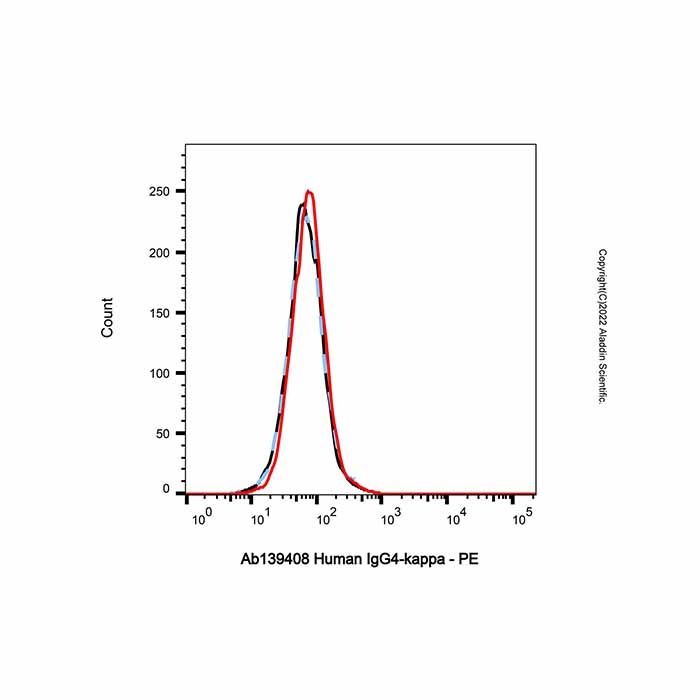
Human IgG4-kappa (Ab139408) - Flow Cytometry
Flow Cytometry analysis of HepG2 cells labelling Human IgG4-kappa (red) with Human IgG4-kappa (Ab139408). Goat Anti-Human IgG (PE) (Ab175838) at a dilution of 1/1000 was used as the secondary antibody. Blue - Isotype control, human IgG (Ab170213). Black - Unlabelled control, cells without incubation with primary antibody.

Aplicación
Aplicación
Dilution info
Functional Assay

Use at an assay dependent concentration.

Flow Cytometry

Use at an assay dependent concentration.

Documentación

📋 Hoja de datos de seguridad (SDS)

Documento completo sobre peligros, manipulación, almacenamiento y cumplimiento normativo.

<<<<<<< HEAD Descargar SDS → ======= Descargar SDS → >>>>>>> release248-p3

✅ Certificado de análisis (COA)

Datos de calidad específicos del lote. Introduzca su número de lote para obtener el COA exacto.

Buscar COA →

📊 Ficha técnica

Resumen de referencia rápida de las especificaciones y aplicaciones del producto.

Ver ficha técnica →

🔬 Hoja de especificaciones

Atributos de calidad completos y criterios de aceptación para esta calidad.

Ver hoja de especificaciones →

Datos avanzados

Certificados (CoA, COO, BSE/TSE y tabla de análisis)
C of A & Other Certificates(BSE/TSE, COO):
Analytical Chart:

Find and download the COA for your product by matching the lot number on the packaging.

6 results found

Lot NumberCertificate TypeFechaArticulo
ZJ25F0723753ZJ25F0723753Certificate of AnalysisApr 07, 2026 Ab139408
ZJ25F0723754ZJ25F0723754Certificate of AnalysisApr 07, 2026 Ab139408
ZJ25F0723755ZJ25F0723755Certificate of AnalysisApr 07, 2026 Ab139408
ZJ24F0809722ZJ24F0809722Certificate of AnalysisMar 16, 2026 Ab139408
ZJ24F0809723ZJ24F0809723Certificate of AnalysisMar 16, 2026 Ab139408
ZJ24F0809724ZJ24F0809724Certificate of AnalysisMar 16, 2026 Ab139408
Preguntas frecuentes y artículos
Calculadoras de soluciones
Reseñas

Reseñas de cliente

Application Protocols

No manufacturer‑tested application protocols or dilutions are provided for this SKU. The following are general starting points for human IgG4‑κ isotype controls and conjugates; optimize empirically for your system.

  • Flow cytometry (isotype control; literature)
    • Starting dilution: 0.1–1 µg per 1×10^6 cells (or 1–10 µg/mL). Match fluorochrome and Fc block conditions to test antibody. Include Fc receptor blocking where appropriate.
  • Immunoblotting (WB)
    • As a loading/background control: 0.1–0.5 µg/mL for secondary‑only checks or conjugate validation. For antigen‑specific detection, use an antibody with known specificity instead.
  • Immunohistochemistry/Immunofluorescence (IHC/IF)
    • Isotype control: 1–10 µg/mL in blocking buffer; match subclass and concentration to test IgG4 primary.
  • ELISA
    • Coating control or standard: 0.5–2 µg/mL for capture; 0.05–0.2 µg/mL for detection, depending on plate and conjugate.
  • Conjugation setup (general)
    • Aim for DOL 2–4 for small fluorophores; verify by A280/label absorbance or MS. Remove unreacted label by SEC.

These ranges are general literature guidance, not product‑validated conditions. For lot‑specific concentration and purity, and any validated applications, consult the CoA/Spec Sheet. Always include proper negative/positive controls and titrate to minimize background.

Biological Roles

General background on human IgG4‑kappa (literature) to contextualize research use. Not product‑specific.

  • Immune function
    • IgG4 is one of four human IgG subclasses and is typically associated with chronic antigen exposure and a more tolerogenic, anti‑inflammatory profile. It has reduced capacity to bind C1q and activate complement compared to IgG1/IgG3, and exhibits lower affinity for activating Fcγ receptors, modulating effector responses.
  • Fab‑arm exchange
    • IgG4 can undergo dynamic half‑molecule exchange in vivo under physiological redox conditions, producing functionally monovalent bispecific antibodies. This can dampen immune complex formation and reduce inflammatory signaling.
  • Light chain usage
    • The κ light chain is one of two human light chain isotypes (κ, λ). κ prevalence is ~60% in healthy individuals (population‑dependent; literature). Light‑chain type does not directly dictate effector function but impacts biochemical properties such as isoelectric focusing profiles and potential PTM patterns.
  • Glycosylation and Fc modulation
    • N‑glycans at Asn297 in CH2 modulate Fc receptor engagement and serum half‑life via FcRn interactions; sialylation, fucosylation, and galactosylation states influence anti‑inflammatory signaling (literature).
  • Research implications
    • IgG4‑κ reagents serve as critical controls and standards for dissecting subclass‑specific biology, benchmarking Fc engineering, and studying tolerance versus inflammation axes in immunology.

These biological notes provide context; consult the CoA for any lot‑specific sequence or glycosylation details (not provided here).

Buffer Applications

This product is an antibody reagent, not a buffering compound. It is supplied in PBS only (per Product Data) and is generally used within compatible biological buffers.

  • Applicability
    • Not typically used to prepare or define buffer systems. Instead, it requires appropriate buffers to maintain stability and function.
  • Practical guidance (general)
    • Maintain near‑neutral pH (≈7.2–7.4) in isotonic saline buffers (PBS, HEPES‑saline). Avoid extremes of pH and high ionic strength that may promote aggregation.
    • For conjugation or enzymatic steps, transient buffer exchange (e.g., to carbonate pH 8.5 for NHS coupling or acetate pH 5.5 for papain activation) can be performed by sterile desalting or dialysis. Restore to storage PBS promptly after processing.

No buffer capacity, pKa, or formulation recipe is specified for this item beyond “PBS Only; Carrier Free; Azide Free.” Refer to the CoA/Spec Sheet for any lot‑specific pH or excipient details.

Green Alternatives

While green chemistry comparisons are most relevant to small‑molecule solvents/reagents, several sustainability considerations apply to antibody reagents.

  • Preservatives and additives
    • Azide‑free formulation (per Product Data) avoids sodium azide, a hazardous preservative with aquatic toxicity and disposal concerns—aligning with greener laboratory practices.
  • Buffer selection
    • PBS is benign and widely compatible. If buffer exchange is needed, prefer aqueous, non‑toxic buffers (HEPES, acetate) over organic cosolvents. Avoid chlorinated solvents entirely with proteins.
  • Process choices (general)
    • Use room‑temperature shipping validation where possible; however, this item is shipped cold with ice packs to preserve quality (per Product Data). Consolidate shipments to reduce cold‑chain footprint.
    • Minimize single‑use plastics by planning aliquots efficiently; employ sterile glass vials for long‑term storage when appropriate.
  • Waste reduction
    • Carrier‑free format reduces extraneous protein waste and simplifies downstream purification (less buffer exchange to remove BSA/gelatin). Low endotoxin minimizes need for repeated sterile filtration steps.

Comparison (general, qualitative)

  • Azide‑containing antibodies: easier microbial control but hazardous waste stream; may inhibit HRP and cell health.
  • Azide‑free (this item): safer waste stream, compatible with live cells and peroxidase systems, but requires stricter aseptic handling and cold storage to prevent contamination.

Overall, this product’s azide‑free, carrier‑free PBS formulation supports cleaner, lower‑impact workflows when aseptic technique is maintained.

Pharmaceutical Uses

No clinical or therapeutic claims are made for this reagent. For research use only (per Product Data). The following contexts describe non‑clinical, pre‑formulation, and manufacturing‑adjacent applications where an IgG4‑κ standard can be useful (general literature).

  • Platform and process development
    • Serve as a human IgG4 reference in chromatography step development (Protein A/G capture, cation/anion exchange), filtration studies, and virus inactivation validation (low‑pH hold compatibility studies).
  • Analytical method qualification
    • Use as a system‑suitability or calibration material for SEC‑HPLC (aggregation/fragmentation), CE‑SDS, icIEF (subclass pI profiling), LC‑MS peptide mapping workflows, and A280 quantitation.
  • Conjugate formulation R&D
    • Evaluate linker‑payload conjugation parameters (DAR distribution, free drug removal) and stability of ADC‑like constructs without employing proprietary therapeutic molecules.
  • Excipient screening (preclinical research)
    • Screen stabilizer excipients (sugars, polyols, surfactants, amino acids) for IgG stability under stress. Note: This item is supplied PBS Only; any excipient screening requires buffer exchange.

All uses above pertain to laboratory research, platform development, or training. This product is not a drug, not GMP‑qualified, and not intended for human or animal administration.

Physical Properties

Item-specific physicochemical specifications are not provided. The following notes distinguish product data from general literature values.

  • Formulation and appearance
    • Formulation: PBS only (per Product Data). No carrier proteins or azide.
    • Appearance/concentration: Not specified for this item; refer to CoA/Spec Sheet.
    • Endotoxin: Low endotoxin grade indicated; numerical limit Not specified for this item; refer to CoA/Spec Sheet.
  • Protein attributes (general, literature)
    • Molecular mass: Intact human IgG typically ~146–150 kDa (glycoform dependent).
    • Isoelectric point (pI): IgG4 commonly pI ~6–9 depending on sequence/glycosylation; exact value is sequence‑dependent.
    • Solubility: Highly soluble in isotonic phosphate or Tris buffers at neutral pH; sensitive to extreme pH, high shear, and organic cosolvents.
    • Extinction coefficient: A280 ≈ 1.35–1.5 per mg/mL for human IgG (approximate, literature); exact ε depends on sequence.
    • Thermal behavior: Typical IgG Tm values for CH2/CH3 domains ~60–72 °C (literature); avoid heat exposure.
  • Storage and stability
    • Storage: Store at −20 °C; avoid repeated freeze–thaw (per Product Data). Aliquoting recommended.
    • Freeze–thaw: May promote aggregation/fragmentation; add cryoprotectants only if compatible with downstream use (not included in this item).

All numeric values above, if any, are general literature guidance and not specifications for this lot. Consult the CoA/Spec Sheet for exact concentration, purity profile, and endotoxin level.

Quality and Grades

This antibody is annotated with multiple quality descriptors. The points below explain their practical implications for method development and sensitive assays.

  • Carrier Free
    • No added proteins such as BSA, gelatin, or casein. Benefits: accurate mass balance, less background in protein assays, compatibility with conjugation chemistries (e.g., NHS‑ester, maleimide) without competitive scavenging by carriers.
  • Recombinant / ExactAb™
    • Recombinant production supports sequence definition and lot‑to‑lot consistency. ExactAb™ typically denotes sequence‑controlled, highly consistent recombinant antibody production (brand-specific program; consult CoA for exact details).
  • Low Endotoxin
    • Suitable for endotoxin‑sensitive work (e.g., primary immune cells). Numerical specification: Not specified for this item; refer to CoA/Spec Sheet. Use endotoxin‑free plastics and buffers to preserve low‑endotoxin status.
  • Azide Free
    • Preservative‑free; compatible with live‑cell assays and peroxidase labeling. Requires stricter aseptic handling and cold storage to maintain integrity.
  • Validated
    • Indicates internal qualification performed by the supplier; application scope and datasets are Not specified for this item; refer to CoA/validation report.
  • PBS Only
    • Formulated solely in phosphate‑buffered saline; no glycerol or stabilizers indicated. Benefits: clean background and direct compatibility with many assays; Considerations: avoid freeze–thaw, and maintain cold chain to prevent aggregation.

Quality control elements typically assessed for such products (general): purity by SDS‑PAGE/SEC, concentration by A280, residual host‑cell proteins/DNA, and endotoxin by LAL. Consult the CoA for lot‑specific results.

Reaction and Applications

No specific tested applications are provided in the Product Data. Below are common research uses for human IgG4‑kappa antibodies (general literature guidance) and how formulation aspects impact performance.

  • Isotype control
    • Use as a subclass/isotype‑matched negative control to set gates or thresholds in flow cytometry, IHC/IF, or ELISA when the primary test antibody is human IgG4‑κ.
  • Fc biology and receptor studies
    • Probe interactions with Fcγ receptors (FcγRI/II/III) to benchmark IgG4’s lower effector function vs. IgG1; evaluate complement activation (minimal C1q binding, literature).
  • Assay standards and platform qualification
    • Serve as a mass/concentration standard in protein A/G quantitation, SEC‑HPLC system suitability, and A280 calibration curves for human IgG.
  • Conjugation and ADC process development
    • Carrier‑free format favors controlled conjugation (lysine‑NHS, cysteine‑maleimide, glycan‑based oxime/SPAAC) for fluorophore, enzyme, or drug attachment.
  • Enzymatic processing and mapping
    • Evaluate papain/pepsin digestion (Fab/F(ab′)2 generation), deglycosylation (PNGase F), and Fc‑engineering impacts in method development.

Practical tips (general)

  • Maintain neutral pH and low ionic strength during NHS‑ester coupling (pH 8.3–8.5) and mildly acidic to neutral conditions for maleimide‑thiol coupling (pH 6.5–7.0).
  • Remove unconjugated reagents by SEC or desalting to prevent assay interference.
  • Validate absence of carriers/preservatives (confirmed here) for cell‑based assays where background or toxicity is a concern.
Reaction Conditions

No item‑specific reaction protocols are provided. The following general conditions are commonly used for IgG conjugation and processing (literature guidance; verify on your system):

  • Amine (lysine) labeling with NHS esters
    • Buffer: 50–100 mM sodium bicarbonate/carbonate, pH 8.3–8.5 (amine‑free). Avoid Tris and primary amines.
    • Temperature/time: 4–25 °C, 15–60 min. Quench with Tris or glycine post‑labeling.
    • Purification: Desalting (NAP‑5) or SEC to remove excess reagent.
  • Thiol labeling with maleimides
    • Partial reduction: 1–5 mM TCEP for 30–60 min at 25 °C (or mild DTT) to expose interchain cysteines; avoid over‑reduction.
    • Buffer: PBS/HEPES, pH 6.5–7.0 with 1–5 mM EDTA to protect thiols from oxidation.
    • Temperature/time: 4–25 °C, 30–120 min.
  • Glycan‑directed conjugation
    • Enzymatic galactosylation/sialylation followed by azide installation (GalT(Y289L)+UDP‑GalNAz); SPAAC/oxime ligations at neutral pH. Maintain Ca2+/Mn2+ as required by the enzyme system.
  • Enzymatic digestion
    • Papain: 10–50 mM cysteine, pH ~6.5; yields Fab + Fc. Pepsin: pH 3.5–4.5; yields F(ab′)2. Quench and re‑neutralize promptly.
  • Typical outcomes
    • Degree of labeling (DOL) for fluorophores: 2–6 per IgG (optimize to balance signal and antigen binding). Aggregation minimized by low temperature, controlled stoichiometry, and prompt purification.

All parameters above are general literature starting points and not specifications for this product. Confirm concentration, purity, and endotoxin from the CoA before performing reactions.

Safety and Handling
  • GHS/SDS
    • Signal word / Hazard statements / Pictograms / Classification: Not specified for this item; refer to SDS.
    • For research use only (per Product Data). Not for diagnostic or therapeutic use.
  • General laboratory precautions for proteins
    • Use standard BSL‑1 practices in a clean area. Wear appropriate PPE: lab coat, nitrile gloves, safety glasses.
    • Avoid aerosol generation; handle gently to prevent protein denaturation and splashing.
  • Chemical/biological considerations
    • Azide free: This product does not contain sodium azide (per Product Data), reducing risks of azide‑metal salt formation and improving compatibility with HRP‑based assays and cell culture. Standard microbial controls should be observed because azide is not present as a preservative.
    • Low endotoxin: Minimizes pyrogen introduction into sensitive cell‑based assays; nevertheless, maintain aseptic technique to prevent contamination.
  • Incompatibilities and stability risks (general)
    • Avoid extreme pH (<5 or >9), organic solvents, strong oxidants/reductants, or elevated temperatures.
    • Minimize freeze–thaw cycles; aliquot upon first thaw. Do not vortex vigorously; mix by gentle inversion.
  • First aid and spill response (general)
    • Skin/eye contact: Rinse with water. If irritation persists, seek medical attention.
    • Ingestion/inhalation: Not expected routes in controlled labs; seek medical attention if exposure occurs.
    • Spills: Absorb with inert material; decontaminate surfaces with suitable detergent/disinfectant. Dispose according to institutional biosafety procedures.

Always consult the SDS for authoritative hazard and response information.

Solvent Selection

As a recombinant protein antibody, Human IgG4‑kappa should be handled in aqueous, isotonic buffers. Organic solvents are inappropriate as primary diluents due to denaturation risk.

  • Preferred media (general guidance)
    • PBS (per Product Data): isotonic, pH ~7.2–7.4; excellent for storage, dilution, and many assays.
    • Alternatives (if compatible with your workflow): HEPES‑buffered saline (better pH control near neutral, CO2‑independent), TBS (some ELISA/Western systems), or acetate/citrate buffers for transient pH adjustments during conjugation/enzymatic steps.
  • Additives
    • Since this item is Carrier Free and Azide Free, no stabilizers are included. If the application permits, 0.01–0.05% nonionic surfactant (e.g., Tween‑20) can reduce adsorption; 5–10% glycerol can improve freeze‑thaw stability (general literature). Validate compatibility first.
  • Compatibility matrix (general)
    • Chaotropes/denaturants (urea/guanidine), high organic (>10–20% v/v), or extremes of pH can unfold IgG—avoid unless intentionally performing unfolding/refolding protocols.

Small comparison (general)

  • PBS: high assay compatibility; phosphate can chelate metals weakly and may interfere with certain immobilized metal assays.
  • HEPES saline: stable buffering in open air incubations; minimal interference with many enzymes.
  • TBS: preferred in some immunoassays where phosphate inhibits enzyme–substrate systems.

Note: This product ships and is supplied in PBS only; any buffer exchange or addition of stabilizers should be performed by sterile dialysis or spin‑column desalting under cold conditions.

Storage and Reconstitution
  • Supplied format and buffer
    • Buffer: PBS only (per Product Data). No carrier proteins; azide free.
    • Concentration/volume/appearance: Not specified for this item; refer to CoA/Spec Sheet.
  • Storage
    • Temperature: Store at −20 °C (per Product Data). Maintain cold chain; ship on ice packs (per Product Data).
    • Handling: Avoid repeated freeze–thaw. Aliquot into low‑bind, sterile microtubes sized for single use.
    • Light and agitation: Protect from light (for labeled conjugates you may prepare) and avoid vigorous mixing; gently invert to mix.
  • Reconstitution
    • If received lyophilized: Reconstitution status is Not specified for this item; refer to CoA/Spec Sheet. General guidance (literature): reconstitute with sterile PBS or water to the desired concentration, allow to dissolve on ice with gentle mixing, then equilibrate to PBS if water was used.
    • If received in solution: Use directly; keep on ice during setup. For long‑term storage, consider aliquoting and storing at −80 °C if compatible with your application (general guidance) because this item is preservative‑free.
  • Stability considerations
    • Because the product is Carrier Free and Azide Free, microbial contamination risk is higher once opened. Work aseptically, filter‑sterilize buffers, and minimize open‑time at room temperature.
    • For freeze–thaw mitigation, add cryoprotectants (e.g., 5–10% glycerol) only if compatible with downstream assays; such additives are not included in this item.

Always consult the CoA for lot‑specific concentration, pH, endotoxin level, and any additional stabilizers (none indicated here).

Structure and Identity

Human IgG4‑kappa is a recombinant human immunoglobulin G subclass 4 with a kappa light chain. As a biologic macromolecule, small‑molecule identifiers (SMILES, InChI, CAS, CID) are not applicable.

  • Item-specific identifiers
    • Molecular formula: Not specified for this item; refer to CoA/Spec Sheet.
    • Molecular weight: Not specified for this item; refer to CoA/Spec Sheet. (Typical full IgG ~146–150 kDa, literature)
    • Sequence/clone: Not specified for this item; refer to CoA/Spec Sheet.
    • InChIKey/SMILES/CAS/CID: Not applicable to proteins.
  • Structural features (general, literature)
    • Heavy chains: Two γ4 heavy chains (IgG4 constant region), each with variable domain (VH), CH1, hinge, CH2, CH3.
    • Light chains: Two κ light chains (VK + CK), paired to form two Fab arms.
    • Quaternary structure: H2L2 tetramer stabilized by inter‑chain disulfides; N‑glycosylation typically at Asn297 in Fc (extent varies by expression system).
    • IgG4 subclass hallmarks: Reduced ability to fix complement (C1q binding weak) and propensity for Fab‑arm exchange in vivo (hinge Ser331; literature), yielding functionally monovalent bispecifics under physiological redox conditions.
    • Fc region engages human Fcγ receptors with subclass‑specific affinities (generally lower pro‑inflammatory signaling than IgG1; literature).
  • 2D description in words (general)
    • Y‑shaped glycoprotein: two antigen‑binding Fab arms connected via a more flexible hinge to the Fc dimer; each Fab comprises a β‑sandwich immunoglobulin fold in VH/VL and CH1/CL; Fc comprises CH2/CH3 dimer with an internal N‑glycan pocket.

Note: This product is described as Carrier Free, Recombinant, ExactAb™, Low Endotoxin, Azide Free, PBS Only (per Product Data).

Synthetic Utility

Although not a synthetic building block in the classical small‑molecule sense, Human IgG4‑kappa offers a versatile biomacromolecular scaffold for conjugation and bioconjugate chemistry (general literature guidance).

  • Functional groups available for derivatization
    • Lysine ε‑amines: abundant surface nucleophiles for NHS‑ester acylation (random labeling; heterogeneous distributions).
    • Cysteines: accessible after mild reduction of interchain disulfides for site‑directed maleimide coupling; or via engineered free Cys residues.
    • Glycans: Fc N‑glycans can be oxidized (periodate) or enzymatically remodeled (GalT(Y289L) + azido‑galactose) to install bioorthogonal handles (oxime/SPAAC/IEF conjugation).
    • Tyrosines/Tryptophans: amenable to diazonium or oxidative coupling (e.g., TAD–Tyr, peroxidase‑mediated) with care.
  • Named methods and utilities
    • NHS‑ester fluorophore/biotin labeling, SMCC maleimide payload coupling, site‑specific THIOMAB‑like approaches, sortase A transpeptidation (if LPXTG motif present), and click chemistry on glycan‑installed azides/alkynes.
  • Retrosynthetic value
    • Provides a validated human Fc scaffold for generating conjugates, immunoassay reagents, or ADC surrogates while maintaining subclass‑specific Fc behavior (low complement activation for IgG4).

Because this item is Carrier Free and Azide Free in PBS, it is immediately compatible with most amine‑ and thiol‑directed chemistries after appropriate buffer exchange (e.g., to carbonate pH 8.5 for NHS, to PBS/HEPES pH 6.5–7.0 with EDTA for maleimide). Lot‑specific concentration and purity should be verified from the CoA prior to conjugation.

Target Specificity
  • Antigen/epitope: Not antigen‑specific; Human IgG4‑kappa can be used as an isotype control or Fc scaffold. No defined antigen epitope is provided.
  • Species reactivity: Human Fc region (IgG4 subclass; literature). Cross‑reactivity to non‑human species Fc receptors varies and is assay‑dependent.
  • Clone/isotype: Human IgG4 heavy chain with κ light chain (per Product Name). Specific clone ID: Not specified for this item; refer to CoA/Spec Sheet.
  • Validation: Product marked as “Validated,” but supported application types and datasets are Not specified for this item; refer to CoA/validation report.

If your study requires a target‑binding monoclonal antibody, verify antigen specificity and affinity on the CoA or select an antigen‑defined product. This reagent is suited for isotype control use, platform qualification, and conjugation method development.

Preguntas frecuentes

What does Carrier Free mean?
Carrier Free indicates that the material has been processed and tested for specialty industrial processing. Specifications focus on the impurities that affect performance in that application — for example, metal content for electronics, particle size for batteries, refractive index for optics, or moisture content for moisture-sensitive processes.
What does Recombinant mean?
Recombinant is a defined analytical purity tier suitable for workflows requiring a specific validated property. It specifies a minimum assay percentage, controlled limits on common impurities (water, heavy metals, residue on ignition), and lot-to-lot consistency. Recombinant is one of several purity tiers — choose based on the sensitivity and regulatory requirements of your method.
How should this product be stored?
Store at ?20 °C. Avoid repeated freeze–thaw cycles. Aliquot into single-use volumes before freezing.
How is this product shipped?
This product ships in an insulated container with ice pads. Unpack on arrival and transfer it to the storage condition stated above.
What documentation is provided?
Available product documentation, including Certificates of Analysis (COA), Safety Data Sheets (SDS), and specification sheets, is shown in the product document area. Document availability and access follow the current site policy.
Which species reactivity has this antibody been validated against?
Validated reactivity is listed on the PDP and on each lot's datasheet. We validate against the most commonly tested species for the target (Human IgG4-kappa); cross-reactivity in untested species may exist but is not guaranteed. Contact technical support for specific species inquiries.

¿Necesita ayuda para elegir la calidad?

Nuestra guía de selección de calidades cubre la pureza, el estado del estabilizador y la idoneidad de la aplicación para todas las variantes de nuestro catálogo.

Ver la guía de calidades Carrier Free → Ver la guía de calidades Recombinant → Ver la guía de calidades Validated → Ver la guía de calidades ExactAb™ → Ver la guía de calidades Low Endotoxin → Ver la guía de calidades Azide Free → Ver la guía de calidades PBS Only →

Artículos relacionados

Human IgG - Anticuerpo de control isotípico, for WB,CLIA,LF,EIA,PRTIA various applications, generated in Human, >95%, IgG
Human IgG2-Kappa - Anticuerpo de control isotípico, Human IgG2
Human IgG3-kappa - Anticuerpo de control isotípico, Human IgG3
Human IgG1-kappa, anti-Spike RBD - Anticuerpo de control isotípico, specific to Spike RBD, Human IgG1
Human IgG (FITC) - Anticuerpo de control isotípico, IgG
Human IgG (APC) - Anticuerpo de control isotípico, IgG
Human IgG (PE) - Anticuerpo de control isotípico, IgG
Human IgG1(P331S/E430G)-kappa, anti-HEL - Anticuerpo de control isotípico, specific to HEL, Human IgG1(P331S/E430G)
Human IgG1(D265A/N297A)-kappa, anti-HEL - Anticuerpo de control isotípico, specific to HEL, Human IgG1(D265A/N297A)
Human IgG1(K409R/E356D/M358L)-kappa, anti-HEL - Anticuerpo de control isotípico, specific to HEL, Human IgG1(K409R/E356D/M358L)
Human IgG1(P329G/E356D/M358L)-kappa, anti-HEL - Anticuerpo de control isotípico, specific to HEL, Human IgG1(P329G/E356D/M358L)
Human IgG1(F405L)-kappa, anti-HEL - Anticuerpo de control isotípico, specific to HEL, Human IgG1(F405L)
Human IgG1(N297Q)-kappa, anti-HEL - Anticuerpo de control isotípico, specific to HEL, Human IgG1(N297Q)
Human IgG (Biotin) - Anticuerpo de control isotípico, IgG
Human IgG1(N297S)-kappa, anti-HEL - Anticuerpo de control isotípico, specific to HEL, Human IgG1(N297S)
Human IgG1(E233A/L235A)-kappa, anti-HEL - Anticuerpo de control isotípico, specific to HEL, Human IgG1(E233A/L235A)
Human IgG1(K214R/N297A)-kappa, anti-HEL - Anticuerpo de control isotípico, specific to HEL, Human IgG1(K214R/N297A)
Human IgG1(K214R/L234A/L235A)-kappa, anti-HEL - Anticuerpo de control isotípico, specific to HEL, Human IgG1(K214R/L234A/L235A)
Human IgG1(N297A/E356D/M358L)-kappa, anti-HEL - Anticuerpo de control isotípico, specific to HEL, Human IgG1(N297A/E356D/M358L)
Human IgG1(L234F/L235E)-kappa, anti-HEL - Anticuerpo de control isotípico, specific to HEL, Human IgG1(L234F/L235E)
Human IgG1(D265A)-kappa, anti-HEL - Anticuerpo de control isotípico, specific to HEL, Human IgG1(D265A)
Human IgG1(K214R/L234F/L235E/P331S)-kappa, anti-HEL - Anticuerpo de control isotípico, specific to HEL, Human IgG1(K214R/L234F/L235E/P331S)
Human IgG1(K214R/E356D/M358L)-kappa, anti-HEL - Anticuerpo de control isotípico, specific to HEL, Human IgG1(K214R/E356D/M358L)
Human IgG1(L234A/L235A/G237A)-kappa, anti-HEL - Anticuerpo de control isotípico, specific to HEL, Human IgG1(L234A/L235A/G237A)
Human IgG1(L234A/L235A/F405L)-kappa, anti-HEL - Anticuerpo de control isotípico, specific to HEL, Human IgG1(L234A/L235A/F405L)
Human IgG1(D270N)-kappa, anti-HEL - Anticuerpo de control isotípico, specific to HEL, Human IgG1(D270N)
Human IgG4(S228P)-kappa, anti-HEL - Anticuerpo de control isotípico, specific to HEL, Human IgG4(S228P)
Human IgG1(N297A)-kappa, anti-HEL - Anticuerpo de control isotípico, specific to HEL, Human IgG1(N297A)
Human IgG4(S228P/L235E/P329G)-kappa, anti-HEL - Anticuerpo de control isotípico, specific to HEL, Human IgG4(S228P/L235E/P329G)
Human IgG1-lambda1, anti-Spike RBD - Anticuerpo de control isotípico, specific to Spike RBD, Human IgG1
Human IgG1-lambda2, anti-Spike RBD - Anticuerpo de control isotípico, specific to Spike RBD, Human IgG1
Human IgG1-kappa (AF405), anti-Spike RBD - Anticuerpo de control isotípico, specific to Spike RBD
Human IgG1-kappa (AF647), anti-Spike RBD - Anticuerpo de control isotípico, specific to Spike RBD
Human IgG1-kappa (APC), anti-Spike RBD - Anticuerpo de control isotípico, specific to Spike RBD
Human IgG1-kappa (Biotin), anti-Spike RBD - Anticuerpo de control isotípico, specific to Spike RBD
Human IgG1-kappa (AF700), anti-Spike RBD - Anticuerpo de control isotípico, specific to Spike RBD
Human IgG1-kappa (FITC), anti-Spike RBD - Anticuerpo de control isotípico, specific to Spike RBD
Human IgG1-kappa (AF555), anti-Spike RBD - Anticuerpo de control isotípico, specific to Spike RBD
Human IgG (AF647) - Anticuerpo de control isotípico
Human IgG (AF488) - Anticuerpo de control isotípico
Human IgG (AF700) - Anticuerpo de control isotípico
Human IgG (AF405) - Anticuerpo de control isotípico
Human IgG (AF555) - Anticuerpo de control isotípico

¿Quieres que te enviemos un mensaje cuando tengamos descuentos disponibles?

Recordármelo más tarde

¡Gracias! Por favor, revisa tu bandeja de entrada de correo electrónico para confirmar.

¡Vaya! Las notificaciones están desactivadas.