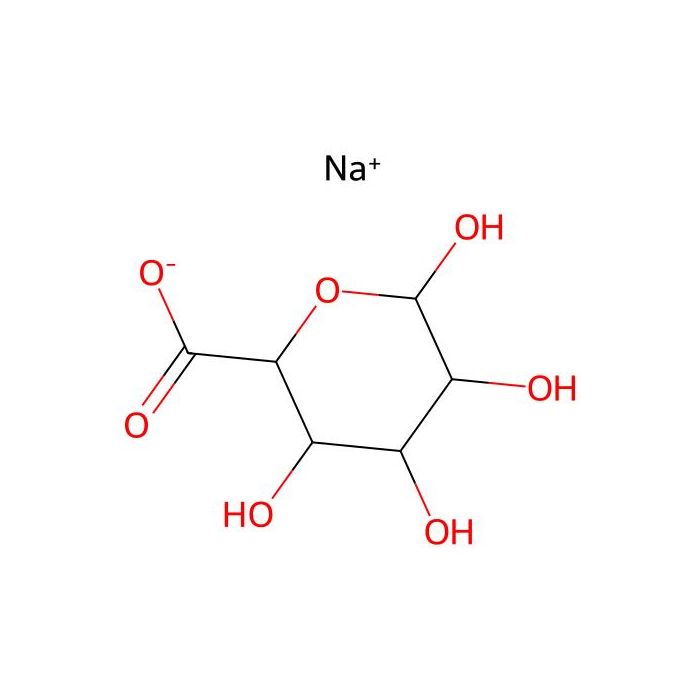
Sodium alginate - Viscosity: 200-250 mPa · S , CAS No.9005-38-3

CAS: 9005-38-3 Cat. No.: S1506463 Número EC: 618-415-6
Disponible para pedir
CALIDAD & PUREZA Viscosity: 200-250 mPa · S
Storage
Room temperature,Desiccated
Shipped In
Normal
★
Talla
Alemania (EU)
USA*
Precio
Cantidad
100g
S1506463-100g
Fabricado bajo pedido · 8–12 semanas
15,53€
500g
S1506463-500g
Fabricado bajo pedido · 8–12 semanas
50,24€
Enter a quantity for the sizes you want to add.
🧪
Por qué esta calidad

Viscosity: 200-250 mPa · S para flujos de trabajo cromatográficos y analíticos sensibles que requieren una interferencia mínima de la línea base.

🌡

Almacenamiento y envío

Room temperature,Desiccated Envío Normal. Consulte el COA específico del lote para conocer las especificaciones exactas.

📋

Documentos de calidad

SDS, COA, ficha técnica y hoja de especificaciones disponibles para descargar. COA específico del lote accesible mediante búsqueda por número de lote.

📚

Prueba documental

Citado en 2585 publicaciones revisadas por pares sobre cromatografía, síntesis orgánica y reacciones de acoplamiento cruzado.

Descripción general

Alginic acid sodium is a gelling and nontoxic anionic polysaccharide. The carboxylic acid groups on the alginic acid chain, renders it insoluble in water.However, converting alginic acid to its sodium form, enables it to solubilize in water easily.
Alginic acid sodium is used: in combination with chitosan, to fabricate a biodegradable porous scaffold for bone tissue engineering. to study the characteristics of a modified amphiphilic alginate derivative to the study the impact of alginate on the rate of lipid digestion by employing an in vitro digestion model in the preparation of alginate hydrogels as encapsulating agents of microparticles of β-galactosidae

Especificaciones

Especificaciones y pureza
Viscosity: 200-250 mPa · S
Condiciones de almacenamiento de almacenamiento
Room temperature,Desiccated
Enviado en
Normal
Nombres e identificadores
IUPAC Name
sodium;(2S,3R,4S,5R)-3,4,5,6-tetrahydroxyoxane-2-carboxylate
InChIKey
MSXHSNHNTORCAW-KSSASCOMSA-M
INCHI
1S/C6H10O7.Na/c7-1-2(8)4(5(10)11)13-6(12)3(1)9;/h1-4,6-9,12H,(H,10,11);/q;+1/p-1/t1-,2+,3+,4-,6?;/m0./s1
Isómeros SMILES
[C@@H]1([C@H]([C@H](OC([C@@H]1O)O)C(=O)[O-])O)O.[Na+]
WGK Alemania
1

Documentación

📋 Hoja de datos de seguridad (SDS)

Documento completo sobre peligros, manipulación, almacenamiento y cumplimiento normativo.

<<<<<<< HEAD Descargar SDS → ======= Descargar SDS → >>>>>>> release248-p3

✅ Certificado de análisis (COA)

Datos de calidad específicos del lote. Introduzca su número de lote para obtener el COA exacto.

Buscar COA →

📊 Ficha técnica

Resumen de referencia rápida de las especificaciones y aplicaciones del producto.

Ver ficha técnica →

🔬 Hoja de especificaciones

Atributos de calidad completos y criterios de aceptación para esta calidad.

Ver hoja de especificaciones →

Datos avanzados

Certificados (CoA, COO, BSE/TSE y tabla de análisis)
C of A & Other Certificates(BSE/TSE, COO):
Analytical Chart:

Find and download the COA for your product by matching the lot number on the packaging.

9 results found

Lot NumberCertificate TypeFechaArticulo
G2631129G2631129Certificate of AnalysisDec 25, 2025 S1506463
I2621205I2621205Certificate of AnalysisDec 25, 2025 S1506463
J2623032J2623032Certificate of AnalysisDec 25, 2025 S1506463
L2511434L2511434Certificate of AnalysisDec 25, 2025 S1506463
C2619056C2619056Certificate of AnalysisDec 16, 2025 S1506463
E2621138E2621138Certificate of AnalysisDec 16, 2025 S1506463
L2511431L2511431Certificate of AnalysisDec 16, 2025 S1506463
L2511432L2511432Certificate of AnalysisDec 16, 2025 S1506463
L2511433L2511433Certificate of AnalysisDec 16, 2025 S1506463
Propiedades químicas y físicas
SensibilidadHygroscopic
Punto de fusión (°C)119 °C
Preguntas frecuentes y artículos
Immobilized Enzyme Technology and Its Applications in Biocatalysis
A Practical Guide to Fragrance Compositions: Turning a Black-Box Formula into an Engineerable System—Compatibility, Stability, Controlled Release, Traceability, and Selection
Panorama Guide to Lithium-Ion Battery Electrode Materials: Working Principles, Materials Map, and Selection Navigation (incl. Tables 1–4)
An Introduction to Research-Grade Carbohydrates: Decoding the “Glycan Language” and a Product-Selection Guide (with Tables 1–3)
Materials Can “Switch”: How Smart Polymers Respond to Temperature, pH, and Light (with Experimental Selection Tips & Product Navigation)
Understanding Hydrophilic Polymers in Aqueous Systems: Hydration Mechanisms, Structural Knobs, and Task-Oriented Selection Guide (Including Tables 1–3)
Biomedical Polymer Insights: Role-Based Task Map, Six Key Material Levers, and a Risk-Driven Evidence Chain (including the Product Navigation Guide and Product Tables 1–3)
Pharmaceutical Formulation and Delivery in Research Settings: Core Definitions, Controllable Frameworks and Practical Guidelines
Alginate : An Overview of Extraction and Purification Processes, Quality Identification, and Multidomain Applications
Review of the Structural Characteristics, Biological Functions, and Application Advances of Lycopene
Functional Framework of Starch Metabolism-Related Enzymes in Food Science Research and Mechanistic Analysis of Quality Regulation
Research Value of Polyelectrolyte Multilayers: Layer-by-Layer Design of Interfacial Composition, Mass Transport, and Function
Key Judgments in Medical Hydrogel R&D: From Polymer Source and Crosslinking Strategy to Sterilization Planning, Scale-Up Feasibility, and Quality Control
Injectable Thermosensitive Gels: Gelation Behavior, Rheological Properties, and Drug Release Characteristics
Applications of Enzymatic Protein Crosslinking Systems in Gel Construction and Functional Evaluation
Designing Hydrogel Scaffolds as Programmable Cell Microenvironments: From Click-Chemistry Functionalization to 3D Cell Culture Experimental Design
From Natural Cellulose to Nanocrystals: Structural Characteristics, Application Directions, and Industrialization Challenges of CNC
Thickening, Suspension, Auxiliary Stabilization, and Agglomeration Mechanisms of Xanthan Gum in Personal Care Formulations: From Molecular Structure to Processing Applications
From Structure to Rheology: Thickening, Stabilization, and Selection Logic of Cellulose Ethers for Personal Care Applications
Structure, Properties, and Mechanisms of Powdered Fragrances and Fragrance Delivery Materials: Stability, Release Mechanisms, and Selection Logic
How to Extend Fragrance Longevity in Personal and Home Care Products: Fragrance Structure, Surface Deposition, and Release Modulation
R&D Selection and Experimental Evaluation of Common Food Hydrocolloids
Experimental Applications of Carboxymethyl Cellulose (CMC) Solution in Enzyme Assays, Suspension Systems, and Functional Materials
Potential Mechanisms of p-Cymene in Problem-Prone Skin: Membrane Perturbation, Inflammatory Signaling Modulation, and Localized Delivery
Citations of This Product
Calculadoras de soluciones
Reseñas

Reseñas de cliente

Preguntas frecuentes

How should this product be stored?
Store at room temperature, desiccated. Keep the container tightly closed with desiccant — the material is moisture-sensitive.
How is this product shipped?
This product ships under standard ambient conditions. No temperature-controlled packaging is required.
What are the CAS number, molecular formula and molecular weight?
The CAS Number is 9005-38-3. InChIKey MSXHSNHNTORCAW-KSSASCOMSA-M.
What documentation is provided?
Available product documentation, including Certificates of Analysis (COA), Safety Data Sheets (SDS), and specification sheets, is shown in the product document area. Document availability and access follow the current site policy.

¿Quieres que te enviemos un mensaje cuando tengamos descuentos disponibles?

Recordármelo más tarde

¡Gracias! Por favor, revisa tu bandeja de entrada de correo electrónico para confirmar.

¡Vaya! Las notificaciones están desactivadas.