Human IgG (AF555) - Anticorpo di controllo isotipo

Cat. No.: Ab215372
Disponibile su ordine
QUALITÀ & PUREZZA ExactAb™ ? ExactAb™ — Aladdin's antibody line emphasizing precision and validated quality. Use for reliable, specificity-validated antibody applications. Validated ? Validated grade — performance confirmed in defined applications before release. Use when you want documented assurance the reagent works as stated. 0.5 mg/mL
Application
Flow Cytometry
Host species
Umano
Isotype
Human IgG
Conjugation
AF555
★
Dimensione
Germania (EU)
USA*
Prezzo
Qtà
10μg
Ab215372-10μg
Su ordinazione · 8–12 settimane
51,98€
100μg
Ab215372-100μg
Su ordinazione · 8–12 settimane
104,04€
500μg
Ab215372-500μg
Su ordinazione · 8–12 settimane
225,53€
Enter a quantity for the sizes you want to add.

Panoramica

Human IgG Antibody; Isotype Control Antibody, could be used for Flow Cytometry.

Specifiche

Product Name
Human IgG (AF555) - Anticorpo di controllo isotipo
Sinonimi
Human IgG
Specifiche e purezza
ExactAb™, Validated, 0.5 mg/mL
Specie ospite
Umano
Coniugazione
AF555
Eccitazione (nm)
Green Laser(532nm)
Emissione (nm)
568nm
Ex/Em(nm)
Ex:553nm;Em:568nm
Grado
ExactAb™, Validated
Metodo di purificazione
Affinity chromatography
Concentrazione
0.5 mg/mL
Product Line
Prodotti biologici
Stoccaggio e spedizione
Condizioni di conservazione di stoccaggio
Store at 2-8°C,Protected from light,Do not freeze
Spedito in
Wet ice,Do not freeze
Stabilità e conservazione
The antibody solution should be stored undiluted between 2°C and 8°C, and protected from prolonged exposure to light. Do not freeze.
Immagini

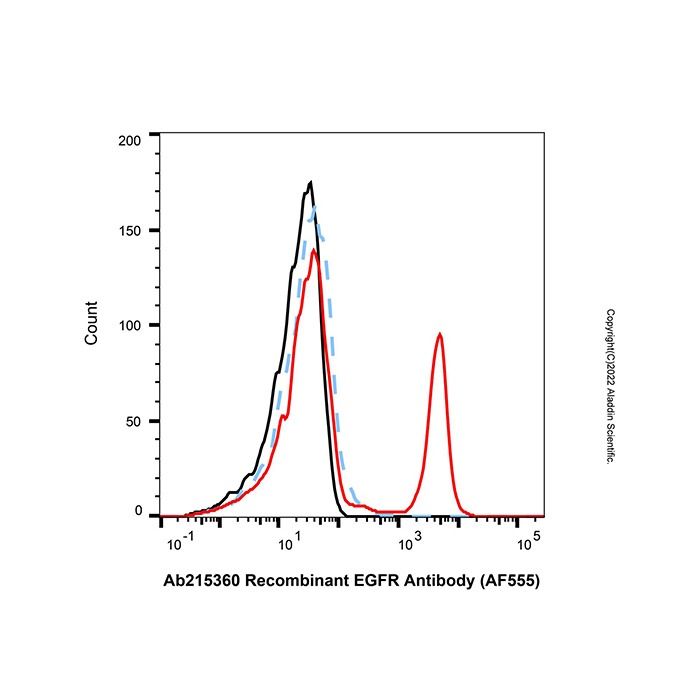
Human IgG (AF555) (Ab215372) - Flow Cytometry
Flow cytometry analysis of EGFR expression by A431 cells (red) compared to an isotype control (blue). Cells were stained with Recombinant EGFR Antibody (AF555) (Ab215360) at 5μL/test for 1 hour at 4°C. Blue - Human IgG (AF555) (Ab215372). Black - Unlabelled control, cells without incubation with primary antibody.

Applicazione
Applicazione
Dilution info
Flow Cytometry

Use at an assay dependent concentration.
Each lot of this antibody is quality control tested by flow cytometric analysis as negative control. Use at concentrations comparable to those of the speci

Dati avanzati

Certificati (CoA, COO, BSE/TSE e tabella di analisi)
C of A & Other Certificates(BSE/TSE, COO):
Analytical Chart:

Find and download the COA for your product by matching the lot number on the packaging.

3 results found

Lot NumberCertificate TypeDataOggetto
ZJ25F0521597ZJ25F0521597Certificate of AnalysisMar 16, 2026 Ab215372
ZJ25F0521598ZJ25F0521598Certificate of AnalysisMar 16, 2026 Ab215372
ZJ25F0521599ZJ25F0521599Certificate of AnalysisMar 16, 2026 Ab215372
Calcolatori di soluzioni
Recensioni

Recensioni dei clienti

Application Protocols

Item-specific tested applications and recommended dilutions are Not specified for this item; refer to CoA/Spec Sheet. The following are general guidelines for AF555-labeled IgG reagents.

  • Immunofluorescence (fixed cells/tissue, general):
    • Block: 1–5% serum or 1% BSA in PBS for 30–60 min.
    • Incubation: Dilute antibody in blocking buffer; typical starting range 1–10 µg/mL. Incubate 1 h at room temp or overnight at 4 °C, protected from light.
    • Wash: 3× with PBS/TBS (with 0.05% Tween-20 optional).
    • Mount: Use antifade mountant; image using 540–560 nm excitation and 570–620 nm emission collection.
  • Flow cytometry (general):
    • Stain 1×10^5–10^6 cells in 50–100 µL with 0.1–2 µg antibody; incubate 20–30 min on ice or 4 °C in the dark; wash 2–3×; acquire with 561 nm laser, appropriate bandpass filter (e.g., 585/42).
    • Include compensation controls for AF555 spillover into adjacent channels.
  • Plate assays (FIA/ELISA-style, general):
    • Start at 0.1–1 µg/mL; optimize for S/N; protect from light during incubations.

Controls and QC:

  • Use isotype controls or unlabeled IgG to assess nonspecific binding.
  • Validate linearity by titration; confirm absence of aggregation by quick spin (e.g., 14,000×g, 5 min) prior to critical assays.
Biological Roles

This section summarizes general biochemistry of Human IgG and photophysics of AF555; it is not an item-specific claim and is provided for context only.

  • Human IgG (general):
    • Major immunoglobulin isotype in human serum; monomeric IgG circulates and diffuses into tissues.
    • Composed of two heavy (γ) and two light (κ or λ) chains with variable regions for antigen recognition and a constant Fc region mediating effector interactions (e.g., Fcγ receptors, complement component C1q) in physiological contexts.
    • Subclasses (IgG1–IgG4) differ in hinge length, flexibility, and effector potential; subclass for this item is not specified.
    • Glycosylation in the Fc region modulates structure and effector interactions; glycoform composition varies.
  • AF555 dye (general):
    • Small-molecule xanthene-based fluorophore with high quantum yield and good photostability; sulfonate groups enhance aqueous solubility.
    • Excited efficiently at ~555–561 nm (common laser line) with emission in the yellow–orange region, enabling multiplex imaging/flow with minimal autofluorescence interference compared to shorter wavelengths.

Research utility derived from these roles:

  • AF555-conjugated IgG provides direct fluorescent signals in immunoassays without the need for secondary reagents.
  • The Fc region can contribute to nonspecific binding via Fc receptors in some biological samples; blocking strategies (e.g., Fc block, serum blocking) are often required for accurate measurements.

No clinical or diagnostic claims are made; for research use only (per item data).

Buffer Applications

As an antibody–fluorophore conjugate, this product is used within standard biological buffer systems rather than functioning as a buffer itself.

  • Common working buffers (general guidance):
    • PBS (10–50 mM phosphate, 100–150 mM NaCl, pH 7.2–7.6) for dilutions, washes, and storage.
    • TBS (20–50 mM Tris, 100–150 mM NaCl, pH 7.4–7.6) may reduce background in some immunoassays.
    • HEPES (10–25 mM, pH 7.2–7.5) for live-cell compatible fluorescence with low autofluorescence.
  • Additives (if compatible with your assay):
    • 0.05–0.1% Tween-20 to reduce nonspecific binding in washes.
    • 0.1–1% BSA or 2–5% serum for blocking; verify they do not introduce cross-reactivity.
    • Sodium azide (0.02–0.05%) as a preservative for stored working solutions not used with live cells or peroxidase-based systems. Presence in this item is Not specified.

Practical notes:

  • Filter all buffers (0.22 µm) to remove particulates that elevate background fluorescence.
  • Maintain neutral pH; avoid chelators or divalent cations only if your assay requires it.

Item-specific buffer composition, stabilizers, and concentration: Not specified for this item; refer to CoA/Spec Sheet.

Green Alternatives

Although antibodies are not solvents or commodity reagents, greener choices in workflow design can reduce environmental impact and hazardous waste.

  • Fluorophore choice (general): AF555 is a bright, photostable dye suitable for standard green/orange channels. Alternative dyes (e.g., phycoerythrin, DyLight 550, or organic dyes excited at 561 nm) may have different photostability, waste profiles, and spectral spillover. Trade-offs include brightness vs. stability, and proteinaceous vs. small-molecule fluorophores.

Sustainability considerations:

  • Buffer systems: Prefer phosphate, Tris, or HEPES at minimal effective concentrations; avoid heavy-metal containing additives. Prepare buffers in bulk to reduce packaging.
  • Preservatives: If azide-free conditions are feasible (e.g., single-use aliquots, sterile technique), you can reduce hazardous azide waste. Item-specific preservative content is Not specified for this item.
  • Imaging media: Choose low-toxicity antifade systems (e.g., glycerol-based with oxygen scavengers) over solvent-rich mountants when performance allows.
  • Process design: Minimize single-use plastics via reusable glassware where compatible; employ microvolume formats to cut reagent consumption.

Comparison (general):

  • AF555 vs enzyme labels (HRP/AP): Fluorescence avoids chromogenic substrates and organic solvents used for some blotting workflows; however, light-sensitive waste still requires proper disposal.

Always follow institutional green-chemistry guidelines and local regulations for disposal of dye-containing aqueous waste.

Pharmaceutical Uses

This product is designated “For research use only” and is not intended for human or veterinary use, clinical diagnostics, or therapeutic applications.

Contextual information (general, non-clinical):

  • Antibody conjugates like Human IgG (AF555) are used in pharmaceutical R&D laboratories for assay development, high-content imaging, target engagement studies, and as controls in bioanalytical method qualification.
  • In formulation science, IgG proteins are model macromolecules for studying protein aggregation, adsorption, and stabilization strategies (e.g., sugars, amino acids, surfactants) in purely research contexts.
  • AF555 fluorescence enables non-radioactive detection in binding studies and microplate assays.

Regulatory notes:

  • No pharmacopeial monograph or GMP status is implied for this item. Batch records, sterility, endotoxin limits, and excipient profiles suitable for clinical use are not provided.

Takeaway:

  • Use this material exclusively in research settings. For any translational or regulated application, source GMP-grade materials with full quality dossiers and verify fluorophore and conjugation chemistry suitability for the intended use.
Physical Properties

Item-specific physical constants are not provided for this protein conjugate. See below for general/literature guidance relevant to Human IgG and AF555; do not treat as specification.

  • Appearance: Not specified for this item; refer to CoA/Spec Sheet.
  • Concentration/formulation: Not specified for this item; refer to CoA/Spec Sheet.
  • Buffer pH: Not specified for this item; refer to CoA/Spec Sheet.

Literature/general values (for context only):

  • Protein size: IgG monomer ~150 kDa; hydrodynamic diameter ~10–12 nm; isoelectric point (pI) typically ~6–9 depending on subclass/glycoform.
  • Solubility: Highly soluble in aqueous buffers (e.g., PBS, TBS); insoluble in most neat organic solvents.
  • Thermal behavior: Unfolding transitions often begin >60 °C; AF555 fluorescence can diminish with prolonged heating or high pH. Avoid >37 °C for routine handling.
  • Photophysics (AF555, literature):
    • Excitation maximum ~555 nm; emission maximum ~565–580 nm depending on environment.
    • Typical extinction coefficient (free dye) ε ~1×10^5 M⁻1 cm⁻1 at 555 nm; quantum yield high; conjugation can shift/attenuate spectra.
  • Refractive index/logP/pKa: Not applicable to macromolecular conjugates; no item-specific data available.

Practical notes:

  • Degree of labeling (DOL) and A260/A280/A555 ratios critically define performance but are lot-specific; Not specified for this item; refer to CoA/Spec Sheet.
  • For spectral unmixing, acquire exact excitation/emission from the lot-specific datasheet when available.
Quality and Grades
  • Grade/Purity (item-specific): ExactAb™, Validated.
  • What this generally implies:
    • ExactAb™ denotes a controlled, lot-traceable antibody preparation with defined production parameters (e.g., source, purification, and conjugation chemistry) designed for reproducible performance across lots. Specific acceptance criteria (purity %, residuals, stabilizers) are Not specified for this item; refer to CoA/Spec Sheet.
    • Validated indicates the conjugate has undergone functional verification in representative fluorescence-based assays (e.g., IF/FC) to confirm signal quality and specificity under defined conditions. The exact test suite, positive controls, and pass/fail metrics are Not specified for this item.
  • Stabilizers and preservatives:
    • Presence/absence and concentrations of BSA, gelatin, trehalose, glycerol, or sodium azide are Not specified for this item; refer to CoA/Spec Sheet. These additives, when present, improve shelf stability but can affect certain applications (biotin/streptavidin systems, live cells, proteomics).
  • Purity/aggregation:
    • Typical analytical controls for high-end conjugates include SEC-HPLC or DLS for monomeric content, SDS-PAGE for integrity, and UV-Vis for DOL. Item-specific results are Not specified for this item.

Recommendation: For regulated or quantitative workflows, document the lot number and obtain the CoA/Spec Sheet to review DOL, purity profile, buffer composition, and any application validations relevant to your assay.

Reaction and Applications

As a fluorophore-labeled Human IgG, this reagent is designed for fluorescence-based detection and quantification rather than chemical synthesis. Typical research applications (general guidance):

  • Immunofluorescence (IF) and confocal microscopy: Direct detection of immobilized or cell-associated targets when Human IgG is the analyte or binding component in the assay architecture.
  • Flow cytometry (FC): Fluorescent readout in channels compatible with AF555 excitation/emission (~555/565–580 nm). Use appropriate compensation controls.
  • Fluorescence immunoassays (FIA), ELISA variants, microarrays: AF555 provides bright, photostable signal with low background.
  • Controls and standards: Human IgG conjugates are frequently used as positive controls for conjugation workflows, instrument calibration, spillover/compensation controls, and benchmarking of fluorophore performance.

Practical considerations:

  • Degree of labeling (DOL) impacts brightness and affinity; verify lot-specific values when available (Not specified for this item).
  • Avoid pH extremes and sodium borohydride or other reducing agents that can damage fluorophores or disrupt disulfide bonds.
  • For multiplexing, pair AF555 with spectrally distinct dyes (e.g., AF488, AF647) and apply proper spectral unmixing.
  • Prevent photobleaching: minimize exposure to intense illumination; include antifade reagents if compatible.

Note: No item-specific application claims are provided. Optimize dilution and incubation parameters empirically and confirm compatibility with your assay matrix.

Reaction Conditions

For end users, no chemical reaction is required; the product is a finished AF555–IgG conjugate. The following general conditions are provided for context if users intend to perform additional labeling or coupling steps with Human IgG (not item-specific recommendations):

  • NHS-ester dye labeling (general, literature):
    • Buffer: 50–100 mM sodium bicarbonate or PBS adjusted to pH 8.3–8.6 (amine-free; avoid Tris during coupling).
    • Temperature/time: 20–25 °C for 15–60 min, protected from light.
    • Molar ratio: Dye:IgG typically 3–10:1 to target DOL ~2–5 (optimize empirically).
    • Quench: Add Tris or ethanolamine (50 mM) after reaction.
    • Purification: Desalt via size-exclusion spin columns or SEC to remove free dye.
  • Maleimide–thiol coupling (if cysteines are available):
    • Buffer: pH 6.5–7.0 with EDTA; reduce selectively (e.g., TCEP at low equivalents) if needed; avoid excess reducing agent during coupling.
    • Temperature/time: 4–25 °C for 30–120 min.

Performance verification (post-reaction):

  • Determine A280 and A555 to calculate protein concentration and DOL (using dye-specific extinction coefficients); confirm integrity by SDS-PAGE or SEC.

Note: The above are general literature conditions for bioconjugation workflows and are not specifications for this item. For use of the supplied conjugate, simply dilute in compatible buffer and protect from light per Storage & Reconstitution.

Safety and Handling
  • GHS classification, signal word, pictograms, H-statements: Not specified for this item; refer to SDS.
  • General safety (proteins/fluorophore conjugates):
    • Handle using standard laboratory PPE: lab coat, gloves (nitrile), and safety glasses.
    • Avoid ingestion, inhalation of aerosols, and skin/eye contact. Work in a clean area to prevent contamination.
    • AF555 is light-sensitive; minimize ambient light exposure. Protect from strong oxidizers and extreme pH that can denature protein or bleach dye.
  • First aid (general guidance; consult SDS):
    • Skin/eye contact: Rinse with water for several minutes; remove contaminated clothing. Seek medical attention if irritation persists.
    • Ingestion/inhalation: Move to fresh air; rinse mouth; seek medical advice.
  • Handling precautions:
    • Do not freeze (per item data) to avoid aggregation/precipitation and loss of activity/fluorescence.
    • Keep on wet ice during use; return promptly to 2–8 °C.
    • Avoid repeated temperature cycling; aliquot if frequent use is expected.
    • Use low-binding plastics/glass to minimize adsorption; mix gently (no vortexing) to preserve antibody integrity.
  • Incompatibilities (general):
    • Strong acids/bases, chaotropes, high concentrations of denaturants, and organic solvents can denature IgG and quench fluorophore signal.
    • Sodium azide and other preservatives may interfere with some downstream conjugations/enzymatic assays; item-specific presence is not specified.

Always consult the product SDS for authoritative hazard and first-aid information.

Solvent Selection

This product is a protein–fluorophore conjugate supplied for use in aqueous buffers.

  • Applicable media (general):
    • Phosphate-buffered saline (PBS), Tris-buffered saline (TBS), HEPES, or similar neutral pH buffers (pH ~7.2–7.6) are commonly used.
    • Include carrier proteins or sugars (e.g., 0.1–1% BSA, 2–5% trehalose) only if compatible with the assay; item composition is Not specified for this item.
  • Avoid:
    • Neat organic solvents (e.g., acetone, acetonitrile, DMSO) that denature protein and quench fluorescence.
    • Strong acids/bases and high ionic strength that can reduce binding or induce aggregation.
  • Polarity/miscibility: Not applicable in the classical solvent-selection sense; as a macromolecule, IgG operates in water with modest salt.

Comparison (general, literature):

  • PBS vs TBS: PBS is broadly compatible; TBS can reduce nonspecific interactions in some immunoassays. Phosphate can interfere with certain metal-dependent steps; Tris can interact with some crosslinkers.
  • HEPES: Superior pH buffering near neutrality for live-cell compatible fluorescence (low autofluorescence), but verify compatibility with preservatives if present.

Practical tips:

  • Filter (0.22 µm) buffers to reduce particulates; avoid filter-sterilizing the antibody itself unless necessary.
  • Maintain low light conditions during dilutions to preserve AF555 signal.
  • Use protein-low binding tubes and pre-blocked plasticware to minimize adsorption losses.
Storage and Reconstitution

Item-specific storage/shipping (from product data):

  • Store at 2–8 °C, protected from light. Do not freeze.
  • Shipped on wet ice. Do not freeze during shipment or storage.

Additional handling guidance (general best practices for antibody–fluorophore conjugates):

  • Upon receipt, record lot number and inspect for precipitation or color change. If particulates are observed, clarify by brief centrifugation (e.g., 10,000–14,000×g, 5 min, 2–8 °C) and use the supernatant.
  • Aliquoting: If frequent access is expected, prepare working aliquots to minimize light and temperature exposure. Maintain aseptic technique to reduce bioburden.
  • Mixing: Gently invert or pipette to mix; avoid vigorous vortexing or foaming that can denature IgG.
  • Light protection: Use amber tubes/foil wrap during storage and handling to preserve AF555 fluorescence.

Reconstitution details (if supplied lyophilized): Not specified for this item; refer to CoA/Spec Sheet. Buffer composition, protein concentration, and any stabilizers/preservatives are Not specified for this item; refer to CoA/Spec Sheet.

Short-term working solution stability (general): Hours to days at 2–8 °C when protected from light; prepare fresh dilutions as needed. Discard if contamination or loss of fluorescence is suspected.

For long-term stability and any freeze–thaw guidance, follow the lot-specific documentation; freezing is contraindicated for this item per product data.

Structure and Identity

Human IgG (AF555) is a fluorophore-labeled immunoglobulin reagent intended for research use in fluorescence-based assays.

  • Item-specific identifiers:
    • CAS: Not specified for this item; refer to CoA/Spec Sheet.
    • InChIKey: Not applicable for macromolecular proteins; not specified for this item.
    • SMILES: Not applicable for macromolecular proteins; not specified for this item.
    • Molecular formula: Not specified for this item; refer to CoA/Spec Sheet.
    • Molecular weight: Not specified for this item; refer to CoA/Spec Sheet.
  • Structural features (general, literature):
    • IgG is a tetrameric glycoprotein (~150 kDa typical, two ~50 kDa heavy chains and two ~25 kDa light chains) arranged as a Y-shaped molecule with two antigen-binding Fab arms and one Fc region.
    • Disulfide bonds link heavy–heavy and heavy–light chains; N-linked glycans decorate the Fc domain.
    • Conjugation with AF555 (Alexa Fluor 555-class dye) is typically via amide linkage to surface-exposed lysine ε-amines using NHS-ester chemistry; degree of labeling (DOL) is lot-dependent (not specified for this item).
    • AF555 is a xanthene-type sulfonated dye; literature photophysics: Ex/Em maxima ~555/565 nm; high quantum yield and photostability relative to rhodamine dyes.
  • Identity notes:
    • “Human IgG (AF555)” indicates the protein entity is Human IgG with covalently attached AF555 fluorophores. Whether it is subclass-specific (IgG1–4), pooled, or affinity fractionated is not specified for this item.
    • ExactAb™, Validated grade indicates controlled production and performance verification (see Quality & Grades).
Synthetic Utility

Although not a classical synthetic building block, Human IgG (AF555) is relevant to bioconjugation chemistry and assay construction. Key chemistry aspects (general guidance):

  • Conjugation chemistry:
    • AF555 is commonly introduced via NHS-ester coupling to lysine ε-amines under mildly basic conditions (pH ~8.3), forming stable amide bonds.
    • Alternative site-specific strategies (not necessarily used here) include enzymatic glycan remodeling (Fc N-glycan), engineered cysteine–maleimide coupling, or click chemistry (azide–alkyne) after introducing handles.
  • Considerations for degree of labeling (DOL):
    • Higher DOL increases brightness but can impair binding or solubility; typical practical range is ~2–6 dyes/IgG (lot-dependent; not specified for this item).
  • Assay assembly:
    • The AF555-labeled IgG can serve as a direct probe or as a standard to benchmark instrument sensitivity, compensation matrices, and spectral unmixing algorithms.
  • Materials compatibility:
    • Avoid strong nucleophiles/reductants (e.g., hydroxylamine, NaBH4) post-conjugation; they may damage the dye or linkages.

In retrosynthetic planning terms, the conjugate embodies a protein scaffold bearing multiple amide-linked chromophores—useful for method development in labeling stoichiometry determination (UV-Vis deconvolution) and for validating purification approaches (SEC, desalting, HIC) in bioconjugation workflows.

Target Specificity
  • Antigen/Target: Not specified for this item; refer to CoA/Spec Sheet.
  • Host/Isotype: Not specified for this item; refer to CoA/Spec Sheet.
  • Clone/Subclass: Not specified for this item; refer to CoA/Spec Sheet.
  • Species reactivity/cross-reactivity: Not specified for this item; refer to CoA/Spec Sheet.
  • Conjugate: AF555 (fluorophore) — conjugation method and DOL Not specified for this item.

Note: The product name suggests the reagent itself is Human IgG labeled with AF555 rather than an antibody directed against a specific antigen. If your use case requires recognition of a defined target (e.g., anti-Protein X), verify the exact specificity, isotype, and validation data on the lot-specific documentation before use.

Domande frequenti

What does ExactAb? mean?
ExactAb? indicates the product has been validated for use in rigorous antibody validation workflows. Validation may include positive/negative control samples, signal-to-noise testing, and protocol-specific QC. Lot-specific test data is published on the Certificate of Analysis where available.
What does Validated mean?
Validated indicates the product has been validated for use in rigorous antibody validation workflows. Validation may include positive/negative control samples, signal-to-noise testing, and protocol-specific QC. Lot-specific test data is published on the Certificate of Analysis where available.
How should this product be stored?
Store at 2–8 °C, protected from light. Do not freeze. Freezing may cause irreversible damage to this material.
How is this product shipped?
This product ships chilled on wet ice. Unpack on arrival and transfer it to the storage condition stated above.
What documentation is provided?
Available product documentation, including Certificates of Analysis (COA), Safety Data Sheets (SDS), and specification sheets, is shown in the product document area. Document availability and access follow the current site policy.
Which species reactivity has this antibody been validated against?
Validated reactivity is listed on the PDP and on each lot's datasheet. We validate against the most commonly tested species for the target (Human IgG (AF555)); cross-reactivity in untested species may exist but is not guaranteed. Contact technical support for specific species inquiries.

Hai bisogno di aiuto per scegliere la qualità?

La nostra guida alla selezione delle qualità copre purezza, stato dello stabilizzatore e idoneità all'applicazione per tutte le varianti del nostro catalogo.

Visualizza la guida alle qualità Validated → Visualizza la guida alle qualità ExactAb™ →

Prodotti correlati

Human IgG - Anticorpo di controllo isotipo, for WB,CLIA,LF,EIA,PRTIA various applications, generated in Human, >95%, IgG
Human IgG2-Kappa - Anticorpo di controllo isotipo, Human IgG2
Human IgG3-kappa - Anticorpo di controllo isotipo, Human IgG3
Human IgG1-kappa, anti-Spike RBD - Anticorpo di controllo isotipo, specific to Spike RBD, Human IgG1
Human IgG4-kappa - Anticorpo di controllo isotipo, IgG4
Human IgG (FITC) - Anticorpo di controllo isotipo, IgG
Human IgG (APC) - Anticorpo di controllo isotipo, IgG
Human IgG (PE) - Anticorpo di controllo isotipo, IgG
Human IgG1(P331S/E430G)-kappa, anti-HEL - Anticorpo di controllo isotipo, specific to HEL, Human IgG1(P331S/E430G)
Human IgG1(D265A/N297A)-kappa, anti-HEL - Anticorpo di controllo isotipo, specific to HEL, Human IgG1(D265A/N297A)
Human IgG1(K409R/E356D/M358L)-kappa, anti-HEL - Anticorpo di controllo isotipo, specific to HEL, Human IgG1(K409R/E356D/M358L)
Human IgG1(P329G/E356D/M358L)-kappa, anti-HEL - Anticorpo di controllo isotipo, specific to HEL, Human IgG1(P329G/E356D/M358L)
Human IgG1(F405L)-kappa, anti-HEL - Anticorpo di controllo isotipo, specific to HEL, Human IgG1(F405L)
Human IgG1(N297Q)-kappa, anti-HEL - Anticorpo di controllo isotipo, specific to HEL, Human IgG1(N297Q)
Human IgG (Biotin) - Anticorpo di controllo isotipo, IgG
Human IgG1(N297S)-kappa, anti-HEL - Anticorpo di controllo isotipo, specific to HEL, Human IgG1(N297S)
Human IgG1(E233A/L235A)-kappa, anti-HEL - Anticorpo di controllo isotipo, specific to HEL, Human IgG1(E233A/L235A)
Human IgG1(K214R/N297A)-kappa, anti-HEL - Anticorpo di controllo isotipo, specific to HEL, Human IgG1(K214R/N297A)
Human IgG1(K214R/L234A/L235A)-kappa, anti-HEL - Anticorpo di controllo isotipo, specific to HEL, Human IgG1(K214R/L234A/L235A)
Human IgG1(N297A/E356D/M358L)-kappa, anti-HEL - Anticorpo di controllo isotipo, specific to HEL, Human IgG1(N297A/E356D/M358L)
Human IgG1(L234F/L235E)-kappa, anti-HEL - Anticorpo di controllo isotipo, specific to HEL, Human IgG1(L234F/L235E)
Human IgG1(D265A)-kappa, anti-HEL - Anticorpo di controllo isotipo, specific to HEL, Human IgG1(D265A)
Human IgG1(K214R/L234F/L235E/P331S)-kappa, anti-HEL - Anticorpo di controllo isotipo, specific to HEL, Human IgG1(K214R/L234F/L235E/P331S)
Human IgG1(K214R/E356D/M358L)-kappa, anti-HEL - Anticorpo di controllo isotipo, specific to HEL, Human IgG1(K214R/E356D/M358L)
Human IgG1(L234A/L235A/G237A)-kappa, anti-HEL - Anticorpo di controllo isotipo, specific to HEL, Human IgG1(L234A/L235A/G237A)
Human IgG1(L234A/L235A/F405L)-kappa, anti-HEL - Anticorpo di controllo isotipo, specific to HEL, Human IgG1(L234A/L235A/F405L)
Human IgG1(D270N)-kappa, anti-HEL - Anticorpo di controllo isotipo, specific to HEL, Human IgG1(D270N)
Human IgG4(S228P)-kappa, anti-HEL - Anticorpo di controllo isotipo, specific to HEL, Human IgG4(S228P)
Human IgG1(N297A)-kappa, anti-HEL - Anticorpo di controllo isotipo, specific to HEL, Human IgG1(N297A)
Human IgG4(S228P/L235E/P329G)-kappa, anti-HEL - Anticorpo di controllo isotipo, specific to HEL, Human IgG4(S228P/L235E/P329G)
Human IgG1-lambda1, anti-Spike RBD - Anticorpo di controllo isotipo, specific to Spike RBD, Human IgG1
Human IgG1-lambda2, anti-Spike RBD - Anticorpo di controllo isotipo, specific to Spike RBD, Human IgG1
Human IgG1-kappa (AF405), anti-Spike RBD - Anticorpo di controllo isotipo, specific to Spike RBD
Human IgG1-kappa (AF647), anti-Spike RBD - Anticorpo di controllo isotipo, specific to Spike RBD
Human IgG1-kappa (APC), anti-Spike RBD - Anticorpo di controllo isotipo, specific to Spike RBD
Human IgG1-kappa (Biotin), anti-Spike RBD - Anticorpo di controllo isotipo, specific to Spike RBD
Human IgG1-kappa (AF700), anti-Spike RBD - Anticorpo di controllo isotipo, specific to Spike RBD
Human IgG1-kappa (FITC), anti-Spike RBD - Anticorpo di controllo isotipo, specific to Spike RBD
Human IgG1-kappa (AF555), anti-Spike RBD - Anticorpo di controllo isotipo, specific to Spike RBD
Human IgG (AF647) - Anticorpo di controllo isotipo
Human IgG (AF488) - Anticorpo di controllo isotipo
Human IgG (AF700) - Anticorpo di controllo isotipo
Human IgG (AF405) - Anticorpo di controllo isotipo

Desidera che le inviamo un messaggio quando avremo sconti disponibili?

Ricordamelo più tardi

Grazie! Controlli la sua casella di posta per confermare.

Ops! Le notifiche sono disabilitate.