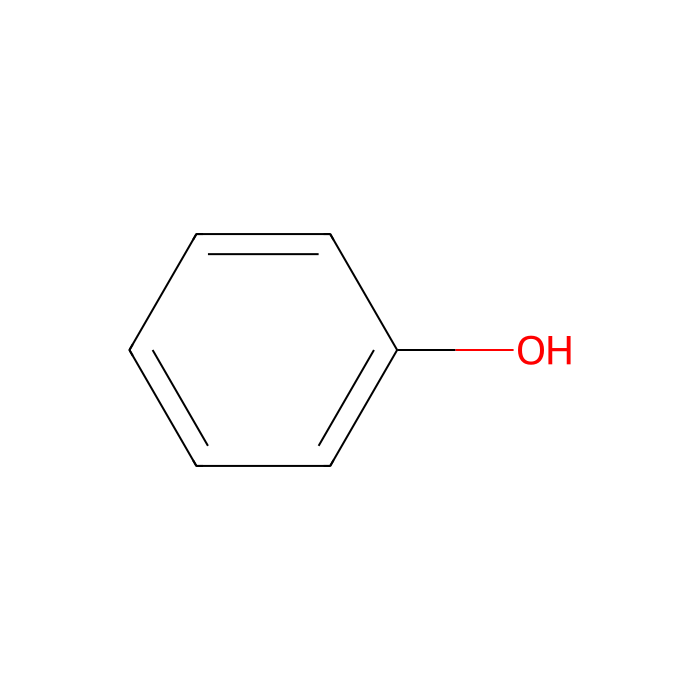
Phenol Standard - 2000ug/ml in high purity Methanol , CAS No.108-95-2

CAS: 108-95-2 Cat. No.: P128195 Formula: C6H6O Peso molecolare: 94.11 Beilstein Registry Number: 969616 Numero EC: 203-632-7
Disponibile su ordine
QUALITÀ & PUREZZA 2000ug/ml in high purity Methanol
Storage
Protected from light,Room temperature
Shipped In
FedEx DG Service
★
Dimensione
Germania (EU)
USA*
Prezzo
Qtà
1ml
P128195-1ml
Su ordinazione · 8–12 settimane

86,69€

101,44€
Salva 14,75 € (14.54%)
Enter a quantity for the sizes you want to add.

Panoramica

Phenols Single Compound Standards US EPA Methods:604,627,8270,1311

Specifiche

Specifiche e purezza
2000ug/ml in high purity Methanol
Condizioni di conservazione di stoccaggio
Protected from light,Room temperature
Spedito in
FedEx DG Service
Nomi e identificatori
SMILES
Oc1ccccc1
InChIKey
ISWSIDIOOBJBQZ-UHFFFAOYSA-N
InChI
1S/C6H6O/c7-6-4-2-1-3-5-6/h1-5,7H
Isomeri SMILES
C1=CC=C(C=C1)O
WGK Germania
2
RTECS
SJ3325000
Numero UN
UN 1671
Gruppo di imballaggio
II
Peso molecolare
94.11
Beilstein
969616
Reaxys
969616
Reaxys-RN_link_address
https://www.reaxys.com/reaxys/secured/hopinto.do?context=S&query=IDE.XRN=969616&ln=

Dati avanzati

Taxonomic Classification

Taxonomy Tree

KingdomOrganic compounds
SuperclassBenzenoids
ClassePhenols
Subclass1-hydroxy-4-unsubstituted benzenoids
Intermediate Tree Nodes Not available
Direct Parent1-hydroxy-4-unsubstituted benzenoids
Alternative Parents 1-hydroxy-2-unsubstituted benzenoids  Benzene and substituted derivatives  Organooxygen compounds  Hydrocarbon derivatives  
Molecular FrameworkAromatic homomonocyclic compounds
Substituents 1-hydroxy-4-unsubstituted benzenoid - 1-hydroxy-2-unsubstituted benzenoid - Monocyclic benzene moiety - Organic oxygen compound - Hydrocarbon derivative - Organooxygen compound - Aromatic homomonocyclic compound
DescrizioneThis compound belongs to the class of organic compounds known as 1-hydroxy-4-unsubstituted benzenoids. These are phenols that are unsubstituted at the 4-position.
External Descriptors a phenol
Struttura 3D
Modello di struttura chimica interattiva


Certificati (CoA, COO, BSE/TSE e tabella di analisi)
C of A & Other Certificates(BSE/TSE, COO):
Analytical Chart:
Proprietà chimiche e fisiche
Indice di rifrazione1.54178
Punto di infiammabilità (°F)177.8 °F - closed cup
Punto di infiammabilità (°C)79.44℃(closed cup)
Punto di ebollizione (°C)181.7°C
Punto di fusione (°C)43°C
Sicurezza e pericoli (GHS)
Pictogrammi
GHS02,   GHS05,   GHS06,   GHS08,   GHS09
Segnale
Danger
Indicazioni di pericolo

H225:Highly Flammable liquid and vapor

H370:Causes damage to organs

H301+H311+H331:Toxic if swallowed, in contact with skin or if inhaled

Precauzioni

P210:Keep away from heat, hot surface, sparks, open flames and other ignition sources. - No smoking.

P233:Keep container tightly closed.

P240:Ground/bond container and receiving equipment.

P241:Use explosion-proof [electrical/ventilating/lighting/.../] equipment.

P242:Use only non-sparking tools.

P243:Take precautionary measures against static discharge.

P260:Do not breathe dust/fume/gas/mist/vapors/spray.

P264:Wash hands [and …] thoroughly after handling.

P270:Do not eat, drink or smoke when using this product.

P271:Use only outdoors or in a well-ventilated area.

P280:Wear protective gloves/protective clothing/eye protection/face protection.

P311:Call a POISON CENTER or doctor/...

P330:Rinse mouth.

P301+P310:IF SWALLOWED: Immediately call a POISON CENTER/doctor/...

P303+P361+P353:IF ON SKIN (or hair): Take off Immediately all contaminated clothing. Rinse SKIN with water [or shower].

P304+P340:IF INHALED: Remove person to fresh air and keep comfortable for breathing.

P308+P311:IF exposed or concerned: Call a POISON CENTER/doctor/...

P370+P378:In case of fire: Use ... to extinguish.

P405:Store locked up.

P403+P233:Store in a well-ventilated place. Keep container tightly closed.

P403+P235:Store in a well-ventilated place. Keep cool.

P501:Dispose of contents/container to an approved waste disposal plant.

WGK Germania
2
RTECS
SJ3325000
Reaxys
969616
Reaxys-RN_link_address
https://www.reaxys.com/reaxys/secured/hopinto.do?context=S&query=IDE.XRN=969616&ln=
Classe
6.1
Indice Merck
7241
Domande frequenti e articoli
Strategies for Eluting Biotinylated Proteins and Nucleic Acids from Streptavidin Supports
Research Progress in Detection Technologies for Soluble Sugars in Plants
A Review of Ten Commonly Used Techniques for Detection, Quantification, and Interaction Analysis in Nucleic Acid Research
Recent Advances in Methods for Measuring Starch-Related Indices in Plants and Their Application-Oriented Selection
RNA Extraction Technologies: Method Systems, Operational Workflows, and Key Quality-Control Considerations
Cholesterol Esterase: Mechanistic Insights and Application Frameworks Driven by Interfacial Hydrolysis
Lipid Panel Testing in Research (TC, TG, HDL-C, LDL-C): Indicator System, Assay Principles, Technical Routes, and Application Overview
Micrococcal Nuclease (MNase): A Technical Review of Enzymatic Properties, Reaction Control, and Research and Biomanufacturing Applications
Interleukin-29 (IL-29/IFN-λ1): Molecular Features, Signaling Networks, and a Systematic Framework for Research Applications
Physicochemical Properties of Diphenylamine, Analytical Applications, and a Review of Its DNA Colorimetric Reaction
Review of the Principles, Common Methods, and Key Application Considerations for the Determination of Glycerol and Triglyceride Contents
Haloheterocycles and Cross-Coupling: A Research-Oriented Selection Framework from Substrate Identification to Bond-Forming Routes (Including Product Navigation and Tables 1–5)
β-Acyloxy Alkenyl Amides (AAAs): A New Approach to Amide Bond and Peptide Bond Construction Worth Attention
Revisiting Titanium Tetrachloride: New Advances in the Direct Amidation and Esterification of Carboxylic Acids
Understanding ATD-DMAP: From Reagent Design to Esterification, Amidation, and Stereochemical Integrity
Triphenylphosphine Dibromide (PPh₃Br₂) Is More Than Just a Brominating Reagent: Experimental Selection Logic from Alcohol-to-Alkyl Bromide Conversion to Carboxylic Acid Activation and One-Pot Esterification, Vinyl Bromide Formation, and Nitrile Constructi
Reaction Roles of DBU in Different Systems: Experimental Judgment from a Strong Organic Base to Nucleophilic Catalysis and Participation in the Reaction Pathway
DMAP Is More Than Just an Organic Base: Experimental Judgment from Nucleophilic Acyl Transfer to Esterification and Macrolactonization
Experimental Evaluation of Triphosgene in Organic Synthesis: Understanding Its Selection Logic Through Reaction Tasks
Comparative Analysis and Selection Strategies for Mounting Media in Immunological Experiments
Formulation Design and Selection of Amine Curing Agents in Epoxy Systems
Experimental Decision-Making for Cross-Coupling Reactions: Target Bond Type, Substrate Combination, and Catalytic System Selection
Adding a Temperature-Triggered Switch to NCO: How Blocked Isocyanates Affect the Storage, Curing, and Film Performance of 1K Baking Coatings
Microscopic Interpretation and Taxonomic Value of Iodine Staining Reaction in Fungal Spores
1K, 2K, Waterborne, Moisture-Curing, and Blocked Systems: Classification Logic and Identification Methods for Polyurethane Coating Curing Systems
Key Control Points in Polyurethane Coating Formulation Design and Application
Microbial Morphological Identification: Observation Systems, Staining Methods, and Result Interpretation
How to Troubleshoot Abnormal Impurities in Peptide Synthesis? Locating Process Issues Through Amino-Related Side Reactions
Why Do Phenolic Resins Have Good Heat and Chemical Resistance? Analyzing the Source of Their Performance from Molecular Structure to Cured Networks
Epoxy Phenolic Coatings: Why Are They Commonly Used for Chemical Resistance, Solvent Resistance, Heat Resistance, and Internal Metal Surface Protection?
Phenolic-Modified Alkyd Resin: Performance Enhancement and Applications in Fast-Drying Industrial Coatings
Selection and Formulation Design Guidelines for Phenolic Resins in Coatings: Applicable Scenarios, Application Limitations, and Performance Verification
Applications of Rosin and Modified Rosin Resins in Coatings and Inks: Structure–Property Relationships, Modification Pathways, and Usage Guidelines
Cashew Nut Shell Liquid (CNSL): From Cashew Processing By-Product to Reactive Bio-Based Raw Material for Coating Resins
Choline Metabolism and Detection Methods: Pathway Analysis of Choline, Phosphatidylcholine, Betaine, Acetylcholine, and TMAO
Strain Release of Azatricycloalkanes: Modular Bridge-Position Functionalization and Stereochemical Control of Three-Dimensional Bridged Aza Scaffolds
Moisturizing Mechanisms of Tremella fuciformis Polysaccharides: From Polysaccharide Structure and Hydration Rheology to Dynamic Film Formation on the Skin Surface
How to Bypass α-Fluoride Elimination: Bromine-Transfer Capture and Oxidative Coupling of α,α-Difluorobenzylic Anions
Phase-Partitioning Principles, System Differences, and Application Selection in Phenol-Based DNA and RNA Extraction
Why Primary and Secondary Amines Have Difficulty Participating Directly in the Classical Mitsunobu Reaction: Mechanism, Inversion of Configuration, and Reaction Scope of BEHT-Mediated Alcohol Amination
Reaction Logic of I₂/DMSO-Mediated Oxidation of Aryl Methyl Ketones: In Situ Generation, Trapping, and Heterocycle Construction of Aryl Glyoxals
From Temporary Covalent Assembly to Intramolecular Smiles Aryl Migration: DCPDC-Mediated Phenol–Primary Amine C–N Cross-Coupling
Citations of This Product
Calcolatori di soluzioni
Recensioni

Recensioni dei clienti

Desidera che le inviamo un messaggio quando avremo sconti disponibili?

Ricordamelo più tardi

Grazie! Controlli la sua casella di posta per confermare.

Ops! Le notifiche sono disabilitate.