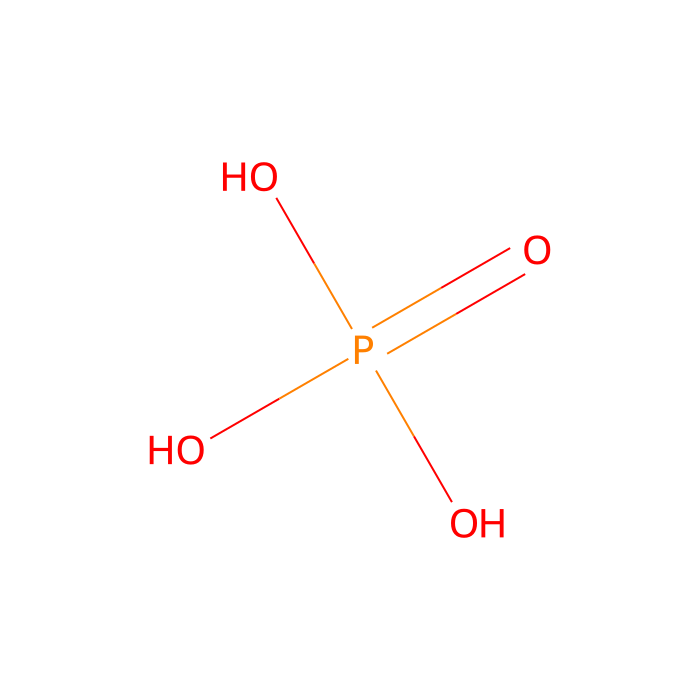
Phosphoric acid - GR, ≥85 wt. % in H2O , CAS No.7664-38-2

CAS: 7664-38-2 Cat. No.: P112026 Formula: H3PO4 Peso molecolare: 98.00 Beilstein Registry Number: 1921286 Numero EC: 231-633-2
Disponibile su ordine
QUALITÀ & PUREZZA GR ? Guaranteed Reagent grade — the highest analytical purity tier, with tightly controlled impurities. Use for precise quantitative work and reference measurements. ≥85 wt. % in H2O
Synonyms
Amberphos 54|Phosphoric acid (aqueous)|Acide phosphorique|Acido fosforico|Fosforzuuroplossingen|Orthophosphoric Acid
Storage
Room temperature
Shipped In
FedEx DG Service
★
Dimensione
Germania (EU)
USA*
Prezzo
Qtà
100ml
P112026-100ml
—
2 Disponibile
8,59€
500ml
P112026-500ml
3 Disponibile
4 Disponibile
30,28€
12×500ml
P112026-12×500ml
Su ordinazione · 8–12 settimane
327,05€
Enter a quantity for the sizes you want to add.

Specifiche

Sinonimi
Amberphos 54 | Phosphoric acid (aqueous) | Acide phosphorique | Acido fosforico | Fosforzuuroplossingen | Orthophosphoric Acid
Specifiche e purezza
GR, ≥85 wt. % in H2O
Condizioni di conservazione di stoccaggio
Room temperature
Spedito in
FedEx DG Service
Grado
GR
Nomi e identificatori
Pubchem Sid
Pubchem Sid Url
https://pubchem.ncbi.nlm.nih.gov/substance/508815664
SMILES
OP(=O)(O)O
IUPAC Name
phosphoric acid
InChIKey
NBIIXXVUZAFLBC-UHFFFAOYSA-N
InChI
1S/H3O4P/c1-5(2,3)4/h(H3,1,2,3,4)
Isomeri SMILES
OP(=O)(O)O
WGK Germania
1
RTECS
TB6300000
Numero UN
1805
Gruppo di imballaggio
III
Peso molecolare
98.00
Beilstein
1921286
Reaxys
1921286
Reaxys-RN_link_address
https://www.reaxys.com/reaxys/secured/hopinto.do?context=S&query=IDE.XRN=1921286&ln=

Dati avanzati

Taxonomic Classification

Taxonomy Tree

KingdomInorganic compounds
SuperclassHomogeneous non-metal compounds
ClasseNon-metal oxoanionic compounds
SubclassNon-metal phosphates
Intermediate Tree Nodes Not available
Direct ParentNon-metal phosphates
Alternative Parents Inorganic oxides  
Molecular FrameworkNot available
Substituents Non-metal phosphate - Inorganic oxide
DescrizioneThis compound belongs to the class of inorganic compounds known as non-metal phosphates. These are inorganic non-metallic compounds containing a phosphate as its largest oxoanion.
External Descriptors phosphoric acids
Struttura 3D
Modello di struttura chimica interattiva


Obiettivi associati (umani)
THRB Tclin Thyroid hormone receptor beta-1 (7926 Activities)
Activity TypeRelationActivity valueUnitsAction TypeJournalPubMed IddoiAssay Aladdin ID
SRC Tclin Tyrosine-protein kinase SRC (10310 Activities)
Activity TypeRelationActivity valueUnitsAction TypeJournalPubMed IddoiAssay Aladdin ID
OTC Tchem Ornithine carbamoyltransferase (24 Activities)
Activity TypeRelationActivity valueUnitsAction TypeJournalPubMed IddoiAssay Aladdin ID
Lymphoblastoid cell (5959 Activities)
Activity TypeRelationActivity valueUnitsAction TypeJournalPubMed IddoiAssay Aladdin ID
SLC16A1 Tchem Monocarboxylate transporter 1 (146 Activities)
Activity TypeRelationActivity valueUnitsAction TypeJournalPubMed IddoiAssay Aladdin ID
Obiettivi associati (non umani)
panE Ketopantoate reductase (28 Activities)
Activity TypeRelationActivity valueUnitsAction TypeJournalPubMed IddoiAssay Aladdin ID
Fe(3+)-Zn(2+) purple acid phosphatase (65 Activities)
Activity TypeRelationActivity valueUnitsAction TypeJournalPubMed IddoiAssay Aladdin ID
Meccanismi d'azione
Certificati (CoA, COO, BSE/TSE e tabella di analisi)
C of A & Other Certificates(BSE/TSE, COO):
Analytical Chart:

Find and download the COA for your product by matching the lot number on the packaging.

30 results found

Lot NumberCertificate TypeDataOggetto
G2624441G2624441Certificate of AnalysisAug 12, 2026 P112026
G2624467G2624467Certificate of AnalysisAug 04, 2026 P112026
E2607656E2607656Certificate of AnalysisMay 12, 2026 P112026
B2604442B2604442Certificate of AnalysisFeb 25, 2026 P112026
L2504606L2504606Certificate of AnalysisDec 15, 2025 P112026
H2505065H2505065Certificate of AnalysisAug 12, 2025 P112026
D2509720D2509720Certificate of AnalysisApr 27, 2025 P112026
D2510448D2510448Certificate of AnalysisMar 13, 2025 P112026
D2510447D2510447Certificate of AnalysisMar 13, 2025 P112026
A2507561A2507561Certificate of AnalysisFeb 19, 2025 P112026
K2425559K2425559Certificate of AnalysisDec 05, 2024 P112026
J2410182J2410182Certificate of AnalysisOct 17, 2024 P112026
G2417698G2417698Certificate of AnalysisJul 26, 2024 P112026
D2418633D2418633Certificate of AnalysisMay 10, 2024 P112026
A2408475A2408475Certificate of AnalysisJan 26, 2024 P112026
K2308495K2308495Certificate of AnalysisNov 21, 2023 P112026
H2317008H2317008Certificate of AnalysisAug 24, 2023 P112026
G2303655G2303655Certificate of AnalysisJul 10, 2023 P112026
C23311211C23311211Certificate of AnalysisApr 07, 2023 P112026
P112026-100ml;B2306955P112026-100ml;B2306955Certificate of AnalysisFeb 16, 2023 P112026
I2219138I2219138Certificate of AnalysisAug 27, 2022 P112026
I2219139I2219139Certificate of AnalysisAug 27, 2022 P112026
I2219141I2219141Certificate of AnalysisAug 27, 2022 P112026
K2225208K2225208Certificate of AnalysisAug 27, 2022 P112026
F2224209F2224209Certificate of AnalysisJul 07, 2022 P112026
A2211649A2211649Certificate of AnalysisJun 09, 2022 P112026
A2211578A2211578Certificate of AnalysisJun 09, 2022 P112026
A2211551A2211551Certificate of AnalysisJun 09, 2022 P112026
F2224212F2224212Certificate of AnalysisJun 08, 2022 P112026
F2224211F2224211Certificate of AnalysisJun 08, 2022 P112026
Proprietà chimiche e fisiche
SensibilitàMoisture sensitive.
Punto di ebollizione (°C)158°C
Punto di fusione (°C)42.35°C
Peso molecolare98
XLogP3-2.100
Hydrogen Bond Donor Count3
Hydrogen Bond Acceptor Count4
Rotatable Bond Count0
Exact Mass97.9769 Da
Monoisotopic Mass97.9769 Da
Topological Polar Surface Area77.800 Ų
Heavy Atom Count5
Formal Charge0
Complexity49.800
Isotope Atom Count0
Defined Atom Stereocenter Count0
Undefined Atom Stereocenter Count0
Defined Bond Stereocenter Count0
Undefined Bond Stereocenter Count0
The total count of all stereochemical bonds0
Covalently-Bonded Unit Count1
Sicurezza e pericoli (GHS)
Pictogrammi
GHS05,   GHS07,   GHS08
Segnale
Danger
Indicazioni di pericolo

H290:May be corrosive to metals

H313:May be harmful in contact with skin

H314:Causes severe skin burns and eye damage

Precauzioni

P234:Keep only in original container.

P264:Wash hands [and …] thoroughly after handling.

P270:Do not eat, drink or smoke when using this product.

P280:Wear protective gloves/protective clothing/eye protection/face protection.

P310:Immediately call a POISON CENTER or doctor/physician.

P330:Rinse mouth.

P363:Wash contaminated clothing before reuse.

P390:Absorb spillage to prevent material damage.

P301+P312:IF SWALLOWED: call a POISON CENTER/doctor/... IF you feel unwell.

P301+P330+P331:IF SWALLOWED: Rinse mouth. Do NOT induce vomiting.

P303+P361+P353:IF ON SKIN (or hair): Take off Immediately all contaminated clothing. Rinse SKIN with water [or shower].

P304+P340:IF INHALED: Remove person to fresh air and keep comfortable for breathing.

P305+P351+P338:IF IN EYES: Rinse cautiously with water for several minutes. Remove contact lenses if present and easy to do - continue rinsing.

P405:Store locked up.

P406:Store in corrosive resistant/... container with a resistant inner liner.

P501:Dispose of contents/container to an approved waste disposal plant.

WGK Germania
1
RTECS
TB6300000
Reaxys
1921286
Reaxys-RN_link_address
https://www.reaxys.com/reaxys/secured/hopinto.do?context=S&query=IDE.XRN=1921286&ln=
Classe
8
Domande frequenti e articoli
Aladdin@Guidelines for the formulation of commonly used buffers for biological experiments
How to prevent and mitigate the deterioration of chemical reagents?
Common Types of Buffer Solutions
Pepsin——Structural Features, Enzymatic Properties, and Experimental Application Guide
Molecular Mechanisms and Multidomain Applications of Inorganic Pyrophosphatase
Paeoniflorin: Structural Features, Physicochemical Properties, and Key Considerations for Analytical Quality Control
Laccase: Technical Characteristics, Optimization Strategies, and Industrial Application Progress
Recent Advances in Methods for Measuring Plant Protein-Related Indices and Application-Oriented Selection
How to Choose Inorganic Acids: Making Descaling, Derusting, and Surface Treatment Controllable via pH and the “Fate of the Salts Formed” (with Tables 1–3)
Experimental Judgment for Differential Deprotection of Double Boc and Related N-Boc Systems: Substrate Type, Site-Response Differences, and Initial Condition Selection
Selection Strategy for PBS, TBS, PBST, and TBST Washing Systems in IHC
Fluorocarbon Resin Coating Formulation Design: Resin Selection, Supporting Systems, and Key Application Control Points
Diagnosis of Coating Performance Issues and Selection of Resin Modification Routes
Resin Polarity in Coating Formulations: From Molecular Structure to Dissolution, Compatibility, Interfacial Interactions, and Formulation Design
Differences, Functions, and Selection Guidelines for Sodium Hydroxide Flakes, Granules, Liquid Caustic Soda, and Caustic Soda in Household and Personal Care Product Manufacturing: The Functional and Application Logic of Sodium Hydroxide
How to Select Thickeners for Strongly Acidic Cleaning Systems: Comparison of Thickening Mechanisms and Application Considerations for Fatty Amine Ethoxylates
More Than a pH Adjuster: Mechanisms, Selection Logic, and Alternative Acid Source Analysis of Citric Acid in Home-Care Cleaning
Sodium Metasilicate in Cleaning Applications: Hydration-Form Differences, Mechanisms of Action, and Selection Logic
What Is an Etchant? Etching Mechanisms for Revealing Metallographic Microstructures, Selection Methods, and Applications of Related Wet-Etching Reagents
Why Do Rust Spots Appear on Neutral Wall Putty? Iron Sources, Moisture Migration, Oxidative Color Development, and Prevention Measures
1,8-Naphthyridine-Based Aldose Reductase Inhibitors: Scaffold Construction, In Vitro Inhibitory Activity, and Directions for Structural Optimization
Phosphoric Acid Handling & Lab Use Protocol
Citations of This Product
Calcolatori di soluzioni
Recensioni

Recensioni dei clienti

Hai bisogno di aiuto per scegliere la qualità?

La nostra guida alla selezione delle qualità copre purezza, stato dello stabilizzatore e idoneità all'applicazione per tutte le varianti del nostro catalogo.

Visualizza la guida alle qualità GR →

Prodotti correlati

Acido fosforico - 30% p/p , CAS No.7664-38-2
Acido fosforico - 60% p/p , CAS No.7664-38-2
Acido fosforico - 5.00 Normale , CAS No.7664-38-2
Acido fosforico - 1.00 Normale , CAS No.7664-38-2
Acido fosforico - 7.50 molare , CAS No.7664-38-2
Phosphoric acid - ≥99.99% metals basis, ≥85 wt. % in H2O , CAS No.7664-38-2
Phosphoric Acid - 15% (v/v) , CAS No.7664-38-2
Phosphoric Acid - 50% (v/v) , CAS No.7664-38-2
Phosphoric Acid - 10% (v/v) , CAS No.7664-38-2
Phosphoric Acid - 75% (v/v) , CAS No.7664-38-2
Phosphoric acid - AR, ≥85 wt. % in H2O , CAS No.7664-38-2
Phosphoric acid - PrimorTrace™, ≥99.999% metals basis, ≥85 wt. % in H2O , CAS No.7664-38-2
Acido fosforico - ≥99%, cristallino , CAS No.7664-38-2
Acido fosforico - ACS, ≥85 wt. % in H2O , CAS No.7664-38-2
Phosphoric Acid - 10% (w/w) , CAS No.7664-38-2
Phosphoric Acid - 40% (w/w) , CAS No.7664-38-2
Phosphoric Acid - 65% (w/w) , CAS No.7664-38-2
Phosphoric acid - BioReagent, for insect cell culture, ≥85% , CAS No.7664-38-2
Phosphoric acid - HPLC grade, ≥85% , CAS No.7664-38-2
Phosphoric Acid - 20% (v/v) , CAS No.7664-38-2
Phosphate standard concentrate - analytical standard, ≥99% , CAS No.7664-38-2
Phosphoric Acid - 0.100 Normal (N/10) , CAS No.7664-38-2
Phosphoric Acid - 15% w/w , CAS No.7664-38-2
Phosphoric Acid in water - 0.35mol/L in water , CAS No.7664-38-2
Phosphoric Acid - 0.0100 Molar (M/100) , CAS No.7664-38-2
Phosphoric acid - UltraBio™, ≥85%(T) , CAS No.7664-38-2
Phosphoric acid - UltraPureChrom™, for HPLC, ≥85% , CAS No.7664-38-2
Phosphoric acid - PrimorTrace™, ≥99.999% metals basis, crystal , CAS No.7664-38-2
Phosphoric acid - BioReagent, for insect cell culture, ≥85% , CAS No.7664-38-2
ortho-Phosphoric acid 85% - Ultra pure , CAS No.7664-38-2
ortho-Phosphoric acid 85% - PharmPure™,BP,Ph.Eur.,E 338,JPE,NF , CAS No.7664-38-2
ortho-Phosphoric acid 85% - Ph.Eur., Suitable for Analysis, ACS, Premium pure , CAS No.7664-38-2
Phosphoric acid solution - 49.5-50.5%, suitable for HPLC , CAS No.7664-38-2
acido ortofosforico 85% - Reagenti di qualità superiore, adatti all'analisi, ISO, ACS , CAS No.7664-38-2

Desidera che le inviamo un messaggio quando avremo sconti disponibili?

Ricordamelo più tardi

Grazie! Controlli la sua casella di posta per confermare.

Ops! Le notifiche sono disabilitate.