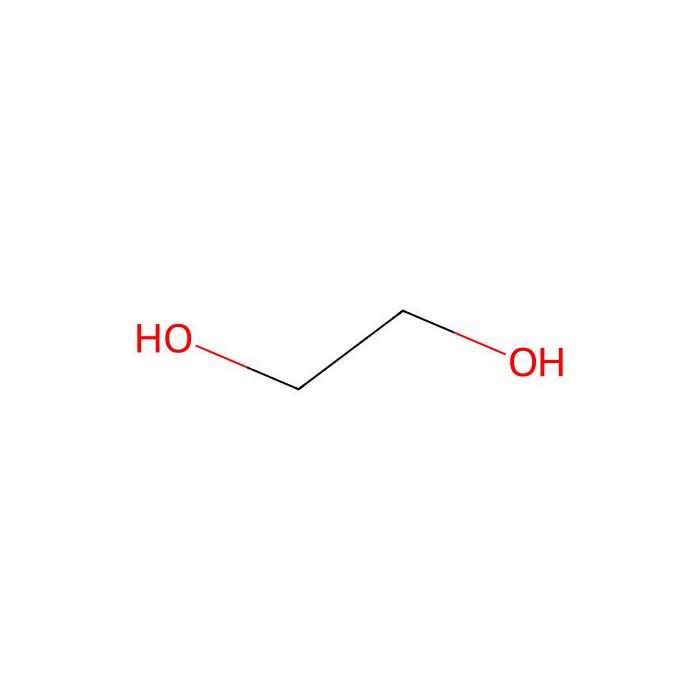
Polietilenglicole - media Mn 6000 , CAS No.25322-68-3

CAS: 25322-68-3 Cat. No.: P103725 Formula: HO(CH2CH2O)nH Numero EC: 500-038-2
Disponibile su ordine
QUALITÀ & PUREZZA average Mn 6000
Synonyms
PEG
Storage
Room temperature,Desiccated
Shipped In
Normale
★
Dimensione
Germania (EU)
USA*
Prezzo
Qtà
100g
P103725-100g
—
2 Disponibile
8,59€
500g
P103725-500g
2 Disponibile
4 Disponibile
10,33€
12×500g
P103725-12×500g
Su ordinazione · 8–12 settimane
121,40€
Enter a quantity for the sizes you want to add.
🧪
Perché questa qualità

media Mn 6000 per flussi di lavoro cromatografici e analitici sensibili che richiedono un'interferenza minima della linea di base.

🌡

Stoccaggio e spedizione

Room temperature,Desiccated Spedizione Normale. Consultare il COA specifico del lotto per le specifiche esatte.

📋

Documenti di qualità

SDS, COA, scheda tecnica e scheda delle specifiche disponibili per il download. COA specifico del lotto accessibile tramite ricerca per numero di lotto.

📚

Prova documentale

Citato in 3267 pubblicazioni peer-reviewed su cromatografia, sintesi organica e reazioni di accoppiamento incrociato.

Panoramica

Il polietilenglicole (PEG) è un polimero idrofilo. Può essere facilmente sintetizzato dalla polimerizzazione anionica di apertura dell'anello dell'ossido di etilene, con una gamma di pesi molecolari e una varietà di gruppi terminali. Se reticolato in reti, il PEG può avere un elevato contenuto di acqua, formando "idrogel". La formazione di idrogel può essere avviata dalla reticolazione del PEG mediante radiazioni ionizzanti o dalla reticolazione covalente di macromeri di PEG con estremità di catena reattive. Il PEG è un materiale adatto alle applicazioni biologiche perché non scatena una risposta immunitaria.

Viene solitamente utilizzato per modificare proteine e peptidi terapeutici per aumentarne la solubilità e ridurne la tossicità.
Solvente per una fluorurazione più ecologica delle acetoacetammidi con Selectfluo

applicazione: il polietilenglicole
Il polietilenglicole è utilizzato nella modifica di proteine e peptidi terapeutici per aumentarne la solubilità. È anche utilizzato nella fabbricazione di barriere bioattive e immunoisolanti per l'incapsulamento delle cellule. Nella gascromatografia, viene utilizzato come fase stazionaria polare. È utilizzato come agente distaccante e lubrificante nella fabbricazione di elastomeri.

Specifiche

Sinonimi
PEG
Specifiche e purezza
media Mn 6000
Meccanismi biochimici e fisiologici
Il polietilenglicole (PEG) è un polimero di condensazione di ossido di etilene e acqua. Migliora il ripiegamento delle proteine estratte. Ciò consente la caratterizzazione delle proteine cristallizzate.
Condizioni di conservazione di stoccaggio
Room temperature,Desiccated
Spedito in
Normale
Nomi e identificatori
WGK Germania
1
Reaxy-Rn
505945
Reaxys-RN_link_address
https://www.reaxys.com/reaxys/secured/hopinto.do?context=S&query=IDE.XRN=505945&ln=

Documentazione

📋 Scheda di dati di sicurezza (SDS)

Documento completo su pericoli, manipolazione, stoccaggio e conformità normativa.

<<<<<<< HEAD Scarica SDS → ======= Scarica SDS → >>>>>>> release248-p3

✅ Certificato di analisi (COA)

Dati di qualità specifici del lotto. Inserisci il numero di lotto per recuperare il COA esatto.

Cerca COA →

📊 Scheda tecnica

Riepilogo di riferimento rapido delle specifiche e applicazioni del prodotto.

Visualizza scheda tecnica →

🔬 Scheda delle specifiche

Attributi di qualità completi e criteri di accettazione per questa qualità.

Visualizza scheda delle specifiche →

Dati avanzati

Certificati (CoA, COO, BSE/TSE e tabella di analisi)
C of A & Other Certificates(BSE/TSE, COO):
Analytical Chart:

Find and download the COA for your product by matching the lot number on the packaging.

120 results found

Lot NumberCertificate TypeDataOggetto
I2611736I2611736Certificate of AnalysisAug 20, 2026 P103725
I2611737I2611737Certificate of AnalysisAug 20, 2026 P103725
I2611738I2611738Certificate of AnalysisAug 20, 2026 P103725
I2611739I2611739Certificate of AnalysisAug 20, 2026 P103725
A2612560A2612560Certificate of AnalysisDec 27, 2024 P103725
D2616438D2616438Certificate of AnalysisDec 27, 2024 P103725
D2616439D2616439Certificate of AnalysisDec 27, 2024 P103725
D2616540D2616540Certificate of AnalysisDec 27, 2024 P103725
D2616541D2616541Certificate of AnalysisDec 27, 2024 P103725
E2611499E2611499Certificate of AnalysisDec 27, 2024 P103725
E2622561E2622561Certificate of AnalysisDec 27, 2024 P103725
E2622562E2622562Certificate of AnalysisDec 27, 2024 P103725
E2622597E2622597Certificate of AnalysisDec 27, 2024 P103725
F2525499F2525499Certificate of AnalysisDec 27, 2024 P103725
F2525507F2525507Certificate of AnalysisDec 27, 2024 P103725
F2624435F2624435Certificate of AnalysisDec 27, 2024 P103725
F2624436F2624436Certificate of AnalysisDec 27, 2024 P103725
F2624437F2624437Certificate of AnalysisDec 27, 2024 P103725
G2516572G2516572Certificate of AnalysisDec 27, 2024 P103725
G2516573G2516573Certificate of AnalysisDec 27, 2024 P103725
H2611023H2611023Certificate of AnalysisDec 27, 2024 P103725
I2519679I2519679Certificate of AnalysisDec 27, 2024 P103725
I2519680I2519680Certificate of AnalysisDec 27, 2024 P103725
I2519688I2519688Certificate of AnalysisDec 27, 2024 P103725
A2521352A2521352Certificate of AnalysisNov 09, 2024 P103725
A2521362A2521362Certificate of AnalysisNov 09, 2024 P103725
C2519545C2519545Certificate of AnalysisNov 09, 2024 P103725
C2519563C2519563Certificate of AnalysisNov 09, 2024 P103725
C2519579C2519579Certificate of AnalysisNov 09, 2024 P103725
C2519600C2519600Certificate of AnalysisNov 09, 2024 P103725
C2519692C2519692Certificate of AnalysisNov 09, 2024 P103725
K2423044K2423044Certificate of AnalysisNov 09, 2024 P103725
K2425373K2425373Certificate of AnalysisNov 09, 2024 P103725
K2425374K2425374Certificate of AnalysisNov 09, 2024 P103725
L2411432L2411432Certificate of AnalysisNov 09, 2024 P103725
L2413701L2413701Certificate of AnalysisNov 09, 2024 P103725
L2413727L2413727Certificate of AnalysisNov 09, 2024 P103725
J2411870J2411870Certificate of AnalysisSep 21, 2024 P103725
J2411871J2411871Certificate of AnalysisSep 21, 2024 P103725
J2411956J2411956Certificate of AnalysisSep 21, 2024 P103725
J2416525J2416525Certificate of AnalysisSep 21, 2024 P103725
J2416532J2416532Certificate of AnalysisSep 21, 2024 P103725
J2416533J2416533Certificate of AnalysisSep 21, 2024 P103725
L2410441L2410441Certificate of AnalysisSep 21, 2024 P103725
L2410442L2410442Certificate of AnalysisSep 21, 2024 P103725
L2420528L2420528Certificate of AnalysisSep 21, 2024 P103725
L2420976L2420976Certificate of AnalysisSep 21, 2024 P103725
H2419642H2419642Certificate of AnalysisAug 08, 2024 P103725
I2409162I2409162Certificate of AnalysisAug 08, 2024 P103725
H2408391H2408391Certificate of AnalysisJul 17, 2024 P103725
H2408392H2408392Certificate of AnalysisJul 17, 2024 P103725
H2408393H2408393Certificate of AnalysisJul 17, 2024 P103725
H2412535H2412535Certificate of AnalysisJul 17, 2024 P103725
F2419263F2419263Certificate of AnalysisJun 12, 2024 P103725
E2409499E2409499Certificate of AnalysisApr 09, 2024 P103725
F2411399F2411399Certificate of AnalysisApr 09, 2024 P103725
F2411400F2411400Certificate of AnalysisApr 09, 2024 P103725
F2412117F2412117Certificate of AnalysisApr 09, 2024 P103725
C2429943C2429943Certificate of AnalysisMar 22, 2024 P103725
C2429944C2429944Certificate of AnalysisMar 22, 2024 P103725
D2407423D2407423Certificate of AnalysisMar 22, 2024 P103725
E2413420E2413420Certificate of AnalysisMar 22, 2024 P103725
E2413421E2413421Certificate of AnalysisMar 22, 2024 P103725
E2413429E2413429Certificate of AnalysisMar 22, 2024 P103725
C2405032C2405032Certificate of AnalysisMar 01, 2024 P103725
C2407369C2407369Certificate of AnalysisMar 01, 2024 P103725
C2407392C2407392Certificate of AnalysisMar 01, 2024 P103725
C2407408C2407408Certificate of AnalysisMar 01, 2024 P103725
C2422330C2422330Certificate of AnalysisMar 01, 2024 P103725
A2424229A2424229Certificate of AnalysisJan 12, 2024 P103725
A2424230A2424230Certificate of AnalysisJan 12, 2024 P103725
A2424247A2424247Certificate of AnalysisJan 12, 2024 P103725
A2424248A2424248Certificate of AnalysisJan 12, 2024 P103725
A2405575A2405575Certificate of AnalysisDec 07, 2023 P103725
L2318156L2318156Certificate of AnalysisDec 07, 2023 P103725
K2323494K2323494Certificate of AnalysisNov 21, 2023 P103725
L2305190L2305190Certificate of AnalysisNov 21, 2023 P103725
K2310052K2310052Certificate of AnalysisNov 06, 2023 P103725
A2404333A2404333Certificate of AnalysisNov 06, 2023 P103725
K2309680K2309680Certificate of AnalysisNov 06, 2023 P103725
K2309681K2309681Certificate of AnalysisNov 06, 2023 P103725
K2309682K2309682Certificate of AnalysisNov 06, 2023 P103725
K2310053K2310053Certificate of AnalysisNov 06, 2023 P103725
J2330374J2330374Certificate of AnalysisOct 19, 2023 P103725
I2311222I2311222Certificate of AnalysisSep 07, 2023 P103725
I2321037I2321037Certificate of AnalysisSep 07, 2023 P103725
H2331015H2331015Certificate of AnalysisAug 29, 2023 P103725
H2331011H2331011Certificate of AnalysisAug 29, 2023 P103725
H2331013H2331013Certificate of AnalysisAug 29, 2023 P103725
H2331014H2331014Certificate of AnalysisAug 29, 2023 P103725
I2307670I2307670Certificate of AnalysisAug 29, 2023 P103725
H23071165H23071165Certificate of AnalysisAug 03, 2023 P103725
H23071166H23071166Certificate of AnalysisAug 03, 2023 P103725
H2302002H2302002Certificate of AnalysisAug 01, 2023 P103725
H2302003H2302003Certificate of AnalysisAug 01, 2023 P103725
E23081337E23081337Certificate of AnalysisMay 04, 2023 P103725
E23261193E23261193Certificate of AnalysisMay 04, 2023 P103725
E23261197E23261197Certificate of AnalysisMay 04, 2023 P103725
E2327001E2327001Certificate of AnalysisMay 04, 2023 P103725
G2314003G2314003Certificate of AnalysisMay 04, 2023 P103725
G2314002G2314002Certificate of AnalysisApr 28, 2023 P103725
G2314004G2314004Certificate of AnalysisApr 28, 2023 P103725
G2314005G2314005Certificate of AnalysisApr 28, 2023 P103725
G2314006G2314006Certificate of AnalysisApr 28, 2023 P103725
B2327520B2327520Certificate of AnalysisFeb 14, 2023 P103725
B2327536B2327536Certificate of AnalysisFeb 14, 2023 P103725
J22111365J22111365Certificate of AnalysisSep 27, 2022 P103725
H2202586H2202586Certificate of AnalysisJul 11, 2022 P103725
H2202587H2202587Certificate of AnalysisJul 11, 2022 P103725
C2209368C2209368Certificate of AnalysisFeb 15, 2022 P103725
C2209611C2209611Certificate of AnalysisFeb 15, 2022 P103725
C2209367C2209367Certificate of AnalysisFeb 15, 2022 P103725
B2207408B2207408Certificate of AnalysisDec 27, 2021 P103725
B2207409B2207409Certificate of AnalysisDec 27, 2021 P103725
A2404334A2404334Certificate of AnalysisDec 21, 2021 P103725
C2224240C2224240Certificate of AnalysisDec 21, 2021 P103725
C2224241C2224241Certificate of AnalysisDec 21, 2021 P103725
G2208110G2208110Certificate of AnalysisDec 21, 2021 P103725
B2210061B2210061Certificate of AnalysisDec 15, 2021 P103725
B2210063B2210063Certificate of AnalysisDec 15, 2021 P103725
Proprietà chimiche e fisiche
SolubilitàSoluble in water and aromatic hydrocarbons. Slightly and aliphatic hydrocarbons
SensibilitàMoisture sensitive
Indice di rifrazione1.460
Punto di infiammabilità (°F)519.8 °F
Punto di infiammabilità (°C)271.00 °C
Punto di ebollizione (°C)> 200 °C
Punto di fusione (°C)61-64℃
Domande frequenti e articoli
Nanoparticle-Based Small Molecule Drug Delivery
Applications of Nanoparticles in Vaccine Delivery
General Conjugation Protocols of PEG linkers——PEG Amine
General Conjugation Protocols of PEG linkers——PEG Acid
General Conjugation Protocols of PEG linkers——PEG-NHS Ester
General Conjugation Protocols of PEG linkers——PEG Maleimide
General Conjugation Protocols of PEG linkers——PEG Thiol
General Conjugation Protocols of PEG linkers——PEG PFP Ester
General Conjugation Protocols of PEG linkers——PEG SPDP
General Conjugation Protocols of PEG linkers——PEG Aldehyde
General Conjugation Protocols of PEG linkers——PEG ONH2
Degradable Poly(ethylene glycol) Hydrogels for 2D and 3D Cell Culture
Versatile Cell Culture Scaffolds via Bio-orthogonal Click Reactions
Enzyme Protectants and Common Methods to Prolong Enzymatic Activity
Buffer exchange of a sample using a dialysis bag
Why Can Biotinylated Peptides Test Negative in Biotin Assays?
How to Choose Plasma Cell-Free DNA Extraction Reagents
Differences Between Transformation and Transfection
PEGylation in Drug Modification and Delivery: Applications to Proteins, Peptides, Small Molecules and Liposomes
Polyethylene Glycol (PEG): Properties, Applications Across Multiple Fields, and Product Selection Guide
PEG–Dialysis Tubing Method for Protein Concentration
Application Guide to Super Fluor 680 / 750 Near-Infrared Dyes for In Vivo Small-Animal Fluorescence Imaging
7 Types of DNA Ligases: Functions and Features
General Principles of Antibody Labeling with NHS-Activated Esters, F/P Calculation, and Troubleshooting Guide
Polyethylene Glycol (PEG) and Its Derivatives: End-Group Design and Applications in PROTACs, ADCs, and Medical Device
Sources, Biological Functions, Isolation/Characterization, and Emerging Applications of Exosomes
Photo-Crosslinking and Patterning of PEG-Based Hydrogels (2D/3D): Principles, Method Comparisons, and Product Selection Guidelines
SOFC Solid Oxide Fuel Cells: From “What It Is and How It Generates Power” to a Key Materials Map, Application Scenarios, and Selection Navigation (Electrolytes / Electrodes / Interconnects / Sealing)
A Complete Guide to Choosing Resins for SPPS (Solid-Phase Peptide Synthesis): Fmoc/Boc Routes, C-Terminal Acid/Amide, and a Key-Parameter Navigator
Materials Can “Switch”: How Smart Polymers Respond to Temperature, pH, and Light (with Experimental Selection Tips & Product Navigation)
Understanding Hydrophilic Polymers in Aqueous Systems: Hydration Mechanisms, Structural Knobs, and Task-Oriented Selection Guide (Including Tables 1–3)
Biomedical Polymer Insights: Role-Based Task Map, Six Key Material Levers, and a Risk-Driven Evidence Chain (including the Product Navigation Guide and Product Tables 1–3)
Pharmaceutical Formulation and Delivery in Research Settings: Core Definitions, Controllable Frameworks and Practical Guidelines
Plant Omics Panorama: Workflow Frameworks and Multi-Omics Integration from Genomics to Transcriptomics, Proteomics, and Metabolomics
Hemicellulases: A Review of Substrate Specificity, Catalytic Systems, and Research and Industrial Applications
Key Judgments in Medical Hydrogel R&D: From Polymer Source and Crosslinking Strategy to Sterilization Planning, Scale-Up Feasibility, and Quality Control
Injectable Thermosensitive Gels: Gelation Behavior, Rheological Properties, and Drug Release Characteristics
Protein Structure Analysis: An Experimental Path from Defining the Question to Functional Validation
How Degradable Poly(ethylene glycol) Hydrogels Build Tunable Cellular Microenvironments: Adhesion, Degradation, Release, and Experimental Interpretation in 2D/3D Culture
Designing Hydrogel Scaffolds as Programmable Cell Microenvironments: From Click-Chemistry Functionalization to 3D Cell Culture Experimental Design
Adding a Temperature-Triggered Switch to NCO: How Blocked Isocyanates Affect the Storage, Curing, and Film Performance of 1K Baking Coatings
How Do Isocyanates and Polyols Affect the Performance of Polyurethane Coating Films: Structure, Raw Material Selection, and Performance Design Essentials
Comprehensive Performance Analysis of Polyurethane Coating Films: Soft/Hard Segment Structure, Microphase Separation, Crosslinking and Curing, and Selection of Representative Chemicals
Failure Mechanisms, Application Limitations, and Systematic Improvement Directions for Polyester Coatings
Peptide Intermediates Difficult to Dissolve and Separate? Route Design and Workup Strategies for Tag-Assisted Liquid-Phase Peptide Synthesis (TAG-LPPS)
Causes, Diagnosis, and Control Strategies for Elevated Off-State Current in Semiconducting Single-Walled Carbon Nanotube Transistors
Polyurethane Coating Resins: Not a Single Resin, but a Designable High-Performance System
Application of Shellac, a Natural Film-Forming Resin, in Coatings: Alcohol-Soluble Fast-Drying Film Formation, Sealing and Repair, and Performance Boundaries
The Role of Polyether-Modified Polysiloxanes in Controlling Coating Leveling and Smooth Tactile Feel: Molecular Structure, Surface Migration, and Interfacial Control Mechanisms
Resin Polarity in Coating Formulations: From Molecular Structure to Dissolution, Compatibility, Interfacial Interactions, and Formulation Design
Solvents, Co-solvents, and Solubilization Systems in Home and Personal Care Formulations: Classification, Functions, and Selection Guide
Why Do Alcohols Differ in Function: Why Is Glycerol Mainly Moisturizing, Propylene Glycol Mainly Solubilizing, and Isopropyl Alcohol Fast-Drying? — Understanding Personal Care Formulation Functions from Structural Differences
Signal Transduction Mechanism of Graphene Biosensors: From Molecular Recognition to Electrical/Optical Signal Readout and Materials Selection
What Is Synthetic Biology? The Industrialization Pathway from Upstream Reagent Toolchains to Biomanufacturing Applications
From Structure to Selection: Mechanisms and Application Assessment of Low-Foam Oil and Wax Removal with Fatty Acid Methyl Ester Ethoxylates (FMEE)
Mechanism of Action and Selection Logic of Defoamers for Daily Chemical Products: Foam Stability, Foam-Breaking Mechanisms, and Representative Raw Material Analysis
Mechanisms and Troubleshooting of Foam Reduction in Personal and Household Care Formulations: Film Rupture, Weak Interfacial Films, Insufficient Surfactant Supply, and Phase-State Disturbance
Application of Conductive Carbon Black in Coatings: Selection Criteria, Dispersion Control, and Conductive Network Construction
Key Variable in the Long-Term Stability of Waterborne Pigment Concentrates: How Dispersant Molecular Weight Distribution (MWD) Affects Pigment Dispersion, Surface Adsorption-Layer Formation, and Storage Stability
Influencing Factors and Control Strategies for Blistering in Neutral Wall Putty: An Experimental Analysis Based on HPMC Dosage, Viscosity, and Ground Calcium Carbonate Fineness
How to Select Binding/Gel Materials for Neutral Wall Putty? A Comparison of Pregelatinized Starch, PVA, and Redispersible Polymer Powder Based on Four Application Trials
Polyethylene Glycol (PEG) Selection Guide
Structure, Degradation Behavior, and Applications of Poly(trimethylene carbonate) (PTMC) in Flexible Absorbable Materials
Antioxidant Mechanisms of Ferulic Acid in Skincare, Vitamin C/E Synergy, and Stable Delivery Applications
Polyethylene Glycol (PEG) Selection Guide
Exosome-Related Ingredients in Skincare Products: Sources and Preparation, Quality Control, Evidence of Efficacy, and Safety Assessment
Differences Between Cast CPU and Thermoplastic TPU in Structure, Processing, Performance, and Applications
What Is Direct Compression? Process Characteristics, Suitability Criteria, and Excipient Selection
Solid Supports in Packed Gas Chromatography Columns: Definition, Mechanisms of Action, Classification, and Selection
Citations of This Product
Calcolatori di soluzioni
Recensioni

Recensioni dei clienti

Desidera che le inviamo un messaggio quando avremo sconti disponibili?

Ricordamelo più tardi

Grazie! Controlli la sua casella di posta per confermare.

Ops! Le notifiche sono disabilitate.