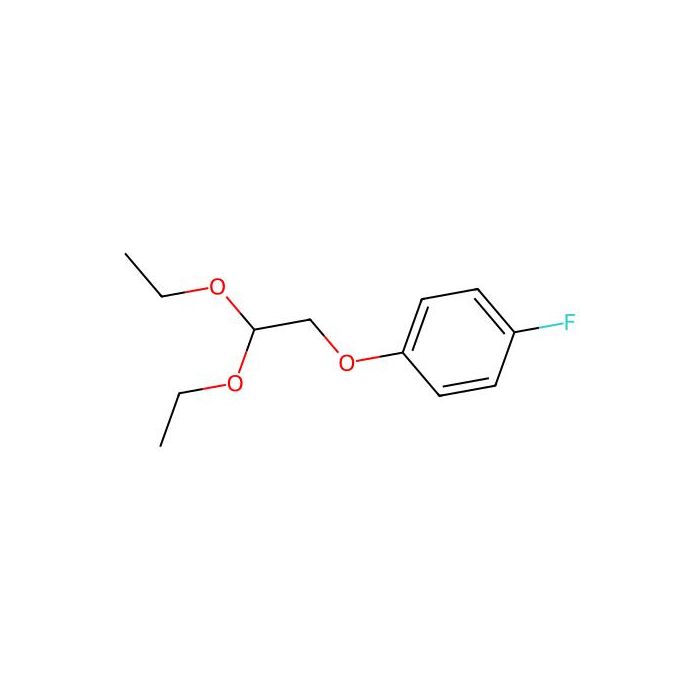
This compound belongs to the class of organic compounds known as phenol ethers. These are aromatic compounds containing an ether group substituted with a benzene ring.
External Descriptors
Not available
1. Djoumbou Feunang Y, Eisner R, Knox C, Chepelev L, Hastings J, Owen G, Fahy E, Steinbeck C, Subramanian S, Bolton E, Greiner R, and Wishart DS. ClassyFire: Automated Chemical Classification With A Comprehensive, Computable Taxonomy. Journal of Cheminformatics, 2016, 8:61.
Determine the necessary mass, volume, or concentration for preparing a solution.
Dilution Calculator
Determine the dilution needed to prepare a stock solution.
Reconstitution Calculator
Revisões
Avaliações dos Clientes
Application Protocols
Not applicable. No validated bioassay, immunoassay, or imaging protocols are associated with this small-molecule intermediate. For synthetic applications, see the Reaction Conditions and Synthetic Utility sections for general laboratory guidance.
Biological Roles
This product is a synthetic organic intermediate with no inherent biological role specified.
Item-specific note
No biological function or target is specified for this item; it is supplied strictly for research use.
General context (for medicinal/agro discovery chemists)
Aryl fluoride and phenoxy motifs are common in bioactive scaffolds due to their ability to modulate lipophilicity, metabolic stability, and binding interactions. The para-fluoro substituent often serves to block metabolic hydroxylation and adjust electronics.
The acetal acts as a protecting group for an aldehyde handle. After deprotection, the resulting phenoxyacetaldehyde can be used to append heterocycles or amines via imine formation/reductive amination, enabling rapid SAR generation.
ADME-relevant features (conceptual)
The presence of an ether linkage and fluorine typically increases lipophilicity and may affect microsomal stability once embedded in larger molecules; however, such considerations pertain to final compounds, not this intermediate.
No clinical, diagnostic, or therapeutic uses are implied or supported. Any biological testing should be performed on derived compounds with appropriate controls and safety review.
Buffer Applications
This compound is a neutral, water-insoluble organic intermediate and is not used as a buffer component. It lacks acid–base functionality in the physiological pH range and does not provide buffering capacity.
Practical note
If aqueous handling is required (e.g., deprotection quench), maintain neutral to basic pH in the aqueous phase to avoid acetal hydrolysis, unless deprotection is intended. For extractions, common lab buffers (phosphate, bicarbonate) may be used to control pH of wash solutions, but the compound itself does not participate in buffering.
Green Alternatives
While the compound itself is a substrate, greener choices can be made for its handling and common transformations.
Greener solvent swaps (general guidance)
Replace dichloromethane with ethyl acetate or dimethyl carbonate for extractions and reactions when feasible.
Replace THF with 2-methyltetrahydrofuran (2-MeTHF) or cyclopentyl methyl ether (CPME) for organometallics and general-purpose reactions (improved renewability and azeotrope behavior).
Use toluene/heptane instead of chlorinated solvents for nonpolar processes and crystallizations.
Acidic deprotection media
Prefer catalytic mineral acid in ethanol or isopropanol over stoichiometric strong acids in halogenated solvents; solid acids (e.g., Dowex 50WX resins) enable easier workup and potential recycling.
Workup and purification
Employ aqueous bicarbonate or citrate buffers to neutralize acids instead of excess base; consider inline scavengers and minimal-solvent flash chromatography.
Comparison snapshot (illustrative)
DCM vs EtOAc: EtOAc is biodegradable and less toxic; may require larger volumes but offers safer profile.
THF vs 2-MeTHF: 2-MeTHF often affords similar rates with better phase-splitting and reduced peroxide risk; note slightly higher bp and distinct solubility behavior.
Tradeoffs should be assessed case-by-case (solubility, rates, selectivity). Validate process robustness and impurity profiles when changing media.
Pharmaceutical Uses
Item-specific status
No pharmacopeial monograph, excipient role, or GMP status is specified for this item; refer to CoA/Spec Sheet. Supplied for research use only.
General relevance in drug discovery chemistry
Functions as a protected aldehyde building block for installing a phenoxyacetaldehyde fragment into lead series. The para-fluoro substituent can influence potency and metabolic stability in derived compounds.
The acetal protects the aldehyde through base-mediated steps, allowing late-stage unveiling for conjugation (e.g., reductive amination with amine fragments) during library expansion.
Formulation/manufacturing context
Not typically used as an excipient. If carried forward into APIs, only as part of a transformed scaffold. Any process use would require full impurity profiling and regulatory assessment.
No therapeutic or clinical claims are made or implied for this reagent.
Physical Properties
Item-specific specifications
Appearance: Not specified for this item; refer to CoA/Spec Sheet.
Grade/Purity: Not specified for this item; refer to CoA/Spec Sheet.
Molecular formula: Not specified for this item; refer to CoA/Spec Sheet.
Molecular weight: Not specified for this item; refer to CoA/Spec Sheet.
Boiling point, melting point, density, refractive index, UV cutoff, water/peroxide content: Not specified for this item; refer to CoA/Spec Sheet.
Literature/general expectations for this class (non-binding; for planning only)
Physical state: aryl ethers bearing acetal groups of this size are typically colorless to pale liquids with moderate viscosity.
Volatility: expected to have low to moderate volatility relative to simple ethers (acetal raises MW and reduces volatility).
Polarity/solubility: overall nonpolar–weakly polar, generally miscible with common organic solvents (e.g., dichloromethane, toluene, THF, ethyl acetate) and poorly soluble in water; acetal moiety confers slight polarity but not water miscibility.
Acid/base behavior: acetal is acid-labile; stable toward neutral and basic media. Aryl fluoride is inert under most conditions.
Partitioning: expected lipophilicity is moderate due to aryl and ethoxy content; anticipate extraction preference for organic phases in liquid–liquid workups.
Practical implications
Handle as a typical neutral organic liquid: weigh/dispense with glass or compatible plastics; rinse lines with nonpolar aprotic solvents.
Avoid aqueous acidic environments to prevent acetal hydrolysis (see Safety & Handling). Always confirm actual specifications on the item’s CoA/SDS before designing purification or storage protocols.
Quality and Grades
Item-specific quality information
Grade/Purity: Not specified for this item; refer to CoA/Spec Sheet.
Stabilizers/Inhibitors: Not specified for this item; refer to CoA/Spec Sheet.
Guidance on interpreting grades (general)
Research grade: typically suitable for synthetic and analytical laboratory use; impurity profiles and residual solvents vary by lot—verify via CoA.
High-purity/low-UV grades (if offered): desirable for trace-analysis or photochemical work, where baseline absorbance and metal content matter.
Practical quality considerations for this compound class
Acetal integrity: acidic trace impurities can promote slow hydrolysis. Lots intended for moisture/acid-sensitive steps should be checked for aldehyde content (e.g., GC or HPLC with DNPH derivatization).
Water content: moisture accelerates acid-catalyzed hydrolysis; Karl Fischer titration may be relevant for stringent applications.
Metals: not typically a concern unless used in metal-catalyzed steps where ppb–ppm levels can influence catalyst turnover; consult CoA for any metal analyses.
Documentation
For exact assay, residual solvents, GC purity, and any stabilizer content, use the lot-specific CoA/Spec Sheet. Contact Aladdin Scientific technical support for additional characterization if your application is sensitive to trace aldehydes or moisture.
Reaction and Applications
Role as a protected aldehyde equivalent
The 2,2-diethoxy (acetal) fragment masks the corresponding aldehyde. Acidic deprotection reveals 2-(4-fluorophenoxy)acetaldehyde, enabling downstream condensations (e.g., Wittig/HWE, Knoevenagel, reductive amination) at the aldehyde stage while preserving the phenoxy–aryl fluoride motif.
Strategic uses in synthesis
Late-stage installation of an aldehyde: introduce the stable acetal early, carry it through base/nucleophile-rich transformations, then deprotect under controlled acidic conditions.
Assembly of linkers/spacers: the –O–CH2–CHO unit (after deprotection) provides a two-atom ether tether to an aldehyde handle for conjugation chemistry (oxime/hydrazone formation, hemiacetal/acetal exchange).
Aryl fluoride as a chemoselective handle
The para-fluoro substituent is largely inert to many conditions but can engage in specialized cross-couplings or defluorinative transformations with modern catalysts (e.g., Ni- or Pd-catalyzed C–F activation under tailored ligand sets; literature-dependent). Its presence can also tune electronics for electrophilic aromatic substitution (EAS) on the ring.
Stability and compatibility
Acetal is stable to bases, many nucleophiles, and mild reducing conditions (e.g., NaBH4 where no aldehyde/ketone is present). It is cleaved by Brønsted/Lewis acids (HCl, TFA, BF3·OEt2) in aqueous or alcoholic media.
Practical execution
For deprotection, see Reaction Conditions. Post-deprotection, immediately trap the liberated aldehyde (e.g., with phosphorane, amine, or bisulfite) to minimize polymerization or self-condensation.
Reaction Conditions
Acetal deprotection (literature guidance; tailor to substrate)
Brønsted acid in alcohol: 1–10 mol% H2SO4 or HCl in EtOH/MeOH, 0–25 °C to reflux, minutes to hours. Monitored by TLC/GC; quench with NaHCO3 and extract.
Aqueous acid: 0.1–1 M HCl in THF/H2O (4:1 to 10:1), 0–25 °C; avoid prolonged exposure to prevent overreaction of the aldehyde.
Lewis acids: catalytic BF3·OEt2 or PTSA in toluene/MeOH for faster rates; control to avoid side reactions on sensitive motifs.
Post-deprotection trapping
Reductive amination: aldehyde + amine (1.2–1.5 eq) in MeOH or CH2Cl2/MeOH with NaBH3CN, pH 5–6 (AcOH), 0–25 °C, 1–12 h.
Wittig/HWE: Ph3P=CHR (or phosphonate) in THF/DMF, 0–25 °C; typical E/Z control via base (NaHMDS, K2CO3) and temperature.
Stability windows
Stable in neutral/aprotic solvents and under basic workups. Avoid silica with strong acidity and avoid storage in alcoholic solvents containing acid.
Representative workup
After acid-catalyzed steps, dilute with EtOAc, wash with sat. NaHCO3 then brine, dry (Na2SO4), and concentrate under reduced pressure. Purify by flash chromatography with 0.1% NEt3 if needed.
All conditions above are general literature guidance and should be optimized for scale, purity requirements, and specific reaction partners.
Safety and Handling
Item-specific hazard classification
Signal word, H-statements, GHS class, pictograms: Not specified for this item; refer to the SDS for authoritative safety information.
General safety profile for aryl ethers with acetal functionality (informational; not a substitute for SDS)
Likely hazards: combustible liquid; may cause skin/eye irritation. Acetals can hydrolyze in strong acids to release ethanol and the corresponding aldehyde (phenoxyacetaldehyde), which may be irritating.
Special risks: ethers may form peroxides on prolonged air/oxygen exposure—though aryl–O–alkyl ethers are less prone than dialkyl ethers, periodic peroxide testing for long-stored material is prudent.
Handling and PPE
Use in a fume hood; avoid inhalation of vapors and contact with skin/eyes.
Wear lab coat, nitrile gloves, safety glasses or face shield. Change gloves regularly when handling bulk quantities.
Incompatibilities
Avoid strong acids (HCl, H2SO4, Lewis acids) and acidic ion-exchange resins; these catalyze acetal cleavage.
Strong oxidizers (peracids, nitric acid) and halogenating agents may react with the aryl ether or acetal.
First aid (overview; consult SDS)
Skin: wash with soap/water; remove contaminated clothing.
Eyes: rinse with water for 15 minutes; seek medical attention.
Inhalation: move to fresh air; seek medical attention if symptoms persist.
Ingestion: rinse mouth; do not induce vomiting; seek medical attention.
Fire safety
Use CO2, dry chemical, or foam. Cool containers with water spray. Vapors may travel; eliminate ignition sources.
Solvent Selection
This product is an organic substrate/intermediate rather than a working solvent. Solvent selection is relevant to dissolve, handle, and react it efficiently.
Polarity and miscibility (general)
Overall a neutral, weakly polar organic liquid. Readily soluble in common organic solvents: dichloromethane, chloroform, ethyl acetate, THF, toluene, ether, and alcohols; poorly soluble in water.
Recommended solvents by task
Reaction medium (base-stable steps): toluene, THF, 2-MeTHF, CPME, DCM, EtOAc.
Acid-sensitive handling: prefer aprotic, neutral media (toluene, heptane, EtOAc) and strictly avoid added acids.
Workup/extraction: DCM/EtOAc vs brine is typically effective; maintain neutral to basic aqueous phases to suppress hydrolysis.
When to choose alternatives
If acetal deprotection is intended, protic media with acid (MeOH/HCl, aq THF/HCl) are appropriate; otherwise avoid such conditions.
For greener processing, 2-MeTHF or EtOAc can replace DCM/THF in many steps with comparable solubility but improved sustainability.
Practical tips
Dry solvents (molecular sieves or distillation) to limit moisture-driven side reactions.
During chromatography, mildly basic modifiers (e.g., 0.1% NEt3 in hexanes/EtOAc) can minimize acid sites on silica that might trigger partial acetal cleavage.
Storage and Reconstitution
Item-specific storage
Storage conditions: Room temperature (per Product Data).
Shipped in: Not specified for this item; refer to CoA/Spec Sheet.
General storage guidance for acetals/aryl ethers
Keep container tightly closed in a dry, well-ventilated place. Protect from moisture and acidic vapors to prevent acetal hydrolysis.
Store away from strong acids, oxidizers, and heat/ignition sources. Amber glass recommended to minimize light exposure for long-term storage.
If dispensing into solution for staged use, prepare in dry, neutral aprotic solvents (e.g., toluene, EtOAc, 2-MeTHF) and use desiccants or molecular sieves when appropriate.
Reconstitution
Not applicable; supplied neat. If a stock solution is desired, prepare at a convenient concentration in a dry, compatible organic solvent (e.g., 0.5–1.0 M in DCM, toluene, or 2-MeTHF) under inert atmosphere for moisture-sensitive workflows; label with solvent, concentration, and date.
Shelf life and monitoring
Periodically check by GC/LC for appearance of the corresponding aldehyde (deprotection product) if stored for extended periods, especially in humid environments. Consult the CoA for any lot-specific stability data.
Structure and Identity
A para-fluorinated phenyl ether bearing a 2,2-diethoxyethoxy side chain; an acetal-protected phenoxyacetaldehyde equivalent.
Connectivity (2D description): a p-fluorophenyl ring linked via oxygen to –CH2–CH(OC2H5)2; the terminal carbon is a 1,1-diethoxy (acetal) center.
Stereochemistry: no stereocenters expected in the named structure; the acetal center is prochiral under many conditions.
General notes
The 2,2-diethoxy substituent is an acid-labile acetal, commonly used to mask the corresponding aldehyde (here, a phenoxyacetaldehyde) during multi-step synthesis.
Synthetic Utility
Protecting-group logic
2,2-Diethoxy (acetal) masks the aldehyde equivalent at the benzylic β-position relative to the phenoxy oxygen. Stable to bases/nucleophiles, it enables transformations (e.g., metalations on other parts of the molecule, alkylations, condensations) without aldehyde side reactions.
Deprotection to unveil aldehyde
Acid-catalyzed hydrolysis produces 2-(4-fluorophenoxy)acetaldehyde. The liberated aldehyde can be immediately subjected to:
Wittig/Horner–Wadsworth–Emmons olefinations (E→Z control via conditions)
Reductive amination (NaBH3CN, BH3·THF, or catalytic hydrogenation)
Oxime/hydrazone formation for conjugation or protection
Oxidation (e.g., Pinnick, TEMPO) to the corresponding acid for further coupling
Aryl fluoride handle
Typically inert to SNAr due to the electron-donating phenoxy group; however, with tailored catalysts, C–F activation or defluorinative couplings are possible (literature-dependent). The F substituent also guides regioselectivity in EAS and can serve as an NMR/LC–MS handle in intermediates.
Retrosynthetic value
Serves as a convergent synthon to introduce a protected –O–CH2–CHO motif onto a p-fluorophenyl ether core, streamlining late-stage diversification.
Purification/handling
Silica gel can contain acidic sites; add 0.1–1% triethylamine to eluents to minimize partial acetal cleavage and tailing. Keep solutions neutral and dry during storage to preserve acetal integrity.
Target Specificity
Not applicable. This product is a small-molecule synthetic intermediate and is not an antibody, enzyme, or biologic. No target, epitope, or isotype information applies to this item.
Perguntas frequentes
What is the purity of this product?
This product is supplied at ≥98% purity (chemical assay). Lot-specific values are stated on the Certificate of Analysis.
How should this product be stored?
Store at room temperature.
What are the CAS number, molecular formula and molecular weight?
The CAS Number is 59769-37-8, the molecular formula is C12H17FO3, and the molecular weight is 228.26 g/mol. InChIKey HISQDLGUCGVTTQ-UHFFFAOYSA-N.
What documentation is provided?
Available product documentation, including Certificates of Analysis (COA), Safety Data Sheets (SDS), and specification sheets, is shown in the product document area. Document availability and access follow the current site policy.
Usamos cookies para garantir o funcionamento adequado do site e, quando permitido, para melhorar a sua experiência. Você pode gerenciar suas preferências a qualquer momento nas Configurações. Saiba mais em nossa Política de Cookies.
Deseja que lhe enviemos uma mensagem quando tivermos descontos disponíveis?
Lembrar-me mais tarde
Obrigado! Por favor, verifique a sua caixa de entrada de e-mail para confirmar.
Products are supplied to verified businesses, institutions, and qualified professionals for research and development use only. Not for use in humans, animals, diagnosis, or therapy.