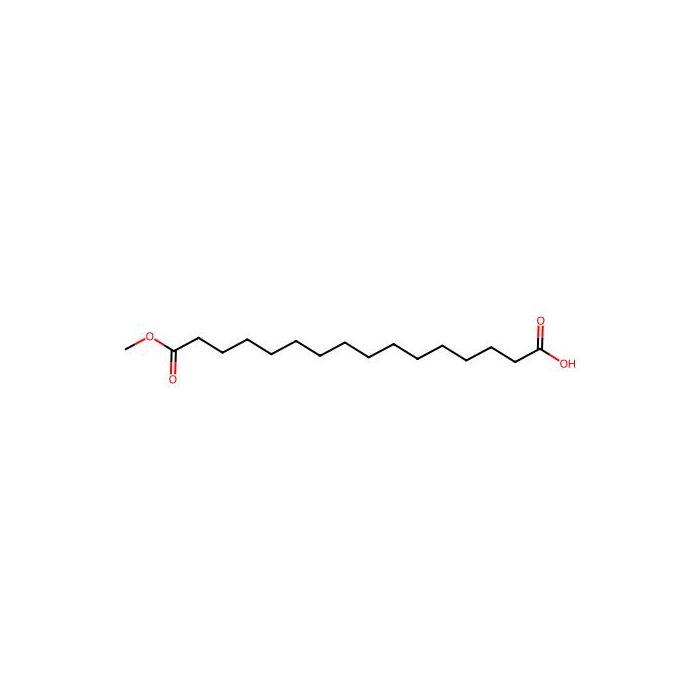
This compound belongs to the class of organic compounds known as long-chain fatty acids. These are fatty acids with an aliphatic tail that contains between 13 and 21 carbon atoms.
External Descriptors
Not available
1. Djoumbou Feunang Y, Eisner R, Knox C, Chepelev L, Hastings J, Owen G, Fahy E, Steinbeck C, Subramanian S, Bolton E, Greiner R, and Wishart DS. ClassyFire: Automated Chemical Classification With A Comprehensive, Computable Taxonomy. Journal of Cheminformatics, 2016, 8:61.
Determine the necessary mass, volume, or concentration for preparing a solution.
Dilution Calculator
Determine the dilution needed to prepare a stock solution.
Reconstitution Calculator
Revisões
Avaliações dos Clientes
Application Protocols
No manufacturer-validated application protocols are provided in the Product Data for this item.
General starting points (research use only):
Stock solutions:
Prepare 10–100 mM stocks in anhydrous DMSO, DMF, or chloroform depending on downstream use. Warm gently (30–40 °C) and sonicate if needed. Record exact concentration gravimetrically.
Lipid film preparation:
Dissolve the compound in chloroform or CHCl3:MeOH (2:1). Evaporate under reduced pressure to form a thin film. Dry under high vacuum (≥2 h) to remove residual solvent. Rehydrate with buffer (optionally with co-lipids/surfactants) and vortex/sonicate to disperse.
Coupling reactions:
For amide formation with amines, use EDC/NHS or DCC/DMAP in DCM/DMF at rt, monitoring by TLC/LC–MS. Quench with dilute acid, extract, and purify by flash chromatography.
Aqueous assays:
To introduce into aqueous media, pre-form a salt (Na+, K+, or TEA) or deliver from a DMSO/ethanol stock at ≤1–2% final organic content, ensuring compatibility with the assay.
These are general procedures; users should optimize conditions for their specific application and consult the SDS and CoA. No WB/IHC/IF/FC or other bioassay dilutions are specified for this item.
Biological Roles
No biological roles are specified for this catalog item; it is supplied strictly for research use only.
General context for saturated ω-functionalized fatty-acid derivatives (literature):
Fatty-acid metabolism: Saturated long-chain fatty acids (LCFAs) undergo activation to acyl‑CoAs and β‑oxidation. Modifications at the ω-end can alter cellular uptake, subcellular trafficking, and metabolic fate, enabling chemical-biology probes of lipid processing.
Membrane interactions: The C16 chain length favors insertion into lipid bilayers and association with membrane proteins. Additional polar functionality at the ω-end can modulate bilayer packing, flip-flop rates, or enable covalent capture after insertion.
Protein acylation studies: Long-chain acids serve as mimetics for palmitoylation-like modifications in biochemical assays. Orthogonal handles at the ω-end allow post-incorporation tagging (e.g., via carbonyl-reactive chemistry) in vitro.
Transport and storage: Interactions with fatty acid binding proteins (FABPs) and lipoprotein assemblies can be probed using labeled derivatives to study binding thermodynamics and specificity.
Important: The above are general research concepts for fatty-acid analogs and do not constitute medical or clinical claims. This specific item’s biological behavior is not characterized in the Product Data; consult primary literature and validate experimentally for your system.
Buffer Applications
This compound is a hydrophobic fatty-acid derivative and is not typically used as a buffering agent. It lacks a suitable conjugate acid/base pair for maintaining pH over a defined range in aqueous media.
Practical guidance (if aqueous handling is required):
To work in buffered systems, dissolve first in a water-miscible organic co-solvent (e.g., DMSO or ethanol) or prepare a salt (e.g., Na+, K+, or TEA salt) of the carboxylate to enhance apparent solubility. Then dilute into the target buffer while keeping final organic content and ionic strength compatible with the application.
Common biological buffers (PBS, HEPES, Tris) can be used to maintain pH during assays, but the compound itself does not contribute to buffering capacity.
Avoid high pH if the ω-terminal “methoxy-oxo” group is base-labile (e.g., ester-like), to minimize hydrolysis during aqueous incubations.
For routine buffering needs, select an appropriate dedicated buffer system (e.g., phosphate pH 6–8, HEPES pH 6.8–8.2, citrate pH 3–6) independent of this reagent.
Green Alternatives
As a solid fatty-acid derivative, the “green” considerations primarily concern the choice of auxiliary solvents and reagents used with this material, rather than the compound itself.
Greener processing choices (general guidance):
Solvents:
Prefer ethyl acetate, 2-methyltetrahydrofuran (2-MeTHF), or isopropanol over chlorinated solvents when reaction compatibility allows.
For peptide/amide couplings, dimethyl carbonate or propylene carbonate may, in some cases, replace DMF/DMSO; solubility of long-chain substrates must be verified.
For chromatographic purification, heptane/EtOAc can replace hexane/DCM systems.
Reagents:
Consider more benign coupling systems (e.g., EDC∙HCl with catalytic DMAP) over DCC to reduce dicyclohexylurea waste handling.
Explore enzyme-catalyzed esterifications/amidations in green solvents where feasible (lipases in 2-MeTHF or solvent-free conditions), recognizing the hydrophobic substrate may be well-suited to such media.
Trade-offs:
Solubility constraints of C16 chains can necessitate halogenated or high-permittivity solvents for efficient reactions; “green” replacements may require higher temperatures or longer times.
Work-up efficiency: Greener solvents sometimes complicate phase separations with amphiphilic products; brine washes and temperature control can mitigate emulsions.
Mini comparison (general):
DCM vs EtOAc: DCM offers superior solvency and low bp for quick removal; EtOAc is less toxic/ozone-impacting but may need warming and larger volumes.
DMF vs 2-MeTHF: DMF gives excellent coupling kinetics; 2-MeTHF is greener and water-immiscible, but may not fully dissolve highly crystalline long-chain acids without co-solvents.
Pharmaceutical Uses
No pharmacopeial status or excipient role is specified for this item; it is offered for research use only.
General, non-clinical context for long-chain fatty-acid derivatives (literature):
Prodrug strategies: Carboxylic acids or ω-functional groups can be derivatized to modulate permeability, lipophilicity, and metabolic stability in small-molecule leads (e.g., reversible esters/amides). Any such use requires thorough preclinical evaluation; not implied for this product.
Lipid excipient research: C16-based chains are common in lipidic formulations (self-emulsifying drug delivery systems, oleogels) and as hydrophobic anchors in PEG–lipid conjugates. Bifunctional lipids can allow orthogonal attachment of payloads and formulation handles.
Analytical standards: Modified fatty acids can serve as internal standards in lipidomics or as surrogates in method development for LC/GC assays.
Caveat: The Product Data provide no claims of GMP compliance, compendial grade, or suitability for human/animal administration. Do not use for diagnostic, therapeutic, or in vivo clinical applications.
Physical Properties
Appearance: Not specified for this item; refer to CoA/Spec Sheet.
Molecular weight: Not specified for this item; refer to CoA/Spec Sheet.
Molecular formula: Not specified for this item; refer to CoA/Spec Sheet.
Melting point: Not specified for this item; refer to CoA/Spec Sheet.
Boiling point: Not specified for this item; refer to CoA/Spec Sheet.
Density: Not specified for this item; refer to CoA/Spec Sheet.
Refractive index: Not applicable to solids; Not specified for this item; refer to CoA/Spec Sheet.
UV cutoff/absorbance: Not specified for this item; refer to CoA/Spec Sheet.
Residual water/peroxides/metals: Not specified for this item; refer to CoA/Spec Sheet.
General/literature expectations for long-chain ω-functionalized fatty-acid derivatives (context, not item-specific specifications):
Physical state: typically a waxy solid or low-melting solid at ambient temperature for C16 saturated derivatives; exact melting behavior depends on the terminal functionality and purity.
Solubility profile: very low in water; soluble in nonpolar and moderately polar organic solvents (e.g., chloroform, dichloromethane, toluene) and often in polar aprotic solvents (e.g., DMF, DMSO). Solubility in alcohols (MeOH/EtOH) may require warming or slight base to ionize the acid.
Acid–base: contains a carboxylic acid; pKa for saturated fatty acids is typically around 4.5–5.0 (literature, general). The presence of an additional carbonyl at the ω-end can modestly affect acidity and partitioning but the molecule remains amphiphilic with high overall hydrophobicity.
Partitioning: long aliphatic chains generally impart high logP/logD values (literature); precise values for this specific derivative are not specified for this item.
Quality and Grades
Item-specific quality attributes provided:
Grade/Purity: Not specified for this item; refer to CoA/Spec Sheet.
Interpretation and guidance (general; not item-specific specifications):
Purity reporting: For synthetic lipid building blocks, purity is often assessed by HPLC/GC and/or NMR. Fatty-acid derivatives can show minor homolog impurities (±1–2 carbons) and residual solvents; the CoA typically discloses assay %, related substances, and residual solvents.
Identity confirmation: High-resolution mass spectrometry and 1H/13C NMR are commonly used. For positional isomers at the ω-end, 2D NMR or derivatization/GC–MS may be applied.
Stabilizers: None are indicated in the Product Data. If stabilizers or antioxidants are added for a specific lot, they will appear on the CoA and may affect downstream reactions (e.g., BHT can interfere with radical chemistry). Always check the CoA when reaction sensitivity is anticipated.
Low-UV or LC/MS suitability: If LC/MS or HPLC applications are planned, select lots with low baseline absorbance and low non-volatile residue. UV cutoff and metal content are not specified for this item.
Lot-to-lot consistency: Lipid-like materials can exhibit polymorphism and variable melting behavior. Documented conditions (storage, handling, drying protocol) help ensure reproducibility across lots.
Recommendations:
Obtain and review the CoA for: purity (assay), residual solvents, water content (Karl Fischer), and any stabilizers.
For sensitive syntheses, consider in-house drying (vacuum at ambient/mild heat) and quick re-check by NMR before use.
Reaction and Applications
Use-cases for ω-functionalized fatty acids center on their dual reactivity: a carboxylic acid terminus for coupling chemistry and an additional carbonyl/methoxy functionality at the opposite end for orthogonal transformations.
Applications (general, literature-based):
Lipid conjugates and probes:
Amide or ester coupling of the acid terminus to labels (fluorophores, affinity tags), peptides, or amines (EDC/NHS, DCC/DMAP, or CDI protocols), providing hydrophobic anchors for membranes or protein conjugation.
Subsequent derivatization at the ω-carbonyl/methoxy group (e.g., hydrolysis/transesterification if ester-like; oxime formation/reduction if carbonyl-like) enables two-point functionalization.
Materials and surfactants: The long C16 chain imparts hydrophobicity; incorporation into polymer backbones or dendrons via the acid end yields amphiphilic materials.
Self-assembled systems: Thin-film formation and liposome-like assemblies can be explored when combined with other lipids; the extra ω-functionality can modulate packing or enable crosslinking after assembly (general observation for bifunctional lipids).
Metabolic studies: As a saturated chain with modified ω-terminus, it can serve as a chemical probe or internal standard in studies of fatty acid uptake, activation, or β-oxidation truncation (non-clinical, research-only use).
Practical notes:
Dry conditions improve coupling efficiency; azeotropically dry reagents/solvents if needed.
For amide formation, pre-activation (e.g., as acid chloride or mixed anhydride) can be used to increase reactivity with sterically hindered partners; monitor to avoid acyl migration or side reactions.
If the ω-group is an ester-like “methoxy-oxo” function, avoid strong base during the first coupling step to prevent unwanted transesterification.
Reaction Conditions
The following are general, literature-based conditions commonly successful for long-chain carboxylic acids bearing a second carbonyl functionality. They are guidance, not specifications for this item.
Amide coupling (acid terminus):
Solvent: DCM, DMF, or DCM:DMF (1:1). Base: DIPEA (2–3 equiv). Reagents: EDC·HCl (1.1–1.5 equiv) + HOBt/HOAt or Oxyma; or HATU/TBTU for difficult substrates.
Temperature/time: 0 °C to rt, 2–16 h. Monitor by TLC/LC–MS. Typical isolated yields for long-chain amide formation: 70–95% (literature, substrate-dependent).
Steglich esterification (acid terminus):
Reagents: DCC (1.1–1.3 equiv), catalytic DMAP (0.05–0.2 equiv). Solvent: DCM or toluene. 0 °C to rt, 4–18 h. Filter DCU, concentrate, purify by flash chromatography (hexane/EtOAc gradient).
Acid chloride formation:
Reagent: SOCl2 (3–5 equiv) with catalytic DMF; solvent-free or toluene. Reflux 1–3 h; remove excess reagent under reduced pressure; use immediately.
ω-Carbonyl transformations (contingent on actual functionality):
If ketone/aldehyde-like: oxime formation with hydroxylamine·HCl (1.5–2 equiv) in pyridine/MeOH at rt; reductive amination using NaBH3CN in MeOH with amine partner at pH ~6–7.
If ester-like: saponification with NaOH/MeOH–H2O (1–2 M) at 0–25 °C; transesterification with ROH and catalytic acid (H2SO4, p‑TsOH) under Dean–Stark or with Ti(OiPr)4.
Purification:
Flash chromatography on silica using hexane/EtOAc or toluene/EtOAc systems; addition of 0.1–0.5% acetic acid or TEA can minimize tailing for acids/amines.
Analytical:
1H/13C NMR in CDCl3, CD2Cl2, or DMSO‑d6. HRMS (ESI/APCI) often shows strong [M−H]− for acids; adducts may form in APCI for hydrophobic species.
Always verify compatibility of reagents with the ω‑functional group indicated by “methoxy‑oxo,” and perform small-scale trials to fine-tune conditions.
Safety and Handling
Authoritative safety information must be obtained from the product SDS.
Provided Product Data:
GHS classification, signal word, pictograms, and H-statements: Not specified for this item; refer to SDS.
Storage conditions: Store at 2–8 °C, desiccated.
Shipping: Shipped on wet ice.
General laboratory safety guidance for long-chain carboxylic acids and related carbonyl derivatives (not item-specific):
Expected hazards: May cause skin/eye irritation. Avoid ingestion and inhalation of dust/particulates. Some fatty-acid derivatives can be slippery if spilled.
PPE: Lab coat, safety glasses or face shield, and appropriate chemical-resistant gloves (e.g., nitrile). Use in a fume hood to avoid inhalation of dust/aerosols.
Handling: Minimize exposure to moisture if hydrolyzable functionality (e.g., esters) is present. Avoid strong bases/acids and strong oxidizers unless part of a controlled reaction protocol. Warm gently to aid dissolution; do not overheat closed containers.
First aid (overview; defer to SDS):
Inhalation: Move to fresh air, monitor breathing, seek medical attention if symptoms persist.
Skin contact: Wash with soap and water; remove contaminated clothing.
Eye contact: Rinse cautiously with water for several minutes; remove contact lenses if present and easy to do; seek medical attention for persistent irritation.
Ingestion: Rinse mouth; do not induce vomiting; seek medical advice.
Spill/cleanup: Avoid creating dust. Collect mechanically; wash area with suitable solvent/detergent while preventing environmental release. Dispose of waste in accordance with local regulations.
Stability considerations: Store desiccated at 2–8 °C as provided. Protect from prolonged exposure to light/heat and from moisture to limit hydrolysis or oxidative degradation of the carbonyl-containing termini.
Solvent Selection
This compound is a long-chain fatty-acid derivative with high hydrophobic content and polar termini. Solvent choice primarily addresses dissolution, reaction compatibility, and hydrolytic stability.
Nonpolar/halogenated: chloroform, dichloromethane (DCM), toluene—good solvating power for C16 chains; useful for extractions and film-casting.
Polar aprotic: DMF, DMSO, NMP—enhanced solubility for coupling reactions (amide/ester formation) while keeping water low.
Alcohols: methanol/ethanol—can dissolve upon warming; may promote transesterification/hydrolysis under acidic/basic conditions.
Aqueous: negligible solubility as free acid; solubility can be increased by converting to salts (e.g., Na+, TEA) or using surfactants/co-solvents.
Polarity/dielectric context (literature): fatty acids exhibit very poor solubility in water but are miscible with many organic solvents; dielectric constants: DCM (~9), toluene (~2.4), DMF (~37), DMSO (~47) provide a range for reaction tuning.
Choosing a solvent:
For coupling (EDC/HOBt, DCC/DMAP): DCM, DMF, or mixtures are common to balance solubility and reactivity.
For analytical prep (HPLC/flash): hexane/EtOAc gradients or MeOH/H2O with 0.1% acid for RP-HPLC of ionizable forms.
For lipid film preparation: chloroform or CHCl3:MeOH mixtures (e.g., 2:1 v/v) are traditional; remove solvent under reduced pressure then vacuum-dry.
Practical tips:
Warm gently (30–40 °C) and sonicate to aid dissolution.
Minimize water to avoid hydrolysis of any ester-like functionality implied by the “methoxy-oxo” moiety.
If generating salts for aqueous work, neutralize carefully and confirm pH to avoid micelle formation artifacts.
Storage and Reconstitution
Item-specific storage information (from Product Data):
Store at 2–8 °C, desiccated.
Shipped on wet ice.
Appearance, stabilizers, and solvent content: Not specified for this item; refer to CoA/Spec Sheet.
General guidance for reconstitution and handling of long-chain fatty-acid derivatives (not a specification):
Upon receipt: Allow the sealed container to equilibrate to room temperature before opening to minimize moisture condensation. Open in a dry environment (desiccator or dry box) if possible.
Solid handling: If clumping is observed, gently loosen the material with a clean spatula. For accurate weighing, minimize exposure to ambient humidity.
Preparing stock solutions:
Use anhydrous solvents (e.g., DCM, chloroform, DMF, DMSO). Warm mildly (30–40 °C) and sonicate to aid dissolution. Record solvent lot and dryness.
For aqueous work, prepare salts or deliver via co-solvent as appropriate. Avoid strong base or acid if the ω “methoxy‑oxo” group is hydrolysis‑prone.
Aliquoting and storage of solutions (general practice):
Dispense into dry, inert vials under nitrogen/argon when feasible. Store tightly capped. Many users keep organics-only solutions at −20 °C to limit degradation; verify stability in your system.
Avoid repeated freeze–thaw of solutions; prepare single-use aliquots.
Stability monitoring: Periodically check by TLC/HPLC/NMR for signs of hydrolysis or oxidation, especially after prolonged storage.
Always defer to the product label and CoA for lot-specific instructions and stability data.
Structure and Identity
Brief overview: 16-Methoxy-16-oxohexadecanoic acid is a saturated long-chain fatty-acid derivative bearing a terminal methoxy/oxo functionality in addition to a carboxylic acid, making it a bifunctional lipid building block.
SKU: M768797
Product name: 16-Methoxy-16-oxohexadecanoic acid
CAS: 18451-85-9
InChIKey: 284016 (as provided; note this does not follow the typical 27-character InChIKey format)
SMILES: Not specified for this item; refer to CoA/Spec Sheet.
Molecular formula: Not specified for this item; refer to CoA/Spec Sheet.
Molecular weight: Not specified for this item; refer to CoA/Spec Sheet.
Structural features (interpretation from name; verify against CoA/SDS):
Core scaffold: a hexadecanoic acid (C16 saturated fatty acid) backbone.
Functional groups: one terminal carboxylic acid (–CO2H) plus an additional methoxy-substituted carbonyl at the ω-end (“16‑methoxy‑16‑oxo”), consistent with an extra carbonyl functionality incorporating a methoxy substituent at carbon 16.
Stereochemistry: none implied (fully saturated, no chiral centers expected along an unbranched chain).
2D description in words (general): a linear C16 chain bearing a carboxylic acid at carbon 1 and, at the opposite terminus (carbon 16), a carbonyl bearing a methoxy substituent; overall presenting a hydrophobic alkyl segment with polar end-groups.
Important note: The precise constitutional detail of the “methoxy-oxo” moiety should be confirmed from the Certificate of Analysis/structure file for this specific lot. No additional identifiers are specified in the provided Product Data.
Synthetic Utility
Functional handles at both termini make 16-Methoxy-16-oxohexadecanoic acid a versatile building block for stepwise assembly of amphiphiles, conjugates, and polymer-anchored entities.
Key reactivity domains (general):
Carboxylic acid terminus:
Amide formation with amines (EDC/NHS, DCC/DMAP, HATU, T3P) to produce fatty amides.
Esterification with alcohols (Fischer, Steglich) to introduce solubilizing groups or protecting groups.
Activation to acid chlorides (oxalyl chloride, thionyl chloride) for subsequent acylations.
Reduction to primary alcohols (BH3·THF, LiAlH4) or to aldehydes (DIBAL-H at low temperature), enabling further diversification.
ω-Methoxy/oxo terminus (as implied by the name; verify actual functionality on CoA):
If ester-like: hydrolysis to uncover a diacid; transesterification to other alcohols; amidation after activation.
If ketone/aldehyde-like: formation of oximes/hydrazones; reductive amination; selective reduction (NaBH4, catalytic hydrogenation) if compatible.
Strategic uses:
Spacer-lipid synthesis: Attach the acid end to a scaffold (polymer, PEG, peptide), then convert the ω-functionality into a reactive handle for conjugation to a second partner.
Surface modification: Graft via amide/ester to surfaces or linkers; use the distal carbonyl to further elaborate or to tune wettability.
Notes:
Control chemoselectivity by protecting the less reactive end. Use orthogonal conditions to avoid scrambling (e.g., neutral coupling at the acid end if the ω-group is base-labile).
Confirm structure/reactivity of the ω-moiety experimentally before committing to multistep routes.
Target Specificity
Not applicable to this product type. This item is a small-molecule fatty-acid derivative, not a biological targeting reagent (e.g., antibody, ligand with defined receptor specificity) in the context of the Product Data provided.
Antigen/epitope/clone/isotype: Not specified for this item; refer to CoA/Spec Sheet if any application-specific targeting information is later provided.
We use cookies to ensure the website functions properly and, where permitted, to improve your experience. You can manage your preferences at any time in Settings. Learn more in our Cookie Policy.
Shall we send you a message when we have discounts available?
Remind me later
Thank you! Please check your email inbox to confirm.
Products are supplied to verified businesses, institutions, and qualified professionals for research and development use only. Not for use in humans, animals, diagnosis, or therapy.