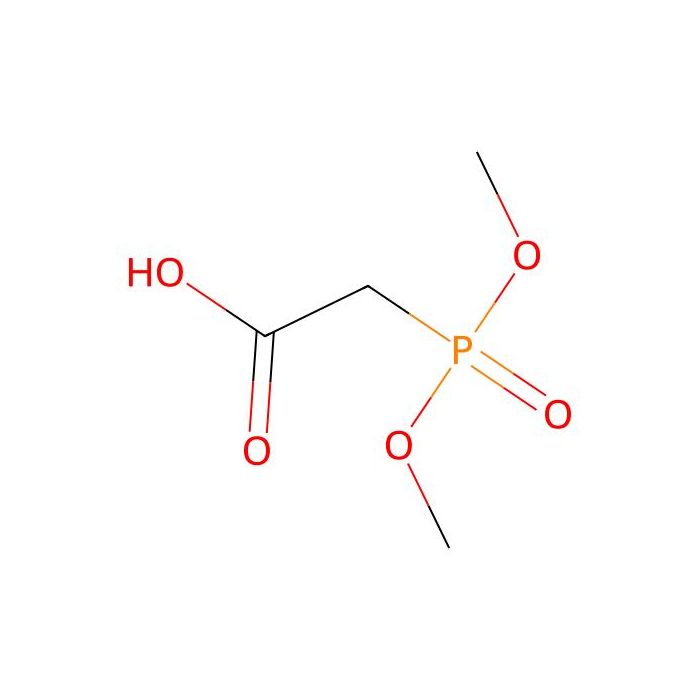
This compound belongs to the class of organic compounds known as dialkyl alkylphosphonates. These are compounds containing a phosphonic acid that is diesterified with alkyl groups, and the phosphorus atom is also directly attached to an alkyl group.
External Descriptors
Not available
1. Djoumbou Feunang Y, Eisner R, Knox C, Chepelev L, Hastings J, Owen G, Fahy E, Steinbeck C, Subramanian S, Bolton E, Greiner R, and Wishart DS. ClassyFire: Automated Chemical Classification With A Comprehensive, Computable Taxonomy. Journal of Cheminformatics, 2016, 8:61.
Determine the necessary mass, volume, or concentration for preparing a solution.
Dilution Calculator
Determine the dilution needed to prepare a stock solution.
Reconstitution Calculator
Revisões
Avaliações dos Clientes
Application Protocols
No application assays (e.g., WB, IHC, IF, FC) are relevant to this small-molecule reagent, and none are provided in the Product Data.
General lab usage examples (non-binding guidance):
Representative esterification (to ethyl phosphonoacetate): dissolve 2-(dimethoxyphosphoryl)acetic acid in dry DCM, add EDC·HCl (1.2–1.5 equiv) and catalytic DMAP, then ethanol (1.5–2.5 equiv). Stir at 0 °C to rt until completion by TLC/LC-MS. Filter or extract to remove urea byproducts; purify by column chromatography.
Representative amide coupling: in dry DMF, combine the acid, amine nucleophile (1.1 equiv), HATU (1.2 equiv), and DIPEA (2–3 equiv) at 0 °C; warm to rt and monitor by LC-MS and 31P NMR.
These are illustrative only; optimize stoichiometry, temperature, and solvent for your substrate set. For regulated or scale-up work, develop and document a formal batch record and risk assessment.
Biological Roles
This product is a synthetic organophosphorus building block and is not a biological buffer or metabolite in standard pathways.
General context (literature):
Dialkyl phosphonates serve as stable, non-hydrolyzable mimics of phosphate esters and have been used in chemical biology and medicinal chemistry as transition-state or isostere surrogates. However, 2-(dimethoxyphosphoryl)acetic acid itself is primarily a synthetic intermediate.
The carboxylic acid enables conjugation to amines (amide formation) or alcohols (esterification), which can be leveraged to append phosphonoacetyl motifs to biomolecules for probe development. Any biological evaluation is outside the scope of this product listing.
Stability considerations:
Phosphonate diesters are generally more resistant to hydrolysis than phosphate diesters but can be cleaved under strong acidic or basic conditions; enzymatic recognition is typically low compared with natural phosphates.
Use limitations:
Research use only; not intended for diagnostic, therapeutic, or clinical applications.
If you require bioconjugation-ready derivatives (e.g., activated esters or N-hydroxysuccinimide esters of phosphonoacetic acid) for biochemical studies, consider preparing them immediately prior to use to maximize stability and minimize nonspecific hydrolysis.
Buffer Applications
This compound is not commonly employed as a pH buffer. It contains a single carboxylic acid group and a phosphonate diester; the latter does not provide a useful buffering pair in aqueous media. For controlled pH systems in the physiological range, choose established buffers (e.g., phosphate, HEPES, MOPS, acetate).
Practical guidance:
If present in an aqueous reaction mixture (e.g., during EDC-mediated couplings), buffer capacity will be minimal and pH should be maintained with an external buffer system.
Avoid using amine-containing buffers (e.g., Tris) during carbodiimide coupling steps, as they can compete and suppress desired amidation.
For aqueous-phase conjugations, use MES (pH ~6), phosphate (pH ~7), or borate (pH ~8–9) as appropriate and perform extractions to isolate the organic products after reaction completion.
Green Alternatives
Sustainable choices focus on solvent selection and process intensification; the intrinsic substance is a specialty reagent, so greener strategy emphasizes media and activation chemistry.
Greener solvent swaps (general):
Replace DCM/CHCl3 with ethyl acetate, 2-MeTHF, CPME, or toluene where solubility permits.
Favor acetonitrile or CPME over THF when peroxide formation or stability is a concern; for strong-base chemistry, 2-MeTHF/CPME can substitute THF with similar polarity but improved EHS.
Use EtOAc/MeOH mixtures instead of purely chlorinated systems for workups.
Greener coupling/activation:
Prefer carbodiimides with catalytic DMAP (DCC or EDC) or uronium reagents (HATU) with careful waste minimization over acid chlorides where HCl off-gas is undesirable. Water-soluble EDC enables aqueous workups and reduces chlorinated waste.
Enzyme-catalyzed esterifications (lipase) in green solvents or neat conditions can form phosphonoacetate esters under mild conditions (literature precedent), though scope must be evaluated.
Comparative overview (general, qualitative):
DCM vs 2-MeTHF: similar solvency for couplings; 2-MeTHF has better environmental profile and can be sourced from renewables; may require longer reaction times.
THF vs CPME: CPME offers lower peroxide formation and higher boiling point; sometimes diminished solubility for salts.
Oxalyl chloride vs EDC: oxalyl chloride gives volatile byproducts but requires chlorinated media and generates HCl; EDC produces urea waste but can run in greener solvents and water.
Implement life-cycle thinking: consolidate steps (in situ esterification then HWE) to reduce solvent exchanges and purifications.
Pharmaceutical Uses
No pharmacopeial or excipient designation is provided for this item. It is a research-grade synthetic intermediate.
General formulation/manufacturing context (non-clinical, literature-based):
Building block: used to introduce a phosphonoacetyl functionality into small molecules or peptides via amide or ester linkages during lead synthesis and SAR campaigns.
Prodrug precursor: carboxylic acids can be masked as esters (e.g., benzyl, tert-butyl) to facilitate purification/handling; the phosphonate diester may also be further modified (e.g., aryl/alkyl variations) for physicochemical tuning in discovery settings. Such uses remain strictly preclinical/synthetic.
Process considerations: when used upstream in API synthesis research, attention to residual reagents (carbodiimide ureas, chlorinating agents) and to phosphorus-containing byproducts is important for impurity control studies.
Compliance note:
This product is for research use only and is not intended for human or veterinary use. It has no stated USP/EP/JP monograph status for excipient or API use under this listing.
Physical Properties
Item-specific specifications (BP, MP, density, water/peroxide/metal content, RI, UV cutoff) are not provided for this SKU; refer to the CoA/Spec Sheet.
General/literature and computed information (for context only; not item specifications):
Molecular formula (computed): C4H9O5P
Molecular weight (computed): ~168.09 g/mol
Physical state/appearance: Not specified for this item; small dialkyl phosphonates are commonly low-melting solids or viscous liquids (literature, varies by sample and purity).
Acidic functionality: contains one carboxylic acid; expected to form salts with bases and to show typical carboxylic acid acidity (pKa ~2–4 for –CO2H, literature range; specific value for this compound not confirmed here).
Alpha-C–H acidity: methylene between –CO2H and –P(=O)(OR)2 is activated; related phosphonoacetate systems exhibit pKa(CH2) ~21–23 in DMSO (literature, indicative only).
Polarity/solubility (qualitative, literature): polar, hydrogen-bond donor/acceptor; generally soluble in polar aprotic solvents (e.g., DMF, DMSO, acetonitrile) and chlorinated solvents; miscibility with water and lower alcohols can be moderate; exact solubility not established here.
Notes:
Always verify melting range, residual solvents, and water content on the lot-specific CoA before designing crystallization or handling protocols.
Hygroscopicity is not established for this item; minimize ambient moisture exposure as a best practice for carboxylic acid reagents and phosphonate esters.
Quality and Grades
Item-specific details:
Grade/Purity: Not specified for this item; refer to CoA/Spec Sheet.
Stabilizers/Inhibitors: Not specified for this item; refer to CoA/Spec Sheet.
How to interpret grades for this reagent class (general guidance):
Research grade: suitable for most synthetic applications and method development; typical focus is assay purity and identity confirmation (NMR/IR/MS). UV background and trace metal content are generally not constrained unless stated.
High-purity or HPLC grade (if offered): emphasizes low non-volatile residue and low UV absorbance background; valuable when the reagent is used in UV-detected workflows or analytical calibration mixtures.
Water content: important for moisture-sensitive couplings or base-mediated deprotonations. For this SKU, specific limits are not provided; check Karl Fischer values on the CoA where available.
Residual solvent and inorganic impurities: phosphonate reagents can retain alcohols or chlorinated solvents from synthesis and workup; lot-specific GC and ICP data (if provided) guide suitability for sensitive catalysis.
Recommendations:
For moisture-sensitive transformations (e.g., generation of phosphonate carbanions after prior esterification), verify water content and assay purity on the CoA.
If using in trace analysis or photochemical settings, request a low-UV or LC-MS suitable grade when available, or pre-purify by distillation/recrystallization as appropriate.
Reaction and Applications
Use this reagent as a versatile linchpin for installing the phosphonoacetyl motif or for accessing olefination partners after derivatization.
Key applications (general/literature):
Esterification to phosphonoacetates: conversion of the –CO2H to alkyl esters (e.g., ethyl or benzyl phosphonoacetate) via Fischer esterification or DCC/EDC/DMAP coupling. The resulting phosphonoacetates are classic Horner–Wadsworth–Emmons (HWE) reagents for olefination of aldehydes/ketones, favoring E-alkenes under non-stabilized conditions.
Mixed anhydrides and acid chlorides: activation of the carboxyl group (e.g., oxalyl chloride, SOCl2) gives acyl derivatives that can acylate nucleophiles or be engaged in further elaborations; control conditions to avoid P–O cleavage.
Amide coupling: installation of phosphonoacetyl groups on amines/peptides using EDC/HOBt, HATU, or PyBOP in DMF/DCM with tertiary amine base. Useful for preparing phosphonoacetylated amino acids/peptidomimetics.
Enolate/carbanion chemistry (post-esterification): the α-CH2 next to P=O and C=O is deprotonated by NaH, KHMDS, or LDA (THF, −78 to 0 °C), enabling C–C bond formation (HWE, alkylations). The acid itself is generally esterified first to enhance stability/reactivity of the anion.
Vinylphosphonate synthesis: via HWE or Knoevenagel-type pathways from derived esters, furnishing handles for cross-coupling (e.g., Hirao, palladium-catalyzed P–C couplings) and as Michael acceptor motifs.
Practical notes:
Thoroughly dry solvents and bases for anion chemistry on phosphonoacetate esters.
For acid chloride formation, include a catalytic DMF or use oxalyl chloride; maintain low temperature to limit transesterification or P–O cleavage.
Monitor reactions by 31P NMR (distinctive shifts for phosphonate vs intermediates) alongside 1H/13C NMR.
Reaction Conditions
General conditions (literature guidance; adjust per substrate and do not construe as specifications):
Esterification to phosphonoacetates:
Fischer: ROH (3–10 equiv), catalytic H2SO4 or p-TsOH, 50–80 °C (solvent or neat), Dean–Stark where applicable; hours to overnight. Protect the phosphonate from prolonged strong acid to limit transesterification.
Coupling: DCC (1.1–1.3 equiv) or EDC·HCl (1.2–1.5 equiv), DMAP (5–20 mol%), DCM or DMF, 0 °C to rt, 2–16 h. Work up by filtration (DCU) or aqueous extraction (EDC).
Acid chloride formation:
Oxalyl chloride (1.2–1.5 equiv), catalytic DMF, DCM, 0 °C to rt, 1–3 h; remove volatiles under reduced pressure. Use immediately to acylate nucleophiles with base (e.g., DIPEA, pyridine).
HWE olefination (from derived phosphonoacetate):
Base: NaH (60% in mineral oil, 1.1–1.5 equiv) or KHMDS/LDA (1.1–1.3 equiv).
Solvent: anhydrous THF, DME, or 2-MeTHF; −78 to 0 °C for deprotonation, then add carbonyl electrophile at −78 to 0 °C; warm to 0–25 °C. Typical times 1–6 h; E/Z selectivity depends on substitution and conditions.
Amide coupling:
Reagents: HATU or EDC/HOBt (or HOAt), DIPEA (2–3 equiv), DMF/DCM, 0 °C to rt, 2–18 h. Monitor by LC-MS and 31P NMR.
Notes:
Strictly dry conditions for anion chemistry; water quenches the phosphonate anion and reduces yields.
31P NMR: phosphonate diesters often resonate around +20 to +30 ppm (relative to 85% H3PO4); product shifts vary—use as a qualitative monitor.
Safety and Handling
Item-specific GHS classification and hazard statements are not provided for this SKU; consult the SDS for authoritative information.
General laboratory safety guidance for organophosphonate carboxylic acids (not product-specific):
Likely hazards: irritant to skin, eyes, and respiratory tract; carboxylic acids can be corrosive to mucous membranes; avoid inhalation of mists/vapors and contact with skin/eyes.
PPE: lab coat, safety glasses or splash goggles, and appropriate chemical-resistant gloves (e.g., nitrile). Use in a fume hood to control vapors/aerosols.
Handling: avoid moisture ingress; keep container tightly closed. Prevent contact with bases, strong oxidizers, and strong reducing agents. Addition of strong bases can generate heat and form salts; avoid uncontrolled neutralizations.
Incompatibilities (general): strong oxidizers; strong bases (can cause exothermic neutralization); reactive acylation agents may form mixed anhydrides—control conditions.
First aid (general):
Skin/eye contact: rinse with copious water for at least 15 minutes; remove contaminated clothing; seek medical attention if irritation persists.
Inhalation: move to fresh air; monitor breathing; seek medical attention if symptoms occur.
Ingestion: rinse mouth; do not induce vomiting; seek medical attention.
Spills: absorb with inert material (vermiculite, sand); transfer to waste container; wash area with mild alkaline detergent if compatible.
Fire: use CO2, dry chemical, or foam. Thermal decomposition may release irritating phosphorus oxides; firefighters should wear SCBA.
Storage (item-specific): Store at 2–8°C. Shipments are on wet ice. Protect from prolonged exposure to heat and ambient moisture. Always defer to the SDS for final guidance.
Solvent Selection
This bifunctional reagent is polar and compatible with a range of organic media commonly used in coupling and phosphonate chemistry.
Polarity/miscibility (general, literature):
Polar aprotic solvents (DMF, DMSO, NMP, acetonitrile) typically dissolve dialkyl phosphonates and carboxylic acids well and are ideal for carbodiimide or uronium-based couplings.
Chlorinated solvents (DCM, CHCl3) and ethyl acetate often provide good solubility and convenient workups for acid chloride or mixed anhydride routes.
Ethers (THF, 2-MeTHF, CPME) are preferred when strong bases (e.g., NaH, KHMDS) are employed on derived phosphonoacetate esters; they balance solvency and base compatibility.
Alcohols may cause esterification of the carboxylic acid under acidic/activating conditions—use deliberately (to prepare phosphonoacetate esters) or avoid when preserving the acid.
Practical selection tips:
For esterification to phosphonoacetates: use ROH with catalytic acid or DCC/DMAP in DCM/THF; choose solvent to control rate and suppress side reactions.
For peptide/amide couplings: DMF or DCM with HATU/EDC and base (DIPEA) facilitate homogeneous reaction; monitor for O→N acyl migration in complex systems.
For purification: ethyl acetate/hexanes or DCM/methanol systems commonly separate unreacted alcohols and urea byproducts.
Comparison (general): DCM offers rapid couplings and easy removal but lower EHS profile; ethyl acetate/2-MeTHF provide greener alternatives with slightly different solubility and rates. Match solvent to downstream isolation strategy and EHS goals.
Storage and Reconstitution
Item-specific storage: Store at 2–8°C. Shipped on wet ice.
Container: keep tightly closed in original container. Protect from ambient moisture and prolonged exposure to heat.
Atmosphere: inert gas blanket (e.g., nitrogen) is advisable for long-term storage to limit moisture ingress and oxidative byproducts, though specific sensitivity is not established for this item.
Stability: lot-specific stability data are not provided; refer to the CoA/Spec Sheet. As a best practice for carboxylic acid phosphonate esters, minimize repeated warming/cooling cycles.
Reconstitution/Preparation: supplied neat (no reconstitution required). For solution preparation, use dry solvents (e.g., DCM, DMF, THF, acetonitrile) as required by your procedure. Prepare stock solutions freshly for moisture-sensitive transformations and store aliquots at 2–8°C where practical.
Freeze–thaw: if solutions are stored refrigerated, avoid multiple freeze–thaw cycles; consider small aliquots.
Disposal: phosphorus-containing waste should be collected in accordance with institutional and local regulations; avoid drain disposal.
For the most accurate handling and stability guidance, always consult the product’s SDS and the lot-specific CoA/Specification Sheet.
Research Use Note: For research use only.
Structure and Identity
2-(Dimethoxyphosphoryl)acetic acid is a bifunctional organophosphorus building block combining a carboxylic acid with a dialkyl phosphonate ester.
Item-specific (from Product Data):
CAS: 34159-46-1
CID (PubChem): 189964
InChIKey (provided): 302252
Storage: Store at 2-8°C; shipped on wet ice
Grade/Purity, Appearance: Not specified for this item; refer to CoA/Spec Sheet.
Structure (literature/derived):
Preferred name (synonym): Dimethyl (phosphono)acetic acid; dimethyl phosphonoacetic acid
Molecular formula (computed from structure): C4H9O5P
Molecular weight (computed): ~168.09 g/mol
SMILES (structural, derived): O=C(O)CP(=O)(OC)OC
Core features: one carboxylic acid (–CO2H); one phosphonate diester P(V) center P(=O)(–OMe)2; a methylene (–CH2–) linking the two electron-withdrawing groups.
2D description: a terminal carboxyl group (–CO2H) is attached to a methylene carbon that is directly bonded to a tetra-coordinated phosphorus bearing one phosphoryl oxo (P=O) and two methoxy substituents.
Stereochemistry: none (achiral); no E/Z or axial chirality.
Functional group implications (general chemistry):
The juxtaposition of –CO2H and –P(=O)(OR)2 creates an “activated methylene” useful for anion generation (after suitable derivatization), and the –CO2H enables standard coupling/esterification to access phosphonoacetate esters.
Synthetic Utility
2-(Dimethoxyphosphoryl)acetic acid is a modular synthon that allows orthogonal manipulation of a carboxyl group and a latent anion-stabilizing phosphonate ester.
Key utilities (general/literature):
Access to phosphonoacetates: esterify the –CO2H with ROH (acid catalysis or DCC/EDC/DMAP) to furnish RO–CO–CH2–P(=O)(OMe)2, a family of substrates for HWE olefination and alkylation chemistry.
HWE olefination (after esterification): deprotonation with NaH, KHMDS, or LDA generates the phosphonate anion; reaction with aldehydes/ketones yields α,β-unsaturated esters or related alkenes (often E-selective under basic conditions). This provides convergent entry to acrylates and vinylphosphonates.
Amide formation: coupling with amines introduces phosphonoacetylated amide motifs, valuable in peptidomimetic synthesis where the phosphonate serves as a phosphate isostere.
Orthogonal derivatization: the phosphonate diester can be diversified (transesterification, alcohol exchange) without perturbing amide/ester linkages under controlled conditions.
31P NMR handle: phosphorus nucleus provides a sensitive probe for reaction monitoring and purification.
Practical tips:
For acid chloride routes, use oxalyl chloride (0.9–1.5 equiv) with catalytic DMF in DCM at 0 °C to rt; exclude moisture. Quench cautiously to avoid P–O cleavage.
For esterifications, minimize urea byproduct contamination by filtering DCC/DCU cold and washing with non-polar solvents; or switch to EDC·HCl in biphasic media for easier removal.
Target Specificity
Not applicable. This product is a small-molecule reagent and does not have antigen/epitope targets, species reactivity, clone, or isotype. No target-specific information is provided in the Product Data.
Perguntas frequentes
What is the purity of this product?
This product is supplied at ≥95% purity (chemical assay). Lot-specific values are stated on the Certificate of Analysis.
How should this product be stored?
Store at 2–8 °C. Refrigerated storage is required to maintain the specified shelf life.
How is this product shipped?
This product ships chilled on wet ice. Unpack on arrival and transfer it to the storage condition stated above.
What are the CAS number, molecular formula and molecular weight?
The CAS Number is 34159-46-1, the molecular formula is C4H9O5P, and the molecular weight is 168.09 g/mol. InChIKey QOJLTIJRCYTUDQ-UHFFFAOYSA-N.
What documentation is provided?
Available product documentation, including Certificates of Analysis (COA), Safety Data Sheets (SDS), and specification sheets, is shown in the product document area. Document availability and access follow the current site policy.
Usamos cookies para garantir o funcionamento adequado do site e, quando permitido, para melhorar a sua experiência. Você pode gerenciar suas preferências a qualquer momento nas Configurações. Saiba mais em nossa Política de Cookies.
Deseja que lhe enviemos uma mensagem quando tivermos descontos disponíveis?
Lembrar-me mais tarde
Obrigado! Por favor, verifique a sua caixa de entrada de e-mail para confirmar.
Products are supplied to verified businesses, institutions, and qualified professionals for research and development use only. Not for use in humans, animals, diagnosis, or therapy.