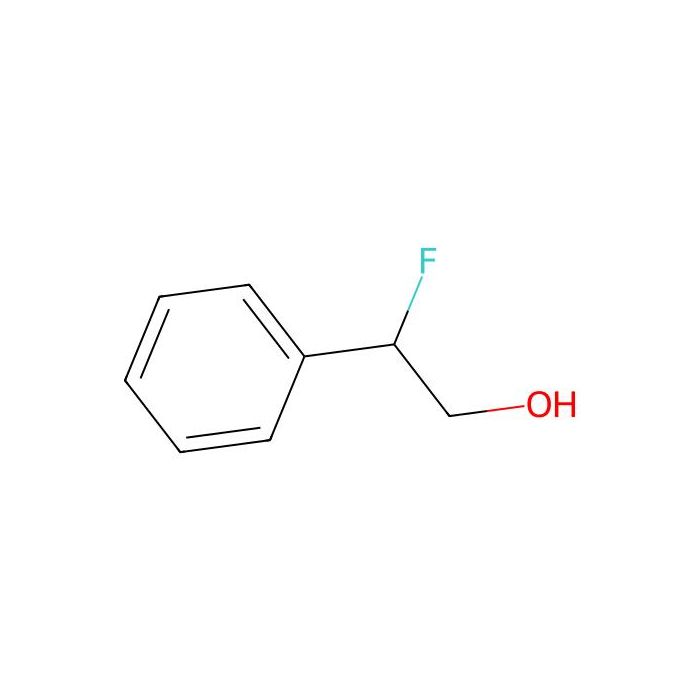
This compound belongs to the class of organic compounds known as benzene and substituted derivatives. These are aromatic compounds containing one monocyclic ring system consisting of benzene.
External Descriptors
Not available
1. Djoumbou Feunang Y, Eisner R, Knox C, Chepelev L, Hastings J, Owen G, Fahy E, Steinbeck C, Subramanian S, Bolton E, Greiner R, and Wishart DS. ClassyFire: Automated Chemical Classification With A Comprehensive, Computable Taxonomy. Journal of Cheminformatics, 2016, 8:61.
Determine the necessary mass, volume, or concentration for preparing a solution.
Dilution Calculator
Determine the dilution needed to prepare a stock solution.
Reconstitution Calculator
Revisões
Avaliações dos Clientes
Application Protocols
Not applicable. No validated biological assay protocols (e.g., WB, IHC, IF, FC) or recommended dilutions are provided for this small-molecule reagent. For synthetic applications, refer to the Reaction Conditions and Synthetic Utility sections for representative procedures and optimization guidelines.
Biological Roles
Applicability note: 2‑Fluoro‑2‑phenylethanol is a synthetic small molecule intended for laboratory research. It is not a biological buffer, nutrient, or biomacromolecule.
General context (literature):
Organofluorine motifs are frequently used in chemical biology and medicinal chemistry to modulate lipophilicity, metabolic stability, and conformational preferences. The benzylic C–F bond can influence binding through stereoelectronic effects and serve as a 19F NMR reporter.
As a benzylic primary alcohol, the compound may undergo enzymatic oxidation in biological systems in analogy to phenethyl alcohols; however, this product is not intended for in vivo use or diagnostics.
Practical guidance:
Use exclusively for in vitro research or synthetic applications per Research Use Only note.
If employed as a probe in biophysical assays (e.g., 19F NMR), confirm purity and absence of acidic/oxidative impurities that could interfere with biomacromolecules.
No biological activity, pathway, or target data are provided for this item; consult primary literature if biological interrogation is planned.
Buffer Applications
This compound is not a buffering agent. It does not form a recognized conjugate acid–base pair suitable for pH control in aqueous systems.
Practical note:
If aqueous handling is required (e.g., biphasic oxidations), use an external buffer system (e.g., phosphate, bicarbonate, or acetate) appropriate to the reaction conditions rather than relying on the substrate itself.
Green Alternatives
Context: As a halogenated building block, 2‑fluoro‑2‑phenylethanol presents persistence concerns typical of organofluorine chemistry. Green strategy focuses on solvent choice, milder reagents, and evaluating whether the fluorine is functionally necessary.
Greener choices and trade-offs (general guidance):
Solvents:
Prefer 2‑MeTHF or EtOAc over chlorinated solvents (e.g., DCM) when compatible. They reduce halogenated waste and often enable easier solvent recovery.
Water or water‑lean systems (e.g., MeCN/H2O with phase-transfer) can be used for some oxidations (TEMPO/NaOCl) and acylations.
Oxidations of the primary alcohol:
TEMPO/NaOCl (buffered, biphasic) or OXOAMM/TEMPO systems avoid chromium waste compared with PCC.
Dess–Martin periodinane is effective but generates hypervalent iodine waste; assess E-factor.
Esterifications/couplings:
Carbodiimide-free protocols (e.g., CDI, green couplings with catalytic DMAP in EtOAc) minimize urea waste.
Alternatives to fluorinated substrates:
If the C–F motif is not performance-critical, consider non-fluorinated 2‑phenylethanol or β‑substituted analogs (e.g., 2‑hydroxy-2‑phenylethanol) to reduce environmental persistence.
Energy and safety:
Room-temperature catalysis and flow chemistry help lower energy input and improve containment. Choose benign bases (e.g., K2CO3) over strong, hazardous bases when feasible.
Mini comparison (illustrative):
DCM vs 2‑MeTHF in acylation: Similar rates; 2‑MeTHF offers better sustainability metrics, but check solubility and selectivity.
PCC vs TEMPO/NaOCl: PCC provides reliable aldehyde formation; TEMPO/NaOCl reduces heavy-metal waste with proper pH control.
Pharmaceutical Uses
No pharmacopeial or excipient status is provided for this item.
General context (non-clinical, formulation/manufacturing perspective):
Organofluorinated benzylic alcohols like 2‑fluoro‑2‑phenylethanol are typically used as intermediates during discovery and process development, not as finished excipients.
Potential roles in process chemistry include: chiral probe or labeled intermediate in SAR studies; precursor to fluorinated aldehydes/acids used for fragment elaboration.
Compliance note:
For research use only. Not for human or veterinary use, drug substance, drug product, or diagnostic applications.
If transitioning a related route to GMP, comprehensive impurity profiling (including inorganic and organofluorine residues) and residual solvent assessments are required; obtain lot-specific CoA and method validation.
Physical Properties
Item-specific (from Product Data):
Appearance: Not specified for this item; refer to CoA/Spec Sheet.
Grade/Purity: Not specified for this item; refer to CoA/Spec Sheet.
Molecular Formula: Not specified for this item; refer to CoA/Spec Sheet.
Molecular Weight: Not specified for this item; refer to CoA/Spec Sheet.
Selected literature/computed properties (reference only; not item specifications):
Empirical formula (literature): C8H9FO
Formula mass (calc.): ~140.06 g/mol
Functional groups: primary alcohol, aryl, C–F at benzylic stereocenter
Expected phase at RT: organic liquid or low-melting solid depending on purity and isomeric composition (consult CoA to confirm actual appearance)
Solubility (qualitative, literature):
Likely miscible with common organic solvents (e.g., DCM, THF, EtOAc, MeCN)
Limited solubility in water typical of benzylic primary alcohols with aryl substitution
Acidity/basicity: neutral alcohol; no ionizable group in neutral water aside from very weak acidity of –OH
Partitioning: aromatic alcohols of this size typically exhibit moderate hydrophobicity (logP in the ca. 1–2 range; verify experimentally for this specific compound)
Important cautions:
Do not treat these literature values as specifications. For method development or regulatory work, obtain the certificate of analysis (CoA) for the specific lot.
Quality and Grades
Item-specific quality information provided: Not specified for this item; refer to CoA/Spec Sheet.
Guidance for interpreting common grades (general knowledge):
Research grade: Suitable for synthetic R&D; impurity profiles vary. Confirm suitability for sensitive catalysis (e.g., Pd, Ni) or organometallic steps with a small pilot run.
Analytical reagent (AR) grade: Typically low non-volatile residue and trace inorganics; valuable when quantitative analyses or impurity-sensitive steps are planned.
HPLC grade (for solvents): Very low UV background and particulate matter; not typically applicable to this compound unless sold as a solvent (it is a building block).
Enantiomeric specification: If chirality matters, verify whether the product is racemic or enantioenriched. No enantiopurity information is provided for this item.
Stabilizers/inhibitors:
Not specified for this item; refer to CoA/Spec Sheet. As a benzylic alcohol, stabilizers are generally unnecessary; however, storage under inert atmosphere can minimize slow oxidation.
Recommendations:
Request the current CoA for exact assay, water content, and impurity profile. If using in asymmetric synthesis, verify enantiomeric composition by chiral HPLC/GC prior to use.
For spectroscopic work, consider distillation or short-path purification if UV background or trace acidity impacts results.
Reaction and Applications
Use profile: 2‑Fluoro‑2‑phenylethanol is a benzylic, β‑fluoro primary alcohol that combines a nucleophilic handle (–CH2OH) with a stereogenic C–F center. It is useful for installing or probing fluorine stereoelectronic effects in small-molecule scaffolds.
Esterification: Acyl chlorides/anhydrides or coupling agents (EDC, DIC) to give 2‑fluoro‑2‑phenylethyl esters.
Etherification: Convert to mesylate/tosylate then SN2 with O-, N-, or S‑nucleophiles to access diverse derivatives.
Oxidation at the primary alcohol:
Aldehyde formation (e.g., DMP, Swern, or TEMPO/bleach) to give 2‑fluoro‑2‑phenylacetaldehyde; further oxidation to the corresponding acid is feasible.
Stereochemical studies and labeling:
The benzylic C–F stereocenter allows NMR (19F) tracking of configurational integrity during transformations.
Elimination/cyclization (note on feasibility):
β‑Halohydrins typically cyclize to epoxides under base. Fluoride is a poor leaving group; cyclization may require activation of –OH (e.g., as sulfonate) or use of specialized conditions. Alternatively, dehydration/elimination to styrenyl products may be possible under forcing acidic conditions, but expect lower efficiency with F as the leaving group.
Cross-coupling on the aryl ring:
The phenyl moiety can be further elaborated after installing appropriate handles (e.g., bromination/iodination prior to Suzuki/Negishi). The intact C–F center can serve as a probe of reaction compatibility.
Practical tips:
Protect the alcohol (e.g., as TBDMS, TBS, or benzyl ether) when undertaking conditions prone to overreaction or oxidation.
Avoid strong Lewis acids that could promote benzylic rearrangements or fluoride loss; monitor by 19F NMR.
Reaction Conditions
The following are literature-style general conditions for common transformations of benzylic primary alcohols bearing C–F; verify on small scale and optimize for your substrate.
Esterification (acyl chloride/anhydride):
Solvent: DCM or 2‑MeTHF
Base: Pyridine, triethylamine, or DIPEA (1.2–2.0 equiv)
Temperature: 0 °C to RT; 0.5–4 h
Workup: Aqueous bicarbonate, brine; silica gel purification
Mitsunobu etherification (to invert at –CH2OH center):
Note: Ensure conditions do not induce benzylic fluoride loss; monitor by 19F NMR
Oxidation to aldehyde:
DMP (1.3 equiv) in DCM, RT, 1–2 h; or Swern (DMSO, oxalyl chloride, −78 to 0 °C)
Green option: TEMPO (1–5 mol%), NaOCl, KBr, pH 8.6 buffer, CH2Cl2/H2O biphasic, 0–5 °C
Activation to sulfonate (Ms/Ts) and SN2 displacement:
MsCl or TsCl (1.1–1.5 equiv), Et3N or pyridine, DCM, 0 °C→RT, 1–3 h
Subsequent SN2: Nucleophile (2–3 equiv) in DMF/MeCN at RT–60 °C
Protection as silyl ether (TBS):
TBSCl (1.2–1.5 equiv), imidazole (2.0 equiv), DMF or DCM, RT, 1–3 h
Deprotection: TBAF in THF, RT
Expected outcomes:
Benzylic C–F typically remains intact under the conditions above. Yields for these standard steps typically range from moderate to high (60–90%) depending on substrate and workup efficiency (literature ranges). Always confirm with 19F and 1H NMR.
Safety and Handling
Item-specific hazard information provided: None. The following guidance is general for benzylic fluorinated alcohols and does not replace the SDS.
GHS/SDS status for this item:
Signal word / Hazard statements / GHS classification / Pictograms: Not specified for this item; refer to SDS.
General laboratory safety (good practice; consult SDS for authoritative details):
PPE: Use lab coat, safety glasses or chemical splash goggles, and appropriate chemically resistant gloves (e.g., nitrile). Handle in a fume hood to avoid inhalation of vapors or aerosols.
Incompatibilities: Avoid strong oxidizers; strong acids or strong dehydrating conditions may promote elimination or decomposition with potential HF formation on severe thermal decomposition/combustion (typical for organofluorines). Avoid strong bases in the presence of halogenating agents.
Peroxide formation: Not expected (no ether functionality), but always check solvent peroxides if using peroxidizable media.
First aid (overview; follow SDS/site protocols):
Inhalation: Move to fresh air; seek medical attention if symptoms persist.
Skin/eye contact: Rinse with water for at least 15 minutes; remove contaminated clothing; obtain medical attention if irritation persists.
Ingestion: Rinse mouth; do not induce vomiting; seek medical attention.
Fire safety: Use CO2, dry chemical, or foam. Thermal decomposition of organofluorinated compounds can generate irritating/toxic fumes.
Spill response: Contain with inert absorbent, collect in suitable container for disposal per local regulations.
Always defer to the product-specific SDS for classification, exposure limits, and emergency measures.
Solvent Selection
Applicability: 2‑Fluoro‑2‑phenylethanol is a substrate/reagent, not a general-purpose solvent. This section provides guidance for dissolving and manipulating it in reactions or analyses.
General solubility profile (literature-based, qualitative):
Expected to be soluble in moderately polar organic solvents: dichloromethane, THF, ethyl acetate, acetone, acetonitrile, toluene.
Limited aqueous solubility due to aryl group; miscibility in water is not expected.
Selection guidance by application:
Nucleophilic substitutions at the primary alcohol (e.g., to form esters/ethers): Use polar aprotic solvents (DCM, MeCN, THF) to enhance nucleophile reactivity; add base (e.g., pyridine, DIPEA) for acylations.
Oxidations of the primary alcohol: DCM (PCC/Swern), MeCN (TEMPO/bleach), or EtOAc (Dess–Martin). Choose solvent to match oxidant solubility and heat management.
Metal-catalyzed transformations at the aryl ring: Toluene/1,4-dioxane/THF commonly used; verify compatibility with the alcohol and fluoride.
Chiral resolution or analysis: Use chiral stationary phases in HPLC with hexane/isopropanol or acetonitrile/water systems, adjusting for retention and solubility.
Brief comparison (typical choices):
DCM: Excellent for acylations and oxidations; easy workup; halogenated waste.
THF/2‑MeTHF: Good for base-promoted steps; 2‑MeTHF offers greener profile.
MeCN: Broad polarity window; favorable for SN2 and some oxidations.
Always confirm actual solubility with a small trial and consult the CoA/SDS for any solvent-reactivity cautions.
Shipped In: Not specified for this item; refer to CoA/Spec Sheet.
General handling guidance for benzylic fluorinated alcohols:
Store tightly closed in a dry, well-ventilated area away from direct sunlight. If long-term storage is planned, consider inert atmosphere (argon/nitrogen) to minimize slow oxidative changes.
Avoid contact with strong acids or oxidants in storage.
If a solid or viscous material at cooler temperatures, warm gently to ambient and mix thoroughly before aliquoting. For liquids, consider aliquoting to minimize headspace and repeated air exposure.
No reconstitution is typically required; if dilution is needed for dosing or analysis, use dry, compatible solvents (e.g., DCM, THF, MeCN, EtOAc) and verify solubility on a small scale.
Freeze–thaw: Generally not applicable; if stored refrigerated for stability studies, avoid repeated freeze–thaw by preparing single-use aliquots.
Always consult the lot-specific CoA/SDS for definitive storage and handling instructions.
Structure and Identity
Brief description: 2‑Fluoro‑2‑phenylethanol is a benzylic, β‑fluoro primary alcohol featuring a chiral center at the carbon bearing fluorine. It serves as a useful fluorinated building block in organic synthesis.
Item-specific (from Product Data):
SKU: F970400
CAS: 2932-58-3
CID: 10866415
Storage: Room temperature
Research use: For research use only
InChIKey (item-specific): Not specified for this item; refer to CoA/Spec Sheet.
SMILES (item-specific): Not specified for this item; refer to CoA/Spec Sheet.
Computed/literature identity (for reference; not item specifications):
Common name: 2-Fluoro-2-phenylethanol (β‑fluoro‑phenethyl alcohol)
Molecular formula (literature): C8H9FO
Molecular weight (literature): ~140.06 g/mol
Structural features: one phenyl ring (C6H5–), a benzylic stereogenic center (–CH(F)–), and a primary alcohol (–CH2OH). The 2D structure can be described as a phenyl group attached to a chiral carbon bearing fluorine and methylene alcohol: Ph–CH(F)–CH2OH.
Stereochemistry: Center at C2 is potentially R or S; material may be racemic unless otherwise specified (not specified for this item).
Notes:
No molecular identifiers (InChIKey/SMILES) were provided with this item; values above under “literature” are for general context only and must not be treated as product specifications.
Synthetic Utility
Key functional elements and reactivity (general/literature):
Primary alcohol (–CH2OH): amenable to oxidation (to aldehyde/acid), activation (as sulfonates: mesylate/tosylate), and protection (e.g., TBS, TBDPS, benzyl).
Benzylic C–F stereocenter: chemically robust yet informative via 19F NMR; may influence SN1/SN2 pathways and neighboring-group effects.
Representative transformations:
Oxidation: DMP or Swern to 2‑fluoro‑2‑phenylacetaldehyde; TEMPO/bleach in biphasic media for green conditions. Over-oxidation to the corresponding acid via Pinnick or TEMPO/NaClO2.
Substitution via alcohol activation: Convert –CH2OH to sulfonate, then SN2 with N/O/S nucleophiles to access amines, ethers, thioethers while retaining the C–F center.
Protection strategies: TBS protection to navigate basic or metal-catalyzed steps; deprotection with TBAF or mild acid as compatible with the C–F bond.
Elimination/cyclization notes: Epoxidation from β‑fluorohydrin is challenging due to poor fluoride leaving propensity; an alternative is activation of –OH (e.g., as epoxide via sulfonate then intramolecular displacement) or dehydration to styrenyl systems under acidic, water-removing conditions.
Aryl diversification: Introduce cross-coupling handles on the ring (e.g., bromination) to enable Pd‑catalyzed couplings while the C–F stereocenter reports on reaction integrity.
Analytical handling:
19F NMR (singlet near aromatic region, solvent-dependent) is valuable for monitoring chemo- and stereoselectivity throughout sequences.
Target Specificity
Not applicable. This product is a small-molecule reagent, not a biological antibody/probe with defined antigen or target binding. No target, clone, isotype, or species reactivity information is provided in the Product Data.
We use cookies to ensure the website functions properly and, where permitted, to improve your experience. You can manage your preferences at any time in Settings. Learn more in our Cookie Policy.
Shall we send you a message when we have discounts available?
Remind me later
Thank you! Please check your email inbox to confirm.
Products are supplied to verified businesses, institutions, and qualified professionals for research and development use only. Not for use in humans, animals, diagnosis, or therapy.