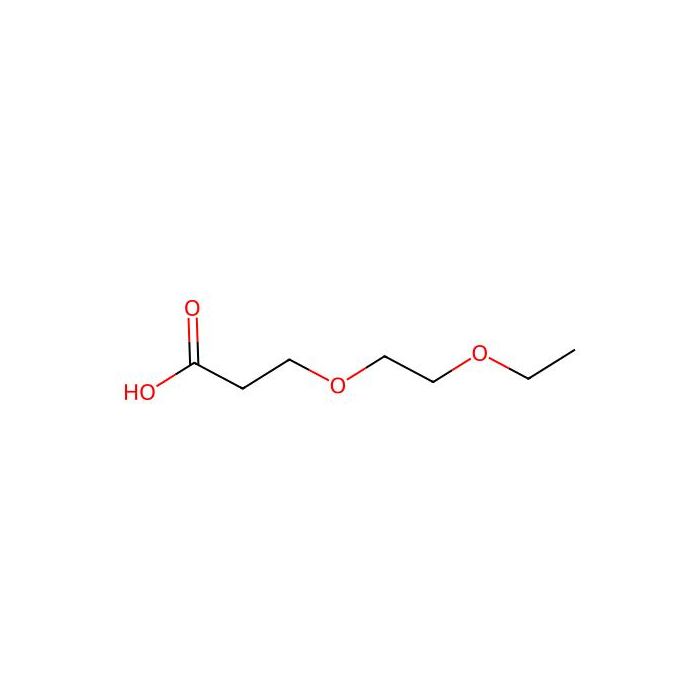
This compound belongs to the class of organic compounds known as carboxylic acids. These are compounds containing a carboxylic acid group with the formula -C(=O)OH.
External Descriptors
Not available
1. Djoumbou Feunang Y, Eisner R, Knox C, Chepelev L, Hastings J, Owen G, Fahy E, Steinbeck C, Subramanian S, Bolton E, Greiner R, and Wishart DS. ClassyFire: Automated Chemical Classification With A Comprehensive, Computable Taxonomy. Journal of Cheminformatics, 2016, 8:61.
Determine the necessary mass, volume, or concentration for preparing a solution.
Dilution Calculator
Determine the dilution needed to prepare a stock solution.
Reconstitution Calculator
Revisões
Avaliações dos Clientes
Application Protocols
No tested biological assay protocols (e.g., WB, IHC, IF, FC) or recommended dilutions are provided in the Product Data for this small-molecule reagent.
General laboratory protocol notes relevant to this compound class:
EDC/NHS-mediated coupling to amines (overview):
Dissolve the acid in MES buffer (pH 5.0–6.0) or MeCN/water.
Add NHS (1.1 eq) and EDC·HCl (1.1–1.5 eq); stir 15–60 min at 0–25 °C to form the NHS ester.
Adjust to pH 7.5–8.5; add amine (1.1–2 eq) and react 0.5–4 h.
Quench excess EDC with β-mercaptoethanol or hydroxylamine; purify the conjugate.
Analytical QC: Verify identity/purity by 1H/13C NMR (CD3OD or DMSO-d6), LC–MS, and IR (broad O–H ~2500–3300 cm−1; C=O ~1700–1725 cm−1). KF titration if water content is critical.
These are generic guidelines intended for experienced users; optimize for your specific substrates. For any regulated application, develop and validate a full protocol under your QA system.
Biological Roles
Item-specific biological roles are not provided in Product Data. As a small synthetic carboxylic acid with a short polyether chain, 3-(2-ethoxyethoxy)propanoic acid does not have a recognized endogenous metabolic role.
General/biochemistry-relevant considerations:
PEG-like character: The di-ether (ethoxy–ethoxy) segment imparts modest PEG-like hydrophilicity, which can improve aqueous dispersibility and reduce nonspecific hydrophobic interactions when this unit is incorporated into ligands, linkers, or surface modifiers.
Conjugation chemistry: The terminal carboxyl group can be used to couple to primary amines on biomolecules (e.g., lysine residues) via EDC/NHS chemistry, yielding amide-linked conjugates with a short polar spacer that can reduce steric hindrance around binding motifs.
Ionization: At physiological pH, the acid will largely exist as the carboxylate, increasing water solubility and potentially influencing ion-pairing in chromatographic methods.
Analytical standards: Ether-containing acids can serve as surrogates or internal standards in LC–MS method development to probe retention of polar acidic analytes.
Caveats:
No medical or clinical use is implied; this reagent is provided strictly for research use only (per Product Data).
Biological activity, toxicity, and metabolic fate are context-dependent and should be empirically determined for each conjugate or formulation.
Buffer Applications
This compound is not a standard buffering agent. While carboxylic acids can weakly buffer near their pKa, 3-(2-ethoxyethoxy)propanoic acid is not commonly used to prepare defined biological or chromatographic buffers.
If a bespoke buffer-like environment is desired (general guidance):
Expected pKa (by analogy to aliphatic monocarboxylic acids): ~4.2–4.9 (literature range). Practical buffering would be confined to roughly pH 3.5–5.5, with limited capacity compared to polyprotic or zwitterionic buffers.
Preparation concept: Dissolve the acid (or its sodium/potassium salt) in water and titrate with NaOH/HCl to the target pH. Verify ionic strength and compatibility with your analytes.
Alternatives: Prefer standard buffers with well-characterized properties (acetate, citrate, MES, MOPS) for robust pH control and lower variability.
Recommendation: Use established buffering systems for analytical and biological assays. Consider this molecule primarily as a linker/building block rather than a buffer component.
Green Alternatives
Context: This product is a reagent/building block rather than a process solvent. Greenness considerations largely involve the coupling/derivatization chemistry and solvent selection around it.
Greener strategies (literature/guidance):
Solvent choice: Favor bio-based or lower-toxicity solvents where feasible—EtOAc, 2-MeTHF, CPME, MeCN, or water/ethanol systems—over chlorinated solvents (DCM) or DMF/DMSO when performance allows.
Coupling reagents: Consider safer coupling technologies (e.g., DMTMM in MeOH/H2O, EDC·HCl with NHS in aqueous media) to reduce urea waste from DCC/HATU. T3P (50% in EtOAc) can be a lower-toxicity alternative with simpler workup.
Protection minimization: The substrate’s inherent hydrophilicity can allow direct aqueous or mixed-aqueous couplings, reducing protecting-group steps and solvent usage.
Catalysis: Enzymatic esterifications/amidations in green media (ionic liquids, deep eutectic solvents, or neat) may be considered for specialized applications.
Illustrative comparison (general, not item-specific specs):
Performance: Often comparable with adjusted temperature/catalyst loading.
Trade-offs:
Replacing DMF with MeCN/EtOAc can reduce solubility for some partners; monitor reaction rates and consider phase-transfer catalysis or co-solvents.
Water-rich media may require carbodiimide/NHS strategies and careful pH control (pH 5–6) to balance amine nucleophilicity vs. NHS-ester stability.
Pharmaceutical Uses
No pharmacopeial monograph or excipient grade is specified for this item; refer to the CoA/Spec Sheet. This product is supplied for research use only and is not intended for human or veterinary use.
Formulation and development context (general, non-clinical):
Linker/building block: The carboxyl group enables amide or ester formation to generate conjugates, pro-moieties, or polymer attachments. The ethoxy–ethoxy side chain can improve aqueous handling and reduce crystallinity in small-molecule libraries.
Surface modification: As a polar organic acid, it can be attached to amine-functionalized materials (e.g., resins, nanoparticles) to introduce hydrophilic spacing, which may modulate protein adsorption in in vitro tools.
Salt screening: Formation of pharmaceutically relevant salts (e.g., sodium, tromethamine) may be explored during pre-formulation to tune solubility and stability of conjugates containing this moiety.
Analytical use: May serve as a reference or derivatization component in development workflows to benchmark acidic analyte behavior in LC–MS or to adjust polarity.
Compliance note: Any use in regulated drug product development requires full characterization, impurity profiling, and toxicological assessment. Item-specific impurity limits, residual solvents, and elemental impurities are Not specified for this item; refer to CoA/Spec Sheet.
Physical Properties
Item-specific specifications provided in Product Data:
Molecular weight: Not specified for this item; refer to CoA/Spec Sheet.
Other physico-chemical specs (mp, bp, density, water, metals, UV cutoff, stabilizers): Not specified for this item; refer to CoA/Spec Sheet.
Computed/literature expectations (for planning; not product specifications):
Empirical formula: C7H14O4 (computed from structure)
Formula mass (Mr): ~162.18 g/mol (calculated)
Ionization: monoprotic carboxylic acid; pKa for analogous aliphatic carboxylic acids typically ~4.2–4.9 (literature range). Presence of ether oxygens can slightly modulate acidity but generally remains in this range.
Polarity: polar protic acid with multiple H-bond acceptors; expected high polarity and hydrophilicity relative to simple propionic acid.
Solubility (qualitative, literature expectation):
Water: expected to be miscible or highly soluble due to di-ether chain plus acid functionality.
Organic: freely soluble in polar organics (MeOH, EtOH, acetone, acetonitrile); likely soluble in moderately polar solvents (EtOAc, CPME) and limited in nonpolar hydrocarbons.
Volatility: low; carboxylic acids with this mass and hydrogen bonding generally have low vapor pressure.
Refractive index, density, melting/boiling behavior, and partition coefficients for this specific item are not provided and can vary with purity and water content. For quantitative process design (e.g., phase-split prediction, Karl Fischer limits), please refer to the item’s CoA/Spec Sheet or measure under your conditions.
Quality and Grades
Item-specific grade/purity and stabilizer information: Not specified for this item; refer to CoA/Spec Sheet.
Guidance for interpreting grades (general information for carboxylic acid building blocks):
Research or Laboratory Grade: suitable for most synthetic and analytical workflows. Trace impurity profiles (water, residual solvents, inorganic ions) are typically controlled but not at ultra-trace levels.
High-purity/Assay (≥98–99%): favored for medicinal chemistry and materials workflows where impurity carryover affects SAR or device performance.
HPLC Grade (solvents) / Low UV: not applicable here unless formulated as a solution; acids used as mobile phase modifiers are separately specified.
Impurity considerations specific to 3-(2-ethoxyethoxy)propanoic acid (general):
Potential related substances: unreacted starting alcohols/halides, oligomeric ethylene glycol ethers, dehydration products (anhydrides) at elevated temperatures, and esterification byproducts.
Water content: affects titrimetric assay and crystallization/handling behavior; verify by Karl Fischer if critical. Item-specific water limits are Not specified for this item; refer to CoA/Spec Sheet.
Metal content and residual catalysts: generally low for purely organic syntheses; if your application is catalyst-sensitive, request elemental analysis data. Item-specific metal limits are Not specified for this item; refer to CoA/Spec Sheet.
Recommendation: For regulated or quantitative work, request the current CoA/Specification Sheet for assay, residual solvents, water, and chromatographic profile. Perform a small in-house verification (NMR, LC–MS, KF) upon receipt for critical work.
Reaction and Applications
This molecule is a useful hydrophilic acid building block combining a carboxylic acid handle with a short polyether spacer. Typical applications (literature/general):
Amide/urea/amide–ester linkages: Serves as a carboxylic acid partner for EDC/HOBt, HATU, T3P, or CDI-mediated couplings to amines on small molecules, linkers, or surfaces, introducing a –CH2CH2–O–CH2–CH2–O–Et spacer that improves solubility.
Esterification and protection: Fischer–Speier esterification (MeOH, H2SO4) or Steglich esterification (DCC/DMAP) yields esters useful as pro-moieties or protecting groups. Acid can be temporarily masked for orthogonal transformations.
Activation to acid chlorides/anhydrides: SOCl2, oxalyl chloride (DMF cat.) or mixed anhydride routes enable subsequent nucleophilic acyl substitutions. Polyether tail can stabilize some intermediates via solvation.
Conjugation to biomolecules/materials: Carboxylate enables attachment to amines on peptides, proteins (via EDC/NHS on surfaces), or polymer backbones; the di-ether segment imparts PEG-like character enhancing aqueous compatibility.
Phase-transferable tag: The ether-rich chain increases polarity, which can facilitate LC–MS ionization and chromatographic behavior in analytical derivatizations.
Practical tips:
Drying: While acids are less water-sensitive than acyl halides, remove adventitious water before coupling (e.g., azeotrope with toluene or co-evaporate with MeCN). Use molecular sieves for anhydrous media.
Base choice: Tertiary amine bases (DIPEA, NMM) minimize side reactions; avoid strong nucleophiles that might cause transetherification under forcing conditions.
Workup: Exploit acid/base partitioning—extract as carboxylate into aqueous phase, then acidify to recover the acid.
Manufacturer application field in Product Data is not provided; the above expands on typical laboratory uses.
Reaction Conditions
No item-specific optimal conditions are provided. Below are general, literature-based conditions for common transformations of aliphatic carboxylic acids like 3-(2-ethoxyethoxy)propanoic acid; these are starting points and should be optimized.
Amide coupling (HATU): substrate (1.0 eq), amine (1.1–1.5 eq), HATU (1.1–1.5 eq), DIPEA (2–4 eq), dry DMF or MeCN, 0–25 °C, 1–16 h. Typical isolated yields: 70–95% for unhindered amines.
Aqueous EDC/NHS coupling: acid (1.0 eq), NHS (1.1 eq), EDC·HCl (1.1–1.5 eq), pH 5.0–6.0 (MES buffer), 0–25 °C, 0.5–4 h to form NHS ester; then add amine (pH 7.5–8.5) for coupling, 0.5–4 h. Monitor by LC.
Steglich esterification: alcohol (1.5 eq), DCC (1.2–1.5 eq), DMAP (0.05–0.1 eq), DCM/EtOAc, 0–25 °C, 2–18 h. Filter DCU, purify by chromatography.
Acid chloride formation: SOCl2 (3–5 eq) with catalytic DMF (1–2 drops per 10 mmol), reflux 0.5–2 h under inert atmosphere; remove volatiles, use in situ. Alternatively, (COCl)2 (2–3 eq), 0–25 °C.
Salt formation: Neutralize with NaOH/KOH (1.0 eq) in water/EtOH at 0–25 °C to give water-soluble carboxylates; isolate by lyophilization or solvent removal.
General tips:
Dry solvents and glassware for moisture-sensitive steps (acyl chlorides, carbodiimide couplings).
Control pH carefully in aqueous couplings to balance amine nucleophilicity and NHS ester stability.
The di-ether segment improves solubility in polar media; leverage this to avoid excessive DMF/DMSO.
These conditions are general guidance from literature precedent and not product specifications.
Safety and Handling
Item-specific hazard classification (GHS), signal word, pictograms, and H-statements: Not specified for this item; refer to the product SDS for authoritative safety information.
General safety considerations for aliphatic carboxylic acids with ether functionality (literature/good practice):
Likely hazards: may cause skin/eye irritation and respiratory irritation in mist/aerosol form; acidic nature can be corrosive to some metals in the presence of moisture.
PPE: wear appropriate laboratory PPE—safety glasses or splash goggles, lab coat, and chemical-resistant gloves (e.g., nitrile). Use in a fume hood to control vapors/aerosols.
Incompatibilities: avoid strong bases (exothermic neutralization), strong oxidizers, and acylation/dehydrating agents (risk of reactive intermediate formation). Carboxylic acids can react with carbonates/bicarbonates (CO2 evolution).
Handling tips:
Hygroscopicity: polyether-containing acids may absorb moisture; keep containers tightly closed.
Corrosion: use compatible materials (glass, PTFE). Avoid prolonged contact with reactive metals if aqueous.
Ethers within the structure are not present as free solvent; peroxide formation risk is negligible for the bound ether moieties. Standard storage suffices.
First aid (overview; defer to SDS):
Skin/eyes: rinse with water for at least 15 minutes; remove contaminated clothing.
Inhalation: move to fresh air; seek medical advice if symptoms persist.
Ingestion: rinse mouth; do not induce vomiting; seek medical attention.
Spill/Disposal: Contain with inert absorbent, collect in compatible container. Dispose of in accordance with local regulations and institutional policies. Always consult and follow the SDS.
Solvent Selection
Applicability: This product is a solid/liquid organic acid reagent rather than a bulk solvent. Solvent selection guidance below addresses its dissolution and use in reactions/purifications.
Polarity class (general): polar, protic acid with enhanced hydrophilicity due to two ether oxygens; dissolves well in polar protic and aprotic media.
Highly soluble: water (especially as salt), methanol, ethanol, acetonitrile, acetone, DMF, DMSO.
Moderately soluble: ethyl acetate, 2-MeTHF, CPME.
Poorly soluble: aliphatic hydrocarbons (hexanes, heptane), toluene unless warmed or converted to an ester/salt.
Choosing solvent by use case:
Coupling chemistry (amide formation): DMF, DCM, MeCN, or EtOAc with carbodiimide/uronium reagents; add base (DIPEA) to generate the carboxylate in situ.
Salt formation and extractions: form water-soluble sodium/potassium salts for aqueous workups; back-extract by acidifying to pH < 2.
NMR analysis: D2O (as salt), CD3OD, DMSO-d6 are typically suitable. Acidic proton may broaden; add trace base for sharper signals if appropriate.
Purification tips:
If oily, consider forming a crystalline salt (e.g., ammonium, p-toluidine) or convert transiently to a methyl/ethyl ester for chromatographic handling, then hydrolyze.
Normal-phase silica tolerates carboxylic acids; elute with polar modifiers (MeOH or AcOH additives) to prevent tailing.
Item-specific solubilities are Not specified for this item; verify experimentally where critical.
Storage and Reconstitution
Item-specific storage conditions (Product Data):
Storage Conditions: Room temperature
Shipped In: Not specified for this item; refer to CoA/Spec Sheet.
Appearance: Not specified for this item; refer to CoA/Spec Sheet.
General storage guidance for polyether-containing carboxylic acids:
Keep container tightly closed in a dry, well-ventilated place. Minimize exposure to atmospheric moisture to avoid variable water content.
For long-term storage, consider an inert headspace (nitrogen/argon) and protect from excessive heat. Room temperature is acceptable per Product Data; avoid freezing/thawing cycles if the material is a viscous liquid or forms hydrates.
If supplied as a solidifying oil, gentle warming (30–40 °C) and sonication can homogenize prior to sampling. Record lot opening date and observe any shelf-life guidance on the label/CoA.
Reconstitution/solution preparation:
Dissolves readily in polar organic solvents (MeOH, EtOH, MeCN, DMSO) and in water as the carboxylate salt. Filter through 0.2 µm for sterile applications (non-sterile product unless otherwise stated).
For aqueous stock solutions, adjust pH as needed; store at 2–8 °C when practical and use fresh to limit hydrolysis/bioburden. Avoid metal-reactive containers at low pH.
Always refer to the product CoA/SDS for definitive storage and handling instructions. Research use only (per Product Data).
Structure and Identity
Brief description: 3-(2-Ethoxyethoxy)propanoic acid is an aliphatic carboxylic acid bearing a terminal ethoxy–ethoxy (–O–CH2–CH2–O–CH2–CH3) side chain at the 3-position of propanoic acid, giving a hydrophilic polyether-like tail attached to a monocarboxylate head.
Item-specific identifiers (Product Data):
CAS: 13630-55-2
CID (PubChem): 24704907
InChIKey: 446144 (as provided)
SKU: E986551
Computed/literature structural data (verify for your use case):
Proposed molecular formula: C7H14O4 (computed from name)
Core functional groups: a terminal carboxylic acid (–CO2H) and a di-ether chain (–O–CH2–CH2–O–CH2–CH3)
Structural features: linear, flexible chain; one acidic proton; two ether oxygens increase polarity and hydrogen-bond acceptor count (3 acceptors total; 1 donor).
2D structure (verbal): a three-carbon chain bearing a carboxyl at C1; C3 is substituted by an ether oxygen that links to an ethoxyethyl fragment: HOOC–CH2–CH2–O–CH2–CH2–O–CH2–CH3.
Notes:
Where Product Data are unspecified (e.g., full IUPAC name, definitive SMILES/InChIKey), values above are literature/computed for structural guidance only. Consult the CoA/SDS for confirmation before regulated uses.
Synthetic Utility
Functional handles and reactivity:
Carboxylic acid (–CO2H): undergoes standard acyl activation and coupling reactions—amide formation with amines, esterification with alcohols, and conversion to acyl chlorides/anhydrides.
Di-ether chain: chemically robust under many coupling conditions; enhances solubility in polar media and can act as a short PEG-like spacer in conjugates.
Activation: SOCl2 or (COCl)2/DMF to acid chloride at 0–25 °C, followed by reaction with nucleophiles. Mixed anhydrides (pivaloyl, isobutyl chloroformate) provide milder routes.
Chain extension/functionalization: After installing the acid into a scaffold, the terminal ethyl group within the di-ether is not reactive but the adjacent ether positions can tolerate further modifications elsewhere on the molecule.
Retrosynthetic value:
Serves as a masked hydrophilic spacer introducing two oxygens across four carbons; useful to modulate logP and HBA/HBD counts without large PEG chains.
Practical notes:
Avoid strong Lewis acids or high-temperature acidic conditions that could promote cleavage or dehydration.
For chromatography, add 0.1–1% AcOH or MeOH modifiers to reduce tailing of the free acid on silica.
Item-specific reactivity limits are not provided; confirm compatibility under your conditions.
Target Specificity
Not applicable. This product is a small-molecule reagent, not a biological targeting agent (e.g., antibody, ligand with defined receptor specificity). No target, epitope, clone, isotype, or species reactivity data are provided in the Product Data.
We use cookies to ensure the website functions properly and, where permitted, to improve your experience. You can manage your preferences at any time in Settings. Learn more in our Cookie Policy.
Shall we send you a message when we have discounts available?
Remind me later
Thank you! Please check your email inbox to confirm.
Products are supplied to verified businesses, institutions, and qualified professionals for research and development use only. Not for use in humans, animals, diagnosis, or therapy.