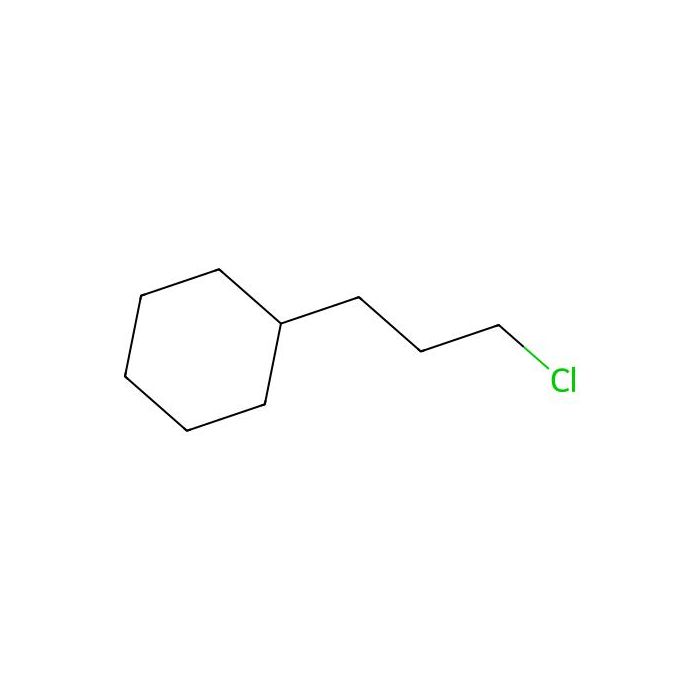
This compound belongs to the class of organic compounds known as organochlorides. These are compounds containing a chemical bond between a carbon atom and a chlorine atom.
External Descriptors
Not available
1. Djoumbou Feunang Y, Eisner R, Knox C, Chepelev L, Hastings J, Owen G, Fahy E, Steinbeck C, Subramanian S, Bolton E, Greiner R, and Wishart DS. ClassyFire: Automated Chemical Classification With A Comprehensive, Computable Taxonomy. Journal of Cheminformatics, 2016, 8:61.
Determine the necessary mass, volume, or concentration for preparing a solution.
Dilution Calculator
Determine the dilution needed to prepare a stock solution.
Reconstitution Calculator
Revisões
Avaliações dos Clientes
Application Protocols
Not applicable. No biological assay protocols (e.g., WB, IHC, IF, FC) are associated with this small-molecule building block. For synthetic applications, see the Reaction Conditions and Application notes provided in other sections.
Biological Roles
Applicability note: (3-Chloropropyl)cyclohexane is a synthetic hydrophobic haloalkane with no established endogenous biological role.
General context (literature/general)
Not known as a metabolite, cofactor, or signaling molecule in living systems.
Reactivity in biological media: Primary alkyl chlorides can alkylate nucleophiles under strongly basic or enzymatic conditions, but this compound’s hydrophobicity and low aqueous solubility limit bioavailability in aqueous systems.
ADME considerations for research planning: If used as a hydrophobic probe precursor, anticipate strong partitioning into lipid phases (high logP) and binding to plastics; use glassware when possible and include co-solvents (DMSO, ethanol) for stock solutions.
Use guidance
For research use only (per Product Data). Not for diagnostic, therapeutic, or in vivo use.
If conjugation to biomolecules is desired, first convert the chloride to a more bioconjugation-friendly handle (e.g., azide → click chemistry; amine → NHS ester formation; thiol → maleimide coupling).
Buffer Applications
This compound is a nonpolar organic building block and is not used to formulate aqueous buffer systems. It lacks acid/base functionality in the useful biological pH range and is essentially insoluble in water. For experimental planning involving this reagent, prepare stocks in suitable organic solvents (e.g., DMSO, MeCN, or ethanol) and add to buffered systems with attention to final organic content and solvent controls.
Green Alternatives
Perspective: The molecule is a building block rather than a solvent; greener choices focus on reaction media and activation strategies.
Greener media (literature/general)
Prefer 2-MeTHF or CPME over THF/ether when feasible: similar SN2 performance, improved safety (higher bp, lower peroxide formation), and bio-based sourcing (2-MeTHF).
Replace DMF/DMSO with MeCN, propylene carbonate, or solvent-free/phase-transfer conditions to simplify workup and reduce energy for distillation.
Aqueous biphasic PTC (toluene or xylene + water + quaternary ammonium salt) can minimize dipolar aprotic solvent use.
Activation strategy
Instead of using excess strong base/heat (which increases energy and byproducts), convert the chloride in situ to a better leaving group under milder conditions:
Finkelstein (NaI in acetone) to form the iodide, proceeding at lower temperature.
Mitsunobu-like alcohol routes are not applicable here directly but consider forming sulfonates (mesylate/tosylate) from the corresponding alcohol when planning a route.
Comparison snapshot (general)
THF vs 2-MeTHF: similar kinetics for SN2; 2-MeTHF is greener and eases aqueous separations.
DMF vs MeCN: DMF often faster; MeCN is easier to remove, lower toxicity profile.
Reflux vs flow: Continuous flow SN2 can reduce solvent volume and improve heat/mass transfer, lowering waste.
Always validate green substitutions by small-scale trials; maintain identical or improved yields/selectivity before scaling.
Pharmaceutical Uses
No pharmacopeial excipient status or formulation role is specified for this item; refer to CoA/Spec Sheet if regulatory designations are required.
General process-chemistry context (literature/general)
Use as an alkylating building block: The primary chloride can introduce a cyclohexylpropyl motif into intermediates through SN2 or cross-coupling (after activation), supporting SAR campaigns or intermediate synthesis in API routes.
Protecting-group compatible: The neutral, hydrophobic nature can simplify extractions and phase splits in process development.
Impurity considerations: In process settings, monitor for elimination byproducts (cyclohexylpropenes) and unreacted chloride. Residual inorganic halides (Cl−, I− after Finkelstein) should be controlled.
Formulation note
Given its hydrophobicity and lack of ionizable groups, the compound is not typically used directly in dosage forms; instead, it serves earlier in the synthetic value chain. Always avoid any inference of therapeutic effect—this product is for research use only.
Physical Properties
Item-specific (from Product Data)
Appearance: Not specified for this item; refer to CoA/Spec Sheet.
Grade/Purity: Not specified for this item; refer to CoA/Spec Sheet.
Molecular formula: Not specified for this item; refer to CoA/Spec Sheet.
Molecular weight: Not specified for this item; refer to CoA/Spec Sheet.
Literature/general values (for context; not product specifications)
State: typically a colorless to pale liquid (literature for analogous C9 primary chlorides).
Boiling point: commonly reported in the approximate range of many C9 primary chlorides (moderate-to-high, non-volatile); consult a trusted database for an exact value for CAS 1124-62-5.
Density: expected near or slightly below/around 1 g/mL due to the chloro substituent and hydrocarbon framework (literature trend; verify by CoA).
Solubility: immiscible with water; miscible with nonpolar and moderately polar organic solvents such as hexanes, toluene, diethyl ether, dichloromethane, THF (literature/general behavior of primary alkyl chlorides).
Refractive index and UV cutoff: Not specified for this item; refer to CoA/Spec Sheet.
LogP: expected high (hydrophobic), consistent with a cyclohexyl plus propyl chain (literature trend for haloalkanes).
Practical implications
Low polarity and high hydrophobicity favor use in nonpolar media; polar aprotic solvents can be chosen for SN2 chemistry (see Reaction Conditions). Always rely on the item’s CoA for exact numeric properties when setting up analytical methods.
Quality and Grades
Item-specific (from Product Data)
Grade/Purity: Not specified for this item; refer to CoA/Spec Sheet.
Stabilizers/Inhibitors: Not specified for this item; refer to CoA/Spec Sheet.
General guidance for this compound class
Purity meaning: For small-molecule building blocks like (3-chloropropyl)cyclohexane, assay is commonly established by GC or 1H NMR. Typical impurity profiles may include starting alcohols/olefins, over-alkylation products, and trace inorganic halides.
Water and acidity: Trace moisture and adventitious HCl can influence reactivity in base-sensitive reactions; Karl Fischer and acid number are occasionally reported by suppliers—check the CoA if these parameters matter.
Color and stability: High-purity material is typically colorless. Slight yellowing can indicate traces of olefinic impurities or oxidation byproducts; purification (distillation under reduced pressure) often restores quality.
Fit-for-purpose selection: If planning SN2 reactions with sensitive nucleophiles (e.g., thiolates, cyanide), low-halogen acid content and high assay are beneficial. For analytical uses (e.g., GC retention index standards), opt for ≥98% with tight GC purity specs.
Documentation: Use the batch CoA for exact assay, residual solvents, and any stabilizer notes. If UV transparency or metal limits are critical, confirm explicitly—Not specified for this item; refer to CoA/Spec Sheet.
Reaction and Applications
Scope (general chemistry of primary alkyl chlorides; apply with this substrate’s cyclohexyl-propyl framework)
Nucleophilic substitutions (SN2): The terminal primary chloride is a competent electrophile. Representative transformations include:
Alkoxylation (RO−, Williamson conditions) → ethers; control temperature to suppress E2.
Halide exchange (Finkelstein, NaI in acetone) → iodide (more reactive substrate); or convert to bromide via PBr3 from the corresponding alcohol.
Eliminations (E2): Strong base (t-BuOK, DBU) can yield cyclohexylpropene isomers; heat and solvent choice modulate Zaitsev/Hofmann selectivity.
Cross-coupling via in situ halide activation: While chlorides are less active, conversion to the iodide or use of photoredox/Ni catalysis can enable C(sp3)–C coupling.
Radical chemistry: Photocatalytic reductive dechlorination or Giese additions following halogen-atom abstraction can install new fragments.
Use cases
Hydrophobic linker installation in medicinal chemistry and probe design.
Precursor to primary amines, alcohols, and sulfides for SAR series.
Alkyl chain handle for surface grafting via thiol/amine elaboration.
Practical tips
Dry conditions and polar aprotic solvents accelerate SN2; add salts (e.g., 18-crown-6/K+ or TBAB) for phase transfer. Monitor by GC.
If elimination competes, lower temperature and choose less basic, more nucleophilic reagents.
Reaction Conditions
Guidance below is based on general literature for primary alkyl chlorides with similar chain length; optimize for your system. Values are illustrative, not product specifications.
Azidation to 3-azidopropylcyclohexane: NaN3 (1.5–2.5 equiv) in DMF or DMSO, 60–90 °C, 4–16 h. Monitor by GC/LC. Work up into water; extract with toluene/EtOAc. Caution: handle azides with care.
Cyanation to nitrile: KCN or NaCN (1.5–3.0 equiv) in DMSO or DMF, 80–110 °C, 6–18 h; phase-transfer (TBAB) in toluene/water at 80–100 °C can be effective. Strict cyanide safety protocols required.
Williamson ether formation: Alcohol (1.2–2.0 equiv), base (NaH, 60% dispersion; or K2CO3 under PTC), solvent THF/DMF/2-MeTHF, 0–25 °C then warm to 40–70 °C, 2–12 h.
Thioether/thiol synthesis: Thiourea (1.2–1.5 equiv) in EtOH or DMF, 50–80 °C → isothiouronium salt; hydrolyze with NaOH to yield thiol, then optionally alkylate.
Halide exchange (Finkelstein): NaI (2–4 equiv) in dry acetone, room temp to reflux, 2–8 h; iodide product used in situ for subsequent steps.
Elimination (E2) to alkenes: t-BuOK (1.2–1.5 equiv) in tBuOH or DMSO, 60–100 °C, 2–6 h; expect mixture of internal alkene isomers.
General tips
Dry solvents and exclude water for SN2 efficiency. Salt effects and crown ethers (e.g., 18-crown-6 for K+) can enhance rates.
Control temperature to balance rate vs selectivity (avoid E2). Use polar aprotic media for faster SN2; consider 2-MeTHF as a greener option where compatible.
Safety and Handling
Item-specific (from Product Data)
GHS classification / pictograms / signal word / H-statements: Not specified for this item; refer to the SDS.
Storage conditions: Room temperature.
General safety guidance (literature/typical for primary alkyl chlorides; consult SDS for authoritative data)
Hazards: Primary alkyl chlorides are generally irritating to skin, eyes, and respiratory tract. Some can be harmful if swallowed or inhaled. Vapor pressure is moderate-to-low for higher-chain chlorides, but avoid inhalation of vapors and mists.
PPE: Use chemical-resistant gloves (e.g., nitrile), splash goggles, lab coat. Handle in a fume hood.
Incompatibilities: Strong bases/nucleophiles (may induce substitution/elimination), strong oxidizers, finely divided metals. Avoid moisture if hydrolysis is a concern in strongly basic media.
Reactivity notes: Good substrate for SN2; can undergo E2 under strong basic/thermal conditions. Avoid heating in closed systems. Do not mix with azides or cyanides except under controlled synthetic conditions.
First aid (overview): Eye/skin contact—rinse with water for at least 15 minutes; remove contaminated clothing. Inhalation—move to fresh air. Ingestion—rinse mouth; do not induce vomiting; seek medical attention. Always follow site SOPs and the SDS.
Fire safety: Combustible organic liquid; use CO2, dry chemical, or foam. Although flash point may be higher than light solvents, normal flammability precautions apply.
Solvent Selection
Applicability note: This product is a hydrophobic organic building block, not a laboratory solvent. Guidance below addresses solvents to dissolve and react it effectively.
General solubility profile (literature/general)
Highly soluble in nonpolar and moderately polar organics: hexanes/heptane, cyclohexane, toluene/xylene, diethyl ether, MTBE, CPME, DCM, chloroform, THF, 2-MeTHF, acetone, and acetonitrile (to a lesser extent by polarity).
Practically insoluble in water.
Choosing solvents by transformation
SN2 substitutions (e.g., to azide, thiol, cyanide): polar aprotic media such as DMF, DMSO, NMP, MeCN, or sulfolane enhance nucleophilicity and rate. Phase-transfer systems (toluene or DCM + aqueous base + PTC) can also work for alkoxylations.
Eliminations (E2 to internal alkene): nonpolar solvents like toluene or THF at reflux with bulky base can minimize overreaction.
Radical or photochemical steps (e.g., dehalogenation): use solvents with low H-atom donation (acetonitrile, DCM) and good light transmission.
Quick comparison (general)
THF/2-MeTHF: good balance of solubility and SN2 performance; 2-MeTHF is greener and more hydrophobic (easier workup).
Toluene: excellent for neutral/basic conditions and PTC; high bp aids kinetics.
DMF/DMSO: fastest for SN2 but challenging to remove; consider MeCN as a volatile alternative when feasible.
Storage and Reconstitution
Item-specific (from Product Data)
Storage conditions: Room temperature.
Shipped in: Not specified for this item; refer to CoA/Spec Sheet.
General handling and stability (literature/general)
Store tightly closed in amber glass at ambient temperature, in a dry place. While primary alkyl chlorides are generally stable, prolonged exposure to strong light/heat may promote slow elimination or oxidation; minimize headspace and consider inert gas blanket for long-term storage.
Moisture: Not highly moisture sensitive, but hydrolysis can occur under strongly basic aqueous conditions; keep dry if you plan base-driven substitutions.
Freeze/thaw: Not applicable (neat liquid). If preparing stock solutions (e.g., 0.5–1.0 M in anhydrous MeCN, THF, or 2-MeTHF), store under inert atmosphere at 2–8 °C for short term and bring to room temperature before use.
Compatibility: Avoid contact with strong oxidizers, strong bases during storage, and reactive metals.
Always consult the product’s SDS and batch CoA for definitive guidance on storage, stability, and container compatibility for your specific lot.
Structure and Identity
Item-specific (from Product Data)
Product name: (3-Chloropropyl)cyclohexane
CAS: 1124-62-5
SKU: C1032591
Category path: 全部 / 可售 / 生命科学
InChIKey (as provided): 294743
Storage conditions: Room temperature
Research Use: For research use only
Literature/computed identifiers and description (general reference; not item-specific specs)
Typical molecular formula: C9H17Cl (literature)
Typical molecular weight: ~160.69 g/mol (literature; calculated from C9H17Cl)
Representative SMILES: C1CCCCC1CCCCl (literature)
2D structural features: a saturated six-membered carbocycle (cyclohexane) bonded via a methylene to a three-carbon tether terminating in a primary chloride (–CH2–CH2–CH2–Cl). No rings other than cyclohexane, no stereocenters, no heteroatoms except Cl.
Functional groups: primary alkyl chloride; overall hydrophobic scaffold with a single leaving group on a primary carbon.
Notes
The literature identifiers above describe the common representation of (3-chloropropyl)cyclohexane but are not item-specific quality specifications. Refer to the CoA/Spec Sheet for definitive identity tests (e.g., GC/MS, NMR).
Synthetic Utility
Functional-group synopsis
Electrophile: Primary C–Cl suitable for SN2 with N-, O-, S-, and C-nucleophiles.
Latent functionality: Convert to azide, nitrile, thiol/ether, or amine to diversify polarity and binding motifs.
Retrosynthetic value
Represents a cyclohexylpropyl fragment often used to modulate lipophilicity and conformational restriction in medicinal chemistry.
Can be traced back to cyclohexane derivatives via alcohol → chloride (e.g., from 3-hydroxypropylcyclohexane using SOCl2/PCl5), allowing flexibility in protecting-group strategies upstream.
Williamson ether synthesis: RO− (NaH or KOtBu, DMF/THF, 0–25 °C) to install alkoxy fragments.
Gabriel/azide routes to amines: Phthalimide K-salt or NaN3 (DMF, 60–100 °C), then deprotection/reduction.
Nucleophilic cyanation: KCN in DMSO or DMF (80–120 °C) to nitrile; optional hydrolysis to acid.
Thioether formation: Thiourea method followed by base hydrolysis to thiol; or direct RS− substitution.
Halogen exchange (Finkelstein): NaI in acetone to form iodide in situ, boosting reactivity for subsequent couplings.
Integration tips
For C–C bond formation, consider converting to the iodide or redox-activated species for Ni/photoredox cross-coupling.
Minimize elimination by using soft nucleophiles, lower temperature, and polar aprotic solvents.
Target Specificity
Not applicable. This product is a small-molecule chemical building block, not a biological targeting reagent (e.g., antibody, inhibitor with defined biomolecular target). No antigen/epitope, species reactivity, clone, or isotype information applies.
Perguntas frequentes
How should this product be stored?
Store at room temperature.
What is the purity of this product?
This product is supplied at ≥95% purity (chemical assay). Lot-specific values are stated on the Certificate of Analysis.
What are the CAS number, molecular formula and molecular weight?
The CAS Number is 1124-62-5, the molecular formula is C9H17Cl, and the molecular weight is 160.680 g/mol. InChIKey QEISABAAOUXQNG-UHFFFAOYSA-N.
What documentation is provided?
Available product documentation, including Certificates of Analysis (COA), Safety Data Sheets (SDS), and specification sheets, is shown in the product document area. Document availability and access follow the current site policy.
Usamos cookies para garantir o funcionamento adequado do site e, quando permitido, para melhorar a sua experiência. Você pode gerenciar suas preferências a qualquer momento nas Configurações. Saiba mais em nossa Política de Cookies.
Deseja que lhe enviemos uma mensagem quando tivermos descontos disponíveis?
Lembrar-me mais tarde
Obrigado! Por favor, verifique a sua caixa de entrada de e-mail para confirmar.
Products are supplied to verified businesses, institutions, and qualified professionals for research and development use only. Not for use in humans, animals, diagnosis, or therapy.