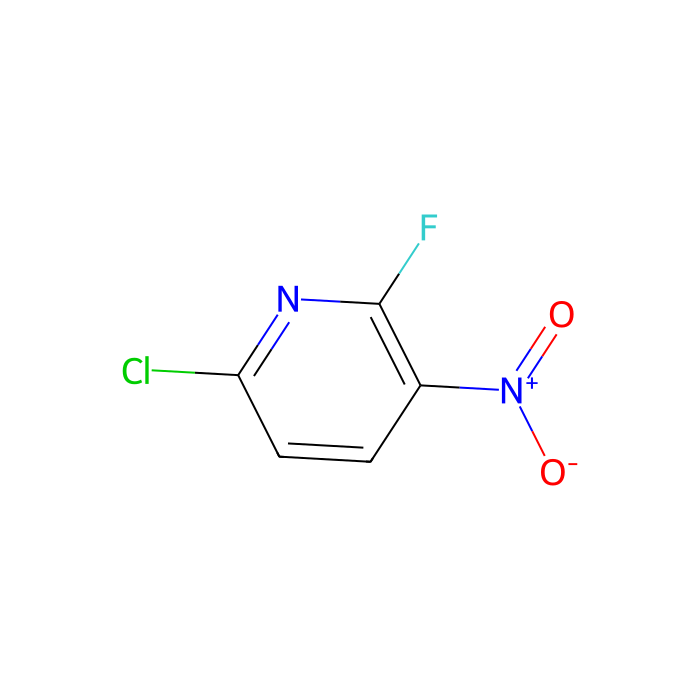
This compound belongs to the class of organic compounds known as nitroaromatic compounds. These are c-nitro compounds where the nitro group is C-substituted with an aromatic group.
External Descriptors
Not available
1. Djoumbou Feunang Y, Eisner R, Knox C, Chepelev L, Hastings J, Owen G, Fahy E, Steinbeck C, Subramanian S, Bolton E, Greiner R, and Wishart DS. ClassyFire: Automated Chemical Classification With A Comprehensive, Computable Taxonomy. Journal of Cheminformatics, 2016, 8:61.
Determine the necessary mass, volume, or concentration for preparing a solution.
Dilution Calculator
Determine the dilution needed to prepare a stock solution.
Reconstitution Calculator
Revisões
Avaliações dos Clientes
Application Protocols
Not applicable. No biology assay protocols (e.g., WB, IHC, IF, FC) are associated with this small-molecule building block. For synthetic use, refer to the Reaction Conditions and Application sections for general procedural guidance.
Biological Roles
This product is a synthetic heteroaromatic building block intended for laboratory research and small-molecule synthesis. It does not have an inherent biological role like metabolites or cofactors.
General context (for researchers planning biology-facing work)
Halogenated nitropyridines are commonly used as intermediates to prepare more complex heterocycles and heteroaryl cores for probe or lead discovery. Any observed biological activity arises from the final synthesized molecules rather than from this starting material itself.
The nitro group and halogens modulate electronics and polarity, enabling tuning of downstream targets once transformed (e.g., via SNAr, reduction, or cross-coupling) but the parent compound is not a known endogenous ligand, substrate, or structural biopolymer component.
Use limitation
For research use only. Not intended for diagnostic, therapeutic, or clinical applications.
Buffer Applications
Not typically applicable. 6-Chloro-2-fluoro-3-nitropyridine is not a buffering agent and does not form a defined laboratory buffer system. For work involving this building block, focus on solvent and reaction media selection rather than aqueous buffer preparation.
Green Alternatives
While the compound itself is a fixed building block, greener choices often lie in solvent, base, and catalyst selection for its key transformations.
Greener solvent choices (general guidance)
Replace DMF/DMSO where possible with MeCN, 2-MeTHF, CPME, propylene carbonate, or dimethyl carbonate considering solubility and reaction performance.
For Suzuki couplings, 2-MeTHF or toluene/water biphasic systems can reduce environmental impact and ease workup versus dioxane/DMF.
Base and reagent considerations
Prefer inorganic carbonates (K2CO3, Cs2CO3) and aqueous bases (K3PO4, Na2CO3) over strong alkoxides when compatible.
Use microwave heating or continuous flow to increase efficiency and reduce solvent volumes for SNAr.
Catalyst systems
Employ ligand-efficient Pd/NHC or Ni-catalyzed couplings that operate at low loadings and in greener media (e.g., water/ethanol with surfactants) when feasible.
Conventional: DMF or dioxane; high temps; higher catalyst loading.
Greener alternative: 2-MeTHF/MeCN or aqueous micellar media; moderate temps; low Pd/Ni loading; facilitated workup and lower VOC impact.
Tradeoffs
Some greener solvents reduce substrate solubility, requiring higher temperature or co-solvent. Aqueous micellar systems may complicate isolation of small, lipophilic products. Validate on small scale and monitor for hydrolysis or undesired denitration.
Waste minimization
Sequence planning (SNAr first, then coupling) can avoid protecting groups and reduce steps. Recover and recycle boron reagents and palladium scavenging to lower metal residues in research intermediates.
Pharmaceutical Uses
Formulation/excipient status
Not used as a pharmaceutical excipient. No pharmacopeial monograph is indicated for this item.
Research/manufacturing context (non-clinical)
Utilized as a synthetic intermediate in discovery and process research to access halogenated amino-/alkoxy-/thioether-pyridine motifs via SNAr and cross-coupling sequences.
Can be incorporated into SAR campaigns to modulate electronic properties of heteroaromatic cores. Any pharmaceutical relevance pertains to downstream compounds synthesized from this building block.
Compliance note
For research use only. Not for human or veterinary use, diagnostic procedures, or clinical applications.
Physical Properties
Item-specific physico-chemical specifications (bp, mp, density, etc.) are not provided in the Product Data.
Item-specific values
Boiling point / Melting point / Density / Refractive index / UV cut-off / Water content / Residual metals: Not specified for this item; refer to CoA/Spec Sheet.
Literature/general expectations for this structural class (for planning only; verify experimentally)
Physical state: Many halogenated nitropyridines are crystalline solids at ambient conditions; however, the exact state and mp for this specific isomer should be confirmed from primary literature or CoA.
Solubility profile (qualitative): Typically sparingly soluble in water; good solubility in polar aprotic organic solvents (e.g., DMSO, DMF, NMP, acetonitrile) and moderate solubility in chlorinated solvents and ethyl acetate; limited in alkanes/ethers. Actual solubility should be empirically verified.
Acid/base behavior: Weakly basic aromatic nitrogen (pyridine), with conjugate acid pKa typically ~5–6 for unsubstituted pyridines (literature). Strong −I/−M substituents (NO2, F) reduce basicity relative to pyridine (literature trend).
Partitioning: Presence of halogens and nitro tends to increase lipophilicity relative to pyridine (qualitative literature trend), yet polarizability/heteroatoms can favor solubility in polar aprotics.
Practical advice
Assess solubility in intended reaction solvent at working concentration; warm or add co-solvent (DMSO/DMF) if needed.
For analytical work, record exact mp and purity for each lot from the accompanying CoA.
Quality and Grades
Item-specific quality information
Grade/Purity: Not specified for this item; refer to CoA/Spec Sheet.
Appearance: Not specified for this item; refer to CoA/Spec Sheet.
Guidance on interpreting grade for this compound class (general)
For heteroaryl electrophiles used in synthesis, typical catalog offerings include “purity ≥95%” (GC/HPLC) or higher. Higher grades may specify tighter limits on related isomers, residual solvents, or halide content—review the CoA to align with your application (e.g., SAR exploration vs. API intermediate research).
If offered in “anhydrous” or “dry” grades, expect moisture specification and packaging under inert atmosphere; this can be beneficial for base-sensitive couplings.
For HPLC-grade or LC-MS-grade reagents (less common for building blocks), UV cut-off and background ions are controlled to minimize analytical interference.
Stabilizers and additives
None are indicated for this item. If your work is sensitive to acids/bases, confirm absence of stabilizers on the CoA.
Recommended incoming QC (best practices)
Verify identity by NMR (1H, 13C, 19F), MS, and, if needed, HRMS; check for regioisomeric impurities.
Assess purity by HPLC/GC and confirm water content by Karl Fischer if moisture-sensitive chemistry is planned.
Reaction and Applications
6-Chloro-2-fluoro-3-nitropyridine is a multifunctional, highly activated heteroaryl electrophile. The combined effects of the ring nitrogen and a vicinal nitro group markedly increase the susceptibility of the C2–F bond to nucleophilic aromatic substitution (SNAr), while the C6–Cl substituent provides an orthogonal handle for metal-catalyzed cross-couplings.
Nucleophilic aromatic substitution (SNAr)
Preferred site: C2–F. Adjacent ring N and C3–NO2 strongly stabilize the Meisenheimer intermediate.
Nucleophiles: Primary/secondary amines (anilines, alkylamines), alkoxides (O-arylation), thiolates (thioether formation), and occasionally carbon nucleophiles (e.g., malonates) under strong basic conditions.
Conditions: Polar aprotic solvents (DMF, DMSO, MeCN, NMP); bases such as K2CO3, Cs2CO3, NaOMe, or DIPEA; 20–100 °C depending on nucleophile.
Cross-coupling at C6–Cl
Suzuki–Miyaura: Formation of 6-substituted biaryl/heteroaryl derivatives using boronic acids/esters; Pd(0/II) catalysts with phosphine or NHC ligands.
Buchwald–Hartwig amination: Installation of amines at C6 with Pd and appropriate ligands; orthogonal to SNAr at C2.
Negishi/Kumada/Stille: Access to diverse C–C linkages from organozinc/magnesium/stannane partners when Suzuki is suboptimal.
Nitro group transformations
Reduction: NO2 → NH2 (hydrogenation, Fe/AcOH, SnCl2, or catalytic transfer hydrogenation) enabling diamino/haloaminopyridine scaffolds.
N–O chemistry: Partial reductions or nucleophilic substitution after nitro activation (e.g., denitration under specific conditions) can further diversify the ring.
Orthogonal sequences
Stage-selective SNAr at C2 followed by Pd-coupling at C6 enables rapid library generation for SAR in discovery chemistry. Conversely, protecting SNAr-prone positions allows initial cross-coupling.
Applications
Broadly used as a building block for agrochemical and medicinal chemistry research (structure–activity exploration, heteroaryl diversification). Research use only.
Reaction Conditions
The following are general, literature-style guidelines for transformations typical of 6-chloro-2-fluoro-3-nitropyridine; optimize for your substrate and scale.
SNAr at C2–F (amines/thiols/alkoxides)
Solvent: DMF, DMSO, NMP, or MeCN.
Base: K2CO3 (2–3 equiv) or Cs2CO3 for difficult amines; alkoxides (NaOMe/KOtBu) for O-arylation; NaSMe/thiol + base for S-arylation.
Temperature/time: 25–100 °C, 2–16 h; many aminations proceed at 60–90 °C.
Notes: Exclude water for alkoxide reactions to avoid hydrolysis; use excess nucleophile to drive to completion. Monitor by LC–MS or 19F NMR.
Suzuki–Miyaura at C6–Cl
Catalyst/ligand: Pd(PPh3)4 (1–3 mol%) or Pd2(dba)3 (1 mol%) with SPhos/XPhos (2–4 mol%).
Base: K3PO4, K2CO3, or Cs2CO3 (2–3 equiv).
Solvent: 2-MeTHF, dioxane, toluene/H2O, or MeCN/H2O.
Temperature/time: 60–100 °C, 2–12 h.
Notes: Micellar aqueous media can be effective with tailored surfactants; consider Ni catalysts for challenging partners.
Buchwald–Hartwig amination at C6–Cl
Catalyst/ligand: Pd2(dba)3 (1–2 mol%) with tBuXPhos/BrettPhos (2–4 mol%).
Base: NaOtBu or K3PO4 depending on amine.
Solvent: Toluene, dioxane, or 2-MeTHF.
Temperature: 80–110 °C.
Nitro reduction (NO2 → NH2)
Hydrogenation: H2 (1–5 bar), Pd/C (5–10 wt%), EtOH/EtOAc, rt–40 °C.
Metal/acids: Fe/AcOH or SnCl2·2H2O in EtOH/THF, reflux.
Notes: Monitor for dehalogenation; milder catalysts/pressures help preserve C–Cl/C–F.
Workup/purification
Quench bases with water/brine, extract into EtOAc or DCM, charcoal polish if needed, and purify by column chromatography or crystallization.
Safety and Handling
Item-specific hazard data
GHS classification / Signal word / Hazard statements / Pictograms: Not specified for this item; refer to SDS.
General safety guidance for halogenated nitro-heteroarenes (informational; not a substitute for SDS)
Potential hazards: May cause skin/eye irritation and respiratory tract irritation. Nitroaromatics can present systemic toxicity with prolonged exposure. Avoid dust generation and inhalation.
PPE: Safety glasses or goggles, lab coat, appropriate chemically resistant gloves (e.g., nitrile). Use in a fume hood.
Handling: Avoid contact with strong bases/nucleophiles unless intended, as the molecule is an activated electrophile (SNAr). Keep containers tightly closed; minimize exposure to moisture if conducting moisture-sensitive reactions (e.g., organometallic couplings).
Incompatibilities (general): Strong reducing agents (may reduce the nitro group), strong bases/nucleophiles (uncontrolled SNAr), and reactive metals.
First aid overview: If on skin/eyes, rinse with water for several minutes; remove contaminated clothing. If inhaled, move to fresh air. If ingested or if symptoms persist, seek medical attention. Always follow your institution’s emergency procedures.
Fire response: Use dry chemical, CO2, or foam. Combustion may produce hydrogen halides and NOx—firefighters should wear self-contained breathing apparatus.
Disposal
Collect waste as halogenated, nitro-containing organic waste per institutional and regulatory requirements. Do not release to the environment.
Always consult the official SDS for authoritative safety and regulatory information.
Solvent Selection
This product is a solid heteroaromatic building block rather than a solvent; selection here refers to solvents for dissolving/using it in reactions and analyses.
General solubility and polarity considerations (literature-based expectations)
Polar aprotic solvents: DMSO, DMF, NMP, and acetonitrile often provide good solubility and favor SNAr kinetics.
Chlorinated solvents: Dichloromethane and chloroform may afford moderate solubility; useful for some electrophilic/nucleophilic transformations with phase-transfer or when using milder bases.
Ethers and esters: THF/2-MeTHF and ethyl acetate can be serviceable, though solubility may be limited at scale; warming or co-solvent with DMF/MeCN can help.
Alcohols/water: Water solubility is expected to be low; alcoholic solvents can participate in SNAr, potentially serving both as solvent and nucleophile (alkoxylation).
Choosing solvents by transformation
SNAr at C2–F (amines/thiols/alkoxides): DMF, DMSO, NMP, or MeCN with inorganic base (K2CO3/Cs2CO3) or organic base (DIPEA). Polar aprotics enhance nucleophilicity and rate.
Cross-coupling at C6–Cl (Suzuki/Buchwald–Hartwig/Negishi): Toluene, dioxane, THF, or CPME with aqueous base systems; DMF/MeCN for difficult couplings.
Reductive chemistry (NO2 → NH2): Alcoholic solvents (EtOH/i-PrOH) or THF with hydrogenation or metal reductions; ensure compatibility with halides.
Small comparison (general)
DMF/DMSO: maximize solubility and SNAr rate but harder workup; MeCN: good balance, easier removal; 2-MeTHF/CPME: greener alternatives for couplings with good phase behavior.
Storage and Reconstitution
Item-specific storage/shipping
Storage Conditions: Room temperature (per Product Data).
Shipped In: Normal (per Product Data).
General storage guidance for halogenated nitro-heteroarenes
Store tightly capped in a dry place, protected from excessive heat and direct sunlight. If long-term storage is planned, consider desiccation to limit moisture pickup and potential hydrolysis during strongly basic operations.
Avoid proximity to strong bases/reducing agents in shared cabinets; segregate by hazard class per institutional policy.
Reconstitution and use
Dissolution: For stock solutions, use dry polar aprotic solvents such as DMSO or DMF to achieve high concentrations; MeCN, EtOAc, or DCM can be used for more volatile options. Warm gently (30–40 °C) and sonicate if needed.
Typical stock concentrations: 10–100 mM in DMSO/DMF for screening chemistry; confirm solubility and stability before scaling.
Stability: Solutions in DMSO/DMF are generally stable to short-term storage at 2–8 °C; for longer term, prepare fresh as needed. Avoid prolonged exposure to strong light/heat.
Research Use Note
For research use only. Not for human or veterinary use.
Always consult the item’s CoA/Spec Sheet for lot-specific specifications and the SDS for safety guidance.
Structure and Identity
A halogenated, nitro-substituted pyridine designed as a versatile heteroaryl electrophile for synthesis.
Item-specific identifiers (from Product Data)
Product Name: 6-Chloro-2-fluoro-3-nitropyridine
CAS: 333998-11-1
PubChem CID: 18379708
InChIKey: 382246 (as provided)
SMILES: Not specified for this item; refer to CoA/Spec Sheet.
Literature/computed structural information (general, for identification context; verify against primary databases before regulatory use)
Core scaffold: Pyridine ring (one endocyclic nitrogen) bearing three ring substituents.
Substitution pattern: Fluorine at C2 (α to ring N), nitro group at C3, chlorine at C6 (the position α to N on the opposite side). This places two strong −I/−M substituents (F, NO2) adjacent to the ring nitrogen, substantially activating the ring toward nucleophilic aromatic substitution at C2.
2D description: A six-membered aromatic ring with the ring nitrogen at position 1. Proceeding clockwise from the ring N: C2 bears F, C3 bears NO2 (−N(=O)O−), positions 4 and 5 are unsubstituted carbons, and C6 bears Cl.
Notes
The strong electron-withdrawing nitro group and the ring nitrogen synergistically activate the C2–F bond toward SNAr, while the C6–Cl site is suitable for transition-metal-catalyzed cross-couplings.
Synthetic Utility
6-Chloro-2-fluoro-3-nitropyridine offers orthogonal reactivity at three loci, enabling convergent route design.
Electrophilic sites and reactivity
C2–F (activated SNAr): Primary avenue for O-, N-, and S-arylations. The adjacent ring N and C3–NO2 strongly activate this position.
C6–Cl (cross-coupling): Amenable to Pd- or Ni-catalyzed C–C and C–N bond formation (Suzuki, Buchwald–Hartwig, Negishi, Kumada, Stille).
C3–NO2 (transformable handle): Reduction to anilines; further diversification via diazotization (from amine) to access halides, hydroxyl, or cross-coupled products.
Strategic sequences
SNAr → Coupling: Install nucleophile at C2 under basic conditions, then use residual C6–Cl for cross-coupling to append aryl/alkenyl groups.
Coupling → Reduction → SNAr (protected): If nucleophile is base-sensitive, first couple at C6 under neutral conditions, reduce NO2 to NH2 to tune electronics, then carry out SNAr if still feasible or leverage the aniline for further derivatization.
Orthogonality and selectivity
SNAr typically occurs at C2 over C6; C6–Cl is less activated to SNAr but highly suitable for Pd-catalysis. Fluorine is a superior leaving group in SNAr; chlorine is superior in cross-coupling with suitable ligands.
Analytical handles
Distinctive 19F NMR signal aids in monitoring C2 substitution. Nitro-to-amino reduction is readily tracked by IR (NO2 bands) and MS.
Applications
Rapid library generation for agrochemical/medchem lead development, heteroaryl core installation, and structure–electronics tuning.
Target Specificity
Not applicable. This product is a small-molecule building block and does not possess biological target specificity, antigen reactivity, or attributes such as clone/isotype that apply to antibodies or biologics.
We use cookies to ensure the website functions properly and, where permitted, to improve your experience. You can manage your preferences at any time in Settings. Learn more in our Cookie Policy.
Shall we send you a message when we have discounts available?
Remind me later
Thank you! Please check your email inbox to confirm.
Products are supplied to verified businesses, institutions, and qualified professionals for research and development use only. Not for use in humans, animals, diagnosis, or therapy.