≥98% para fluxos de trabalho cromatográficos e analíticos sensíveis que exigem interferência mínima da linha de base.
🌡
Armazenamento e envio
Store at -20°C Envio Ice chest + Ice pads. Consulte o COA específico do lote para obter as especificações exatas.
📋
Documentos de qualidade
SDS, COA, ficha técnica e folha de especificações disponíveis para download. COA específico do lote acessível por meio de pesquisa por número de lote.
📚
Comprovação documental
Citado em 0 publicações revisadas por pares nas áreas de cromatografia, síntese orgânica e reações de acoplamento cruzado.
Visão geral
Information
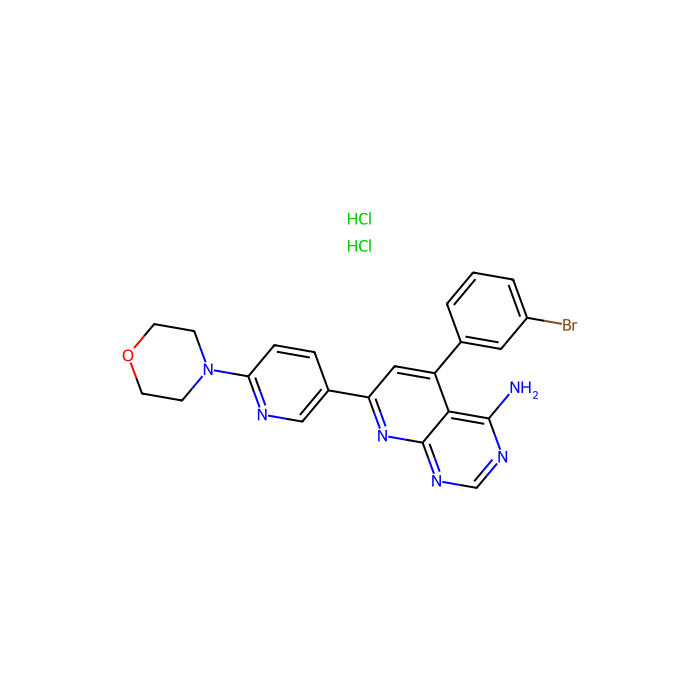
ABT 702 dihydrochloride ABT-702 is a novel, potent non-nucleoside Adenosine kinase inhibitor with an IC50 of 1.7 nM. It has oral activity in animal models of pain and inflammation.
ABT-702 is a novel, potent non-nucleoside Adenosine kinase inhibitor with an IC50 of 1.7 nM. It has oral activity in animal models of pain and inflammation.
Condições de armazenamento de armazenamento
Store at -20°C
Enviado em
Ice chest + Ice pads
Este produto requer transporte de cadeia fria. Serviços terrestres e outros serviços econômicos não estão disponíveis.
This compound belongs to the class of organic compounds known as bipyridines and oligopyridines. These are organic compounds containing two pyridine rings linked to each other.
External Descriptors
Not available
1. Djoumbou Feunang Y, Eisner R, Knox C, Chepelev L, Hastings J, Owen G, Fahy E, Steinbeck C, Subramanian S, Bolton E, Greiner R, and Wishart DS. ClassyFire: Automated Chemical Classification With A Comprehensive, Computable Taxonomy. Journal of Cheminformatics, 2016, 8:61.
Determine the necessary mass, volume, or concentration for preparing a solution.
Dilution Calculator
Determine the dilution needed to prepare a stock solution.
Reconstitution Calculator
Revisões
Avaliações dos Clientes
Application Protocols
Only information from Product Data may be listed here.
From Product Data (item-specific facts):
Manufacturer Applications: Not specified for this item; refer to product page or CoA.
Tested applications, recommended dilutions, and positive controls: Not specified for this item; refer to product page or CoA.
General note: For biochemical or cell-based applications, users typically prepare concentrated DMSO stocks and perform serial dilutions into assay media, including proper vehicle controls. However, specific protocols are not provided for this item.
Targeted pathway: Adenosine kinase (AK) catalyzes the phosphorylation of adenosine to AMP, a key step in purine salvage. Inhibition of AK reduces intracellular adenosine phosphorylation, which can increase intracellular and extracellular adenosine availability via equilibrative nucleoside transporters.
Downstream consequences: Altered adenosine levels can modulate signaling through adenosine receptors (A1, A2A, A2B, A3) indirectly, influencing cAMP, PKA/PKC activation patterns, and metabolic fluxes in purine pathways. These are mechanistic/biochemical effects; no medical or clinical claims are made.
Cellular contexts: AK activity is broadly expressed across mammalian tissues; tool inhibitors like ABT‑702 are used to interrogate purine homeostasis, stress responses, and nucleotide balance in cell culture and tissue preparations.
Selectivity considerations: Literature reports ABT‑702 as a selective AK inhibitor relative to other kinases/adenosine‑metabolizing enzymes, but off‑target profiling should be consulted in primary sources for concentration‑dependent effects.
Practical research use (general):
Employ in time‑course experiments to link changes in adenosine/AMP/ATP levels to phenotypic readouts (e.g., reporter assays, metabolomics).
Combine with nucleoside transport inhibitors or adenosine deaminase modulators to dissect pathway control points.
Validate on‑target effects with orthogonal methods (e.g., siRNA against AK) to confirm specificity.
Note: The above represents general biochemical knowledge about adenosine metabolism and reported tool compound use; consult primary literature for exact parameters and datasets.
Buffer Applications
This product is not a buffering agent and is not used to set or maintain pH. Therefore, classic buffer recipes and pH ranges are not applicable.
Practical handling in buffers (general guidance for bioassays):
Dissolution: Create a concentrated DMSO stock (e.g., 10–50 mM), then dilute into assay buffer (HEPES, phosphate, or Tris) to the working concentration. Maintain final DMSO at levels tolerated by the system (often ≤0.1–1% v/v).
pH considerations: Mildly acidic to neutral pH typically supports solubility for dihydrochloride salts. Avoid strong bases that could deprotonate the salt and precipitate the free base.
Filtration: If sterility is required, filter working solutions through 0.22 µm PVDF/nylon filters. Avoid extended contact with polystyrene at high organic content to minimize adsorption.
For actual buffer component roles and recipes, refer to dedicated buffering reagents. Use this compound as a solute within those systems rather than as a buffer itself.
Green Alternatives
This product is a specialized bioactive small molecule, not a process solvent or commodity reagent. “Green” selection is therefore less about substitution and more about minimizing use and waste in screening campaigns.
Applicability: Not typically applicable in the same way as solvent selection. However, general greener practices can be applied.
Greener practice suggestions (general):
Use miniaturized assay volumes (e.g., 384/1536‑well formats) to reduce compound consumption and solvent waste.
Prefer water as the bulk medium, limiting DMSO to the minimal concentration tolerated by the assay.
Consolidate dilutions to avoid multiple thaw cycles and expired intermediate stocks.
Dispose of halogenated/non‑halogenated solvent wastes appropriately; segregate DMSO/water streams when feasible.
Alternatives: If the research goal is to modulate adenosine signaling, consider non-chemical or genetic approaches (e.g., siRNA/CRISPR knockdown of adenosine kinase) which may reduce chemical usage. Choice of an alternative chemical tool would be driven by target profile and IP considerations rather than classical green metrics.
Note: Because this is a research tool compound, substitution decisions should be based on mechanistic suitability and data quality rather than environmental parameters alone.
Pharmaceutical Uses
Scope: Research use only. No therapeutic, diagnostic, or clinical use is claimed or supported for this catalog item.
Potential roles in pharmaceutical R&D workflows (general, non-clinical):
Reference standard: May be used as a reference material for analytical method development targeting adenosine kinase inhibitors or related chemical classes.
Tool compound: Utilized in target validation studies, phenotypic assays, and mechanistic experiments to explore adenosine metabolism pathways.
ADME/PK method development (in vitro): Potentially applied in transporter/enzyme interaction panels or microsomal stability screens to benchmark assay performance (without implying suitability for human/animal administration).
Regulatory/compendial status:
No pharmacopeial monograph is known for ABT 702 dihydrochloride. Any GMP or clinical development use would require separate qualification and is outside the scope of this research-grade listing.
Note: Handle under institutional guidelines for investigational research chemicals. For any regulated application, source or qualify material according to the appropriate quality system and regulatory framework.
Physical Properties
Item-specific specifications are not provided in the Product Data.
From Product Data (item-specific facts):
Appearance: Not specified for this item; refer to CoA/Spec Sheet.
Molecular Formula: Not specified for this item; refer to CoA/Spec Sheet.
Molecular Weight: Not specified for this item; refer to CoA/Spec Sheet.
Typical/literature expectations for dihydrochloride small-molecule salts (general guidance, not specifications for this item):
Physical state: Often solid, hygroscopic tendencies possible for amine dihydrochlorides.
Solubility: Dihydrochloride salts generally show enhanced solubility in water and polar protic solvents; readily soluble in DMSO and aqueous buffers adjusted to neutral/acidic pH. Actual solubility must be determined empirically for this lot.
pKa: Protonated multi-amine salts typically exhibit conjugate acid pKa values in the 6–10 range depending on the scaffold; consult primary literature for ABT‑702 specifically.
LogP/LogD: Salt formation lowers apparent logD at physiological pH relative to the free base (literature generality).
Not provided for this item; refer to CoA/Spec Sheet if needed:
Melting point/boiling point
Density
Refractive index
Water content, residual solvents, counter‑ion assay
Note: For quantitative property needs (e.g., dose formulation, solution stability), verify with CoA/SDS or measure experimentally under intended conditions.
Quality and Grades
From Product Data (item-specific facts):
Grade/Purity: Not specified for this item; refer to CoA/Spec Sheet.
Interpretation and typical expectations (general guidance):
In the absence of a stated grade, ABT 702 dihydrochloride is generally supplied for research use. Lot-specific purity (e.g., HPLC assay, NMR) and identity (HRMS, elemental analysis, chloride content) should be verified on the Certificate of Analysis (CoA).
Dihydrochloride salts may be analyzed for counter‑ion content (chloride assay), residual solvents, and water (Karl Fischer). UV impurity profile can matter for bioassays; check chromatographic purity trace if provided.
If a stabilizer or form (e.g., hydrate, hemifumarate, polymorph) is relevant, it will be explicitly listed on the CoA. None is specified here for this item.
Practical recommendations:
Request and review CoA prior to critical studies. Confirm purity and identity thresholds that meet your assay’s tolerance (e.g., ≥95% by HPLC for screening, higher for mechanistic enzymology).
For quantitative studies, consider secondary qualification in your lab (orthogonal HPLC method, LC–MS, water content), particularly if hygroscopicity is suspected.
Note: Do not infer analytical specifications beyond what is provided; rely on the lot-specific CoA for authoritative values.
Reaction and Applications
This compound is not typically used as a synthetic reagent; it is primarily a bioactive research tool. Accordingly, its “applications” center on biochemical and cellular studies rather than preparative chemistry.
Research applications (literature/general):
Tool compound for adenosine metabolism research: ABT‑702 is reported as a selective adenosine kinase (AK) inhibitor, used to modulate intracellular phosphorylation of adenosine to AMP, thereby influencing extracellular adenosine tone via transport equilibria.
Enzymology: Employed to probe AK catalytic mechanisms, substrate competition, and kinetic parameters in purified enzyme systems or cell lysates.
Pathway interrogation: Used in studies of purine salvage, AMP/ATP homeostasis, and signaling cascades downstream of adenosine receptors (indirectly, through altered adenosine availability). No medical or clinical claims are implied.
Practical assay tips (general):
Prepare concentrated DMSO stocks and minimize freeze–thaw. Confirm absence of precipitation upon dilution into assay buffer.
Include vehicle controls matching DMSO content. Verify that observed effects are reversible or concentration-dependent to support on-target interpretation.
For cell-based work, initiate with a broad concentration range (e.g., 0.01–30 µM) and refine based on viability and target engagement readouts; exact ranges must be determined empirically.
Note: For detailed potency/selectivity figures and structural data, consult primary literature and PubChem CID 16760265. Item-specific specifications should be taken from the CoA/Spec Sheet.
Reaction Conditions
Not typically applicable. ABT 702 dihydrochloride is not used as a reagent or catalyst in preparative organic reactions.
If employing the compound in biochemical reactions/assays (general guidance):
Solvent: DMSO stock solutions diluted into aqueous assay buffers.
Temperature: Most enzymatic/cellular assays are conducted at 20–37°C; confirm stability over the assay window.
Time: Pre‑incubation with enzyme or cells may be required (e.g., 5–60 minutes) to achieve steady-state effects; optimize empirically.
Controls: Include vehicle controls and, where possible, orthogonal tool compounds or genetic controls.
For chemical reaction conditions (solvents, catalysts, temperatures, yields), this section does not apply to this product.
Safety and Handling
Safety information in the Product Data is incomplete for this item. Always consult the product’s SDS for authoritative guidance.
From Product Data (item-specific facts):
GHS Classification: Not specified for this item; refer to SDS.
Signal Word: Not specified for this item; refer to SDS.
H‑Statements: Not specified for this item; refer to SDS.
Pictograms: Not specified for this item; refer to SDS.
Storage Conditions: Store at −20°C.
Shipped In: Ice chest + Ice pads.
General laboratory precautions for small‑molecule hydrochloride salts (literature/general):
PPE: Use lab coat, safety glasses, and appropriate chemical-resistant gloves. Handle solids in a fume hood to minimize dust inhalation.
Avoid: Contact with skin/eyes; inhalation of dust. Wash thoroughly after handling. Prevent moisture uptake if the salt is hygroscopic (store tightly sealed with desiccant when practical).
Incompatibilities: Strong oxidizers and strong bases may cause decomposition or free‑base liberation; avoid mixing with reactive acylating/alkylating agents.
First aid (overview; defer to SDS): If inhaled—move to fresh air; skin contact—wash with soap and water; eye contact—rinse cautiously with water for several minutes; ingestion—rinse mouth and seek medical advice. Provide SDS to medical personnel.
Spill response: Avoid dust generation; collect with inert absorbent or damp disposable towels; dispose according to institutional and local regulations.
Note: This product is for research use only. No medical, diagnostic, or therapeutic use.
Solvent Selection
This product is a small-molecule dihydrochloride salt used primarily as a biochemical tool. Solvent choice is driven by assay format and desired stock concentration.
General behavior of amine dihydrochloride salts (literature/general, not item-specific specs):
High affinity for polar solvents; typically readily soluble in DMSO and water, with improved solubility at mildly acidic pH. Free base (if generated) is less water-soluble and more soluble in organics.
Practical recommendations:
Screening stocks: DMSO at 10–50 mM is a common practice for small-molecule tools. Filter-sterilize if sterility is required for cell-based assays.
Aqueous buffers: Phosphate, HEPES, or citrate buffers at pH 5.5–7.4 often suitable. If solubility is borderline, dissolve first in a minimal volume of DMSO and then dilute into buffer (final DMSO ≤0.1–0.5% for sensitive cells).
Avoid strong basic media that can liberate the free base and reduce aqueous solubility or cause precipitation.
Miscibility and co‑solvent strategies (general):
DMSO, DMF, ethanol, and water are typical vehicles. For in vitro enzymology, DMSO ≤1–2% v/v is frequently acceptable; verify enzyme tolerance.
For in vivo or ex vivo tissue preparations (research use), use biocompatible vehicles (e.g., saline with minimal cosolvent and surfactant), adhering to institutional guidelines.
Note: Actual solubility and stability in a given medium must be verified empirically for the specific lot. Consult the CoA or perform a small-scale solubility/stability check before scale-up.
Storage and Reconstitution
From Product Data (item-specific facts):
Storage Conditions: Store at −20°C.
Shipped In: Ice chest + Ice pads.
General storage guidance for small‑molecule hydrochloride salts (literature/practice):
Keep tightly closed in the original container, protected from moisture and light. Consider desiccation if repeated room‑air exposure is expected.
Avoid repeated freeze–thaw of solid; dispense into aliquots if frequent access is anticipated.
Reconstitution (general recommendations; not item-specific specifications):
Prepare a concentrated stock solution in anhydrous DMSO (e.g., 10–50 mM). Mix by gentle vortex/sonication. If aqueous stocks are preferred, dissolve in water or buffer adjusted to neutral/mildly acidic pH; filter sterilize if required.
Store aliquoted stock solutions at −20°C or below. Minimize thaw time and refreeze promptly. Typical working lifetime for DMSO stocks can range from weeks to months when protected from moisture and light; verify stability empirically.
Before use, equilibrate to room temperature to avoid condensation ingress. Inspect for precipitation or discoloration; discard if integrity is suspect.
Note: For lot-specific stability, solubility, and concentration limits, consult the CoA/Spec Sheet. Research use only.
Structure and Identity
Brief overview: ABT 702 dihydrochloride is a small‑molecule research tool compound sold as the dihydrochloride salt of ABT‑702 (an adenosine kinase inhibitor). The dihydrochloride form indicates protonation of basic nitrogen(s) and improved aqueous handleability compared to the free base.
From Product Data (item-specific facts):
SKU: A413554
Product Name: ABT 702 dihydrochloride
CAS: 1188890-28-9
PubChem CID: 16760265
InChIKey: 263556 (as provided)
SMILES: Not specified for this item; refer to CoA/Spec Sheet.
Molecular Formula: Not specified for this item; refer to CoA/Spec Sheet.
Molecular Weight: Not specified for this item; refer to CoA/Spec Sheet.
Structural features (general/literature description, not item-specific):
ABT‑702 (free base) is a heteroaromatic, polyamine-containing small molecule reported as a potent, selective inhibitor of adenosine kinase (AK). The dihydrochloride salt denotes two equivalents of HCl associated with protonated nitrogen centers.
Functional groups typically include heteroaromatic ring systems and basic amine nitrogens capable of salt formation; the dihydrochloride increases polarity and aqueous solubility (literature/general behavior of HCl salts).
2D structure (descriptive, general):
A fused/linked heteroaromatic core connected to amine-bearing substituents; salt form contains two counter anions (Cl−) balancing two protonated nitrogens. Exact atom connectivity should be confirmed in primary references or the CoA/Spec Sheet for this catalog item.
Synthetic Utility
This compound is supplied as a finalized bioactive small molecule (dihydrochloride salt) and is not commonly employed as a synthetic building block or reagent.
Applicability to synthesis: Limited. While, in principle, the free base could contain functional handles, ABT‑702 is primarily used as a target‑engagement tool rather than as a precursor for further derivatization.
When synthetic derivatization is contemplated (general considerations):
Salt cleavage: Conversion to the free base would be required prior to most transformations; neutralize carefully and extract under anhydrous conditions to avoid hydrolysis of labile motifs.
Protecting groups: Multiple basic nitrogens (typical in such scaffolds) can necessitate protection to achieve chemoselective modifications; choose strategies compatible with heteroaromatic systems.
Analytical control: Track modifications by LC–MS and NMR; confirm retention or loss of activity if structure–activity relationship (SAR) studies are intended.
For routine organic synthesis tasks (e.g., coupling reagents, catalysts, solvents), refer to reagents specifically designed for synthetic utility. This item is best viewed as a research tool compound.
Target Specificity
Only information from Product Data may be listed here.
From Product Data (item-specific facts):
No target specificity data are provided for this item.
Note: Although ABT‑702 is widely reported in the literature as an adenosine kinase inhibitor, target, selectivity, species reactivity, or binding constants are not specified in this catalog entry and should be obtained from primary sources if needed.
Perguntas frequentes
What are the CAS number, molecular formula and molecular weight?
The CAS Number is 1188890-28-9, the molecular formula is C22H21BrCl2N6O, and the molecular weight is 536.25 g/mol. InChIKey OOXNYFKPOPJIOT-UHFFFAOYSA-N.
What documentation is provided?
Available product documentation, including Certificates of Analysis (COA), Safety Data Sheets (SDS), and specification sheets, is shown in the product document area. Document availability and access follow the current site policy.
What is the purity of this product?
This product is supplied at ≥98% purity (chemical assay). Lot-specific values are stated on the Certificate of Analysis.
How should this product be stored?
Store at ?20 °C. Freezer storage is required to maintain the specified shelf life.
How is this product shipped?
This product ships in an insulated container with ice pads. Unpack on arrival and transfer it to the storage condition stated above.
Usamos cookies para garantir o funcionamento adequado do site e, quando permitido, para melhorar a sua experiência. Você pode gerenciar suas preferências a qualquer momento nas Configurações. Saiba mais em nossa Política de Cookies.
Deseja que lhe enviemos uma mensagem quando tivermos descontos disponíveis?
Lembrar-me mais tarde
Obrigado! Por favor, verifique a sua caixa de entrada de e-mail para confirmar.
Products are supplied to verified businesses, institutions, and qualified professionals for research and development use only. Not for use in humans, animals, diagnosis, or therapy.

 F2229229