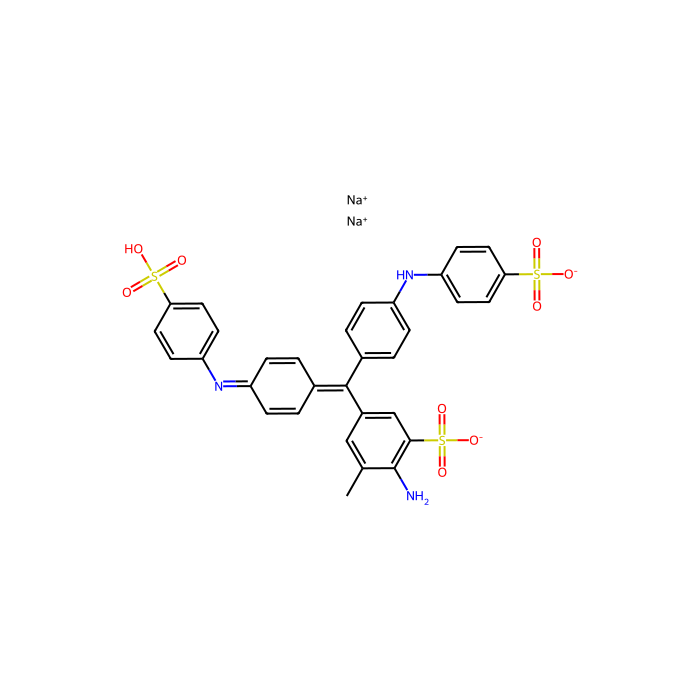
Aniline Blue - Biological stain , CAS No.28631-66-5

CAS: 28631-66-5 Cat. No.: A113197 Fórmula: C32H25N3Na2O9S3 Peso molecular: 737.72 Número CE: 249-113-9
Disponível para encomenda
GRADE & PURITY Biological Stain ? Biological stain grade — dyes characterized for staining cells and tissues. Use in histology and microscopy where staining consistency matters.
Synonyms
C.I. Acid Blue 22 | Aniline Blue (spirit soluble) , | CI 42755 | Aniline Blue | Acid Blue 22 | ANILINE BLUE SOLUTION
Shipped In
Normal
★
Size
Alemanha (EU)
USA*
Price
Qty
25g
A113197-25g
—
3 Em stock
20,74€
100g
A113197-100g
—
5 Em stock

51,98€

65,86€
Gravar 13,88 € (21.08%)
Enter a quantity for the sizes you want to add.
🧪
Why this grade

Biological stain Biological Stain for sensitive chromatographic and analytical workflows requiring minimal baseline interference.

🌡

Storage & shipping

Ships Normal Check lot-specific COA for exact specifications.

📋

Quality documents

SDS, COA, datasheet, and spec sheet available for download. Lot-specific COA accessible via lot number lookup.

📚

Literature proof

Cited in 16 peer-reviewed publications across chromatography, organic synthesis, and cross-coupling reactions.

Visão geral

Aniline Blue is the traditional name applied to anionic dyes produced by successive phenylation and sulfonation of basic fuchsine. Aniline blue consists of sulfonation products of variable mixtures of phenylated rosaniline and pararosaniline. It is a mixture of methyl blue and water blue. The dye is also known as cotton blue, and ink blue. Methyl blue of aniline blue belongs to the group of triaminotriphenylmethane dyes.

Specifications

Sinónimos
C.I. Acid Blue 22 | Aniline Blue (spirit soluble) , | CI 42755 | Aniline Blue | Acid Blue 22 | ANILINE BLUE SOLUTION
Especificações e pureza
Biological stain
Enviado em
Normal
Grau
Biological Stain
Nomes e identificadores
Pubchem Sid
Pubchem Sid Url
https://pubchem.ncbi.nlm.nih.gov/substance/504773448
Sorrisos canónicos
CC1=CC(=CC(=C1N)S(=O)(=O)[O-])C(=C2C=CC(=NC3=CC=C(C=C3)S(=O)(=O)O)C=C2)C4=CC=C(C=C4)NC5=CC=C(C=C5)S(=O)(=O)[O-].[Na+].[Na+]
IUPAC Name
disodium;2-amino-3-methyl-5-[[4-(4-sulfonatoanilino)phenyl]-[4-(4-sulfophenyl)iminocyclohexa-2,5-dien-1-ylidene]methyl]benzenesulfonate
InChIKey
XOSXWYQMOYSSKB-UHFFFAOYSA-L
INCHI
1S/C32H27N3O9S3.2Na/c1-20-18-23(19-30(32(20)33)47(42,43)44)31(21-2-6-24(7-3-21)34-26-10-14-28(15-11-26)45(36,37)38)22-4-8-25(9-5-22)35-27-12-16-29(17-13-27)46(39,40)41;;/h2-19,34H,33H2,1H3,(H,36,37,38)(H,39,40,41)(H,42,43,44);;/q;2*+1/p-2
SMILES isoméricas
CC1=CC(=CC(=C1N)S(=O)(=O)[O-])C(=C2C=CC(=NC3=CC=C(C=C3)S(=O)(=O)O)C=C2)C4=CC=C(C=C4)NC5=CC=C(C=C5)S(=O)(=O)[O-].[Na+].[Na+]
CAS alternativo
8004-91-9
Peso molecular
737.72
Reaxy-Rn
60338171
Reaxys-RN_link_address
https://www.reaxys.com/reaxys/secured/hopinto.do?context=S&query=IDE.XRN=60338171&ln=

Documentation

📋 Safety Data Sheet (SDS)

Comprehensive hazard, handling, storage, and regulatory compliance document.

Download SDS →

✅ Certificate of Analysis (COA)

Lot-specific quality data. Enter your lot number to retrieve the exact COA.

Look up COA →

📊 Datasheet

Quick-reference summary of product specifications and applications.

View datasheet →

🔬 Specification Sheet

Full quality attributes and acceptance criteria for this grade.

View spec sheet →

Advanced Data

Taxonomic Classification

Taxonomy Tree

KingdomOrganic compounds
SuperclassBenzenoids
ClasseBenzene and substituted derivatives
SubclassDiphenylmethanes
Intermediate Tree Nodes Not available
Direct ParentDiphenylmethanes
Alternative Parents Benzenesulfonic acids and derivatives  Benzenesulfonyl compounds  1-sulfo,2-unsubstituted aromatic compounds  Aniline and substituted anilines  Aminotoluenes  Sulfonyls  Secondary ketimines  Organosulfonic acids  Azomethines  Secondary amines  Propargyl-type 1,3-dipolar organic compounds  Primary amines  Organopnictogen compounds  Organic sodium salts  Organic oxides  Hydrocarbon derivatives  
Molecular FrameworkAromatic homomonocyclic compounds
Substituents Diphenylmethane - Benzenesulfonate - Benzenesulfonyl group - 1-sulfo,2-unsubstituted aromatic compound - Arylsulfonic acid or derivatives - Aminotoluene - Aniline or substituted anilines - Toluene - Sulfonyl - Organosulfonic acid - Organosulfonic acid or derivatives - Organic sulfonic acid or derivatives - Secondary ketimine - Azomethine - Ketimine - Organic alkali metal salt - Organic 1,3-dipolar compound - Propargyl-type 1,3-dipolar organic compound - Secondary amine - Organic nitrogen compound - Organic oxygen compound - Organopnictogen compound - Organic oxide - Hydrocarbon derivative - Organic sodium salt - Organic salt - Primary amine - Organosulfur compound - Organonitrogen compound - Imine - Amine - Aromatic homomonocyclic compound
DescriçãoThis compound belongs to the class of organic compounds known as diphenylmethanes. These are compounds containing a diphenylmethane moiety, which consists of a methane wherein two hydrogen atoms are replaced by two phenyl groups.
External Descriptors Not available
Estrutura 3D
Modelo de Estrutura Química Interativa


Certificados(CoA,COO,BSE/TSE e Mapa de Análise)
C of A & Other Certificates(BSE/TSE, COO):
Analytical Chart:

Find and download the COA for your product by matching the lot number on the packaging.

4 results found

Lot NumberCertificate TypeDataItem
L2214722Certificate of AnalysisSep 07, 2026 A113197
D2401056Certificate of AnalysisNov 25, 2021 A113197
E2311037Certificate of AnalysisNov 25, 2021 A113197
I2318180Certificate of AnalysisNov 25, 2021 A113197
Propriedades químicas e físicas
Peso molecular737.700 g/mol
XLogP3
Hydrogen Bond Donor Count3
Hydrogen Bond Acceptor Count12
Rotatable Bond Count6
Exact Mass737.055 Da
Monoisotopic Mass737.055 Da
Topological Polar Surface Area244.000 Ų
Heavy Atom Count49
Formal Charge0
Complexity1520.000
Isotope Atom Count0
Defined Atom Stereocenter Count0
Undefined Atom Stereocenter Count0
Defined Bond Stereocenter Count0
Undefined Bond Stereocenter Count0
The total count of all stereochemical bonds0
Covalently-Bonded Unit Count3
FAQs e artigos
Citations of This Product
Calculadoras de soluções
Revisões

Avaliações dos Clientes

Application Protocols

Protocol information must be product-validated to be listed here. No manufacturer-validated protocols, tested applications, or recommended dilutions are provided for this item.

  • Tested applications (WB, IHC, IF, FC, etc.): Not specified for this item; refer to CoA/Spec Sheet.
  • Recommended working concentrations/dilutions: Not specified for this item; determine empirically for your specimen and imaging setup.
  • Positive controls: Not specified for this item; select controls appropriate to your study (e.g., plant tissues known to accumulate callose for method development—general literature guidance only).

Users should develop and validate protocols under their own lab conditions, including buffer composition, staining time, illumination, and imaging settings.

Biological Roles

Scope: Aniline Blue is a staining reagent and does not have a biological role in vivo. The following summarizes literature observations regarding its interactions with biological polymers during lab staining.

Literature/general notes

  • Polysaccharide affinity: Exhibits pronounced binding to β-1,3-glucans (e.g., plant callose), enabling selective visualization in tissues. Binding is believed to involve electrostatic and hydrogen-bonding interactions between the anionic sulfonate-bearing dye and hydroxyl-rich polysaccharide networks, with alterations in the dye’s photophysical properties upon complexation.
  • Cell wall imaging: In fungi and plants, staining highlights cell wall features enriched in β-glucans and related acidic polysaccharides. The intensity and specificity can vary with species, developmental stage, and sample preparation (fixation, clearing, pH, ionic strength).
  • Protein/nucleic acid interactions: Compared to cationic dyes (e.g., methylene blue), anionic triphenylmethane dyes have lower affinity for nucleic acids at neutral pH, contributing to contrast when counterstaining.
  • Fluorescence behavior: Complex formation with glucans can enhance fluorescence under appropriate excitation in the near-UV/blue region. Exact excitation/emission maxima depend on dye composition, solvent, and pH; document empirically for your setup.

Important: These points describe general staining behavior. They are not therapeutic/clinical claims. Item-specific validation data, extinction coefficients, or binding constants are not provided; verify performance within your specimen type and microscope configuration.

Buffer Applications

Not a buffer reagent: Aniline Blue is not used to prepare buffer systems and does not function as a pH buffer in typical laboratory practice.

Practical interface with buffers (literature/general)

  • Solubilization medium: Frequently prepared in aqueous buffers (e.g., acetate, phosphate, citrate–phosphate) at mildly acidic to neutral pH to stabilize hue/fluorescence and promote consistent staining.
  • Ionic strength and pH: Both can influence binding to polysaccharides and the dye’s spectral profile. Maintain the same buffer composition across experiments to ensure reproducibility.

For preparing biological buffers, refer to dedicated buffering agents (e.g., phosphate, HEPES, Tris) rather than dyes. No item-specific buffer recipes or recommendations are provided for this product.

Green Alternatives

Context: Dyes used in microscopy contribute relatively small mass to overall lab waste, but they can be persistent in aqueous streams. Selection of staining agents can therefore consider both performance and environmental profile.

Comparative considerations (literature/general)

  • Aniline Blue (this product): Strong, established stain for β-1,3-glucan-rich structures; water-soluble; effective at low concentrations. Potential drawbacks include persistence in wastewater and difficult decolorization.
  • Calcofluor White (Fluorescent Brightener 28): High affinity to β-glucans/cellulose with strong UV-excited fluorescence; often used at very low concentrations, reducing mass used. However, it requires UV excitation and can bind broadly to polysaccharides, potentially lowering specificity.
  • Toluidine Blue O: Metachromatic thiazine dye; versatile and generally effective at low loadings; different color/contrast profile; fluorescence weaker than dedicated fluorochromes.
  • Congo Red: Binds amyloid-like and cellulose structures; azo dye with regulatory scrutiny regarding environmental fate and potential hazards; not necessarily a greener option.

Practical green tips

  • Minimize working concentrations and volumes consistent with image quality.
  • Reuse/recirculate rinses where compatible, and collect dye-containing effluents for specialized disposal rather than sink disposal.
  • Consider in-house photolysis or activated carbon treatment of dye-containing waste streams if permitted.
  • Choose buffered aqueous systems over organic-rich solvents to reduce VOCs, unless alcohol co-solvent is necessary for performance.

No item-specific environmental certifications or green labels are provided; consult your institutional sustainability guidelines for dye handling and disposal.

Pharmaceutical Uses

This product is supplied as a laboratory Biological Stain for research use only. No medical or clinical use is intended or supported.

Literature/general context

  • Excipient status: Triphenylmethane dyes are occasionally used as colorants in non-sterile products; however, “Aniline Blue” as a mixture is not a standard pharmacopeial colorant, and compositions vary by supplier. Consequently, it is generally unsuitable for regulated pharmaceutical formulations without extensive qualification.
  • Manufacturing/QA labs: Dyes may be employed in non-GMP visualization tasks (e.g., tracing, leak testing, surface coverage studies) within facilities, but use must be segregated from GMP-critical operations unless validated.

Item-specific regulatory notes

  • Pharmacopeial listing: Not specified for this item; refer to CoA/Spec Sheet.
  • GMP suitability: Not specified for this item; end users should perform their own qualification if contemplating any regulated use.

Conclusion: Treat this product strictly as a research-grade staining reagent. For any formulation or manufacturing application, select pharmacopeia-listed colorants with defined composition and specifications.

Physical Properties

Item-specific physical properties

  • Appearance: Not specified for this item; refer to CoA/Spec Sheet.
  • Physical state: Typically supplied as a solid dye powder (general, literature note).
  • Molecular Weight: Not specified for this item; refer to CoA/Spec Sheet.

Literature/general properties for the Aniline Blue dye class (mixture-dependent; values vary by supplier and component ratio)

  • Solubility: Generally readily soluble in water due to sulfonate groups; often soluble to limited extent in methanol/ethanol; poor solubility in nonpolar solvents.
  • Ionic character: Anionic (sulfonate salts), favoring affinity for cationic sites and hydrogen-bonding with polysaccharides/proteins.
  • UV–Vis behavior: Strong absorber in the visible region typical of triphenylmethane dyes (precise λmax depends on composition and pH; consult batch CoA or record spectrum in intended buffer).
  • pH sensitivity: Color intensity and spectral profile can shift with pH and ionic strength; for reproducible staining/quantitation, maintain constant buffer conditions.
  • Hygroscopicity/dusting: Finely divided dye powders can be dusty and may absorb moisture; handle in a dry area with minimal air currents (general handling practice).

Important: No item-specific BP, MP, density, refractive index, logP, or spectral maxima are provided. For quantitative method development, record a reference spectrum and extinction coefficient under your exact buffer composition and pH.

Quality and Grades
  • Supplied Grade (item-specific): Biological Stain. This denotes material intended for laboratory staining applications (histology, cytology, microbiology, plant biology) where color strength, solubility, and staining performance are the primary quality attributes rather than chromatographic or synthetic purity.

What Biological Stain grade implies (general)

  • Performance-oriented QC: Lots are typically qualified for color strength/tonality and dissolution behavior. Some producers may benchmark against established staining protocols (e.g., plant callose/mycological stains). Exact tests vary; consult the CoA for this item’s acceptance criteria.
  • Composition considerations: “Aniline Blue” is often a mixture of related sulfonated triphenylmethane dyes. Biological Stain grade prioritizes reproducible staining outcomes over single-component chemical homogeneity.
  • UV background: For fluorescence applications, background autofluorescence/impurities can affect signal. If you require minimized background for imaging or quantitation, request spectral scans or impurity profiling from the CoA.
  • Stabilizers: Not specified for this item; refer to CoA/Spec Sheet. Many dye powders do not contain added stabilizers, but some vendors include anti-caking agents; confirm if your workflow is sensitive to additives.

When to choose this grade

  • Routine light microscopy/fluorescence staining of polysaccharides (e.g., plant callose), fungal structures, connective tissues, and general histological counterstaining.
  • Not recommended for: trace analytical methods requiring precisely defined molar absorptivity or for pharmaceutical GMP use without additional qualification.

Documentation: For regulated or highly quantitative applications, obtain batch CoA/SDS and, if needed, perform in-house performance qualification under your exact protocol.

Reaction and Applications

Primary use domain: Aniline Blue is a functional stain rather than a synthetic reagent. Its value lies in selective, intense coloration/fluorescence of biological matrices, especially polysaccharides.

Applications (literature/general)

  • Plant biology: Widely employed to visualize callose (β-1,3-glucan) in cell plates, sieve plates, and wound responses. Under appropriate excitation, the dye–callose complex exhibits enhanced fluorescence relative to background cell wall components.
  • Mycology/microbiology: Used to contrast fungal hyphae/spores and cell wall features rich in β-glucans; compatible with bright-field and epifluorescence microscopy depending on formulation and illumination.
  • Histology: Incorporated into connective tissue stains and as a counterstain, imparting blue coloration to acidic components.
  • Spectroscopy/assays: Serves as a colorimetric/fluorometric reporter in qualitative assessments where binding to anionic polymeric substrates is desired (method-dependent).

Practical tips (general)

  • Solution preparation: Use high-purity water or buffer, and filter to remove undissolved particulates that can introduce background speckles in imaging.
  • pH control: Maintain a consistent pH (commonly mildly acidic to neutral) to stabilize hue and signal; document and replicate ionic strength.
  • Photostability: Protect solutions and stained specimens from prolonged high-intensity light to minimize fading.
  • Controls: Include negative controls (no dye) and matrix blanks to gauge background; if quantifying fluorescence, include internal intensity standards.

Note: This section summarizes literature usage patterns. No manufacturer-validated application list is provided for this item; consult the CoA and perform in-house validation for your protocol.

Reaction Conditions

Not applicable as a reaction reagent: Aniline Blue is used for staining and imaging rather than as a substrate, reagent, or catalyst. Therefore, there are no standard synthetic reaction conditions associated with this material.

Literature/general handling for staining solutions

  • Solvent: Water or aqueous buffer; optional minor alcohol co-solvent for wetting.
  • Concentration: Determined empirically for the specimen and imaging modality; prepare fresh solutions and filter to remove particulates.
  • Temperature/time: Room temperature staining with durations from minutes to hours depending on tissue thickness and target abundance; rinse thoroughly to reduce background.

Item-specific, validated reaction or staining conditions are not provided for this product. Consult the CoA/Spec Sheet and optimize conditions within your lab’s protocol framework.

Safety and Handling

Item-specific hazard data

  • GHS Classification: Not specified for this item; refer to SDS.
  • Signal Word: Not specified for this item; refer to SDS.
  • H-Statements/Pictograms: Not specified for this item; refer to SDS.

General laboratory safety guidance for triphenylmethane biological stains (literature/standard practice)

  • PPE: Use lab coat, safety glasses, and appropriate chemically resistant gloves. Powders can be strongly coloring; minimize skin contact and inhalation of dust/aerosols.
  • Engineering controls: Handle powders in a fume hood or ventilated enclosure to control dust. Avoid creating aerosols during solution preparation (add dye to liquid, not vice versa; wet the powder gently).
  • Incompatibilities: Strong oxidizers may degrade dye; avoid contact with strong reducing agents/bleaches when preparing working solutions. Avoid strong acids/bases unless your protocol specifies pH adjustment (pH can alter spectral/staining properties).
  • First aid (overview; defer to SDS): Inhalation—move to fresh air; Skin—wash with soap/water (staining may persist temporarily); Eyes—rinse cautiously with water for several minutes; Ingestion—rinse mouth, seek medical advice.
  • Spill/waste: Absorb small spills with inert material; dyes can strongly stain surfaces. Dispose of dye wastes as aqueous organic dye waste according to institutional and local regulations; many triphenylmethane dyes are persistent in water.
  • Fire: Most dye solids are combustible; use standard extinguishing media (water fog, CO2, dry chemical). Thermal decomposition can produce irritating fumes.

Always consult the product-specific SDS for authoritative hazard classifications and response measures.

Solvent Selection

Applicability: As a solid anionic dye, Aniline Blue is used by dissolving in aqueous media or polar protic solvents for staining. It is not used as a reaction solvent.

General solvent behavior (literature)

  • Water: Primary solvent of choice due to multiple sulfonate groups that confer high water solubility; solutions are typically intensely blue. Ionic strength and pH can subtly affect shade and fluorescence.
  • Alcohols: Often soluble in methanol and ethanol; mixed aqueous alcohols can aid wetting/penetration in tissue samples.
  • Buffers: Commonly prepared in acetate, citrate–phosphate, phosphate, or glycine buffers, with pH adjusted per staining protocol. Maintain constant pH for reproducibility; triphenylmethane dyes can show pH-dependent spectral shifts.
  • Poor solvents: Nonpolar solvents (e.g., hexanes, toluene, ethers) generally do not dissolve sulfonated triphenylmethane dyes.

Selection tips

  • For fluorescence-based detection (e.g., callose), use freshly prepared buffered aqueous solutions; filter through 0.2–0.45 µm to remove particulates.
  • For thick or hydrophobic samples, a small fraction of ethanol or isopropanol (literature practice, e.g., 10–50%) can improve wetting while maintaining dye activity; verify compatibility with your specimen.
  • Avoid strong oxidants/reductants or bleach in the solvent system; these can fade or chemically modify the dye.

Item-specific solvent limits, solubility, and pH stability ranges are not specified for this item; consult the CoA/Spec Sheet and validate in your own matrix.

Storage and Reconstitution

Item-specific storage conditions and appearance are not specified for this product; refer to the CoA/Spec Sheet. Shipment: Shipped in Normal conditions (from Product Data).

General guidance (literature/standard practice for dye powders)

  • Storage of solid: Store tightly closed in a dry place at ambient temperature, protected from excessive humidity and light. Avoid prolonged exposure to air to limit moisture uptake and dusting.
  • Reconstitution: Dissolve the required mass in high-purity water or buffer; wet the powder gently to minimize dust. Mix until fully dissolved; warm gently to room temperature if needed (avoid heating that could degrade dye). Filter through 0.2–0.45 µm to remove particulates before microscopy.
  • Working solutions: Prepare fresh when feasible. For short-term storage, keep solutions in amber bottles at 2–8°C to minimize photobleaching and microbial growth. Allow to reach room temperature before use and mix well.
  • Freeze–thaw: Typically unnecessary for aqueous dye solutions; if freezing is chosen, aliquot to avoid repeated freeze–thaw cycles that may cause precipitation or concentration drift due to ice fractionation.

Shelf life: Not specified for this item; establish in-house by monitoring color strength, clarity, and staining performance over time.

Structure and Identity

Overview: Aniline Blue (often termed Aniline Blue WS, “water soluble aniline blue”) is a classical triphenylmethane-based biological stain used widely in histology, mycology, and plant biology.

  • Item-specific identifiers (from Product Data)

    • CAS: 28631-66-5
    • SKU: A113197
    • Grade/Purity: Biological Stain
    • InChIKey: Not specified for this item; refer to CoA/Spec Sheet.
    • SMILES: Not specified for this item; refer to CoA/Spec Sheet.
    • Molecular Formula: Not specified for this item; refer to CoA/Spec Sheet.
    • Molecular Weight: Not specified for this item; refer to CoA/Spec Sheet.
  • Literature/contextual identity notes (general)

    • “Aniline Blue” commonly refers to a mixture of closely related sulfonated triphenylmethane dyes. Formulations may contain methyl blue and/or water blue components; exact composition varies by supplier/grade.
    • Structural features (typical for the class): triarylmethyl (triphenylmethane) chromophore bearing multiple sulfonate groups (as sodium salts) for water solubility; multiple anilide/amine substituents modulate color and affinity for acidic polysaccharides.
    • 2D structural description (class-level): central carbon attached to three aromatic rings; rings carry dimethylamino or amino substituents and sulfonate groups. The extensive conjugation underlies the intense blue coloration.

Notes: Because “Aniline Blue” is often a mixture and composition varies, definitive single-structure descriptors (InChIKey/SMILES/formula/MW) are not provided here for this specific item. Consult the CoA/specification sheet for batch-level identity and analytical details.

Synthetic Utility

Not a general synthetic reagent: Aniline Blue is a staining dye and is not typically employed as a building block, reagent, catalyst, or solvent in organic synthesis.

Literature/general remarks

  • Triphenylmethane framework: While the triarylmethyl cation chemistry is a classic topic in physical organic chemistry, commercial Aniline Blue (as a sulfonated mixture) is not commonly used for synthetic transformations.
  • Indicator role: Some triphenylmethane dyes serve as acid–base indicators; however, Aniline Blue is not a standard indicator in synthetic laboratories.

Recommendation: For synthetic transformations, select purpose-designed reagents, catalysts, or indicators. If a colored tracer is desired in a process study, verify chemical inertness of the dye under process conditions and ensure it will not interfere with analysis; Aniline Blue is seldom chosen for this purpose.

Target Specificity

Only provide if supported by product data. For this item, no target specificity (e.g., antigen/epitope, species reactivity, clone/isotype) has been provided.

  • Item-specific target details: Not specified for this item; refer to CoA/Spec Sheet.

General literature note: In microscopy, “Aniline Blue” is often employed to visualize β-1,3-glucan-rich structures (e.g., plant callose, fungal cell walls). This is a usage convention rather than a validated, product-specific target claim.

Deseja que lhe enviemos uma mensagem quando tivermos descontos disponíveis?

Lembrar-me mais tarde

Obrigado! Por favor, verifique a sua caixa de entrada de e-mail para confirmar.

Ops! As notificações estão desativadas.