GRADE & PURITYMoligand™?Moligand™ — Aladdin's line of ligands and bioactive small molecules. Use for receptor, pathway, and binding studies needing defined small-molecule tools.≥98%
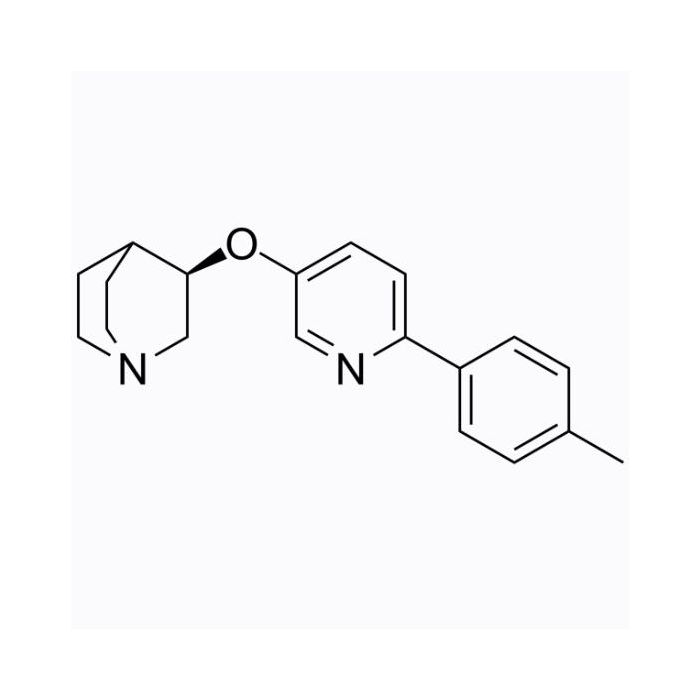
This compound belongs to the class of organic compounds known as phenylpyridines. These are polycyclic aromatic compounds containing a benzene ring linked to a pyridine ring through a CC or CN bond.
External Descriptors
Not available
1. Djoumbou Feunang Y, Eisner R, Knox C, Chepelev L, Hastings J, Owen G, Fahy E, Steinbeck C, Subramanian S, Bolton E, Greiner R, and Wishart DS. ClassyFire: Automated Chemical Classification With A Comprehensive, Computable Taxonomy. Journal of Cheminformatics, 2016, 8:61.
Determine the necessary mass, volume, or concentration for preparing a solution.
Dilution Calculator
Determine the dilution needed to prepare a stock solution.
Reconstitution Calculator
Revisões
Avaliações dos Clientes
Application Protocols
No tested applications or validated protocols are provided for AQW051. The following guidance outlines common practices for small-molecule library compounds; tailor to your system and consult the CoA/SDS.
Stock preparation (general)
Equilibrate vial to room temperature in a desiccator before opening. Prepare a concentrated stock (e.g., 10–50 mM) in anhydrous DMSO. Vortex and sonicate briefly to aid dissolution. If particulates persist, warm gently (<40 °C) and/or filter through 0.2 µm PTFE.
Record exact mass and final volume to calculate concentration gravimetrically when molar mass is not provided; once molecular weight is known, adjust to molarity.
Assay use (general)
Dilute stock into assay buffer/media to desired test concentrations, keeping final DMSO constant (commonly 0.1–0.5% v/v). Prepare fresh working solutions immediately before use to minimize degradation/precipitation.
Include vehicle controls and, when relevant, detergent controls (e.g., 0.01% Tween-20) to detect aggregation artifacts. Confirm activity with orthogonal assays.
Storage of solutions (general)
Aliquot DMSO stocks (e.g., 10–50 µL) in inert, low-bind tubes under dry nitrogen/argon if possible. Store at −20 °C protected from light. Avoid multiple freeze–thaw cycles.
Documentation
Note lot number, preparation date, solvent, and concentration on each aliquot; attach chromatograms/spectra to maintain data traceability.
Biological Roles
No biological function, mechanism, or target annotation is provided for AQW051. Any biological role must be determined experimentally.
Item-specific (Product Data)
Biological/target information: Not specified for this item; refer to CoA/Spec Sheet or internal screening records.
General context for small-molecule library entries (not item-specific)
Potential roles: May act as a ligand or modulator of protein function in biochemical or cellular assays, depending on structure and physicochemical properties.
ADME-relevant properties: Once structure is available, calculated cLogP, TPSA, HBD/HBA, and ionization states inform permeability and solubility—useful for designing cell-based experiments.
Off-target risks: Pan-assay interference compounds (PAINS), redox cyclers, and aggregators can produce artifactual signals. Employ counter-screens, detergent controls (e.g., 0.01% Tween-20/Triton X-100), and orthogonal assays to validate activity.
Practical guidance
Start with a broad concentration range and include vehicle controls. Confirm activity with fresh stocks and independent lots when possible.
Monitor compound stability in assay buffers over time (LC–MS) to decouple degradation from apparent potency changes.
Use orthogonal readouts (e.g., enzymatic activity vs biophysical binding) to establish mechanism-agnostic confirmation of interaction.
Buffer Applications
This product is a discovery small molecule rather than a buffering agent. As such, standard buffer formulation guidelines do not directly apply.
Applicability
AQW051 is not a classical buffer or pH modifier. No pKa or acid/base functionality is provided for this item; do not rely on it for buffering capacity.
Practical notes for assay buffers (general)
Prepare concentrated stocks of the compound in DMSO and dilute into pre-made assay buffers (e.g., PBS, HEPES, Tris) selected for target compatibility.
Maintain constant DMSO across treatments; filter buffers (0.2 µm) to minimize particulates and adsorption artifacts.
If the compound is suspected to chelate metals or react with nucleophiles/electrophiles, avoid buffers with reactive components (e.g., primary amines in Tris) until compatibility is known.
Reference
For any buffer-related behavior (precipitation, pH drift), perform small-scale solubility tests across relevant pH and ionic strengths once structure/pKa are available.
Green Alternatives
Without a defined structure, solvent and process choices for AQW051 should prioritize low hazard and environmental impact while maintaining performance. The following considerations are general and not item-specific.
Preferred stock and dilution strategy
Use minimal volumes of high-boiling polar aprotics. DMSO is often necessary for solubility but should be minimized in final assays (≤0.1–0.5% v/v) where possible.
Greener solvent substitutions (general guidance)
Replace DMF/NMP where feasible with ethanol, isopropanol, acetone, acetonitrile, or 2-MeTHF depending on solubility and stability.
For workups/cleaning, consider ethyl acetate or isopropanol instead of dichloromethane; heptane/ethyl acetate systems often substitute for hexane/DCM.
Selection tradeoffs (general)
2-MeTHF vs THF: 2-MeTHF offers higher hydrophobicity and partial water immiscibility, potentially better for hydrophobic compounds; THF forms peroxides and is less green.
Ethanol vs methanol: Ethanol is safer and preferred when solubility allows; methanol offers higher polarity but greater toxicity.
Scale reactions and assays efficiently to reduce solvent use; employ microplate formats and automated liquid handling to minimize waste.
Pharmaceutical Uses
No pharmacopeial status, excipient role, or formulation guidance is provided for AQW051.
Item-specific (Product Data)
Regulatory/pharmacopeia listing: Not specified for this item; refer to CoA/Spec Sheet.
General considerations (not item-specific; research use only)
Library compounds are supplied strictly for research use and are not intended for human or animal administration or for clinical diagnostics.
If preformulation studies are pursued in research contexts, characterize solubility, stability (pH-, light-, and oxidation-sensitivity), and solid-state form (XRPD/DSC/TGA) before any advanced testing.
For in vitro dosing vehicles, typical research approaches include DMSO stock dilution into compatible media with controlled final solvent content.
Disclaimer
For research use only. No medical or clinical claims are made for this material.
Physical Properties
Given the absence of structural and property data, definitive physico-chemical specifications cannot be stated for AQW051.
Item-specific (Product Data)
Appearance: Not specified for this item; refer to CoA/Spec Sheet.
Molecular weight: Not specified for this item; refer to CoA/Spec Sheet.
Molecular formula: Not specified for this item; refer to CoA/Spec Sheet.
Melting point (MP): Not specified for this item; refer to CoA/Spec Sheet.
Boiling point (BP): Not specified for this item; refer to CoA/Spec Sheet.
Density: Not specified for this item; refer to CoA/Spec Sheet.
Refractive index: Not specified for this item; refer to CoA/Spec Sheet.
Solubility in water/organic solvents: Not specified for this item; refer to CoA/Spec Sheet.
LogP/logD, pKa: Not specified for this item; refer to CoA/Spec Sheet.
Literature/general notes (not item-specific)
Small-molecule screening ligands are commonly dissolved as concentrated DMSO stocks (e.g., 10–50 mM) due to broad solubility. Water solubility can vary widely with polarity and ionizable groups.
If the structure becomes available, computational tools (ACD/Percepta, ChemAxon, RDKit) can estimate cLogP, pKa, and solubility to guide assay media selection, later to be verified experimentally.
Practical guidance
Empirically determine solubility by stepwise addition of solvent with vortex/sonication, documenting the maximum clear concentration before assay dilutions.
If hygroscopic or prone to polymorphism/oiling out, record observations upon warming to room temperature; store desiccated as specified.
For UV-based quantification, confirm the absorption maximum and extinction coefficient experimentally for this item; otherwise, use gravimetric preparation.
Quality and Grades
This product is provided under the Moligand brand designation, indicating suitability for small-molecule and ligand-focused discovery workflows.
Item-specific (Product Data)
Grade/Purity: Moligand™ (no numeric purity, stabilizers, or metal/UV limits are specified for this item; refer to CoA/Spec Sheet.)
What Moligand™ typically denotes at Aladdin (general description; not item-specific specifications)
Intended use: Research-grade small molecules intended for target screening, SAR exploration, and chem-biology assays.
Typical QC framework: Identity confirmation by LC–MS and/or NMR; purity assessed by HPLC/UPLC with UV/ELSD; residual solvent and water content checked as appropriate. Exact tests and limits vary by item—see the CoA for AQW051.
Format: Frequently supplied as dry solid or film suitable for DMSO stock preparation; some items may be supplied as concentrated DMSO solutions. The appearance/format for AQW051 is not specified for this item.
Practical notes for end-users
Always verify batch-specific purity and identity on receipt using the CoA; for critical applications, consider orthogonal confirmation (e.g., 1H NMR, HRMS) against provided references.
If low UV background is critical (e.g., HPLC analytics), confirm UV chromatogram baseline behavior on your detector settings; no UV cutoff is specified for this item.
Document lot numbers in screening data to preserve traceability across hit validation and SAR iterations.
Reaction and Applications
Because structural and functional information for AQW051 is not provided, detailed synthetic reaction applications cannot be assigned to this item. However, Moligand-designated compounds are commonly utilized in discovery and screening contexts.
Item-specific (Product Data)
Manufacturer Applications: Not specified in the listing; no reaction use claims are made for AQW051.
General research applications for library compounds (not item-specific)
Biochemical/biophysical screening: Assessment as potential ligands in target-based assays (e.g., enzyme inhibition kinetics, fluorescence polarization, DSF/thermal shift, SPR, MST). Optimize assay solvent and DMSO tolerance.
Cellular assays: Phenotypic screens with careful control of vehicle concentration and cytotoxicity baselining.
Analytical method development: Use as probe candidates in LC–MS method establishment once the structure is known.
Practical tips (general)
Prepare and filter stock solutions (0.2 µm PTFE for organics) when feasible to remove particulates.
Track lot numbers and exact stock concentrations; confirm by gravimetry or quantitative NMR if UV data are unavailable.
Evaluate compound stability by re-injecting LC–MS aliquots after storage at 4 °C and room temperature over 24–72 h to establish working-solution shelf life.
Reaction Conditions
No reaction conditions can be recommended for AQW051 because the structure and functional groups are not provided.
Item-specific (Product Data)
Named reactions, catalysts, solvent/temperature windows: Not specified for this item; refer to CoA/Spec Sheet.
General note (not item-specific)
If the compound is to be used as a starting material or coupling partner, establish compatibility by micro-scale scouting experiments. Begin with mild conditions and monitor by LC–MS/UPLC to detect degradation or transformation.
Record any observed instability (e.g., hydrolysis in aqueous base, oxidation in air) to inform handling and storage. No such tendencies are specified for this item.
Safety and Handling
Safety information for AQW051 is incomplete in the current listing. Apply prudent laboratory practices and consult the SDS prior to use.
Item-specific (Product Data)
GHS classification, pictograms, signal word, H-statements: Not specified for this item; refer to SDS.
Storage conditions: Store at −20 °C, desiccated.
Shipping: Ice chest + ice pads.
General handling guidance (not item-specific; defer to SDS)
PPE: Use lab coat, safety glasses, and appropriate chemical-resistant gloves (e.g., nitrile). Handle within a fume hood to avoid inhalation of dust/vapors/aerosols.
Avoid contact with skin and eyes; prevent ingestion and inhalation. Wash thoroughly after handling.
Incompatibilities: Without structural data, treat as a typical organic small molecule—avoid strong oxidizers and reducing agents, strong acids/bases, and reactive acylating/alkylating conditions until compatibility is known.
Thermal/moisture sensitivity: Desiccated storage suggests sensitivity to moisture and/or hydrolysis; minimize exposure to ambient humidity. Bring to room temperature in a desiccator before opening to prevent condensation.
First-aid overview (consult SDS for specifics)
Skin/eye contact: Rinse with water for at least 15 minutes; remove contaminated clothing. Seek medical attention if irritation persists.
Inhalation: Move to fresh air; seek medical attention if symptoms occur.
Ingestion: Rinse mouth; do not induce vomiting; seek medical attention.
Waste and spills
Collect small spills with inert absorbent; dispose of according to institutional hazardous waste protocols. Label waste with CAS if known (669770-29-0).
Solvent Selection
With structure and polarity not specified, solvent choice should follow a pragmatic screening approach prioritizing solubility, chemical stability, and assay compatibility.
Item-specific (Product Data)
No solubility profile is provided for AQW051; refer to CoA/Spec Sheet.
General best practices for small-molecule library members (not item-specific)
Primary stock solvent: DMSO is the default for discovery compounds due to wide solubilizing power and assay compatibility up to 0.1–1% v/v in many biochemical/cellular assays.
Secondary solvents: If DMSO is inadequate or undesirable, test DMF, methanol, ethanol, acetonitrile. For hydrophobic compounds, screen 2-methyltetrahydrofuran (2-MeTHF), ethyl acetate, or isopropanol; for ionizable bases/acids, consider buffered aqueous mixtures or add minimal acid/base modifiers (e.g., 0.1% TFA/TEA) when compatible with the assay.
Aqueous dilution: Prepare concentrated DMSO stock (e.g., 10–50 mM), then dilute into buffer/media with vigorous mixing to minimize precipitation. Keep final DMSO level constant across test wells.
Stability considerations
Desiccated storage suggests hydrolytic sensitivity may be possible. Avoid prolonged exposure in aqueous media; prepare fresh dilutions immediately prior to use.
Quick comparison (general)
DMSO: Highest solvency; potential cellular effects at >0.5%.
DMF: Good solvency; less desirable in bioassays; remove thoroughly for chemistry.
MeOH/EtOH: Volatile, miscible; may affect enzymes/cells at low percentages.
Storage and Reconstitution
Follow the item-specific storage instructions and adopt handling practices that limit moisture and thermal exposure.
Item-specific (Product Data)
Storage conditions: Store at −20 °C, desiccated.
Shipped in: Ice chest + ice pads.
General handling guidance (not item-specific)
Upon receipt, inspect the vial for integrity and any visible changes. Allow to reach room temperature in a desiccator before opening to prevent moisture condensation.
Reseal promptly after use. If available, purge headspace with dry inert gas and return to −20 °C. Maintain a desiccant in the storage container.
Reconstitution (general)
Preferred solvent: Anhydrous DMSO for initial stock preparation unless CoA specifies otherwise. Start at 10–50 mM, adjusting to the solubility limit.
For aqueous applications, dilute the DMSO stock into buffer immediately before use with vigorous mixing to avoid precipitation. If insolubility is observed, consider co-solvents (MeCN, EtOH) at low percentages compatible with the assay.
Stability considerations
Desiccated storage implies possible hydrolytic or hygroscopic tendencies; minimize exposure to ambient humidity and avoid prolonged time at room temperature.
Prepare single-use aliquots to avoid repeated freeze–thaw. Document any observed degradation by LC–MS/UPLC over time.
Note
For research use only. For definitive shelf life and stability-in-solution, consult the batch-specific CoA/Spec Sheet and SDS.
Structure and Identity
Brief overview: AQW051 (SKU A607700) is listed in our Moligand small-molecule library. Structural identifiers are incomplete in the current product data; consult the CoA/Spec Sheet for definitive identity metrics.
Item-specific (Product Data)
CAS: 669770-29-0
PubChem CID: 50914822
InChIKey: 244401 (as provided; full 27-character InChIKey is not specified for this item; refer to CoA/Spec Sheet.)
SMILES: Not specified for this item; refer to CoA/Spec Sheet.
Chemical name: Not specified for this item; refer to CoA/Spec Sheet.
Molecular formula: Not specified for this item; refer to CoA/Spec Sheet.
Molecular weight: Not specified for this item; refer to CoA/Spec Sheet.
Structural features (general guidance)
Without SMILES/InChI, ring systems, heteroatoms, stereocenters, and functional groups cannot be enumerated for this item.
Library compounds such as Moligand entries typically encompass drug-like heteroaromatics, amide/urea linkages, and polar handles for solubility; however, this is general context only and not specific to AQW051.
2D structure description
Not available for this item. Please consult the product CoA, SDS, or a supplied structural file (SDF/MOL) for a definitive 2D depiction and atom connectivity.
Best practice
When planning experiments, verify identity by orthogonal methods (e.g., LC–MS exact mass, 1H/13C NMR) against the CoA-provided reference to ensure concordance with the intended structure.
Synthetic Utility
Synthetic applications cannot be assigned to AQW051 without structural information. No functional groups, protecting-group patterns, or reactivity handles are available in the provided data.
Item-specific (Product Data)
Functional group content and reactivity: Not specified for this item; refer to CoA/Spec Sheet.
General guidance (not item-specific)
If repurposed as a synthetic building block in research, first confirm structure (NMR/HRMS) and assess stability under acid/base and redox conditions.
Retrosynthetic integration depends on known leaving groups (e.g., halides, sulfonates) or coupling handles (e.g., boronates, carboxylates, amines). None are known for this item as listed.
For derivatization campaigns, establish a small panel of conditions (amide coupling, Suzuki/Chan–Lam, N-alkylation/acylation) only after the exact structure is confirmed.
Target Specificity
Target or pathway specificity for AQW051 is not provided.
Item-specific (Product Data)
Antigen/target name, pathway, enzyme, receptor, or species reactivity: Not specified for this item; refer to CoA/Spec Sheet.
General guidance (not item-specific)
In discovery campaigns, corroborate putative target engagement with multiple orthogonal assays (biochemical vs biophysical vs cellular phenotypes) and use counterscreens against common off-targets to assess selectivity profiles.
Need help choosing the grade?
Our grade selection guide covers purity, stabilizer status, and application suitability for all variants in our catalog.
Usamos cookies para garantir o funcionamento adequado do site e, quando permitido, para melhorar a sua experiência. Você pode gerenciar suas preferências a qualquer momento nas Configurações. Saiba mais em nossa Política de Cookies.
Deseja que lhe enviemos uma mensagem quando tivermos descontos disponíveis?
Lembrar-me mais tarde
Obrigado! Por favor, verifique a sua caixa de entrada de e-mail para confirmar.
Products are supplied to verified businesses, institutions, and qualified professionals for research and development use only. Not for use in humans, animals, diagnosis, or therapy.
 J2613615
