Determine the necessary mass, volume, or concentration for preparing a solution.
Dilution Calculator
Determine the dilution needed to prepare a stock solution.
Reconstitution Calculator
Revisões
Avaliações dos Clientes
Application Protocols
No tested applications or protocols are provided in the Product Data for ARUK3001185. As a general small-molecule research item, use should follow your lab’s validated assay procedures.
If incorporating into high‑throughput screening: prepare plate maps with unique identifiers (CAS 2411969-39-4, SKU A649924), confirm DMSO stock concentration by qNMR or LC–UV, and include positive/negative controls to benchmark performance.
For biophysical assays (general guidance): ensure the compound does not interfere with detection (e.g., fluorescence or SPR refractive index artifacts) by running appropriate blanks and reference channels.
Note: Only lot-specific documentation should be considered authoritative for preparation and dilution instructions. No official Aladdin protocols are specified for this item.
Biological Roles
No biological targets, mechanisms, or pathway annotations are provided for ARUK3001185 in the Product Data.
Target/mechanism: Not specified for this item; refer to CoA/Spec Sheet or internal project documentation.
Biological role in pathways: Not specified for this item; refer to CoA/Spec Sheet.
General considerations for small-molecule research articles (non‑item‑specific):
When evaluating potential bioactivity, pair primary assays with orthogonal counterscreens to exclude assay interference (aggregation, redox cycling, metal chelation, detergent sensitivity, autofluorescence/absorbance overlap).
Confirm apparent activity by concentration–response analysis and replicate across lots to mitigate impurities or degradation products causing false positives.
Establish basic ADME‑relevant properties experimentally (stability in buffer and microsomes, permeability, solubility, and plasma protein binding) as appropriate for your research scope.
Research Use Note: For research use only. No medical or clinical claims are made or implied.
Buffer Applications
This product is a discrete small molecule, not a buffering agent. No buffer system, pKa, or formulation role is specified in the Product Data.
Buffer use: Not typically applicable. If aqueous work is required, prepare dilutions from an organic stock (e.g., DMSO) into your assay buffer while monitoring for precipitation.
If the compound is eventually found to be ionizable, buffer selection (pH relative to pKa) will influence solubility and stability; however, no pKa or ionization information is available for this item.
Green Alternatives
Because ARUK3001185 is supplied as an individual small-molecule research compound (not as a solvent or reagent), the common “green alternative” discussion is limited. Still, greener practices can be applied to its handling and evaluation.
Solvent footprint minimization:
Prefer DMSO for stock solutions over more hazardous dipolar aprotics when feasible; keep final assay DMSO at ≤1% v/v.
For chromatography, choose methanol or water‑rich mobile phases where compatible with detection and retention; reduce acetonitrile consumption through gradient optimization.
Microformatting:
Conduct solubility and stability screens in microvolumes (96/384-well plates) to reduce solvent use and waste generation.
Waste management:
Segregate halogenated from non‑halogenated organic waste; neutralize acid/base washes before disposal according to local regulations.
Energy-conscious storage:
Consolidate freezer space, minimize door‑open time, and use secondary containment to prevent frost‑related vial failures and sample loss.
Comparison context (general):
If the compound later proves insoluble except in high‑hazard solvents (e.g., DMF/NMP), consider temporary co‑solvent systems (DMSO/ACN/water) or cyclodextrin inclusion to avoid those solvents where assay‑compatible.
Note: No greener “alternative compound” can be suggested without knowledge of the intended target or structure.
Pharmaceutical Uses
No pharmacopeial status, excipient role, or manufacturing application is provided for ARUK3001185. This item is offered strictly for research use only.
Regulatory status: Not specified for this item; not for human or veterinary use.
Formulation context: If used as a research control or tool compound in preclinical experiments, develop fit‑for‑purpose vehicle systems (e.g., DMSO/PEG300/saline) only after obtaining structural and stability information. Such practices are outside the scope of this listing and should follow institutional review and safety guidance.
Note: No therapeutic claims are made or implied. Consult your organization’s regulatory team before any use beyond basic research.
Physical Properties
Physical property data have not been provided for this specific item.
Appearance: Not specified for this item; refer to CoA/Spec Sheet.
Melting point (literature/typical): Not available for this CAS in the provided Product Data.
Boiling point (literature/typical): Not available for this CAS in the provided Product Data.
Density, refractive index: Not specified for this item; refer to CoA/Spec Sheet.
LogP/logD, pKa: Not specified for this item; refer to CoA/Spec Sheet.
Solubility: Not specified for this item; refer to CoA/Spec Sheet.
Practical guidance (general, not item‑specific):
For unknown small molecules used in screening, an initial solubility survey is recommended: attempt dissolution at 10–50 mM in dry DMSO, warming gently (≤40 °C) and vortex/sonication as needed, then dilute into assay buffer with ≤1% DMSO final. Record any precipitation on dilution.
If aqueous solubility is desired, evaluate co‑solvent systems (DMSO, ethanol, or acetonitrile) or pH adjustment if ionizable groups are later disclosed. Always filter (0.22 µm) before bioassay to remove particulates.
For hygroscopic or polymorphic solids, equilibrate to room temperature before opening cold vials to minimize condensation. Verify mass quickly to limit atmospheric exposure.
Quality and Grades
Grade/Purity: Not specified for this item; refer to CoA/Spec Sheet.
Guidance for interpreting quality when documentation is provided:
Purity reporting: Screening compounds are commonly supplied with an HPLC purity (e.g., area % at a specified wavelength) and, when available, orthogonal purity (qNMR or HRMS). Confirm the detection method and wavelength used, as UV‑only methods may miss non‑chromophoric impurities.
Identity confirmation: Expect LC–MS (m/z), HRMS, or NMR support. Verify that the reported mass corresponds to the expected adducts (e.g., [M+H]+, [M+Na]+).
Water/Residual solvents: Not specified for this item; refer to CoA/Spec Sheet. If solvent-sensitive applications are planned, request residual solvent data (GC) and Karl Fischer if relevant.
Lot-to-lot consistency: For hit validation and SAR, lock a single lot for an assay campaign or cross‑qualify multiple lots by LC–MS/HPLC to ensure response equivalence.
Stabilizers/Additives: Not specified for this item; refer to CoA/Spec Sheet. If stabilizers are present, consider potential assay interference.
Documentation: Always consult the lot-specific CoA/SDS shipped with the vial for definitive grade, purity metrics, analytical methods, and acceptance criteria.
Reaction and Applications
This catalog entry is listed under “small molecules and compound libraries.” No synthetic or reaction-chemistry role is specified for ARUK3001185 in the Product Data.
Not typically positioned as a reagent/solvent: In the absence of a disclosed structure and reactivity profile, this item should not be assumed to serve as a building block, catalyst, or solvent.
Likely use case (general): As a discrete small-molecule entity for screening, profiling, or reference testing in discovery research. Researchers may evaluate potency, selectivity, or physicochemical behavior within in‑house assays; however, no target or application is provided here.
Practical guidance for research evaluation (non‑item‑specific):
Prepare a DMSO stock (e.g., 10 mM), verify clarity after serial dilution into assay buffer (≤1% DMSO final), and confirm concentration by UV (if chromophore known) or quantitative NMR against internal standard.
Assess intrinsic assay interference risk using counterscreens such as redox cycling, aggregation (detergent sensitivity), and fluorescence quenching/inner-filter checks if relevant to your assay format.
Stability checks: Short-term bench stability at room temperature and freeze–thaw robustness can be assessed by LC–MS/HPLC at 0, 4, and 24 h timepoints.
For any chemical transformation or derivatization, request structural disclosure and reactivity precautions; otherwise, treat as a non-reagent testing article.
Reaction Conditions
No reaction chemistry, catalysts, or transformation conditions are specified for ARUK3001185. This listing is not positioned as a reagent.
General guidance (not item‑specific) if chemical modification is later pursued with a disclosed structure:
Establish baseline stability in a variety of solvents (DMSO, MeOH, ACN, toluene, aqueous buffers) at room temperature and elevated temperatures (40–60 °C) before attempting synthesis.
Start with mild conditions (neutral pH, ambient temperature) and monitor by LC–MS. Escalate to stronger conditions only as needed, tracking impurity growth.
Use inert atmosphere if the compound shows oxidation sensitivity (e.g., phenols, anilines, sulfides), but this is unknown for the present item.
As supplied, no typical yields, temperatures, or catalysts can be provided for this specific compound.
Safety and Handling
Safety details specific to this item are not provided in the Product Data and should be confirmed in the SDS supplied with the shipment.
GHS classification: Not specified for this item; refer to SDS.
Signal word / Pictograms / H‑statements: Not specified for this item; refer to SDS.
Recommended PPE (general lab practice):
Safety glasses or chemical splash goggles
Lab coat and appropriate gloves (e.g., nitrile); change regularly and upon contamination
Handle powders in a fume hood to avoid inhalation of dust or aerosols
General precautions for small-molecule research compounds:
Avoid inhalation, ingestion, and skin contact. Prevent dust formation; use local exhaust.
Keep away from incompatible reagents until structure/incompatibilities are known. As a conservative default, segregate from strong oxidizers, strong acids/bases, and reducing agents.
Do not pipette by mouth; wash hands thoroughly after handling.
First-aid overview (consult SDS for authoritative guidance):
Inhalation: Move to fresh air; seek medical attention if symptoms occur.
Skin contact: Remove contaminated clothing; wash with soap and water.
Eye contact: Rinse cautiously with water for several minutes; remove contact lenses if easy to do; seek medical attention if irritation persists.
Ingestion: Rinse mouth; seek medical advice.
Waste disposal: Collect in properly labeled organic waste per institutional and local regulations.
Research Use Note: For research use only.
Solvent Selection
No structure or polarity data are provided for ARUK3001185; therefore, solvent guidance is procedural rather than item‑specific.
Recommended approach for small-molecule dissolution:
Primary stock solvent: Anhydrous DMSO is typically the first choice for screening stocks (10–50 mM) due to broad solvency and assay compatibility at ≤0.5–1% v/v final.
Secondary options (if DMSO insoluble):
DMF or NMP for difficult hydrophobic compounds (verify assay compatibility and cytotoxicity if applicable)
Acetonitrile or ethanol for less polar/medium‑polarity compounds
Water or buffered saline only if structure indicates ionizable functionality and solubility allows
Solvent screening workflow:
Try DMSO at target concentration; warm gently (≤40 °C), vortex, and sonicate.
If turbid, reduce concentration or switch to DMF/NMP; avoid exceeding 60 °C.
Upon aqueous dilution, add organic stock slowly into vigorously stirred buffer to minimize crash‑out; maintain final organic ≤1%.
Filtration: 0.22 µm PTFE for organic systems; PVDF/nylon for mixed aqueous/organic. Avoid cellulose esters with strong solvents.
Light/air sensitivity: Unknown for this item; protect from light and minimize air exposure until stability is confirmed.
Note: For chromatographic work, ensure mobile phase compatibility (DMSO plugs can distort early eluting peaks) and consider pre‑dilution in ACN/MeOH when injecting onto LC.
Storage and Reconstitution
Storage conditions (from Product Data): Store at −20 °C.
Shipping: Shipped in ice chest with ice pads to maintain a low-temperature chain.
Appearance: Not specified for this item; refer to CoA/Spec Sheet.
Best practices (general, not item‑specific):
Upon receipt: Allow the sealed container to equilibrate to room temperature before opening to prevent condensation. Record lot, receipt date, and any observations.
Aliquoting: If repeated use is expected, prepare small aliquots (e.g., 10–50 µL of concentrated DMSO stocks) to minimize freeze–thaw cycles. Store aliquots at −20 °C in tightly sealed, chemically resistant vials (e.g., PTFE‑lined caps).
Light and moisture: Protect from light and ambient humidity until stability is confirmed. Use desiccant and secondary containment in frost‑free freezers.
Reconstitution: Without structural/solubility data, begin with dry DMSO to make a concentrated stock (e.g., 10–50 mM). Warm gently (≤40 °C), vortex, and sonicate if needed. Filter through 0.22 µm if particulates persist. Document final concentration and solvent composition on the vial label.
Stability: Not specified for this item; refer to CoA/Spec Sheet. Verify on‑bench and in‑assay stability by LC–MS/HPLC as appropriate.
Research Use Note: For research use only.
Structure and Identity
Brief overview of identity information available for this catalog item.
Product name: ARUK3001185 (SKU: A649924)
CAS: 2411969-39-4
Molecular formula: Not specified for this item; refer to CoA/Spec Sheet.
Molecular weight: Not specified for this item; refer to CoA/Spec Sheet.
SMILES: Not specified for this item; refer to CoA/Spec Sheet.
InChIKey: Not specified for this item; refer to CoA/Spec Sheet.
Synonyms/Identifiers: Not specified for this item; refer to CoA/Spec Sheet.
Structural features (general guidance):
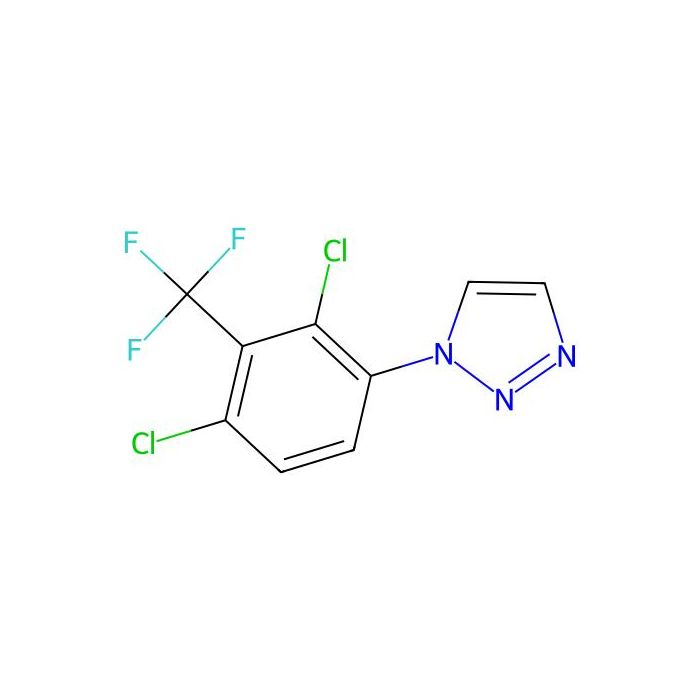
No structural representation is provided in the current Product Data. If you require a structure (SMILES, InChI, or 2D depiction), please request the latest CoA/Spec Sheet or structure disclosure where available under confidentiality.
Without a disclosed structure, functional group analysis, ring system description, stereochemistry, and other atom-connectivity commentary cannot be provided for this specific item.
Notes for researchers:
When receiving this item, confirm identity by your in‑house analytics where appropriate (LC–MS, accurate mass, 1H/13C NMR, and HPLC purity) using the certificate provided with the shipment.
If you maintain an internal database, index this item by CAS 2411969-39-4 and your local inventory code to avoid ambiguity across screening plates or procurement lots.
Synthetic Utility
Synthetic utility cannot be assessed without a disclosed structure. The Product Data do not provide functional groups, reactive handles, or protecting group considerations for ARUK3001185.
As provided, this item should be treated as a terminal screening compound rather than a building block.
If structural disclosure becomes available and you intend derivatization (SAR expansion, biotinylation, linker installation), evaluate:
Functional group tolerance and chemoselectivity
Potential sites for diversification vs. pharmacophore integrity
Stability under standard coupling, reduction/oxidation, and heteroatom-alkylation conditions
Until such information is available, do not assume compatibility with common transformations (e.g., Suzuki, amide coupling, nucleophilic substitutions), and avoid conditions that could cause decomposition during handling (strong acid/base, oxidants, high heat) without prior testing.
Target Specificity
Target, selectivity profile, and species reactivity are not provided for ARUK3001185 in the Product Data.
Antigen/epitope information: Not applicable; this product is a small molecule, not an antibody or protein reagent.
Any target annotations, if available, would be provided in the CoA/Spec Sheet or associated screening library documentation.
We use cookies to ensure the website functions properly and, where permitted, to improve your experience. You can manage your preferences at any time in Settings. Learn more in our Cookie Policy.
Shall we send you a message when we have discounts available?
Remind me later
Thank you! Please check your email inbox to confirm.
Products are supplied to verified businesses, institutions, and qualified professionals for research and development use only. Not for use in humans, animals, diagnosis, or therapy.