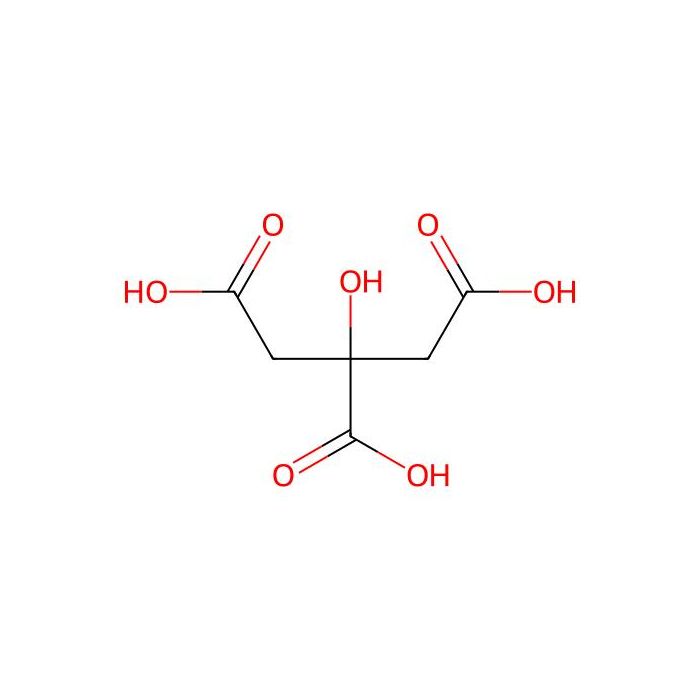
Citric acid - UltraBio™, anhydrous, ≥99.5%(T) , CAS No.77-92-9

CAS: 77-92-9 Cat. No.: C755557 Fórmula: C6H8O7 Peso molecular: 192.12 Beilstein Registry Number: 782061 Número CE: 201-069-1
Disponível para encomenda
GRADE & PURITY Anhydrous Grade ? Anhydrous grade — water removed and packaged dry for moisture-sensitive chemistry. Use in reactions where even trace water would interfere or quench. UltraBio™ ? UltraBio™ — Aladdin's line for molecular-biology applications. Use for nuclease-free, high-consistency reagents across molecular workflows. ≥99.5%(T)
Storage
Room temperature,Argon charged
Shipped In
Normal
★
Size
Alemanha (EU)
USA*
Price
Qty
100g
C755557-100g
Sob encomenda · 8–12 semanas
28,55€
500g
C755557-500g
Sob encomenda · 8–12 semanas
99,70€
Enter a quantity for the sizes you want to add.
🧪
Why this grade

UltraBio™, anhydrous, ≥99.5%(T) Anhydrous Grade,UltraBio™ for sensitive chromatographic and analytical workflows requiring minimal baseline interference.

🌡

Storage & shipping

Room temperature,Argon charged Ships Normal Check lot-specific COA for exact specifications.

📋

Quality documents

SDS, COA, datasheet, and spec sheet available for download. Lot-specific COA accessible via lot number lookup.

📚

Literature proof

Cited in 1976 peer-reviewed publications across chromatography, organic synthesis, and cross-coupling reactions.

Visão geral

Citric acid is a buffer component for triple-column amino acid analysis. It is an optimal buffer for dissociation of radioiodinated antibodies from viable murine tumor cells.
Application:

  • Enhancing soil microbiomes: Citric acid has been applied to modify soil bacterial communities in saline mudflats, demonstrating its utility in environmental biotechnology for sustainable ecosystem management (Liu et al., 2024).

  • Biodegradable packaging in food industry: In food chemistry, citric acid is used in conjunction with polyvinyl alcohol for developing antimicrobial packaging, highlighting its potential in food safety and preservation (Xu et al., 2024).

  • Nanomaterial synthesis for engineering applications: Citric acid serves as a key component in the eco-friendly synthesis of hybrid nanomaterials for supercapacitors, underpinning its role in advancing materials science and engineering (Teixeira et al., 2024).

  • Environmental science and pollution control: Research utilizes citric acid to study the co-transport of pharmaceuticals and nanoparticles in environmental systems, aiding in the understanding of contaminant dynamics and mitigation strategies (Cui et al., 2024).

  • Food science and technology: Citric acid is employed in the formulation of vegan gummies, indicating its versatility in food product development and its impact on textural properties (Rawat et al., 2024).

Specifications

Especificações e pureza
UltraBio™, anhydrous, ≥99.5%(T)
Condições de armazenamento de armazenamento
Room temperature,Argon charged
Enviado em
Normal
Grau
Anhydrous Grade, UltraBio™
Pureza
≥99.5%(T)
Nomes e identificadores
PH
1.0-2.0 (25 °C, 1 M in H 2 O)
Sorrisos canónicos
C(C(=O)O)C(CC(=O)O)(C(=O)O)O
IUPAC Name
2-hydroxypropane-1,2,3-tricarboxylic acid
InChIKey
KRKNYBCHXYNGOX-UHFFFAOYSA-N
INCHI
1S/C6H8O7/c7-3(8)1-6(13,5(11)12)2-4(9)10/h13H,1-2H2,(H,7,8)(H,9,10)(H,11,12)
SMILES isoméricas
C(C(=O)O)C(CC(=O)O)(C(=O)O)O
WGK Alemanha
1
RTECS
GE7350000
Peso molecular
192.12
Beilstein
782061
Reaxy-Rn
782061
Reaxys-RN_link_address
https://www.reaxys.com/reaxys/secured/hopinto.do?context=S&query=IDE.XRN=782061&ln=

Documentation

📋 Safety Data Sheet (SDS)

Comprehensive hazard, handling, storage, and regulatory compliance document.

Download SDS →

✅ Certificate of Analysis (COA)

Lot-specific quality data. Enter your lot number to retrieve the exact COA.

Look up COA →

📊 Datasheet

Quick-reference summary of product specifications and applications.

View datasheet →

🔬 Specification Sheet

Full quality attributes and acceptance criteria for this grade.

View spec sheet →

Advanced Data

Taxonomic Classification

Taxonomy Tree

KingdomOrganic compounds
SuperclassOrganic acids and derivatives
ClasseCarboxylic acids and derivatives
SubclassTricarboxylic acids and derivatives
Intermediate Tree Nodes Not available
Direct ParentTricarboxylic acids and derivatives
Alternative Parents Alpha hydroxy acids and derivatives  Tertiary alcohols  Carboxylic acids  Organic oxides  Hydrocarbon derivatives  Carbonyl compounds  
Molecular FrameworkAliphatic acyclic compounds
Substituents Tricarboxylic acid or derivatives - Hydroxy acid - Alpha-hydroxy acid - Tertiary alcohol - Carboxylic acid - Organic oxygen compound - Organic oxide - Hydrocarbon derivative - Organooxygen compound - Carbonyl group - Alcohol - Aliphatic acyclic compound
DescriçãoThis compound belongs to the class of organic compounds known as tricarboxylic acids and derivatives. These are carboxylic acids containing exactly three carboxyl groups.
External Descriptors tricarboxylic acid
Estrutura 3D
Modelo de Estrutura Química Interativa


Certificados(CoA,COO,BSE/TSE e Mapa de Análise)
C of A & Other Certificates(BSE/TSE, COO):
Analytical Chart:

Find and download the COA for your product by matching the lot number on the packaging.

3 results found

Lot NumberCertificate TypeDataItem
I2616913Certificate of AnalysisApr 08, 2026 C755557
I2616923Certificate of AnalysisApr 08, 2026 C755557
I2616924Certificate of AnalysisApr 08, 2026 C755557
Propriedades químicas e físicas
SolubilidadeH 2 O: 1 M at 20 °C, clear, colorless
SensibilidadeMoisture sensitive
Ponto de fusão (°C)153-159°C
Peso molecular192.120 g/mol
XLogP3-1.700
Hydrogen Bond Donor Count4
Hydrogen Bond Acceptor Count7
Rotatable Bond Count5
Exact Mass192.027 Da
Monoisotopic Mass192.027 Da
Topological Polar Surface Area132.000 Ų
Heavy Atom Count13
Formal Charge0
Complexity227.000
Isotope Atom Count0
Defined Atom Stereocenter Count0
Undefined Atom Stereocenter Count0
Defined Bond Stereocenter Count0
Undefined Bond Stereocenter Count0
The total count of all stereochemical bonds0
Covalently-Bonded Unit Count1
FAQs e artigos
UltraBio™: Defining Excellence in Molecular Biology Applications
The Guide to Anhydrous Grade for Reagents
Why Did My Ni-Agarose Beads Turn Black or Brown?
Stripping, Cleaning, and Metal Recharging Workflow for Ni²⁺–Agarose Resins
Pepsin——Structural Features, Enzymatic Properties, and Experimental Application Guide
A Practical Guide to Fragrance Compositions: Turning a Black-Box Formula into an Engineerable System—Compatibility, Stability, Controlled Release, Traceability, and Selection
How to Choose a Hydrogen Evolution (HER) Catalyst: Kinetic Barriers in Water Electrolysis, AWE/PEM/AEM Pathways, and a Materials-Family Roadmap (with a Product Map)
Physicochemical Properties, Staining Mechanisms, and Practical Application Specifications of Hematoxylin
Laccase: Technical Characteristics, Optimization Strategies, and Industrial Application Progress
Practical Guide to Sodium Carboxymethyl Cellulose (CMC-Na): Thickening/Stabilizing Mechanisms, Key Controls for Solution Preparation, and Selection Navigation (including Table 1 and Tables A–C)
How Organic Acids “Stabilize a System”: Selection Logic via the pH Window, Salt Forms, and Metal-Ion Management (with a navigation guide to Tables A–E)
Acid Phosphatase: Dephosphorylation Reactions in Acidic Microenvironments and Their Research, Assay, and Detection Applications
Hemicellulases: A Review of Substrate Specificity, Catalytic Systems, and Research and Industrial Applications
Bromelain: Enzymological Properties and Key Points for Food, Pharmaceutical, and Industrial Applications
Phytase: Enzymological Properties, Mechanism of Action, and Applications in Feed and Food
From Sucrose to Monosaccharides: Key Enzymatic Nodes and Regulatory Logic in Sugar Conversion
Functional Framework of Starch Metabolism-Related Enzymes in Food Science Research and Mechanistic Analysis of Quality Regulation
Acetyl-Group Metabolic Enzyme Network and In Vitro Enzymology Analysis
Technical Comparison and Method Selection for Hydroxyproline Determination
Bacterial Sodium Ion-Driven Energy Metabolism and Mechanisms of Transmembrane Coupled Transport
Tyramide Signal Amplification in In Situ Fluorescence Detection
Effects of Cell Sample Preservation Systems on Morphological Integrity, Anticoagulant Stability, and Analytical Results
Comparison of Low-pH, High-pH, and Enzymatic Antigen Retrieval Systems in IHC
Perovskite Oxides for Energy and Environmental Catalysis: How Oxygen Vacancies, B-Site Metals, and the Metal–Oxygen Bond Network Regulate Reaction Performance
Why Do Cancer Cells Synthesize Their Own Fatty Acids? From the De Novo Fatty Acid Synthesis Pathway to Experimental Assessment
From Natural Cellulose to Nanocrystals: Structural Characteristics, Application Directions, and Industrialization Challenges of CNC
Porous Graphitic Carbon (PGC) Chromatography Columns: Creating New Selectivity for Challenging Separations through Molecular Shape and the π-Electron Cloud on the Graphitic Surface
Why LABSA (Sulfonic Acid) Is Commonly Used in Household Cleaning Formulations: Neutralization Mechanism, Detergency Action, and Formulation Application Points
From Structure to Performance: Conditioning, Film-Forming, Thickening, and Chelating Applications of Functional Ingredients in Personal Care and Home Care
Differences, Mechanisms of Action, and Selection of Sodium Metasilicate and Sodium Tripolyphosphate in Detergent and Cleaning Formulations
The Role, Selection, and Validation of Chelating Agents in Daily Chemical Formulations
K12 (Sodium Lauryl Sulfate/SLS) Is More Than a Foaming Agent: Structure, Properties, and Applications in Personal Care and Household Care Formulations
From Structure to Rheology: How Carbomer Forms Gel Structures and Enables Thickening, Suspension, and Auxiliary Emulsion Stabilization
What Is the Difference Between Triethanolamine and Diethanolamine: Understanding Their Formulation Functions, Application Differences, and Selection Logic from a Molecular-Structure Perspective
Thickening, Suspension, Auxiliary Stabilization, and Agglomeration Mechanisms of Xanthan Gum in Personal Care Formulations: From Molecular Structure to Processing Applications
Why Can 6501 (Cocamide DEA) Stabilize Foam and Build Viscosity? Structural Mechanism, 1:1/1:1.5 Differences, and Application Selection
Differences, Functions, and Selection Guidelines for Sodium Hydroxide Flakes, Granules, Liquid Caustic Soda, and Caustic Soda in Household and Personal Care Product Manufacturing: The Functional and Application Logic of Sodium Hydroxide
AES (Fatty Alcohol Polyoxyethylene Ether Sulfate) in Personal and Home-Care Cleansing Formulations: An Analysis of Structure, Performance, and Low-Temperature Flowability
Xiao Fang Bai, Da Fang Bai, PnB and DPnB: Mechanisms and Selection of Butyl Glycol Ethers in Hard-Surface Cleaning Formulations
Why Limonene Can Soften Greasy Soils Yet Is Difficult to Dissolve in Water: Understanding the Cleaning Mechanism and Formulation Applications of Naturally Derived Solvents from Molecular Structure
Understanding CAPB from Its Structure: How Cocamidopropyl Betaine Improves Foam, Enhances Mildness, and Supports Thickening
How to Select Thickeners for Strongly Acidic Cleaning Systems: Comparison of Thickening Mechanisms and Application Considerations for Fatty Amine Ethoxylates
How Can Sodium Tripolyphosphate (STPP) Be Replaced? From Detergency Mechanisms to Formulation Choices for Low-Phosphorus/Phosphorus-Free Builder Systems
Interfacial Mechanism and Formulation Applications of AEO-9 (Fatty Alcohol Polyoxyethylene Ether): An Analysis of Emulsification, Wetting, Oil Soil Removal, and Co-Formulation Compatibility
More Than a pH Adjuster: Mechanisms, Selection Logic, and Alternative Acid Source Analysis of Citric Acid in Home-Care Cleaning
Sodium Metasilicate in Cleaning Applications: Hydration-Form Differences, Mechanisms of Action, and Selection Logic
Analysis of the Foaming Performance Differences Between K12 and AOS: Structure, Acid–Base Stability, and Formulation Selection
Structural Characteristics, Low-Temperature Flowability, and Home-Care Cleaning Applications of Palm-Derived Isomeric Alcohol Polyoxyethylene Ether PLE-S9
Performance Sources and Formulation Applications of Enzyme-Based Ingredients in Daily Chemical Products: Fermentation Transformation, Enzymatic Reactions, and Application Principles
Mechanisms and Troubleshooting of Foam Reduction in Personal and Household Care Formulations: Film Rupture, Weak Interfacial Films, Insufficient Surfactant Supply, and Phase-State Disturbance
Analysis of the Production Process of Hydroxypropyl Methylcellulose (HPMC) for Putty: Understanding Differences in Substitution Structure and Gelation Temperature from High-Ratio and Low-Ratio Formulations
Why Are Daily Chemical Products Prone to Viscosity Thinning in Summer? Core Mechanisms, Troubleshooting Methods, and Solutions
Types, Mechanisms of Action, Key Quality Indicators, and Selection and Application of Common Cellulose Ethers in Wall Putty
Causes and Mechanism Analysis of Delamination During Sanding of Water-Resistant Putty
Why Do Rust Spots Appear on Neutral Wall Putty? Iron Sources, Moisture Migration, Oxidative Color Development, and Prevention Measures
Experimental Evaluation of the Synergistic Actions of Endoglucanase, CBH I, and β-Glucosidase in Lignocellulosic Saccharification
TCA Cycle Metabolite Detection Methods and Result Interpretation
Preparation Strategy and In Vitro Biological Performance Evaluation of Tannic Acid–Brushite In Situ Composite Bone Cement
Histological Staining Methods for Identifying Hepatitis B Virus: Comparison of HE, Orcein, Aldehyde Fuchsin, Victoria Blue, Immunohistochemistry, and In Situ Hybridization
Mechanism of Kojic Acid in Reducing Hyperpigmentation: From Tyrosinase Inhibition to Melanin Production Regulation
Antioxidant Mechanisms, Stability, and Delivery Strategies of Resveratrol in Skincare Research
Antioxidant Mechanisms of Ferulic Acid in Skincare, Vitamin C/E Synergy, and Stable Delivery Applications
Potential Mechanisms of Succinic Acid in Acne Care: From Dicarboxylic Acid–Base Equilibria to Metabolic Antagonism Among Skin Microorganisms
Structure, Stratum Corneum Distribution, and Stratum Corneum Conditioning Mechanism of Capryloyl Salicylic Acid: Barrier Effects and Safety Evaluation
Potential Mechanisms of Tea Polyphenols in Oily, Acne-Prone Skin: Effects of EGCG on Sebum Production, Lipid Peroxidation, and Inflammatory Responses
Moisturizing Mechanisms of Tremella fuciformis Polysaccharides: From Polysaccharide Structure and Hydration Rheology to Dynamic Film Formation on the Skin Surface
How Arbutin Regulates Melanin Production: α/β Anomeric Configuration and Tyrosinase Action
Mechanistic Basis of Acetyl Hexapeptide-8 in the Management of Expression Lines: SNARE Complex Interference, Constraints on Percutaneous Delivery, and Combination Strategies
Niacinamide Brightening Mechanisms and Formulation Design: Melanosome Transfer, pH Regulation, and Combination Strategies
MTAD-Mediated Oxidative Dearomatization of Pyridines: Transient para-Cycloaddition, Alkene Oxidation, and Heteroatom Functionalization
Citations of This Product
Calculadoras de soluções
Revisões

Avaliações dos Clientes

Shall we send you a message when we have discounts available?

Remind me later

Thank you! Please check your email inbox to confirm.

Oops! Notifications are disabled.