Antiprotazoal agent. Inhibits electron transport in mitochondria. Active in vivo . Orally active.
Condições de armazenamento de armazenamento
Room temperature
Enviado em
Normal
Nota
Wherever possible, you should prepare and use solutions on the same day. However, if you need to make up stock solutions in advance, we recommend that you store the solution as aliquots in tightly sealed vials at -20°C. Generally, these will be useable for up to one month. Before use, and prior to opening the vial we recommend that you allow your product to equilibrate to room temperature for at least 1 hour. Need more advice on solubility, usage and handling? Please visit our frequently asked questions (FAQ) page for more details.
This compound belongs to the class of organic compounds known as polyhalopyridines. These are organic compounds containing a pyridine ring substituted at two or more positions by a halogen atom.
External Descriptors
Not available
1. Djoumbou Feunang Y, Eisner R, Knox C, Chepelev L, Hastings J, Owen G, Fahy E, Steinbeck C, Subramanian S, Bolton E, Greiner R, and Wishart DS. ClassyFire: Automated Chemical Classification With A Comprehensive, Computable Taxonomy. Journal of Cheminformatics, 2016, 8:61.
Determine the necessary mass, volume, or concentration for preparing a solution.
Dilution Calculator
Determine the dilution needed to prepare a stock solution.
Reconstitution Calculator
Revisões
Avaliações dos Clientes
Application Protocols
No vendor-validated protocols are supplied for this SKU.
General guidance for analytical use:
Prepare a concentrated stock solution in DMSO, methanol, or acetonitrile (e.g., 1–10 mg/mL depending on solubility). Filter through a 0.22 µm PTFE membrane if needed.
For LC–MS: Dilute into initial mobile phase composition to reduce solvent mismatch. Use amber vials if light sensitivity is suspected.
For stability studies: Aliquot stocks to minimize freeze–thaw and headspace; monitor by LC–UV/LC–MS for degradation products over time.
General guidance for synthetic transformations:
Dry solvents and degas as appropriate. Employ inert atmosphere for metal-catalyzed couplings. Run small-scale screens to select base/ligand/catalyst.
Confirm product identity and substitution pattern by NMR (including HMBC/HSQC as needed) and HRMS.
These are general, literature-informed suggestions. For application-specific SOPs, consult peer-reviewed protocols or develop internal methods.
Biological Roles
This product is supplied strictly for research use only. No medical, clinical, or veterinary use is implied or permitted.
General literature context (non-therapeutic, informational):
Clopidol has been studied historically within the domain of veterinary parasitology as a benchmark heteroaromatic compound. Researchers have examined its physicochemical behavior, stability, extraction from complex matrices, and detection via chromatographic techniques.
At the molecular level, the halogenated pyridone/pyridinol scaffold is of interest for structure–property studies, including lipophilicity, tautomerism, and interaction with biomolecular targets in vitro. Any specific mechanistic or target-binding claims must be verified from primary literature and are beyond the scope of this catalog entry.
Practical implications for lab biology workflows:
The compound’s limited aqueous solubility typically necessitates stock solutions in DMSO, methanol, or acetonitrile before dilution into assay buffers. Solubility limits, adsorption to plastics, and potential photostability should be assessed empirically for each assay format.
When used as a control substance in analytical or metabolism studies, ensure traceability of identity and purity from the CoA and apply appropriate internal standards for quantitation.
Note: No specific biological role, target, or mode-of-action is assigned to this SKU in our Product Data. Refer to peer-reviewed sources for mechanistic investigations, if relevant to your research.
Buffer Applications
Clopidol is not a buffer component and does not define a buffering system.
Typical usage with buffers (general lab practice):
Prepare concentrated stocks in DMSO, methanol, or acetonitrile, then dilute into assay buffers (e.g., phosphate, HEPES) to the desired working concentration, keeping the organic co-solvent fraction as low as assay tolerance allows (often ≤0.5–1% v/v).
If precipitation occurs upon dilution, increase the co-solvent fraction slightly, warm gently, or employ surfactants where compatible with the assay.
No item-specific buffer recipes or pKa values are provided for this SKU; consult literature or perform empirical solubility testing for your specific buffer conditions.
Green Alternatives
Clopidol is a target molecule rather than a process solvent; thus, green chemistry considerations primarily concern the choice of solvents and reagents used with it rather than substituting the compound itself.
Greener solvent choices (general guidance):
Replace chlorinated solvents (e.g., DCM, CHCl3) with ethyl acetate, methyl tert‑butyl ether (MTBE), 2‑methyltetrahydrofuran (2‑MeTHF), or cyclopentyl methyl ether (CPME) when solubility and performance permit.
For polar media, prefer acetonitrile, ethanol, isopropanol, or water/co‑solvent systems over DMF/NMP/DMAc, which have higher toxicological concerns. Propylene carbonate can be a useful high‑boiling polar aprotic alternative in some reactions.
Cross-coupling sustainability:
Use palladium at low loadings with efficient ligands or explore nickel catalysis for aryl chloride activation under milder, more sustainable conditions. Micellar catalysis (aqueous surfactant systems) can reduce organic solvent usage.
Workup and waste:
Minimize halogenated waste streams; adopt nonchlorinated extraction systems and employ solid-phase extraction where feasible.
Apply solvent recovery and distillation for large-scale method development.
Tradeoffs: Greener solvents may alter solubility, rates, and selectivity. Conduct small-scale screens to balance environmental impact with performance. No item-specific green certifications are provided for this SKU.
Pharmaceutical Uses
For research use only. No therapeutic, prophylactic, or veterinary claims are made for this SKU.
Relevant to pharmaceutical and analytical labs (general):
Can serve as a system suitability or reference analyte during development/validation of chromatographic methods (e.g., LC–UV/LC–MS) for heteroaromatic compounds in complex matrices.
Useful in forced-degradation and stability-indicating method development exercises due to the presence of halogens and a tautomerizable heteroaromatic core, which provide diverse degradation pathways to challenge specificity.
May be used in permeability/solubility screening panels to benchmark assay performance for poorly water-soluble, halogenated heteroaromatics.
Regulatory context:
This listing does not imply compendial status (e.g., USP/EP) or certified reference material designation. If a pharmacopeial or certified standard is required, please request documentation or select an appropriate CRM product.
No excipient roles or formulation uses are specified for this item in the Product Data.
Physical Properties
Only limited item-specific physical data were provided.
Item-specific (from Product Data):
Appearance: Not specified for this item; refer to CoA/Spec Sheet.
Molecular weight: Not specified for this item; refer to CoA/Spec Sheet.
Storage conditions: Room temperature (per Product Data)
Shipping: Normal (per Product Data)
Literature/qualitative properties (background; not item specifications):
Physical state: Typically a crystalline, nonhygroscopic solid for many halogenated pyridone derivatives; actual form may vary by batch.
Solubility profile: Generally low aqueous solubility expected for dihalogenated heteroaromatics with limited hydrogen-bond donors. Often soluble in polar aprotic organic solvents (e.g., DMSO, DMF, acetonitrile) and moderately to well soluble in chlorinated solvents (e.g., dichloromethane, chloroform). Methanol and ethanol frequently dissolve such compounds at analytical concentrations.
Acid–base behavior: The 4-pyridone/4-pyridinol tautomeric system confers weak acidity/basicity; protonation typically occurs on ring nitrogen in strong acid, and deprotonation of the enol form may be possible in strong base. Exact pKa values should be taken from dedicated references.
Volatility: Negligible at ambient conditions; thermally stable under standard laboratory environments. Avoid prolonged exposure to elevated temperatures to prevent degradation.
Note: Definitive numerical properties (bp, mp, density, pKa, logP, nD) are not specified for this item; consult the CoA/Spec Sheet or primary literature for exact values and methods.
Quality and Grades
Item-specific (from Product Data):
Grade/Purity: Not specified for this item; refer to CoA/Spec Sheet.
Interpreting grades (general guidance):
Research grade: Suitable for discovery chemistry, method development, and non-GLP studies. Typical documentation includes CoA with identity confirmation (e.g., NMR/HRMS/LC–MS, HPLC assay) and impurity profile where applicable.
Analytical reference standard grade: When specified, implies tighter control of purity, identity, and stability (often with certified assay and traceability), suitable for calibration/quantitation work. Not specified here—verify with the CoA if you require a reference standard.
Stabilizers: Not indicated for this item. If stabilizers are present for any lot to enhance shelf-life, they will be disclosed on the CoA/SDS; consider potential impact on downstream analytics.
What to expect from Aladdin Scientific (typical documentation):
Identity confirmation (techniques vary by item), assay/purity determination, residual solvent profile as applicable, and storage guidance.
If you require a particular grade (e.g., ≥98% assay, LC–MS qualified, certified reference material), contact us prior to purchase; specifications not explicitly listed for this SKU should be confirmed against the current CoA/Spec Sheet.
Reaction and Applications
Given its halogenated pyridone/pyridinol framework, Clopidol can serve as both a study compound and a functionalized heteroaromatic substrate in synthesis and analysis.
Analytical and methods development (general research use):
Employed as a reference analyte in method development and validation workflows (e.g., HPLC/LC–MS) for heteroaromatic residues in complex matrices. Extraction optimization, solid-phase cleanup, and ionization behavior can be benchmarked using this scaffold.
Synthetic reaction families enabled by its structure (literature/general):
Nucleophilic aromatic substitution (SNAr) at chloro-substituted positions, especially under strongly basic conditions and elevated temperatures in polar aprotic solvents.
Cross-coupling on aryl chlorides (Suzuki–Miyaura, Buchwald–Hartwig, Stille, Negishi) using modern catalysts/ligands tailored for aryl chlorides; ring electronics and the adjacent carbonyl/nitrogen can modulate reactivity.
Tautomer-responsive chemistry at the 4-position (keto–enol behavior), enabling selective O- vs. N-functionalization in certain conditions.
Practical considerations:
Control moisture and oxygen for sensitive metal-catalyzed couplings; degas solvents and use dry glassware. Base selection (e.g., Cs2CO3, K3PO4, NaOtBu) and ligand choice (e.g., dialkylbiaryl phosphines) often determine coupling success on chloro-heteroarenes.
Monitor for competitive dehalogenation or over-substitution; stepwise protection/functionalization strategies may be required.
Manufacturer Applications: Not provided for this SKU; the above reflects general research and synthetic applications described in literature for halogenated pyridone-type heteroarenes.
Reaction Conditions
Generalized conditions below are compiled from literature precedent for chloro‑substituted heteroaromatic 4‑pyridones/pyridinols and are intended as starting points for method scouting. They are not item-specific specifications.
Bases: NaH, K2CO3, Cs2CO3, t‑BuOK depending on nucleophile strength.
Temperature/time: Often 60–140 °C, 2–24 h; monitor by LC–MS/HPLC.
Notes: Electron-withdrawing influence of the 4‑pyridone can facilitate SNAr; regioselectivity to be verified by NMR/LC–MS.
Suzuki–Miyaura coupling (aryl chloride):
Catalyst systems: Pd2(dba)3 or Pd(OAc)2 with dialkylbiaryl phosphines (e.g., BrettPhos/BippyPhos family) for challenging aryl chlorides.
Boron partners: Aryl/heteroaryl boronic acids or esters.
Base/solvent: K3PO4 or Cs2CO3 in dioxane/H2O or toluene/H2O; 60–110 °C.
Consider ligand and additive screens to optimize turnover and suppress dehalogenation.
Buchwald–Hartwig amination:
Catalyst/ligand: Pd2(dba)3 or Pd(OAc)2 with biaryl phosphines; strong base (NaOtBu, KOtBu) in toluene, dioxane, or tAmylOH; 80–120 °C.
Protective strategies may be needed to control O/N-alkylation vs. C–N coupling.
O‑Acylation/O‑Alkylation (pyridinol tautomer):
Base: K2CO3, Cs2CO3 in acetone, DMF, or acetonitrile; alkyl halides or acid chlorides as electrophiles; 0–60 °C.
These conditions are guidance only; optimize stoichiometry, temperature, and catalysts for your substrate and scale.
Safety and Handling
Safety information in the Product Data is minimal; defer to the SDS for authoritative hazard classification and response measures.
Item-specific (from Product Data):
Storage conditions: Room temperature
Shipping: Normal
GHS classification, signal word, pictograms, H-statements: Not specified for this item; refer to SDS.
General laboratory precautions (good practice for halogenated heteroaromatic solids):
Engineering controls: Work in a chemical fume hood to minimize dust/aerosol exposure. Use local exhaust for weighing and transfers.
Personal protective equipment: Lab coat, safety glasses or goggles, and appropriate chemically resistant gloves (e.g., nitrile). Consider double-gloving for extended handling or solutions.
Avoid inhalation of dust and contact with skin/eyes. Prevent environmental release; collect waste in halogenated-organics streams.
Incompatibilities (general): Strong oxidizers and strong bases/acids may promote undesired reactions (e.g., halogen displacement, hydrolysis, or decomposition). Avoid reactive metals in the presence of strong base.
Thermal stability: Stable at ambient conditions; avoid excessive heat and direct sunlight during storage and handling.
First-aid overview (consult SDS for details):
Inhalation: Move to fresh air; seek medical attention if symptoms occur.
Skin/eye contact: Rinse cautiously with water for several minutes; remove contaminated clothing; obtain medical advice if irritation persists.
Ingestion: Rinse mouth; do not induce vomiting; seek medical attention.
For research use only. Not for human or veterinary therapeutic use.
Solvent Selection
Clopidol is a neutral (overall) halogenated N-heteroaromatic featuring a 4-pyridone/4-pyridinol tautomeric unit. Solvent choice depends on intended use (analytical vs. synthetic) and desired concentration.
Polar aprotic solvents: DMSO, DMF, and acetonitrile typically dissolve such heteroaromatics well, enabling high-concentration stock solutions for analytical assays or screening.
Protic solvents: Methanol and ethanol often provide workable solubility for HPLC/LC–MS sample prep at low to moderate concentrations; water miscibility via co-solvent strategies (e.g., MeOH/H2O) is common.
Nonpolar solvents: Limited solubility expected in alkanes; chlorinated solvents (DCM, CHCl3) may offer better dissolution due to halogen affinity and moderate polarity.
Selection by application:
Analytical stocks (qNMR, LC–MS): DMSO‑d6 or CD3OD for NMR; MeOH, ACN, or ACN/H2O for LC workflows. Filter or centrifuge to remove particulates.
Synthetic transformations: Polar aprotics (DMSO, DMF, NMP) facilitate SNAr on aryl chlorides under basic conditions. For cross-coupling, dioxane, toluene, or mixed solvent systems may be beneficial with suitable catalysts.
Practical tips:
Warm gently (≤40 °C) and sonicate to accelerate dissolution; avoid prolonged heating.
For aqueous systems, use cosolvent or cyclodextrin encapsulation strategies if required.
Note: No item-specific solubility values are provided; verify experimentally for your system.
Storage and Reconstitution
Item-specific (from Product Data):
Storage conditions: Room temperature
Shipped in: Normal
General storage guidance for a halogenated heteroaromatic solid:
Store in a tightly closed container under dry, ambient conditions. Protect from excessive heat, humidity, and direct light. Use desiccant if your environment is humid.
If preparing solutions, use anhydrous solvents where feasible. For long-term solution storage, aliquot into amber vials, flush headspace with inert gas if practical, and keep refrigerated or frozen according to your stability studies.
Reconstitution (general suggestions; not item-specific specifications):
Dissolve the solid in a suitable organic solvent such as DMSO, methanol, acetonitrile, or dichloromethane to the desired concentration. Gentle warming (≤40 °C) and sonication can aid dissolution.
Filter solutions if particulate matter is present. Verify concentration by UV or gravimetry as appropriate for your workflow.
Note: Exact stability, solution shelf-life, and solubility limits are not specified for this item; refer to the lot-specific CoA/Spec Sheet and perform small-scale tests to establish conditions for your application. For research use only.
Structure and Identity
Concise profile for a heteroaromatic research chemical; item-specific identifiers are limited in the supplied Product Data. Literature context is provided separately and clearly labeled.
Item-specific (from Product Data):
Product name: Clopidol
CAS: 2971-90-6
CID (PubChem): 18087
InChIKey: 454088 (as provided; note that this format appears atypical for an InChIKey—verify against the CoA/SDS)
SMILES: Not specified for this item; refer to CoA/Spec Sheet.
Molecular formula: Not specified for this item; refer to CoA/Spec Sheet.
Molecular weight: Not specified for this item; refer to CoA/Spec Sheet.
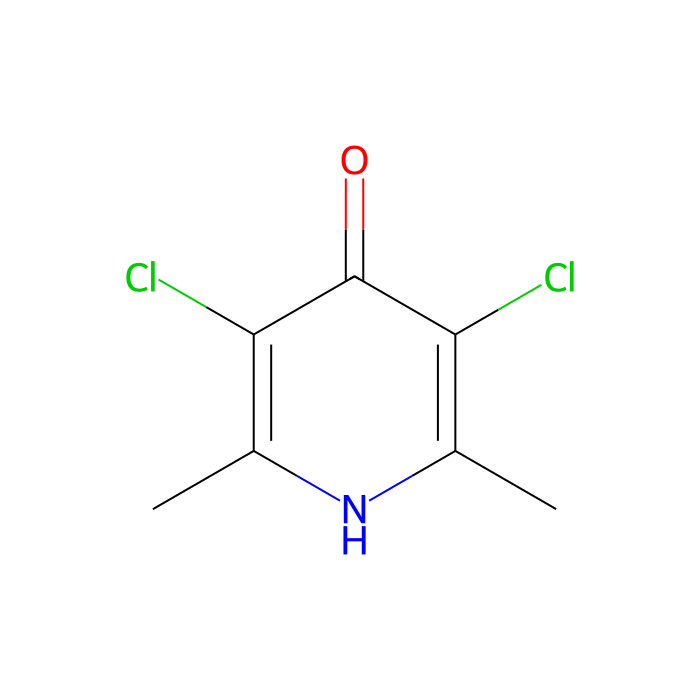
Widely described in the literature as a dihalogenated, 2,6-dimethyl-substituted 4-pyridone/4-pyridinol scaffold (a halogenated N-heteroaromatic). Exact stereochemistry is not applicable (achiral).
Key functional features: an aromatic nitrogen (pyridyl), a carbonyl/oxo-enolizable 4-position (pyridone/pyridinol tautomerism), and two ring chlorides amenable to nucleophilic aromatic substitution (SNAr) or cross-coupling under suitably activating conditions.
A six-membered aromatic ring containing one ring nitrogen (position 1), with a keto/enol functionality at the para position relative to N, methyl groups at the 2 and 6 positions, and chloro substituents at the 3 and 5 positions.
Synthetic Utility
Clopidol’s functional handles enable a range of derivatizations valuable for medicinal chemistry and heteroarene diversification.
Reactive sites (literature/general):
Aryl chlorides (di-): Potential for SNAr with hard nucleophiles (alkoxides, amines under forcing conditions) and for transition-metal-catalyzed cross-coupling with appropriate activation (ligand-engineering for aryl chlorides).
4-Pyridone/pyridinol tautomerism: Enables O‑acylation/alkylation of the enol form or N‑functionalization of the lactam form under controlled conditions.
Ring nitrogen: Protonation and subsequent functionalization (e.g., N-oxide formation) can alter electronics, facilitating downstream substitutions.
Strategic value:
Late-stage diversification of the heteroaromatic core via selective mono‑ vs. di‑substitution allows SAR exploration around a conserved 4-pyridone scaffold.
Orthogonal reactivity: Differentiate O- vs. C‑functionalization routes by tuning base/solvent/temperature and catalyst systems.
Suzuki–Miyaura arylation at chloro positions using Pd catalysts with dialkylbiaryl phosphine ligands (e.g., tBuBrettPhos-type); bases like K3PO4 or Cs2CO3 in dioxane/H2O.
Buchwald–Hartwig amination to introduce anilines or alkyl amines onto the heteroaryl chloride positions under elevated temperatures.
O‑alkylation/acylation to access ether/ester analogs from the pyridinol tautomer in polar aprotic media.
Note: Exact reactivity depends on substitution pattern and conditions; confirm structure and substitution sites experimentally.
Target Specificity
Not applicable for this product. Clopidol is a small-molecule chemical, not a biological affinity reagent. No antigen, epitope, clone, isotype, or species reactivity applies.
Item-specific Product Data do not include any biochemical target or binding specificity.
If your research involves biochemical assays, determine target engagement empirically and consult primary literature for mechanistic insights.
Perguntas frequentes
How is this product shipped?
This product ships under standard ambient conditions. No temperature-controlled packaging is required.
How should this product be stored?
Store at room temperature.
What is the purity of this product?
This product is supplied at ≥98% purity (chemical assay). Lot-specific values are stated on the Certificate of Analysis.
What are the CAS number, molecular formula and molecular weight?
The CAS Number is 2971-90-6, the molecular formula is C7H7Cl2NO, and the molecular weight is 192.04 g/mol. InChIKey ZDPIZLCVJAAHHR-UHFFFAOYSA-N.
What documentation is provided?
Available product documentation, including Certificates of Analysis (COA), Safety Data Sheets (SDS), and specification sheets, is shown in the product document area. Document availability and access follow the current site policy.
Usamos cookies para garantir o funcionamento adequado do site e, quando permitido, para melhorar a sua experiência. Você pode gerenciar suas preferências a qualquer momento nas Configurações. Saiba mais em nossa Política de Cookies.
Deseja que lhe enviemos uma mensagem quando tivermos descontos disponíveis?
Lembrar-me mais tarde
Obrigado! Por favor, verifique a sua caixa de entrada de e-mail para confirmar.
Products are supplied to verified businesses, institutions, and qualified professionals for research and development use only. Not for use in humans, animals, diagnosis, or therapy.

 J1514080