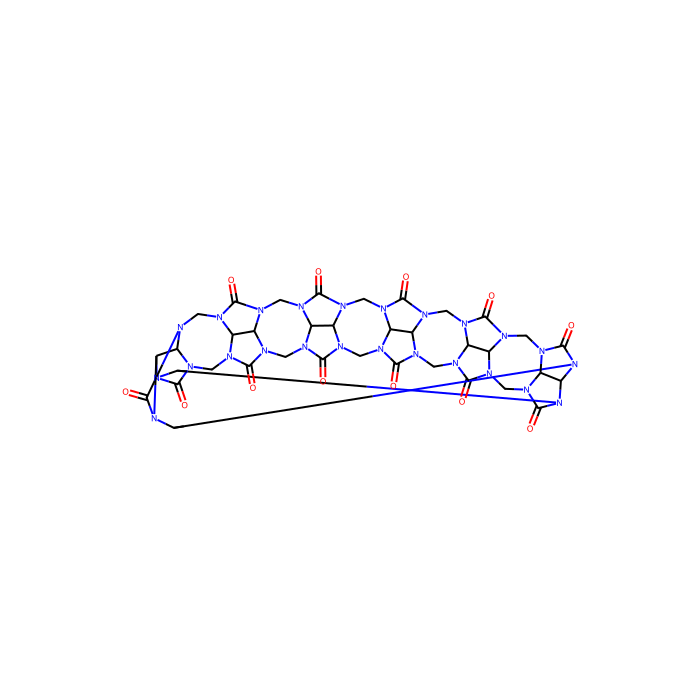
Cucurbit[6]uril hydrate - ≥99% , CAS No.80262-44-8

CAS: 80262-44-8 Cat. No.: C395767 Fórmula: C36H36N24O12 · xH2O Peso molecular: 996.82 (anhydrous basis) Beilstein Registry Number: 4933186 Número CE: 805-571-7
Disponível para encomenda
GRADE & PURITY ≥99%
Synonyms
SCHEMBL16272338 | DTXSID101317823 | SCHEMBL13527759 | CHEBI:51432 | Cucurbit[6]uril (CB[6]) hydrate, 99% | Cucurbit[n]uril b | 3,5,8,10,13,15,18,20,23,25,28,30,31,33,35,37,41,43,45,47,49,51,53,55-tetracosazanonadecacyclo[25.3.3.36,7.311,12.316,17.321,22.2
Storage
Store at 2-8°C,Protected from light
Shipped In
Wet ice
★
Size
Alemanha (EU)
USA*
Price
Qty
250mg
C395767-250mg
—
4 Em stock
77,14€
1g
C395767-1g
—
1 Em stock
220,32€
Enter a quantity for the sizes you want to add.
🧪
Why this grade

≥99% for sensitive chromatographic and analytical workflows requiring minimal baseline interference.

🌡

Storage & shipping

Store at 2-8°C,Protected from light Ships Wet ice Check lot-specific COA for exact specifications.

📋

Quality documents

SDS, COA, datasheet, and spec sheet available for download. Lot-specific COA accessible via lot number lookup.

📚

Literature proof

Cited in 7 peer-reviewed publications across chromatography, organic synthesis, and cross-coupling reactions.

Visão geral

Cucurbit[6]uril hydrate is a compound that forms cavitands for host-guest complexation. Cavitands formed with Cucurbit[6]uril have been described to host small molecules, transition metals and lanthanides, and intercalating Pt(II) complexes. Cucurbit[6]uril is also described to increase the cytotoxicity of some Pt(II)-based intercalators, and as Cucurbit[n]uril (n = 6, 7, 8) compounds were further shown to prevent metal complex degradation by glutathione, they have been indicated as potential drug delivery cavitands of interest. Cucurbit[6]uril has also been described to form highly symmetric columnar channels as hydrate crystals.
A host molecule forming host-guest complexes

Specifications

Sinónimos
SCHEMBL16272338 | DTXSID101317823 | SCHEMBL13527759 | CHEBI:51432 | Cucurbit[6]uril (CB[6]) hydrate, 99% | Cucurbit[n]uril b | 3,5,8,10,13,15,18,20,23,25,28,30,31,33,35,37,41,43,45,47,49,51,53,55-tetracosazanonadecacyclo[25.3.3.36,7.311,12.316,17.321,22.2
Especificações e pureza
≥99%
Condições de armazenamento de armazenamento
Store at 2-8°C,Protected from light
Enviado em
Wet ice
Este produto requer transporte de cadeia fria. Serviços terrestres e outros serviços econômicos não estão disponíveis.
Pureza
≥99%
Nomes e identificadores
Pubchem Sid
Pubchem Sid Url
https://pubchem.ncbi.nlm.nih.gov/substance/504757779
Sorrisos canónicos
C1N2C3C4N(C2=O)CN5C6C7N(C5=O)CN8C9C2N(C8=O)CN5C8C%10N(C5=O)CN5C%11C%12N(C5=O)CN5C%13C(N1C5=O)N1CN3C(=O)N4CN6C(=O)N7CN9C(=O)N2CN8C(=O)N%10CN%11C(=O)N%12CN%13C1=O
IUPAC Name
3,5,8,10,13,15,18,20,23,25,28,30,31,33,35,37,41,43,45,47,49,51,53,55-tetracosazanonadecacyclo[25.3.3.36,7.311,12.316,17.321,22.22,31.226,33.13,30.15,8.110,13.115,18.120,23.125,28.135,41.137,55.143,45.147,49.151,53]hexacontane-34,36,38,39,40,42,44,46,48,50,52,54-dodecone
InChIKey
MSBXTPRURXJCPF-UHFFFAOYSA-N
INCHI
1S/C36H36N24O12/c61-25-37-1-38-14-16-42(26(38)62)4-46-18-20-50(30(46)66)8-54-22-24-58(34(54)70)11-57-23-21-53(33(57)69)7-49-19-17-45(29(49)65)3-41(25)15-13(37)39-2-40(14)28(64)44(16)6-48(18)32(68)52(20)10-56(22)36(72)60(24)12-59(23)35(71)55(21)9-51(19)31(67)47(17)5-43(15)27(39)63/h13-24H,1-12H2
SMILES isoméricas
C1N2C3C4N(C2=O)CN5C6C7N(C5=O)CN8C9C2N(C8=O)CN5C8C%10N(C5=O)CN5C%11C%12N(C5=O)CN5C%13C(N1C5=O)N1CN3C(=O)N4CN6C(=O)N7CN9C(=O)N2CN8C(=O)N%10CN%11C(=O)N%12CN%13C1=O
WGK Alemanha
3
Peso molecular
996.82 (anhydrous basis)
Beilstein
4933186
Reaxy-Rn
4173784
Reaxys-RN_link_address
https://www.reaxys.com/reaxys/secured/hopinto.do?context=S&query=IDE.XRN=4173784&ln=

Documentation

📋 Safety Data Sheet (SDS)

Comprehensive hazard, handling, storage, and regulatory compliance document.

Download SDS →

✅ Certificate of Analysis (COA)

Lot-specific quality data. Enter your lot number to retrieve the exact COA.

Look up COA →

📊 Datasheet

Quick-reference summary of product specifications and applications.

View datasheet →

🔬 Specification Sheet

Full quality attributes and acceptance criteria for this grade.

View spec sheet →

Advanced Data

Taxonomic Classification

Taxonomy Tree

KingdomOrganic compounds
SuperclassOrganic acids and derivatives
ClassePeptidomimetics
SubclassOligoureas
Intermediate Tree Nodes Not available
Direct ParentOligoureas
Alternative Parents Imidazolidinones  Ureas  Azacyclic compounds  Organopnictogen compounds  Organonitrogen compounds  Organic oxides  Hydrocarbon derivatives  Carbonyl compounds  
Molecular FrameworkAliphatic heteropolycyclic compounds
Substituents Oligourea - Imidazolidinone - Imidazolidine - Carbonic acid derivative - Urea - Azacycle - Organoheterocyclic compound - Carbonyl group - Organooxygen compound - Organonitrogen compound - Organopnictogen compound - Organic oxygen compound - Organic nitrogen compound - Hydrocarbon derivative - Organic oxide - Aliphatic heteropolycyclic compound
DescriçãoThis compound belongs to the class of organic compounds known as oligoureas. These are compounds containing several urea groups linked to each other. Urea is an organic compound with the formula CO(NH2)2.
External Descriptors Not available
Estrutura 3D
Modelo de Estrutura Química Interativa


Certificados(CoA,COO,BSE/TSE e Mapa de Análise)
C of A & Other Certificates(BSE/TSE, COO):
Analytical Chart:

Find and download the COA for your product by matching the lot number on the packaging.

4 results found

Lot NumberCertificate TypeDataItem
G2325308Certificate of AnalysisOct 13, 2026 C395767
G2325312Certificate of AnalysisAug 04, 2026 C395767
G2325305Certificate of AnalysisJul 31, 2023 C395767
G2325311Certificate of AnalysisJul 31, 2023 C395767
Propriedades químicas e físicas
SensibilidadeHygroscopic;Light sensitive
Peso molecular996.800 g/mol
XLogP3-6.800
Hydrogen Bond Donor Count0
Hydrogen Bond Acceptor Count12
Rotatable Bond Count0
Exact Mass996.294 Da
Monoisotopic Mass996.294 Da
Topological Polar Surface Area283.000 Ų
Heavy Atom Count72
Formal Charge0
Complexity2140.000
Isotope Atom Count0
Defined Atom Stereocenter Count0
Undefined Atom Stereocenter Count0
Defined Bond Stereocenter Count0
Undefined Bond Stereocenter Count0
The total count of all stereochemical bonds0
Covalently-Bonded Unit Count1
Citations of This Product
Calculadoras de soluções
Revisões

Avaliações dos Clientes

Application Protocols
  • No vendor-tested bioassay protocols are provided for this item.
  • General, literature-based starting points (for research use only)
    • Binding constant determination by 1H NMR
      • Prepare CB[6] stock in D2O with a small amount of DCl or formic acid-d2 to aid solubility.
      • Titrate guest (e.g., alkylammonium salt) into a fixed CB[6] concentration, recording upfield shifts of guest protons; analyze with appropriate binding models.
    • Indicator displacement assay (IDA)
      • Form a CB[6]•dye complex in acetate buffer (pH 4.5–5.5). Titrate analyte guest and monitor fluorescence/absorbance recovery to derive Ka.
    • ITC binding thermodynamics
      • Use acetate/citrate buffer at low pH to keep guests protonated. Degas solutions, inject guest into CB[6] cell, fit isotherm to obtain ΔH, ΔS, Ka.
  • Adjust concentrations, pH, and ionic strength based on guest class and instrument sensitivity. Validate and optimize locally.
Biological Roles
  • Applicability: CB[6] itself is a synthetic macrocycle with no inherent metabolic role. Content below describes research-use observations; not clinical/therapeutic claims.
  • Literature/general insights
    • Molecular encapsulation in aqueous media can modulate guest bioavailability in vitro by shielding hydrophobic groups or cationic centers, enabling studies of transport and signaling models.
    • Protein/peptide interactions: portal carbonyls bind to protonated lysine/arginine sidechains; CB[6] can form inclusion complexes with N-termini or sidechains, used to probe protein surface recognition and to assemble supramolecular conjugates.
    • Enzyme mimics: CB-hosted reaction environments can accelerate certain transformations (e.g., photodimerizations) by preorganizing substrates, serving as biomimetic microreactors.
    • Cell compatibility: reports vary depending on guest and dose; CB homologs (notably CB[7]) have been examined as sequestration agents for cationic toxins in vitro. Such findings are exploratory and for research contexts only.
    • Analytical biology: used in indicator displacement assays to detect biogenic amines and polyamines; complexation shifts optical readouts of dye–guest systems.
  • Note: actual biological effects depend strongly on guest, concentration, and medium; always evaluate in your specific in vitro system and consult relevant literature.
Buffer Applications
  • Not a buffering agent. Cucurbit[6]uril does not function as an acid–base buffer.
  • Practical guidance for use in buffers (literature/general)
    • Use common biological buffers (e.g., acetate, phosphate, citrate) primarily as media for host–guest studies. Lower pH (e.g., acetate pH 4–5) often enhances CB[6] solubility and binding to protonated amines.
    • Ionic strength and counterions can influence binding constants; maintain consistent salt composition (e.g., NaCl) across experiments.
    • For spectroscopic assays, prepare CB[6] stocks in dilute HCl or formic acid, then dilute into the working buffer to the final acid concentration tolerated by the system.
    • Filtration through 0.2 µm membranes can clarify suspensions; avoid strong bases, which can diminish binding or promote degradation over time.
Green Alternatives
  • Context: Cucurbit[6]uril is a solid supramolecular host, not a volatile solvent or common reagent. “Green alternative” considerations focus on choosing the most sustainable host platform for a given function and on media used with CB[6].
  • Host alternatives (literature/general comparison)
    • Cyclodextrins (CDs): renewable, biodegradable; excellent water solubility at neutral pH; typically lower binding affinity for cationic guests than CB[6] but broader solubilization of neutrals.
    • Calixarenes/pillararenes: synthetically accessible; tunable solubility via substituents; binding selectivity differs (often π–cation or size-selective rather than portal carbonyl interactions of CBs).
    • Cucurbit[7]uril (CB[7]): same family, higher water solubility at neutral pH; often higher affinities for adamantylammonium-type guests; smaller cavity than CB[8] and comparable/ slightly smaller than CB[6] in portal size but different behavior.
  • Media considerations
    • Favor aqueous systems over organic solvents when feasible; employ weak acids (e.g., formic acid) rather than strong mineral acids where performance allows.
    • Use buffer systems at the minimal ionic strength necessary to achieve binding and stability; avoid halogenated organics.
  • Trade-offs
    • CB[6] offers exceptional selectivity and robust, reusable solids but limited neutral-pH solubility (may necessitate acids or guest-mediated solubilization).
    • CDs provide greener sourcing/biodegradation but may require chemical modification to reach comparable affinities or selectivities.
Pharmaceutical Uses
  • Item-specific regulatory status: Not specified for this item; refer to CoA/Spec Sheet. Supplied for research use only.
  • Literature/general formulation roles (non-clinical, research context)
    • Enabling excipient candidate: inclusion/portal binding of cationic actives to modulate solubility or stability in aqueous media for in vitro studies.
    • Detoxification/sequestration studies: CB homologs have been explored as binders of biogenic amines and certain cationic small molecules; CB[6] offers strong binding to diammonium guests, informing model detox systems in vitro.
    • Delivery materials: CB[6]-mediated cross-linking forms supramolecular hydrogels/microcapsules investigated as carriers in research formulations.
  • Important note: No claims are made regarding safety, efficacy, or suitability for human/animal use. For any GMP or pharmacopeial applications, comprehensive qualification and toxicology would be required and are outside the scope of this research-grade product.
Physical Properties
  • Item-specific (from Product Data)
    • Appearance: Not specified for this item; refer to CoA/Spec Sheet.
    • Any numeric specifications (MP/BP/density/solubility/logP/RI): Not specified for this item; refer to CoA/Spec Sheet.
  • Literature/general values (for reference; not item specifications)
    • Physical state: crystalline solid; typically white to off-white (literature).
    • Melting/decomposition: cucurbiturils do not exhibit a conventional melting point; CB[6] is reported to be thermally robust and to decompose upon strong heating rather than melt (literature).
    • Solubility: very low in neutral water; markedly higher in strong mineral acids (e.g., ≥1–3 M HCl or H2SO4) and in formic acid; forms soluble host–guest complexes with certain cationic guests (literature).
    • Aqueous behavior: at neutral pH, forms suspensions; solubility can increase with ionic strength and temperature; protonation at portals in acid boosts solubility (literature).
    • Partitioning: not well described by logP due to ionic/hydrogen-bonding interactions and supramolecular nature (literature).
    • Hygroscopicity: hydrate content can vary with ambient humidity; drying under vacuum at mild heat reduces lattice water (literature).
Quality and Grades
  • Item-specific (from Product Data)
    • Grade/Purity: Not specified for this item; refer to CoA/Spec Sheet.
    • Stabilizers/additives: Not specified for this item; refer to CoA/Spec Sheet.
  • Guidance on interpreting quality for this material
    • Research-use only: supplied for laboratory R&D per listing; not for diagnostic, therapeutic, or food use.
    • Typical quality markers for cucurbiturils (literature/general)
      • Phase purity by powder XRD and/or solid-state NMR to confirm CB[6] over other homologs (CB[5], CB[7]).
      • Organic/metal impurities by elemental analysis, ICP-MS (for catalysts from synthesis), and residual solvent content by TGA.
      • Hydration level by TGA/DSC or Karl Fischer; hydrate stoichiometry can vary and may influence apparent assay on as-is basis.
      • Host–guest performance by benchmark binding constants (e.g., with adamantylammonium) to assess functional quality.
    • For chromatography-related “grades” (HPLC/UV), these are generally not applicable to solid macrocycles; instead, focus on structural identity and binding performance. Always consult the item’s CoA for definitive purity and assay data.
Reaction and Applications
  • Item-specific (from Product Data)
    • Manufacturer applications: Not specified beyond listing; research use only.
  • Literature/general applications of Cucurbit[6]uril
    • Host–guest chemistry: high-affinity binding to cationic guests (alkylammoniums, viologens, ferrocene derivatives), driven by hydrophobic effect and ion–dipole interactions at the portals.
    • Molecular recognition and sensing: CB[6] can template fluorescence turn-on sensors by modulating guest emission when encapsulated or by indicator displacement assays.
    • Supramolecular polymer/gel formation: CB[6]-mediated ternary complexes (e.g., with diammonium “axles”) enable dynamic cross-links in hydrogels and self-healing materials.
    • Catalysis and reactivity modulation: encapsulation can accelerate or inhibit reactions (e.g., cycloadditions, ester hydrolysis) via microenvironment effects and substrate preorganization.
    • Separation and remediation: selective uptake of dyes or organocations; potential use in solid-phase extraction.
    • Crystallization templating: promotes co-crystallization or polymorph control by including guests within the cavity or at the portals.
  • Practical notes
    • Binding is pH- and salt-dependent; protonation of guests and CB[6] portal interactions typically favor complexation at lower pH.
    • Competitive binding by inorganic cations (e.g., alkali metals) is usually weak, but high ionic strength can screen interactions.
    • Kinetics: CB[6] features narrower portals than some homologs; guest ingress/egress can be slower, leading to kinetic trapping with bulky guests.
Reaction Conditions
  • Item-specific tested conditions: Not specified for this item; refer to CoA/Spec Sheet.
  • Literature/general guidance for using CB[6]
    • Complexation studies
      • Solvent: water or aqueous acid (e.g., 1–3 M HCl) to solubilize host; buffers such as acetate (pH 4–5) for binding to protonated amines.
      • Temperature: ambient (20–25 °C) is common; binding constants are temperature-dependent—report T explicitly.
      • Time: encapsulation may be slow for bulky guests due to portal constraints; allow hours to equilibrate, with stirring/sonication.
    • Templated reactions
      • Medium: aqueous or mixed aqueous systems; ensure adequate host/guest solubility (acidify if needed).
      • Stoichiometry: typically 1:1 CB[6]:guest for monocationic guests; 1:1 or 1:2 with diammonium/bridged guests; confirm by Job plots/ITC/NMR.
      • Monitoring: 1H NMR (upfield shifts of encapsulated protons), UV–Vis/fluorescence with indicator displacement, ITC for thermodynamics.
    • Materials assembly
      • Use diammonium linkers to form ternary complexes for cross-linking; tune pH and ionic strength to control dynamics.
  • Expected outcomes (illustrative, literature)
    • High Ka (10^3–10^12 M−1) reported depending on guest class; strongest for hydrophobic quaternary/secondary ammonium species at low pH.
    • Reaction acceleration or inhibition factors vary widely (from negligible to orders of magnitude) depending on substrate fit and portal interactions.
Safety and Handling
  • Item-specific (from Product Data)
    • GHS classification, signal word, pictograms, H-statements: Not specified for this item; refer to SDS.
    • Storage: Store at 2–8 °C, protected from light. Shipped on wet ice.
  • General laboratory safety (consult SDS for authoritative guidance)
    • PPE: lab coat, safety glasses, appropriate gloves (e.g., nitrile). Avoid creating dust; use local exhaust when weighing.
    • Handling: CB[6] powders can be electrostatically clingy; antistatic measures and gentle spatulation help. Avoid inhalation of dust; do not ingest.
    • Incompatibilities: strong oxidizers and strong bases may degrade the macrocycle over time; prolonged exposure to strong reducing agents can cause decomposition (literature). Stable toward dilute acids; dissolves in strong acids.
    • First aid: if inhaled, move to fresh air; if on skin/eyes, rinse with water for several minutes; if ingested, rinse mouth. Seek medical attention as needed. Always follow the SDS.
    • Waste: dispose according to institutional and local regulations for non-volatile organic solids. Avoid release to the environment.
    • Special risks: none known for peroxide formation or self-reactivity; dust may pose mechanical irritation. Thermal decomposition can generate nitrogen/oxygenated organics—avoid overheating.
Solvent Selection
  • Applicability to this product: as a sparingly soluble macrocyclic solid, solvent choice governs dissolution for processing, spectroscopy, and host–guest studies rather than acting as a reaction solvent.
  • Literature/general guidance
    • Water (neutral): very low solubility; suitable as a suspension medium for solid–liquid complexation studies.
    • Acidic media: markedly enhanced solubility in strong mineral acids (e.g., ≥1–3 M HCl or H2SO4) and in formic acid; commonly used to prepare stock solutions.
    • Polar aprotic solvents: generally poor solubility; CB[6] is largely insoluble in common organics (MeCN, DMF, DMSO) unless acidified or with specific guest-mediated solubilization.
    • Mixed aqueous buffers: addition of salts or using lower pH can improve dispersion/solubility; ionic strength and counterions influence complex stability.
    • NMR solvents: D2O with added DCl or formic acid-d2 enables solution-state NMR; in neutral D2O, signals may be weak due to low solubility.
  • When to choose alternatives
    • If high aqueous solubility at neutral pH is essential, consider cucurbit[7]uril (CB[7]) or water-soluble derivatives; cyclodextrins offer better neutrality-range solubility but different binding profiles.
  • Practical tips
    • Sonication and gentle heating (≤40–50 °C) in acidic water accelerate dissolution.
    • Pre-form guest complexes (e.g., with protonated diamines) to enhance apparent solubility for kinetic studies.
Storage and Reconstitution
  • Item-specific (from Product Data)
    • Storage conditions: Store at 2–8 °C, protected from light.
    • Shipping: Wet ice.
  • Reconstitution and handling (literature/general guidance)
    • Aqueous dissolution: CB[6] is sparingly soluble in neutral water. To prepare concentrated stocks, dissolve in dilute to strong mineral acid (e.g., 0.1–3 M HCl) or in formic acid; gentle heating (≤40–50 °C) and sonication aid dissolution.
    • Neutralization/dilution: If required, dilute acidic stock into the working buffer to the minimal final acid content compatible with your system; avoid local oversaturation/precipitation by slow addition under stirring.
    • Filtration: Clarify solutions/suspensions through 0.2 µm membranes prior to spectroscopy or binding assays.
    • Solid handling: Keep container tightly closed to avoid moisture uptake/variations in hydrate content. Minimize light exposure per storage guidance.
    • Freeze–thaw: As a solid, not applicable. For prepared aqueous solutions, store refrigerated and use promptly; prolonged storage may lead to precipitation. Prepare fresh solutions as needed.
    • Stability: No item-specific shelf-life is provided. For best results, monitor performance (e.g., binding response) over time and refer to the CoA for any lot-specific recommendations.
Structure and Identity
  • Item-specific (from Product Data)
    • Product name: Cucurbit[6]uril hydrate (SKU: C395767)
    • CAS: 80262-44-8
    • PubChem CID: 196163
    • InChIKey: 227060 (as provided)
    • SMILES: Not specified for this item; refer to CoA/Spec Sheet.
    • Molecular formula: Not specified for this item; refer to CoA/Spec Sheet.
    • Molecular weight: Not specified for this item; refer to CoA/Spec Sheet.
  • Literature/general description
    • Cucurbit[6]uril (CB[6]) is a rigid, barrel-shaped macrocycle composed of six glycoluril units linked by methylene bridges, forming a symmetrical toroidal cavity.
    • Structural features: two identical “portals” rimmed by 12 carbonyl groups (ureidyl C=O) that engage in strong ion–dipole/H-bond interactions with cationic guests; an apolar inner cavity that encapsulates hydrophobic moieties.
    • 2D depiction in words: a hexagonal ring of fused imidazolidinone-like units (glycolurils), joined head-to-tail by –CH2– bridges, with carbonyl oxygens pointing toward the portals; the central cavity is enclosed, with no side openings.
    • Typical symmetry: approximate D6h; rigid, non-collapsible framework.
    • Hydrate form: includes lattice/adsorbed water molecules associated with the portals and/or crystal lattice (extent depends on preparation and drying).
Synthetic Utility
  • Role: CB[6] is a supramolecular host and template rather than a conventional stoichiometric reagent.
  • Literature/general synthetic uses
    • Templated synthesis: promotes macrocyclizations or dimerizations by co-confining reactive guests; enhances regio-/stereocontrol in photodimerizations and cycloadditions within the cavity.
    • Protection/activation: transiently “protects” cationic handles (e.g., ammonium termini) by encapsulation, modulating reactivity or selectivity of multi-functional substrates.
    • Supramolecular catalysts: accelerates reactions via hydrophobic effects, transition state stabilization, and proximity; conversely may inhibit reactions by sequestering substrates.
    • Materials synthesis: directs assembly of polyrotaxanes and slide-ring materials when combined with linear polymers bearing ammonium stations; enables dynamic cross-links.
    • Separation: immobilized CB[6] phases can capture quaternary ammonium or viologen guests from complex mixtures.
  • Practical notes
    • Control pH to maintain guest protonation for strong binding.
    • Competitive guests or salts can displace substrates; account for this in reaction design.
    • Solid-supported CB[6] can simplify recovery/reuse in preparative contexts.
Target Specificity
  • Not applicable. This product is a small-molecule supramolecular host, not a biological targeting reagent or antibody.
  • No antigen/epitope, clone, isotype, or species reactivity information applies to this item.

Deseja que lhe enviemos uma mensagem quando tivermos descontos disponíveis?

Lembrar-me mais tarde

Obrigado! Por favor, verifique a sua caixa de entrada de e-mail para confirmar.

Ops! As notificações estão desativadas.