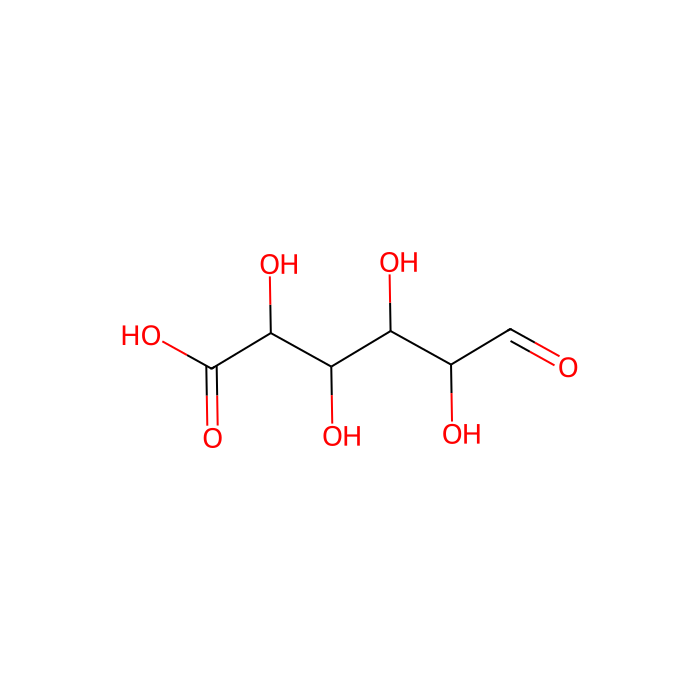
D-Glucuronic acid - Moligand™, 10mM in DMSO , CAS No.6556-12-3

CAS: 6556-12-3 Cat. No.: D425310 Fórmula: C6H10O7 Peso molecular: 194.14 Beilstein Registry Number: 1727083 Número CE: 229-486-4
Disponível para encomenda
GRADE & PURITY Moligand™ ? Moligand™ — Aladdin's line of ligands and bioactive small molecules. Use for receptor, pathway, and binding studies needing defined small-molecule tools. 10mM in DMSO
Synonyms
BP-12303 | AKOS006271885 | D-GLUCURONIC ACID [MI] | D-Glucuronic Acid; Glucuronic acid, D- (8CI); D-(+)-Glucuronic acid; Glucosiduronic acid; Glucuronic acid | MFCD00166981 | (d)-glucuronic acid | IAJILQKETJEXLJ-QTBDOELSSA-N | AT25131 | DTXSID60859531 | G
Storage
Store at -80°C
Shipped In
Dry ice packs + Cold packs
★
Size
Alemanha (EU)
USA*
Price
Qty
1ml
D425310-1ml
—
1 Em stock
25,08€
Enter a quantity for the sizes you want to add.
🧪
Why this grade

Moligand™, 10mM in DMSO Moligand™ for sensitive chromatographic and analytical workflows requiring minimal baseline interference.

🌡

Storage & shipping

Store at -80°C Ships Dry ice packs + Cold packs Check lot-specific COA for exact specifications.

📋

Quality documents

SDS, COA, datasheet, and spec sheet available for download. Lot-specific COA accessible via lot number lookup.

📚

Literature proof

Cited in 143 peer-reviewed publications across chromatography, organic synthesis, and cross-coupling reactions.

Visão geral

The level of carbohydrates in a sample of alginate purified from P.aeruginosa was determined by using a phenol-sulfuric acid aβay where D- glucuronic acid was used as the standard

Specifications

Sinónimos
BP-12303 | AKOS006271885 | D-GLUCURONIC ACID [MI] | D-Glucuronic Acid; Glucuronic acid, D- (8CI); D-(+)-Glucuronic acid; Glucosiduronic acid; Glucuronic acid | MFCD00166981 | (d)-glucuronic acid | IAJILQKETJEXLJ-QTBDOELSSA-N | AT25131 | DTXSID60859531 | G
Especificações e pureza
Moligand™, 10mM in DMSO
Mecanismos bioquímicos e fisiológicos
In humans, glucuronic acid conjugation with steroidal compounds and drugs is an important step in phase II metabolic reactions. This influences the biotransformation process of the compound.Water soluble sugar acid formed by oxidation of the C-6 carbon of
Condições de armazenamento de armazenamento
Store at -80°C
Enviado em
Dry ice packs + Cold packs
Este produto requer transporte de cadeia fria. Serviços terrestres e outros serviços econômicos não estão disponíveis.
Grau
Moligand™
Tipo de ação
AGONIST
Nomes e identificadores
Pubchem Sid
Sorrisos canónicos
C(=O)C(C(C(C(C(=O)O)O)O)O)O
IUPAC Name
(2S,3S,4S,5R)-2,3,4,5-tetrahydroxy-6-oxohexanoic acid
InChIKey
IAJILQKETJEXLJ-QTBDOELSSA-N
INCHI
1S/C6H10O7/c7-1-2(8)3(9)4(10)5(11)6(12)13/h1-5,8-11H,(H,12,13)/t2-,3+,4-,5-/m0/s1
SMILES isoméricas
C(=O)[C@@H]([C@H]([C@@H]([C@@H](C(=O)O)O)O)O)O
WGK Alemanha
3
RTECS
LZ8836600
Peso molecular
194.14
Beilstein
1727083
Reaxy-Rn
2330562
Reaxys-RN_link_address
https://www.reaxys.com/reaxys/secured/hopinto.do?context=S&query=IDE.XRN=2330562&ln=

Documentation

📋 Safety Data Sheet (SDS)

Comprehensive hazard, handling, storage, and regulatory compliance document.

Download SDS →

✅ Certificate of Analysis (COA)

Lot-specific quality data. Enter your lot number to retrieve the exact COA.

Look up COA →

📊 Datasheet

Quick-reference summary of product specifications and applications.

View datasheet →

🔬 Specification Sheet

Full quality attributes and acceptance criteria for this grade.

View spec sheet →

Advanced Data

Taxonomic Classification

Taxonomy Tree

KingdomOrganic compounds
SuperclassOrganic oxygen compounds
ClasseOrganooxygen compounds
SubclassCarbohydrates and carbohydrate conjugates
Intermediate Tree Nodes Sugar acids and derivatives
Direct ParentGlucuronic acid derivatives
Alternative Parents Hexoses  Medium-chain hydroxy acids and derivatives  Medium-chain fatty acids  Hydroxy fatty acids  Beta hydroxy acids and derivatives  Beta-hydroxy aldehydes  Alpha hydroxy acids and derivatives  Alpha-hydroxyaldehydes  Secondary alcohols  Polyols  Monocarboxylic acids and derivatives  Carboxylic acids  Organic oxides  Hydrocarbon derivatives  
Molecular FrameworkAliphatic acyclic compounds
Substituents Glucuronic acid or derivatives - Hexose monosaccharide - Medium-chain hydroxy acid - Medium-chain fatty acid - Hydroxy fatty acid - Beta-hydroxy acid - Fatty acyl - Fatty acid - Monosaccharide - Hydroxy acid - Beta-hydroxy aldehyde - Alpha-hydroxy acid - Alpha-hydroxyaldehyde - Secondary alcohol - Polyol - Monocarboxylic acid or derivatives - Carboxylic acid - Carboxylic acid derivative - Organic oxide - Hydrocarbon derivative - Carbonyl group - Aldehyde - Alcohol - Aliphatic acyclic compound
DescriçãoThis compound belongs to the class of organic compounds known as glucuronic acid derivatives. These are compounds containing a glucuronic acid moiety (or a derivative), which consists of a glucose moiety with the C6 carbon oxidized to a carboxylic acid.
External Descriptors D-glucuronic acid
Estrutura 3D
Modelo de Estrutura Química Interativa


Certificados(CoA,COO,BSE/TSE e Mapa de Análise)
C of A & Other Certificates(BSE/TSE, COO):
Analytical Chart:
Propriedades químicas e físicas
SensibilidadeMoisture sensitive.
Rotação específica [α]36 ° (C=6, H2O)
Ponto de fusão (°C)165°C
Peso molecular194.140 g/mol
XLogP3-2.600
Hydrogen Bond Donor Count5
Hydrogen Bond Acceptor Count7
Rotatable Bond Count5
Exact Mass194.043 Da
Monoisotopic Mass194.043 Da
Topological Polar Surface Area135.000 Ų
Heavy Atom Count13
Formal Charge0
Complexity191.000
Isotope Atom Count0
Defined Atom Stereocenter Count4
Undefined Atom Stereocenter Count0
Defined Bond Stereocenter Count0
Undefined Bond Stereocenter Count0
The total count of all stereochemical bonds0
Covalently-Bonded Unit Count1
FAQs e artigos
An Introduction to Research-Grade Carbohydrates: Decoding the “Glycan Language” and a Product-Selection Guide (with Tables 1–3)
Hemicellulases: A Review of Substrate Specificity, Catalytic Systems, and Research and Industrial Applications
Pyran and the “Pyran Family” Research Selection Guide: Key Structural Points, a Classification Roadmap, and Experimental Selection Navigation
Mechanisms of Gut Microbial Enzyme-Mediated Metabolism of Glucuronide Conjugates and Drug Biotransformation
Galactose-Related Precursor Conversion and Redox Regulation in Plant Ascorbate Biosynthesis
Moisturizing Mechanism of Polyglutamic Acid: From the γ-Glutamyl Structure to Hydration Networks and Surface Film-Forming Behavior
Moisturizing Mechanisms of Tremella fuciformis Polysaccharides: From Polysaccharide Structure and Hydration Rheology to Dynamic Film Formation on the Skin Surface
Multilevel Moisturizing Mechanisms of Sodium Hyaluronate and Its Derivatives: Molecular Weight Modulation, Crosslinking, Acetylation, and Major Sites of Action
Skin Mechanism of Action of Pro-Xylane: From C-Xyloside Priming and CS/DS Chain Remodeling to the Dermal–Epidermal Junction
Effect of Glycosylation on the Hydrophilic–Lipophilic Partitioning and Solubility Behavior of Natural Products—Quercetin, Isoquercitrin, and Rutin as Examples
Effects of Sample Processing on Natural Glycoside Composition—Tissue Disruption, Endogenous Enzymatic Transformation, Drying, and Pre-Extraction Treatment
Citations of This Product
Calculadoras de soluções
Revisões

Avaliações dos Clientes

Shall we send you a message when we have discounts available?

Remind me later

Thank you! Please check your email inbox to confirm.

Oops! Notifications are disabled.