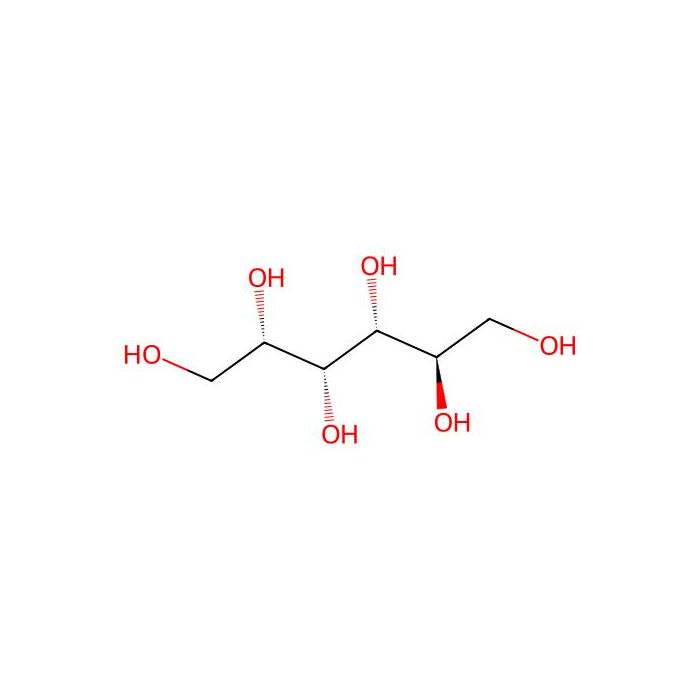
D-Sorbitol - UltraBio™, ≥99%(HPLC) , CAS No.50-70-4

CAS: 50-70-4 Cat. No.: D755727 Fórmula: C6H14O6 Peso molecular: 182.18 Beilstein Registry Number: 1721899 Número CE: 200-061-5
Disponível para encomenda
GRADE & PURITY UltraBio™ ? UltraBio™ — Aladdin's line for molecular-biology applications. Use for nuclease-free, high-consistency reagents across molecular workflows. ≥99%(HPLC)
Storage
Room temperature
Shipped In
Normal
★
Size
Alemanha (EU)
USA*
Price
Qty
250g
D755727-250g
Sob encomenda · 8–12 semanas
203,83€
50g
D755727-50g
Sob encomenda · 8–12 semanas
57,18€
Enter a quantity for the sizes you want to add.
🧪
Why this grade

UltraBio™, ≥99%(HPLC) UltraBio™ for sensitive chromatographic and analytical workflows requiring minimal baseline interference.

🌡

Storage & shipping

Room temperature Ships Normal Check lot-specific COA for exact specifications.

📋

Quality documents

SDS, COA, datasheet, and spec sheet available for download. Lot-specific COA accessible via lot number lookup.

📚

Literature proof

Cited in 219 peer-reviewed publications across chromatography, organic synthesis, and cross-coupling reactions.

Visão geral

May be used for washing spheroplasts and in isoelectric focusing to minimize endoosmotic flow in agarose gels. May be used to induce osmotic stress.
Sorbitol is a sugar alcohol and slowly metabolized sweetener. Sorbitol, a bacterial culture supplement, is used for the preparation of selective plating media to culture Sorbitol-fermenting bacteria including strains of Escherichia coli and Yersinia enterocolitica.

Specifications

Especificações e pureza
UltraBio™, ≥99%(HPLC)
Mecanismos bioquímicos e fisiológicos
D-Sorbitol is a sugar alcohol that is commonly used as a sugar substitute. It occurs naturally and is also produced synthetically from glucose. The food industry uses D-sorbitol as an additive in the form of a sweetener, humectant, emulsifier, thickener,
Condições de armazenamento de armazenamento
Room temperature
Enviado em
Normal
Grau
UltraBio™
Pureza
≥99%(HPLC)
Nomes e identificadores
PH
5.0-7.0 (25 °C, 1 M in H 2 O)
Sorrisos canónicos
OC[C@@H](O)[C@@H](O)[C@H](O)[C@@H](O)CO
IUPAC Name
(2R,3R,4R,5S)-hexane-1,2,3,4,5,6-hexol
InChIKey
FBPFZTCFMRRESA-JGWLITMVSA-N
INCHI
1S/C6H14O6/c7-1-3(9)5(11)6(12)4(10)2-8/h3-12H,1-2H2/t3-,4+,5-,6-/m1/s1
SMILES isoméricas
C([C@H]([C@H]([C@@H]([C@H](CO)O)O)O)O)O
WGK Alemanha
2
CAS alternativo
98201-93-5;68425-17-2;1259528-21-6
Peso molecular
182.18
Beilstein
1721899
Reaxy-Rn
1721899
Reaxys-RN_link_address
https://www.reaxys.com/reaxys/secured/hopinto.do?context=S&query=IDE.XRN=1721899&ln=

Documentation

📋 Safety Data Sheet (SDS)

Comprehensive hazard, handling, storage, and regulatory compliance document.

Download SDS →

✅ Certificate of Analysis (COA)

Lot-specific quality data. Enter your lot number to retrieve the exact COA.

Look up COA →

📊 Datasheet

Quick-reference summary of product specifications and applications.

View datasheet →

🔬 Specification Sheet

Full quality attributes and acceptance criteria for this grade.

View spec sheet →

Advanced Data

Taxonomic Classification

Taxonomy Tree

KingdomOrganic compounds
SuperclassOrganic oxygen compounds
ClasseOrganooxygen compounds
SubclassCarbohydrates and carbohydrate conjugates
Intermediate Tree Nodes Not available
Direct ParentSugar alcohols
Alternative Parents Monosaccharides  Secondary alcohols  Polyols  Primary alcohols  Hydrocarbon derivatives  
Molecular FrameworkAliphatic acyclic compounds
Substituents Sugar alcohol - Monosaccharide - Secondary alcohol - Polyol - Hydrocarbon derivative - Primary alcohol - Alcohol - Aliphatic acyclic compound
DescriçãoThis compound belongs to the class of organic compounds known as sugar alcohols. These are hydrogenated forms of carbohydrate in which the carbonyl group (aldehyde or ketone, reducing sugar) has been reduced to a primary or secondary hydroxyl group.
External Descriptors glucitol
Estrutura 3D
Modelo de Estrutura Química Interativa


Certificados(CoA,COO,BSE/TSE e Mapa de Análise)
C of A & Other Certificates(BSE/TSE, COO):
Analytical Chart:

Find and download the COA for your product by matching the lot number on the packaging.

7 results found

Lot NumberCertificate TypeDataItem
H2519011Certificate of AnalysisAug 25, 2025 D755727
H2519012Certificate of AnalysisAug 25, 2025 D755727
H2519018Certificate of AnalysisAug 25, 2025 D755727
I2605004Certificate of AnalysisAug 25, 2025 D755727
H2519009Certificate of AnalysisAug 22, 2025 D755727
L2501051Certificate of AnalysisAug 22, 2025 D755727
H2519013Certificate of AnalysisAug 21, 2025 D755727
Propriedades químicas e físicas
SolubilidadeH 2 O: 1 M at 20 °C, clear, colorless
Índice de refração1.3477
Rotação específica [α]106° (C=0.4,Acidified (NH4)6Mo7O24)
Ponto de ebulição (°C)200 °C/0.002 mmHg
Ponto de fusão (°C)110 °C
Peso molecular182.170 g/mol
XLogP3-3.100
Hydrogen Bond Donor Count6
Hydrogen Bond Acceptor Count6
Rotatable Bond Count5
Exact Mass182.079 Da
Monoisotopic Mass182.079 Da
Topological Polar Surface Area121.000 Ų
Heavy Atom Count12
Formal Charge0
Complexity105.000
Isotope Atom Count0
Defined Atom Stereocenter Count4
Undefined Atom Stereocenter Count0
Defined Bond Stereocenter Count0
Undefined Bond Stereocenter Count0
The total count of all stereochemical bonds0
Covalently-Bonded Unit Count1
FAQs e artigos
UltraBio™: Defining Excellence in Molecular Biology Applications
ZYMOLYASE Experimental Protocol
Buffer Additives to Prevent Protein Precipitation
Bio-based Chemicals: From Platform Molecules to Application Scenarios — Trend Insights and Aladdin’s Product Portfolio
Functional Sweetener Maltitol: Physicochemical Properties, Application Practices, and Aladdin Product Selection Guide
An Introduction to Research-Grade Carbohydrates: Decoding the “Glycan Language” and a Product-Selection Guide (with Tables 1–3)
Functional Properties, Application Scenarios, and Manufacturing Processes of Maltotetraose (G4): A Review
Functional Framework of Starch Metabolism-Related Enzymes in Food Science Research and Mechanistic Analysis of Quality Regulation
Why Do Alcohols Differ in Function: Why Is Glycerol Mainly Moisturizing, Propylene Glycol Mainly Solubilizing, and Isopropyl Alcohol Fast-Drying? — Understanding Personal Care Formulation Functions from Structural Differences
Analysis of Structural Differences in Diols: Moisturization, Co-solvency, Skin Feel, and Formulation Selection for Propylene Glycol, Butylene Glycol, and Medium- to Long-Chain 1,2-Alkanediols
Mechanisms and Troubleshooting of Foam Reduction in Personal and Household Care Formulations: Film Rupture, Weak Interfacial Films, Insufficient Surfactant Supply, and Phase-State Disturbance
Experimental Applications of Carboxymethyl Cellulose (CMC) Solution in Enzyme Assays, Suspension Systems, and Functional Materials
Bacterial Cell Wall Degradation Technology
The Moisturizing and Low-Moisture Protective Mechanisms of Trehalose: From Its α,α-1,1 Structure and Hydration Dynamics to In Vitro Skin Barrier Research
Moisturizing Mechanisms of Tremella fuciformis Polysaccharides: From Polysaccharide Structure and Hydration Rheology to Dynamic Film Formation on the Skin Surface
1,8-Naphthyridine-Based Aldose Reductase Inhibitors: Scaffold Construction, In Vitro Inhibitory Activity, and Directions for Structural Optimization
What Is Direct Compression? Process Characteristics, Suitability Criteria, and Excipient Selection
p38 MAPK Signaling Pathway: Activation Mechanisms, MK2 Functional Output, and Experimental Interpretation
Citations of This Product
Calculadoras de soluções
Revisões

Avaliações dos Clientes

Need help choosing the grade?

Our grade selection guide covers purity, stabilizer status, and application suitability for all variants in our catalog.

View UltraBio™ grade guide →

Shall we send you a message when we have discounts available?

Remind me later

Thank you! Please check your email inbox to confirm.

Oops! Notifications are disabled.