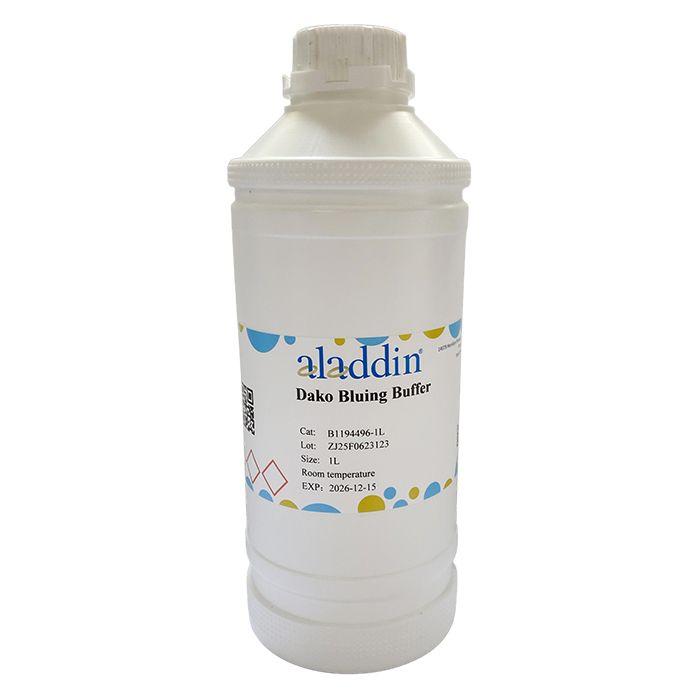
Dako Bluing Buffer consists of lithium carbonate and purified water. It is mainly used to adjust hematoxylin staining and shift the color from purple to blue. It is applicable to manual staining of biological tissue sections as well as automated staining on slide stainers.
Test Principle:
Cell nuclei are composed of acidic substances and exhibit strong affinity for the basic dye hematoxylin, while cytoplasm contains alkaline substances and binds preferentially to the acidic dye eosin. After bluing treatment with bluing staining solution, red blood cells appear orange-red; nucleated cell nuclei turn purplish-blue; cytoplasm shows pale red, light gray or pink hues.
Sample Requirements:
Tissue sections that have undergone proper differentiation and water rinsing.
Storage Conditions:
Store Bluing Staining Solution at 4–40 °C with relative humidity ≤ 80%, in a dim environment free of corrosive gases. Protect the product from freezing and do not invert the bottle. Shelf life: 18 months. Once opened within the shelf life, finish using the solution within 6 months. Tighten the cap immediately after each use to prevent volatilization and deterioration.
Instructions for Use:
1. Deparaffinize paraffin sections in Xylene I and Xylene II for 5 minutes each. Sequentially dehydrate in absolute ethanol, 95% ethanol and 80% ethanol for 1 minute each, then rinse with tap water for 1 minute.
2. Stain with Harris hematoxylin for 5–10 minutes, or Gill hematoxylin for 8–15 minutes. Rinse with tap water for 1–2 minutes until excess stain no longer leaches from slides.
3. Differentiate slides stained with Harris hematoxylin in differentiation solution for several seconds. No differentiation step is required after Gill hematoxylin staining.
4. Bluing in bluing staining solution for 30 seconds, followed by water rinsing for 1–2 minutes.
5. Stain with water-soluble eosin for 30–60 seconds and perform brief rinsing. For alcohol-soluble eosin: dehydrate slides in 80% ethanol first, then stain with alcohol-soluble eosin for 10–30 seconds (DO NOT rinse with water).
6. Color correction in 95% Ethanol I and 95% Ethanol II for around 10 seconds each; avoid over-incubation.
7. Dehydrate in absolute ethanol I and absolute ethanol II for 1–2 minutes each, then clear in Xylene I and Xylene II for 1–2 minutes each.
8. Mount slides with mounting medium and examine under microscope.
Precautions:
1. For in vitro diagnostic use only.
2. Intended for staining biological tissue sections.
3. This product must be handled exclusively by professional laboratory personnel with fundamental knowledge of pathological analysis and slide staining techniques, strictly in accordance with the instructions.
4. Use the reagent promptly after opening. Replace staining solutions regularly based on staining quality and consumption. Seal unused reagent tightly after opening; expired products must be discarded.
5. Operators shall comply with biosafety guidelines for pathology laboratories and wear protective gloves, masks and eye shields.
6. Dispose of spent reagents per chemical waste regulations. Discard biological tissue specimens following medical waste management standards.

 ZJ26F0738080