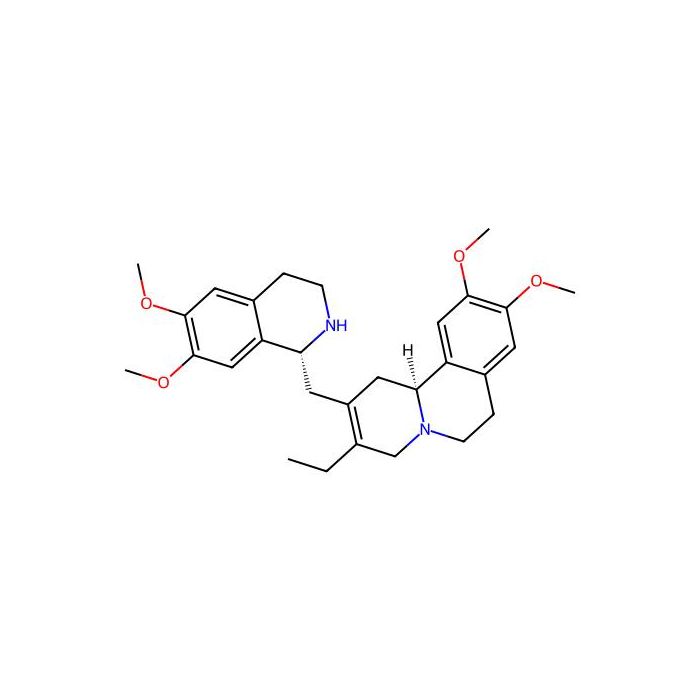
This compound belongs to the class of organic compounds known as tetrahydroisoquinolines. These are tetrahydrogenated isoquinoline derivatives.
External Descriptors
isoquinolines
1. Djoumbou Feunang Y, Eisner R, Knox C, Chepelev L, Hastings J, Owen G, Fahy E, Steinbeck C, Subramanian S, Bolton E, Greiner R, and Wishart DS. ClassyFire: Automated Chemical Classification With A Comprehensive, Computable Taxonomy. Journal of Cheminformatics, 2016, 8:61.
Determine the necessary mass, volume, or concentration for preparing a solution.
Dilution Calculator
Determine the dilution needed to prepare a stock solution.
Reconstitution Calculator
Revisões
Avaliações dos Clientes
Application Protocols
Item-specific (from Product Data)
No tested application protocols are provided for this SKU.
General guidance for small-molecule tool compounds (literature/context)
Stock preparation: Dissolve in anhydrous DMSO to 10–50 mM. Vortex and, if necessary, sonicate briefly. Filter through 0.22 μm PTFE for organic-rich solutions.
Working dilutions (cell-based): Add stock to pre-warmed culture medium to achieve the desired final concentration with ≤0.1–0.5% DMSO v/v. Mix gently; inspect for precipitation. Include vehicle-only controls at matched DMSO content.
Time course: For translation-inhibition controls, typical exposure spans 15–120 minutes for acute effects; longer incubations require careful cytotoxicity monitoring. Determine minimal effective dose via pilot titration.
Washout: For reversibility studies, replace medium with compound-free medium and allow recovery; assess translation resumption with puromycin incorporation or polysome analysis.
Analytical use: For LC-MS calibration, prepare serial dilutions in 50:50 acetonitrile–water with 0.1% formic acid, or matrix-match to sample composition. Store standards in amber vials at −20°C and avoid repeated freeze–thaw.
Disclaimer
These are general, literature-informed practices. Optimize and validate conditions in your specific model. No item-specific validated protocols are supplied.
Biological Roles
Literature/context (for research use only; no medical/clinical claims)
Mechanistic family: Dehydroemetine belongs to the emetine class of natural-product alkaloids, historically characterized as inhibitors of eukaryotic protein synthesis. These agents interfere with ribosomal translocation/elongation on the 80S (40S/60S) ribosome, thereby suppressing nascent polypeptide formation in cells.
Cellular consequences: Translation blockade rapidly attenuates short-lived protein pools, activates integrated stress responses, and can modulate pathways such as autophagy and proteostasis. These properties make the compound a useful tool for probing translation-dependent biology and stress signaling.
Selectivity considerations: Eukaryotic ribosomes are generally more sensitive than bacterial counterparts to emetine-class alkaloids, though off-target interactions may occur at higher concentrations; rigorous controls (vehicle, inactive analogs) are recommended.
Assay usage: Commonly applied as a positive control in puromycin incorporation assays, ribosome runoff experiments, polysome profiling, and studies of protein half-life. Time- and dose-dependence are pronounced; titration is essential to balance efficacy with cytotoxicity.
Item-specific note
This product is designated for research use only. No biological potency, EC50/IC50, or selectivity data are specified for this SKU; consult primary literature and determine conditions empirically in your system.
Buffer Applications
Applicability
Dehydroemetine is not a buffering agent and is not used to control pH. This section is generally not applicable.
Practical handling in aqueous buffers (general guidance)
If aqueous use is required (e.g., for cell-based assays), dissolve first in DMSO or ethanol, then dilute into a suitable buffer. Protonation of the tertiary amine (e.g., with acetate or citrate buffer, pH ~4.5–6) improves solubility and helps avoid precipitation.
Avoid highly basic buffers that may deprotonate the amine and reduce solubility; monitor for precipitation on ice.
Item-specific data
No buffer recipes, pKa, or solubility constants are specified for this item; refer to CoA/Spec Sheet and perform small-scale solubility checks before scale-up.
Green Alternatives
Context
As a complex alkaloid supplied for research use, dehydroemetine does not have a “greener substitute” in the same functional sense that commodity solvents or reagents do. However, greener choices can be made for solvents and workflows around this compound.
Stock solution solvents: Prefer ethanol or water (via salt formation) where scientifically appropriate to reduce reliance on high-boiling polar aprotics. When DMSO is necessary, minimize volumes and ensure proper waste segregation.
Chromatography: Use water–acetonitrile mobile phases with volatile acidic modifiers (formic acid) instead of nonvolatile buffers. Optimize gradients to reduce solvent consumption.
Derivatization chemistry: Favor catalytic, atom-economical transformations under mild conditions. Avoid chlorinated solvents and hazardous alkylating agents when possible.
Illustrative comparison (general)
DMSO vs. ethanol (for stock prep): DMSO offers broader solubility; ethanol is greener but may have limited solubility and biological assay constraints at higher v/v. A compromise is preparing a concentrated DMSO stock and performing substantial aqueous dilution to keep final DMSO ≤0.1%.
DMF/CH2Cl2 vs. MeCN/EtOAc: For sample preparation and extractions, acetonitrile or ethyl acetate are often greener choices than DMF or dichloromethane, provided solubility/performance are adequate.
Note
No item-specific environmental metrics are available. Align choices with institutional green-chemistry policies and waste regulations.
Pharmaceutical Uses
Scope and limitations
No pharmacopoeial monograph, excipient role, or GMP status is specified for this item; it is supplied strictly for research use only.
Research/manufacturing context (non-clinical)
Reference standard: Dehydroemetine can serve as a reference compound for analytical method development (e.g., LC-MS calibration curves, system suitability) when studying emetine-class alkaloids.
Impurity/stability studies: Useful as a marker or degradation/related-substance standard in stability-indicating methods for structurally related materials.
Salt selection studies: The tertiary amine permits formation of salts (e.g., hydrochloride, sulfate) to explore solubility, crystallinity, and solid-state behavior in pre-formulation research (non-GMP).
Compliance note
No claims are made regarding suitability for human or veterinary use. For any regulated applications, source GMP-grade material with full regulatory support.
Physical Properties
Item-specific (from Product Data)
Appearance: Not specified for this item; refer to CoA/Spec Sheet.
Grade/Purity: Not specified for this item; refer to CoA/Spec Sheet.
Physical constants (bp, mp, density, refractive index): Not specified for this item; refer to CoA/Spec Sheet.
UV/Vis cutoff, residual solvent/metal limits, water/peroxide content: Not specified for this item; refer to CoA/Spec Sheet.
Physical state: Typically an organic solid for the free base; often supplied/handled as a crystalline salt (e.g., hydrochloride) to enhance aqueous solubility.
Solubility profile: Free base is generally sparingly soluble in water but soluble in polar organics (DMSO, DMF, methanol, ethanol). Protonated salts show improved aqueous solubility; solubility increases under acidic pH due to amine protonation.
Acid–base behavior: Contains a basic tertiary amine; pKa values for emetine-class alkaloids are typically in the 7–9 range (literature, compound-class guidance), enabling pH-tunable solubility and salt formation.
Practical notes
If preparing aqueous solutions, adjust to mildly acidic pH (e.g., acetate or citrate buffer) to favor dissolution of the protonated form.
For stock solutions in screening workflows, DMSO is commonly used; filter-sterilize if needed for cell-based assays.
Always verify item-specific constants on the CoA/SDS before designing processes reliant on precise physicochemical data.
Quality and Grades
Item-specific (from Product Data)
Grade/Purity: Not specified for this item; refer to CoA/Spec Sheet.
Guidance on grades and characterization (general)
Small-molecule library compounds are commonly supplied at high chemical purity suitable for screening, hit validation, and reference standard use. When grade is unspecified, rely on the Certificate of Analysis for assay method (e.g., HPLC/UPLC area%), purity value, and limits on key impurities (residual solvents, inorganic residues).
Identity confirmation: Expect NMR and/or MS confirmation; many libraries also include HRMS. If chirality is relevant, check whether optical rotation or chiral HPLC data are provided.
Stabilizers: None stated for this item. If a stabilizer or counterion is present (e.g., as a hydrochloride), it will be listed on the CoA; such details impact solubility and assay setup.
UV suitability: If using for LC/UV quantification, confirm UV profile and low-UV-absorbing impurity levels on the CoA when “analytical” or “HPLC” grade is required.
Recommendations
Request and review the lot-specific CoA before critical use (screening, standardization).
If you require a defined salt form, chiral purity, or tighter impurity limits, contact Aladdin Scientific for custom specifications.
Reaction and Applications
Item-specific (from Product Data)
Manufacturer Applications: Not specified for this item.
Research applications (literature/context; no clinical claims)
Chemical biology tool: Dehydroemetine is widely used as a reference inhibitor of eukaryotic protein synthesis in vitro and in cells, making it valuable as a positive control in translation-inhibition studies, ribosome-associated quality control assays, and stress-response investigations.
Reference standard: Employed in analytical method development/validation for emetine-class alkaloids (e.g., LC-MS quantification, stability-indicating assays, impurity profiling).
Notes on reactivity/handling
Salt formation: Tertiary amine enables straightforward formation of hydrochloride or other acid salts to modulate solubility and crystallinity.
Derivatization: Quaternization (alkyl halides), acylation/carbamoylation (on the amine), and O-demethylation (under carefully controlled conditions) are explored in SAR contexts.
Practical tips
For biological assays, pre-dissolve in high-purity DMSO and verify absence of particulates after dilution into media. Filter sterilize if required (0.22 μm PTFE/RC for organic-rich; PES/CA for aqueous).
Use freshly prepared working solutions; adsorption to plastics can occur with lipophilic alkaloids—prefer low-binding polypropylene and add carrier proteins cautiously if compatible with the assay.
Deferral
Specific tested uses and concentrations are not provided for this item; consult primary literature and perform pilot titrations in your assay system.
Reaction Conditions
Item-specific (from Product Data)
No reaction condition guidance is specified for this item.
Literature/general guidance for derivatization of emetine-class alkaloids
Salt formation: Dissolve free base in anhydrous ethanol or isopropanol, add anhydrous HCl (g) or alcoholic HCl at 0–25°C; isolate the hydrochloride salt by precipitation/evaporation. Dry under vacuum at mild temperature to avoid degradation.
Quaternization: Treat the tertiary amine with a slight excess of a primary alkyl halide (e.g., MeI, EtI) in acetonitrile or acetone at ambient to 50°C; monitor by TLC/LC-MS. Workup by precipitation of the quaternary ammonium salt and thorough washing to remove unreacted halide. Exercise extreme caution with hazardous alkylating agents.
Hydrogenation (addressing the “dehydro” unit): Employ mild catalytic hydrogenation (e.g., H2, 1–3 bar; Pd/C or Pt/C) in ethanol or ethyl acetate at 20–40°C, carefully monitoring to avoid over-reduction or O-dealkylation. Validate by NMR and MS.
O-Demethylation (to phenols): Use Lewis-acid demethylation (e.g., BBr3 in dichloromethane at −78 to 0°C) with stringent control; quench cautiously and neutralize to avoid decomposition.
Notes
The complex, multifunctional scaffold requires chemoselective conditions and rigorous analytical monitoring. Yields and selectivity are substrate- and condition-dependent; optimize on milligram scale before scale-up.
Safety and Handling
Item-specific (from Product Data)
GHS Classification: Not specified for this item; refer to SDS.
Signal Word / Pictograms / H-Statements: Not specified for this item; refer to SDS.
General laboratory safety (literature/context)
Toxicological profile: Dehydroemetine is a bioactive alkaloid of the emetine class; handle as acutely toxic to cells/tissues. Avoid inhalation, ingestion, and skin/eye contact. Use a chemical fume hood.
PPE: Wear lab coat, nitrile gloves, and splash goggles. For weighing/milling, consider a particulate respirator if dust may form; local exhaust recommended.
Incompatibilities: Strong oxidizers may degrade alkaloids; strong acids/bases can cause decomposition depending on form. Avoid reactive acylating/alkylating agents unless intentionally derivatizing.
First aid (overview, not exhaustive): If inhaled—move to fresh air and seek medical attention. Skin—wash with soap and water. Eyes—rinse cautiously with water for several minutes, remove contacts if present and easy to do. If ingested—rinse mouth; seek medical attention. Provide SDS to responders.
Environmental precautions: Prevent release to drains; collect spills with inert absorbent and dispose according to local regulations.
Storage and stability (see also Storage tab)
Store tightly closed, protected from light/moisture, at −20°C as specified for this item. Warm to room temperature in a desiccated environment before opening to minimize condensation.
Deferral
For authoritative hazard classification and exposure limits, consult the item-specific SDS provided by Aladdin Scientific.
Solvent Selection
Applicability
Dehydroemetine is a tertiary-amine-containing alkaloid typically handled as a free base or protonated salt. Solvent choice should consider basicity, lipophilicity, and intended application (analytical vs. biological assays).
General solvent guidance (literature/context)
Stock solutions (screening/biological): DMSO is the common primary solvent due to broad solubility and assay compatibility. Prepare concentrated stocks (e.g., 10–50 mM) and dilute into aqueous media to ≤0.1–0.5% DMSO v/v final, as assay permits.
Aqueous formulations: Enhance water solubility by forming the salt in situ (e.g., add a stoichiometric equivalent of HCl or use acetate/citrate buffer, pH ~4.5–6). Avoid strong bases in aqueous media, which can precipitate the free base.
Chromatography/analytics: Methanol, acetonitrile, and water with acid modifiers (0.05–0.1% formic acid) are typical LC-MS mobile phases. For sample prep, methanol or acetonitrile are preferred; avoid highly basic eluents that may cause peak tailing for tertiary amines.
Synthetic/derivatization work: Polar aprotics (acetonitrile, DMF) or alcohols are frequently suitable; minimize exposure to strong nucleophiles/oxidants.
Comparison notes
Versus highly nonpolar solvents (hexanes, toluene): improved solubility is generally achieved in polar organic solvents.
Versus water: protonation state dictates solubility; salt forms or mildly acidic buffers markedly improve dissolution.
Tip
If the supplied form (free base vs. salt) is unclear, perform a small-scale solubility check in DMSO and in pH-adjusted aqueous buffer to confirm handling conditions.
Storage and Reconstitution
Item-specific (from Product Data)
Storage Conditions: Store at −20°C.
Shipped In: Ice chest + ice pads.
General best practices
Protection: Store in a tightly sealed, inert-atmosphere container, protected from light and moisture. Allow to equilibrate to room temperature in a desiccator before opening to prevent condensation.
Solid material: If provided as a solid, divide into single-use aliquots upon first opening to minimize cumulative exposure to air and moisture.
Solution stocks: Prepare concentrated stocks (e.g., 10–50 mM) in anhydrous DMSO or ethanol. Dispense into small amber vials or low-bind tubes; purge headspace with inert gas if feasible. Label with concentration, solvent, lot, and preparation date.
Storage of solutions: For short-term use (days to weeks), −20°C is generally acceptable; for longer-term storage, −80°C is recommended. Avoid multiple freeze–thaw cycles by aliquoting. Monitor for discoloration or precipitation and discard if observed.
Aqueous working solutions: Prepare fresh immediately before use. If solubility is limited, acidify slightly (compatible buffer) to favor protonation and dissolution.
Not specified for this item
Exact shelf life, stability in specific solvents, and light sensitivity are not specified; refer to the CoA/SDS and verify stability empirically for critical applications.
Research Use Note
For research use only.
Structure and Identity
Item-specific (from Product Data)
CAS: 4914-30-1
PubChem CID: 21022
InChIKey: 429892 (as provided; truncated/incomplete format — see literature identity below)
SMILES: Not specified for this item; refer to CoA/Spec Sheet.
Molecular formula: Not specified for this item; refer to CoA/Spec Sheet.
Molecular weight: Not specified for this item; refer to CoA/Spec Sheet.
Literature/General identity (for reference only; verify against CoA/SDS)
Compound class: Emetine-class isoquinoline alkaloid (dehydro analogue of emetine)
Core features: Poly-methoxylated aromatic rings, benzyltetrahydroisoquinoline framework, and a basic tertiary amine. The “dehydro-” designation denotes an additional degree of unsaturation (C=C) relative to emetine.
Stereochemistry: Multiple stereocenters are present in the natural-product scaffold (exact configuration depends on source; confirm against reference standards).
2D description in words: A fused isoquinoline-like aromatic system decorated with methoxy substituents is tethered via a benzylic linkage to a second arylethyl fragment bearing oxygenated substituents; a tertiary amino center confers basicity and salt-forming behavior.
Notes
Identity particulars (exact SMILES/InChIKey, formula, MW) should be confirmed from the item’s CoA. The above structural description is provided as literature context for chemists working with emetine-class alkaloids.
Synthetic Utility
Context
As a complex natural-product alkaloid, dehydroemetine is primarily a target or tool compound rather than a general-purpose synthetic reagent. Nonetheless, its functional groups allow selective transformations and derivatizations for SAR and analytical purposes.
Functional group leverage (literature/general)
Tertiary amine: Salt formation (HX) for crystallization/solubility tuning; quaternization with alkyl halides to generate ammonium salts; reductive functionalizations under carefully controlled conditions.
Aromatic methoxy groups: Potential for O-demethylation (e.g., BBr3 or AlCl3 systems) to access phenolic derivatives; subsequent etherification or carbamate formation expands analog space.
“Dehydro” double bond: Serves as a handle for selective hydrogenation (comparative conversion toward emetine-like saturation) or conjugate additions in tailored systems.
Applications
Probe synthesis: Installing reporter tags (e.g., photoaffinity or alkyne handles) via amine-functional modifications for chemoproteomics.
Solid-form engineering: Preparation of diverse salts/co-crystals to study polymorphism and improve handling.
Caveats
Multisite reactivity and steric congestion demand chemoselective conditions; protect sensitive sites where necessary. Validate structures by NMR (including 2D), HRMS, and, when applicable, chiral analysis.
Target Specificity
Item-specific (from Product Data)
No target, antigen, or clone information is provided. This product is not an antibody or biologic; target specificity in the immunochemical sense is not applicable.
Dehydroemetine is commonly employed as a research tool associated with inhibition of eukaryotic translation machinery (ribosomal translocation). However, no item-specific potency/selectivity data are provided; end users should determine effective concentrations empirically in their assay system.
Usamos cookies para garantir o funcionamento adequado do site e, quando permitido, para melhorar a sua experiência. Você pode gerenciar suas preferências a qualquer momento nas Configurações. Saiba mais em nossa Política de Cookies.
Deseja que lhe enviemos uma mensagem quando tivermos descontos disponíveis?
Lembrar-me mais tarde
Obrigado! Por favor, verifique a sua caixa de entrada de e-mail para confirmar.
Products are supplied to verified businesses, institutions, and qualified professionals for research and development use only. Not for use in humans, animals, diagnosis, or therapy.