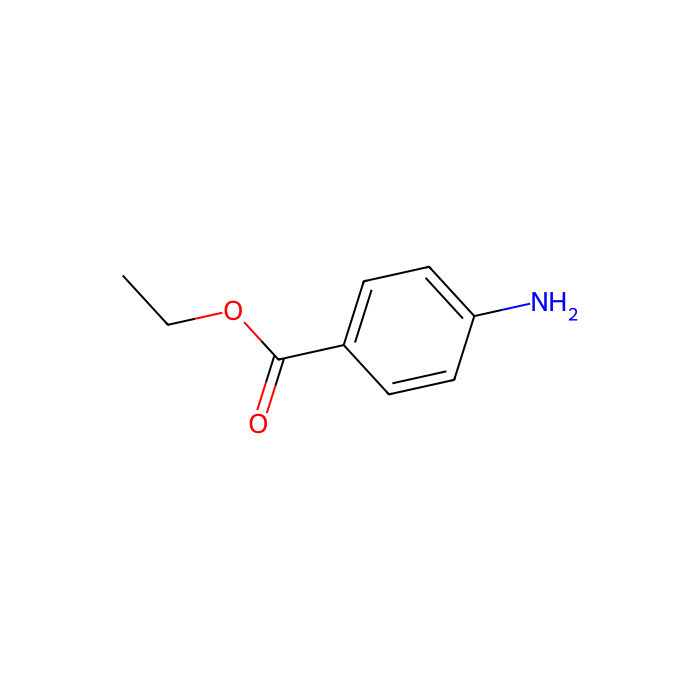
Dextran sulfate sodium salt - M.W 100,000 , CAS No.9011-18-1

CAS: 9011-18-1 Cat. No.: D292253 Número CE: 618-471-1 PubChem CID: 2337
Disponível para encomenda
GRADE & PURITY M.W 100,000
Synonyms
4-aminobenzoic acid-ethyl ester | Anaesthesinum | Benzoak | ETHYL4-AMINOBENZOATE | Norcaine | Norcainum | Aethoform | Anaesthin | Bensokain | HSDB 7225 | BENZOCAINE [USP MONOGRAPH] | CAS-94-09-7 | Benzoic acid, 4-amino-, ethyl ester | Chiggerex | Ethoform
Storage
Store at 2-8°C,Argon charged
Shipped In
Wet ice
★
Size
Alemanha (EU)
USA*
Price
Qty
5g
D292253-5g
—
3 Em stock
274,12€
10g
D292253-10g
—
3 Em stock

398,21€

498,00€
Gravar 99,79 € (20.04%)
25g
D292253-25g
—
2 Em stock

796,50€

996,08€
Gravar 199,58 € (20.04%)
50g
D292253-50g
—
2 Em stock

1274,62€

1593,95€
Gravar 319,33 € (20.03%)
Enter a quantity for the sizes you want to add.
🧪
Why this grade

M.W 100,000 for sensitive chromatographic and analytical workflows requiring minimal baseline interference.

🌡

Storage & shipping

Store at 2-8°C,Argon charged Ships Wet ice Check lot-specific COA for exact specifications.

📋

Quality documents

SDS, COA, datasheet, and spec sheet available for download. Lot-specific COA accessible via lot number lookup.

📚

Literature proof

Cited in 122 peer-reviewed publications across chromatography, organic synthesis, and cross-coupling reactions.

Visão geral

Dextran sulfate is supplied as a white powder which dissolves freely in water or salt solutions giving a clear solution.

Dextran sulfates may be produced with a wide range of molecular weights and degrees of sulfation. Each of the products within this range is supplied with sulphur contents of 16-20%. Dextran sulfates act as potent polyanions and offer many interesting pharmacological and biophysical properties. Dextran sulfates are produced by sulfating selected dextran fractions. The dextran sulfate is supplied as the sodium salt and is stabilised by a small addition of phosphate salts. A certificate of analysis is supplied with each batch. The molecular weight range, sulfur content, moisture etc. are carefully controlled. Dextran is a polysaccharide derived from the bacterium Leuconostoc mesenteroides B512F and consists of an α-D-(1 – 6) linear glucan with a low content (ca. 5%) of sidechains linked to the 3-carbon of glucose. Dextran sulfate is a sulfated derivative of selected dextran fraction. 


Applications

Dextran sulfate have a wide range of applications areas and properties. Some examples are:

Anti-coagulation agent in cell media

Selective precipitation of lipoproteins

Acceleration of DNA hybridisation.

Releasing DNA from DNA-histones complexes

Inhibition tRNA-binding to ribosomes

Inhibition of ribonucleases

Anti-viral properties

Used in cosmetics for anti-inflammation properties and osmotic retention of water

Separation of microorganisms and macromolecules

Adjuvant in vaccines

Studies of perm selectivity of membranes

Specifications

Sinónimos
4-aminobenzoic acid-ethyl ester | Anaesthesinum | Benzoak | ETHYL4-AMINOBENZOATE | Norcaine | Norcainum | Aethoform | Anaesthin | Bensokain | HSDB 7225 | BENZOCAINE [USP MONOGRAPH] | CAS-94-09-7 | Benzoic acid, 4-amino-, ethyl ester | Chiggerex | Ethoform
Especificações e pureza
M.W 100,000
Mecanismos bioquímicos e fisiológicos
Glucose sulfate inhibits the replication of human immunodeficiency viruses by preventing the virus from adsorption into host cells.
Condições de armazenamento de armazenamento
Store at 2-8°C,Argon charged
Enviado em
Wet ice
Este produto requer transporte de cadeia fria. Serviços terrestres e outros serviços econômicos não estão disponíveis.
Propriedades do produto
ALogP
1.9
Nomes e identificadores
IUPAC Name
ethyl 4-aminobenzoate
InChIKey
BLFLLBZGZJTVJG-UHFFFAOYSA-N
INCHI
1S/C9H11NO2/c1-2-12-9(11)7-3-5-8(10)6-4-7/h3-6H,2,10H2,1H3
SMILES isoméricas
CCOC(=O)C1=CC=C(C=C1)N
WGK Alemanha
2
RTECS
HH9290000
PubChem CID
2337

Documentation

📋 Safety Data Sheet (SDS)

Comprehensive hazard, handling, storage, and regulatory compliance document.

Download SDS →

✅ Certificate of Analysis (COA)

Lot-specific quality data. Enter your lot number to retrieve the exact COA.

Look up COA →

📊 Datasheet

Quick-reference summary of product specifications and applications.

View datasheet →

🔬 Specification Sheet

Full quality attributes and acceptance criteria for this grade.

View spec sheet →

Advanced Data

Taxonomic Classification

Taxonomy Tree

KingdomOrganic compounds
SuperclassBenzenoids
ClasseBenzene and substituted derivatives
SubclassBenzoic acids and derivatives
Intermediate Tree Nodes Not available
Direct ParentBenzoic acid esters
Alternative Parents Aminobenzoic acids and derivatives  Benzoyl derivatives  Aniline and substituted anilines  Carboxylic acid esters  Amino acids and derivatives  Monocarboxylic acids and derivatives  Primary amines  Organopnictogen compounds  Organooxygen compounds  Organic oxides  Hydrocarbon derivatives  
Molecular FrameworkAromatic homomonocyclic compounds
Substituents Aminobenzoic acid or derivatives - Benzoate ester - Benzoyl - Aniline or substituted anilines - Amino acid or derivatives - Carboxylic acid ester - Carboxylic acid derivative - Monocarboxylic acid or derivatives - Amine - Organonitrogen compound - Organooxygen compound - Primary amine - Hydrocarbon derivative - Organic oxide - Organopnictogen compound - Organic oxygen compound - Organic nitrogen compound - Aromatic homomonocyclic compound
DescriçãoThis compound belongs to the class of organic compounds known as benzoic acid esters. These are ester derivatives of benzoic acid.
External Descriptors substituted aniline - benzoate ester
Alvos associados (humanos)
PDE5A Tclin Phosphodiesterase 5A (5113 Activities)
Activity TypeRelationActivity valueUnitsAction TypeJournalPubMed IddoiAssay Aladdin ID
EGFR Tclin Epidermal growth factor receptor erbB1 (33727 Activities)
Activity TypeRelationActivity valueUnitsAction TypeJournalPubMed IddoiAssay Aladdin ID
CA2 Tclin Carbonic anhydrase II (17698 Activities)
Activity TypeRelationActivity valueUnitsAction TypeJournalPubMed IddoiAssay Aladdin ID
ESR1 Tclin Estrogen receptor alpha (17718 Activities)
Activity TypeRelationActivity valueUnitsAction TypeJournalPubMed IddoiAssay Aladdin ID
HMGCR Tclin HMG-CoA reductase (2475 Activities)
Activity TypeRelationActivity valueUnitsAction TypeJournalPubMed IddoiAssay Aladdin ID
NR3C1 Tclin Glucocorticoid receptor (14987 Activities)
Activity TypeRelationActivity valueUnitsAction TypeJournalPubMed IddoiAssay Aladdin ID
INSR Tclin Insulin receptor (5558 Activities)
Activity TypeRelationActivity valueUnitsAction TypeJournalPubMed IddoiAssay Aladdin ID
PGR Tclin Progesterone receptor (8562 Activities)
Activity TypeRelationActivity valueUnitsAction TypeJournalPubMed IddoiAssay Aladdin ID
ADRB2 Tclin Beta-2 adrenergic receptor (11824 Activities)
Activity TypeRelationActivity valueUnitsAction TypeJournalPubMed IddoiAssay Aladdin ID
CHRM2 Tclin Muscarinic acetylcholine receptor M2 (10671 Activities)
Activity TypeRelationActivity valueUnitsAction TypeJournalPubMed IddoiAssay Aladdin ID
ADRB1 Tclin Beta-1 adrenergic receptor (6630 Activities)
Activity TypeRelationActivity valueUnitsAction TypeJournalPubMed IddoiAssay Aladdin ID
HTR1A Tclin Serotonin 1a (5-HT1a) receptor (14969 Activities)
Activity TypeRelationActivity valueUnitsAction TypeJournalPubMed IddoiAssay Aladdin ID
ADRA2A Tclin Alpha-2a adrenergic receptor (9450 Activities)
Activity TypeRelationActivity valueUnitsAction TypeJournalPubMed IddoiAssay Aladdin ID
AR Tclin Androgen Receptor (11781 Activities)
Activity TypeRelationActivity valueUnitsAction TypeJournalPubMed IddoiAssay Aladdin ID
CHRM1 Tclin Muscarinic acetylcholine receptor M1 (12690 Activities)
Activity TypeRelationActivity valueUnitsAction TypeJournalPubMed IddoiAssay Aladdin ID
ACE Tclin Angiotensin-converting enzyme (1423 Activities)
Activity TypeRelationActivity valueUnitsAction TypeJournalPubMed IddoiAssay Aladdin ID
DRD2 Tclin Dopamine D2 receptor (23596 Activities)
Activity TypeRelationActivity valueUnitsAction TypeJournalPubMed IddoiAssay Aladdin ID
GABRA1 Tclin GABA receptor alpha-1 subunit (399 Activities)
Activity TypeRelationActivity valueUnitsAction TypeJournalPubMed IddoiAssay Aladdin ID
MAOA Tclin Monoamine oxidase A (11911 Activities)
Activity TypeRelationActivity valueUnitsAction TypeJournalPubMed IddoiAssay Aladdin ID
CNR1 Tclin Cannabinoid CB1 receptor (20913 Activities)
Activity TypeRelationActivity valueUnitsAction TypeJournalPubMed IddoiAssay Aladdin ID
DRD1 Tclin Dopamine D1 receptor (9720 Activities)
Activity TypeRelationActivity valueUnitsAction TypeJournalPubMed IddoiAssay Aladdin ID
DRD4 Tchem Dopamine D4 receptor (7907 Activities)
Activity TypeRelationActivity valueUnitsAction TypeJournalPubMed IddoiAssay Aladdin ID
ACHE Tclin Acetylcholinesterase (18204 Activities)
Activity TypeRelationActivity valueUnitsAction TypeJournalPubMed IddoiAssay Aladdin ID
PTGS1 Tclin Cyclooxygenase-1 (9233 Activities)
Activity TypeRelationActivity valueUnitsAction TypeJournalPubMed IddoiAssay Aladdin ID
SLC6A2 Tclin Norepinephrine transporter (10102 Activities)
Activity TypeRelationActivity valueUnitsAction TypeJournalPubMed IddoiAssay Aladdin ID
HRH2 Tclin Histamine H2 receptor (5428 Activities)
Activity TypeRelationActivity valueUnitsAction TypeJournalPubMed IddoiAssay Aladdin ID
ADRA1D Tclin Alpha-1d adrenergic receptor (4171 Activities)
Activity TypeRelationActivity valueUnitsAction TypeJournalPubMed IddoiAssay Aladdin ID
HTR1B Tclin Serotonin 1b (5-HT1b) receptor (2801 Activities)
Activity TypeRelationActivity valueUnitsAction TypeJournalPubMed IddoiAssay Aladdin ID
HTR2A Tclin Serotonin 2a (5-HT2a) receptor (14758 Activities)
Activity TypeRelationActivity valueUnitsAction TypeJournalPubMed IddoiAssay Aladdin ID
HTR2C Tclin Serotonin 2c (5-HT2c) receptor (11471 Activities)
Activity TypeRelationActivity valueUnitsAction TypeJournalPubMed IddoiAssay Aladdin ID
AVPR2 Tclin Vasopressin V2 receptor (2912 Activities)
Activity TypeRelationActivity valueUnitsAction TypeJournalPubMed IddoiAssay Aladdin ID
ADORA1 Tclin Adenosine A1 receptor (17603 Activities)
Activity TypeRelationActivity valueUnitsAction TypeJournalPubMed IddoiAssay Aladdin ID
AGTR1 Tclin Type-1 angiotensin II receptor (5176 Activities)
Activity TypeRelationActivity valueUnitsAction TypeJournalPubMed IddoiAssay Aladdin ID
CALCR Tclin Calcitonin receptor (2215 Activities)
Activity TypeRelationActivity valueUnitsAction TypeJournalPubMed IddoiAssay Aladdin ID
SLC6A4 Tclin Serotonin transporter (12625 Activities)
Activity TypeRelationActivity valueUnitsAction TypeJournalPubMed IddoiAssay Aladdin ID
ADRA1A Tclin Alpha-1a adrenergic receptor (8359 Activities)
Activity TypeRelationActivity valueUnitsAction TypeJournalPubMed IddoiAssay Aladdin ID
PTGS2 Tclin Cyclooxygenase-2 (13999 Activities)
Activity TypeRelationActivity valueUnitsAction TypeJournalPubMed IddoiAssay Aladdin ID
HRH1 Tclin Histamine H1 receptor (7573 Activities)
Activity TypeRelationActivity valueUnitsAction TypeJournalPubMed IddoiAssay Aladdin ID
ADRA1B Tclin Alpha-1b adrenergic receptor (2912 Activities)
Activity TypeRelationActivity valueUnitsAction TypeJournalPubMed IddoiAssay Aladdin ID
OPRM1 Tclin Mu opioid receptor (19785 Activities)
Activity TypeRelationActivity valueUnitsAction TypeJournalPubMed IddoiAssay Aladdin ID
DRD3 Tclin Dopamine D3 receptor (14368 Activities)
Activity TypeRelationActivity valueUnitsAction TypeJournalPubMed IddoiAssay Aladdin ID
AVPR1A Tclin Vasopressin V1a receptor (5412 Activities)
Activity TypeRelationActivity valueUnitsAction TypeJournalPubMed IddoiAssay Aladdin ID
OPRD1 Tclin Delta opioid receptor (15096 Activities)
Activity TypeRelationActivity valueUnitsAction TypeJournalPubMed IddoiAssay Aladdin ID
OPRK1 Tclin Kappa opioid receptor (16155 Activities)
Activity TypeRelationActivity valueUnitsAction TypeJournalPubMed IddoiAssay Aladdin ID
HTR3A Tclin Serotonin 3a (5-HT3a) receptor (3366 Activities)
Activity TypeRelationActivity valueUnitsAction TypeJournalPubMed IddoiAssay Aladdin ID
SLC6A3 Tclin Dopamine transporter (10535 Activities)
Activity TypeRelationActivity valueUnitsAction TypeJournalPubMed IddoiAssay Aladdin ID
GRIN1 Tclin Glutamate (NMDA) receptor subunit zeta 1 (122 Activities)
Activity TypeRelationActivity valueUnitsAction TypeJournalPubMed IddoiAssay Aladdin ID
KCNH2 Tclin HERG (29587 Activities)
Activity TypeRelationActivity valueUnitsAction TypeJournalPubMed IddoiAssay Aladdin ID
HTR4 Tclin Serotonin 4 (5-HT4) receptor (2068 Activities)
Activity TypeRelationActivity valueUnitsAction TypeJournalPubMed IddoiAssay Aladdin ID
CACNA1C Tclin Voltage-gated L-type calcium channel alpha-1C subunit (766 Activities)
Activity TypeRelationActivity valueUnitsAction TypeJournalPubMed IddoiAssay Aladdin ID
Alvos associados (não humanos)
Agtr2 Angiotensin II type 2 (AT-2) receptor (803 Activities)
Activity TypeRelationActivity valueUnitsAction TypeJournalPubMed IddoiAssay Aladdin ID
Mc4r Melanocortin receptor 4 (1205 Activities)
Activity TypeRelationActivity valueUnitsAction TypeJournalPubMed IddoiAssay Aladdin ID
Ltc4s Leukotriene C4 synthase (1 Activities)
Activity TypeRelationActivity valueUnitsAction TypeJournalPubMed IddoiAssay Aladdin ID
Sigmar1 Sigma opioid receptor (160 Activities)
Activity TypeRelationActivity valueUnitsAction TypeJournalPubMed IddoiAssay Aladdin ID
Npy1r Neuropeptide Y receptor type 1 (8 Activities)
Activity TypeRelationActivity valueUnitsAction TypeJournalPubMed IddoiAssay Aladdin ID
Cckar Cholecystokinin A receptor (90 Activities)
Activity TypeRelationActivity valueUnitsAction TypeJournalPubMed IddoiAssay Aladdin ID
Pde4d Phosphodiesterase 4D (4 Activities)
Activity TypeRelationActivity valueUnitsAction TypeJournalPubMed IddoiAssay Aladdin ID
Abcb1b P-glycoprotein 1 (174 Activities)
Activity TypeRelationActivity valueUnitsAction TypeJournalPubMed IddoiAssay Aladdin ID
Nos2 Nitric oxide synthase, inducible (3573 Activities)
Activity TypeRelationActivity valueUnitsAction TypeJournalPubMed IddoiAssay Aladdin ID
Mapk1 MAP kinase ERK2 (650 Activities)
Activity TypeRelationActivity valueUnitsAction TypeJournalPubMed IddoiAssay Aladdin ID
Hdac6 Histone deacetylase 6 (222 Activities)
Activity TypeRelationActivity valueUnitsAction TypeJournalPubMed IddoiAssay Aladdin ID
Mmp9 Matrix metalloproteinase 9 (38 Activities)
Activity TypeRelationActivity valueUnitsAction TypeJournalPubMed IddoiAssay Aladdin ID
Plasmodium falciparum (966862 Activities)
Activity TypeRelationActivity valueUnitsAction TypeJournalPubMed IddoiAssay Aladdin ID
Rattus norvegicus (775804 Activities)
Activity TypeRelationActivity valueUnitsAction TypeJournalPubMed IddoiAssay Aladdin ID
rep Replicase polyprotein 1ab (378 Activities)
Activity TypeRelationActivity valueUnitsAction TypeJournalPubMed IddoiAssay Aladdin ID
Rorc Nuclear receptor ROR-gamma (89407 Activities)
Activity TypeRelationActivity valueUnitsAction TypeJournalPubMed IddoiAssay Aladdin ID
Scn2a Sodium channel alpha subunits; brain (Types I, II, III) (344 Activities)
Activity TypeRelationActivity valueUnitsAction TypeJournalPubMed IddoiAssay Aladdin ID
Whole blood (71 Activities)
Activity TypeRelationActivity valueUnitsAction TypeJournalPubMed IddoiAssay Aladdin ID
Glra2 Glycine receptor (1745 Activities)
Activity TypeRelationActivity valueUnitsAction TypeJournalPubMed IddoiAssay Aladdin ID
Mecanismos de ação
Certificados(CoA,COO,BSE/TSE e Mapa de Análise)
C of A & Other Certificates(BSE/TSE, COO):
Analytical Chart:

Find and download the COA for your product by matching the lot number on the packaging.

4 results found

Lot NumberCertificate TypeDataItem
L2215484Certificate of AnalysisSep 07, 2026 D292253
L2215464Certificate of AnalysisSep 07, 2026 D292253
L2215437Certificate of AnalysisSep 07, 2026 D292253
L2215427Certificate of AnalysisSep 07, 2026 D292253
Propriedades químicas e físicas
Solubilidadereadily soluble in water.
SensibilidadeMoisture sensitive
Rotação específica [α]93° (C=6,H2O)
Peso molecular165.190 g/mol
XLogP31.900
Hydrogen Bond Donor Count1
Hydrogen Bond Acceptor Count3
Rotatable Bond Count3
Exact Mass165.079 Da
Monoisotopic Mass165.079 Da
Topological Polar Surface Area52.300 Ų
Heavy Atom Count12
Formal Charge0
Complexity151.000
Isotope Atom Count0
Defined Atom Stereocenter Count0
Undefined Atom Stereocenter Count0
Defined Bond Stereocenter Count0
Undefined Bond Stereocenter Count0
The total count of all stereochemical bonds0
Covalently-Bonded Unit Count1
FAQs e artigos
Citations of This Product
Calculadoras de soluções
Revisões

Avaliações dos Clientes

Application Protocols

Note: No manufacturer protocols are provided in the Product Data. The following are general research workflows (literature) to illustrate use; adjust to your system.

A. Preparation of a sterile 1% w/v stock solution

  • Add 10 g dextran sulfate sodium to ~800 mL endotoxin-free water with vigorous stirring; allow to dissolve completely (10–60 min). Bring to 1 L with water. Filter-sterilize through 0.22 μm PES. Aliquot and store at 2–8 °C under argon. Avoid freeze–thaw.

B. Precipitation of basic proteins (screening)

  • Mix protein solution (e.g., 1 mg/mL in 20 mM HEPES, pH 7.4) with dextran sulfate to final 0–500 μg/mL. Incubate 10–30 min at room temperature. Monitor turbidity (A600) or collect precipitate by centrifugation (10,000 × g, 10 min). Analyze supernatant and pellet for protein content. Titrate salt (0–300 mM NaCl) to modulate selectivity.

C. Formation of polyelectrolyte complex nanoparticles

  • Prepare 0.5 mg/mL dextran sulfate and 0.5 mg/mL poly-L-lysine in 10 mM HEPES, pH 7.4. Add poly-L-lysine dropwise into dextran sulfate under stirring at N+/S− charge ratios of 0.8–1.2. Allow 10 min equilibration. Characterize hydrodynamic size by DLS; adjust ionic strength to tune size/stability.

D. Layer-by-layer film deposition

  • Substrate pretreatment (e.g., oxygen plasma). Immerse in 1 mg/mL polycation (PDADMAC) for 10 min, rinse, then 1 mg/mL dextran sulfate for 10 min, rinse. Repeat cycles to desired thickness. Use 0.15 M NaCl to promote exponential growth; characterize by ellipsometry or QCM-D.
Biological Roles

General information (literature; not product-specific)

  • Structural analog: Dextran sulfate sodium is a highly sulfated polysaccharide that functionally mimics certain sulfated glycosaminoglycans (e.g., heparan sulfate) in terms of high anionic charge density and capacity to bind cationic domains on proteins and peptides via electrostatic interactions.
  • Binding interactions: Exhibits strong, nonspecific electrostatic binding to cationic proteins (histone-rich regions, lysine/arginine clusters), basic peptides, and polycationic polymers. This can modulate enzyme activity, ligand binding, or aggregation behaviors in vitro.
  • Scavenger receptor ligand: Sulfated polysaccharides are known ligands for some scavenger receptors on phagocytic cells, a feature exploited in cell biology assays to probe endocytosis and receptor function.
  • Nucleic acid/protein systems: High charge density can disrupt condensates or promote phase separation with basic proteins (e.g., as a model polyanion in biomolecular condensate research), allowing systematic study of electrostatically driven assemblies.
  • Colloid science: In biological dispersions (lipoproteins, viral particles), dextran sulfate can alter zeta potential and influence stability, adsorption, or sedimentation.

Notes and limitations

  • Effects are highly dependent on molecular weight, degree of sulfation, ionic strength, and pH. Always calibrate concentrations and validate in your specific assay system.
  • No medical or clinical claims are made for this product. For research use only (Product Data).
Buffer Applications

Applicability

  • While dextran sulfate sodium is not itself a traditional buffer, it is frequently incorporated into aqueous buffers as a functional polyanion to modulate electrostatics, viscosity, and macromolecular interactions.

Practical guidance (literature)

  • Stock solutions: Common laboratory stocks are prepared at 1–10% w/v in deionized water. Dissolve gradually with stirring; adjust to final volume after complete dissolution. Filter-sterilize (0.22 μm) if sterility is required.
  • Working concentrations: 1–1000 μg/mL in protein/nucleic acid assays; 0.01–5% w/v for precipitation/coacervation, depending on MW and target. Empirically optimize.
  • Buffer compatibility: Use low-divalent or chelated buffers (e.g., 10–50 mM HEPES, Tris, or phosphate without added Ca2+/Mg2+). Divalent cations can produce turbidity/precipitates by crosslinking.
  • pH considerations: Maintain pH 6.5–7.5 for biomolecule work to preserve backbone integrity and protein activity. Avoid strong base (>pH 9) for prolonged periods to limit desulfation.
  • Viscosity management: High-MW material dramatically increases viscosity; prepare intermediate concentrates (e.g., 2–5% w/v) and dilute into final buffer under vigorous mixing to ensure homogeneity.
  • Filtration tips: Warm slightly (room temp to 30–37 °C) to lower viscosity before filtration. Use low-protein-binding PVDF or PES membranes.

Interferences

  • Spectroscopy: Sulfate and carbohydrate absorb weakly in the UV above 220 nm, but scattering from viscous solutions can skew baselines. Use matched blanks.
  • Assay reagents: May interfere with cationic dyes or metal-dependent enzymes; test controls accordingly.
Green Alternatives

Context

  • Dextran sulfate sodium is carbohydrate-derived and water-soluble, enabling aqueous processing that aligns with green chemistry principles (avoidance of organic solvents, mild temperatures). However, sulfation chemistry and downstream sulfate load in waste streams merit consideration.

Comparative considerations (literature)

  • Renewable feedstock: Derived from dextran (microbial polysaccharide) — renewable carbon source. Synthetic polyanions like polystyrene sulfonate rely on petrochemical monomers.
  • Processing medium: Typically used in water; alternatives like aromatic sulfonates may require mixed solvents for comparable behavior.
  • Biodegradability: Carbohydrate backbone is inherently biodegradable; sulfate esters may slow biodegradation until hydrolyzed. Synthetic sulfonated polymers are often less biodegradable.
  • Toxicity/ecotoxicity: Generally low for carbohydrate-based polymers, but high sulfate and sodium can impact aquatic systems if discharged untreated.

Comparison snapshot (literature; qualitative)

  • Dextran sulfate sodium: renewable, aqueous use, biodegradable backbone; waste contains sulfate and Na+.
  • Heparin/chondroitin sulfate: biological origin, variable composition; sourcing/supply chain complexities.
  • Polystyrene sulfonate: consistent composition, robust; petroleum-derived, less biodegradable.

Greener practice tips

  • Prepare only needed volumes; store cold to extend shelf life and minimize disposals.
  • Neutralize/adjust ionic strength before disposal per local regulations; consider ion-exchange treatment to reduce sulfate load.
  • Avoid autoclaving when filtration suffices, reducing energy use and polymer degradation.
Pharmaceutical Uses

Scope note

  • No therapeutic or clinical claims are made for this product. The following pertains to formulation and process research contexts only.

Formulation roles (literature)

  • Polyanionic excipient model: Employed in pre-formulation studies as a high-charge-density polyanion to probe protein–excipient interactions, aggregation propensity of basic biologics, or to stress-test formulations under electrostatic challenge.
  • Precipitation/clarification: Used to precipitate basic impurities or lipoprotein-like components in serum-containing process streams to evaluate clarification strategies.
  • Mucoadhesive/film-forming systems: In combination with cationic polymers (e.g., chitosan), forms polyelectrolyte complexes and films explored in delivery research; dextran sulfate contributes hydrophilicity and anionic charge.
  • Nanoparticle templating: Serves as a counterion and steric stabilizer for cationic nanoparticle systems in screening studies.

Regulatory/quality considerations (general)

  • Source and heterogeneity: As a derivative of dextran, it is polydisperse; lot-specific MW and sulfate content drive functionality—require tight CoA control for reproducibility.
  • Impurities: Ash/Na content, residual solvents from sulfation (if any), moisture, and bioburden/endotoxin may affect suitability for sensitive applications; confirm via CoA/Spec Sheet for this item (not specified here).
  • Sterility: For aseptic work, prepare sterile-filtered solutions; autoclaving may alter MW/DS and is generally avoided unless validated.
Physical Properties

Item-specific (Product Data)

  • Appearance: Not specified for this item; refer to CoA/Spec Sheet.
  • Storage: Store at 2–8 °C, Argon charged (Product Data). Shipped on wet ice (Product Data).

General/literature values and characteristics (for context; non-spec)

  • Physical form: hygroscopic, amorphous to microcrystalline polymeric solid; typically off-white to light tan (literature).
  • Solubility: highly soluble in water; insoluble in most organic solvents (e.g., alcohols, ketones) due to strong hydration of sulfate groups (literature). Forms clear to slightly opalescent solutions depending on MW and concentration.
  • pKa: sulfate ester groups behave as strong acids (first deprotonation well below pH 2); in sodium salt form, solutions are strongly anionic across neutral pH (literature).
  • Viscosity: strongly concentration- and MW-dependent; solutions can be markedly viscous at ≥1–5% w/v (literature).
  • Hygroscopicity: absorbs moisture from air, which can alter apparent weight and concentration if not controlled (literature).
  • Thermal behavior: non-volatile polymer; does not exhibit a sharp melting point; chars/decomposes on heating well below 200–250 °C; avoid drying at high temperatures (literature).
  • Optical rotation: dextran backbones are typically dextrorotatory; sulfation level and MW influence magnitude (literature).
  • Ash content and sulfate content: key quality metrics for this class, but specific values are lot-dependent. Not specified for this item; refer to CoA/Spec Sheet.

Note: Because dextran sulfate is polydisperse, properties such as viscosity-average MW, degree of sulfation (DS), and intrinsic viscosity must be taken from the item’s CoA/Spec Sheet for exact numerical values.

Quality and Grades

Item-specific (Product Data)

  • Grade/purity: Not specified for this item; refer to CoA/Spec Sheet.

How to interpret grades for dextran sulfate sodium (general/literature)

  • Molecular weight range: Suppliers commonly offer narrow- or broad-range MW distributions (e.g., ~5 kDa, 10–20 kDa, 40 kDa, 500 kDa). MW affects solution viscosity, biological interactions, filtration behavior, and precipitation performance. Exact MW for this item is lot-specific—see CoA.
  • Degree of sulfation (DS): Typically reported as sulfur % or sulfate % by mass, or as DS per glucose unit. Higher DS increases charge density, ionic strength contribution, and binding to cationic biomolecules. CoA-specified sulfate content is critical for reproducibility.
  • Ash/Na content and moisture: Residual inorganic salts and water impact accurate assay concentrations. CoA usually lists loss on drying and ash. Use these to correct concentrations for precise experimental work.
  • Microbial/bioburden/endotoxin: For cell-based work, low bioburden or sterile-filtered grades may be preferred. If sterility/endotoxin are relevant to your use, confirm on the CoA or request certified grades.
  • UV absorbance/background: For spectroscopic or chromatographic work, low UV background grades are advantageous; check absorbance at 214/254 nm on the CoA if applicable.

Stabilizers and additives

  • Dextran sulfate sodium generally requires no added stabilizer; inert atmosphere storage (argon) minimizes oxidative degradation of the polysaccharide (Product Data indicates argon charging). Avoid metal contamination; trace metals can catalyze degradation—if metal limits matter, confirm on the CoA.
Reaction and Applications

Applicability

  • As a carbohydrate-based, polyanionic polymer, dextran sulfate sodium is not typically used as a solvent or small-molecule reagent in classical organic synthesis. Its value lies in colloid/biomolecule manipulation, polyelectrolyte complexation, and materials/process chemistry.

Representative research applications (literature)

  • Polyelectrolyte complexation: Formation of coacervates or complexes with cationic polymers (e.g., poly-L-lysine, chitosan, PEI) for encapsulation, nanoparticle templating, and layer-by-layer (LbL) film assembly.
  • Protein/lipoprotein precipitation: Selective precipitation of basic proteins or serum lipoproteins by charge neutralization; useful in sample preparation workflows.
  • Chromatography/adsorption: Modulation of ion-exchange interactions; sulfated polysaccharides can serve as ligands/mimics for affinity systems targeting cationic domains.
  • Enzyme or virus work in vitro: High charge density interferes with some protein–ligand or virus–cell surface interactions; employed in mechanistic assays and as a control polyanion (no clinical claims).
  • Colloid stabilization/destabilization: Adjusts zeta potential, screens charges, and controls aggregation in dispersions.

Practical tips (literature)

  • Hydration and dissolution: Sprinkle slowly onto vigorously stirred water to avoid clumping; warm (room temperature to ~37 °C) and time aid dissolution. Avoid strong shear that introduces air.
  • Concentration control: Correct for moisture/ash content using CoA values to prepare accurate molar equivalents (if needed for charge-balance calculations).
  • Filtration: Use 0.45–0.22 μm; high-MW/viscous solutions may require low protein-binding membranes and moderate pressure.
  • Metal sensitivity: Trace Fe3+/Al3+ can cause haze; use plasticware or passivate glassware; add chelators if compatible.
Reaction Conditions

General experimental conditions in which dextran sulfate sodium is used (literature; non-spec)

  • Solvent: Water or aqueous buffers (e.g., 10–50 mM HEPES, Tris, or phosphate). Avoid high levels of divalent cations unless precipitation is desired.
  • Concentration ranges: 1–1000 μg/mL for protein-binding modulation assays; 0.01–5% w/v for precipitation/coacervation; 0.1–2% w/v for polyelectrolyte multilayer deposition baths. Optimize per MW and DS.
  • Temperature: Ambient (20–25 °C). Mild warming (30–37 °C) can aid dissolution. Elevated temperatures accelerate hydrolysis; prolonged heating is discouraged.
  • Time: Dissolution can require 10–60 minutes depending on MW and concentration. Complexation/precipitation often occurs within seconds to minutes upon mixing with polycations.
  • pH: Neutral to slightly acidic (pH 6–7.5) to maintain backbone integrity and reproducible charge states.
  • Sterilization: Prefer 0.22 μm filtration of solutions. If autoclaving is unavoidable, expect some depolymerization/desulfation; re-qualify viscosity/MW.
  • Workup and isolation: Precipitates formed with polycations can be collected by centrifugation (3–10k × g, 5–15 min) or filtration; supernatants dialyzed to remove salts.

Expected outcomes (illustrative)

  • Protein precipitation yields vary with isoelectric point and ionic strength; typical recovery of targeted cationic species can be high under low-salt conditions, decreasing with added NaCl due to charge screening.
  • LbL film growth shows linear to exponential thickness increase per bilayer depending on salt concentration and polymer pair; dextran sulfate often supports smoother films at moderate ionic strength (0.1–0.5 M NaCl).
Safety and Handling

Item-specific (Product Data)

  • GHS classification, pictograms, signal word, H-statements: Not specified for this item; refer to SDS.
  • Storage: Store at 2–8 °C, under argon (Product Data). Ship on wet ice (Product Data).

General safety guidance (literature; always defer to SDS)

  • Hazards: Polysulfated polysaccharides are generally considered low volatility solids but can cause respiratory, eye, and skin irritation as dust/aerosol. High anionic charge can chelate/complex cationic species in solution.
  • PPE: laboratory coat, safety goggles, and suitable gloves (e.g., nitrile). Use a dust mask or work in a fume hood/biological safety cabinet when weighing to minimize inhalation of particulates.
  • Handling: Avoid generating dust; prepare aqueous solutions slowly with gentle stirring to prevent clumping and aerosolization. Solutions may be viscous—use wide-bore tips and positive-displacement pipettes as needed.
  • Incompatibilities: Strong oxidizers (may degrade carbohydrate backbone); strong bases or prolonged high-pH exposure can hydrolyze sulfate esters; multivalent cations (e.g., Fe3+, Al3+) may cause precipitation through ionic crosslinking. Avoid contact with reducing sugars analysis reagents where interference is possible.
  • First aid (overview): If inhaled—fresh air, monitor for irritation. Skin/eye contact—rinse with water for several minutes; remove contaminated clothing. If ingested—rinse mouth with water. Seek medical attention if symptoms persist. Always consult the SDS for authoritative instructions.
  • Waste: Aqueous solutions can often be disposed of as non-hazardous carbohydrate waste depending on local regulations; however, sulfate load and any additives/contaminants dictate disposal—follow institutional protocols.
Solvent Selection

Relevance to this compound type

  • Dextran sulfate sodium is a strongly hydrophilic, polyanionic polymer primarily used in aqueous media. Organic solvent selection is generally not applicable; focus is on water and buffered systems.

Aqueous media considerations (literature)

  • Miscibility/solubility: Freely soluble in deionized water and common physiological buffers (PBS without divalent cations; HEPES, Tris). Solubility is high but viscosity-limited; typical working solutions range from 0.01% to 5% w/v depending on MW.
  • Ionic interactions: Multivalent cations (Ca2+, Mg2+, Fe3+, Al3+) can cause turbidity/precipitation by ionic crosslinking. For clear solutions, use low-divalent buffers or chelate with EDTA if compatible.
  • pH range: Stable and fully ionized in neutral to mildly acidic conditions (pH 4–8). Prolonged exposure to strong base can hydrolyze sulfate esters; strong acid can hydrolyze glycosidic bonds—avoid extremes when possible.
  • Sterilization: Prefer 0.22 μm filtration of freshly prepared solutions. Autoclaving may cause depolymerization and DS changes; validate if required.

When to choose versus alternatives (literature)

  • Choose dextran sulfate when a high-charge-density polyanion is needed to complex cationic proteins/peptides, precipitate lipoproteins, modulate electrostatics in colloids, or mimic sulfated glycosaminoglycans.
  • Alternatives: Heparin sodium (biological origin, heterogeneous saccharide structure), chondroitin sulfate (lower charge density), polystyrene sulfonate (synthetic aromatic sulfonate, different backbone and hydrophobicity). Selection depends on desired charge density, biocompatibility, and regulatory context.
Storage and Reconstitution

Item-specific (Product Data)

  • Storage conditions: Store at 2–8 °C, argon charged.
  • Shipping: Shipped on wet ice.

General guidance (literature; complementing Product Data)

  • Container: Use tightly sealed, inert containers (glass or HDPE) with minimal headspace; argon blanket helps limit oxidative degradation of the polysaccharide backbone.
  • Moisture control: Hygroscopic; minimize exposure to ambient humidity. Allow container to equilibrate to room temperature before opening to prevent condensation.
  • Shelf life: Polymer integrity (MW, DS) can change slowly over time; verify critical parameters for long-running studies. For exact expiry, consult CoA/Spec Sheet (not specified for this item).

Reconstitution and solution handling

  • Solvent: Deionized water or compatible buffer. Add powder gradually to vigorously stirred solvent to avoid clumping. Mild warming (up to ~37 °C) can accelerate dissolution.
  • Sterilization: Prefer 0.22 μm filtration. Autoclaving may cause depolymerization/desulfation—avoid unless validated.
  • Working stocks: Commonly 1–10% w/v; aliquot to minimize repeated opening and potential contamination. Label with concentration corrected for moisture/ash per CoA when precision is required.
  • Freeze–thaw: Avoid freezing viscous solutions (risk of phase separation and depolymerization). If freezing is necessary, use small aliquots and thaw gently with mixing; re-verify viscosity/clarity.

Research Use

  • For research use only (Product Data). Always consult the SDS and the lot-specific CoA/Spec Sheet for definitive specifications and handling details.
Structure and Identity

Item-specific (Product Data)

  • SKU: D292253
  • Product name: Dextran sulfate sodium salt
  • CAS: 9011-18-1
  • InChIKey: 27766 (as provided; polymers often lack a definitive InChIKey)
  • SMILES: Not specified for this item; refer to CoA/Spec Sheet.
  • Molecular formula: Not specified for this item; refer to CoA/Spec Sheet.
  • Molecular weight: Not specified for this item; refer to CoA/Spec Sheet.

General structural description (literature)

  • Dextran sulfate sodium is a polyanionic polysaccharide derived from dextran in which a fraction of the glucose repeat units (α-1→6-linked D-glucopyranose with occasional α-1→3 branches) are O-sulfated (typically at C2, C3, and/or C4 hydroxyls), and counterbalanced by sodium cations.
  • Structural features: repeating saccharide backbone (pyranose rings), abundant sulfate ester groups (–OSO3− Na+), ether linkages (glycosidic), no defined stereogenic variability beyond the native dextran stereochemistry (all-D-glucose configuration).
  • Polymer nature: polydisperse material; average molecular weight and degree of sulfation (charge density) vary by lot and supplier specifications.
  • 2D depiction in words: long α-1,6-glucan chain of chair-form pyranose rings linked through C1–O–C6 glycosidic bonds, with pendant sulfate esters on secondary alcohol positions; sodium ions are associated with the sulfate groups.

Identity notes (literature)

  • Common synonyms: Sodium dextran sulfate; DSS (context-dependent); DexS.
  • Functional group inventory: sulfate esters (strongly acidic), cyclic acetals (glycosidic), multiple secondary alcohols (partially sulfated).
Synthetic Utility

Role in synthesis and materials (literature)

  • Template and scaffold: The polyanionic backbone nucleates growth of inorganic nanoparticles (e.g., Fe3O4, Au) by coordinating metal cations and distributing nucleation sites; subsequent reduction/precipitation yields stabilized nanostructures.
  • Layer-by-layer assembly: Alternating deposition with cationic polymers (PAH, PDADMAC, chitosan) enables construction of polyelectrolyte multilayers with tunable permeability and charge for catalysis supports or separation membranes.
  • Phase behavior modifier: Introduces controlled phase separation (complex coacervation) with polycations to encapsulate catalysts/enzymes or to create microreactors.
  • Affinity mimic: Sulfate-rich surface mimics heparan sulfate binding, enabling selective capture of heparin-binding proteins/peptides from complex mixtures in exploratory workflows.

Transformations and stability

  • Chemical modification: Desulfation under basic conditions, partial hydrolysis of the glycosidic backbone under acid, and reductive end-group manipulation are known; however, maintaining DS is critical to preserve function.
  • Coupling strategies: Periodate oxidation of vicinal diols on dextran backbones (if non-sulfated sites remain) creates aldehydes for Schiff-base coupling; carbodiimide chemistry is generally not applicable directly to sulfate esters but can be used with introduced carboxyl groups.

Practical notes

  • Charge stoichiometry: For complexation, calculate anion equivalents using CoA-reported sulfate content (mol SO3− per gram). This enables rational N+/S− charge ratios with polycations.
  • Purification: Dialysis/ultrafiltration (cutoffs selected by MW) effectively remove small ions and unbound species from dextran sulfate complexes.
Target Specificity

Not applicable to this product type.

  • This item is a polysaccharide reagent, not an antibody, probe, or targeted ligand with defined epitope specificity. It exhibits broad electrostatic interactions with cationic biomolecules (literature) rather than specific binding to a single antigen or target.
  • For functional interaction considerations, see the Biological Roles and Reaction & Applications sections.

Deseja que lhe enviemos uma mensagem quando tivermos descontos disponíveis?

Lembrar-me mais tarde

Obrigado! Por favor, verifique a sua caixa de entrada de e-mail para confirmar.

Ops! As notificações estão desativadas.