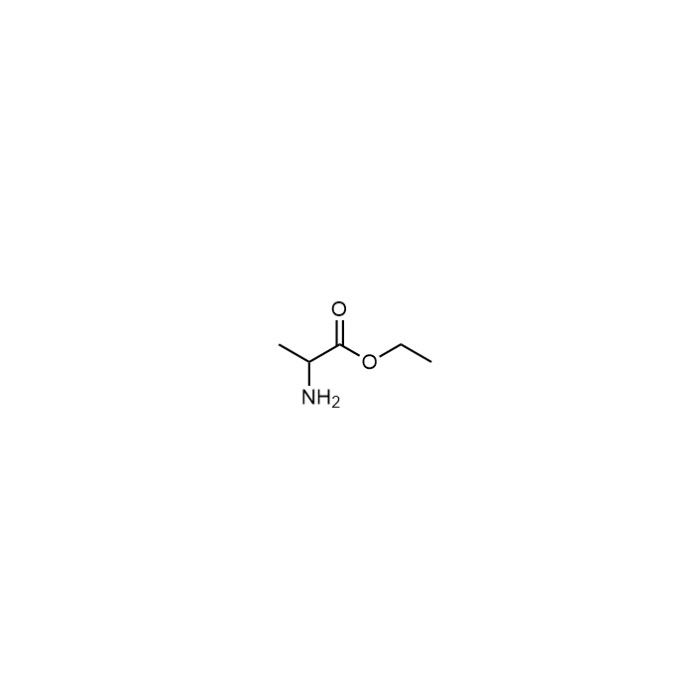
This compound belongs to the class of organic compounds known as alpha amino acid esters. These are ester derivatives of alpha amino acids.
External Descriptors
Not available
1. Djoumbou Feunang Y, Eisner R, Knox C, Chepelev L, Hastings J, Owen G, Fahy E, Steinbeck C, Subramanian S, Bolton E, Greiner R, and Wishart DS. ClassyFire: Automated Chemical Classification With A Comprehensive, Computable Taxonomy. Journal of Cheminformatics, 2016, 8:61.
Determine the necessary mass, volume, or concentration for preparing a solution.
Dilution Calculator
Determine the dilution needed to prepare a stock solution.
Reconstitution Calculator
Revisões
Avaliações dos Clientes
Application Protocols
Not applicable as a validated bioassay reagent. No tested applications (e.g., WB, IHC, IF, FC) or recommended dilutions are provided for this small-molecule building block.
For synthetic applications, see the Reaction & Applications and Reaction Conditions sections for general laboratory guidance.
Biological Roles
This product is intended for research use only. Ethyl 2-aminopropanoate is a synthetic derivative of the natural amino acid alanine.
General biochemical context (literature):
Alanine (the acid form) is a proteinogenic amino acid central to nitrogen shuttling (glucose–alanine cycle) and transamination pathways. The ethyl ester is not a native metabolite but can serve as a permeable precursor in chemical biology or as a masked carboxylate for synthetic purposes.
The free base may form ammonium salts in physiological-like media; hydrolysis (chemical or enzymatic) can unmask alanine, depending on conditions and catalysts present.
Research utility in biology/chemical biology:
Pro-moieties: Amino acid esters are sometimes employed as transient protecting groups or to modulate membrane permeability in in vitro studies and probe development.
Enzyme studies: Substrate analog in investigations of esterases/peptidases; rates of hydrolysis provide mechanistic insights into active-site preferences.
Important caveats:
No established physiological role for the ethyl ester itself; it should not be construed as a nutrient or therapeutic.
Hydrolysis and amine protonation state are highly medium-dependent; interpret biological assay data with attention to pH, buffer composition, and enzyme content.
Always avoid clinical or diagnostic use; adhere strictly to research applications in controlled laboratory settings.
Buffer Applications
Ethyl 2-aminopropanoate is not a standard buffering agent. While it contains an amine, its principal use is as a synthetic building block rather than as a pH buffer.
Practical guidance:
Do not substitute this reagent for established biological or chromatographic buffers.
If present in aqueous media, expect pH-dependent protonation (ammonium formation) and potential ester hydrolysis; this undermines buffering capacity and stability.
For buffer needs, select validated systems (e.g., phosphate, HEPES, Tris) appropriate to your pH range and ionic strength requirements.
Refer to sections Reaction & Applications and Synthetic Utility for relevant uses of this compound.
Green Alternatives
As a building block, Ethyl 2-aminopropanoate itself is not readily substituted by a “greener” reagent; however, the sustainability profile of processes using it can be improved by solvent and reagent choices.
Greener solvent choices (relative to common benchmarks):
Replace DCM with EtOAc, 2-MeTHF, or CPME for acylations/couplings when feasible.
Favor MeCN or EtOAc over DMF/NMP where solubility/performance permit.
Use alcohols from biorenewable sources (ethanol, isopropanol) for workups and crystallizations.
Greener coupling strategies:
Consider water-compatible couplings (e.g., EDCI with green co-additives) or catalytic amide formation methods to minimize stoichiometric waste.
Employ solid-supported scavengers to reduce solvent use in purifications.
Performance: DCM often superior solvator; EtOAc typically adequate with slight adjustments (temperature/base).
Energy and stability:
Follow the product’s recommended −20 °C, inert storage to extend shelf life and reduce waste from hydrolysis/oxidation.
Overall, prioritize low-toxicity, biorenewable or recyclable solvents and atom-economical coupling methods without compromising the selectivity of the amino ester transformations.
Pharmaceutical Uses
No pharmacopeial or excipient status is provided for this item. This product is for research use only.
General roles in pharmaceutical research (literature):
Intermediate for peptidomimetics: The alanine motif is prevalent in peptide leads; the ethyl ester facilitates N-functionalization and subsequent conversion to amides/acids.
Pro-moiety design: Amino acid esters are explored as transient pro-ester handles to modulate physicochemical properties of investigational compounds (in vitro/in vivo research workflows). No therapeutic claims are made.
Chiral synthesis: Enantiopure L- or D-ethyl alaninate derivatives support synthesis of stereodefined APIs/intermediates; confirm enantiopurity specifications on CoA where relevant.
Manufacturing considerations:
Control of residual solvents, enantiomeric excess, and ester integrity (avoid hydrolysis) is critical during scale-up.
Selection of green solvents and robust crystallization/salt-formation protocols can streamline isolation and improve EHS profiles.
For any regulated application, dedicated GMP-grade materials and documented specifications are required; this product is not indicated for such use.
Physical Properties
Item-specific specifications are not provided in the Product Data. Values below are general literature information for ethyl 2-aminopropanoate (for reference only; not product specifications).
Molecular formula (literature): C5H11NO2
Molecular weight (literature): ~117.15 g/mol
Physical state/appearance: Not specified for this item; refer to CoA/Spec Sheet.
Boiling point: Not specified for this item; literature values vary depending on pressure and salt/free-base form.
Melting point: Not broadly tabulated for the free base; many amino esters are liquids or low-melting solids. Not specified for this item.
Density: Not specified for this item; refer to CoA/Spec Sheet.
Refractive index: Not specified for this item; refer to CoA/Spec Sheet.
pKa (literature, conjugate acid of –NH2): typically in the range pKaH ≈ 9–10 for simple α-amino esters; exact value depends on medium and substituents.
LogP/logD (literature expectation): α-amino esters are moderately polar and often show pH-dependent partitioning; specific values not tabulated here.
Solubility (general behavior):
Miscible to highly soluble in many polar organic solvents (e.g., methanol, ethanol, acetonitrile, dichloromethane, THF).
Limited solubility in nonpolar hydrocarbons; increased solubility upon formation of salts in water/alcohols.
Note: Consult the product’s CoA/SDS for authoritative physical constants and handling characteristics of this specific lot.
Quality and Grades
Item-specific grade/purity: Not specified for this item; refer to CoA/Spec Sheet.
General guidance on grades for amino ester building blocks:
Research or “reagent” grade: Suitable for most synthesis applications. Trace water and alcohol content are typically controlled but may not be minimized to chromatographic standards.
High-purity/peptide synthesis grades (when offered): Low residual solvents, low inorganic/metal content, and controlled enantiopurity (for L- or D-forms). Useful in SPPS or solution-phase coupling.
HPLC grade solvents vs. reagent solutes: For coupling or kinetic studies, pair the building block with low-UV, low-peroxide solvents to minimize side reactions.
Stabilizers/inhibitors: None specified for this item. Primary amines generally do not require polymerization inhibitors; the ester moiety benefits from dry, inert storage to prevent hydrolysis.
What to check on the CoA for this product type:
Identity (NMR, IR, HRMS) and, if relevant, optical rotation/enantiomeric excess.
Assay/purity by GC or HPLC.
Residual solvents and water (KF) if your process is moisture-sensitive.
Appearance and color, acid/base number (where applicable), and any noted stabilizers.
Always align your application’s requirements (chiral purity, residual solvent limits, water content) with the actual CoA specifications for the supplied lot.
Reaction and Applications
Ethyl 2-aminopropanoate (ethyl alaninate) is a versatile α-amino ester building block used across organic synthesis, peptide chemistry, and medicinal chemistry.
Amide bond formation: Conversion to N-acyl alaninates using acid chlorides/anhydrides or carbodiimide/uronium/phosphonium coupling systems (e.g., EDCI/HOBt, HATU, PyBOP). Subsequent hydrolysis of the ester affords alanine-containing amides/peptides.
N-protection chemistry: Formation of Boc-, Cbz-, or Fmoc-protected alaninate derivatives. Protecting the amine allows selective manipulation of the ester (hydrolysis, transesterification, reduction).
Ester manipulations: Controlled hydrolysis to alanine (acidic or basic aqueous conditions), transesterification to other alcohol esters, or reduction (e.g., with LiAlH4 or borane) to the corresponding amino alcohol.
Reductive alkylation: Formation of N-alkyl alaninate derivatives via imine formation with aldehydes/ketones followed by reduction (NaBH3CN, NaBH(OAc)3, or catalytic hydrogenation), enabling rapid SAR exploration.
Chiral synthesis: When enantiopure (L- or D-), serves as a chiral precursor for peptidomimetics and small-molecule scaffolds. Racemic material can be resolved enzymatically or via chiral derivatization.
Heterocycle construction: Acts as a nucleophilic partner in formation of oxazolinones/oxazolines or β-lactams after suitable activation/protection steps.
Practical tips:
Keep reactions anhydrous to avoid ester hydrolysis; use base scavengers and inert atmosphere as provided in the Storage guidance.
For acylations, pre-form amine salts (e.g., HCl) if needed to modulate reactivity/selectivity, then liberate the free base in situ with a non-nucleophilic base (DIPEA).
Monitor for competing transesterification in alcoholic solvents; choose aprotic media for aminolysis/couplings when the ethyl ester must be retained.
Reaction Conditions
The following are general, literature-informed conditions commonly used with α-amino esters such as ethyl 2-aminopropanoate. They are guidance only and not specifications for this product.
N-Acylation (forming N-acyl alaninates):
Solvent: DCM, THF, EtOAc, or MeCN (anhydrous).
Base: DIPEA or TEA (2–3 equiv) for acid chlorides/anhydrides; catalytic DMAP can accelerate anhydride acylations.
Temperature: 0 °C to rt; exotherms possible on addition of acylating agent.
Workup: Aqueous quench followed by organic extraction; avoid prolonged aqueous contact to limit ester hydrolysis.
Carbamate formation (Boc-protection):
Reagents: Boc2O (1.1–1.5 equiv), base (NaHCO3, K2CO3, or DIPEA).
Solvent: Dioxane/water biphasic or MeCN/THF (anhydrous) for non-aqueous variants.
Temperature: 0 °C to rt; typical times 1–4 h.
Reductive amination (N-alkylation):
Solvent: MeOH, EtOH, or DCE/MeCN.
Conditions: Carbonyl partner (1.0–1.5 equiv), NaBH3CN or NaBH(OAc)3 (1.2–2.0 equiv), weak acid (AcOH) as needed.
Temperature: 0 °C to rt; 2–16 h.
Ester hydrolysis to alanine:
Acidic: 6 M HCl (aq), reflux to rt depending on desired rate; yields alanine HCl salt.
Basic: NaOH or KOH (1–2 M, aq/MeOH), 0–50 °C; careful neutralization to avoid racemization if chiral.
Reduction to amino alcohol:
Reagents: LiAlH4 (THF, 0–25 °C) or BH3·THF; slow addition to control exotherm.
Notes on stereochemistry:
For enantiopure substrates, minimize base strength/temperature and use rapid couplings (e.g., HATU) to limit racemization at the α-center.
Safety and Handling
Hazard classification and statements are not provided in the Product Data for this item. Always consult the SDS for authoritative information.
GHS classification, signal word, H-statements, pictograms: Not specified for this item; refer to SDS.
Likely hazards (general for α-amino esters): May cause skin/eye/respiratory irritation. Amines can be sensitizers/irritants; esters can hydrolyze to acidic/basic components under harsh conditions.
Storage conditions (from Product Data):
Store at −20 °C.
Protect from light.
Maintain under inert gas (argon charged) to limit oxidation, moisture uptake, and CO2 salt formation.
Incompatibilities (general): Strong acids/bases (promote hydrolysis), strong oxidizers, acid chlorides/anhydrides (uncontrolled acylation), isocyanates (urea formation), carbon dioxide/moist air (amine salt formation). Use dry apparatus.
Special risks/practical notes:
Hydrolysis: The ethyl ester can hydrolyze to alanine or alanine ethyl salt under acidic/basic aqueous conditions. Keep dry and avoid prolonged exposure to aqueous media unless intended.
Volatility/odor: Primary amino esters may have amine-like odor; use in a fume hood.
Recommended PPE: Lab coat, safety glasses/goggles, appropriate chemical-resistant gloves (e.g., nitrile), and use of a certified chemical fume hood.
First aid (general):
Inhalation: Move to fresh air; seek medical advice if symptoms persist.
Skin/eye contact: Rinse with water for at least 15 minutes; remove contaminated clothing; obtain medical attention if irritation persists.
Ingestion: Rinse mouth; do not induce vomiting unless directed by medical personnel; seek medical attention.
This material is for research use only (per Product Data).
Solvent Selection
Ethyl 2-aminopropanoate is a moderately polar, bifunctional molecule soluble in many polar organic solvents. Solvent choice is dictated by the intended transformation (acylation, coupling, aminolysis, or hydrolysis) and the need to manage the free amine.
Aqueous systems: Solubility increases upon protonation (e.g., as HCl salt); neutral free base shows modest water solubility.
Selection by application:
Acylation/carbamoylation of the amine: DCM, THF, EtOAc, or MeCN with an organic base (DIPEA, TEA) for acid chlorides/anhydrides; DMF helpful for uronium/phosphonium coupling reagents.
Amidation (ester to amide via aminolysis): Alcohol-free aprotic solvents (THF, toluene, DCM) to suppress transesterification; use coupling reagents or activate acid after hydrolysis step.
Transesterification: Anhydrous alcohols (MeOH, EtOH) with acid/base catalysts; remove alcohol byproduct to drive equilibrium when applicable.
Salt formation/purification: Alcohol/ether mixtures (EtOH/MTBE) or EtOAc/hexanes can aid crystallization of amine salts.
Comparison notes:
DCM vs. EtOAc: DCM offers superior solvation and low nucleophilicity; EtOAc is greener and often adequate for acylations with base present.
MeCN vs. DMF: MeCN is easier to remove; DMF enhances solubility for coupling reagents but is harder to dry/remove.
Storage and Reconstitution
Storage conditions (from Product Data):
Store at −20 °C.
Protect from light.
Maintain under inert gas (argon charged).
Shipped in: Ice chest + ice pads.
Rationale and handling tips:
Inert, cold, and dark storage mitigates ester hydrolysis, oxidation, and amine salt formation with CO2/moisture. Keep container tightly closed; purge headspace with argon after each use.
Allow the container to warm to room temperature under inert atmosphere before opening to prevent moisture condensation.
Reconstitution/use:
Physical form/appearance: Not specified for this item; refer to CoA/Spec Sheet.
If solid, dissolve in a dry, oxygen-free solvent suitable for your application (e.g., DCM, THF, MeCN, EtOAc, MeOH) under inert atmosphere.
If liquid, use dry syringes/micropipettes; consider preparing anhydrous stock solutions and storing aliquots at −20 °C under argon.
Avoid repeated freeze–thaw cycles; aliquot upon first opening when feasible.
Stability notes:
Avoid prolonged exposure to aqueous/alkaline media to limit ester cleavage and potential racemization at the α-carbon in chiral material.
No stabilizers are specified for this item. Monitor by NMR/GC/HPLC if storing solutions for extended periods.
For exact shelf life and specifications, consult the product’s CoA and SDS. Research use only, as noted in the Product Data.
Structure and Identity
Ethyl 2-aminopropanoate is the ethyl ester of the α-amino acid alanine (commonly called ethyl alaninate). It is an α-amino ester bearing a primary amine and a simple aliphatic side chain (methyl).
Product identity (from Product Data)
SKU: E1074138
Product Name: Ethyl 2-aminopropanoate
CAS: 17344-99-9
CID: 69236
InChIKey: 321459 (as provided)
SMILES: Not specified for this item; refer to CoA/Spec Sheet.
Backbone: α-substituted (2-position) amino functionality on a propanoate skeleton; methyl side chain at the α-carbon (alanine motif)
Stereochemistry: If not specified, material is typically racemic (DL). Enantiopure variants (L- or D-) are common in peptide/biocatalytic contexts; confirm with CoA.
2D description: CH3–CH(NH2)–C(=O)–O–CH2–CH3; the amine and ester reside on adjacent carbons enabling intramolecular H-bonding and zwitterionic interactions under certain conditions.
Synthetic Utility
Functionally, ethyl 2-aminopropanoate combines a nucleophilic primary amine with an electrophile-tunable ester, enabling divergent synthesis pathways.
Key transformations (literature):
N-derivatization: Acylation (acid chlorides/anhydrides, HATU/PyBOP/EDCI systems), sulfonylation (tosyl, mesyl), carbamoylation (isocyanates, CDI with alcohols) to build amide/carbamate libraries.
Carbonyl chemistry at the ester: Hydrolysis to alanine (acid/base), transesterification (alcohol exchange), or reduction to 2-aminopropanol derivatives (LiAlH4, BH3·THF).
Reductive amination/alkylation on nitrogen: Access to N-alkyl alaninates (SAR exploration, intramolecular cyclizations after further functionalization).
Cyclization/heterocycles: Formation of oxazolinone intermediates under dehydrating/activating conditions (e.g., CDI) that can be leveraged in peptide couplings or rearrangements.
Enantiospecific elaboration: With enantiopure starting material, retains stereocenter through N-acylation and subsequent transformations; careful choice of base/temperature avoids racemization.
Retrosynthetic value:
Serves as a masked alanine synthon: Build complex amide side chains on nitrogen, then unmask the acid via ester cleavage at a late stage, improving solubility/handling.
Facilitates convergent coupling: Pre-functionalize N, then couple the carboxylate (after hydrolysis/activation) to partners.
Practical notes:
Protect the amine (Boc, Fmoc, Cbz) when selectivity for ester transformations is required.
Use non-nucleophilic bases (DIPEA, lutidine) and anhydrous conditions to minimize side reactions and racemization at the α-carbon.
Target Specificity
Not applicable. This product is a small-molecule chemical building block, not a biological targeting reagent. No antigen/epitope, clone, isotype, or species reactivity data apply.
We use cookies to ensure the website functions properly and, where permitted, to improve your experience. You can manage your preferences at any time in Settings. Learn more in our Cookie Policy.
Shall we send you a message when we have discounts available?
Remind me later
Thank you! Please check your email inbox to confirm.
Products are supplied to verified businesses, institutions, and qualified professionals for research and development use only. Not for use in humans, animals, diagnosis, or therapy.