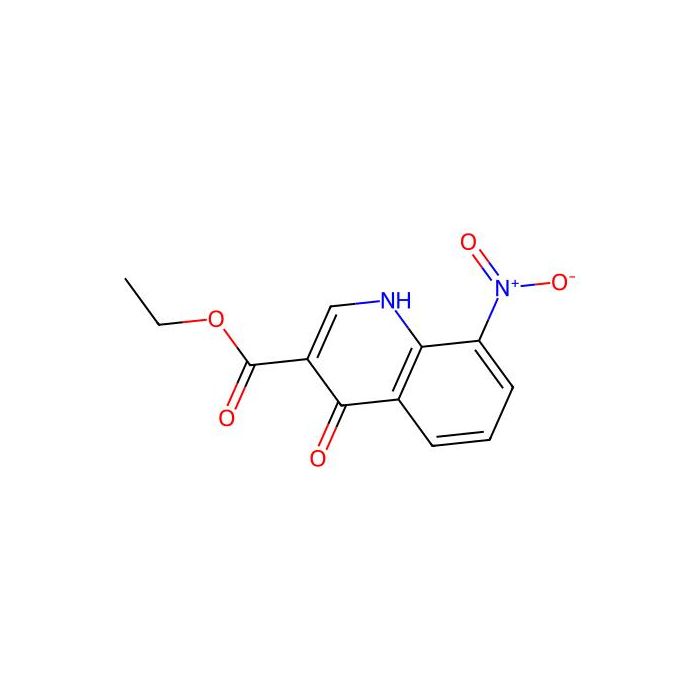
This compound belongs to the class of organic compounds known as hydroquinolones. These are compounds containing a hydrogenated quinoline bearing a ketone group.
External Descriptors
Not available
1. Djoumbou Feunang Y, Eisner R, Knox C, Chepelev L, Hastings J, Owen G, Fahy E, Steinbeck C, Subramanian S, Bolton E, Greiner R, and Wishart DS. ClassyFire: Automated Chemical Classification With A Comprehensive, Computable Taxonomy. Journal of Cheminformatics, 2016, 8:61.
Determine the necessary mass, volume, or concentration for preparing a solution.
Dilution Calculator
Determine the dilution needed to prepare a stock solution.
Reconstitution Calculator
Revisões
Avaliações dos Clientes
Application Protocols
No standardized biological application protocols are provided for this small-molecule building block.
General lab use (guidance)
Prepare stock solutions in dry DMSO, MeCN, or DCM as appropriate for your application. Filter (0.2 µm PTFE) if using in analytical assays.
For synthetic steps, follow the Reaction Conditions tab for starting points and adjust based on scale, base strength, and sensitivity of functional groups.
For assay-specific protocols (e.g., spectroscopic studies, metal sensing after derivatization), consult primary literature and validate conditions locally.
Biological Roles
No biological or clinical roles are claimed for this product. The following context is general, literature-based information about related scaffolds and is provided for researchers designing experiments.
Quinoline scaffolds (general literature)
Quinoline is a privileged heteroaromatic motif found in numerous natural products and research probes. Its ring nitrogen can engage in hydrogen bonding or coordination with metals, and the aromatic system supports diverse photophysical behaviors.
Phenolic quinolines can act as weak acids (phenol pKa typically ~8–10), enabling pH-dependent ionization and potential metal-binding through O/N donors when appropriately substituted.
Functional group influence
Nitro group at C8 is a strong electron-withdrawing substituent, generally quenching fluorescence and altering redox potential. Reduction to the corresponding aniline often restores or changes emissive properties, a tactic used in turn-on probes and drug masking strategies (research).
The ethyl ester at C3 provides a tunable handle for converting to acids/amides/other esters, altering lipophilicity and H-bonding capacity for structure–property exploration in biochemical assays.
Enzyme/biomolecule interactions
Phenolic and heteroaromatic compounds can non-specifically interact with proteins (π–π, H-bonding) and membranes (lipophilicity). Mitigate PAINS concerns by orthogonal assays and appropriate controls when screening.
All uses are for research only. No medical, diagnostic, or therapeutic claims are made.
Buffer Applications
This material is not a buffering reagent and is not typically used to prepare defined pH buffer systems.
Applicability
The compound is a hydrophobic heteroaromatic building block with a phenolic OH; while it exhibits acid–base chemistry, it is not employed as a primary buffer.
For aqueous assays requiring dissolution, consider co-solvents (DMSO, MeCN) or generate the phenolate with mild base in mixed aqueous-organic media if compatible with your application.
For actual buffer preparation, select established systems (e.g., phosphate, HEPES, Tris) appropriate to your pH range.
Green Alternatives
Greener practice considerations relate primarily to solvent/reagent choices during transformations of this building block.
Greener solvents for common steps (literature/general)
O-alkylation of phenols: Replace DMF with MeCN or propylene carbonate; consider 2-MeTHF instead of THF for base-mediated reactions (K2CO3/Cs2CO3).
Hydrolysis/coupling: Use water/ethanol co-solvents where possible. For amide couplings, aqueous micellar media (TPGS-750-M) or green coupling reagents (e.g., CDI) reduce hazardous byproducts versus uronium salts.
Nitro reduction: Transfer hydrogenation with cyclohexene, HCO2NH4, or HCO2Na in EtOAc/EtOH over Pd/C can avoid high-pressure H2.
Brief comparison (general)
THF vs 2-MeTHF: 2-MeTHF derived from renewable sources, higher boiling point reduces VOC losses; may offer improved phase separations in workups. THF forms peroxides and is more miscible with water.
DCM vs EtOAc/Me-THF: EtOAc and 2-MeTHF reduce chlorinated solvent use and ease waste handling, though solubility and chromatographic performance may differ.
DMF/NMP vs MeCN/PC: MeCN and propylene carbonate have better EHS profiles and are easier to remove (MeCN) or are non-volatile (PC), though base solubility may be lower.
Process tips
Minimize chromatographic solvent usage by crystallization or precipitation purifications (e.g., after saponification or nitro reduction).
Employ solvent recycling and in-process controls (UPLC) to reduce rework and waste.
Pharmaceutical Uses
No pharmacopeial or excipient status is claimed for this product. The following notes are general, research-context information.
Role in R&D (general)
Quinoline derivatives are widely explored as discovery chemistry motifs. Ethyl 4-hydroxy-8-nitroquinoline-3-carboxylate functions as a synthetic intermediate to access acids, amides, ethers, and anilines on the quinoline core for SAR exploration.
The ester handle allows rapid modulation of lipophilicity and solubility through derivatization (re-esterification, amidation), useful in pre-formulation screening for research compounds.
Formulation considerations (research only)
Solubility enhancement: Cyclodextrin complexation, nanoemulsions, or salt formation after converting to the corresponding acid/amine derivatives may be used in exploratory studies.
Analytical control: HPLC-UV with diode array detection is suitable due to strong aromatic/nitro chromophores; LC–MS methods benefit from quinoline ionization efficiency.
No therapeutic, diagnostic, or clinical uses are implied. For GMP or clinical development, distinct sourcing/qualification and regulatory assessments are required.
Physical Properties
Item-specific specifications are not provided in the Product Data for this material. Refer to the CoA/Spec Sheet for authoritative values.
Item-specific (from Product Data)
Appearance: Not specified for this item; refer to CoA/Spec Sheet.
Molecular weight: Not specified for this item; refer to CoA/Spec Sheet.
Literature/computed (general guidance; not specifications)
Estimated formula/mass for the named structure: C12H13N2O5; MW ≈ 265.24 g/mol (calculated).
Physical state/color: Quinoline nitro esters commonly isolate as yellow to orange crystalline solids (literature, general trend due to nitroaromatic chromophore).
UV-vis: Nitro- and quinoline-containing aromatics typically show strong absorption in the near-UV (250–380 nm) with tailing into visible (literature, qualitative).
Solubility (qualitative): Expected to be sparingly soluble in water; soluble in common organic solvents (e.g., DCM, chloroform, EtOAc, acetone). Phenolic OH improves solubility in polar aprotic media (DMF/DMSO). Phenolate salts are soluble in alcohols/water mixtures (literature, qualitative trends).
Acid/base behavior: Phenolic OH (pKa for analogous 4-hydroxyquinolines typically ~8–10, literature) enabling deprotonation; ring nitrogen weakly basic; ester neutral.
Do not use the above as acceptance criteria. For precise BP/MP, density, refractive index, water/peroxide/metal limits, or UV cutoffs: Not specified for this item; refer to CoA/Spec Sheet.
Quality and Grades
Item-specific (from Product Data)
Grade/Purity: Not specified for this item; refer to CoA/Spec Sheet.
Stabilizers/Inhibitors: Not specified for this item; refer to CoA/Spec Sheet.
Interpreting grades for heteroaromatic building blocks (general guidance)
Research/technical grade: Suitable for synthetic chemistry, library synthesis, and method development. Trace-level impurities may be present; verify by NMR/LC before critical steps.
High-purity/assay ≥98–99%: Preferred for SAR campaigns and sensitive transformations (e.g., cross-couplings, photoredox), where side products can confound results.
Chromatography suitability: If HPLC grade is specified for solvents or when using compound as analytical standard, low non-volatile residue and low UV background are desirable. For solid reagents, “HPLC grade” is uncommon; instead, look for assay, residual solvent profile, and water content on the CoA.
Practical considerations
Phenolic and nitroaromatic materials can discolor over time; assay by HPLC/UV to track quality.
If trace metals are critical (e.g., for catalytic screens), request ICP data. Not specified for this item; refer to CoA/Spec Sheet.
Water content (Karl Fischer) and residual solvents can impact O-alkylation or coupling reactions; check CoA. Not specified for this item; refer to CoA/Spec Sheet.
Reaction and Applications
As a multifunctional quinoline derivative, ethyl 4-hydroxy-8-nitroquinoline-3-carboxylate serves as a versatile intermediate for heterocycle elaboration and probe/material synthesis.
Transformations centered on each functional group (literature/general)
Phenolic OH (C4):
O-alkylation/arylation to ethers using K2CO3/Cs2CO3 in DMF/MeCN or via Ullmann-type coupling (CuI, diamine ligands) or Buchwald-Hartwig etherification (Pd, bulky ligands).
O-acylation to carbonates/carbamates; silylation (TBDMS/Imidazole) for protection.
Ethyl ester (C3):
Hydrolysis to acid (NaOH/MeOH-H2O, reflux) followed by amide coupling (EDCI/HOBt/DIPEA or HATU/DIPEA) or ester re-formation with alternative alcohols.
Direct amidation under catalytic conditions (e.g., BTMG/heat) is possible but less common.
Nitro (C8):
Reduction to an aniline via H2/Pd-C, Fe/AcOH, SnCl2/HCl, or Zn/NH4Cl, unlocking further diversification (acylation, diazotization/Sandmeyer, Buchwald couplings).
Nucleophilic aromatic substitution adjacent to nitro is limited on quinolines; however, the ring N activation and nitro group can enable directed metalation or photoinduced substitutions in specific contexts.
Ring nitrogen (N1):
N-oxide formation (mCPBA) for directing group chemistry; subsequent rearrangements (e.g., Boekelheide) after O-acylation of the N-oxide (on appropriate systems).
Application domains (non-clinical, research only)
Ligand design and chemosensor scaffolds: Quinoline cores support metal coordination and fluorescence modulation; substituent tuning (OH/NO2/CO2Et) adjusts photophysics.
Medicinal chemistry building block: Enables rapid generation of 4-alkoxy/4-amino, 8-amino, and 3-amide libraries for SAR in enzyme/receptor targeting (research context).
Materials: Nitro-to-amino reduction pathway allows push–pull systems and charge-transfer dyes in optoelectronic studies.
Reaction Conditions
Typical literature conditions for functional group interconversions on this scaffold (guidance only; optimize per substrate and scale):
O-Alkylation of the phenol (to 4-alkoxy derivatives)
Base: K2CO3 or Cs2CO3 (1.2–2.0 equiv)
Electrophile: primary alkyl halide or sulfate (1.2–1.5 equiv)
Solvent/Temp: MeCN (reflux, 3–12 h) or DMF (50–80 °C)
Notes: Add KI (catalytic) to accelerate. Protect ester if transesterification risk exists.
Ester hydrolysis (to the 3-carboxylic acid)
Conditions: NaOH (1–2 M) in MeOH/H2O (4:1 to 1:1), 25–60 °C, 1–6 h
Workup: Acidify to pH ~2 with HCl; isolate by filtration/extraction.
Amide coupling (from acid)
Reagents: HATU or EDCI/HOBt, amine (1.2–1.5 equiv), DIPEA (2–3 equiv)
Solvent: DMF, DCM, or MeCN; 0–25 °C then to RT, 2–16 h.
Nitro reduction (to the 8-anilino derivative)
Catalytic hydrogenation: H2 (1–3 atm), Pd/C (5–10 wt%), EtOH or EtOAc, RT–40 °C, 2–8 h.
Alternative: Fe (5–6 equiv) in AcOH/H2O (reflux) or SnCl2·2H2O (3–4 equiv) in EtOH/HCl.
Notes: Monitor to avoid over-reduction; phenol and ester typically tolerated under mild conditions.
Protection of phenol
TBDMS-Cl/imidazole in DMF, RT–40 °C; or BnBr/K2CO3 in acetone/DMF, 40–60 °C; deprotect with TBAF (silyl) or hydrogenolysis (benzyl).
N-oxide formation (quinoline N1)
Reagent: mCPBA (1.1–1.5 equiv) in DCM at 0 °C to RT, 1–3 h.
Expected yields vary with substituents; analogous systems often afford 60–90% for single-step interconversions under optimized conditions (literature ranges).
Safety and Handling
Always consult the SDS for authoritative safety information. Product Data for this item does not list GHS details.
Item-specific (from Product Data)
Storage condition: Room temperature
GHS classification, signal word, hazard statements, pictograms: Not specified for this item; refer to SDS.
General safety profile for nitro-quinoline esters (literature/good practice; not item-specific)
Hazards: Nitroaromatics may cause irritation to skin/eyes/respiratory tract; some nitroarenes can be harmful if swallowed and may cause methemoglobinemia upon significant exposure. Phenolic functionality can enhance dermal absorption; handle with care. Quinoline derivatives can be harmful if inhaled or ingested; avoid dust formation.
PPE: Lab coat, nitrile gloves, safety glasses or face shield. Work in a fume hood to avoid inhalation of dust or solvent vapors during handling/dissolution.
Incompatibilities: Strong reducing agents (risk of rapid nitro reduction/heat evolution), strong oxidizers, strong bases/acids that may induce hydrolysis or transesterification. Avoid prolonged exposure to high heat and UV (possible degradation).
First aid (overview): If inhaled—move to fresh air. Skin/eye contact—rinse with water for at least 15 minutes; remove contaminated clothing. If ingested—rinse mouth; seek medical advice. In all cases, refer to SDS and medical attention as appropriate.
Fire response: Treat as combustible organic solid. Use CO2, dry chemical, or foam. Combustion may produce NOx and CO.
Waste: Collect organic waste and nitroaromatic residues in appropriate halogen-free organic waste streams; follow institutional and local regulations.
Solvent Selection
This compound is a moderately polar, heteroaromatic nitro-phenolic ester. Solvent choice hinges on balancing solubility with reaction compatibility.
Polarity & miscibility (general, literature)
Expected good solubility: DCM, chloroform, EtOAc, acetone, acetonitrile, THF, dioxane.
High-solubility polar aprotics: DMF, DMSO, NMP (useful for O-alkylation or SNAr conditions).
Alcohols: MeOH/EtOH—moderate solubility; deprotonation to phenolate increases solubility.
Water: Likely low solubility as neutral species; increases under basic conditions (phenolate) or in mixed aqueous-organic systems.
Selection tips
O-Alkylation of the phenol: DMF or acetonitrile with K2CO3/Cs2CO3; avoid strongly nucleophilic solvents that could transesterify.
Hydrolysis to the acid: MeOH/H2O or THF/H2O with base (NaOH/KOH), then acidify.
Nitro reduction: Alcoholic solvents (EtOH/MeOH) or ethyl acetate under H2/Pd-C; avoid strongly basic media that may saponify ester unless desired.
Purification: Normal-phase silica using DCM/EtOAc/hexanes; add 0.1–1% AcOH if tailing occurs due to phenol.
Brief comparison (general)
DCM vs EtOAc: DCM provides higher solubility and sharper chromatography; EtOAc is greener and compatible with aqueous workups.
MeCN vs DMF: MeCN is easier to remove and often sufficient; DMF offers higher solubility for salts/bases but is harder to dry/remove.
Storage and Reconstitution
Item-specific (from Product Data)
Storage Conditions: Room temperature
Shipped In: Not specified for this item; refer to CoA/Spec Sheet.
General guidance for this compound class
Container: Store in a tightly sealed amber glass bottle to limit light exposure (nitroaromatics and phenolics can slowly degrade/discolor under strong light).
Atmosphere: Store in a dry environment; consider desiccant. Avoid prolonged exposure to moisture which may promote slow ester hydrolysis.
Stability: Quinoline nitro esters are typically shelf-stable at ambient conditions when kept dry and protected from light/heat. Re-test by NMR/HPLC if stored >12 months.
Reconstitution/solution preparation
Solvents: DMSO, DMF, MeCN, DCM, EtOAc, or alcohols as compatible with intended use.
Concentration: Prepare concentrated stocks (e.g., 10–100 mM in DMSO) for screening; dilute into working media immediately before use.
Handling: Warm gently and sonicate to aid dissolution if needed. For aqueous systems, use co-solvent or convert to phenolate under mild base if appropriate.
Freeze–thaw: For solutions, minimize cycles; aliquot and store at 2–8 °C or −20 °C depending on solvent stability. Solid is best kept at room temperature as indicated, protected from moisture.
Refer to the product’s CoA/SDS for definitive storage and handling instructions.
Structure and Identity
Ethyl 4-hydroxy-8-nitroquinoline-3-carboxylate is a heteroaromatic quinoline derivative bearing three key substituents: a phenolic OH at C4, an ethyl ester at C3, and a nitro group at C8.
Item-specific (from Product Data)
SKU: E692053
CAS: 109799-69-1
PubChem CID: 734639
InChIKey: 465753 (as provided; appears truncated—verify against CoA/SDS)
SMILES: Not specified for this item; refer to CoA/Spec Sheet.
Literature/computed identifiers and features (for reference; not item specifications)
Typical molecular formula (computed from substituents): C12H13N2O5
Structural features: quinoline fused bicyclic system (benzene fused to pyridine), phenolic hydroxyl at position 4 (resorcinol-like acidity on the quinoline core), ethyl carboxylate at position 3 (ester), strongly electron-withdrawing nitro at position 8, ring nitrogen at position 1.
2D structure description: a planar quinoline scaffold; on the pyridine ring, C3 carries a –C(=O)OEt group; adjacent C4 bears –OH; on the distal benzene portion (peri to the ring N), C8 bears –NO2. No stereocenters present; expected as a single constitutional isomer.
Notes
Where exact identifiers (SMILES/InChIKey) are critical, consult the item’s CoA/Spec Sheet for confirmation. The above formula and mass are provided as general/literature computations for the named structure.
Synthetic Utility
This reagent is a richly functionalized quinoline that enables convergent diversification at three orthogonal sites, making it a valuable node in retrosynthetic planning.
Orthogonal handles
C4–OH: Readily protected (silyl/benzyl/acetyl) or elaborated to ethers/esters/aryl ethers; serves as a nucleophile after base activation.
C3–CO2Et: Convertible to acids (hydrolysis), amides (coupling), or alternative esters (transesterification). Decarboxylation may be feasible from the acid under forcing conditions or after activation (e.g., Curtius from acyl azide to amine-bearing derivatives).
C8–NO2: Strategic handle for installing an aniline (reduction), then accessing diazonium chemistry (Sandmeyer) to introduce halide, cyano, or perform azo coupling; also a directing EWG for certain metalations.
Quinoline core manipulations
N-oxide chemistry (mCPBA) can direct C–H functionalization and facilitate rearrangements (e.g., O-acyloxylations), allowing substitution patterns otherwise difficult to achieve.
Cross-coupling after halogenation (e.g., NBS/NCS or diazotization routes) provides rapid library build-out (Suzuki, Buchwald, Chan–Lam for O-arylation at C4 derivatives).
Strategic advantages
Electronic differentiation (NO2 vs OH/CO2Et) allows selective reactivity control.
The scaffold supports photophysical tuning; post-reduction (–NH2) can create push–pull systems relevant to sensing/materials.
Use cases include: late-stage diversification, probe dye precursors, and heteroaromatic fragment growth in medicinal chemistry.
Target Specificity
Not applicable. This product is a small-molecule chemical reagent, not a biological targeting agent (e.g., antibody, ligand with validated selectivity). No antigen/epitope, species reactivity, clone, or isotype information applies.
Usamos cookies para garantir o funcionamento adequado do site e, quando permitido, para melhorar a sua experiência. Você pode gerenciar suas preferências a qualquer momento nas Configurações. Saiba mais em nossa Política de Cookies.
Deseja que lhe enviemos uma mensagem quando tivermos descontos disponíveis?
Lembrar-me mais tarde
Obrigado! Por favor, verifique a sua caixa de entrada de e-mail para confirmar.
Products are supplied to verified businesses, institutions, and qualified professionals for research and development use only. Not for use in humans, animals, diagnosis, or therapy.