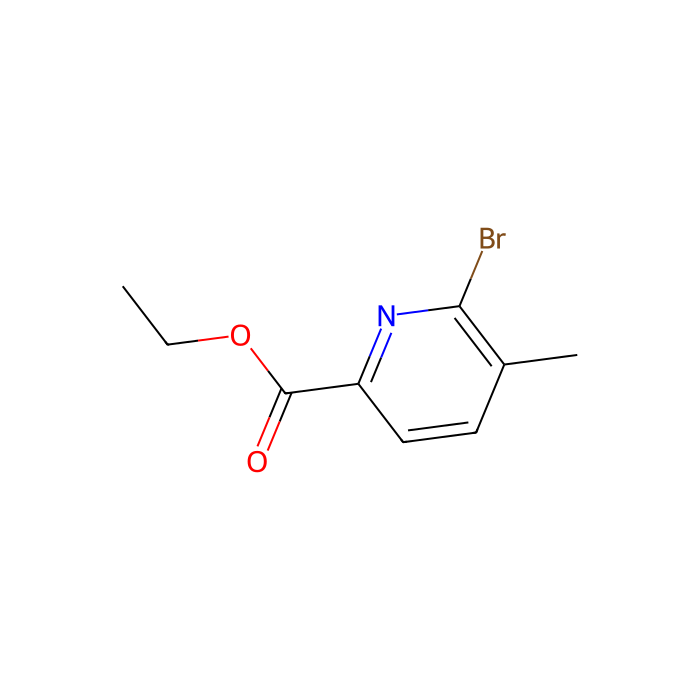
This compound belongs to the class of organic compounds known as 5-alkyl-2-carboxypyrimidines. These are pyrimidine-2-carboxylic acids that carry an alkyl group at the 5-position of the pyridine ring.
External Descriptors
Not available
1. Djoumbou Feunang Y, Eisner R, Knox C, Chepelev L, Hastings J, Owen G, Fahy E, Steinbeck C, Subramanian S, Bolton E, Greiner R, and Wishart DS. ClassyFire: Automated Chemical Classification With A Comprehensive, Computable Taxonomy. Journal of Cheminformatics, 2016, 8:61.
Determine the necessary mass, volume, or concentration for preparing a solution.
Dilution Calculator
Determine the dilution needed to prepare a stock solution.
Reconstitution Calculator
Revisões
Avaliações dos Clientes
Application Protocols
No biological assay protocols (e.g., WB, IHC, IF, FC) are applicable to this small-molecule reagent. For synthetic use, consult the Reaction Conditions and Synthetic Utility sections for representative procedures and adapt to your target transformation and scale.
Biological Roles
This product is a synthetic heteroaromatic building block and does not have an intrinsic biological role in cells or organisms.
General note: Picolinic acid derivatives can act as metal ligands in coordination chemistry, but the present compound is an ethyl ester and not designed as a biological chelator.
Applications context: Use is primarily in chemical synthesis to access substituted picolinic acids, amides, and related motifs that may be evaluated in biochemical assays during discovery research. Any biological activity would pertain to downstream derivatives and must be established empirically.
No item-specific biological function, pathway involvement, or enzymatic interactions are provided. For research use only.
Buffer Applications
Not typically applicable. Ethyl 6-bromo-5-methylpicolinate is a neutral, poorly water-soluble organic building block and is not used as a buffering agent. For aqueous work, focus on the Synthesis/Reaction sections for hydrolysis or derivatization steps that may require standard laboratory buffers (e.g., phosphate, carbonate) as auxiliary media.
Green Alternatives
Greener choices center on solvent and coupling methodology selection, as the substrate itself is a fixed building block.
Solvent substitutions (literature/general):
Replace DCM with EtOAc or 2-MeTHF for workups and extractions.
Use 2-MeTHF or CPME instead of THF/dioxane for couplings and organometallics; both offer improved safety and life-cycle profiles and higher boiling points (useful for reflux conditions).
Consider bio-based ethanol as co-solvent in Suzuki aqueous mixtures.
Catalysis and bases:
Employ ligand-optimized Pd catalysis (e.g., XPhos/SPhos) to reduce catalyst loadings and reaction temperatures.
Favor aqueous inorganic bases (K2CO3, K3PO4) over strong organic bases when compatible with the ester functionality.
Alternative couplings:
Nickel catalysis can enable lower-cost, lower-Pd residue processes for aryl bromides, though pyridine substrates may require ligand tuning.
Avoid Stille where possible due to organotin toxicity and waste.
Workup/waste minimization:
Telescoping saponification–amidation without isolation of the acid can reduce solvent use.
Use solid-supported scavengers to reduce aqueous waste from extractions.
Trade-offs: Greener solvents may alter solubility or rate; catalyst/ligand changes can impact chemoselectivity on pyridine substrates. Pilot small-scale screens to balance EHS gains with yield and impurity control.
Pharmaceutical Uses
Regulatory/excipient status: No pharmacopeial/excipient information is provided. This material is supplied for research use only.
Formulation role: Not used directly as a drug product excipient. Its typical role is as a synthetic intermediate to prepare more advanced molecules (e.g., amides or 6-substituted analogs) that may be investigated during medicinal chemistry campaigns.
Process considerations (general): For route scouting toward APIs, the ethyl ester can be hydrolyzed to the acid and coupled to amines under GMP once appropriate controls, specifications, and impurity clearances are established. Residual palladium/nickel from couplings and residual halides should be controlled per ICH Q3D/Q3A if developed further.
No therapeutic or clinical claims are made for this product.
Physical Properties
Item-specific physico-chemical specifications have not been provided for this catalog entry. Values below are general/literature-style expectations for the scaffold and must not be construed as specifications.
Appearance (item-specific): Not specified for this item; refer to CoA/Spec Sheet.
Melting/Boiling point (literature/analogous compounds): Not specified for this item; consult literature for closely related 6-bromopyridine-2-carboxylate esters.
Density (literature): Not specified for this item.
Refractive index (literature): Not specified for this item.
Solubility (general expectations):
Likely soluble in common organic solvents (e.g., DCM, chloroform, EtOAc, THF, toluene, acetonitrile) based on ester/aryl bromide functionality (literature/general).
Expected to have very low aqueous solubility (literature/general) due to aromatic core and absence of ionizable groups at neutral pH.
LogP (qualitative, literature expectation): Moderate lipophilicity anticipated from aryl bromide and ester (no item-specific logP available).
pKa: The pyridine nitrogen is weakly basic (typical conjugate acid pKa of pyridines ~5.2, literature); no item-specific pKa reported for this substitution pattern.
For definitive physical property data and release specifications, please refer to the product CoA/Spec Sheet.
Quality and Grades
Grade/Purity (item-specific): Not specified for this item; refer to CoA/Spec Sheet for actual assay and impurity profile.
What to expect on the CoA (general): Identity confirmation by NMR/HRMS/IR and chromatographic purity (e.g., HPLC/GC) are typical for research-grade building blocks. Residual solvents, water content, and inorganic impurities may also be reported when relevant.
Stabilizers/Inhibitors: None specified for this item; refer to CoA/Spec Sheet. Given the functionality, stabilizers are generally not required, but moisture control can help minimize ester hydrolysis during long storage.
Storage per Product Data: Room temperature; shipped under normal conditions.
Use-case alignment: Research-grade heteroaromatic building block suitable for discovery chemistry, SAR campaigns, and route scouting where a defined aryl bromide and masked carboxylate (ethyl ester) are desired. For GMP or clinical manufacturing, additional qualification and vendor auditing would be required.
Reaction and Applications
Ethyl 6-bromo-5-methylpicolinate is a versatile heteroaryl bromide–ester scaffold suited to diversification at C-6 and carboxyl-derivative manipulations.
Cross-couplings (literature):
Suzuki–Miyaura: Install diverse (hetero)aryl or alkenyl groups at C-6 using Pd catalysts (e.g., Pd(PPh3)4, Pd2(dba)3/XPhos) with bases such as K2CO3 or Cs2CO3 in dioxane/H2O or toluene/EtOH/H2O.
Buchwald–Hartwig amination: Formation of 6-aminated derivatives using ligands like BrettPhos/XPhos and strong bases (NaOtBu) in toluene or dioxane.
Stille/Negishi/Kumada: Alternative couplings where applicable; consider tin waste issues (Stille) and sensitivity of the ester under strongly basic conditions (Kumada/Negishi).
Halogen–metal exchange (literature): Rapid Li–Br exchange at low temperature (e.g., s-BuLi in THF, ≤−78 °C) enables formylation, acylation, or borylation, with care to avoid ester reduction or overreaction.
Ester transformations (literature):
Saponification to 6-bromo-5-methylpicolinic acid (aq. NaOH/LiOH in THF/MeOH/H2O) followed by amide coupling (EDC/HOBt, HATU/DIPEA).
Reduction to the corresponding alcohol (LiAlH4, DIBAL-H; control conditions to avoid affecting the aryl bromide).
Hydrogenolysis of aryl bromide is generally slower than ester reduction; select catalysts/conditions accordingly.
Directed metalation (literature/general): The ring nitrogen can direct ortho metalation; however, the 2-carboxylate and existing substituents bias reactivity—practitioners typically modify at C-6 via the bromide handle.
Applications span medicinal chemistry scaffold synthesis, agrochemical intermediate preparation, and library buildouts where the picolinic motif improves coordination or binding properties.
Reaction Conditions
The following are literature-style general conditions for analogous 6-bromopyridine-2-carboxylate substrates. They are not item-specific specifications.
Solvent: 1,4-dioxane/H2O (4:1) or toluene/EtOH/H2O (4:1:1).
Temp/Time: 70–100 °C, 2–12 h.
Notes: Pyridine substrates can benefit from electron-rich biaryl phosphines; aqueous phase aids boronate participation.
Buchwald–Hartwig amination (C-6 amination):
Catalyst: Pd2(dba)3 (1 mol% Pd) with BrettPhos or RuPhos (2–4 mol%).
Base: NaOtBu or Cs2CO3 (2–3 equiv).
Solvent: Toluene or dioxane.
Temp/Time: 80–110 °C, 4–16 h.
Notes: Control equivalents to avoid ester transesterification; use dry conditions.
Saponification to acid:
Reagents: LiOH·H2O or NaOH (2–3 equiv).
Solvent: THF/MeOH/H2O (2:1:1).
Temp/Time: rt to 50 °C, 1–6 h.
Workup: Acidify to pH ~2 then extract with EtOAc.
Ester reduction:
DIBAL-H (1.2–2.0 equiv) in toluene/THF at −78 to 0 °C to give aldehyde; quench carefully.
LiAlH4 (1.5–2.0 equiv) in THF at 0–25 °C to give primary alcohol; protect aryl bromide from hydrogenolysis by avoiding catalytic hydrogenation.
Halogen–metal exchange:
s-BuLi (1.1 equiv) in dry THF at −78 °C, then electrophile (e.g., DMF for formylation). Protect ester if incompatibilities arise.
Actual conditions require optimization per substrate and scale.
Safety and Handling
GHS classification, pictograms, H-statements (item-specific): Not specified for this item; refer to the product SDS for authoritative classifications.
General hazards (literature/general): Aromatic bromides and esters may cause skin/eye irritation and are harmful if swallowed or inhaled. Treat as a combustible organic. Avoid dust/aerosol generation.
PPE: Use appropriate lab attire including lab coat, safety glasses or splash goggles, and compatible chemical-resistant gloves (e.g., nitrile). Employ a fume hood to control vapors/aerosols.
Incompatibilities: Strong oxidizers; strong bases/acids may promote hydrolysis or decomposition. Avoid prolonged exposure to moisture if hydrolysis is a concern during sensitive operations.
First aid overview (general):
Inhalation: Move to fresh air; seek medical attention if symptoms persist.
Skin: Wash with soap and water; remove contaminated clothing.
Eyes: Rinse cautiously with water for several minutes; remove contact lenses if present and easy; seek medical advice if irritation continues.
Ingestion: Rinse mouth; do not induce vomiting; seek medical attention.
Spill/Release: Absorb with inert material (vermiculite, sand), collect for disposal. Prevent entry into drains.
Firefighting: Use dry chemical, CO2, or foam. Combustion may produce COx, NOx, HBr/Br2; firefighters should wear self-contained breathing apparatus.
Always consult the current SDS before handling. For research use only.
Solvent Selection
This compound is a moderately lipophilic heteroaromatic ethyl ester with an aryl bromide. It behaves as a neutral, non-protic substrate.
Polarity class (general): Moderately nonpolar to mid-polar organic solute; favors aprotic organic solvents.
Likely miscibility/solubility (literature/general): Good solubility in DCM, chloroform, EtOAc, THF, acetone, acetonitrile, toluene; poor solubility in water and in very nonpolar alkanes at room temperature.
Coupling/cross-coupling: Mixed aqueous-organic media (e.g., dioxane/H2O, toluene/EtOH/H2O) are often effective for Suzuki/Buchwald reactions of aryl bromides on pyridines.
Nucleophilic substitutions/reductions: Anhydrous ethers (THF, 2-MeTHF) or hydrocarbons (toluene) are common for halogen–metal exchange or hydride reductions of the ester.
Hydrolysis/amidation: THF/MeOH/H2O mixtures for saponification to the acid; polar aprotic solvents (DMF, NMP, MeCN, DCM) for carbodiimide or uronium-mediated amidations.
Small comparison (literature/general):
DCM vs EtOAc: DCM gives higher solubility and fast workups; EtOAc is greener and often adequate for extractions and crystallizations.
THF vs 2-MeTHF: Similar solvating power for organometallics; 2-MeTHF offers greener profile and higher boiling point useful for reflux couplings.
Dioxane vs CPME: Dioxane is traditional for Suzuki; CPME is a greener alternative with broad compatibility.
Select solvent based on reaction class, base/catalyst solubility, and desired environmental profile.
Storage and Reconstitution
Storage conditions (item-specific): Room temperature (per Product Data). Store tightly closed in a dry, well-ventilated place. Protect from excessive heat and direct light. Avoid prolonged exposure to moisture to limit ester hydrolysis during storage.
Shipping: Shipped under normal conditions (per Product Data).
Solution preparation (general): Prepare stock solutions in dry organic solvents (e.g., DCM, THF, MeCN, toluene, EtOAc) as needed. Filter if particulates are present. For moisture-sensitive operations (e.g., metalations), use anhydrous, oxygen-free solvents and inert atmosphere.
Reconstitution: Not applicable—material is supplied neat. If solidification occurs on cooling, gently warm to ambient and sonicate to homogeneity as appropriate.
Freeze–thaw: Not typically relevant; if storing solutions, keep under inert gas at low temperature and avoid repeated freeze–thaw cycles to minimize degradation.
Always refer to the product CoA and SDS for item-specific guidance. For research use only.
Structure and Identity
Ethyl 6-bromo-5-methylpicolinate is an ethyl ester of a substituted picolinic acid (pyridine-2-carboxylate) bearing a bromine at the 6-position and a methyl at the 5-position on the pyridine ring.
SKU: E191663
Product name: Ethyl 6-bromo-5-methylpicolinate
CAS: 1807149-82-1
PubChem CID: 71721180
InChIKey: Not specified for this item; refer to CoA/Spec Sheet.
SMILES: Not specified for this item; refer to CoA/Spec Sheet.
Molecular formula (computed from name, literature): C9H10BrNO2
Core scaffold (general description): A six-membered aromatic pyridine ring (one ring nitrogen) with a carboxylate ethyl ester at the 2-position, a methyl substituent at the 5-position, and an aryl bromide at the 6-position. No stereocenters are present.
2D structure in words: An aromatic pyridine ring with N at position 1; at position 2 a carbonyl carbon of an ethyl ester (–C(=O)OCH2CH3) is attached; adjacent positions bear a methyl (5-position) and a bromo (6-position).
Synthetic Utility
Key reactive elements of Ethyl 6-bromo-5-methylpicolinate enable orthogonal diversification:
Aryl bromide at C-6:
Entry point for Pd-catalyzed cross-couplings (Suzuki, Buchwald–Hartwig, Sonogashira after bromide activation) to install diverse fragments at C-6.
Allows halogen–metal exchange followed by electrophile trapping (formylation, borylation, stannylation) with careful protection of the ester if needed.
Ethyl ester at C-2:
Masked acid enabling late-stage hydrolysis to picolinic acid or direct conversion to amides/esters via transesterification or coupling agents (EDC/HATU/T3P).
Reduction pathways to aldehyde/alcohol for further elaboration (e.g., oxidation to acid, Mitsunobu-type inversions from the alcohol stage).
Pyridine nitrogen:
Modulates electronic properties, often making C-6 bromide sufficiently reactive in cross-coupling under mild conditions.
Potential for N-oxide strategies to direct substitution on the ring (literature) if alternative regioisomers are targeted in a multi-step plan.
Strategic value: Serves as a convergent hub—combine C-6 diversification via the bromide with independent manipulation of the 2-carboxyl handle to build libraries of 5-methylpicolinate analogs with minimal protecting-group interdependencies.
Target Specificity
Not applicable. This product is a small-molecule chemical building block and is not an antibody, probe, or biologic with defined biological targets. No antigen/epitope or species reactivity applies.
Usamos cookies para garantir o funcionamento adequado do site e, quando permitido, para melhorar a sua experiência. Você pode gerenciar suas preferências a qualquer momento nas Configurações. Saiba mais em nossa Política de Cookies.
Deseja que lhe enviemos uma mensagem quando tivermos descontos disponíveis?
Lembrar-me mais tarde
Obrigado! Por favor, verifique a sua caixa de entrada de e-mail para confirmar.
Products are supplied to verified businesses, institutions, and qualified professionals for research and development use only. Not for use in humans, animals, diagnosis, or therapy.