
Benzofuran Heteroaromatic Building-Block Guide: From “Adding an Oxygen Atom” to More Controllable Scaffold Hops and Selection Navigation (Tables A–C)
Benzofuran Heteroaromatic Building-Block Guide: From “Adding an Oxygen Atom” to More Controllable Scaffold Hops and Selection Navigation (Tables A–C)
1.A practical problem: aromatic rings are “useful,” but many projects get stuck on “unstable properties and poor scalability”
In drug discovery, aromatic rings are widely used to provide hydrophobic interactions, π–π stacking, and shape complementarity, so they appear very frequently in lead molecules. However, once you move into systematic optimization, the same set of pain points often shows up:
①. Unstable solubility and exposure window: Highly aromatic, strongly hydrophobic scaffolds often suffer from inadequate solubility and large fluctuations in in vivo exposure.
②. Multiple metabolic soft spots and hard-to-predict in vivo behavior: Polycyclic aromatic structures are prone to oxidation, producing multiple metabolites and causing drift in PK/safety risk.
③. Noisy SAR (Structure–Activity Relationship): Small structural changes often shift multiple properties at once (lipophilicity, conformation, electronics, metabolic sites), so results can swing “up and down,” making comparisons less clean and rules harder to establish.
This is where heteroaromatic building blocks show their value: not to become “more complex,” but to keep size and shape as similar as possible while making polarity, electronic effects, substitution vectors, and the metabolic window more controllable. Benzofuran is one of the high-frequency options in this category: an aromatic heterobicyclic core formed by fusion of a benzene ring and a furan ring.
2.Basic concepts: what is the “heteroaromatic building block—benzofuran”?
2.1 Definition and naming
①. Benzofuran: an aromatic heterocycle formed by fusion of a benzene ring and a furan ring; CAS: 271-89-6.
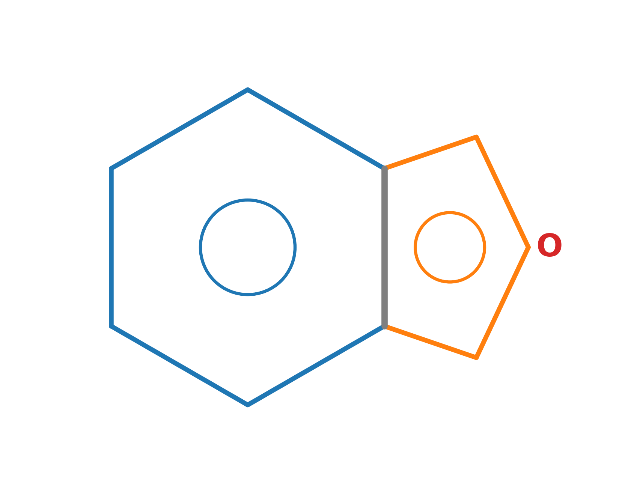
②. Common aliases / database spellings include benzo[b]furan, 2,3-benzofuran, and coumarone (different naming pathways for the same parent core). The older name coumarone typically refers to benzofuran itself; coumaran usually refers to 2,3-dihydrobenzofuran (the partially saturated form). Do not use these interchangeably.
③. The “core change” in benzofuran is that an oxygen atom is embedded into an aromatic system, enabling more tunable electronic/dipole characteristics without introducing an extra H-bond donor such as N–H.
2.2 Three easily confused “neighboring scaffolds”
Name | Relationship to benzofuran | How to think about it |
Dihydrobenzofuran | The furan portion is partially saturated | More “3D”; closer to a “rigid small ring” than a purely aromatic plane |
Dibenzofuran | Further annelation on top of benzofuran | Larger and more hydrophobic; more common in materials/environmental chemistry |
Benzofuranone | Introduces a carbonyl into the framework (not the same parent core) | Reactivity and use change markedly (often used as synthetic intermediates/fragrance-related chemistry) |
3.Structural features: why “one extra O” often makes properties more controllable
Benzofuran is frequently used in scaffold hopping, mainly because it brings three more controllable differences:
①. Shape is largely retained, but polarity/electron distribution becomes easier to tune
Benzofuran remains a fused aromatic scaffold: its planarity and aromatic surface still support hydrophobic pocket matching and π interactions. Meanwhile, introducing an oxygen atom changes the molecular dipole and electron distribution, making it easier to fine-tune “polarity and interaction mode at a similar volume,” which can help steer binding and ADME trends more directionally.
②. Provides an H-bond “acceptor,” but does not inherently add an H-bond “donor” (fewer extra state variables)
The oxygen supplies an H-bond acceptor site (typically a relatively “weak acceptor,” and benzofuran is usually not easily protonated). Because the parent core has no N–H, it often avoids adding extra “donor sites / protonation-driven state changes.” This helps keep H-bond networks and charge-state design focused on intentionally introduced functional groups.
③. Metabolic risk should be managed upfront: treat “potential activation sites” as a design parameter
In some systems, furan-like motifs may undergo oxidative activation to form reactive intermediates (e.g., epoxides or related electrophilic species), which matters for safety assessment. Therefore, it is often better to consider strategies such as “blocking the site,” tuning electronics, changing substituents, or swapping the core early in the lead stage, rather than trying to patch the issue late.
4.Classification framework: organizing the benzofuran family by “degree of saturation” and “substitution position”
4.1 Aromatic vs partially saturated (shape and the metabolism/solubility window)
Category | Structural features | Common R&D motivation |
Benzofuran (aromatic) | Planar, strongly conjugated | Retain aromatic interactions; scaffold hop and SAR series building |
Dihydrobenzofuran (partially saturated) | More 3D; more “cycloalkyl-like” | Need clearer 3D volume and vectors; reduce non-specific risk from excessive planarity |
4.2 Substitution “handle positions”
Position (high-frequency in practice) | Typical role | What it usually helps solve |
C2/C3 | Connection point; primary substitution hotspot | Rapid SAR; tune “vector/space filling”; append pharmacophores outward |
Benzene side (C4–C7) | Fine-tuning region | Tune electronics and lipophilicity; address metabolic soft spots; improve selectivity or stability |
5.Three high-frequency ways benzofuran is used in drug discovery
Use case | When you would use it | What to compare | What to look at to judge whether it becomes “more stable / more controllable” |
1. Scaffold hop | Potency is acceptable, but solubility / exposure / selectivity / metabolism are highly variable | Replace a certain aromatic module with benzofuran and run a parallel set with the smallest possible structural change | Whether potency/selectivity are retained; whether solubility and exposure become more stable; whether clearance and the metabolite profile become easier to interpret |
2. Rigid linker / spatial occupying unit (geometry locking) | During pharmacophore stitching, the linker is too flexible; conformational distribution is too broad; SAR becomes incoherent | Use benzofuran as a thin, planar, substitutable fused linking unit to fix the relative geometry | Whether SAR becomes more continuous; whether conformation/substituent vectors become more consistent; whether new metabolic soft spots appear or clearance increases |
3. Rapid series expansion around C2/C3 (draw the main SAR map) | You need to quickly scan the main substitution space, establish the “primary trend,” then fine-tune | Expand first around C2 (primary hotspot) / C3 (comparison hotspot); use C4–C7 on the benzene side for fine tuning | Whether the main SAR trend is clear; whether vector/space-filling effects and structure–effect relationships are reproducible; whether fine tuning can specifically address metabolism/selectivity issues |
6.Benzofuran in marketed drugs: three checkable examples
Drug | Public database structure/class annotation | Key point |
Amiodarone | PubChem describes it as a benzofuran derivative and labels it as an antiarrhythmic drug. | A classic example of a “benzofuran core entering real medicines”: while retaining the fused-aromatic shape, the embedded O introduces electronic/dipole differences that provide handles for property tuning. |
Dronedarone | PubChem describes it as a member of the class of 1-benzofurans, used for antiarrhythmic therapy. | A straightforward “same-core family” comparison with amiodarone: both relate to benzofuran scaffolds, reflecting a common R&D path of series building and head-to-head comparisons around a shared core. |
Benzbromarone | PubChem describes it as a member of 1-benzofurans, used for anti-gout therapy (e.g., promoting uric-acid excretion). | Representative of a common medicinal motif: benzofuran core + substituent series, which is convenient for site-by-site refinement. It also signals that the safety window should be considered upfront: benzbromarone was withdrawn by the originator/sponsor in 2003 due to a rare but severe liver-injury risk; some countries continued to use it thereafter, and the risk–benefit balance has been discussed over the long term. |
7.Aladdin benzofuran-related chemicals | Task-based selection navigation table (Product Tables A–C)
Your R&D task / experimental need | Product table | Why this table first |
Antiarrhythmic-related drug research: need APIs/reference standards; impurity/degradation profiling; HPLC/LC–MS quantitation method development | A | This table concentrates real drug molecules and their salt forms (free base / hydrochloride), making it the best starting point for method validation, impurity/degradation work, and batch consistency checks. |
Uric-acid lowering / urate transport (URAT1, etc.): pharmacology evaluation, mechanism studies, reference standards and quantitation | A | Includes representative/reference benzofuran drugs/leads commonly used in this area, enabling direct efficacy/mechanism and analytical benchmarking. |
Need to compare salt-form effects: solubility, stability, formulation/testing windows (free base vs hydrochloride) | A | Salt-form comparisons are concentrated here, suitable for salt screening logic, solubility/stability window comparisons, and quantitative method verification. |
Receptor/metabolism studies need classic tool compounds as positive controls or methodological benchmarks | A | Contains commonly used pharmacological tool-compound salt forms that better match “standard controls” in receptor assays, metabolism experiments, and analytical workflows. |
PUVA / photobiology: UVA-induced crosslinking, phototoxicity, photosensitization mechanism validation; need psoralen-type controls | B | Concentrates psoralen and typical methoxy derivatives and other photosensitizing natural products—most commonly used positive controls/standards in photobiology experiments. |
Need “parent vs substituted” photosensitization comparisons (e.g., absorption / crosslinking strength / phototoxicity window) | B | Naturally forms “parent–derivative” comparison sets in the table, facilitating structure–effect comparisons and quantitative analysis. |
Benzofuran scaffold library / lead optimization: rapid SAR runs focused on C2/C3 substitution series | C | Collects high-frequency “reaction handles” such as halides, boron sources (boronic acids/boronate esters), nitriles, aldehydes, and carboxylic acids—ideal for systematic series expansion. |
Suzuki–Miyaura coupling: need robust boron sources and matched halide substrates to rapidly expand aryl/heteroaryl scope | C | Includes both halide entry points (C2/C3) and boron sources (boronic acids / Bpin), enabling direct pairing for route screening and SAR expansion. |
Reductive amination/condensation for rapid assembly: want the easiest “side-chain entry” to build diversity | C | C2/C3 aldehydes are among the fastest side-chain entry points, suitable for quickly building a comparable set to validate SAR and property windows. |
Amide/ester coupling fragments: need stable “coupling handles” to systematically tune polarity/solubility | C | C2/C3 carboxylic acids are concentrated here and are among the most common connection points for amides/esters, enabling systematic tuning while keeping the core unchanged. |
Core comparison: assess how “aromatic planar (benzofuran) vs more 3D (2,3-dihydrobenzofuran)” affects properties/activity | C | Contains both the aromatic parent core and partially saturated analogs, enabling direct head-to-head experiments on “shape/conformation windows.” |
Need fused aryl-oxygen heterocycles as materials/scaffold references, or comparisons to larger fused systems | C | Includes dibenzofuran (oxygen fluorene) and other fused scaffolds, which can serve as reference points for larger fused aryl-oxygen systems. |
Table A|Drug APIs / Pharmacological Tool Compounds (including salt-form comparisons)
Category | CAS No. | Aladdin Cat. No. | Name | Spec / Purity | Product features & applications |
Drug API / Reference standard | Antiarrhythmic (benzofuran-scaffold drug) | 1951-25-3 | Amiodarone | Moligand™, ≥98% | A representative benzofuran-derivative antiarrhythmic drug; used for API research, analytical benchmarking, impurity/degradation studies, and method validation. | |
Drug API / Reference standard | Salt form (solubility / formulation-window comparison) | 19774-82-4 | Amiodarone hydrochloride | ≥98% | Salt-form comparator: used to evaluate solubility, stability, and quantitative analytical methods; compared with the free base, it is closer to certain formulation and analytical contexts. | |
Drug API / Reference standard | Antiarrhythmic (benzofuran-scaffold drug) | 141626-36-0 | Dronedarone | Moligand™, ≥98% | Benzofuran-class antiarrhythmic drug; used in drug research, quality control, and impurity-profile/method-development comparisons; also serves as a real-drug example of benzofuran scaffold application. | |
Drug API / Reference standard | Salt form (solubility / formulation-window comparison) | 141625-93-6 | Dronedarone hydrochloride | ≥98% (HPLC) | Salt-form comparator: for salt screening, solubility/stability window comparisons, QC quantitation, and method benchmarking; the benzofuran core is unchanged—only the physical/existence form differs. | |
Drug API / Reference standard | Antiarrhythmic-related (benzofuran-scaffold drug) | 68-90-6 | Benziodarone | ≥98% | A representative antiarrhythmic-related drug containing a benzofuran core; used for pharmacology research, reference standard purposes, and method/impurity-profile comparisons. | |
Drug API / Reference standard | Uric-acid transport / urate-lowering (benzofuran-scaffold drug) | 3562-84-3 | Benzbromarone | ≥98% (HPLC) | A representative benzofuran-containing drug; used for pharmacology research, reference standard work, and analytical method development; also commonly cited as an example of “benzofuran core + substituent series development.” | |
Drug API / Reference standard | Uric-acid transport / urate-lowering (benzofuran-scaffold drug) | 1477-19-6 | Benzarone | ≥99% | Representative benzofuran-class drug/lead; often used in pharmacology research, reference standard work, and method development (frequently discussed in the context of benzofuran property and metabolism windows). | |
Pharmacology tool / Reference standard | β-receptor related (contains a benzofuran motif) | 60398-91-6 | Bufuralol hydrochloride | — | Common pharmacological tool compound (HCl salt); used for receptor/metabolism studies, analytical benchmarking, and method validation. |
Table B|Photosensitizing Natural Products (neighboring scaffold: furanocoumarins; PUVA / photobiology controls)
Category | CAS No. | Aladdin Cat. No. | Name | Spec / Purity | Product features & applications |
Photosensitizing natural product | Furanocoumarin (PUVA / photobiology control) | 66-97-7 | Psoralen | ≥98% | Parent psoralen: a classic control for PUVA / photo-crosslinking studies; used in photobiology, phototoxicity evaluation, and as an analytical standard. | |
Photosensitizing natural product | Furanocoumarin (PUVA / photobiology control) | 298-81-7 | 8-Methoxypsoralen | Moligand™, ≥98% | Representative psoralen derivative (8-MOP); used in UVA-induced DNA/protein crosslinking studies, photosensitization activity benchmarking, and as a quantitative analytical standard. | |
Photosensitizing natural product | Furanocoumarin (PUVA / photobiology control) | 484-20-8 | Bergapten | Moligand™, ≥98% (GC) | Typical furanocoumarin (psoralen-class) photosensitizer; commonly used in PUVA/phototoxicity and photo-crosslinking mechanism studies, method development, and as a reference standard. |
Table C|Synthetic / Coupling Building Blocks and Scaffold References (parent cores, halides, boron sources, aldehydes/acids/nitriles)
Category | CAS No. | Aladdin Cat. No. | Name | Spec / Purity | Product features & applications |
Parent core / scaffold | Benzofuran core (building block / fragment starting point) | 271-89-6 | Benzofuran | ≥99% | Fundamental aromatic heterocycle core; used for fragment libraries/scaffold screening, scaffold-hop comparisons, and as a starting material for benzofuran-derivative synthesis. | |
Parent core / scaffold | Partially saturated analog (shape / stereochemical comparison) | 496-16-2 | 2,3-Dihydrobenzofuran | ≥98% | Partially saturated version of benzofuran (more 3D / more “rigid”); used for shape and conformational-window comparisons, and as an alternative scaffold to reduce risks associated with excessive planarity during lead optimization. | |
Fused aryl-oxygen heterocycle | Materials / scaffold reference (Dibenzofuran) | 132-64-9 | Dibenzofuran | ≥98% | Fused aryl-oxygen heterocycle (often called “oxygen fluorene” in Chinese usage); widely used as a scaffold in organic electronics/emissive materials, heat-resistant aromatic-system studies, and as a synthetic reference. | |
Coupling block | Halide entry (high-reactivity electrophile) | 69626-75-1 | 2-Iodobenzofuran | ≥97% | C2 iodide is a highly reactive coupling electrophile; used to rapidly build C2-substituted benzofuran series (Suzuki/Negishi/Stille, etc.) and for route screening. | |
Coupling block | Halide entry (coupling electrophile) | 54008-77-4 | 2-Bromobenzofuran | ≥95% | One of the most commonly used coupling substrates at C2; enables rapid construction of C2-substituted series and property/activity comparisons. | |
Coupling block | Halide entry (coupling electrophile) | 59214-70-9 | 3-Bromobenzofuran | ≥97% | Used to build C3-substituted benzofuran series; suitable for Suzuki series expansion when paired with boronic acids/boronate esters. | |
Coupling block | Boronic acid (common Suzuki boron source) | 98437-24-2 | Benzofuran-2-boronic acid (with variable amounts of anhydride) | ≥98% | Key C2 boron source for constructing C2-substituted benzofurans; supports “main-series” Suzuki coupling and rapid SAR expansion in lead optimization. | |
Coupling block | Boronate ester (stable Suzuki boron source) | 796851-30-4 | 3-(4,4,5,5-Tetramethyl-1,3,2-dioxaborolan-2-yl)benzo[b]furan | ≥98% | Typical Bpin boronate ester: enables rapid Suzuki–Miyaura series building; convenient for installing aryl/heteroaryl substituents on the benzofuran framework for SAR studies. | |
Synthetic block | Aldehyde entry (reductive amination / condensation / rapid coupling) | 4265-16-1 | Benzofuran-2-carbaldehyde | ≥97% | High-frequency “rapid-assembly handle” at C2; used for reductive amination, condensations, and derivatization to quickly build side chains and enable SAR exploration. | |
Synthetic block | Aldehyde entry (reductive amination / condensation / rapid coupling) | 4687-25-6 | Benzofuran-3-carbaldehyde | ≥95% | C3 aldehyde is suitable as a “side-chain entry” while keeping the core unchanged; used for reductive amination/condensation to build diverse substitution for SAR iteration. | |
Synthetic block | Carboxylic-acid entry (amide/ester formation / fragment coupling) | 496-41-3 | Benzofuran-2-carboxylic acid | ≥99% | High-frequency “coupling handle” at C2; used for amide/ester formation to build lead series, enabling systematic tuning of polarity and exposure windows. | |
Synthetic block | Carboxylic-acid entry (amide/ester formation / fragment coupling) | 26537-68-8 | Benzofuran-3-carboxylic acid | ≥95% | C3 carboxylic acid for amide/ester series building; often used to systematically tune polarity, solubility, and metabolic windows without changing the core. | |
Synthetic block | Nitrile entry (electronic tuning / downstream transformations) | 41717-32-2 | Benzofuran-2-carbonitrile | ≥97% | C2 nitrile offers strong electron-withdrawing tuning and helps adjust metabolic-site/polarity windows; also serves as a starting point for downstream conversion routes (to acids/amides/amines, etc.). |
Note: The items above are representative Aladdin products. For additional specifications, please refer to the product list at the end of the article, or search the Aladdin website using the product name / CAS / catalog number.
For more related articles, please see below:
Experimental determination of nitrofuran metabolite residues in foods of animal origin
Targeted drug discovery: scarce and inefficient, what is the geometry of its effectiveness?
Innovations in the design of stereospecific drug molecular structures: Spirocyclic Scaffolds