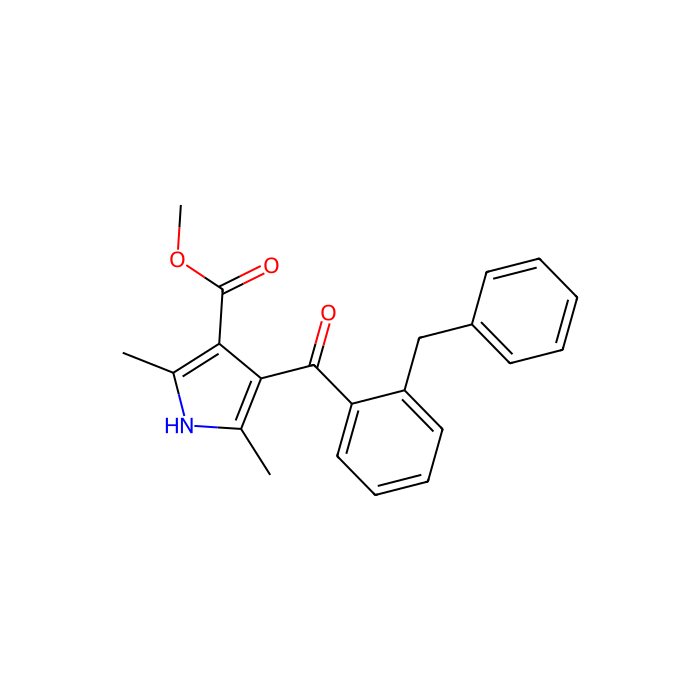
FPL 64176 - Moligand™, ≥99%(HPLC) , Activator of Ca v1.1;Activator of Ca v1.2;Activator of Ca v1.3, CAS No.120934-96-5, Activator of Ca v1.1;Activator of Ca v1.2;Activator of Ca v1.3

CAS: 120934-96-5 Cat. No.: F286559 Fórmula: C22H21NO3 Peso molecular: 347.41
Disponível para encomenda
GRAU & PUREZA Moligand™ ? Moligand™ — Aladdin's line of ligands and bioactive small molecules. Use for receptor, pathway, and binding studies needing defined small-molecule tools. ≥99%(HPLC)
Synonyms
1H-Pyrrole-3-carboxylic acid, 2,5-dimethyl-4-(2-(phenylmethyl)benzoyl)-, methyl ester|SDCCGSBI-0050531.P002|2,5-Dimethyl-4-[2-(phenylmethyl)benzoyl]-1H-pyrrole-3-carboxylic acid methyl ester|2,5-Dimethyl-4-[2-(phenylmethyl)benzoyl]-1H-pyrrole-3-carboxylic acid, methyl ester|Methyl 2,5-dimethyl-4-(2-(phenylmethyl)benzoyl)-1H-pyrrole-3-carboxylate|FPL 64176|Lopac-F-131|methyl 4-(2-benzylbenzoyl)-2,5-dimethyl-1H-pyrrole-3-carboxylate.|1H-Pyrrole-3-carboxylicacid, 2,5-dimethyl-4-[2-(phenylmethyl)benzoyl]-, methyl ester|Methyl-2,5-dimethyl-4-(2-(phenylmethyl)benzoyl)-1H-pyrrole-3-carboxylate|FPL64176|FPL-64176|Methyl4-(2-benzylbenzoyl)-2,5-dimethyl-1H-pyrrole-3-carboxylate|4-(2-Benzyl-benzoyl)-2,5-dimethyl-1H-pyrrole-3-carboxylic acid methyl ester|methyl 2,5-dimethyl-4-[2-(phenylmethyl)benzoyl]-1H-pyrrole-3-carboxylate|Methyl 4-(2-benzylbenzoyl)-2,5-dimethyl-1H-pyrrole-3-carboxylate
Storage
Store at 2-8°C,Protected from light
Shipped In
Wet ice
★
Tamanho
Alemanha (EU)
USA*
Preço
Qtd
5mg
F286559-5mg
Sob encomenda · 8–12 semanas
121,40€
10mg
F286559-10mg
Sob encomenda · 8–12 semanas
208,17€
25mg
F286559-25mg
Sob encomenda · 8–12 semanas
416,43€
50mg
F286559-50mg
Sob encomenda · 8–12 semanas
798,23€
100mg
F286559-100mg
Sob encomenda · 8–12 semanas
1492,42€
Enter a quantity for the sizes you want to add.

Especificações

Sinónimos
1H-Pyrrole-3-carboxylic acid, 2,5-dimethyl-4-(2-(phenylmethyl)benzoyl)-, methyl ester | SDCCGSBI-0050531.P002 | 2,5-Dimethyl-4-[2-(phenylmethyl)benzoyl]-1H-pyrrole-3-carboxylic acid methyl ester | 2,5-Dimethyl-4-[2-(phenylmethyl)benzoyl]-1H-pyrrole-3-carboxylic acid, methyl ester | Methyl 2,5-dimethyl-4-(2-(phenylmethyl)benzoyl)-1H-pyrrol Show more
Especificações e pureza
Moligand™, ≥99%(HPLC)
Mecanismos bioquímicos e fisiológicos
Potent activator of L-type Ca2+channels (EC50= 16 nM). 40-fold more potent thanBay K 8644 as a positive inotrope in guinea pig atria.
Condições de armazenamento de armazenamento
Store at 2-8°C,Protected from light
Enviado em
Wet ice
Este produto requer transporte de cadeia fria. Serviços terrestres e outros serviços econômicos não estão disponíveis.
Grau
Moligand™
Tipo de ação
ACTIVATOR
Mecanismo de ação
Activator of Ca v1.1;Activator of Ca v1.2;Activator of Ca v1.3
Pureza
≥99%(HPLC)
Nomes e identificadores
SMILES
CC1=C(C(=C(N1)C)C(=O)OC)C(=O)C2=CC=CC=C2CC3=CC=CC=C3
IUPAC Name
methyl 4-(2-benzylbenzoyl)-2,5-dimethyl-1H-pyrrole-3-carboxylate
InChIKey
MDMWHKZANMNXTF-UHFFFAOYSA-N
InChI
1S/C22H21NO3/c1-14-19(20(15(2)23-14)22(25)26-3)21(24)18-12-8-7-11-17(18)13-16-9-5-4-6-10-16/h4-12,23H,13H2,1-3H3
SMILES isoméricas
CC1=C(C(=C(N1)C)C(=O)OC)C(=O)C2=CC=CC=C2CC3=CC=CC=C3
WGK Alemanha
3
Peso molecular
347.41
Reaxy-Rn
5445217
Reaxys-RN_link_address
https://www.reaxys.com/reaxys/secured/hopinto.do?context=S&query=IDE.XRN=5445217&ln=

Dados avançados

Taxonomic Classification

Taxonomy Tree

KingdomOrganic compounds
SuperclassBenzenoids
ClasseBenzene and substituted derivatives
SubclassDiphenylmethanes
Intermediate Tree Nodes Not available
Direct ParentDiphenylmethanes
Alternative Parents Aryl-phenylketones  Pyrrole carboxylic acids and derivatives  Benzoyl derivatives  Substituted pyrroles  Vinylogous amides  Methyl esters  Heteroaromatic compounds  Monocarboxylic acids and derivatives  Azacyclic compounds  Organopnictogen compounds  Organonitrogen compounds  Organic oxides  Hydrocarbon derivatives  
Molecular FrameworkAromatic heteromonocyclic compounds
Substituents Diphenylmethane - Aryl-phenylketone - Benzoyl - Pyrrole-3-carboxylic acid or derivatives - Aryl ketone - Substituted pyrrole - Heteroaromatic compound - Pyrrole - Vinylogous amide - Methyl ester - Carboxylic acid ester - Ketone - Carboxylic acid derivative - Monocarboxylic acid or derivatives - Azacycle - Organoheterocyclic compound - Organonitrogen compound - Organic nitrogen compound - Organic oxide - Organopnictogen compound - Organooxygen compound - Hydrocarbon derivative - Organic oxygen compound - Aromatic heteromonocyclic compound
DescriçãoThis compound belongs to the class of organic compounds known as diphenylmethanes. These are compounds containing a diphenylmethane moiety, which consists of a methane wherein two hydrogen atoms are replaced by two phenyl groups.
External Descriptors carboxylic ester - pyrroles
Estrutura 3D
Modelo de Estrutura Química Interativa


Alvos associados (humanos)
CYP1A2 Tchem Cytochrome P450 1A2 (1 Activities)
Activity TypeActivity Value -log(M)Mechanism of ActionActivity ReferencePublications (PubMed IDs)
CYP3A4 Tclin Cytochrome P450 3A4 (1 Activities)
Activity TypeActivity Value -log(M)Mechanism of ActionActivity ReferencePublications (PubMed IDs)
CACNA1C Tclin Voltage-dependent L-type calcium channel subunit alpha-1C (0 Activities)
Activity TypeActivity Value -log(M)Mechanism of ActionActivity ReferencePublications (PubMed IDs)
CACNA1D Tclin Voltage-dependent L-type calcium channel subunit alpha-1D (1 Activities)
Activity TypeActivity Value -log(M)Mechanism of ActionActivity ReferencePublications (PubMed IDs)
CACNA1S Tclin Voltage-dependent L-type calcium channel subunit alpha-1S (1 Activities)
Activity TypeActivity Value -log(M)Mechanism of ActionActivity ReferencePublications (PubMed IDs)
CHRM1 Tclin Muscarinic acetylcholine receptor M1 (12690 Activities)
Activity TypeRelationActivity valueUnitsAction TypeJournalPubMed IddoiAssay Aladdin ID
TSHR Tclin Thyroid stimulating hormone receptor (29986 Activities)
Activity TypeRelationActivity valueUnitsAction TypeJournalPubMed IddoiAssay Aladdin ID
KCNH2 Tclin HERG (29587 Activities)
Activity TypeRelationActivity valueUnitsAction TypeJournalPubMed IddoiAssay Aladdin ID
ARSA Tbio Cerebroside-sulfatase (655 Activities)
Activity TypeRelationActivity valueUnitsAction TypeJournalPubMed IddoiAssay Aladdin ID
ALDH1A1 Tchem Aldehyde dehydrogenase 1A1 (77053 Activities)
Activity TypeRelationActivity valueUnitsAction TypeJournalPubMed IddoiAssay Aladdin ID
CYP2D6 Tclin Cytochrome P450 2D6 (33882 Activities)
Activity TypeRelationActivity valueUnitsAction TypeJournalPubMed IddoiAssay Aladdin ID
NFKB1 Tclin Nuclear factor NF-kappa-B p105 subunit (1459 Activities)
Activity TypeRelationActivity valueUnitsAction TypeJournalPubMed IddoiAssay Aladdin ID
CYP1A2 Tchem Cytochrome P450 1A2 (26471 Activities)
Activity TypeRelationActivity valueUnitsAction TypeJournalPubMed IddoiAssay Aladdin ID
PIN1 Tchem Peptidyl-prolyl cis-trans isomerase NIMA-interacting 1 (36611 Activities)
Activity TypeRelationActivity valueUnitsAction TypeJournalPubMed IddoiAssay Aladdin ID
CYP2C9 Tchem Cytochrome P450 2C9 (32119 Activities)
Activity TypeRelationActivity valueUnitsAction TypeJournalPubMed IddoiAssay Aladdin ID
CYP2C19 Tchem Cytochrome P450 2C19 (29246 Activities)
Activity TypeRelationActivity valueUnitsAction TypeJournalPubMed IddoiAssay Aladdin ID
CYP3A4 Tclin Cytochrome P450 3A4 (53859 Activities)
Activity TypeRelationActivity valueUnitsAction TypeJournalPubMed IddoiAssay Aladdin ID
HEK293 (82097 Activities)
Activity TypeRelationActivity valueUnitsAction TypeJournalPubMed IddoiAssay Aladdin ID
HIF1A Tchem Hypoxia-inducible factor 1 alpha (6027 Activities)
Activity TypeRelationActivity valueUnitsAction TypeJournalPubMed IddoiAssay Aladdin ID
POLI Tchem DNA polymerase iota (116820 Activities)
Activity TypeRelationActivity valueUnitsAction TypeJournalPubMed IddoiAssay Aladdin ID
KDM4A Tchem Lysine-specific demethylase 4A (52245 Activities)
Activity TypeRelationActivity valueUnitsAction TypeJournalPubMed IddoiAssay Aladdin ID
APEX1 Tchem DNA-(apurinic or apyrimidinic site) lyase (38016 Activities)
Activity TypeRelationActivity valueUnitsAction TypeJournalPubMed IddoiAssay Aladdin ID
EHMT2 Tchem Histone-lysine N-methyltransferase, H3 lysine-9 specific 3 (93046 Activities)
Activity TypeRelationActivity valueUnitsAction TypeJournalPubMed IddoiAssay Aladdin ID
TDP1 Tchem Tyrosyl-DNA phosphodiesterase 1 (345557 Activities)
Activity TypeRelationActivity valueUnitsAction TypeJournalPubMed IddoiAssay Aladdin ID
BLM Tchem Bloom syndrome protein (4248 Activities)
Activity TypeRelationActivity valueUnitsAction TypeJournalPubMed IddoiAssay Aladdin ID
PMP22 Tbio Peripheral myelin protein 22 (699 Activities)
Activity TypeRelationActivity valueUnitsAction TypeJournalPubMed IddoiAssay Aladdin ID
CBX1 Tbio Chromobox protein homolog 1 (92434 Activities)
Activity TypeRelationActivity valueUnitsAction TypeJournalPubMed IddoiAssay Aladdin ID
MPHOSPH8 Tbio M-phase phosphoprotein 8 (656 Activities)
Activity TypeRelationActivity valueUnitsAction TypeJournalPubMed IddoiAssay Aladdin ID
USP1 Tchem Ubiquitin carboxyl-terminal hydrolase 1 (22556 Activities)
Activity TypeRelationActivity valueUnitsAction TypeJournalPubMed IddoiAssay Aladdin ID
Alvos associados (não humanos)
Cruzipain (33337 Activities)
Activity TypeRelationActivity valueUnitsAction TypeJournalPubMed IddoiAssay Aladdin ID
Hdac6 Histone deacetylase 6 (222 Activities)
Activity TypeRelationActivity valueUnitsAction TypeJournalPubMed IddoiAssay Aladdin ID
Saccharomyces cerevisiae (19171 Activities)
Activity TypeRelationActivity valueUnitsAction TypeJournalPubMed IddoiAssay Aladdin ID
Plasmodium falciparum (966862 Activities)
Activity TypeRelationActivity valueUnitsAction TypeJournalPubMed IddoiAssay Aladdin ID
Cavia porcellus (23802 Activities)
Activity TypeRelationActivity valueUnitsAction TypeJournalPubMed IddoiAssay Aladdin ID
GH3 (79 Activities)
Activity TypeRelationActivity valueUnitsAction TypeJournalPubMed IddoiAssay Aladdin ID
H4 (48 Activities)
Activity TypeRelationActivity valueUnitsAction TypeJournalPubMed IddoiAssay Aladdin ID
lef Anthrax lethal factor (7585 Activities)
Activity TypeRelationActivity valueUnitsAction TypeJournalPubMed IddoiAssay Aladdin ID
Npsr1 Neuropeptide S receptor (260 Activities)
Activity TypeRelationActivity valueUnitsAction TypeJournalPubMed IddoiAssay Aladdin ID
rep Replicase polyprotein 1ab (378 Activities)
Activity TypeRelationActivity valueUnitsAction TypeJournalPubMed IddoiAssay Aladdin ID
pfk 6-phospho-1-fructokinase (7870 Activities)
Activity TypeRelationActivity valueUnitsAction TypeJournalPubMed IddoiAssay Aladdin ID
Txnrd1 Thioredoxin reductase 1, cytoplasmic (45279 Activities)
Activity TypeRelationActivity valueUnitsAction TypeJournalPubMed IddoiAssay Aladdin ID
Mapt Microtubule-associated protein tau (6 Activities)
Activity TypeRelationActivity valueUnitsAction TypeJournalPubMed IddoiAssay Aladdin ID
FTL Ferritin light chain (43324 Activities)
Activity TypeRelationActivity valueUnitsAction TypeJournalPubMed IddoiAssay Aladdin ID
nfo Endonuclease 4 (425 Activities)
Activity TypeRelationActivity valueUnitsAction TypeJournalPubMed IddoiAssay Aladdin ID
NS1 Nonstructural protein 1 (33327 Activities)
Activity TypeRelationActivity valueUnitsAction TypeJournalPubMed IddoiAssay Aladdin ID
Mecanismos de ação
Certificados(CoA,COO,BSE/TSE e Mapa de Análise)
C of A & Other Certificates(BSE/TSE, COO):
Analytical Chart:
Propriedades químicas e físicas
SolubilidadeSolvent:ethanol, Max Conc. mg/mL: 8.69, Max Conc. mM: 25; Solvent:DMSO, Max Conc. mg/mL: 17.37, Max Conc. mM: 50
SensibilidadeLight sensitive;Moisture sensitive
Peso molecular347.400 g/mol
XLogP34.600
Hydrogen Bond Donor Count1
Hydrogen Bond Acceptor Count3
Rotatable Bond Count6
Exact Mass347.152 Da
Monoisotopic Mass347.152 Da
Topological Polar Surface Area59.200 Ų
Heavy Atom Count26
Formal Charge0
Complexity500.000
Isotope Atom Count0
Defined Atom Stereocenter Count0
Undefined Atom Stereocenter Count0
Defined Bond Stereocenter Count0
Undefined Bond Stereocenter Count0
The total count of all stereochemical bonds0
Covalently-Bonded Unit Count1
Calculadoras de soluções
Revisões

Avaliações dos Clientes

Application Protocols

No vendor-validated biological application protocols (e.g., WB, IHC, IF, FC) are provided for this item.

General workflow suggestions for small-molecule tool compounds:

  • Stock solution: Prepare 10–50 mM in dry DMSO in amber vials; vortex and, if needed, sonicate briefly. Record concentration and date.
  • Working solutions: Dilute into assay buffer or media to the desired final concentration, keeping DMSO ≤0.1–0.5% v/v where feasible. Mix thoroughly to avoid microprecipitation.
  • Controls: Include vehicle controls matched for DMSO content, and positive/negative reference ligands where available.
  • Plate handling: Use low-binding polypropylene plates/tubes for hydrophobic compounds. Minimize edge effects and protect from light during incubation and reads.
  • Data QC: Check for fluorescence/absorbance interference at assay wavelengths; run orthogonal assays if mechanism confirmation is required.

These are general best practices and not product-specific validated protocols.

Biological Roles

General, literature-based context (no medical/clinical claims):

  • FPL 64176 is widely cited as a small-molecule tool in ion-channel research. In the literature, it has been used to modulate certain voltage-gated calcium channel activities in biochemical and cellular experiments, serving as a reference ligand in electrophysiology and calcium-flux assays. Users should verify the exact target, potency, and selectivity profile from primary literature appropriate to their system before use.

Best practices for biological experiments:

  • Establish a validated control curve (concentration–response) under your specific assay conditions and solvent composition; confirm reproducibility across plates and days.
  • Assess off-target interactions and signal interference using orthogonal assay formats (e.g., patch clamp vs. fluorescence-based readouts; different reporter systems) to avoid mechanism misassignment.
  • Ensure light protection during handling to preserve integrity, and confirm stability over the experimental window.

Data integrity considerations:

  • Record batch/lot numbers, preparation timestamps, and storage history for traceability.
  • Where possible, quantify active concentration via LC-UV or LC-MS after dilution into assay buffer to account for adsorption or precipitation losses.
Buffer Applications

This product is not a buffer component. However, it is often dosed into buffered systems for biochemical or cellular assays.

Practical guidance (general):

  • Stock preparation: Prepare a concentrated DMSO stock. For aqueous use, add the stock to the buffer with rapid mixing to a final DMSO content typically ≤0.1–0.5% v/v (assay-dependent). Validate solubility at working concentrations.
  • Common assay buffers: HEPES- or Tris-based buffers for biochemical assays; HBSS/DPBS or culture media for cell-based assays. Confirm compatibility with serum or protein supplements which may alter free concentration via binding.
  • Filtration: If compatible, pass final working solutions through 0.22–0.45 μm filters to remove particulates; avoid filters that bind hydrophobic ligands.
  • Light protection: Use amber tubes/plates or wrap plates in foil during incubations.

Notes:

  • pH buffering ranges and buffer recipes are application-specific; optimize ionic strength and divalent cation content to suit your biological system.
Green Alternatives

As a research-only tool compound, FPL 64176 itself has no direct “green alternative.” However, greener choices can be made in how it is handled and formulated.

Greener handling strategies (general):

  • Solvent hierarchy: Prefer water-based buffers with minimal DMSO where performance allows; avoid chlorinated solvents for routine solution prep.
  • Concentrate and aliquot stocks to reduce waste from repeated freeze–thaw and expired solutions.
  • Use micro-scale assay formats (384/1536-well) to reduce material and solvent consumption.

Illustrative solvent comparison (general; non-spec):

  • DMSO vs alternatives
    • DMSO: High solvency, low vapor pressure; well-accepted in screening but not “green.”
    • Ethanol: Bio-based options available; higher vapor pressure and potential assay interference at >1–2% v/v.
    • 2-MeTHF/CPME: Greener for synthetic steps but rarely used for bioassay dosing stocks.

Operational improvements:

  • Switch to amber, reusable glassware where contamination control permits.
  • Implement just-in-time solution preparation guided by stability data to minimize disposal volumes.

Note: Always prioritize assay data integrity; adopt greener practices only insofar as they do not compromise data quality.

Pharmaceutical Uses

This product is provided strictly for research use and is not an excipient or GMP-grade material.

  • Regulatory status: No pharmacopeial status is claimed for this item. It is not intended for human or veterinary use, diagnostic procedures, or as a drug substance/intermediate in regulated manufacturing.
  • Formulation relevance (research only): If formulation-like studies are performed (e.g., nanoparticle loading, cyclodextrin inclusion, or PEGylated carriers), ensure the excipients are compatible with your assay and that the compound remains chemically stable and bioavailable under test conditions.

Important: Do not incorporate this material into clinical or commercial products. For any translational work, source appropriate GMP-grade materials and establish full CMC characterization independently.

Physical Properties

Item-specific physical property specifications are not provided in the Product Data.

  • Appearance: Not specified for this item; refer to CoA/Spec Sheet.
  • Molecular weight (spec): Not specified for this item; refer to CoA/Spec Sheet.
  • Melting point, boiling point, density, refractive index: Not specified for this item; refer to CoA/Spec Sheet.
  • Aqueous solubility, logP/logD, pKa values: Not specified for this item; refer to CoA/Spec Sheet.

General, literature-oriented guidance (non-spec):

  • Tool ligands of this class are commonly handled as solid powders or concentrated DMSO stocks due to limited aqueous solubility. If solubility screening is required, evaluate DMSO, DMF, ethanol, and co-solvent systems (e.g., DMSO→buffer titration) under controlled light to reduce potential photodegradation.
  • Where permitted by your method/assay, prepare analytical working solutions freshly, verify concentration by UV/Vis or LC methods, and filter through low-protein-binding membranes when applicable.

Important:

  • Do not treat any literature values as specifications for this catalog item. For exact QC limits and physical constants, consult the product’s CoA/Spec Sheet and SDS.
Quality and Grades
  • Supplied Grade: Moligand™
    • Moligand™ indicates suitability for screening and mechanistic studies within small-molecule/compound libraries. Emphasis is typically on identity confirmation and purity sufficient for discovery workflows, not on excipient/pharmaceutical GMP.
    • Expect documentation such as CoA (identity/purity by NMR/LC, as applicable) and SDS. Exact purity metrics, stabilizers, water/peroxide/metal limits, and UV cutoffs are Not specified for this item; refer to CoA/Spec Sheet.

What Moligand™ means in practice:

  • Intended for research use in biochemical, cellular, and biophysical assays.
  • Typically compatible with DMSO stock preparation and microtiter plate dispensing.
  • Batch-to-batch consistency is supported by analytical QC suitable for screening cascades (e.g., LC-MS, HPLC area %), but end-users should verify fitness-for-purpose in their specific assays.

Stabilizers/antioxidants:

  • None are listed in the Product Data. If present in a given lot, they will be disclosed on the CoA. Absence/presence can influence UV background and redox-sensitive assays.

Recommendation:

  • Prior to HTS/HCS deployment, run a small pilot to validate signal windows, interference profiles (absorbance/fluorescence), and any aggregation/colloidal behavior at working concentrations.
Reaction and Applications

This product is offered as a research ligand in a small-molecule library rather than as a synthetic reagent.

Applicable uses (research context):

  • Tool compound for mechanistic and target engagement studies in biochemistry and chemical biology, where precise dosing, light protection, and solvent control are essential.
  • Reference control in screening panels to benchmark assay performance (signal window, Z′), contingent on validated activity in your assay system.

Not typically applicable:

  • It is not commonly employed as a reagent or catalyst in stoichiometric organic synthesis or named transformations. For synthetic chemistry workflows, refer instead to the Synthetic Utility section for general considerations on handling aromatic, hydrophobic ligands if derivatization is intended.

Practical tips:

  • Prepare concentrated DMSO stocks (e.g., 10–50 mM as assay allows) in amber vials; minimize freeze–thaw with aliquots.
  • Validate absence of compound aggregation (e.g., detergent sensitivity tests, DLS, or orthogonal readouts) to avoid artifactual assay responses.
  • Confirm compound identity and purity by LC-MS/HPLC upon receipt if critical for SAR or quantitative pharmacology.
Reaction Conditions

Not typically applicable. This product is not offered as a reagent or catalyst for preparative organic synthesis.

For users pursuing scaffold modification (general, non-item-specific guidance):

  • Solvents: Anhydrous DCM, THF, toluene, DMF, or MeCN are common, selected by the functionality present (confirm from an authenticated structure record).
  • Atmosphere: Employ inert gas when handling air-/moisture-sensitive motifs; protect from light if chromophores are present.
  • Temperatures: Plan room-temperature to moderate heating (20–100°C) depending on transformation; avoid conditions known to degrade sensitive aryl/heteroaryl motifs until stability is established.
  • Workup: Use minimal light exposure; quench reactions carefully; consider reverse-phase cleanup for highly aromatic compounds.

These points are generic best practices and are not specifications for this item. For validated conditions, consult peer-reviewed procedures specific to the confirmed structure of FPL 64176.

Safety and Handling

Hazard classification details are not provided in the Product Data and can vary by supplier lot and jurisdiction.

  • GHS: Not specified for this item; refer to SDS.
  • Signal word and H-statements: Not specified for this item; refer to SDS.
  • Pictograms: Not specified for this item; refer to SDS.

Practical laboratory precautions (general guidance):

  • Handle in a chemical fume hood; avoid inhalation and skin/eye contact. Use appropriate PPE: lab coat, nitrile gloves, and safety glasses or face shield.
  • Protect from light during weighing, solution prep, and storage (Product Data: store 2–8°C, protected from light; ship on wet ice).
  • Avoid contact with strong oxidizers and strong acids/bases until compatibility is confirmed. Many aromatic tool compounds can show photosensitivity; keep containers closed and shielded.
  • For solution handling, prefer amber vials/syringes; purge headspace with inert gas if long-term stability studies indicate sensitivity to oxygen/moisture.

First-aid overview (refer to SDS for authoritative instructions):

  • Inhalation: Move to fresh air; seek medical attention if symptoms persist.
  • Skin/eyes: Rinse with water for ≥15 minutes; remove contaminated clothing; obtain medical advice.
  • Ingestion: Rinse mouth; do not induce vomiting; seek medical help.

Waste disposal:

  • Collect residues and rinseates as halogenated/non-halogenated organic waste per your institution’s policy; do not discharge to drains. Always follow the SDS and local regulations.
Solvent Selection

Given the lack of item-specific solubility data, select solvents empirically with assay compatibility in mind.

General guidance for small-molecule tool ligands:

  • Primary stock solvent: DMSO is commonly preferred due to broad solvency and assay compatibility at ≤0.1–1% v/v in biochemical/cellular readouts.
  • Secondary organic solvents: DMF, ethanol, acetonitrile can be used for intermediate stocks; confirm assay tolerance and volatility.
  • Aqueous buffers: Often require co-solvent or surfactant to reach working concentrations; use serial dilution from DMSO into buffer with vigorous mixing to minimize precipitation. Filter if compatible with your assay.

Selection considerations:

  • Minimize final DMSO content consistent with activity and cell health if used in cell-based assays (e.g., ≤0.1–0.5% v/v typical).
  • Use amber vials to reduce photodegradation; keep solutions cold and protected from light.
  • Verify solution stability over the assay timescale by LC or plate reader pre-/post-read checks.

Comparison (general):

  • DMSO: Highest solvency, low volatility, widely accepted in screening.
  • Ethanol/MeOH: More volatile, higher assay background for some readouts; improved aqueous miscibility.
  • ACN: Good for analytical dilutions; limited for biological assays at higher fractions.
Storage and Reconstitution

Item-specific storage and shipping (from Product Data):

  • Storage Conditions: Store at 2–8°C, protected from light.
  • Shipped In: Wet ice.

Reconstitution and handling (general guidance):

  • Allow container to equilibrate to room temperature in the dark before opening to minimize moisture condensation.
  • Prepare concentrated stock solutions in dry, high-purity DMSO in amber vials. Typical research stocks are 10–50 mM (assay-dependent). Filter (0.22 μm) if appropriate and if no adsorption losses are observed.
  • Aliquot stocks to avoid repeated freeze–thaw cycles. After reconstitution, many users store aliquots at ≤−20°C protected from light; verify stability for your application.
  • Working solutions in aqueous buffers/media should be prepared fresh and used promptly. Monitor for precipitation or color changes.

Shelf-life and specifications:

  • Exact retest dates, purity limits, and stability-indicating methods are Not specified for this item; refer to CoA/Spec Sheet.

Note:

  • Always consult the product’s SDS/CoA for definitive handling and stability information and adjust procedures based on your lab’s validation data.
Structure and Identity

A well-known small-molecule tool compound supplied under Aladdin’s Moligand™ grade for ligand screening libraries.

  • Item-specific identifiers (from Product Data):
    • SKU: F286559
    • Product Name: FPL 64176
    • CAS: 120934-96-5
    • PubChem CID: 3423 (literature identifier; verify against current databases before citation)
    • InChIKey: 216285 (not a standard-length InChIKey; verify on the CoA/SDS)
    • SMILES: Not specified for this item; refer to CoA/Spec Sheet.
  • Molecular formula: Not specified for this item; refer to CoA/Spec Sheet.
  • Molecular weight: Not specified for this item; refer to CoA/Spec Sheet.

Structural description (general, literature):

  • FPL 64176 is reported in the literature as a rigid, aromatic small molecule used predominantly as a tool ligand in ion-channel research. Detailed functional groups, ring systems, and stereochemical descriptors should be taken from an authenticated structure record (e.g., SDS/CoA or primary database) to avoid ambiguity.

Notes:

  • Because multiple database entries can exist for historic tool compounds, always reconcile CAS and structural identifiers from the latest CoA/SDS and a primary database record prior to structure-based calculations or inventory registration.
Synthetic Utility

This catalog item is positioned as a screening ligand rather than a building block. As such, it is not commonly used as a substrate or reagent in standard synthetic transformations.

If derivatization is desired (general considerations):

  • Structural verification: Confirm the exact functional groups and substitution pattern from an authenticated structure record (CoA/SDS or primary database) prior to route planning.
  • Protecting-group strategy: Aromatic tool compounds may include functionalities sensitive to strong acids/bases or oxidants; plan accordingly.
  • Purification: Expect strong UV chromophores; normal-phase or reverse-phase chromatography can be effective. Track for potential photoisomerization or degradation during purification.
  • Analytics: LC-MS and quantitative NMR are recommended for purity/identity; consider photostability tests under lab lighting if relevant to the scaffold.

Note: Because item-specific structural details are not provided here, no assumptions about reactivity or named-reaction suitability are made. Consult primary literature on FPL 64176 if you plan scaffold modification.

Target Specificity

No antibody or biological macromolecule is supplied. This is a small-molecule research ligand.

  • Target specificity details (e.g., antigen, clone, isotype, species reactivity) are Not applicable to this product.
  • If used as a reference ligand in target-based assays, consult primary literature to confirm the relevant molecular targets and selectivity under conditions matching your experimental system.

Perguntas frequentes

What is the purity of this product, and how is it determined?
This product is supplied at ≥99% purity, determined by HPLC. Lot-specific values are stated on the Certificate of Analysis.
What is Moligand??
Moligand? is one of Aladdin Scientific's premium product lines, formulated for high-purity applications across multiple workflows. Compared to standard grades in the same workflow, Moligand? products typically offer tighter specifications, more rigorous QC, and stronger lot-to-lot consistency.
How should this product be stored?
Store at 2–8 °C, protected from light. The material is light-sensitive — keep it in its original opaque or amber container.
How is this product shipped?
This product ships chilled on wet ice. Unpack on arrival and transfer it to the storage condition stated above.
What are the CAS number, molecular formula and molecular weight?
The CAS Number is 120934-96-5, the molecular formula is C??H??NO?, and the molecular weight is 347.41 g/mol. InChIKey MDMWHKZANMNXTF-UHFFFAOYSA-N.
What documentation is provided?
Available product documentation, including Certificates of Analysis (COA), Safety Data Sheets (SDS), and specification sheets, is shown in the product document area. Document availability and access follow the current site policy.

Deseja que lhe enviemos uma mensagem quando tivermos descontos disponíveis?

Lembrar-me mais tarde

Obrigado! Por favor, verifique a sua caixa de entrada de e-mail para confirmar.

Ops! As notificações estão desativadas.