This compound belongs to the class of organic compounds known as pyridinesulfonamides. These are heterocyclic compounds containing a pyridine ring substituted by one or more sulfonamide groups.
External Descriptors
Not available
1. Djoumbou Feunang Y, Eisner R, Knox C, Chepelev L, Hastings J, Owen G, Fahy E, Steinbeck C, Subramanian S, Bolton E, Greiner R, and Wishart DS. ClassyFire: Automated Chemical Classification With A Comprehensive, Computable Taxonomy. Journal of Cheminformatics, 2016, 8:61.
Determine the necessary mass, volume, or concentration for preparing a solution.
Dilution Calculator
Determine the dilution needed to prepare a stock solution.
Reconstitution Calculator
Revisões
Avaliações dos Clientes
Application Protocols
Item-specific, validated protocols are not provided in the Product Data. The following notes are general recommendations for small-molecule inhibitors used in cell and biochemical assays (not specific to this item):
Biochemical kinase assay (general):
Prepare serial dilutions in DMSO; maintain constant final DMSO across wells.
Use an appropriate substrate (eIF2α peptide/protein) and ATP concentration near Km to evaluate competitive inhibition.
Include positive and negative controls and perform at least triplicate wells.
Cell-based assay (general):
Pre-treat cells with inhibitor prior to ISR activation (e.g., amino acid deprivation) and monitor p-eIF2α and ATF4 levels.
Verify cytotoxicity separately to decouple on-target signaling effects from general stress.
Data quality:
Use orthogonal readouts (western blot, TR-FRET, HTRF, reporter assays) and confirm concentration–response behavior.
For definitive, item-specific dilutions, incubation times, and positive controls, consult the CoA/Spec Sheet or validate empirically.
Biological Roles
Target and pathway (general literature context):
GCN2 (EIF2AK4) is a serine/threonine kinase that senses amino acid deprivation via uncharged tRNA binding to its HisRS-like domain, triggering autophosphorylation and phosphorylation of eIF2α at Ser51.
Phosphorylated eIF2α reduces global translation initiation while selectively enhancing translation of specific mRNAs (e.g., ATF4), forming the core of the integrated stress response (ISR).
Role of GCN2 inhibition (conceptual):
Chemical inhibition of GCN2 modulates ISR signaling under nutrient stress, enabling dissection of translational control, stress-adaptation programs, and metabolic rewiring.
In multi-kinase contexts, selectivity over other eIF2α kinases (PERK/EIF2AK3, HRI/EIF2AK1, PKR/EIF2AK2) is a key parameter evaluated with biochemical and cell-based assays.
Experimental readouts (examples, not item-specific):
Decreased p-eIF2α levels or altered kinetics following amino acid starvation or histidinol treatment.
Changes in ATF4 accumulation, downstream transcriptional targets, and nascent protein synthesis (SUnSET or ribopuromycing assays).
Translatome profiling (Ribo-seq) or reporter assays under ISR-inducing conditions.
Systems and models:
Frequently studied in mammalian cell lines (e.g., HEK293, HeLa, cancer-derived lines) and primary cells under defined stressors.
This section provides general biological context for GCN2 pathway interrogation. Item-specific potency, selectivity, and profiling data are not provided here.
Buffer Applications
This item is a bioactive small molecule and not a buffering agent.
Not typically used to prepare buffer systems or maintain pH. Buffer selection should be based on the biological assay (e.g., HEPES, PBS) and the stability/solubility profile of the compound in the chosen medium.
If formulating working solutions, ensure buffer components and pH do not compromise compound stability or target engagement. Include minimal DMSO as required for solubilization and verify compatibility with the assay.
Green Alternatives
As a small-molecule probe used primarily in micro- to millimolar solutions for biochemical/cellular assays, the major environmental considerations relate to solvent and waste minimization rather than substitution of the active compound.
Greener solvent choices (general guidance):
Prefer water-based buffers with minimal DMSO (≤0.1–0.5% v/v) where assay-compatible.
For analytical/sample preparation, consider ethanol or isopropanol over acetonitrile or halogenated solvents when compatible with stability and detection.
Avoid chlorinated solvents (e.g., DCM) in routine handling; reserve for cases with validated necessity.
Process and waste reduction:
Prepare high-concentration master stocks to reduce solvent volume and shipping mass.
Utilize microplate formats and miniaturized assays to cut waste streams.
Segregate DMSO/organic waste from aqueous to facilitate proper disposal.
Comparison of common solvents (general):
Water/buffer: Greenest; may require solubilization aids.
Ethanol/IPA: Renewable feedstocks available; moderate solvency; good for cleaning.
DMSO: Essential for solvating hydrophobic probes; low volatility; manageable with minimal volumes.
MeCN/DMF/NMP: Effective but higher environmental/health concerns; limit use.
Note: No direct “green substitute” exists for the bioactive itself; focus on solvent selection, miniaturization, and responsible waste management.
Pharmaceutical Uses
No pharmacopeial/excipient role is indicated for this research compound.
Formulation/excipient status: Not established. This product is supplied for research use only (per Product Data) and is not intended for human or veterinary use.
Manufacturing context (general): Small-molecule inhibitors used as research tools may be formulated in DMSO for in vitro studies or in suitable vehicles for exploratory in vivo research performed by qualified laboratories, with rigorous ethical and regulatory oversight. Such practices are outside the scope of this catalog listing and must not be inferred as approved uses.
Any therapeutic or clinical application is outside intended use. Consult institutional guidelines and regulatory frameworks for any work beyond in vitro research.
Physical Properties
Only limited, item-specific physical property data are available in the Product Data.
Item-specific values (from Product Data):
Appearance: Not specified for this item; refer to CoA/Spec Sheet.
Molecular Weight: Not specified for this item; refer to CoA/Spec Sheet.
Molecular Formula: Not specified for this item; refer to CoA/Spec Sheet.
Typical properties for small-molecule kinase inhibitors (general literature guidance; not item-specific):
Form: Often provided as an off-white to light-colored solid or as a DMSO solution for screening collections.
Solubility: Frequently soluble in polar aprotic solvents (e.g., DMSO) and sparingly soluble in aqueous buffers without co-solvent. Actual solubility for this item is not specified.
LogP/cLogP: Many ATP-competitive inhibitors fall in cLogP ~2–5 (literature generalization). Not specific to this item.
pKa: Heteroaromatic nitrogen and anilide/urea motifs may impart weakly basic/acidic pKa values; not defined for this item.
Any exact values such as melting point, boiling point, density, refractive index, UV cutoff, water/peroxide/metal content: Not specified for this item; refer to CoA/Spec Sheet.
Note: For precise handling (e.g., dissolution, filtration), consult the CoA/SDS for lot-specific information.
Quality and Grades
Item-specific grade/purity (from Product Data):
Grade/Purity: Not specified for this item; refer to CoA/Spec Sheet.
Guidance on research compound grades (general):
Small-molecule screening tools are often supplied at >95% HPLC purity for cell-based and biochemical assays; low levels of UV-active impurities are desirable for spectroscopic assays. The exact purity and analytical method set (HPLC/UPLC, NMR, MS) must be confirmed on the CoA for this item.
If stabilizers or formulating excipients are present, they are disclosed on the CoA; none are specified in the provided data.
Chromatographic purity does not guarantee biological selectivity; consult literature/orthogonal assays to confirm target engagement.
Recommended quality controls (best practice):
Verify identity (e.g., LC–MS) on receipt for critical studies.
Confirm purity and assess for degradation after multiple freeze–thaw cycles.
For quantitative biology, determine exact concentration by UV or quantitative NMR when feasible.
Note: Where exact specifications are required (water content, residual solvents, elemental analysis), use the CoA/Spec Sheet. Do not infer from general guidance.
Reaction and Applications
This product is primarily a bioactive research tool (GCN2 pathway inhibitor) rather than a general synthetic reagent.
Applicability to chemical synthesis: Limited. It is not commonly used as a reagent, catalyst, or building block in preparative chemistry.
Research applications (general, literature-based; not item-specific claims):
Employed as a chemical probe to interrogate the role of GCN2 (EIF2AK4) within the integrated stress response (ISR), particularly under amino acid deprivation or proteotoxic stress.
Used in cell-based experiments to modulate eIF2α phosphorylation dynamics and downstream transcriptional programs (e.g., ATF4 induction), enabling target validation and pathway mapping.
Utilized in biochemical kinase panels to assess selectivity profiles versus other eIF2α kinases (PERK, HRI, PKR) and broader kinome.
Practical notes (general best practice):
Prepare concentrated DMSO stocks (e.g., 10–50 mM) to minimize DMSO carryover; confirm absence of precipitation upon dilution.
Include vehicle (DMSO) controls and, where possible, an orthogonal GCN2 tool (e.g., genetic knockdown/knockout) for mechanism support.
Confirm target engagement with proximal biomarkers (e.g., p-eIF2α levels) and verify off-target liabilities by counter-screens.
Item-specific validated applications, concentrations, and assay conditions are not provided and should be established empirically.
Reaction Conditions
Not a synthetic reagent; however, practical conditions are relevant for preparing and using solutions in biological assays (general guidance; not item-specific):
Stock preparation:
Dissolve in anhydrous DMSO to prepare concentrated stocks (e.g., 10–50 mM). Vortex and, if needed, sonicate gently. Filter through 0.2 µm PTFE for sterile applications.
Working solutions:
Dilute into pre-warmed assay buffer or culture medium to the desired final concentration, ensuring the final DMSO percentage is within the assay’s tolerated range (commonly ≤0.1–0.5% v/v). Add slowly with mixing to prevent local supersaturation and precipitation.
Temperature and light:
Prepare and store solutions protected from light. Avoid prolonged exposure to elevated temperature. Keep ice-cold during extended setup to minimize degradation unless precipitation is observed.
Controls and verification:
Include vehicle controls and verify solubility visually; if turbidity appears, reduce concentration or increase mixing time.
Expected performance:
Potency, selectivity, and optimal dosing windows are assay- and cell-line–dependent and are not provided for this item; determine empirically.
For chemical reactions or derivatizations (if any), no standardized conditions are recommended since the compound is not intended for synthetic transformations.
Safety and Handling
Safety data are limited in the Product Data; therefore, follow prudent laboratory practices for handling research chemicals of unknown acute toxicity.
GHS classification (from Product Data):
Signal Word: Not specified for this item; refer to SDS.
H-Statements: Not specified for this item; refer to SDS.
GHS Classification: Not specified for this item; refer to SDS.
Pictograms: Not specified for this item; refer to SDS.
General laboratory precautions (best practice):
Handle in a chemical fume hood; avoid inhalation, ingestion, and skin/eye contact.
Wear appropriate PPE: lab coat, safety glasses, and nitrile gloves. Consider double-gloving when handling DMSO stocks due to enhanced dermal permeability of DMSO.
Avoid aerosolization when weighing fine powders; use antistatic tools and weigh boats.
If preparing solutions, use compatible, dry glassware; label clearly with solvent and concentration.
Incompatibilities and stability (general):
Protect from moisture and light during storage and handling to minimize hydrolysis or photodegradation risks typical of heteroaromatic inhibitors.
Avoid strong oxidizers and strong acids/bases unless stability is verified.
First-aid (overview; defer to SDS for authoritative guidance):
Skin/eye contact: Rinse with water for several minutes; remove contaminated clothing.
Inhalation: Move to fresh air; seek medical attention if symptoms persist.
Ingestion: Rinse mouth; seek medical attention. Do not induce vomiting unless directed by medical personnel.
Always consult the item’s SDS for authoritative hazard and response information.
Solvent Selection
Item-specific solvent data: Not specified for this item; refer to CoA/Spec Sheet.
General solvent strategy for small-molecule kinase inhibitors:
Primary stock solvent: Anhydrous DMSO is the default for many hydrophobic inhibitors due to broad solubilizing power and assay compatibility at ≤0.1–0.5% v/v final DMSO in biological systems (assay-dependent). Validate DMSO tolerance for your assay.
Alternate solvents (screening): DMF or NMP can dissolve challenging compounds but are less favored for biological assays due to cytotoxicity; use only for intermediate preparations and dilute into aqueous buffer immediately before use.
Aqueous media: Direct aqueous solubility may be limited. If needed, consider co-solvents (DMSO 1–5%), cyclodextrin inclusion, or pH adjustment where chemically justified (confirm stability first).
Volatile organic solvents (prep steps): For non-biological workup/cleanup, MeCN, EtOAc, MeOH, or IPA may be used depending on polarity; confirm compound stability.
Comparison (general):
DMSO: Highest solvency, biocompatible at low %; slows freezing; hygroscopic.
DMF/NMP: Strong solvency; higher toxicity; avoid in live-cell endpoints when possible.
MeCN/MeOH: Useful for analytical dilutions; may precipitate upon water mixing if oversaturated.
Always perform a small-scale solubility test and filter (0.2 µm) if using in biochemical assays.
Storage and Reconstitution
Item-specific storage and shipping (from Product Data):
Storage Conditions: Store at -20°C.
Shipped In: Ice chest + ice pads.
General handling to maintain integrity (best practice):
Store solid material tightly sealed, under inert atmosphere if possible, and protected from light and moisture. Allow vials to equilibrate to room temperature before opening to avoid condensation.
For solution stocks, use anhydrous DMSO, aliquot into small, single-use portions to minimize freeze–thaw cycles, and store at -20°C or -80°C as laboratory practice dictates.
Avoid repeated freeze–thaw of DMSO solutions; thaw on ice, mix gently, and promptly return unused aliquots to storage.
Reconstitution (general guidance; not item-specific):
Start with DMSO to a convenient concentration (e.g., 10–50 mM). Confirm complete dissolution visually; gentle warming (≤40°C) and brief sonication can assist if compatible with stability.
If aqueous working solutions are required, dilute the DMSO stock into buffer or media with vigorous mixing to prevent precipitation. Use immediately or within a validated window determined by your assay stability tests.
Always refer to the product’s CoA and SDS for lot-specific stability and compatibility information. This product is for research use only.
Structure and Identity
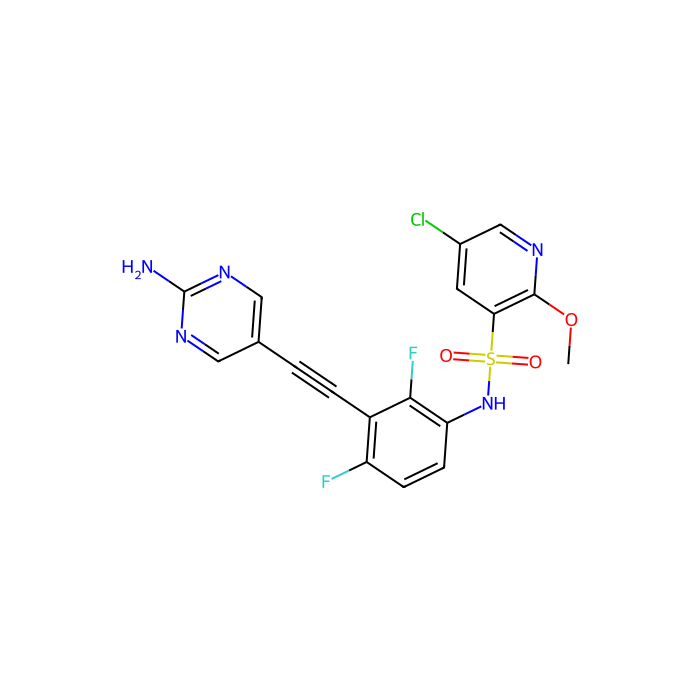
Brief overview: GCN2iB is a small-molecule research tool compound commonly used as a selective inhibitor of the integrated stress response (ISR) kinase GCN2 (EIF2AK4). The specific structural identifiers for this catalog item are limited in the provided data.
Item-specific identifiers (from Product Data):
Product Name: GCN2iB (SKU: G414275)
CAS: 2183470-12-2
PubChem CID: 134814489
InChIKey: 159715 (as provided)
SMILES: Not specified for this item; refer to CoA/Spec Sheet.
Molecular Formula: Not specified for this item; refer to CoA/Spec Sheet.
Molecular Weight: Not specified for this item; refer to CoA/Spec Sheet.
Structural features (general literature context, not item-specific):
GCN2 inhibitors are typically heteroaromatic, ATP-competitive kinase ligands with donor/acceptor motifs capable of forming hinge-binding hydrogen bonds in the GCN2 catalytic domain.
Common motifs in reported GCN2 inhibitors include fused bicyclic heteroaromatics and halogenated aryl substituents that address selectivity pockets. Exact features for this specific lot are not provided here.
2D structure description (general):
Typically comprises a planar heteroaromatic core (for hinge binding), appended hydrophobic/aromatic groups for selectivity, and polar elements to tune solubility. Exact ring systems, stereochemistry (if any), and substituent pattern are not specified for this item.
Synthetic Utility
This compound is a targeted bioactive probe and is not typically deployed as a reagent, catalyst, monomer, or protecting group in synthetic organic chemistry.
If used in synthesis at all, it would be as a reference standard or analytical spike-in for method development (e.g., LC–MS), rather than as a transforming agent.
For researchers interested in analog development or SAR, literature on GCN2 inhibitor chemotypes can guide scaffold modifications; however, the current catalog item is intended as a finished tool compound rather than a building block.
No named reactions or general reactivity patterns are applicable here beyond standard stability considerations for heteroaromatic drug-like molecules (avoid strong acids/bases and oxidants unless stability is established).
Target Specificity
Item-specific target details (from Product Data): Not specified for this item; refer to CoA/Spec Sheet.
General context (not item-specific):
The name “GCN2iB” is commonly used in the literature to denote a selective inhibitor of GCN2 (EIF2AK4), a kinase upstream of eIF2α in the ISR pathway. However, exact potency (IC50/Ki), cellular activity, and kinome selectivity for this specific catalog item are not provided here and should be determined from the CoA, vendor technical notes, or primary literature where available.
Perguntas frequentes
What is the purity of this product?
This product is supplied at ≥98% purity (chemical assay). Lot-specific values are stated on the Certificate of Analysis.
How should this product be stored?
Store at ?20 °C. Freezer storage is required to maintain the specified shelf life.
How is this product shipped?
This product ships in an insulated container with ice pads. Unpack on arrival and transfer it to the storage condition stated above.
What are the CAS number, molecular formula and molecular weight?
The CAS Number is 2183470-12-2, the molecular formula is C18H12ClF2N5O3S, and the molecular weight is 451.83 g/mol. InChIKey JGHVXJKGYJYWOP-UHFFFAOYSA-N.
What documentation is provided?
Available product documentation, including Certificates of Analysis (COA), Safety Data Sheets (SDS), and specification sheets, is shown in the product document area. Document availability and access follow the current site policy.
Usamos cookies para garantir o funcionamento adequado do site e, quando permitido, para melhorar a sua experiência. Você pode gerenciar suas preferências a qualquer momento nas Configurações. Saiba mais em nossa Política de Cookies.
Deseja que lhe enviemos uma mensagem quando tivermos descontos disponíveis?
Lembrar-me mais tarde
Obrigado! Por favor, verifique a sua caixa de entrada de e-mail para confirmar.
Products are supplied to verified businesses, institutions, and qualified professionals for research and development use only. Not for use in humans, animals, diagnosis, or therapy.

 I2618012