≥99% para fluxos de trabalho cromatográficos e analíticos sensíveis que exigem interferência mínima da linha de base.
🌡
Armazenamento e envio
Store at -20°C,Desiccated Envio Ice chest + Ice pads. Consulte o COA específico do lote para obter as especificações exatas.
📋
Documentos de qualidade
SDS, COA, ficha técnica e folha de especificações disponíveis para download. COA específico do lote acessível por meio de pesquisa por número de lote.
📚
Comprovação documental
Citado em 0 publicações revisadas por pares nas áreas de cromatografia, síntese orgânica e reações de acoplamento cruzado.
Visão geral
Product description
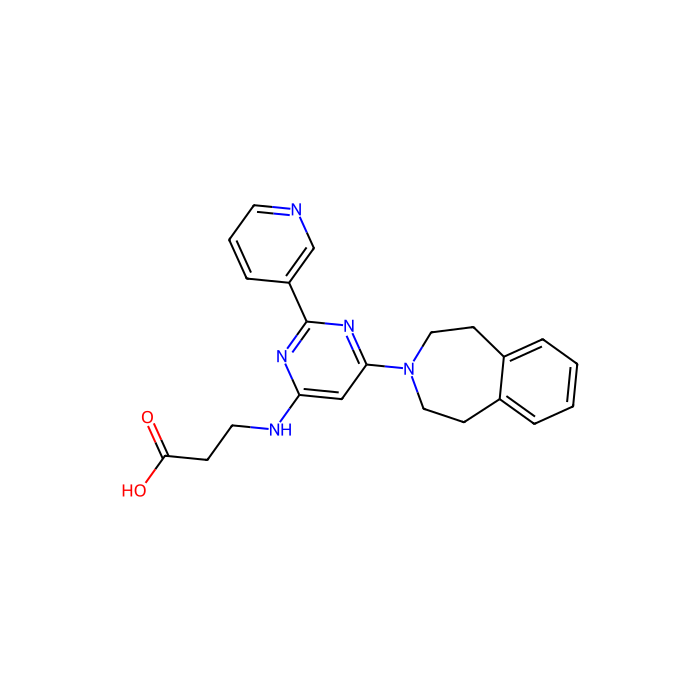
GSK-J2 is an isomer of GSK-J1 that does not have any specific activity. GSK-J1 is a potent inhibitor of H3K27me3/me2-demethylases JMJD3/KDM6B and UTX/KDM6A.
Inactive control for GSK-J1 (IC 50 > 100 µM for inhibition of JMJD3) in vitro . Pyridine isoform of GSK-J1.
Condições de armazenamento de armazenamento
Store at -20°C,Desiccated
Enviado em
Ice chest + Ice pads
Este produto requer transporte de cadeia fria. Serviços terrestres e outros serviços econômicos não estão disponíveis.
Nota
Wherever possible, you should prepare and use solutions on the same day. However, if you need to make up stock solutions in advance, we recommend that you store the solution as aliquots in tightly sealed vials at -20°C. Generally, these will be useable for up to one month. Before use, and prior to opening the vial we recommend that you allow your product to equilibrate to room temperature for at least 1 hour. Need more advice on solubility, usage and handling? Please visit our frequently asked questions (FAQ) page for more details.
This compound belongs to the class of organic compounds known as pyridinylpyrimidines. These are compounds containing a pyridinylpyrimidine skeleton, which consists of a pyridine linked (not fused) to a pyrimidine by a bond.
External Descriptors
Not available
1. Djoumbou Feunang Y, Eisner R, Knox C, Chepelev L, Hastings J, Owen G, Fahy E, Steinbeck C, Subramanian S, Bolton E, Greiner R, and Wishart DS. ClassyFire: Automated Chemical Classification With A Comprehensive, Computable Taxonomy. Journal of Cheminformatics, 2016, 8:61.
Determine the necessary mass, volume, or concentration for preparing a solution.
Dilution Calculator
Determine the dilution needed to prepare a stock solution.
Reconstitution Calculator
Revisões
Avaliações dos Clientes
Application Protocols
Only application details from the product data may be listed here.
Tested applications: Not specified for this item; refer to CoA/Spec Sheet.
Recommended concentrations/dilutions: Not specified for this item; refer to CoA/Spec Sheet.
Positive/negative controls: Not specified for this item; refer to CoA/Spec Sheet.
General suggestion (non-binding): Establish internal SOPs for stock preparation in DMSO, vehicle control percentages, and assay validation using a known active comparator if the study design requires a negative control probe.
Biological Roles
Context from the literature (not item-specific claims):
The GSK-J probe family was developed to interrogate histone lysine demethylases (notably the KDM6/JMJD3-UTX axis) involved in H3K27 methylation dynamics and chromatin regulation. These enzymes play roles in gene expression programs underlying development and cellular responses.
GSK‑J2 is commonly cited as a closely related, functionally inactive (negative control) analog for potent KDM6 inhibitors such as GSK‑J1 (biochemical) and GSK‑J4 (cell-permeable prodrug). As a negative control, GSK‑J2 aids in distinguishing on-target epigenetic effects from off-target or chemotype-related artifacts in cellular assays.
Use cases in chemical biology include: validating target engagement assays, benchmarking phenotypic screens, and defining structure–activity relationships (SAR) when paired with active analogs.
Good practices for biological experimentation (general):
Include a vehicle control (e.g., 0.1–0.5% DMSO), an active reference compound, and GSK‑J2 as the inactive analog to triangulate specificity.
Confirm exposure and intracellular concentrations where possible (e.g., LC–MS bioanalysis) to correlate dose with effect.
Important: No potency, selectivity, permeability, or ADME data are provided for this catalog item. All uses are for research only; not for human or veterinary applications.
Buffer Applications
This product is a small-molecule probe and is not itself a buffering agent. Consequently, it is not used to set or maintain pH in biochemical assays.
Practical notes:
When making working solutions, pre-dissolve in DMSO, then dilute into your assay buffer (e.g., HEPES-, Tris-, or phosphate-based buffers) while maintaining a consistent final DMSO percentage across all conditions.
Verify compound stability in the chosen buffer over the experimental timeframe via LC–MS or HPLC.
No item-specific buffer compatibility or pH stability data are provided; consult your internal validation and the CoA/Spec Sheet as needed.
Green Alternatives
Green chemistry considerations are not typically central for a research probe used at micromolar concentrations in biological assays. Nevertheless, the following general guidance can reduce environmental footprint:
Solvent choices for stock solutions:
Prefer DMSO over DMF/NMP when feasible due to better biocompatibility and generally lower regulatory concern in bioassays. However, DMSO still requires proper waste handling.
Dilution media:
Use aqueous buffers and minimize organic cosolvent fractions in working solutions (e.g., keep DMSO at the lowest level that maintains solubility and performance).
Waste minimization:
Prepare small aliquots to avoid repeated thawing and disposal of degraded material.
Combine compatible organic waste streams to optimize disposal efficiency.
Energy and storage:
Consolidate freezer space and use secondary containment to improve thermal stability and reduce freeze–thaw losses, indirectly lowering waste.
Applicability limits:
Because this item is not a bulk solvent or a reagent used in stoichiometric synthesis, common "green alternative solvent" substitutions (e.g., 2-MeTHF for THF) are not relevant.
Note: No item-specific environmental hazard data are provided; consult the SDS for persistence, degradability, and aquatic toxicity information, and follow institutional waste policies.
Pharmaceutical Uses
This material is provided strictly for research use only (per product data). It is not intended for human or veterinary use, drug substance manufacture, or clinical applications.
Context (general, non-therapeutic):
Chemical probes like GSK‑J2 are commonly used in discovery biology to explore target validation questions and to create structure–activity relationships in medicinal chemistry programs.
No pharmacopeial monograph, excipient role, or formulation standard is provided for this item.
Item-specific statements:
Research Use Note: For research use only (product data).
Any claims regarding clinical performance, dosing, or therapeutic indications are outside the scope of this product and are not made here.
Operational guidance:
If used within discovery workflows, handle under research QA systems, maintain traceable CoA/lot records, and establish internal acceptance criteria (identity, purity, potency where applicable) before deployment in screening or mechanistic studies.
Physical Properties
Item-specific physicochemical parameters are not provided in this listing.
Appearance: Not specified for this item; refer to CoA/Spec Sheet.
Melting point (MP): Not specified for this item; refer to CoA/Spec Sheet.
Boiling point (BP): Not applicable/unknown for a probe typically handled as a solid; specific value not provided here.
Density: Not specified for this item; refer to CoA/Spec Sheet.
Refractive index: Not applicable for a solid; not provided.
LogP, pKa, solubility: Not specified for this item; refer to CoA/Spec Sheet.
Small-molecule epigenetic probes of this class are frequently dissolved in anhydrous DMSO to prepare concentrated stocks (e.g., 10–50 mM), then diluted into assay buffers or culture media immediately before use. Actual solubility limits and stability must be verified experimentally for this exact item.
Protect from moisture and light as a prudent measure for heteroaromatic/amide-bearing probes, and avoid repeated warming/cooling cycles of solid and solutions to minimize degradation.
Recommendations:
Determine actual solubility by stepwise titration into the intended solvent and monitor clarity and HPLC area percent.
For solution stability, perform time-course HPLC or LC–MS at relevant temperatures (bench, 4°C, 37°C) to establish working windows.
For solid-state properties (polymorph/hydrate form), consult the CoA/Spec Sheet and confirm by PXRD/TGA if such attributes are critical to your workflow.
Quality and Grades
Grade/Purity: Not specified for this item; refer to CoA/Spec Sheet.
Interpretation and best practices (general guidance):
Research-use small-molecule probes are typically offered at high chemical purity (e.g., ≥95% by HPLC/UPLC), but the exact threshold, assay conditions (UV wavelength, gradient), and residual solvent/water specifications must be taken from the item’s CoA/Spec Sheet.
Spectral identity confirmation (1H/13C NMR, MS/HRMS) and chromatographic homogeneity (HPLC) are standard; some suppliers also provide water/RS testing (KF/GC). Because item-specific values are not listed here, please verify directly on the CoA.
Stabilizers: Not specified for this item; refer to CoA/Spec Sheet. If no stabilizer is used, ensure strict dryness and low-temperature storage to preserve integrity.
Batch-to-batch traceability: Retain lot numbers and CoAs with your experimental records; small changes in polymorph or amorphous content can influence dissolution and bioassay performance.
Choosing grade for application:
Analytical/biochemical assays: prefer the highest available purity with documented identity data and low unknown impurities.
Screening libraries: ensure consistent batch quality and confirm solubility in your standard DMSO format (e.g., 10 mM). Run incoming QC (UPLC + MS) to harmonize across suppliers.
For any attribute not stated above, treat as Not specified for this item; refer to CoA/Spec Sheet.
Reaction and Applications
This product is primarily a research probe (chemical biology) rather than a synthetic reagent. Consequently, it is not commonly used as a reactant or catalyst in preparative organic chemistry.
Applications (general/literature context for the GSK-J series):
Utilized in epigenetics research to interrogate histone lysine demethylase biology in biochemical assays and cell-based models. GSK‑J2 is frequently referenced as a structurally related, functionally inactive analog control when studying active KDM6 inhibitors (e.g., GSK‑J1/J4). This enables on-target/off-target assessment in phenotypic readouts.
Employed in screening collections and focused epigenetic panels to benchmark assay robustness, vehicle effects, and counter-screen behaviors.
Practical tips for probe use (non-specification):
Prepare concentrated DMSO stocks (e.g., 10–50 mM), aliquot under dry, inert conditions, and avoid repeated freeze–thaw cycles.
Validate assay windows using a known active comparator alongside GSK‑J2 as a negative control to confirm signal specificity.
Run orthogonal readouts (biochemical vs cellular) and incorporate counterscreens (e.g., cytotoxicity, reporter-only controls) to rule out assay interference.
Note: No item-specific potency, selectivity, or assay-validation data are provided in this listing. Consult primary literature and perform in-house QC to establish concentration ranges and exposure times that suit your platform.
Reaction Conditions
Not applicable in the usual sense: this item is supplied as a finished small-molecule probe and is not intended for use as a reagent or catalyst in synthetic transformations.
General notes for solution preparation (non-synthetic):
Stock solutions: Dissolve in dry DMSO to the desired concentration (e.g., 10–50 mM), vortex thoroughly, and sonicate briefly if needed. Filter (0.22–0.45 μm) to clarify if particulates persist.
Working dilutions: Add the DMSO stock to assay buffer or media while maintaining a consistent vehicle percentage across test and control wells.
Temperature/exposure: Minimize time at ambient temperature; keep solutions protected from moisture and light. Establish stability windows via LC–MS/HPLC.
No item-specific reaction temperatures, catalysts, or yields exist for this product because it is not used in preparative chemistry under this listing.
Safety and Handling
Safety data specific to this catalog item are not provided in the listing; defer to the SDS for authoritative guidance.
From product data:
Storage conditions: Store at −20°C, desiccated.
Shipping: Ice chest + ice pads (helps maintain low temperature and dryness during transit).
GHS classification, signal word, H-statements, pictograms: Not specified for this item; refer to SDS.
General laboratory precautions for small-molecule research probes (non-item-specific):
PPE: lab coat, safety glasses, and appropriate chemically resistant gloves (e.g., nitrile). Handle powders in a fume hood to minimize inhalation or dust exposure.
Avoid contact with skin and eyes; prevent ingestion and inhalation. Use engineering controls (hood, local exhaust) during weighing and solution preparation.
Incompatibilities (general): strong oxidizers and strong acids/bases may cause degradation for many organic probes; keep away from aqueous humidity when storing.
First aid (general): In case of eye or skin contact, rinse with water for at least 15 minutes and remove contaminated clothing. If inhaled, move to fresh air. If swallowed, rinse mouth and seek medical advice. Always follow your institutional EHS procedures.
Spill/cleanup: Avoid dust formation; sweep up with minimal agitation, place in compatible waste container, and decontaminate surfaces.
Always consult the current SDS supplied with the item for exact hazard classification, exposure limits, and response measures.
Solvent Selection
This product is a small-molecule probe typically handled as a solid and formulated into DMSO stocks for biochemical or cell-based assays.
Polarity/miscibility (general guidance):
DMSO: widely used as primary solvent for stock solutions; miscible with water and many buffers on dilution.
DMF, NMP: alternative polar aprotic solvents when DMSO is unsuitable (verify biocompatibility for your assay).
Aqueous buffers: direct dissolution is often limited for hydrophobic probes; pre-dissolve in DMSO, then dilute into buffer with vigorous mixing.
Filtration: Use PTFE or PVDF syringe filters (0.22–0.45 μm) for clarification of working solutions; avoid adsorption-prone membranes for low-concentration work.
Precipitation control: Maintain final DMSO percentage in assays (e.g., 0.1–0.5%) to minimize compound precipitation and vehicle effects; empirically titrate the vehicle level for your system.
Light and moisture: Prepare solutions freshly or aliquot and store under inert atmosphere or desiccation to limit hydrolysis/oxidation where applicable.
Comparison (general):
DMSO vs DMF: DMSO is more biocompatible in most cell assays but may affect redox-sensitive readouts; DMF is less favored biologically. Both offer strong solubilization; choose based on assay tolerance and compound stability.
Note: No item-specific solubility, logP, or pKa is provided here. Verify actual solvent compatibility and stability experimentally for this exact item/lot.
Storage and Reconstitution
From product data:
Storage: Store at −20°C, desiccated.
Shipping: Ice chest + ice pads.
Reconstitution (general guidance for small-molecule probes; not item-specific specifications):
Allow the sealed vial to equilibrate to room temperature before opening to prevent condensation. Open in a dry environment (desiccator or glovebox if available).
Prepare concentrated stocks in anhydrous DMSO. Mix thoroughly (vortex) and, if necessary, sonicate briefly to aid dissolution. Do not heat solutions unless stability is verified.
Aliquot stocks into dry, inert vials or microtubes to avoid repeated freeze–thaw. Backfill headspace with inert gas (e.g., nitrogen/argon) if feasible.
Store aliquots at −20°C or below, protected from light and moisture. Record preparation date and concentration on each aliquot.
Stability notes:
Solution stability, freeze–thaw tolerance, and light sensitivity are Not specified for this item; refer to CoA/Spec Sheet. Establish your own stability-indicating HPLC/LC–MS method and determine allowable bench time for working solutions.
Disposal:
Dispose of unused material and solutions according to institutional chemical waste procedures and the SDS guidance.
For any attribute not detailed above, treat as Not specified for this item; refer to CoA/Spec Sheet.
Structure and Identity
GSK-J2 is a cataloged small-molecule research probe offered for chemical biology and epigenetics research.
SKU: G275564
Product name: GSK-J2
CAS: 1394854-52-4 (product data)
PubChem CID: 73010924 (product data)
InChIKey: 200998 (as provided in product data)
SMILES: Not specified for this item; refer to CoA/Spec Sheet.
Molecular formula: Not specified for this item; refer to CoA/Spec Sheet.
Molecular weight: Not specified for this item; refer to CoA/Spec Sheet.
Structural features (general/literature context—not item-specific):
GSK-J series compounds are well-known chemical probes developed for epigenetic demethylase research. GSK‑J2 is commonly described in the literature as a closely related analog (often used as a negative control) to active KDM6-family inhibitors such as GSK‑J1/J4. Without item-specific structural data here, detailed ring systems/functional groups cannot be enumerated from this listing.
2D structure description:
Not available in this listing. Please consult the CoA/Spec Sheet or authoritative databases (linked via the CAS/CID) for atom connectivity, stereochemistry, and functional group annotations.
Identity confirmation guidance (general):
For rigorous work, confirm identity by orthogonal methods (e.g., 1H/13C NMR, HRMS, and HPLC/UPLC purity profiling) using reference spectra from primary literature or databases tied to the CAS/CID above.
Synthetic Utility
Not a typical synthetic building block or reagent. GSK‑J2 is primarily employed as a reference/negative control probe in chemical biology and epigenetics studies rather than as a substrate, nucleophile, electrophile, or ligand in transformations.
If derivatization is desired (general guidance):
Consult the primary literature for synthetic routes to the GSK‑J chemotype. Derivative synthesis often involves heteroaromatic coupling steps (e.g., amide formation, N-alkylation, or cross-coupling) followed by late-stage functionalization to tune potency and permeability. These are general observations about the series and are not item-specific specifications.
Any modification may change probe behavior (permeability, selectivity, stability). Re-validate biological performance after derivatization.
Because structural details (SMILES, formula) are not provided in this listing, no concrete retrosynthetic analysis or reaction planning can be offered here. Refer to the CoA/Spec Sheet and the cited CAS/CID for authoritative structural information before attempting synthesis or analog design.
Target Specificity
Only information from the product data may be listed here.
Targets/enzymes: Not specified for this item; refer to CoA/Spec Sheet.
Species reactivity, binding constants, selectivity panel data: Not specified for this item; refer to CoA/Spec Sheet.
Note: While the GSK‑J series is discussed in the literature in the context of epigenetic demethylase biology, no target-specific claims are made for this catalog item in the provided data.
Perguntas frequentes
What is the purity of this product?
This product is supplied at ≥99% purity (chemical assay). Lot-specific values are stated on the Certificate of Analysis.
How should this product be stored?
Store at ?20 °C, desiccated. Keep the container tightly closed with desiccant — the material is moisture-sensitive.
How is this product shipped?
This product ships in an insulated container with ice pads. Unpack on arrival and transfer it to the storage condition stated above.
What are the CAS number, molecular formula and molecular weight?
The CAS Number is 1394854-52-4, the molecular formula is C22H23N5O2, and the molecular weight is 389.4 g/mol. InChIKey LJIFOCRGDDQFJF-UHFFFAOYSA-N.
What documentation is provided?
Available product documentation, including Certificates of Analysis (COA), Safety Data Sheets (SDS), and specification sheets, is shown in the product document area. Document availability and access follow the current site policy.
Usamos cookies para garantir o funcionamento adequado do site e, quando permitido, para melhorar a sua experiência. Você pode gerenciar suas preferências a qualquer momento nas Configurações. Saiba mais em nossa Política de Cookies.
Deseja que lhe enviemos uma mensagem quando tivermos descontos disponíveis?
Lembrar-me mais tarde
Obrigado! Por favor, verifique a sua caixa de entrada de e-mail para confirmar.
Products are supplied to verified businesses, institutions, and qualified professionals for research and development use only. Not for use in humans, animals, diagnosis, or therapy.

 F2302403