GRAU & PUREZAMoligand™?Moligand™ — Aladdin's line of ligands and bioactive small molecules. Use for receptor, pathway, and binding studies needing defined small-molecule tools.10mM in DMSO
Moligand™, 10mM in DMSO Moligand™ para fluxos de trabalho cromatográficos e analíticos sensíveis que exigem interferência mínima da linha de base.
🌡
Armazenamento e envio
Store at -80°C Envio Dry ice packs + Cold packs. Consulte o COA específico do lote para obter as especificações exatas.
📋
Documentos de qualidade
SDS, COA, ficha técnica e folha de especificações disponíveis para download. COA específico do lote acessível por meio de pesquisa por número de lote.
📚
Comprovação documental
Citado em 0 publicações revisadas por pares nas áreas de cromatografia, síntese orgânica e reações de acoplamento cruzado.
Visão geral
Information
GSK2636771 is a potent, orally bioavailable and selective inhibitor ofPI3Kβwith >900-fold selectivity over PI3Kα/PI3Kγ and >10-fold over PI3Kδ. Sensitive to PTEN cell lines. In vitro
GSK-2636771 shows selectively inhibitory activity in PTEN cell lines (human prostate adenocarcinoma PC-3 and breast cancer HCC70) with EC50 of 36 nM and 72 nM, respectively. GSK2636771 significantly decreases cell viability in p110β-reliant PTEN-deficient PC3 prostate and BT549 and HCC70 breast cancer cell lines, and leads to a marked decrease of AKT phosphorylation only in the control prostate and breast cancer cell lines.
In vivo
GSK-2636771 decreases phosphorylated protein kinase Akt (Ser473) levels in these xenograft models. GSK-2636771 (100 mg/kg) do not increase glucose/insulin levels in mice. Cell Data
cell lines:MALME-3M, Colo829, Colo38, A375, SK-MEL28, and A2058 cells
GSK2636771 is a potent, orally bioavailable and selective inhibitor of PI3Kβ with >900-fold selectivity over PI3Kα/PI3Kγ and >10-fold over PI3Kδ. Sensitive to PTEN null cell lines.
Condições de armazenamento de armazenamento
Store at -80°C
Enviado em
Dry ice packs + Cold packs
Este produto requer transporte de cadeia fria. Serviços terrestres e outros serviços econômicos não estão disponíveis.
Determine the necessary mass, volume, or concentration for preparing a solution.
Dilution Calculator
Determine the dilution needed to prepare a stock solution.
Reconstitution Calculator
Revisões
Avaliações dos Clientes
Application Protocols
No tested application protocols are provided in the Product Data for this item.
Not specified for this item
Validated uses (e.g., specific assay types), recommended working concentrations, or positive controls.
General guidance (non-binding; adapt to your SOPs)
Stock preparation: 10–50 mM in anhydrous DMSO; store in single-use aliquots at −80 °C.
Biochemical assays: Prepare serial dilutions in assay buffer with matched DMSO across wells; include vehicle controls.
Cellular assays: Titrate across a broad range (e.g., 0.001–10 µM) to capture potency window; confirm solubility and monitor for precipitation or cytotoxicity attributable to vehicle.
Data quality: Use replicate measurements and include reference standards where applicable.
Always defer to your internal validation and the SDS/CoA for any conditions that could impact safety, integrity, or data quality.
Biological Roles
Item-specific biological roles are not provided in the Product Data. The following is general, literature-based context to aid experimental planning (not a specification for this lot).
Kinase pathway probes (literature context)
GSK2636771 is reported in the literature as a small-molecule inhibitor used to interrogate phosphoinositide 3-kinase (PI3K) signaling, with a focus on the PI3Kβ isoform in pathway studies. Such tools help dissect PI3K/AKT signaling nodes in biochemistry and cell biology.
Application areas include enzyme kinetics, target engagement (e.g., CETSA/thermal shift), pathway phosphorylation readouts (e.g., pAKT), and genetic–chemical epistasis experiments.
Biochemical considerations
Assay performance often depends on protein source (recombinant vs cellular), ATP concentration relative to Km, and presence of competing lipids/cofactors in PI3K assays (literature).
Off-target profiling (kinome panels, safety pharmacology) is commonly conducted to contextualize observed phenotypes.
Important caveats
Avoid extrapolating biochemical potency directly to cellular activity without assessing permeability, efflux, and protein binding.
Confirm identity and purity for reproducibility; lot-to-lot validation is recommended in screening cascades.
Note: No medical or clinical claims are made. This product is strictly for research use only, as stated in the Product Data.
Buffer Applications
This compound is a hydrophobic small-molecule probe and is not itself a buffering agent. Therefore, classical buffer systems (e.g., PBS, Tris, HEPES) are not directly applicable to the compound as a buffer component.
Practical guidance (general)
Prepare concentrated stocks in DMSO; dilute into assay buffers (e.g., HEPES-, Tris-, or phosphate-based buffers) to the desired final concentration, maintaining consistent DMSO across conditions.
To mitigate precipitation upon dilution into aqueous buffers, add compound last with vigorous mixing, and consider 0.01–0.05% nonionic surfactant if compatible with the assay.
Filter sterilize final working solutions intended for cell culture if solvent and concentration allow.
Not specified for this item
Any specific buffer recipes, pH ranges, or formulation excipients are not provided; consult your assay SOPs.
Green Alternatives
As a solid small-molecule probe, GSK2636771 itself is not replaceable by a “green solvent.” However, greener practices can be applied to the solvents and workflows around its use.
Solvent choices (general guidance)
Prefer DMSO for high-concentration stocks; while not “green,” its high boiling point and low volatility reduce inhalation exposure and losses.
Where compatible, use aqueous buffers with minimal co-solvent (≤0.1–0.2% DMSO) to reduce organic solvent burden.
Avoid chlorinated solvents for cleaning or recovery; use ethanol/isopropanol where feasible.
Operational green tips
Miniaturize assays (384/1536-well plates) to decrease compound and solvent consumption.
Use acoustic or pin-tool dispensing to limit DMSO volumes and plastic waste.
Implement closed, low-evaporation plates or seals to limit solvent losses and emissions.
Comparison snapshot (general)
DMSO vs DMF: DMSO typically offers lower toxicity and better environmental profile than DMF; choose DMSO when performance is equivalent.
Aqueous formulations: Greener but risk precipitation; evaluate with small pilot tests and surfactants compatible with the biology.
No pharmacopeial status or excipient role is provided for this item, and it is supplied strictly for research use only.
Item-specific (from Product Data)
Research Use Note: For research use only.
General, non-clinical context
In discovery settings, compounds of this class are formulated for in vitro and in vivo research to study target pathways and ADME properties. However, such usage details are study-specific and are not specifications for this product.
Not included / not applicable here
No therapeutic, diagnostic, or clinical claims are made.
No compendial monographs (USP/EP/JP) or cGMP manufacturing claims are provided for this listing.
Recommendation
If exploring pre-formulation (purely for research), document excipients and vehicle compositions rigorously (e.g., DMSO/PEG400/saline systems) and confirm stability by analytical methods. This falls outside the specifications of the supplied product and must follow institutional and regulatory guidance.
Physical Properties
Use the following as guidance; only item-specific values on a CoA/Spec Sheet should be treated as specifications.
Item-specific (from Product Data)
Appearance: Not specified for this item; refer to CoA/Spec Sheet.
Molecular weight: Not specified for this item; refer to CoA/Spec Sheet.
Literature/general expectations for drug-like kinase probes (context, not specifications)
Physical state: Typically a solid.
Solubility: Commonly sparingly soluble in water; soluble in polar aprotic organic solvents such as DMSO and DMF; limited solubility in ethanol or methanol may be observed depending on form.
Stock solutions: Frequently prepared at 10–50 mM in anhydrous DMSO, then diluted into assay buffers with final DMSO ≤0.1–0.5% v/v when compatible with the assay.
Partitioning: Many kinase-targeted small molecules exhibit moderate-to-high lipophilicity (literature), which informs solvent and delivery choices.
Parameters not specified for this item (consult CoA/SDS or primary literature for the exact compound):
Melting point, boiling point, density, pKa, logP/logD, refractive index, UV–vis absorbance characteristics.
Note: Where exact values are critical (e.g., for formulation, QC, or analytical method development), obtain and follow the item-specific CoA/Spec Sheet and SDS.
Intended for discovery research, screening, and probe development. Focus is on identity and suitability for biochemical/cellular assays rather than preparative synthetic use.
Typically provided with identity confirmation (e.g., NMR/LC–MS) and purity appropriate for screening. Exact acceptance criteria, stabilizers (if any), and analytical methods are product- and batch-dependent.
How to use this grade effectively
For screening/assay: Prepare DMSO stocks, verify concentration by UV or gravimetric methods as required by your QC SOPs.
For analytical characterization: If you require specific impurity profiles, water content, or residual solvent limits, request the item-specific CoA/Spec Sheet. Do not assume values.
Not specified for this item; refer to CoA/Spec Sheet
Exact purity (%), residual solvents, water content (Karl Fischer), metals/halogen content, stabilizers, and UV cutoff.
Recommendation
Upon receipt, equilibrate to room temperature in sealed container to avoid moisture condensation, then promptly aliquot and return to −80 °C storage to maintain integrity over the project lifetime.
Reaction and Applications
This product is supplied as a research probe/ligand candidate, not as a general-purpose chemical reagent for synthetic transformations.
Applicability to synthetic reactions
Not typically used as a solvent, catalyst, or stoichiometric reagent in organic synthesis. No named-reaction roles are expected for this compound class.
Research applications (literature/general; not item-specific claims)
Small-molecule probe studies, target engagement assays (e.g., biochemical enzyme assays, thermal shift assays), and cell-based pathway interrogation are common use cases for drug-like ligands.
Profiling studies may include concentration–response curves, off-target panels, and time-course experiments to define potency and selectivity profiles.
Practical tips for discovery use
Ensure accurate stock concentration via gravimetric preparation and, when feasible, orthogonal verification (e.g., UV absorbance using literature ε when available).
Control for vehicle effects using matched DMSO concentrations across conditions.
Monitor compound integrity over time by LC–MS or HPLC, especially after multiple freeze–thaw cycles.
Not specified for this item
Specific biochemical targets, recommended assay concentrations, or reference potencies are not provided in the Product Data; consult primary literature or generate lab-specific validation data.
Reaction Conditions
Not typically applicable. This product is not supplied as a reagent for promoting or undergoing standard organic reactions in a synthetic workflow.
General notes (for handling solutions rather than reactions)
Dissolution: Room temperature, with vortexing/brief sonication in DMSO.
Dilution: Add concentrated DMSO stock slowly into vigorously mixed aqueous buffer or media to minimize precipitation.
Stability checks: Periodically verify by LC–MS/HPLC for long studies.
Not specified for this item
No recommended temperatures, catalysts, or yields for chemical reactions are provided for this product because it is not intended for that use case.
Safety and Handling
Safety information specific to this listing is limited. Always consult the SDS for authoritative guidance and institutional protocols before use.
Item-specific (from Product Data)
GHS classification: Not specified for this item; refer to SDS.
Signal word / Pictograms / H-statements: Not specified for this item; refer to SDS.
Storage: Store at −80 °C. Shipments are supplied on dry ice packs + cold packs.
General laboratory precautions (good practice; not item-specific specifications)
PPE: Lab coat, safety glasses, and appropriate chemical-resistant gloves (e.g., nitrile). Use in a fume hood or ventilated enclosure to avoid inhalation of dust or aerosols.
Handling: Avoid skin/eye contact and inhalation. Minimize exposure to moisture and repeated freeze–thaw.
First aid (overview): In case of contact, rinse affected area with water for ≥15 minutes and seek medical guidance. If inhaled, move to fresh air. If ingested, do not induce vomiting; seek medical attention.
Incompatibilities: Strong oxidizers and strong acids/bases may degrade drug-like organics; avoid prolonged exposure to light/air when not in use.
DMSO considerations: If preparing concentrated DMSO stocks, note that DMSO facilitates dermal absorption of solutes—prevent skin contact.
Waste & spills
Collect organic waste according to local regulations. For small spills, absorb on inert material and dispose appropriately. Decontaminate surfaces with suitable organic solvent followed by detergent wash.
Solvent Selection
GSK2636771 is a drug-like small molecule typically handled as a concentrated stock in polar aprotic solvents for biochemical or cellular assays.
Practical solvent choices (general guidance; confirm solubility for your lot)
DMSO: First-line solvent for 10–50 mM stocks; broad compatibility with biochemical and cell assays at final ≤0.1–0.5% v/v.
DMF: Useful alternative for initial dissolution; often diluted into DMSO for storage.
Ethanol/Methanol: May dissolve at lower concentrations; assess assay tolerance to alcohols.
Aqueous buffers: Often require co-solvent (0.1–1% DMSO) or inclusion of surfactant (e.g., 0.01–0.05% Tween-20) to prevent precipitation upon dilution (as permitted by your assay).
Polarity/miscibility context (general)
Polar aprotic solvents (DMSO/DMF) are miscible with water, enabling straightforward serial dilutions into buffered systems.
Comparative considerations
DMSO vs ethanol: DMSO provides typically higher solubility and chemical stability; ethanol may be preferable for sensitive biological systems but often limits highest workable stock concentration.
Aqueous-only: Not recommended unless verified; many kinase-oriented chemotypes exhibit low water solubility.
Tips
Warm (room temperature) and vortex/sonicate briefly to aid dissolution; avoid elevated temperatures that may promote degradation.
Filter sterilize (0.22 µm) stocks intended for cell culture if compatible with solvent and concentration.
Storage and Reconstitution
Item-specific (from Product Data)
Storage: Store at −80 °C.
Shipped in: Dry ice packs + Cold packs.
General best practices (guidance; not item specifications)
Upon receipt, keep sealed and allow to warm to room temperature before opening to prevent moisture condensation.
Aliquot immediately into small, single-use portions to minimize freeze–thaw cycles; return unopened material promptly to −80 °C.
Reconstitution for stocks: Dissolve in anhydrous DMSO (e.g., 10–50 mM) with vortexing/brief sonication. If sterility is required, pass through a 0.22 µm PTFE filter compatible with DMSO.
Working solutions: Dilute DMSO stock into buffer or media with vigorous mixing; maintain consistent final DMSO across samples. Use freshly prepared working solutions to reduce degradation/adsorption losses.
Light and air: Store protected from light in tightly closed containers; purge headspace with inert gas if long-term stability studies indicate sensitivity.
Not specified for this item
Exact solubility limits in DMSO/water, long-term stability data, freeze–thaw tolerance, and recommended retest dates. Refer to the CoA/Spec Sheet or perform internal stability assessments appropriate for your application.
Structure and Identity
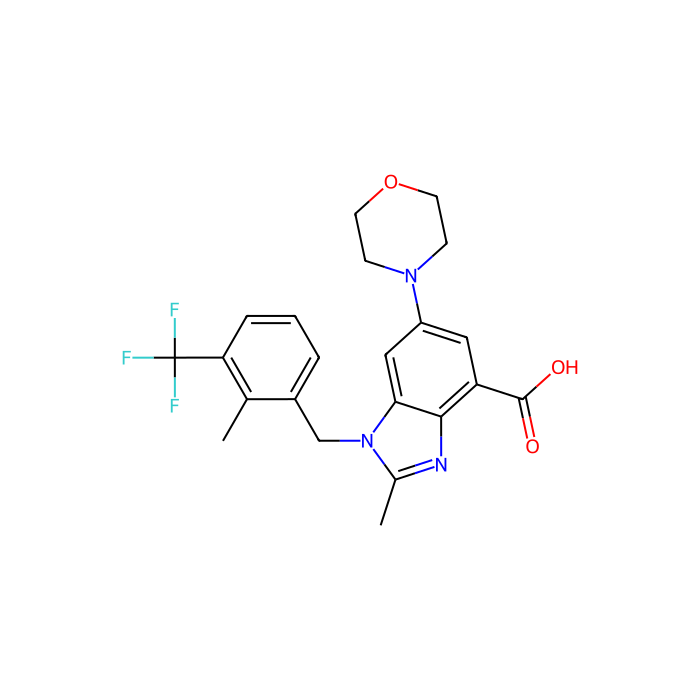
Brief overview: GSK2636771 is a research-use-only small molecule supplied as part of Aladdin’s Moligand™ collection (SKU: G409258), commonly employed in chemical biology and screening workflows.
Item-specific (from Product Data)
Product Name: GSK2636771
CAS: 1372540-25-4
Grade: Moligand™
Storage: Store at −80 °C
Shipping: Dry ice packs + Cold packs
Molecular formula: Not specified for this item; refer to CoA/Spec Sheet.
Molecular weight: Not specified for this item; refer to CoA/Spec Sheet.
SMILES: Not specified for this item; refer to CoA/Spec Sheet.
InChIKey: Not specified for this item; refer to CoA/Spec Sheet.
Literature/general description (for context; not item specifications)
GSK2636771 is described in the literature as a drug-like heteroaromatic small molecule typically used as a kinase pathway probe in discovery research.
Structural features commonly reported for such chemotypes include multiple nitrogen-containing heteroaromatics, hydrogen-bond donors/acceptors arranged for enzyme “hinge” interactions, and lipophilic substituents for selectivity.
2D structure (conceptual, literature-based)
Flat polycyclic aromatic/heteroaromatic core, decorated with heteroatoms (N,O) for binding, and peripheral hydrophobic moieties. Stereochemistry is generally not a key element for this scaffold (literature).
Synthetic Utility
GSK2636771 is a finished, drug-like small molecule and is not typically used as a synthetic intermediate or building block.
Applicability to synthesis
Not commonly incorporated into multi-step synthetic sequences as a reagent, catalyst, or monomer.
General medicinal chemistry context (literature-based)
Molecules of this class often arise from SAR programs featuring heteroaromatic ring systems, H-bond donor/acceptor arrays, and lipophilic vectors to tune selectivity and PK. While informative for retrosynthetic analysis, these features are not leveraged as functional handles in routine synthetic transformations once the final ligand is prepared.
If derivatization is desired (research-only)
Any modifications (e.g., biotinylation, photoaffinity tags) should be pursued starting from suitably functionalized analogs or earlier intermediates rather than from the final compound, to avoid degrading core binding elements. Such work is outside the scope of this catalog item.
Target Specificity
Only item-specific information from the Product Data can be listed in this section.
Item-specific
Specific molecular targets, isoform selectivity, and binding constants are not provided for this item.
Note
For discovery projects requiring defined target specificity (e.g., enzyme IC50/Ki, cellular potency), consult primary literature on GSK2636771 or perform in-house profiling. Such data are not part of the current product listing.
Perguntas frequentes
What is Moligand??
Moligand? is one of Aladdin Scientific's premium product lines, formulated for high-purity applications across multiple workflows. Compared to standard grades in the same workflow, Moligand? products typically offer tighter specifications, more rigorous QC, and stronger lot-to-lot consistency.
How should this product be stored?
Store at ?80 °C. Ultra-low temperature storage is required to maintain the specified shelf life.
How is this product shipped?
This product ships frozen with dry ice and cold packs. Unpack on arrival and transfer it to the storage condition stated above; handle dry ice with insulated gloves in a ventilated area.
What are the CAS number, molecular formula and molecular weight?
The CAS Number is 1372540-25-4, the molecular formula is C22H22F3N3O3, and the molecular weight is 433.42 g/mol.
What documentation is provided?
Available product documentation, including Certificates of Analysis (COA), Safety Data Sheets (SDS), and specification sheets, is shown in the product document area. Document availability and access follow the current site policy.
Precisa de ajuda para escolher o grau?
O nosso guia de seleção de graus abrange pureza, estado do estabilizador e adequação à aplicação para todas as variantes do nosso catálogo.
Usamos cookies para garantir o funcionamento adequado do site e, quando permitido, para melhorar a sua experiência. Você pode gerenciar suas preferências a qualquer momento nas Configurações. Saiba mais em nossa Política de Cookies.
Deseja que lhe enviemos uma mensagem quando tivermos descontos disponíveis?
Lembrar-me mais tarde
Obrigado! Por favor, verifique a sua caixa de entrada de e-mail para confirmar.
Products are supplied to verified businesses, institutions, and qualified professionals for research and development use only. Not for use in humans, animals, diagnosis, or therapy.