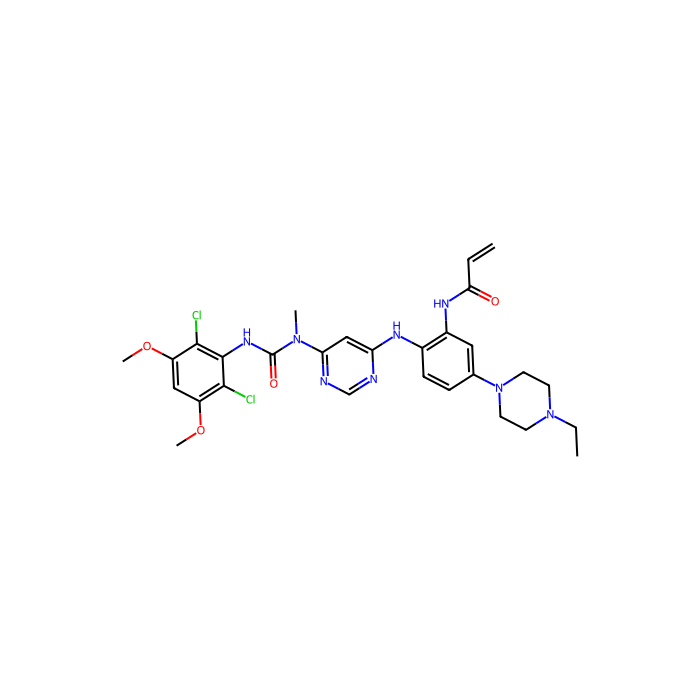
H3B-6527 - ≥97% , CAS No.1702259-66-2

CAS: 1702259-66-2 Cat. No.: H414109 Fórmula: C29H34Cl2N8O4 Peso molecular: 629.54
Disponível para encomenda
GRADE & PURITY ≥97%
Synonyms
BDBM249396 | N-(2-((6-(((2,6-Dichloro-3,5 dimethoxyphenyl) carbamoyl) (methyl)amino)pyrimidin-4-yl)amino)-5-(4-ethylpiperazin-1-yl)phenyl)prop-2-enamide | 4HTE364XIK | H3B 6527;H3B6527;Eisai;H3 Biomedicine | A901400 | 2-(2-{[1-(2-{2-[2-({1-[1-(2-Amino-5-g
Storage
Store at -20°C
Shipped In
Ice chest + Ice pads
★
Size
Alemanha (EU)
USA*
Price
Qty
1mg
H414109-1mg
—
6 Em stock

70,20€

105,78€
Gravar 35,58 € (33.63%)
5mg
H414109-5mg
—
6 Em stock

118,79€

178,67€
Gravar 59,87 € (33.51%)
10mg
H414109-10mg
—
5 Em stock

152,64€

229,00€
Gravar 76,36 € (33.35%)
25mg
H414109-25mg
—
5 Em stock

303,62€

455,48€
Gravar 151,85 € (33.34%)
50mg
H414109-50mg
—
5 Em stock

515,35€

773,07€
Gravar 257,72 € (33.34%)
100mg
H414109-100mg
—
5 Em stock

801,70€

1202,60€
Gravar 400,90 € (33.34%)
Enter a quantity for the sizes you want to add.
🧪
Why this grade

≥97% for sensitive chromatographic and analytical workflows requiring minimal baseline interference.

🌡

Storage & shipping

Store at -20°C Ships Ice chest + Ice pads Check lot-specific COA for exact specifications.

📋

Quality documents

SDS, COA, datasheet, and spec sheet available for download. Lot-specific COA accessible via lot number lookup.

📚

Literature proof

Cited in 0 peer-reviewed publications across chromatography, organic synthesis, and cross-coupling reactions.

Visão geral

Information

H3B-6527 H3B-6527 is a highly selective covalent FGFR4 inhibitor with an IC50 value of <1.2 nM and at least 250-fold selectivity over FGFR1-3 (IC50 values of 320, 1,290 and 1,060 nM respectively).


Targets

FGFR4 (Cell-free assay) <1.2 nM


In vitro

H3B-6527 shows robust inhibition of the target kinase FGFR4 with an IC50 value of <1.2 nmol/L and at least 250-fold selectivity over FGFR1-3 (IC50 values of 320, 1,290 and 1,060 nmol/L respectively). TAOK2, JNK2, and CSF1R are also less sensitive to H3B-6527 treatment with IC50 values of 690, >10,000, and >10,000 nmol/L, respectively. H3B-6527 inhibits FGFR4 signaling, proliferation, and leads to apoptosis in a HCC cell line (Hepatocellular carcinoma). Treatment on Hep3B cells leads to robust activation of caspase-3/7, an apoptotic marker, in a concentration-dependent manner, indicating FGFR4 inhibition by H3B-6527 leads to cell death in HCC cell lines. H3B-6527 has the selectivity and the selective dependence on FGFR4 across cancer types.


In vivo

In the Hep3B human HCC xenograft mouse model, H3B-6527 shows dose-proportional plasma exposures and greater than dose-proportional tumor exposures within the dose range evaluated (30, 100, and 300 mg/kg). The H3B-6527 pharmacodynamic response as measured by CYP7A1 mRNA and pERK1/2 protein levels is dose dependent, with higher doses leading to sustained responses. Oral treatment of H3B-6527, twice daily, inhibits xenograft growth in a dose-dependent manner in nude mice, with the 300 or 100 mg/kg twice daily, significantly inhibiting tumor growth in both Hep3B subcutaneous and orthotopic xenograft model and causing tumor regressions in the subcutaneous xenograft model. Palbociclib can enhance H3B-6527 efficacy and promote tumor regression in JHH-7 model where H3B-6527 as a single agent can only lead to tumor stasis.


Cell Research(from reference)

Cell lines:Hep3B cells 

Concentrations:100 and 300 nmol/L 

Incubation Time:0.5, 1, 2, 4, 8, and 24 hours 

Specifications

Sinónimos
BDBM249396 | N-(2-((6-(((2,6-Dichloro-3,5 dimethoxyphenyl) carbamoyl) (methyl)amino)pyrimidin-4-yl)amino)-5-(4-ethylpiperazin-1-yl)phenyl)prop-2-enamide | 4HTE364XIK | H3B 6527;H3B6527;Eisai;H3 Biomedicine | A901400 | 2-(2-{[1-(2-{2-[2-({1-[1-(2-Amino-5-g
Especificações e pureza
≥97%
Mecanismos bioquímicos e fisiológicos
H3B-6527 is a highly selective covalent FGFR4 inhibitor with an IC50 value of <1.2 nM and at least 250-fold selectivity over FGFR1-3 (IC50 values of 320, 1,290 and 1,060 nM respectively).
Condições de armazenamento de armazenamento
Store at -20°C
Enviado em
Ice chest + Ice pads
Este produto requer transporte de cadeia fria. Serviços terrestres e outros serviços econômicos não estão disponíveis.
Tipo de ação
INHIBITOR
Pureza
≥97%
Propriedades do produto
ALogP
5.16
hba_count
6
Contagem HBD
3
Ligação rotativa
10
Nomes e identificadores
Pubchem Sid
Pubchem Sid Url
https://pubchem.ncbi.nlm.nih.gov/substance/488202638
Sorrisos canónicos
CCN1CCN(CC1)C2=CC(=C(C=C2)NC3=CC(=NC=N3)N(C)C(=O)NC4=C(C(=CC(=C4Cl)OC)OC)Cl)NC(=O)C=C
IUPAC Name
N-[2-[[6-[(2,6-dichloro-3,5-dimethoxyphenyl)carbamoyl-methylamino]pyrimidin-4-yl]amino]-5-(4-ethylpiperazin-1-yl)phenyl]prop-2-enamide
InChIKey
MBWRLLRCTIYXDW-UHFFFAOYSA-N
INCHI
1S/C29H34Cl2N8O4/c1-6-25(40)35-20-14-18(39-12-10-38(7-2)11-13-39)8-9-19(20)34-23-16-24(33-17-32-23)37(3)29(41)36-28-26(30)21(42-4)15-22(43-5)27(28)31/h6,8-9,14-17H,1,7,10-13H2,2-5H3,(H,35,40)(H,36,41)(H,32,33,34)
SMILES isoméricas
CCN1CCN(CC1)C2=CC(=C(C=C2)NC3=CC(=NC=N3)N(C)C(=O)NC4=C(C(=CC(=C4Cl)OC)OC)Cl)NC(=O)C=C
Peso molecular
629.54
Reaxy-Rn
28151526
Reaxys-RN_link_address
https://www.reaxys.com/reaxys/secured/hopinto.do?context=S&query=IDE.XRN=28151526&ln=

Documentation

📋 Safety Data Sheet (SDS)

Comprehensive hazard, handling, storage, and regulatory compliance document.

Download SDS →

✅ Certificate of Analysis (COA)

Lot-specific quality data. Enter your lot number to retrieve the exact COA.

Look up COA →

📊 Datasheet

Quick-reference summary of product specifications and applications.

View datasheet →

🔬 Specification Sheet

Full quality attributes and acceptance criteria for this grade.

View spec sheet →

Advanced Data

Taxonomic Classification

Taxonomy Tree

KingdomOrganic compounds
SuperclassOrganoheterocyclic compounds
ClasseDiazinanes
SubclassPiperazines
Intermediate Tree Nodes Not available
Direct ParentPhenylpiperazines
Alternative Parents N-arylpiperazines  N-phenylureas  Dimethoxybenzenes  Methoxyanilines  Anilides  Phenoxy compounds  N-arylamides  Dichlorobenzenes  Dialkylarylamines  Anisoles  N-alkylpiperazines  Aminopyrimidines and derivatives  Alkyl aryl ethers  Imidolactams  Aryl chlorides  Heteroaromatic compounds  Acrylic acids and derivatives  Ureas  Trialkylamines  Secondary carboxylic acid amides  Amino acids and derivatives  Secondary amines  Azacyclic compounds  Organopnictogen compounds  Organochlorides  Organic oxides  Hydrocarbon derivatives  Carbonyl compounds  
Molecular FrameworkAromatic heteromonocyclic compounds
Substituents N-arylpiperazine - Phenylpiperazine - M-dimethoxybenzene - Dimethoxybenzene - N-phenylurea - Methoxyaniline - Anilide - Phenoxy compound - Methoxybenzene - Aniline or substituted anilines - Dialkylarylamine - N-arylamide - Tertiary aliphatic/aromatic amine - Phenol ether - 1,3-dichlorobenzene - Anisole - N-alkylpiperazine - Halobenzene - Chlorobenzene - Aminopyrimidine - Alkyl aryl ether - Imidolactam - Benzenoid - Pyrimidine - Monocyclic benzene moiety - Aryl halide - Aryl chloride - Acrylic acid or derivatives - Heteroaromatic compound - Urea - Tertiary aliphatic amine - Tertiary amine - Secondary carboxylic acid amide - Carbonic acid derivative - Carboxamide group - Amino acid or derivatives - Azacycle - Secondary amine - Ether - Carboxylic acid derivative - Organic nitrogen compound - Organic oxygen compound - Organopnictogen compound - Organic oxide - Hydrocarbon derivative - Organooxygen compound - Organonitrogen compound - Organochloride - Organohalogen compound - Carbonyl group - Amine - Aromatic heteromonocyclic compound
DescriçãoThis compound belongs to the class of organic compounds known as phenylpiperazines. These are compounds containing a phenylpiperazine skeleton, which consists of a piperazine bound to a phenyl group.
External Descriptors Not available
Estrutura 3D
Modelo de Estrutura Química Interativa


Alvos associados (humanos)
FGFR2 Tclin Fibroblast growth factor receptor 2 (3405 Activities)
Activity TypeRelationActivity valueUnitsAction TypeJournalPubMed IddoiAssay Aladdin ID
FGFR1 Tclin Fibroblast growth factor receptor 1 (9149 Activities)
Activity TypeRelationActivity valueUnitsAction TypeJournalPubMed IddoiAssay Aladdin ID
Alvos associados (não humanos)
Fgfr4 Fibroblast growth factor receptor 4 (138 Activities)
Activity TypeRelationActivity valueUnitsAction TypeJournalPubMed IddoiAssay Aladdin ID
Fgfr3 Fibroblast growth factor receptor 3 (21 Activities)
Activity TypeRelationActivity valueUnitsAction TypeJournalPubMed IddoiAssay Aladdin ID
Mecanismos de ação
Certificados(CoA,COO,BSE/TSE e Mapa de Análise)
C of A & Other Certificates(BSE/TSE, COO):
Analytical Chart:

Find and download the COA for your product by matching the lot number on the packaging.

12 results found

Lot NumberCertificate TypeDataItem
D2317314Certificate of AnalysisFeb 04, 2026 H414109
D2317315Certificate of AnalysisFeb 04, 2026 H414109
D2317321Certificate of AnalysisFeb 04, 2026 H414109
D2317328Certificate of AnalysisFeb 04, 2026 H414109
D2317329Certificate of AnalysisFeb 04, 2026 H414109
D2317337Certificate of AnalysisFeb 04, 2026 H414109
D2317338Certificate of AnalysisFeb 04, 2026 H414109
D2317344Certificate of AnalysisFeb 04, 2026 H414109
D2317345Certificate of AnalysisFeb 04, 2026 H414109
D2317346Certificate of AnalysisFeb 04, 2026 H414109
D2317347Certificate of AnalysisFeb 04, 2026 H414109
D2317354Certificate of AnalysisFeb 04, 2026 H414109
Propriedades químicas e físicas
SolubilidadeSolubility (25°C) In vitro DMSO: 50 mg/mL (79.42 mM); Water: Insoluble; Ethanol: Insoluble;
DMSO (mg/mL) Solubilidade máxima50
DMSO (mM) Solubilidade máxima79.42307081
Água (mg/mL) Solubilidade máxima<1
Peso molecular629.500 g/mol
XLogP34.400
Hydrogen Bond Donor Count3
Hydrogen Bond Acceptor Count9
Rotatable Bond Count10
Exact Mass628.208 Da
Monoisotopic Mass628.208 Da
Topological Polar Surface Area124.000 Ų
Heavy Atom Count43
Formal Charge0
Complexity913.000
Isotope Atom Count0
Defined Atom Stereocenter Count0
Undefined Atom Stereocenter Count0
Defined Bond Stereocenter Count0
Undefined Bond Stereocenter Count0
The total count of all stereochemical bonds0
Covalently-Bonded Unit Count1
Calculadoras de soluções
Revisões

Avaliações dos Clientes

Application Protocols

No item-specific, tested application protocols are provided for this SKU. The following is general guidance for handling small-molecule research compounds in biochemical and cellular assays.

Biochemical enzyme assay (general)

  • Prepare a 10 mM DMSO stock. Serially dilute in DMSO (3-fold or 10-fold) to create a range of concentrations.
  • Add diluted compound to assay buffer to achieve final DMSO ≤0.1–1% v/v depending on assay tolerance.
  • Include at least 8 concentrations bracketing the expected potency. Run in technical triplicate with vehicle controls.
  • Read endpoints per assay format (e.g., fluorescence polarization, TR-FRET, luminescence); fit dose–response using a 4-parameter logistic model.

Cell-based assay (general)

  • Seed cells to reach the desired confluence at dosing. Prepare dosing solutions freshly; ensure clarity after dilution into media.
  • Maintain identical final DMSO across wells (commonly 0.05–0.2%).
  • Incubate for an empirically determined time window (e.g., 1–24 h). Assess target pathway readouts (e.g., phospho-epitope Western blot or reporter assays) and viability controls.

Analytical QC check (general)

  • Verify stock concentration by UV or quantitative NMR if an extinction coefficient or internal standard is available.

Note: These are general, literature-style procedures and are not item-specific validations. Consult the CoA/SDS for material handling limits.

Biological Roles

Item-specific biological target information is not provided in the product data. The following context is general/literature-based and should not be interpreted as a specification for this item.

General notes on small-molecule kinase-directed probes (literature):

  • Many research compounds named with the prefix “H3B-” originate from medicinal chemistry programs focused on protein kinases and signaling enzymes. Such compounds are often designed to engage ATP-binding pockets and, in some cases, incorporate electrophilic motifs to achieve prolonged target residence or covalent capture.
  • Typical research applications include dissecting signaling cascades, validating target engagement in cells (e.g., CETSA, NanoBRET, pull-downs), and mapping downstream transcriptional effects (RNA-seq, phospho-proteomics).
  • Off-target profiling (kinome panels, thermal profiling) is commonly used to benchmark selectivity versus related kinases and to understand phenotypic outcomes.

Experimental considerations (general):

  • Establish potency and selectivity in biochemical assays before cell-based use; incorporate counterscreens (e.g., unrelated kinases) and orthogonal readouts.
  • Evaluate compound stability in assay media (protein binding, photostability, redox sensitivity) and confirm that observed biology is compound-driven rather than vehicle- or aggregation-driven (use detergent controls and DLS where needed).

Important: No medical or clinical claims are made. This product is supplied strictly for research use only, as stated in the product data.

Buffer Applications

This product is not a buffering reagent and has no typical role in preparing buffer systems.

General guidance for use in buffered biological assays (not item-specific):

  • Prepare concentrated DMSO stocks and dilute into assay buffers (e.g., HEPES, PBS) while maintaining final DMSO at the lowest effective percentage to prevent precipitation (commonly ≤0.1–0.5% v/v).
  • Include 0.01–0.05% nonionic surfactant (e.g., Tween-20) or 0.1% BSA when adsorption or aggregation is suspected.
  • Filter buffers (0.22 µm) and equilibrate to assay temperature prior to compound addition to reduce bubble/precipitation artifacts.
Green Alternatives

For bioactive screening compounds, the principal environmental considerations are solvent choice, packaging, and waste minimization rather than substitution of the active itself.

Greener handling strategies (general):

  • Reduce DMSO volumes via high-concentration stocks and acoustic dispensing to minimize solvent use and plastic waste.
  • Consider alternative, more biodegradable co-solvents at low percentages where compatible with the biology (e.g., ethanol) while recognizing DMSO’s superior solvency and stability profile.
  • Utilize low-bind, recyclable polypropylene or glass containers; consolidate shipments and select ambient-stable shipment options when validated.

Comparison of common assay solvents (general)

  • DMSO: High solvency, low volatility, good chemical stability; environmental persistence is moderate—use minimal volumes and segregate waste.
  • Ethanol: Renewable and readily biodegradable; limited solvency for many hydrophobic drug-like solids; higher volatility.
  • Aqueous buffers: Most benign; limited by compound solubility and stability.

Waste management

  • Segregate organic DMSO-containing waste from aqueous streams for appropriate treatment.
  • Plan small-scale pilot solubility tests to avoid preparing large, unused solutions.
Pharmaceutical Uses

No pharmacopeial grade or excipient role is specified for this item; it is supplied strictly for research use only.

General, non-clinical context for small-molecule research standards:

  • Reference material: May be used as an analytical reference in drug discovery laboratories for LC–MS method development, retention time matching, or system suitability (when identity and purity are established by CoA).
  • Discovery support: Useful in SAR benchmarking, positive/negative control selection for biochemical and cell-based assays, and internal proficiency testing.
  • Manufacturing/clinical use: Not intended for human or veterinary use. No claims are made regarding GMP status, compendial listing, or suitability for formulation.

Documentation recommendations:

  • Retain CoA/Spec Sheet, batch chromatograms, and spectral data with your analytical records.
  • Where regulated workflows are involved, qualify the material internally according to your QA procedures.
Physical Properties

Item-specific physico-chemical data are not provided for this catalog entry.

  • Appearance: Not specified for this item; refer to CoA/Spec Sheet.
  • Melting point: Not specified for this item; refer to CoA/Spec Sheet.
  • Boiling point: Not applicable (typically solid small-molecule screening compounds are characterized by MP rather than BP).
  • Density: Not specified for this item; refer to CoA/Spec Sheet.
  • Refractive index: Not applicable (solids).
  • Solubility: Not specified for this item; refer to CoA/Spec Sheet.
  • logP/logD, pKa: Not specified for this item; refer to CoA/Spec Sheet.

General, literature-based expectations for small-molecule screening solids (guidance only, not item specifications):

  • Stock solution preparation commonly uses anhydrous DMSO (e.g., 10–50 mM) with subsequent dilution into assay buffers containing surfactant (0.01–0.05% Tween-20) to mitigate aggregation and adsorption.
  • Many kinase-directed scaffolds exhibit moderate lipophilicity (clogP ~2–4, literature) and may benefit from warming (25–37°C) and sonication for complete dissolution prior to sterile filtration.

Important: Treat all numerical property needs (e.g., exact solubility limits, MP) as Not specified for this item unless stated on the CoA/Spec Sheet. Use batch documentation for authoritative values.

Quality and Grades
  • Grade/Purity: Not specified for this item; refer to CoA/Spec Sheet.

How to interpret typical quality indicators for small-molecule screening compounds (general guidance):

  • HPLC/UPLC purity: Screening compounds are commonly qualified at ≥95% area by HPLC with dual-wavelength or PDA detection. Verify the exact assay method, wavelength, and any volatile salt corrections on the CoA.
  • Identity confirmation: 1H NMR, 13C NMR, and HRMS (ESI) are standard. Where applicable, provide evidence for regiochemistry and stereochemistry (e.g., 2D NMR, chiral HPLC).
  • Water/volatile content: Karl Fischer and residual solvent profiles (GC) may be included for some lots. If your application is moisture-sensitive, request these data.
  • Counterions/salt form: Confirm whether the item is a free base/acid or a defined salt form; stoichiometry affects molecular weight and solution prep.
  • Stabilizers: Not specified for this item; refer to CoA/Spec Sheet.

Recommendations

  • For quantitative biology or LC–MS reference use, request batch-specific purity, exact molecular weight, and extinction characteristics if applicable.
  • Record the batch/lot number in ELNs and screen plates; re-verify purity after extended storage, especially if multiple freeze–thaw cycles occur.
Reaction and Applications

This item is a bioactive small molecule for research screening and is not typically employed as a synthetic reagent or catalyst.

Applicable research uses (general guidance, not item-specific claims):

  • Chemical biology: Probe-dependent modulation of kinase-driven signaling pathways; use in pathway mapping, target engagement, and phenotypic response profiling.
  • In vitro assays: Enzyme inhibition kinetics (IC50/Ki determination), residence time, and covalency assessments (if applicable) using mass spectrometry or activity-based assays.
  • Cell-based studies: Dose–response curves, time-course signaling analyses (e.g., phosphorylation markers by Western blot), and mechanistic rescue/antagonism experiments.
  • ADME profiling: Microsomal stability, plasma protein binding, and permeability screens to contextualize cellular potency versus exposure.

Not commonly applicable

  • Named organic reactions, stoichiometric reagents, or cross-coupling catalyst roles are not relevant for this product.

Practical tips

  • Prepare fresh DMSO stocks; limit freeze–thaw cycles by aliquoting.
  • Validate compound integrity in your assay matrix via LC–MS where feasible, particularly for long incubations or high temperatures.
  • Include vehicle controls matching the final DMSO percentage and, if needed, inactive analog controls.
Reaction Conditions

Not applicable. This product is not intended for use as a reagent or catalyst in synthetic organic reactions.

General guidance for biological assay conditions (not item-specific):

  • Stock prep: Dissolve in anhydrous DMSO to a defined concentration (e.g., 10–50 mM); vortex, sonicate gently, and warm if needed to achieve clarity. Filter (0.22 µm) for sterile applications.
  • Assay dilution: Add to pre-equilibrated buffer or media with thorough mixing; maintain consistent vehicle percentages across controls and treatments.
  • Incubation: Determine time dependence empirically (e.g., 0.5–24 h in cells), considering potential slow-onset or irreversible target engagement mechanisms common to some enzyme inhibitors.
  • Stability: Protect from light and repeated freeze–thaw; confirm integrity by LC–MS for long incubations.
Safety and Handling

GHS and hazard classifications are not provided for this item; consult the SDS for authoritative information.

  • GHS Classification/Pictograms: Not specified for this item; refer to SDS.
  • Signal word / H-statements: Not specified for this item; refer to SDS.

General laboratory precautions (good practice for bioactive small molecules):

  • PPE: Wear lab coat, safety glasses, and appropriate chemical-resistant gloves (e.g., nitrile). Avoid inhalation of dust or aerosols; handle solids in a fume hood or ventilated enclosure.
  • Avoid exposure: Prevent skin/eye contact. Use tools (spatula, micro-scoop) to minimize direct handling. Cap vials promptly to limit moisture uptake and contamination.
  • Weighing and solution prep: Handle on clean bench paper; use antistatic measures for finely powdered solids. Dissolve initially in dry DMSO or suitable solvent before aqueous dilution. Filter sterilize if asepsis is required for cell-based assays.
  • Incompatibilities: Unknown for this specific item. As a conservative practice, keep away from strong oxidizers and strong acids/bases until compatibility is known.
  • Accidental exposure (first aid, general guidance):
    • Skin/eye contact: Rinse with water for at least 15 minutes; remove contaminated clothing; seek medical attention as needed.
    • Inhalation: Move to fresh air; obtain medical advice if symptoms persist.
    • Ingestion: Rinse mouth; do not induce vomiting; seek medical attention.
  • Waste: Collect solutions and contaminated disposables as organic hazardous waste per institutional and local regulations.

Storage and transport

  • Storage: Store at -20°C (per product data). Keep tightly closed, desiccated, and protected from light if possible.
  • Shipping: Shipped in an ice chest with ice pads (per product data). Minimize transit time; refrigerate/freezer store upon receipt.
Solvent Selection

This product is a small-molecule intended for research screening; item-specific solubility is not provided.

General solvent strategy for bioactive small molecules (guidance, not item specifications):

  • Primary solvent: Anhydrous DMSO is typically preferred for initial stock (e.g., 10–50 mM) due to broad solvating power and compatibility with biological assays at ≤0.1–0.5% v/v.
  • Co-solvents: If precipitation occurs upon buffer dilution, include 0.01–0.05% nonionic surfactant (Tween-20/Pluronic F-127) or 0.1% BSA; consider cosolvent micropercentages (methanol, ethanol) where assay permits.
  • Aqueous buffers: Many hydrophobic compounds have limited aqueous solubility. Titrate DMSO content (0.05–1% v/v) to maintain clarity without compromising assay biology.
  • Acid/base adjustments: If the compound possesses ionizable functionality (unknown here), modest pH adjustments (pH 6–8) can modulate solubility; confirm compound stability versus hydrolysis/oxidation before use.
  • Adsorption mitigation: Use low-bind polypropylene tubes/plates; pre-wet tips with DMSO stock to improve delivery accuracy at low nL–µL volumes.

Comparison (general)

  • DMSO vs DMF: DMSO is typically less volatile and more assay-compatible; DMF can be used for difficult solutes but may exhibit higher cytotoxicity.
  • DMSO vs aqueous: Aqueous buffers are preferred for final assay matrices; maintain the lowest feasible DMSO carryover to balance solubility and biological performance.
Storage and Reconstitution
  • Storage temperature: Store at -20°C (per product data). Keep tightly sealed in the original container. Protect from moisture and, where feasible, from light.
  • Shipping: Shipped in an ice chest with ice pads (per product data). Upon receipt, return to -20°C storage promptly.

Reconstitution (general guidance; not item-specific specifications):

  • Solvent: Use anhydrous DMSO for initial stock preparation unless the CoA specifies otherwise.
  • Concentration: Common screening stock concentrations are 10–50 mM. Adjust based on solubility and assay needs.
  • Technique: Allow vial to equilibrate to room temperature in a desiccator before opening to prevent condensation. Weigh quickly, recap immediately. Vortex and, if needed, sonicate gently and warm (≤37°C) to fully dissolve. If sterility is required, filter through a 0.22 µm PTFE/nylon filter.
  • Aliquoting: Dispense single-use aliquots in low-bind polypropylene or amber glass vials/tubes to minimize adsorption and avoid repeated freeze–thaw.

Stability (general):

  • Minimize freeze–thaw cycles. For long-term storage, keep concentrated DMSO stocks at -20°C or below; avoid aqueous storage unless stability is known.
  • Inspect solutions for precipitation or discoloration before use. Confirm integrity by LC–MS or HPLC if experiments are sensitive to degradation.

Note: If batch-specific solubility limits, extinction coefficients, or stability data are required, consult the CoA/Spec Sheet for this item.

Structure and Identity
  • Product Name: H3B-6527 (research small-molecule)
  • CAS: 1702259-66-2 (catalog identifier)
  • PubChem CID: 118029202 (reference identifier)
  • InChIKey: 215065 (as provided; note that typical InChIKeys are 27 characters; consult CoA/Spec Sheet for confirmation)
  • SMILES: Not specified for this item; refer to CoA/Spec Sheet.
  • Molecular Formula: Not specified for this item; refer to CoA/Spec Sheet.
  • Molecular Weight: Not specified for this item; refer to CoA/Spec Sheet.

Structural description

  • Item-specific structural features: Not specified for this item; refer to CoA/Spec Sheet.
  • Literature context (general): H3B-6527 is reported in the medicinal chemistry literature as a small-molecule kinase-focused scaffold. Without an item-level structure record, functional groups, ring systems, and stereochemistry cannot be detailed here. Please verify structural identifiers directly from the Certificate of Analysis.

Identity best practices

  • Cross-verify CAS, CID, and any provided spectral data (1H/13C NMR, HRMS, HPLC chromatogram) on the item’s CoA/Spec Sheet before use in regulated workflows.
  • For cheminformatics or registration, use the specific batch SMILES/InChI from the supplied documentation to avoid ambiguity.
Synthetic Utility

This product is supplied as a finished small-molecule research compound and is not generally used as a synthetic intermediate or reagent.

If derivatization is desired (general considerations):

  • Without an item-specific structure, feasible transformations cannot be prescribed. In principle, medicinal chemistry teams sometimes derivatize screening hits to generate analogs; however, that workflow requires full disclosure of structure, functional groups, and protecting-group strategy from primary literature or internal records.
  • For bioconjugation or probe development (e.g., alkyne/azide tags, photoaffinity handles), confirm the presence and accessibility of modifiable positions from validated structural information before planning synthesis.

Conclusion: Treat this item as a terminal research probe rather than a building block. Consult the CoA or primary literature for structural data if synthetic campaigns are contemplated.

Target Specificity

Item-specific target, epitope, or binding data have not been provided in the product data for this SKU.

  • Target/Pathway: Not specified for this item; refer to CoA/Spec Sheet.
  • Species reactivity / selectivity: Not specified for this item; refer to CoA/Spec Sheet.
  • Assay-validated applications: Not specified for this item; refer to CoA/Spec Sheet.

Note: If you require definitive target specificity or kinome selectivity profiling, please contact us with the lot number to request any available internal data or references.

Shall we send you a message when we have discounts available?

Remind me later

Thank you! Please check your email inbox to confirm.

Oops! Notifications are disabled.