≥98% para fluxos de trabalho cromatográficos e analíticos sensíveis que exigem interferência mínima da linha de base.
🌡
Armazenamento e envio
Store at -20°C Envio Ice chest + Ice pads. Consulte o COA específico do lote para obter as especificações exatas.
📋
Documentos de qualidade
SDS, COA, ficha técnica e folha de especificações disponíveis para download. COA específico do lote acessível por meio de pesquisa por número de lote.
📚
Comprovação documental
Citado em 0 publicações revisadas por pares nas áreas de cromatografia, síntese orgânica e reações de acoplamento cruzado.
Visão geral
Information
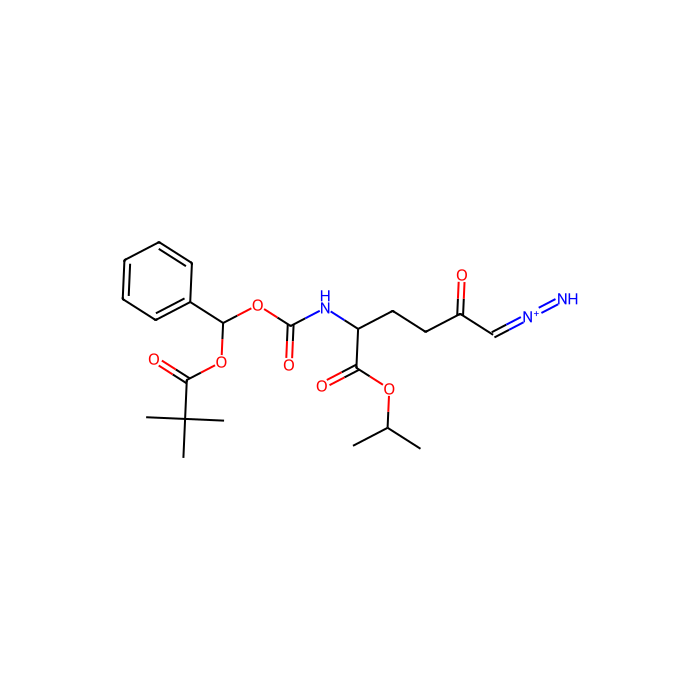
JHU395 JHU395 is a novel orally bioavailable GA (glutamine antagonists) prodrug designed to circulate inert in plasma, but permeate and release active GA within target tissues. JHU395 delivers active GA to malignant peripheral nerve sheath tumor (MPNST), and significantly inhibits tumor growth without observed toxicity.
Targets
Glutamine
In vitro
JHU395 inhibits growth of multiple biosynthetic processes by tumors (MPNST) cells, while growth of immortalized Schwann cells is minimally affected. JHU395 induces less PARP cleavage as a marker of apoptosis in human MPNST cells. JHU395 is a plasma stable lipophilic GA prodrug which delivers DON to MPNST in an in vitro plasma to tumor cell partitioning assay measurement.
In vivo
orally administered JHU395 delivers active GA to tumors with over twofold higher tumor-to-plasma exposure, and significantly inhibits tumor growth in a murine flank MPNST model without observed toxicity.
JHU395 is a novel orally bioavailable GA (glutamine antagonists) prodrug designed to circulate inert in plasma, but permeate and release active GA within target tissues. JHU395 delivers active GA to malignant peripheral nerve sheath tumor (MPNST), and sig
Condições de armazenamento de armazenamento
Store at -20°C
Enviado em
Ice chest + Ice pads
Este produto requer transporte de cadeia fria. Serviços terrestres e outros serviços econômicos não estão disponíveis.
Determine the necessary mass, volume, or concentration for preparing a solution.
Dilution Calculator
Determine the dilution needed to prepare a stock solution.
Reconstitution Calculator
Revisões
Avaliações dos Clientes
Application Protocols
No validated, item-specific protocols are supplied for JHU395. The following generic guidance supports initial use as a small-molecule test article in screening assays.
Stock preparation (general)
Weigh the required amount quickly to minimize moisture uptake. Prepare a 10–50 mM stock in anhydrous DMSO; vortex and, if necessary, sonicate briefly to achieve a clear solution. Record the exact concentration.
Optionally, filter through a 0.22 µm PTFE membrane to remove particulates.
Working solutions
Prepare serial dilutions in DMSO (e.g., 3× or 10× intermediate stocks) before spiking into assay buffer or media to the desired final concentration with a constant vehicle percentage (typically 0.1–1% DMSO).
Include vehicle-only controls and, if applicable, known positive/negative controls for the assay readout.
Plate handling
Use low-binding polypropylene plates or tubes for hydrophobic compounds. Avoid prolonged exposure to light or elevated temperatures during setup unless stability is known.
Stability checks
Visually inspect for precipitation after dilution. If available, use LC–MS to confirm integrity in assay matrix over the assay timeframe.
These steps are general and not item-specific; adapt to your institutional SOPs.
Biological Roles
No biological role, target, or pathway assignment is provided for JHU395 in the Product Data. It is offered for research use only.
General notes for small-molecule library members
Until a definitive target and mechanism are established, treat the compound as a chemical probe candidate. Validate activity across orthogonal assays to rule out artifacts (fluorescence interference, colloidal aggregation, redox cycling, PAINS liabilities).
If the structure becomes available, in silico profiling (e.g., aggregate PAINS filters, substructure alerts, cLogP, TPSA) and cheminformatics clustering can contextualize potential biological risk/privilege.
Establish basic ADME-relevant properties experimentally as needed for your models: kinetic solubility, microsomal stability, plasma protein binding, and permeability (PAMPA or Caco-2). These are general research considerations and not item specifications.
No clinical or therapeutic claims are made. For any biological testing, include appropriate vehicle and positive/negative controls, and confirm lot identity/purity via CoA prior to use.
Buffer Applications
This product is not a buffering reagent. However, as a small-molecule test article it is commonly dissolved in DMSO and then diluted into assay buffers.
Practical guidance (general)
Typical assay buffers: PBS (pH 7.2–7.4), HEPES (pH 7.2–7.6), Tris (pH 7.4–8.0), or cell culture media (e.g., DMEM, RPMI) with 0.1–1% DMSO final, depending on assay tolerance.
To minimize precipitation: add the DMSO stock to buffer slowly with vigorous mixing; maintain the final DMSO fraction consistently across wells/samples.
For low-solubility compounds: consider co-solvent strategies (DMSO:EtOH:H2O), use of cyclodextrins (e.g., 2–10% HP-β-CD), or surfactants (0.01–0.05% Tween-20) if compatible with the assay.
Item-specific buffer capacity, pKa, and ionic strength contributions: Not applicable to this compound.
Green Alternatives
Without structure-specific data for JHU395, green chemistry considerations focus on solvent and handling choices during screening and analytics rather than on the compound itself.
Greener choices (general guidance)
Prefer water and water-miscible green co-solvents (e.g., ethanol) over dipolar aprotics where assay compatibility allows.
If DMSO use is required (typical for screening), minimize volumes and use closed, reusable reservoirs to reduce waste and exposure.
For synthesis or derivatization work involving this scaffold, consider replacing DMF/NMP with safer alternatives (e.g., Cyrene, propylene carbonate, ethyl acetate/MeCN mixtures) when feasible.
Small comparison (general)
DMSO vs. ethanol: DMSO offers broader solvency and lower volatility; ethanol is greener and more benign but may not dissolve highly lipophilic compounds.
DMF/NMP vs. Cyrene/PC: Traditional dipolar aprotics are reproductive hazards; newer bio-based solvents can sometimes substitute with comparable polarity, subject to reaction/assay constraints.
Operational practices
Use microscale assay formats (384/1536-well) to reduce solvent consumption.
Consolidate waste streams and segregate halogenated from non-halogenated solvents to enable more sustainable disposal.
Item-specific environmental metrics (e.g., E-factors, life-cycle data): Not specified for this item.
Pharmaceutical Uses
No pharmacopeial status, excipient role, or formulation use is specified for JHU395. It is supplied strictly for research use only.
Context (general)
If used as a reference material in pharmaceutical R&D, establish identity (NMR/HRMS), purity (HPLC), and stability-indicating methods (LC–MS) per internal SOPs.
For preformulation screening (research stage), assess solubility in biorelevant media (FaSSIF/FeSSIF), solid-state form, and hygroscopicity once the structure is known; these activities are outside the scope of the current listing and are not product specifications.
Regulatory note
No clinical or therapeutic claims are made. The material is not intended for human or veterinary use and has no stated compendial monograph.
Physical Properties
Item-specific physicochemical properties have not been provided in the Product Data for JHU395. Do not treat the following placeholders as specifications.
Physical state/appearance: Not specified for this item; refer to CoA/Spec Sheet.
Melting point (literature/estimated): Not specified for this item; refer to CoA/Spec Sheet.
Boiling point (literature): Not applicable/unknown for an undefined structure; consult primary references once structure is confirmed.
Density (literature): Not specified for this item; refer to CoA/Spec Sheet.
Solubility: Not specified for this item; refer to CoA/Spec Sheet. Practical guidance: many screening compounds dissolve well in anhydrous DMSO (10–50 mg/mL) or DMF; aqueous solubility varies widely and should be measured empirically.
LogP/cLogP (literature/computed): Not specified; compute after structure confirmation.
pKa (literature/computed): Not specified; determine experimentally if needed for assay design.
Refractive index: Not applicable unless liquid; not specified.
Practical characterization tips (general)
Assess purity by HPLC (UV/ELSD) using multiple gradients; record UV spectrum to check for strong absorbance that could impact bioassays.
Determine solubility by serial dilution in DMSO, followed by stepwise aqueous buffering with co-solvent (0.1–1% DMSO final) to identify precipitation limits.
For hygroscopic or polymorphic solids, perform Karl Fischer and XRPD as appropriate. These are general recommendations and not item specifications.
Quality and Grades
Grade/Purity: Not specified for this item; refer to CoA/Spec Sheet.
Appearance: Not specified for this item; refer to CoA/Spec Sheet.
Context and expectations
Small-molecule library compounds are typically supplied at high chemical purity suitable for discovery biology and cheminformatics. In the absence of a stated grade, verify lot-specific data: HPLC purity, identity confirmation (NMR/HRMS), and residual solvent levels.
For screening and SAR work, UV transparency and minimal fluorescence/background may be important; if your assays are spectroscopic, request UV–Vis profile and fluorescence background data.
If chirality is relevant, confirm enantiomeric excess (ee) or diastereomeric ratio (dr). If unspecified, assume racemate or undefined stereochemistry until confirmed.
Metal content, water, and peroxide specifications: Not specified for this item; refer to CoA/Spec Sheet. If your application is metal-sensitive (e.g., enzyme metalloassays), perform ICP-MS on your working lot.
Documentation
CoA should include identity (NMR/HRMS), purity (HPLC area%), and, when applicable, water (KF). Request additional documents (COO, TDS) as needed for regulated environments.
Fit-for-purpose guidance
For biotesting, aim for ≥95% HPLC purity and confirm stability in assay media; for analytical benchmarking, consider secondary orthogonal purity checks (qNMR).
Reaction and Applications
This product is cataloged as a small-molecule library compound intended primarily for screening and discovery research rather than as a general-purpose synthetic reagent. No manufacturer application notes beyond “Research use only” are provided.
Applicable research contexts (general)
Biochemical and cell-based screening: Use as a test article in target-based or phenotypic assays to build SAR, potency, and selectivity profiles.
Analytical characterization: Reference standard for method development (LC–MS/MS, HPLC-UV), once identity and purity are confirmed with the supplied lot.
Probe development workflows: If hit activity is observed, derivatives can be synthesized for SAR expansion; JHU395 may serve as a core/scaffold depending on its structure (not provided here).
Synthetic/transformational chemistry
Specific reaction families (e.g., cross-coupling handles, nucleophile/electrophile behavior) cannot be discussed without structural information. Do not assume reactivity until the structure is verified from CoA/Spec Sheet.
Assay implementation pointers
Establish a clear dilution scheme from a concentrated DMSO stock to minimize compound precipitation.
Include vehicle controls (matching DMSO) and test for assay interference (fluorescence quenching, redox cycling, detergent sensitivity) as part of triage.
Item-specific reaction examples and mechanistic notes are not provided; consult primary literature once the exact structure is confirmed.
Reaction Conditions
No structure or reactivity data are provided for JHU395; therefore, specific synthetic reaction conditions, catalysts, and yields cannot be offered for this item.
General guidance (only if derivatization is pursued after structure confirmation)
Cross-couplings: Typical solvents (2-MeTHF, CPME, toluene, dioxane), bases (K3PO4, Cs2CO3), and Pd catalysts (XPhos- or SPhos-ligated) at 60–120°C under inert atmosphere.
Amide couplings: DMF/MeCN/2-MeTHF with HATU, EDCI, or DIC/HOBt; 0–25°C for sensitive substrates.
N- or O-alkylations: Polar aprotic solvents (MeCN, acetone) with carbonate bases, 0–50°C; monitor for over-alkylation.
These examples are general literature practices and not specific to JHU395. Always validate compatibility with the confirmed structure and consult primary references.
Safety and Handling
Hazard and GHS details are not provided for this listing. Treat JHU395 as a laboratory chemical of unknown toxicity and handle under prudent practices.
Signal word: Not specified for this item; refer to SDS.
GHS hazard statements/pictograms/classification: Not specified for this item; refer to SDS.
General laboratory precautions (advisory)
Use in a chemical fume hood; avoid inhalation of dust/aerosols and skin/eye contact.
Personal protective equipment: lab coat, safety glasses, and appropriate chemically resistant gloves (e.g., nitrile). Consider double-gloving for extended handling of DMSO solutions.
Incompatibilities: Unknown for this specific item. As a conservative approach, segregate from strong oxidizers and acids/bases until compatibility is known.
First aid (overview): In case of contact, rinse with water for 15 minutes; remove contaminated clothing. If inhaled, move to fresh air. Seek medical attention if irritation persists. Refer to SDS for authoritative instructions.
Spill response: Avoid dust generation; absorb solutions with inert material and dispose of in accordance with institutional and local regulations.
Waste: Collect as halogenated or non-halogenated organic waste according to your solvent system; follow institutional hazardous waste procedures.
Always consult the lot-specific Safety Data Sheet (SDS) upon receipt for definitive hazard, handling, and disposal guidance.
Solvent Selection
With no structure provided, solvent selection should follow generalized best practices for small-molecule screening compounds.
Primary stock solvent: Anhydrous DMSO is the most common choice due to broad solvency and assay compatibility at 0.1–1% v/v final concentrations.
Alternatives: DMF or NMP for challenging solutes; ethanol, methanol, or isopropanol when biological compatibility allows. For nonpolar compounds, consider tert-butanol or co-solvent systems (DMSO + PEG400 or DMSO + cyclodextrin solutions).
Aqueous work: Use buffer systems (e.g., PBS, HEPES) with 0.1–1% DMSO to minimize precipitation. Employ surfactants (0.01–0.05% Tween-20) cautiously if permitted by the assay.
Miscibility and polarity (general)
DMSO: polar aprotic, fully miscible with water and many organics; favorable for serial dilutions and plate-based dispensing.
Ethanol/MeOH: protic, water-miscible; may impact certain enzyme or cell assays—validate tolerances.
Practical tips
Determine solubility by preparing a 10 mM DMSO stock; inspect clarity and stability over 24–48 h at room temperature and 4°C.
Filter sterilize (0.22 µm PTFE) if aseptic conditions are required; confirm no adsorption losses.
Avoid adsorptive plastics for hydrophobic molecules; use low-bind polypropylene plates/tubes.
Specifications
Solubility values, dielectric constants, and UV cutoffs: Not specified for this item; consult CoA or determine experimentally for your solvent system.
Storage and Reconstitution
Storage
Store at −20°C (as provided in Product Data). Keep tightly closed in the original container. Protect from moisture and prolonged exposure to light and heat.
Shipped in: Ice chest + ice pads (as provided). Allow the container to equilibrate to room temperature in a desiccated environment before opening to prevent condensation.
Reconstitution (general guidance for small molecules)
For solid material: Bring to room temperature in a desiccator, then open. Prepare concentrated stock solutions in anhydrous DMSO (typical 10–50 mM). If aqueous use is required, dilute the DMSO stock into buffered media with vigorous mixing.
For solutions (if supplied as such): Verify concentration on the label/CoA; aliquot under dry, inert conditions if long-term storage is planned.
Aliquoting and stability
Prepare single-use aliquots to avoid repeated freeze–thaw cycles. Store DMSO stocks at −20°C in amber vials; minimize headspace and consider inert gas blanket for air-sensitive chemotypes.
Inspect periodically for precipitation, discoloration, or changes in HPLC purity.
Specifications not provided
Purity, water content, stabilizers, and exact solubility: Not specified for this item; refer to CoA/Spec Sheet.
Research use note
For research use only (as provided). Not for human or veterinary use.
Structure and Identity
JHU395 is listed as a small-molecule library compound suitable for research screening. Item-specific structural identifiers have not been provided in the Product Data.
SKU: J414249
Product Name: JHU395
CAS: 2079938-92-2 (as provided)
PubChem CID: 126555751 (as provided)
InChIKey: 176683 (as provided)
SMILES: Not specified for this item; refer to CoA/Spec Sheet.
Molecular formula: Not specified for this item; refer to CoA/Spec Sheet.
Molecular weight: Not specified for this item; refer to CoA/Spec Sheet.
Structural features
Functional groups, ring systems, heteroatoms, and stereochemistry: Not specified for this item; refer to CoA/Spec Sheet.
2D structure (descriptive)
A precise 2D structural description cannot be given without the SMILES/InChI or a structure drawing. Please consult the Certificate of Analysis (CoA) or spectral package for definitive structural information, including atom connectivity, substitution pattern, and any chiral centers.
Notes
If you require structural confirmation, request NMR (1H/13C), HRMS, and HPLC traces from the lot-specific CoA or perform independent characterization upon receipt.
Synthetic Utility
JHU395 is presented as a finished small molecule for screening; no functional group information is provided. Accordingly, specific synthetic transformations or named-reaction compatibilities cannot be asserted for this item.
General considerations if derivatization is planned (post-structure disclosure)
Map exit vectors and functional handles (halogens, anilines, phenols, carboxylates) to design SAR analogs using robust disconnections (e.g., Suzuki–Miyaura for aryl–aryl links, amide couplings with HATU/EDC, nucleophilic substitutions on activated centers).
Establish stability domains (acid/base/oxidative) before late-stage diversification; run stress tests to guide protecting-group strategy if needed.
If chirality is present, plan enantioselective routes or chiral resolution early; validate stereochemical integrity by chiral HPLC or VCD/ORD as applicable.
Item-specific reactive motifs, protecting-group strategies, and retrosynthetic analyses: Not specified for this item; refer to CoA/structure.
Target Specificity
Target, selectivity profile, and binding data are not provided for JHU395.
Target/epitope/antigen: Not specified for this item; refer to CoA/Spec Sheet or primary literature if available.
Species reactivity/clone/isotype: Not applicable; this is a small-molecule product, not an antibody.
Researchers should generate target engagement evidence (e.g., biochemical IC50/Ki, CETSA/DSF, NanoBRET) and orthogonal selectivity panels as needed. These are general research recommendations and not product specifications.
Perguntas frequentes
What is the purity of this product?
This product is supplied at ≥98% purity (chemical assay). Lot-specific values are stated on the Certificate of Analysis.
How should this product be stored?
Store at ?20 °C. Freezer storage is required to maintain the specified shelf life.
How is this product shipped?
This product ships in an insulated container with ice pads. Unpack on arrival and transfer it to the storage condition stated above.
What are the CAS number, molecular formula and molecular weight?
The CAS Number is 2079938-92-2, the molecular formula is C22H29N3O7, and the molecular weight is 447.48 g/mol. InChIKey KCTDLEPDMHFLHZ-KKFHFHRHSA-O.
What documentation is provided?
Available product documentation, including Certificates of Analysis (COA), Safety Data Sheets (SDS), and specification sheets, is shown in the product document area. Document availability and access follow the current site policy.
Usamos cookies para garantir o funcionamento adequado do site e, quando permitido, para melhorar a sua experiência. Você pode gerenciar suas preferências a qualquer momento nas Configurações. Saiba mais em nossa Política de Cookies.
Deseja que lhe enviemos uma mensagem quando tivermos descontos disponíveis?
Lembrar-me mais tarde
Obrigado! Por favor, verifique a sua caixa de entrada de e-mail para confirmar.
Products are supplied to verified businesses, institutions, and qualified professionals for research and development use only. Not for use in humans, animals, diagnosis, or therapy.