GRAU & PUREZAMoligand™?Moligand™ — Aladdin's line of ligands and bioactive small molecules. Use for receptor, pathway, and binding studies needing defined small-molecule tools.10mM in DMSO
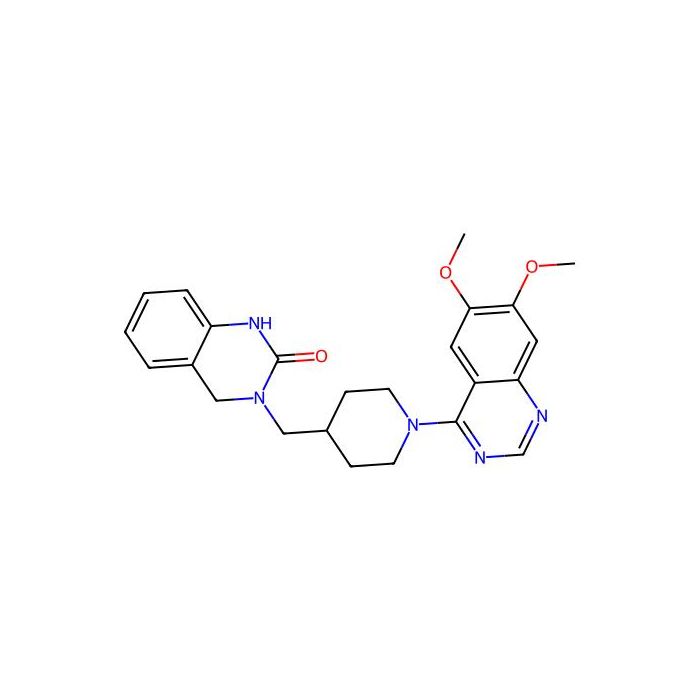
K-756 is a direct and selective tankyrase ( TNKS ) inhibitor, which inhibits the ADP-ribosylation activity of TNKS1 and TNKS2 with IC 50 s of 31 and 36 nM, respectively.
In Vitro
K-756 is a novel and selective Wnt/β-catenin pathway inhibitor targeting tankyrase (TNKS). TNKS is one of the members of the PARP family (it is also known as PARP5). K-756 binds to the induced pocket of TNKS and inhibits its enzyme activity. To study the isoform selectivity of K-756, the PARP family enzyme inhibitory activity at 10 μM is evaluated. K-756 inhibits TNKS1 and TNKS2 by 97% and 100%, respectively. In contrast, the inhibitory activity of K-756 against PARP1, PARP2, PARP3, PARP6, PARP7, and PARP11 is less than 13%. K-756 inhibits the cell growth of APC-mutant colorectal cancer COLO 320DM and SW403 cells by inhibiting the Wnt/β-catenin pathway. K-756 strongly inhibits the reporter activity in DLD-1/TCF-Luc cells with an IC 50 of 110 nM, but does not inhibit DLD-1/mtTCF-Luc cells, even at 1,000 nM. APC-mutant colorectal cancer cell line COLO 320DM and SW403 cells are treated with K-756 and after 144 hours, cell growth inhibition is measured by an XTT assay. The application of K-756 inhibits the cell growth of COLO 320DM with a GI 50 of 780 nM. K-756 also inhibits SW403 with a GI 50 of 270 nM. MCE has not independently confirmed the accuracy of these methods. They are for reference only.
In Vivo
DLD-1/TCF-Luc cell xenografts are created in SCID mice. Vehicle (0.5% MC400) or K-756 is administered orally once a day for 3 days at 100, 200, and 400 mg/kg. The Wnt/β-catenin signal inhibition in the tumor is detected by measuring FGF20 and LGR5 and luciferase activity. The expression of FGF20 and reporter activity are significantly decreased at doses of 100 mg/kg and above at 3-day administration. The expression of LGR5 is significantly decreased at doses of 200 mg/kg and above at 3-day administration. The maximum inhibitory activity is reached with the administration of K-756 at a dose of 400 mg/kg at 3-day administration. The Wnt/β-catenin signal inhibition at a dose of 400 mg/kg is observed from 1-day administration . MCE has not independently confirmed the accuracy of these methods. They are for reference only.
K-756 is a direct and selective tankyrase ( TNKS ) inhibitor, which inhibits the ADP-ribosylation activity of TNKS1 and TNKS2 with IC 50 s of 31 and 36 nM, respectively.
Condições de armazenamento de armazenamento
Store at -80°C
Enviado em
Dry ice packs + Cold packs
Este produto requer transporte de cadeia fria. Serviços terrestres e outros serviços econômicos não estão disponíveis.
Determine the necessary mass, volume, or concentration for preparing a solution.
Dilution Calculator
Determine the dilution needed to prepare a stock solution.
Reconstitution Calculator
Revisões
Avaliações dos Clientes
Application Protocols
No validated, item-specific application protocols are provided for K-756. The following are general templates for small-molecule screening; adapt to your system and confirm compatibility.
General biochemical assay workflow (example):
Stock: Dissolve K-756 at 10–50 mM in anhydrous DMSO. Filter (0.2 µm PTFE) if needed. Prepare single-use aliquots and store at −80 °C.
Dilution: Create a DMSO serial dilution (e.g., 10-point, 1:3) to form a mother plate. Transfer to assay plate to achieve final 0.1–1% DMSO and a suitable concentration range (e.g., 0.3 nM–30 µM depending on assay sensitivity).
Controls: Include vehicle control and positive/negative controls relevant to your target. Run in technical triplicates.
Readout: Follow the assay kit or in-house SOP; record plate temperature and timing precisely.
Quality checks: Inspect for precipitation; monitor Z′ factor; verify that signal is not a function of co-solvent percentage.
Cell-based assay considerations (if applicable):
Confirm compound solubility in complete media; keep final DMSO ≤0.1–0.5% v/v unless cells tolerate more.
Assess cytotoxicity separately to avoid confounding target-specific effects.
All parameters above are general guidance and must be optimized empirically for K-756.
Biological Roles
No biological function, target class, or pathway annotation is provided for K-756 in this product record.
General considerations for small-molecule library members (non-item-specific):
Such compounds may serve as chemical probes, tool compounds, or hit matter in discovery programs. Definitive biological roles require validated target engagement and phenotypic characterization.
If a structure is obtained (via the CAS or CID), standard in silico annotations (e.g., physicochemical profiling, predicted permeability, and pan-assay interference risk) can guide assay selection and counter-screen design.
Any reported activities from external databases should be independently confirmed under your assay conditions, accounting for solubility ceilings, aggregation propensity, and redox/photochemical liabilities.
Important: Aladdin provides K-756 strictly for research use only. No medical, diagnostic, or clinical applications are supported or implied. Users should perform due diligence to establish mechanistic relevance, potency, and selectivity in the biological context of interest before deploying the compound as a probe.
Buffer Applications
K-756 is not a buffering agent, and no acid/base properties are provided in this record. Therefore, buffer formulation guidance is general and assay-centric.
General assay buffer guidance (non-item-specific):
Choose a buffer that ensures target stability and activity (e.g., HEPES 25–50 mM, pH 7.2–7.5; Tris 25–50 mM, pH 7.4–8.0; phosphate 10–50 mM, pH 6.5–7.4), adding salts (NaCl 100–300 mM) and cofactors as needed.
Maintain low final organic co-solvent (DMSO/EtOH) percentages, typically ≤0.1–1% v/v for sensitive enzymes; validate tolerance empirically.
Include BSA (0.01–0.1%) or mild nonionic detergents (0.01–0.05% Tween 20 or Triton X-100) to reduce nonspecific binding/aggregation if consistent with the assay.
Filter (0.22 µm) and degas buffers to enhance plate-to-plate reproducibility and mitigate bubble artifacts in optical readouts.
Note: pKa, ionization state, and solubility of K-756 in physiological buffers are not specified for this item; consult structural data and perform small-scale solubility tests before committing to large screens.
Green Alternatives
Because K-756 is a compound rather than a solvent or reagent, green considerations primarily concern solvent choice, energy input, and waste minimization during dissolution, storage, and screening.
Greener solvent strategy (general):
Prefer water with minimal DMSO where solubility permits; otherwise, use the least hazardous organic co-solvent compatible with assay sensitivity and compound stability.
Avoid high-toxicity dipolar aprotics (e.g., NMP, DMF) when DMSO or bio-derived solvents suffice.
DMSO: Benchmark for solubilizing diverse chemotypes; readily biodegradable, low vapor pressure; assay effects above ~1% v/v.
2-MeTHF or CPME (if synthetic manipulations are needed): Bio-based/safer alternatives to THF/Et2O; not typically used as assay cosolvents but relevant for any upstream synthesis/purification of analogs.
Ethanol: Safer, renewable routes exist; lower solvency for very lipophilic scaffolds but often acceptable ≤1% v/v in assays.
Operational practices:
Aliquot at high concentration to reduce freeze–thaw and plastic waste from repeated pipetting.
Use low-dead-volume tips and sealed, barcode-tracked plates to minimize evaporation and VOC emissions.
Consolidate waste streams (halogenated vs non-halogenated) to improve recyclability and reduce incineration burdens.
Trade-offs:
Greener co-solvents may limit solubility or alter assay sensitivity; always balance environmental benefits with data quality and compound stability.
Pharmaceutical Uses
No pharmacopeial status, excipient role, or clinical use is provided or implied for K-756. It is supplied strictly for research use only.
Research/development context (general):
Can serve as reference material, control compound, or hit matter in preclinical discovery workflows, subject to confirmation of identity, purity, and stability.
May be incorporated into formulation screening studies (e.g., solvent/co-solvent systems, cyclodextrins, or lipid-based carriers) solely for research on solubility/permeability—no clinical application is supported.
Regulatory note:
Not a GMP material. Not intended for human or veterinary use, diagnostic purposes, or in foods/cosmetics.
If used in GLP settings for exploratory studies, generate internal specifications and method validations appropriate to the study requirements.
For item-specific composition (salt form, residual solvents, water content) or impurity profiles: Not specified for this item; refer to CoA/Spec Sheet.
Physical Properties
Item-specific specifications are not provided in the current record; consult the CoA/Spec Sheet.
Appearance: Not specified for this item; refer to CoA/Spec Sheet.
Melting point (MP): Not specified for this item; refer to CoA/Spec Sheet.
Boiling point (BP): Not specified for this item; refer to CoA/Spec Sheet.
Density: Not specified for this item; refer to CoA/Spec Sheet.
LogP/logD: Not specified for this item; refer to CoA/Spec Sheet.
pKa(s): Not specified for this item; refer to CoA/Spec Sheet.
Refractive index: Not applicable for most solids; Not specified for this item; refer to CoA/Spec Sheet.
Solubility: Not specified for this item; refer to CoA/Spec Sheet.
General guidance for small-molecule library compounds (literature/general):
Initial dissolution: Start with an anhydrous, high-boiling polar aprotic solvent (e.g., DMSO) to prepare a 10–50 mM master stock. Warm gently (room temperature) and vortex/sonicate as needed. Avoid heating above 40 °C until thermal stability is verified by LC–MS.
Aqueous buffers: If aqueous use is required, prepare DMSO stocks then dilute into buffer with constant mixing to avoid local precipitation. Keep final DMSO ≤0.1–1% v/v for sensitive biochemical assays; up to 2–5% v/v may be tolerated in some enzyme/cell-free systems (verify empirically).
Solubility screening: If insoluble in DMSO, evaluate DMF, NMP, ethanol, or PEG400 co-solvent systems; check for assay interference and material compatibility.
Hygroscopicity/photolability: Unknown for this item. Handle under ambient light until photostability is known; protect from moisture until data are available.
Quality and Grades
Grade: Moligand™ (item-specific). Moligand™ designates small-molecule library compounds suitable for discovery screening, assay development, and chemical biology.
What Moligand™ typically implies (general description):
Emphasis on identity confirmation and screening-suitable purity, enabling reliable SAR development and reproducible assay outcomes.
Lots are generally supported by analytical data such as LC–MS and/or 1H NMR and chromatographic purity suitable for hit finding. However, specific purity thresholds, residual solvent levels, and elemental limits are not specified here.
Item-specific details:
Purity/assay, stabilizers, counterions, and any salt/solvate form: Not specified for this item; refer to CoA/Spec Sheet.
Water/peroxide/UV cutoff/metal limits: Not specified for this item; refer to CoA/Spec Sheet.
Implications for use:
For HTS and biochemical assays, document the lot number and archive the CoA. If low-UV absorbance for HPLC or photometric assays is critical, confirm via your own baseline scans.
For quantitative studies (IC50/Ki/EC50), confirm purity in-house under your assay conditions to avoid read-through from minor impurities.
Recommended QC on receipt (best practices):
Record LC–MS (ESI±) to confirm intact mass and check for adducts/fragmentation.
Quick HPLC/UPLC purity check under an orthogonal method to the supplier’s.
Optional: 1H NMR in a deuterated solvent that fully dissolves the sample; archive spectra for future reference.
Reaction and Applications
Intended use: As a Moligand™ library member, K-756 is positioned for discovery screening, target validation, and chemical biology workflows. No specific biochemical target or mode of action is provided in this record.
Research applications (general for small molecules; verify for this item):
High-throughput screening (HTS) and focused secondary assays to establish preliminary SAR.
Orthogonal assay confirmation (biochemical vs biophysical methods such as DSF, MST, SPR) to deconvolute mechanism and mitigate assay interference.
Cellular assays (if permeability and cytotoxicity profiles permit), with careful control of final DMSO content and plate-edge effects.
Practical tips:
Prepare a freshly thawed, single-use aliquot of a concentrated DMSO stock to avoid freeze–thaw degradation and adsorption losses.
Use serial dilution in DMSO to create mother plates, then pin-tool/dispense to daughter assay plates to ensure uniform final DMSO percentages.
Implement counter-screens to identify redox cyclers, metal chelators, detergent-sensitive aggregators, or PAINS-like behaviors (general guidance; target-agnostic).
Analytical support:
Track purity and identity pre- and post-assay by LC–MS to detect instability or modification under assay conditions (e.g., oxidation, hydrolysis).
Record extinction or fluorescence properties if relevant to detection; verify no spectral overlap with assay readouts.
Note: Without target/structure information, all application guidance above is general and should be validated empirically for K-756.
Reaction Conditions
This product is not provided as a reagent for chemical transformations, and no structural or functional-group information is included in the record. Accordingly, specific reaction conditions cannot be recommended for K-756.
General guidance if derivative preparation is contemplated (non-item-specific):
Solvents: Start with dry, oxygen-free conditions for moisture/air-sensitive transformations; select solvents based on the functional groups present in the known structure (when obtained from literature/databases).
Temperatures: Screen from 0–80 °C as dictated by reactivity and stability; avoid elevated temperatures until thermal stability is confirmed.
Catalysts/bases/acids: Choose based on the intended bond formation (e.g., palladium for cross-coupling, carbodiimides for amide couplings) only after confirming compatibility with the compound’s functionalities.
Monitoring: Use LC–MS/UPLC and TLC to track conversion; quench samples and immediately analyze to assess degradation/side reactions.
Item-specific yields, equivalents, and times: Not specified for this item; refer to primary literature if available for the compound’s CAS/CID.
Safety and Handling
GHS and hazard data for this specific item are not provided in the current record. Always consult the SDS for authoritative guidance.
GHS classification, signal word, hazard statements, pictograms: Not specified for this item; refer to SDS.
Primary hazards (general for research chemicals): Treat as potentially harmful if swallowed, inhaled, or in contact with skin/eyes. Unknown chronic toxicity; avoid unnecessary exposure.
PPE and engineering controls:
Wear lab coat, safety glasses, and appropriate chemical-resistant gloves (e.g., nitrile). Use a certified chemical fume hood for weighing, dissolution, and transfers—especially when using volatile organic solvents.
Handling practices:
Avoid dust/aerosol generation. Use antistatic weighing boats for fine powders. Cap vials promptly to minimize moisture/air exposure.
For DMSO stocks, prevent skin contact (rapid transdermal transport risk). Wipe external vial surfaces after preparation.
Incompatibilities and reactivity (unknown item-specific):
Until data are known, avoid strong oxidizers/reducers, strong acids/bases, and reactive acylating/alkylating agents. Do not heat above 40 °C unless stability has been confirmed analytically.
First aid (general):
Skin/eye contact: Rinse with water for ≥15 minutes, remove contaminated clothing, seek medical attention if irritation persists.
Inhalation: Move to fresh air; seek medical attention if symptoms occur.
Ingestion: Rinse mouth; do not induce vomiting; seek medical attention.
Waste disposal:
Collect organic solutions and contaminated disposables in compatible, labeled hazardous-waste containers according to institutional and regulatory requirements.
Solvent Selection
Item-specific solubility is not provided. The following guidance is general for small-molecule screening compounds and should be verified empirically for K-756.
Primary stock solvent (typical): DMSO (anhydrous) due to high solvating power and assay compatibility at low percentages.
Secondary options: DMF, NMP, ethanol, methanol, or PEG400/co-solvent systems, depending on structural polarity and H-bonding capacity (unknown for this item).
Aqueous buffers: Prepare concentrated organic stock and dilute into buffer under vigorous mixing. Include nonionic surfactant (e.g., 0.01–0.05% Tween 20) only if consistent with assay and after checking for interference.
Comparison (general):
DMSO: Broad solubility, miscible with water; may affect enzyme kinetics above ~1% v/v.
DMF/NMP: Strongly solvating; higher toxicity profiles; use sparingly and confirm assay compatibility.
Ethanol/Methanol: Volatile, lower solvency for highly lipophilic chemotypes; often acceptable up to 0.1–1% in biochemical assays.
Aqueous PBS/HEPES: Limited direct solubility for many hydrophobic ligands; risk of precipitation without co-solvent.
Practical tips:
Start with 10–50 mM stocks in DMSO; inspect for clarity and microbubbles. Filter through 0.2 µm PTFE if necessary and chemically compatible.
If precipitation occurs on dilution, increase dilution temperature slightly (≤30–37 °C) or adjust co-solvent percentage within assay tolerances.
Document final co-solvent composition per assay well to ensure reproducibility and comparability across plates and runs.
Storage and Reconstitution
Storage (item-specific):
Store at −80 °C (from Product Data). Shipments are sent on dry ice packs + cold packs to maintain ultra-low temperature.
Stability notes:
Long-term stability at −80 °C is generally superior for small-molecule library members; however, item-specific stability, hygroscopicity, and photolability are Not specified for this item; refer to CoA/Spec Sheet.
Minimize freeze–thaw cycles by preparing single-use aliquots immediately after first opening.
Reconstitution (general guidance):
Solvent: Start with anhydrous DMSO to prepare a concentrated master stock (e.g., 10–50 mM). If insoluble, evaluate DMF, NMP, ethanol, or co-solvent systems as allowed by downstream assays.
Procedure: Allow vial to equilibrate to room temperature inside a desiccator before opening to prevent moisture condensation; add calculated solvent volume; vortex and, if necessary, sonicate briefly. Avoid heating above 40 °C unless stability is confirmed.
Filtration: If particulates persist, pass through a 0.2 µm PTFE syringe filter compatible with the solvent system.
Aliquoting: Dispense into low-bind microtubes or plate wells; purge headspace with inert gas if oxidation sensitivity is suspected.
Short-term handling:
Keep on ice or at 4 °C during assay setup if thermally labile; return unused sealed aliquots promptly to −80 °C.
Specifications not provided (item-specific):
Appearance, solubility limits, pKa/logP, stabilizers, or salt form: Not specified for this item; refer to CoA/Spec Sheet.
Structure and Identity
Brief overview: K-756 (SKU K655378) is listed in our small-molecule/compound library under the Moligand™ line, intended for research screening and chemical biology.
CAS: 130017-40-2 (item-specific)
PubChem CID: 14668434 (item-specific)
InChIKey: Not specified for this item; refer to CoA/Spec Sheet.
SMILES: Not specified for this item; refer to CoA/Spec Sheet.
Molecular Formula: Not specified for this item; refer to CoA/Spec Sheet.
Molecular Weight: Not specified for this item; refer to CoA/Spec Sheet.
Structural features:
Functional groups, ring systems, heteroatoms, and stereochemistry are not provided in the current product record. Researchers should consult the CoA/SDS or trusted databases (e.g., via the CAS or CID above) to obtain the definitive 2D/3D structure prior to computational modeling, docking, or analytical method development.
2D structure (descriptive):
Not available in the present entry. If structure is obtained from literature/databases, we recommend documenting major pharmacophores (donor/acceptor count, HBD/HBA), aromatic vs aliphatic balance, and any ionizable centers to inform solubility, assay buffer selection, and permeability expectations.
Identity confirmation best practices (general):
Verify by orthogonal techniques (LC–MS, 1H NMR, HPLC purity) against literature spectra when possible.
Record retention time and exact mass under your local LC–MS conditions for future lot-to-lot tracking.
Synthetic Utility
This Moligand™ product is supplied for screening rather than for use as a synthetic reagent. No structural information is provided here, so functional-group-based reactivity cannot be described for this specific item.
General considerations (if structure is available from literature/databases):
If K-756 contains modifiable handles (e.g., aryl halides, anilides, carboxylates, sulfonamides), it could be adapted for SAR by parallel synthesis (e.g., amide couplings, Suzuki/Negishi cross-couplings, SNAr, or sulfonylations) to generate analog panels.
Protecting-group strategies and chemoselective transformations should be planned after mapping heteroatom distribution and oxidation state.
If a chiral center is present, enantioselective synthesis or chiral separation may be necessary to interpret biological data.
Practical note:
Before derivatization, confirm stability of K-756 to bases, acids, and oxidants by micro-scale stress testing followed by LC–MS analysis.
Because no structural details are included in this entry, the above represents general guidance only. For concrete synthetic routes, consult primary literature associated with the compound’s CAS or CID and adapt conditions to your lab’s capabilities.
Target Specificity
No target, pathway, or selectivity data are provided for K-756 in this product entry.
Target name/class: Not specified for this item; refer to CoA/Spec Sheet or primary literature.
Selectivity panel data: Not specified for this item; refer to CoA/Spec Sheet.
Species reactivity: Not specified for this item; refer to CoA/Spec Sheet.
Users intending to deploy K-756 as a tool compound should conduct orthogonal assays and, where possible, broad profiling to establish potency and selectivity under their experimental conditions.
Perguntas frequentes
What is Moligand??
Moligand? is one of Aladdin Scientific's premium product lines, formulated for high-purity applications across multiple workflows. Compared to standard grades in the same workflow, Moligand? products typically offer tighter specifications, more rigorous QC, and stronger lot-to-lot consistency.
How should this product be stored?
Store at ?80 °C. Ultra-low temperature storage is required to maintain the specified shelf life.
How is this product shipped?
This product ships frozen with dry ice and cold packs. Unpack on arrival and transfer it to the storage condition stated above; handle dry ice with insulated gloves in a ventilated area.
What are the CAS number, molecular formula and molecular weight?
The CAS Number is 130017-40-2, the molecular formula is C24H27N5O3, and the molecular weight is 433.50 g/mol.
What documentation is provided?
Available product documentation, including Certificates of Analysis (COA), Safety Data Sheets (SDS), and specification sheets, is shown in the product document area. Document availability and access follow the current site policy.
Precisa de ajuda para escolher o grau?
O nosso guia de seleção de graus abrange pureza, estado do estabilizador e adequação à aplicação para todas as variantes do nosso catálogo.
Usamos cookies para garantir o funcionamento adequado do site e, quando permitido, para melhorar a sua experiência. Você pode gerenciar suas preferências a qualquer momento nas Configurações. Saiba mais em nossa Política de Cookies.
Deseja que lhe enviemos uma mensagem quando tivermos descontos disponíveis?
Lembrar-me mais tarde
Obrigado! Por favor, verifique a sua caixa de entrada de e-mail para confirmar.
Products are supplied to verified businesses, institutions, and qualified professionals for research and development use only. Not for use in humans, animals, diagnosis, or therapy.