HIF-1α inhibitors. Works by down-regulating HIF-1α protein synthesis and reducing phosphorylation of eIF4E-binding proteins 1 (4EBP1) and p70 S6K under hypoxia conditions. It also prevents hypoxia-induced accumulation of HIF-1α in a range of human cancer
Condições de armazenamento de armazenamento
Store at -20°C
Enviado em
Ice chest + Ice pads
Este produto requer transporte de cadeia fria. Serviços terrestres e outros serviços econômicos não estão disponíveis.
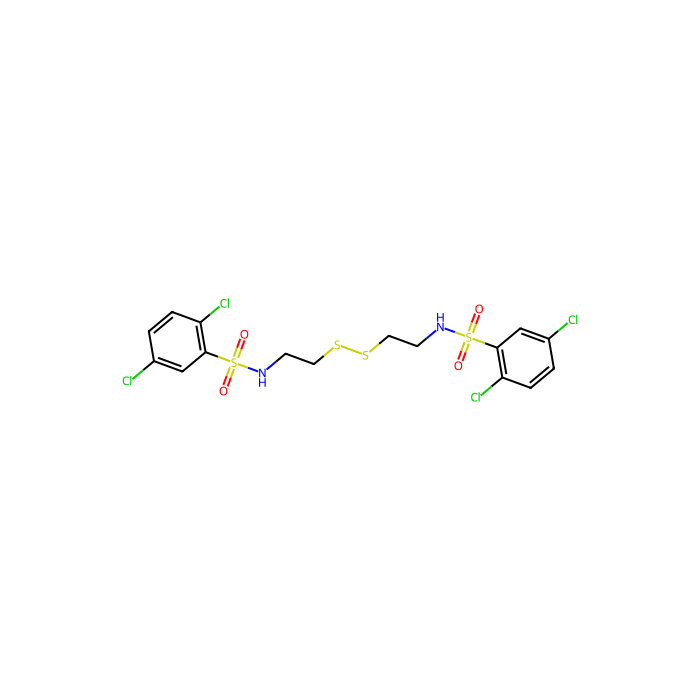
This compound belongs to the class of organic compounds known as benzenesulfonamides. These are organic compounds containing a sulfonamide group that is S-linked to a benzene ring.
External Descriptors
Not available
1. Djoumbou Feunang Y, Eisner R, Knox C, Chepelev L, Hastings J, Owen G, Fahy E, Steinbeck C, Subramanian S, Bolton E, Greiner R, and Wishart DS. ClassyFire: Automated Chemical Classification With A Comprehensive, Computable Taxonomy. Journal of Cheminformatics, 2016, 8:61.
Determine the necessary mass, volume, or concentration for preparing a solution.
Dilution Calculator
Determine the dilution needed to prepare a stock solution.
Reconstitution Calculator
Revisões
Avaliações dos Clientes
Application Protocols
No vendor-validated application protocols are provided for this item. The following is general, target-agnostic guidance for handling small-molecule library members in research settings. Adjust to your assay and compound behavior.
Stock solution preparation (general):
Weigh the compound quickly at ambient conditions. If hygroscopicity is unknown, minimize air exposure.
Prepare an initial stock in anhydrous DMSO (typical 10–50 mM). Vortex and, if needed, sonicate gently. Avoid heating unless stability is confirmed.
Filter if particulate persists (0.2 µm PTFE or hydrophilic PTFE for DMSO-containing solutions).
Aliquot into low-bind tubes, flush headspace with inert gas if long-term storage is planned, and freeze at −20 °C.
Assay use (general):
Dilute stocks into assay buffer to the desired concentration, keeping final DMSO ≤0.5–1% v/v unless your assay tolerates more.
Include vehicle controls and, when relevant, positive/negative controls.
Verify absence of precipitation or color/fluorescence interference by visual check and a quick light-scattering or absorbance scan.
Stability checks:
Confirm chemical stability and potency retention by LC/UPLC (and bioassay if applicable) over the time window of use (e.g., t0, 4 h, 24 h at room temperature and 4 °C).
Note: For any protocol claims specific to KC7F2, consult the CoA/Spec Sheet or peer-reviewed literature tied to this CAS/CID.
Biological Roles
Item-specific biological targets, pathways, or modes of action for KC7F2 are not provided in the product data. No claims are made here regarding biological activity or therapeutic relevance.
General considerations for small-molecule library members:
Potential roles: Compounds in screening libraries may interact with enzymes, receptors, transporters, or signaling proteins; however, any such activity must be established experimentally for the specific lot and conditions.
Assay development: When exploring biological roles, start with unbiased phenotypic or biochemical assays, followed by secondary and orthogonal assays to confirm specificity and rule out assay interference (e.g., redox cycling, aggregation, fluorescence quenching).
ADME profiling: If progressing beyond primary screening, collect solubility, permeability (e.g., PAMPA/Caco-2), microsomal stability, and protein binding data to contextualize any observed activity.
Cytotoxicity: Establish basic cytotoxicity windows (e.g., resazurin/ATP assays) in relevant cell lines before target assays to set safe concentration ranges.
Note: All uses are for research only. Any biological role or mechanism should be supported by primary literature and/or vendor documentation specific to KC7F2 (CAS 927822-86-4; CID 16047442). Absent such data, do not infer function.
Buffer Applications
KC7F2 is a discrete small molecule, not a buffering reagent. As such, it does not form part of a conventional buffer system.
Typical buffer use: Not applicable. Use your assay’s validated buffer (e.g., PBS, HEPES, Tris) and add KC7F2 as a solute from an organic stock (often DMSO) at low final percentages to maintain buffer properties.
Practical tips: Verify that the selected buffer and pH maintain KC7F2 solubility upon dilution. Conduct a small precipitation test at working concentrations. Include vehicle (solvent) controls.
For preparation of standard biological buffers or electrophoresis systems, refer to established recipes; KC7F2 does not substitute for buffer components.
Green Alternatives
Because KC7F2 is a discrete small-molecule library member rather than a process solvent or commodity reagent, the concept of a “green alternative” is generally not applicable to the compound itself. However, greener choices can be made in how the compound is handled and formulated.
Greener handling considerations (general):
Solvent selection: Prefer ethanol or water–ethanol co-solvent systems over higher-toxicity polar aprotics when assay-compatible. DMSO is broadly used but should be minimized in aqueous assays to ≤0.5–1% v/v.
Miniaturization: Use microplate formats and acoustic dispensing to reduce solvent and waste volumes.
Workup/waste: Segregate halogenated vs non-halogenated organic waste; adopt solvent recycling where feasible.
Energy: Store only as cold as necessary (−20 °C per item-specific guidance) to reduce energy use relative to ultra-low temperatures; avoid repeated door openings and consolidate shipments.
Comparison of common stock solvents (general):
Ethanol: Renewable feedstock, lower toxicity; limited solvency for some hydrophobic analytes.
DMSO: High solvency and biodegradability reports, but can enhance dermal absorption; handle with care.
DMF/NMP: Powerful solvents but reproductive toxins; avoid when possible in favor of EtOH/DMSO.
Conclusion: Optimize solvent systems and dispensing technologies to lower environmental impact without altering the identity of KC7F2.
Pharmaceutical Uses
No pharmacopeial status, excipient role, or manufacturing application is provided for KC7F2 in the product data. This product is supplied strictly for research use only.
General guidance (non-clinical, non-therapeutic):
Pre-formulation screening: If evaluating KC7F2 in early discovery, typical exercises include solubility screening (kinetic/equilibrium), salt/cocrystal screening (if ionizable), and stability studies in model formulation vehicles. These activities remain strictly preclinical research.
Compatibility: Assess compatibility with common formulation excipients only within research contexts; no claims are made here about suitability for human or veterinary use.
Important: Do not use this product as a drug substance, excipient, or for any clinical application. No GMP status is implied or claimed. For any movement toward regulated development, new sourcing, full CMC characterization, and quality system controls would be required.
Physical Properties
The product data does not supply item-specific physicochemical parameters.
Item-specific values:
Appearance: Not specified for this item; refer to CoA/Spec Sheet.
Melting point (MP): Not specified for this item; refer to CoA/Spec Sheet.
Boiling point (BP): Not specified for this item; refer to CoA/Spec Sheet.
Density: Not specified for this item; refer to CoA/Spec Sheet.
Solubility: Not specified for this item; refer to CoA/Spec Sheet.
LogP/logD: Not specified for this item; refer to CoA/Spec Sheet.
pKa: Not specified for this item; refer to CoA/Spec Sheet.
Refractive index: Not applicable for most solids; specific value not provided.
UV-Vis characteristics/LC-MS ionization: Not specified for this item; refer to CoA/Spec Sheet.
General guidance (literature/practice for screening compounds):
Many small-molecule library members are supplied as solids or films and are commonly soluble in high-boiling polar aprotic solvents (e.g., DMSO) for stock solutions. Always verify solubility experimentally before assay use.
If UV detection is needed, determine λmax empirically via a quick DMSO or MeOH scan; avoid stating cutoffs without data.
Hygroscopicity or polymorphism is unknown for this item; handle under dry conditions until characterized.
Note: For definitive physical property values for KC7F2, consult the CoA/Spec Sheet or the SDS. Do not assume values from unrelated compounds.
Quality and Grades
Grade/Purity (item-specific): Not specified for this item; refer to CoA/Spec Sheet.
Interpretation and context:
In the absence of a stated grade (e.g., ≥98%, screening grade, bioactive grade, or analytical grade), users should treat KC7F2 as a research-use small molecule with unspecified purity. Request the CoA for lot-specific assay/purity, residual solvent profile, and characterization (NMR, LC/UPLC, HRMS where available).
Chromatographic suitability: If the material is intended for quantitative biological assays, ensure LC purity and peak homogeneity meet internal acceptance criteria (commonly ≥95% area by UPLC at multiple wavelengths). Verify absence of interfering UV-active impurities when using photometric readouts.
Stabilizers/inhibitors: Not specified for this item; refer to CoA/Spec Sheet. If none is indicated, assume the compound is supplied neat. Assess stability in solution (e.g., DMSO) during method development.
Trace specifications (water, peroxides, metals, residual reagents, UV cutoff): Not specified for this item; refer to CoA/Spec Sheet.
Recommendations:
Upon receipt, record lot number and request the CoA. For sensitive biological assays, consider in-house confirmation by LC-MS and 1H NMR.
If the compound is moisture- or light-sensitive (unknown here), aliquot under inert atmosphere and protect from light as a precaution.
Reaction and Applications
This product is cataloged as a small-molecule library component for research use. No item-specific reactivity profile or synthetic application notes are provided.
Applications (general for small-molecule probes/collection members):
Biological assay screening: Preparation of concentrated DMSO stocks for use in cell-free or cell-based assays (target-agnostic unless otherwise specified). Evaluate dose–response and conduct counterscreens for assay interference.
Analytical reference: May serve as a reference analyte during method development (e.g., LC-MS retention time brackets), provided identity and purity are confirmed by CoA and in-house testing.
Physicochemical characterization: Can be used to benchmark solubility, permeability, or stability workflows (shake-flask solubility, PAMPA, microsomal stability) after verifying structure and identity.
Not provided for this item:
Named reaction roles (e.g., coupling partner, catalyst ligand, building block) are not specified and may be inapplicable if the compound is not designed as a synthetic reagent.
Practical tips (general):
Prepare minimal freeze–thaw aliquots in dry DMSO to avoid hydrolysis/oxidation of sensitive motifs (unknown here); assess stability by LC-MS over time.
If using in screening, incorporate vehicle controls and evaluate potential pan-assay interference (PAINS) by orthogonal assays.
Always tailor application development to verified structural and purity information from the CoA.
Reaction Conditions
No reaction condition guidance is applicable to KC7F2 as a reagent, because it is offered as a discrete library compound with no specified role in chemical transformations.
General notes (if using in assay solution preparation):
Stock preparation: Commonly prepared in anhydrous DMSO at 10–50 mM, then diluted into assay buffer to a low final solvent fraction (≤0.5–1% v/v). Verify solubility and chemical stability.
Light/air sensitivity: Unknown for this item. As a precaution, prepare and store solutions under low light and with minimal headspace; consider inert gas overlay for long-term storage.
Temperature: Avoid elevated temperatures during dissolution unless stability is confirmed by LC. Gentle warming (25–37 °C) and sonication can assist dissolution.
For any use in synthetic chemistry, first obtain structure-specific data and consult primary literature or conduct small-scale feasibility tests.
Safety and Handling
Safety overview for KC7F2 is constrained by limited hazard data in the product listing. Treat as a research chemical of unknown hazards and follow prudent laboratory practices.
GHS/Classification (item-specific):
Signal word: Not specified for this item; refer to SDS.
H-statements: Not specified for this item; refer to SDS.
GHS classification and pictograms: Not specified for this item; refer to SDS.
General laboratory precautions (good practice):
PPE: Wear lab coat, safety glasses or face shield, and appropriate chemically resistant gloves (e.g., nitrile). Use in a chemical fume hood to avoid inhalation of dusts or vapors.
Avoid ingestion, inhalation, and skin/eye contact. Wash thoroughly after handling.
Incompatibilities: Unknown for this specific item. As a precaution, segregate from strong oxidizers, strong acids/bases, and reducing agents until compatibility is confirmed.
First aid (overview; defer to SDS): If on skin/eyes, rinse with water for at least 15 minutes; remove contaminated clothing. If inhaled, move to fresh air. If ingested, rinse mouth; seek medical attention in all cases of exposure.
Spill/accidental release: Avoid dust generation; collect with inert absorbent or dampened disposable towels; dispose per institutional chemical waste procedures.
Fire-fighting: Many organics are combustible; use CO2, dry chemical, or foam. Thermal decomposition may produce irritating/toxic fumes. Firefighters should wear SCBA.
Always consult the product-specific SDS for authoritative guidance before use.
Solvent Selection
Item-specific solubility data are not provided for KC7F2. The following is general guidance for small-molecule screening compounds and should be verified experimentally.
General approach:
Primary stock solvent: DMSO is the default choice for many drug-like compounds due to broad solvency and assay compatibility at low final percentages (≤0.5–1% v/v). Start with 10–50 mM trial stocks.
Alternative solvents: DMF or NMP can be used for challenging solutes, with subsequent dilution into aqueous buffers containing co-solvent. Methanol or ethanol may suffice for polar/medium-polar analytes.
Aqueous buffers: Direct aqueous solubility is unknown. If aqueous work is needed, consider co-solvent systems (e.g., 5–20% DMSO or MeOH) or surfactants (0.01–0.1% Tween-80) after compatibility checks with the assay.
pH effects: Without pKa data, evaluate solubility across pH 3–9 using a cosolvent microtiter screen.
Filtration: Use hydrophilic PTFE or PVDF syringe filters for mixed solvent systems; test for adsorption losses with recovery checks.
Comparison (typical considerations):
DMSO: Highest solvency; may affect some assays at >1%.
MeOH/EtOH: Lower solvency but easier evaporation; potential enzyme inhibition at higher levels.
DMF/NMP: Strong solvents; verify biocompatibility and remove before biological readouts when possible.
Note: Confirm solution stability (e.g., by UPLC at t0/t24 at room temperature and 4 °C) to ensure no precipitation or degradation.
Storage and Reconstitution
Item-specific guidance from Product Data:
Storage conditions: Store at −20 °C.
Shipped in: Ice chest + ice pads.
Research use note: For research use only.
Additional best practices (general for small molecules):
Container: Store in tightly sealed, chemically compatible vials (e.g., amber glass or fluoropolymer-lined caps) to reduce moisture/oxygen ingress and photodegradation.
Light/moisture protection: If the compound is light- or moisture-sensitive (not specified), store in amber containers with desiccant in the secondary container.
Aliquoting: Upon first opening, prepare single-use aliquots to minimize freeze–thaw cycles. Record the date opened and lot number.
Reconstitution (general guidance):
Solvent choice: Begin with anhydrous DMSO for stock preparation unless item-specific solubility indicates otherwise. Incrementally add solvent with vortexing/sonication to achieve the target concentration (e.g., 10–50 mM).
Aqueous use: Dilute DMSO stocks into buffer immediately before use, maintaining low final organic content to avoid precipitation. Verify visually and, if possible, by quick turbidity/UPLC check.
Stability in solution: Unknown for this item; confirm by storing a small test aliquot at intended conditions (e.g., 4 °C, −20 °C) and analyzing by LC-MS after 24–72 h.
Disposal: Dispose of unused solutions and solids as organic chemical waste per institutional and local regulations.
Structure and Identity
Brief overview: KC7F2 is listed as a small-molecule library component. The supplied product data does not include a chemical name, structure, or elemental composition.
SKU: K286569
Product name: KC7F2 (catalog name)
CAS: 927822-86-4 (identifier only; structure not provided here)
PubChem CID: 16047442 (external reference; consult PubChem for structural details)
InChIKey: 314395 (as provided; note: this does not match standard InChIKey length; verify on CoA/SDS)
SMILES: Not specified for this item; refer to CoA/Spec Sheet.
Molecular formula: Not specified for this item; refer to CoA/Spec Sheet.
Molecular weight: Not specified for this item; refer to CoA/Spec Sheet.
Structural features (general note):
Item-specific functional groups, ring systems, and stereochemistry are not available in the provided data. For definitive structure, consult the Certificate of Analysis (CoA), Spec Sheet, or the cited PubChem record (CID 16047442).
2D structure description:
Not available in the provided data. If structural information is required for computational or planning purposes, retrieve the SDF/Molfile from PubChem (CID 16047442) or request the structure from Aladdin Scientific customer support.
Synthetic Utility
KC7F2 is listed as a small-molecule library member rather than a synthetic reagent or building block. Without structural information, it is not appropriate to ascribe functional-group reactivity or named-reaction participation.
Building-block role: Not established. Do not assume availability of reactive handles (e.g., halides, boronates, acids, amines) without a confirmed structure.
Catalyst/ligand role: Not indicated.
Reference material: May serve as an analytical reference only after identity/purity verification (e.g., LC-MS retention time, HRMS), but this is distinct from synthetic use.
If a synthetic application is intended, obtain the full structure (e.g., from PubChem CID 16047442) and evaluate compatibility with your planned transformations. Confirm stability in proposed reaction media before scale-up.
Target Specificity
Item-specific biological target(s), selectivity profile, and mechanism of action for KC7F2 are not provided in the product data.
Antigen/epitope/clone/isotype: Not applicable (this product is not an antibody or biologic).
Molecular target(s): Not specified for this item; refer to literature and the CoA/Spec Sheet. Do not infer a target without primary data.
Selectivity/off-targets: Not specified for this item; establish experimentally if required for your research.
Recommendation: If using KC7F2 in mechanistic studies, run orthogonal assays and include target engagement experiments (e.g., CETSA, DARTS, biochemical kinetics) to support any specificity claims.
Usamos cookies para garantir o funcionamento adequado do site e, quando permitido, para melhorar a sua experiência. Você pode gerenciar suas preferências a qualquer momento nas Configurações. Saiba mais em nossa Política de Cookies.
Deseja que lhe enviemos uma mensagem quando tivermos descontos disponíveis?
Lembrar-me mais tarde
Obrigado! Por favor, verifique a sua caixa de entrada de e-mail para confirmar.
Products are supplied to verified businesses, institutions, and qualified professionals for research and development use only. Not for use in humans, animals, diagnosis, or therapy.

 C2215416