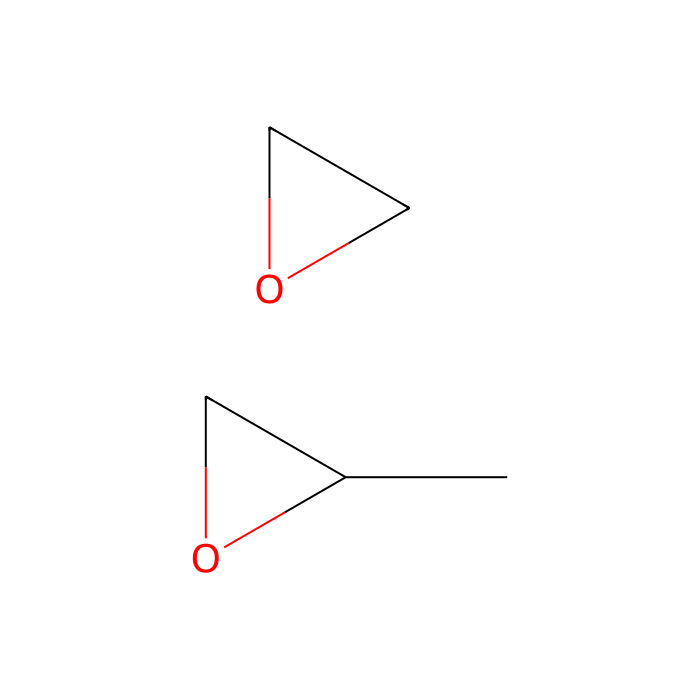
Kolliphor® P 188 , CAS No.9003-11-6

CAS: 9003-11-6 Cat. No.: K434430 Número CE: 618-355-0
Disponível para encomenda
Synonyms
Poloxamer 331 | Poloxamer 407 | Pluronic L 122 | F-108 | Pluronic F-68 | 2-methyloxirane | Pluronic L 61 | oxirane | 8800 (Average Mn) | PEG-PPG-PEG | Poly(ethylene glycol)-block-poly(propylene glycol)-block-poly(ethylene glycol) | Lutrol F68
Storage
Room temperature
Shipped In
Normal
★
Size
Alemanha (EU)
USA*
Price
Qty
50g
K434430-50g
—
2 Em stock
25,95€
250g
K434430-250g
4 Em stock
5 Em stock
86,69€
Enter a quantity for the sizes you want to add.
🧪
Why this grade

for sensitive chromatographic and analytical workflows requiring minimal baseline interference.

🌡

Storage & shipping

Room temperature Ships Normal Check lot-specific COA for exact specifications.

📋

Quality documents

SDS, COA, datasheet, and spec sheet available for download. Lot-specific COA accessible via lot number lookup.

📚

Literature proof

Cited in 661 peer-reviewed publications across chromatography, organic synthesis, and cross-coupling reactions.

Visão geral

Application:

Kolliphor P 188 has been widely used as a thickening agent and gel binder. This research grade product is intended for use in R&D and development only.

Product description:

Poloxamers are ABA-type co-polymers of poly (ethylene oxide) (PEO=A) and poly (propylene oxide) (PPO=B). The approximate relative amount of PEO and the average molecular weight of the PPO are indicated in the name of the poloxamer. For example, P 188 succeeding the word Kolliphor® indicates a poloxamer with ca. 80% m/m PEO (P 188; 8x10= 80%) and approximately average molecular weight of PPO of 1800 (P 188; 18x100= 1800)

Other Notes:

The Kolliphor P grades are poloxamers from the extensive line of Pluronic block copolymers.

Specifications

Sinónimos
Poloxamer 331 | Poloxamer 407 | Pluronic L 122 | F-108 | Pluronic F-68 | 2-methyloxirane | Pluronic L 61 | oxirane | 8800 (Average Mn) | PEG-PPG-PEG | Poly(ethylene glycol)-block-poly(propylene glycol)-block-poly(ethylene glycol) | Lutrol F68
Informações legais
Kolliphor is a registered trademark of BASF Lutrol is a registered trademark of BASF SE
Condições de armazenamento de armazenamento
Room temperature
Enviado em
Normal
Tipo de ação
INHIBITOR
Nomes e identificadores
Pubchem Sid
Pubchem Sid Url
https://pubchem.ncbi.nlm.nih.gov/substance/504753255
Sorrisos canónicos
CC1CO1.C1CO1
IUPAC Name
2-methyloxirane;oxirane
InChIKey
RVGRUAULSDPKGF-UHFFFAOYSA-N
INCHI
1S/C3H6O.C2H4O/c1-3-2-4-3;1-2-3-1/h3H,2H2,1H3;1-2H2
SMILES isoméricas
CC1CO1.C1CO1
CAS alternativo
691397-13-4
Reaxy-Rn
13268566
Reaxys-RN_link_address
https://www.reaxys.com/reaxys/secured/hopinto.do?context=S&query=IDE.XRN=13268566&ln=

Documentation

📋 Safety Data Sheet (SDS)

Comprehensive hazard, handling, storage, and regulatory compliance document.

Download SDS →

✅ Certificate of Analysis (COA)

Lot-specific quality data. Enter your lot number to retrieve the exact COA.

Look up COA →

📊 Datasheet

Quick-reference summary of product specifications and applications.

View datasheet →

🔬 Specification Sheet

Full quality attributes and acceptance criteria for this grade.

View spec sheet →

Advanced Data

Taxonomic Classification

Taxonomy Tree

KingdomOrganic compounds
SuperclassOrganoheterocyclic compounds
ClasseEpoxides
SubclassNot available
Intermediate Tree Nodes Not available
Direct ParentEpoxides
Alternative Parents Oxacyclic compounds  Dialkyl ethers  Hydrocarbon derivatives  
Molecular FrameworkNot available
Substituents Oxacycle - Ether - Oxirane - Dialkyl ether - Organic oxygen compound - Hydrocarbon derivative - Organooxygen compound - Aliphatic heteromonocyclic compound
DescriçãoThis compound belongs to the class of organic compounds known as epoxides. These are compounds containing a cyclic ether with three ring atoms(one oxygen and two carbon atoms).
External Descriptors Not available
Estrutura 3D
Modelo de Estrutura Química Interativa


Certificados(CoA,COO,BSE/TSE e Mapa de Análise)
C of A & Other Certificates(BSE/TSE, COO):
Analytical Chart:

Find and download the COA for your product by matching the lot number on the packaging.

31 results found

Lot NumberCertificate TypeDataItem
H2617120Certificate of AnalysisJun 13, 2026 K434430
H2617119Certificate of AnalysisJun 13, 2026 K434430
H2617118Certificate of AnalysisJun 13, 2026 K434430
A2614372Certificate of AnalysisJan 10, 2026 K434430
A2614558Certificate of AnalysisJan 10, 2026 K434430
A2614559Certificate of AnalysisJan 10, 2026 K434430
D2610112Certificate of AnalysisJan 10, 2026 K434430
E2628049Certificate of AnalysisJan 10, 2026 K434430
L2509099Certificate of AnalysisMay 16, 2025 K434430
I2519064Certificate of AnalysisMay 16, 2025 K434430
E2530621Certificate of AnalysisMay 16, 2025 K434430
E2523471Certificate of AnalysisMay 16, 2025 K434430
E2523360Certificate of AnalysisMay 16, 2025 K434430
E2523339Certificate of AnalysisMay 16, 2025 K434430
E2523340Certificate of AnalysisMay 16, 2025 K434430
I2511072Certificate of AnalysisMar 31, 2025 K434430
D2507545Certificate of AnalysisMar 31, 2025 K434430
D2507546Certificate of AnalysisMar 31, 2025 K434430
I2412395Certificate of AnalysisSep 05, 2024 K434430
G2411593Certificate of AnalysisJun 19, 2024 K434430
G2411597Certificate of AnalysisJun 19, 2024 K434430
I2402498Certificate of AnalysisJun 19, 2024 K434430
A2419066Certificate of AnalysisJul 26, 2023 K434430
H2309968Certificate of AnalysisJul 26, 2023 K434430
H2309953Certificate of AnalysisJul 26, 2023 K434430
H2309941Certificate of AnalysisJul 26, 2023 K434430
E2409034Certificate of AnalysisJul 26, 2023 K434430
C23111141Certificate of AnalysisFeb 27, 2023 K434430
F2325070Certificate of AnalysisFeb 27, 2023 K434430
E2310125Certificate of AnalysisFeb 27, 2023 K434430
C23111125Certificate of AnalysisFeb 27, 2023 K434430
Propriedades químicas e físicas
Índice de refração1.459
Ponto de ebulição (°C)> 149 °C
Ponto de fusão (°C)40-50 °C
Peso molecular102.130 g/mol
XLogP3
Hydrogen Bond Donor Count0
Hydrogen Bond Acceptor Count2
Rotatable Bond Count0
Exact Mass102.068 Da
Monoisotopic Mass102.068 Da
Topological Polar Surface Area25.100 Ų
Heavy Atom Count7
Formal Charge0
Complexity36.700
Isotope Atom Count0
Defined Atom Stereocenter Count0
Undefined Atom Stereocenter Count1
Defined Bond Stereocenter Count0
Undefined Bond Stereocenter Count0
The total count of all stereochemical bonds0
Covalently-Bonded Unit Count2
FAQs e artigos
Poloxamers Explained: A Comprehensive Guide to Non-Ionic Block Copolymer Surfactants
A Panoramic Guide to Surfactants: Definitions & Mechanisms, Key Metrics, Application Scenarios, and Selection Navigation (Tables 1–3)
Materials Can “Switch”: How Smart Polymers Respond to Temperature, pH, and Light (with Experimental Selection Tips & Product Navigation)
Understanding Hydrophilic Polymers in Aqueous Systems: Hydration Mechanisms, Structural Knobs, and Task-Oriented Selection Guide (Including Tables 1–3)
Biomedical Polymer Insights: Role-Based Task Map, Six Key Material Levers, and a Risk-Driven Evidence Chain (including the Product Navigation Guide and Product Tables 1–3)
Review of the Structural Characteristics, Biological Functions, and Application Advances of Lycopene
Tissue Dissociation for Single-Cell Preparation: Sample Handling and Quality Control Strategies
Key Judgments in Medical Hydrogel R&D: From Polymer Source and Crosslinking Strategy to Sterilization Planning, Scale-Up Feasibility, and Quality Control
Injectable Thermosensitive Gels: Gelation Behavior, Rheological Properties, and Drug Release Characteristics
Potassium Fatty Acid Soaps: Structure and Formulation Applications—Production Processes, Alkalinity, Foam Control, and Low-Foam Cleaning
Solvents, Co-solvents, and Solubilization Systems in Home and Personal Care Formulations: Classification, Functions, and Selection Guide
Signal Transduction Mechanism of Graphene Biosensors: From Molecular Recognition to Electrical/Optical Signal Readout and Materials Selection
From Structure to Selection: Mechanisms and Application Assessment of Low-Foam Oil and Wax Removal with Fatty Acid Methyl Ester Ethoxylates (FMEE)
Mechanism of Action and Selection Logic of Defoamers for Daily Chemical Products: Foam Stability, Foam-Breaking Mechanisms, and Representative Raw Material Analysis
Mechanisms and Troubleshooting of Foam Reduction in Personal and Household Care Formulations: Film Rupture, Weak Interfacial Films, Insufficient Surfactant Supply, and Phase-State Disturbance
Structural Logic of Nonionic Surfactants: Mechanisms of Action, Classification Features, and Selection Principles
Application of Conductive Carbon Black in Coatings: Selection Criteria, Dispersion Control, and Conductive Network Construction
Understanding the Four Classes of Surfactants Through Molecular Charge: Application Logic of Anionic, Cationic, Amphoteric and Zwitterionic, and Nonionic Surfactants in Personal Care and Home Care
Mechanistic Analysis of Topical Glutathione in Skincare: Cellular Redox Regulation, Skin Delivery Challenges, and SLN-Based Delivery Strategies
Antioxidant Mechanisms, Stability, and Delivery Strategies of Resveratrol in Skincare Research
Antioxidant Mechanisms of Ferulic Acid in Skincare, Vitamin C/E Synergy, and Stable Delivery Applications
Mechanism of Action of Porous Silica in Oil-Control Loose Powder: Pore Structure, Capillary Imbibition, and Surface Modification
Exosome-Related Ingredients in Skincare Products: Sources and Preparation, Quality Control, Evidence of Efficacy, and Safety Assessment
Mechanism of Action of Tranexamic Acid in Pigmentation Care: From the Plasmin System to Regulation of Inflammation-Driven Pro-Melanogenic Signaling
Potential Mechanisms of p-Cymene in Problem-Prone Skin: Membrane Perturbation, Inflammatory Signaling Modulation, and Localized Delivery
How Coenzyme Q10 Acts on the Skin: Mitochondrial Electron Transfer, Antioxidant Protection of Membrane Lipids, and Lipid-Carrier Delivery
What Is Direct Compression? Process Characteristics, Suitability Criteria, and Excipient Selection
Citations of This Product
Calculadoras de soluções
Revisões

Avaliações dos Clientes

Perguntas frequentes

How should this product be stored?
Store at room temperature.
How is this product shipped?
This product ships under standard ambient conditions. No temperature-controlled packaging is required.
What are the CAS number, molecular formula and molecular weight?
The CAS Number is 9003-11-6. InChIKey RVGRUAULSDPKGF-UHFFFAOYSA-N.
What documentation is provided?
Available product documentation, including Certificates of Analysis (COA), Safety Data Sheets (SDS), and specification sheets, is shown in the product document area. Document availability and access follow the current site policy.

Shall we send you a message when we have discounts available?

Remind me later

Thank you! Please check your email inbox to confirm.

Oops! Notifications are disabled.