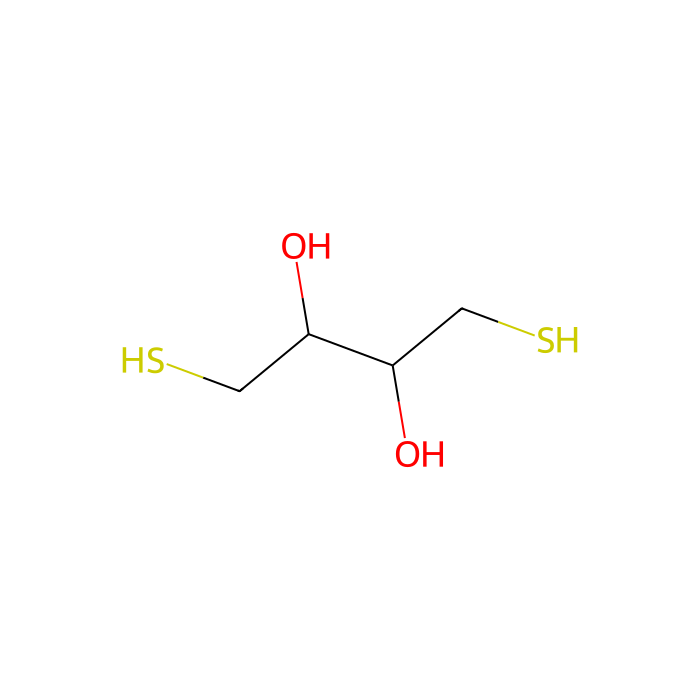
L-Dithiothreitol - ≥95% , CAS No.16096-97-2

CAS: 16096-97-2 Cat. No.: D121076 Fórmula: C4H10O2S2 Peso molecular: 154.25 Beilstein Registry Number: 2036371 Número CE: 240-263-0
Disponível para encomenda
GRAU & PUREZA ≥95%
Synonyms
1,4-Dithiothreitol|DTT|L-1,4-disulfanylbutane-2,3-diol|rac-Dithiothreitol|(R*,R*)-(+-)-1,4-Dimercapto-2,3-butanediol|(2R,3R)-rel-1,4-Dimercapto-2,3-butanediol|Threitol, 1,4-dithio-|WR 34678|Sputolysin|2,3-DIHYDROXY-1,4-DITHIOBUTANE|(2R,3R)-1,4-dimercaptobutane-2,3-diol|Cleland reagent|3-(t-Butyloxycarbonylamino)propanamine|CLELAND REAGENT RACEMIC|(2R,3R)-(-)-2,3-Dihydroxy-1,4-butanedithiol|(2R,3R)-1,4-disulfanylbutane-2,3-diol|2,3-Butanediol, 1,4-dimercapto-, (R*,R*)- (+-)-|2,3-Butanediol, 1,4-dimercapto-, DL-threo-|dl-Dithiothreitol|L-Dithiothreitol|LDtt|L-Dtt|DITHIOTHREITOL [INCI]|(2R,3R)-1,4-bis(sulfanyl)butane-2,3-diol|(2R,3R)-(-)-1,4-Dimercapto-2,3-butanediol|2,3-Butanediol, 1,4-dimercapto-, (2R,3R)-rel-|L-threo-1,4-Dimercapto-2,3-butanediol|L-(-)-Dithiothreitol|2,3-BUTANEDIOL, 1,4-DIMERCAPTO-, D-threo-|Threitol, dithio-|2,3-BUTANEDIOL, 1,4-DIMERCAPTO-, (R*,R*)- (+/-)-|Dithiothreitol|(R*,R*)-1,4-Dimercaptobutane-2,3-diol|2,3-Butanediol, 1,4-dimercapto-, (theta,theta)-(+/-)-|(R*,R*)-(1)-1,4-Dimercaptobutane-2,3-diol|L-1,4-Dithiothreitol|L-Cleland's Reagent|1,4-DITHIOTHREITOL [MI]|(-)-1,4-dithio-l-threitol|1,4-DIMERCAPTO-2,3-BUTANEDIOL, DL-|DL-threo-1,4-Dimercapto-2,3-butanediol|threo-1,4-Dimercapto-2,3-butanediol
Storage
Store at -20°C,Argon charged,Desiccated
Shipped In
Ice chest + Ice pads
★
Tamanho
Alemanha (EU)
USA*
Preço
Qtd
50mg
D121076-50mg
—
2 Em stock

34,62€

51,98€
Gravar 17,35 € (33.39%)
250mg
D121076-250mg
—
6 Em stock

128,34€

192,55€
Gravar 64,21 € (33.35%)
1g
D121076-1g
—
2 Em stock

389,53€

584,77€
Gravar 195,24 € (33.39%)
Enter a quantity for the sizes you want to add.

Visão geral

Proposed as a stereoselective reducing agent for disulfide bridges in complex molecules.

Especificações

Sinónimos
1,4-Dithiothreitol | DTT | L-1,4-disulfanylbutane-2,3-diol | rac-Dithiothreitol | (R*,R*)-(+-)-1,4-Dimercapto-2,3-butanediol | (2R,3R)-rel-1,4-Dimercapto-2,3-butanediol | Threitol, 1,4-dithio- | WR 34678 | Sputolysin | 2,3-DIHYDROXY-1,4-DITHIOBUTANE | (2R,3R)-1,4-dimercaptobutane-2,3-diol | Cleland reagent | 3-(t-Butyloxycarbonylamino)pro Show more
Especificações e pureza
≥95%
Condições de armazenamento de armazenamento
Store at -20°C,Argon charged,Desiccated
Enviado em
Ice chest + Ice pads
Este produto requer transporte de cadeia fria. Serviços terrestres e outros serviços econômicos não estão disponíveis.
Pureza
≥95%
Nomes e identificadores
Pubchem Sid
Pubchem Sid Url
https://pubchem.ncbi.nlm.nih.gov/substance/488189735
SMILES
C(C(C(CS)O)O)S
IUPAC Name
(2R,3R)-1,4-bis(sulfanyl)butane-2,3-diol
InChIKey
VHJLVAABSRFDPM-IMJSIDKUSA-N
InChI
1S/C4H10O2S2/c5-3(1-7)4(6)2-8/h3-8H,1-2H2/t3-,4-/m0/s1
SMILES isoméricas
C([C@@H]([C@H](CS)O)O)S
WGK Alemanha
3
RTECS
EK1612000
Peso molecular
154.25
Beilstein
2036371
Reaxys
9483598
Reaxys-RN_link_address
https://www.reaxys.com/reaxys/secured/hopinto.do?context=S&query=IDE.XRN=9483598&ln=

Dados avançados

Taxonomic Classification

Taxonomy Tree

KingdomOrganic compounds
SuperclassOrganic oxygen compounds
ClasseOrganooxygen compounds
SubclassAlcohols and polyols
Intermediate Tree Nodes Polyols
Direct Parent1,2-diols
Alternative Parents Secondary alcohols  Alkylthiols  Hydrocarbon derivatives  
Molecular FrameworkAliphatic acyclic compounds
Substituents Secondary alcohol - 1,2-diol - Alkylthiol - Hydrocarbon derivative - Organosulfur compound - Aliphatic acyclic compound
DescriçãoThis compound belongs to the class of organic compounds known as 1,2-diols. These are polyols containing an alcohol group at two adjacent positions.
External Descriptors 1,4-dithiothreitol
Estrutura 3D
Modelo de Estrutura Química Interativa


Alvos associados (humanos)
CPB2 Tchem Carboxypeptidase B2 isoform A (351 Activities)
Activity TypeRelationActivity valueUnitsAction TypeJournalPubMed IddoiAssay Aladdin ID
Alvos associados (não humanos)
Pasteurella multocida (1166 Activities)
Activity TypeRelationActivity valueUnitsAction TypeJournalPubMed IddoiAssay Aladdin ID
Mecanismos de ação
Certificados(CoA,COO,BSE/TSE e Mapa de Análise)
C of A & Other Certificates(BSE/TSE, COO):
Analytical Chart:

Find and download the COA for your product by matching the lot number on the packaging.

10 results found

Lot NumberCertificate TypeDataItem
K2104016K2104016Certificate of AnalysisAug 11, 2025 D121076
B2528414B2528414Certificate of AnalysisFeb 18, 2025 D121076
H2504106H2504106Certificate of AnalysisFeb 18, 2025 D121076
E2326627E2326627Certificate of AnalysisMay 09, 2023 D121076
E2326630E2326630Certificate of AnalysisMay 09, 2023 D121076
E2326631E2326631Certificate of AnalysisMay 09, 2023 D121076
E2326632E2326632Certificate of AnalysisMay 09, 2023 D121076
F2202181F2202181Certificate of AnalysisMar 14, 2022 D121076
F2202182F2202182Certificate of AnalysisMar 14, 2022 D121076
J2416236J2416236Certificate of AnalysisMar 14, 2022 D121076
Propriedades químicas e físicas
Sensibilidadeheat & air & Moisture sensitive
Rotação específica [α]26° (C=2.5,MeOH)
Ponto de inflamação (°C)110 °C
Ponto de fusão (°C)51°C
Peso molecular154.3
XLogP3-0.400
Hydrogen Bond Donor Count4
Hydrogen Bond Acceptor Count4
Rotatable Bond Count3
Exact Mass154.012 Da
Monoisotopic Mass154.012 Da
Topological Polar Surface Area42.500 Ų
Heavy Atom Count8
Formal Charge0
Complexity52.000
Isotope Atom Count0
Defined Atom Stereocenter Count2
Undefined Atom Stereocenter Count0
Defined Bond Stereocenter Count0
Undefined Bond Stereocenter Count0
The total count of all stereochemical bonds0
Covalently-Bonded Unit Count1
Segurança e perigos (GHS)
Pictograma(s)
GHS05,   GHS07
Sinal
Danger
Declarações de perigo

H302:Harmful if swallowed

H315:Causes skin irritation

H318:Causes serious eye damage

H319:Causes serious eye irritation

H335:May cause respiratory irritation

Declarações de precaução

P261:Avoid breathing dust/fume/gas/mist/vapors/spray.

P264:Wash hands [and …] thoroughly after handling.

P270:Do not eat, drink or smoke when using this product.

P271:Use only outdoors or in a well-ventilated area.

P280:Wear protective gloves/protective clothing/eye protection/face protection.

P321:Specific treatment (see ... on this label).

P330:Rinse mouth.

P302+P352:IF ON SKIN: wash with plenty of water.

P304+P340:IF INHALED: Remove person to fresh air and keep comfortable for breathing.

P305+P351+P338:IF IN EYES: Rinse cautiously with water for several minutes. Remove contact lenses if present and easy to do - continue rinsing.

P362+P364:Take off contaminated clothing and wash it before reuse.

P405:Store locked up.

P403+P233:Store in a well-ventilated place. Keep container tightly closed.

P501:Dispose of contents/container to an approved waste disposal plant.

P264+P265:Wash hands [and …] thoroughly after handling. Do not touch eyes.

P301+P317:IF SWALLOWED: Get medical help.

P305+P354+P338:IF IN EYES: Immediately rinse with water for several minutes. Remove contact lenses if present and easy to do. Continue rinsing.

P317:Get emergency medical help.

P337+P317:If eye irritation persists: Get medical help.

P332+P317:If skin irritation occurs: Get medical help.

P319:Get medical help if you feel unwell.

WGK Alemanha
3
RTECS
EK1612000
Reaxys
9483598
Reaxys-RN_link_address
https://www.reaxys.com/reaxys/secured/hopinto.do?context=S&query=IDE.XRN=9483598&ln=
Citations of This Product
Calculadoras de soluções
Revisões

Avaliações dos Clientes

Application Protocols

The following are general literature protocols for DTT use; they are not item-specific validated methods. Optimize for your system.

  • 1 M DTT stock solution (aqueous)

    • Under inert gas, dissolve 154.25 mg DTT per mL of degassed water or buffer. Adjust pH to ~7.5 if needed. Aliquot, argon-overlay, and store at −20 °C. Thaw single-use aliquots immediately before use. Stability in solution is limited (hours to a few days depending on conditions).
  • Proteomics sample reduction

    • Add DTT to 5–10 mM final in 50 mM NH4HCO3 or Tris buffer, pH 8.0. Incubate 30–60 min at 37 °C. Cool, then alkylate with 10–20 mM iodoacetamide for 20–30 min in the dark at room temp. Quench excess IAA with additional DTT (5 mM) if required.
  • SDS-PAGE reducing sample buffer

    • Prepare 4× buffer: 250 mM Tris-HCl pH 6.8, 8% SDS, 40% glycerol, 0.04% bromophenol blue. Add DTT freshly to 400 mM. Mix 1:3 with sample to achieve 100 mM DTT final. Heat 5–10 min at 95 °C (or 10 min at 70 °C for sensitive proteins).
  • Enzyme storage buffer

    • Typical: 20–50 mM Tris-HCl pH 7.5, 10–150 mM NaCl, 1 mM EDTA, 1–5 mM DTT, 10% glycerol. Filter-sterilize; prepare DTT fresh.
  • RNase-sensitive workflows

    • Use 5–10 mM DTT in RT mixes per kit guidance; prepare under RNase-free conditions.

Note: Dispose of thiol-containing waste per institutional EHS procedures.

Biological Roles

Applicability note: DTT is a synthetic laboratory reagent and not an endogenous metabolite. The following describes its roles in biological research systems (literature/general), not physiological function.

  • Reductive environment mimicry

    • Maintains protein cysteines as thiols by reducing intra/intermolecular disulfide bonds, approximating cytosolic redox conditions for in vitro studies.
  • Enzyme protection and activation

    • Preserves activity of enzymes with active-site cysteines (e.g., dehydrogenases, phosphatases, proteases) that are inactivated by disulfide formation or S-nitrosylation.
  • Nucleic acid workflows

    • Helps inhibit RNases (which often require disulfide bonds for activity) during reverse transcription and RNA handling; improves cDNA synthesis consistency in many kits.
  • Redox biochemistry and proteostasis research

    • Used to probe disulfide bond formation/breakage mechanisms, reductive stress, and thiol–disulfide exchange in proteins and peptides.
  • Cautions in biological systems

    • Can disrupt native disulfide-bonded structure of secreted/extracellular proteins; may interfere with metal-dependent enzymes or assays via metal reduction/complexation indirectly.
    • At higher concentrations, may affect cell membranes or signaling indirectly by altering extracellular redox potential; not generally used in live-cell culture except in specific protocols at carefully controlled doses.
  • Not a drug/therapeutic

    • For research use only (per Product Data). No clinical or therapeutic claims are made or implied.
Buffer Applications

DTT is routinely incorporated into biochemical buffers to maintain reducing conditions (literature/general guidance). Optimize concentration and pH for your target system.

  • Typical buffer systems

    • Tris-HCl (pH 7.2–8.0): 1–10 mM DTT for enzyme storage/assay.
    • Phosphate (PBS variants, pH 7.0–7.5): 0.5–5 mM for gentle maintenance of thiols; avoid high phosphate if metal-dependent reactions are sensitive.
    • HEPES/MOPS (pH 7.2–7.6): 1–5 mM for protein handling and imaging-compatible buffers.
  • SDS-PAGE sample buffers (reducing)

    • Laemmli-type: Final DTT 50–100 mM, 2% SDS, 62.5 mM Tris-HCl pH ~6.8, glycerol, bromophenol blue. Heat samples 5–10 min at 95 °C (protocol dependent).
  • Proteomics prep

    • Reduction step: 5–10 mM DTT, 30–60 min at 37 °C; follow with alkylation (e.g., 10–20 mM iodoacetamide) in the dark.
  • Redox buffers

    • Combine DTT with GSH/GSSG to tune redox potential for protein folding studies. Maintain pH ≥7 for effective thiolate formation.
  • Practical tips

    • Prepare fresh DTT solutions just prior to use; degas buffers and work under inert gas for sensitive assays.
    • Include 0.1–1 mM EDTA if trace metals catalyze oxidation (verify assay compatibility).
    • Monitor activity over time; discard solutions that show diminished reducing capacity or discoloration.
Green Alternatives

Perspective: DTT is effective but thiol-based reductants raise concerns about odor, aquatic toxicity, and air oxidation leading to waste. Alternatives can be greener depending on context.

  • Comparison (literature/general)

    • DTT
      • Pros: High reducing power for disulfides; rapid kinetics; effective at pH 7–8.5; relatively low volatility vs BME.
      • Cons: Air-sensitive; thiol odor; generates sulfide-containing waste; performance declines in air/at high pH.
    • TCEP (tris(2-carboxyethyl)phosphine)
      • Pros: Odorless; air-stable; active across broad pH (1.5–8.5+); compatible with many salts and detergents; reduces disulfides without thiolate formation.
      • Cons: Phosphine-derived; potential aquatic impact; can chelate metals and interfere with metal-dependent assays; higher cost.
    • Ascorbic acid/ascorbate
      • Pros: Low toxicity; renewable origin; benign byproducts.
      • Cons: Weaker and less selective for disulfides; metal-catalyzed side reactions; may require catalysts or mediators.
    • Glutathione (GSH)
      • Pros: Biogenic and biodegradable; tunable redox buffers (GSH/GSSG).
      • Cons: Slower kinetics; may be costlier at scale; can complicate downstream analysis.
    • 2-Mercaptoethanol (BME)
      • Pros: Economical; effective reducer.
      • Cons: Highly odorous and volatile; worker exposure concerns; often less preferred from EHS standpoint.
  • Practical guidance

    • For greener workflows, prefer TCEP or GSH where compatible with analytical/readout requirements. Optimize stoichiometry to minimize excess reductant and segregate sulfide-containing waste for proper disposal.
Pharmaceutical Uses

Scope note: No therapeutic or clinical claims. DTT is primarily a research reagent. Item-specific pharmacopeial status or excipient grade is not provided for this product.

  • Item-specific grade/purity: Not specified for this item; refer to CoA/Spec Sheet.

  • Formulation/manufacturing context (literature/general)

    • Reducing agent in process development for biologics and peptides to control disulfide states during purification or conjugation studies.
    • Employed in analytical quality control methods (e.g., characterization of mAb free thiols, forced degradation studies) to generate reduced variants for method qualification.
    • May be used to maintain enzyme activity in in vitro diagnostic reagent preparations during development (research stage), though TCEP is often preferred for stability/odor.
  • Considerations

    • Regulatory acceptability as an excipient is limited; DTT is not commonly formulated into finished dosage forms.
    • Residuals: If used in manufacturing development, demonstrate clearance and lack of interference with release assays.
  • Alternatives

    • TCEP or glutathione systems may be favored in regulated settings due to stability and handling advantages, subject to risk assessment and compatibility.
Physical Properties

Note: No item-specific specifications were provided. Values below are typical literature data for L-dithiothreitol and should be used as general guidance only (not lot specifications).

  • Physical state/appearance: Solid; often white to off-white crystalline (literature). Item-specific appearance: Not specified for this item; refer to CoA/Spec Sheet.
  • Melting point: ~40–45 °C (literature)
  • Boiling point: Not commonly reported due to decomposition before boiling (literature)
  • Molecular formula: C4H10O2S2 (literature)
  • Molecular weight: ~154.25 g/mol (literature)
  • Density: Not well established; Not specified for this item; refer to CoA/Spec Sheet.
  • Solubility: Highly soluble in water; soluble in many aqueous buffers; limited solubility in nonpolar solvents (literature). Quantitative solubility: Not specified for this item; refer to CoA/Spec Sheet.
  • pKa (thiols): ~9.2 and ~10.1 (literature); ionization increases with pH, enhancing reducing rate above neutral pH.
  • Redox potential E0’ (DTTred/DTTox, pH 7): ~−0.33 V (literature)
  • LogP (estimated): Low; hydrophilic due to diol functionalities (literature/computed).
  • Hygroscopicity: Tends to oxidize in air/moisture; best handled under inert gas (literature).
Quality and Grades
  • Item-specific grade/purity: Not specified for this item; refer to CoA/Spec Sheet.

  • Interpreting common grades for DTT (general guidance)

    • Biochemistry/biotech grade: Low levels of metal contaminants and oxidative impurities; suitable for enzyme work and protein/RNA handling.
    • Molecular biology grade/UltraPure: Additional controls on nuclease contamination and peroxides; recommended for sensitive nucleic acid applications.
    • HPLC grade (less typical for solids like DTT): Sometimes denotes stringent purity and low UV-absorbing impurities if used as a mobile phase modifier/scavenger.
  • Stabilizer content

    • DTT is generally supplied neat without stabilizers. If a stabilizer or anti-oxidant were present, it would be listed on the CoA; none is specified here.
  • What to check on arrival (practical tips)

    • Appearance and absence of caking/discoloration.
    • Purity and assay method on CoA (e.g., titration vs HPLC), residual solvents, metal content if relevant to your assay.
    • Peroxide/oxidized species: Some vendors report DTTox content; verify if your application is redox-sensitive.
  • Batch-to-batch consistency

    • For quantitative biochemical workflows (enzyme kinetics, redox proteomics), reference the lot-specific CoA and, if needed, perform a quick functional check (e.g., Ellman’s reagent assay for reactive thiol content).
Reaction and Applications
  • Core function (general)

    • DTT is a vicinal dithiol reductant that reduces disulfide bonds via a two-step thiol–disulfide exchange, forming a stable six-membered cyclic disulfide (DTTox). The favorable intramolecular cyclization drives the equilibrium toward reduction.
  • Biochemical applications (expandable use cases)

    • Protein handling: Maintains cysteine residues in the reduced state during purification, storage, SDS-PAGE sample preparation, and mass-spectrometry workflows (typically 1–100 mM).
    • Enzyme assays: Protects sulfhydryl-dependent enzymes from oxidative inactivation; often 0.5–5 mM in assay buffers.
    • Nucleic acids: In RT and PCR workflows, reduces disulfides and can help inactivate RNases (used at 5–10 mM in many RT buffers; verify protocol-specific needs).
    • Proteomics: Pre-reduction of samples before alkylation (e.g., with iodoacetamide) to map cysteine residues.
    • Refolding: Assists oxidative folding by setting reducing redox conditions with glutathione couples (GSH/GSSG) or alone at controlled concentrations.
  • Chemical/synthetic contexts (general)

    • Selective reduction of disulfides in small molecules and peptides in water or mixed aqueous solvents.
    • Temporary protecting group strategy: Oxidation to DTTox after reduction enables separation; re-reduction regenerates DTT if needed.
  • Practical tips

    • Activity increases with pH > 7 as thiolates form; balance with accelerated autoxidation. Work quickly, cold, and oxygen-limited when possible.
    • Prepare fresh stocks; discard if yellowing or loss of activity is observed. Test with Ellman’s reagent (DTNB) for thiol content when critical.
Reaction Conditions

General literature guidance for common DTT-mediated reductions (not item-specific specifications):

  • Disulfide reduction in proteins/peptides

    • Solvent: Aqueous buffer (e.g., 50 mM Tris-HCl, pH 7.5–8.5)
    • DTT concentration: 1–50 mM (typical 5–10 mM for proteomics pre-reduction)
    • Temperature: 20–37 °C
    • Time: 15–60 min (monitor by Ellman’s assay, MS, or SDS-PAGE)
    • Follow-up: Alkylate free thiols with iodoacetamide (10–20 mM) in the dark to prevent reoxidation.
  • SDS-PAGE sample preparation

    • Buffer: Laemmli buffer with 50–100 mM DTT (final)
    • Temperature: 70–95 °C
    • Time: 5–10 min
  • Small-molecule disulfide reduction

    • Solvent: Water, aqueous alcohols, or mixed buffer/organic (e.g., H2O/MeOH)
    • Base: Mild (pH 7.5–9) to generate thiolate for faster kinetics
    • Temperature: Ambient to 40 °C
    • Time: Minutes to hours depending on substrate sterics/electronics
  • Notes and controls

    • Oxygen exclusion (argon/nitrogen) improves efficiency and reduces DTT consumption.
    • Include metal chelators (e.g., 0.1–1 mM EDTA) if transition metals catalyze undesired oxidation (assay permitting).
    • Yields and kinetics vary with substrate; consult primary literature for specific systems. Always verify compatibility with sensitive cofactors, dyes, and metals.
Safety and Handling

Item-specific hazard fields (GHS, H-statements, pictograms) were not provided. Always consult the product SDS for authoritative safety information.

  • General (literature) GHS tendencies for DTT
    • May cause skin and eye irritation; may cause respiratory irritation if dust is generated.
    • Harmful if swallowed. Odor is mild compared to 2-mercaptoethanol, but thiol odor may be detectable.
  • Special risks
    • Air oxidation: DTT readily oxidizes to its cyclic disulfide, especially in solution and at elevated pH/temperature. Use inert atmosphere (argon/nitrogen) and minimize exposure to air.
    • Reactivity: Reduces disulfide bonds and can reduce certain metal ions; avoid contact with strong oxidizers and incompatible metals.
  • Safe handling practices
    • PPE: Lab coat, safety glasses, and appropriate gloves (e.g., nitrile). Handle powders in a fume hood to avoid dust inhalation.
    • Solution prep: Use freshly prepared, oxygen-free (degassed) water or buffer when critical; filter sterilize if needed for cell-free biochemical assays.
  • First aid (overview; defer to SDS)
    • Skin/eye contact: Rinse with water for 15 minutes; remove contaminated clothing; seek medical attention if irritation persists.
    • Inhalation: Move to fresh air; seek medical attention if symptoms occur.
    • Ingestion: Rinse mouth; do not induce vomiting; seek medical attention.
  • Storage incompatibilities
    • Avoid oxidizers, halogens, and prolonged exposure to air, light, and moisture. Store under inert gas as indicated in Product Data.
Solvent Selection

Relevance: DTT is a solid reagent typically used by dissolving in aqueous buffers. Solvent selection pertains to preparing stock and working solutions.

  • Polarity and miscibility (literature)

    • Highly polar and hydrophilic; readily soluble in water and most common biological buffers (Tris, phosphate, HEPES, MOPS).
    • Poorly soluble in nonpolar solvents; modest solubility in polar organics (e.g., methanol/ethanol) but aqueous systems are preferred to preserve activity and stability.
  • Practical choices

    • Water or buffer at pH 7.2–8.5 is typical; higher pH accelerates reduction but also oxidation of DTT—prepare fresh and minimize air exposure.
    • Degassed/argon-sparged buffers can extend solution lifetime. Include 0.1–1 mM EDTA when trace metals catalyze oxidation (compatibility dependent on assay).
  • When to choose DTT vs alternatives

    • Choose DTT when a potent, rapid disulfide-reducing environment is needed and odor/volatility must be lower than 2-mercaptoethanol (BME).
    • Prefer TCEP in high-pH, high-temperature, or metal-catalyzed contexts where thiols are problematic; TCEP is stable and odorless, and functions across broader pH.
  • Small comparison (general)

    • DTT: Thiol-based; pKa ~9–10; strong, fast reducer in mildly basic aqueous media.
    • BME: More volatile/odorous; effective but less potent on a molar basis; broader solvent compatibility.
    • TCEP: Phosphine-based; stable to air; compatible with many buffers and salts; may be incompatible with certain metal-dependent enzymes.
Storage and Reconstitution
  • Item-specific conditions (from Product Data)

    • Storage Conditions: Store at −20 °C, Argon charged.
    • Shipped In: Ice chest + Ice pads.
  • Additional practical guidance (literature/general)

    • Solid stability: Keep tightly closed under inert gas in a dry, light-protected container. Minimize headspace oxygen and moisture to limit oxidation to the disulfide (DTTox).
    • Reconstitution: Dissolve in degassed water or buffer immediately before use. Typical working concentrations: 0.5–100 mM depending on application. Adjust pH to ≥7 for effective reducing activity; avoid strong acids.
    • Aliquoting: Prepare single-use aliquots of concentrated stock (e.g., 0.5–1.0 M) under argon or nitrogen. Snap-freeze and store at −20 °C. Avoid repeated freeze–thaw cycles.
    • In-use stability: At neutral to basic pH, DTT solutions oxidize over hours to days depending on temperature, oxygen, metals, and light. Use fresh solutions for critical assays; discard if discoloration or diminished thiol content is observed.
    • Compatibility: Avoid mixing with strong oxidizers or metal salts that catalyze oxidation. If necessary, add 0.1–1 mM EDTA (assay permitting) to chelate trace metals.
  • Research Use Note

    • For research use only (from Product Data). Not for human or veterinary use.
Structure and Identity

Brief: L-Dithiothreitol (DTT; Cleland’s reagent) is a small-molecule vicinal dithiol reducing agent widely used in biochemistry to maintain sulfhydryl groups in the reduced state.

  • Item-specific (from Product Data)

    • SKU: D121076
    • Product Name: L-Dithiothreitol
    • CAS: 16096-97-2
    • PubChem CID: 439196
    • InChIKey: 379094 (as provided; format appears non-standard)
    • SMILES: Not specified for this item; refer to CoA/Spec Sheet.
  • Literature/General identity (for reference; not item-specific)

    • Common synonyms: DTT, Cleland’s reagent, 1,4-dithiothreitol
    • Molecular formula (literature): C4H10O2S2
    • Molecular weight (literature): ~154.25 g/mol
    • Stereochemistry: “L-” designates the threo stereochemistry corresponding to L-threitol backbone (two adjacent stereocenters). Commercial DTT may be supplied as a defined enantiomer or racemate; verify on CoA for this item.
    • Functional groups: two thiols (–SH) at C2 and C3; two primary alcohols (–CH2OH) at C1 and C4; vicinal dithiol–diol motif.
  • 2D structural description (general)

    • A four-carbon chain bearing terminal hydroxymethyl groups (HO–CH2– and –CH2–OH). The central carbons (C2 and C3) each carry one thiol (–SH) and one hydrogen, forming a 2,3-dimercapto-1,4-butanediol with defined relative configuration (threo). The reducing activity arises from intramolecular stabilization of the oxidized six-membered cyclic disulfide formed upon oxidation.
Synthetic Utility
  • Functional group profile

    • Two thiols and two primary alcohols offer orthogonal reactivity. Thiols engage in thiol–disulfide exchange, nucleophilic substitutions (e.g., with activated halides), Michael-type additions to electron-poor alkenes, and radical processes.
  • Key uses (literature/general)

    • Selective disulfide reduction in peptides and small molecules in aqueous media, often at room temperature and mildly basic pH.
    • Protective manipulation of cysteine residues during peptide synthesis and conjugation workflows; reduction followed by alkylation (e.g., IAA, NEM) or disulfide reshuffling.
    • Reductive cleavage of crosslinks (e.g., in polymer/bioconjugate chemistry) and as a chain-transfer co-initiator in some thiol–ene click reactions.
    • Scavenger in organic synthesis to quench electrophilic species and capture soft electrophiles or metal contaminants.
  • Selectivity advantages

    • Intramolecular cyclization to the oxidized disulfide (six-membered ring) drives reductions to completion under mild conditions, often avoiding over-reduction of other functional groups that would require harsher hydride reagents.
  • Practical guidance

    • Conduct reactions in buffered aqueous media (pH 7.5–8.5) for rapid kinetics; remove DTT and its oxidized form by aqueous workup, dialysis, or size-exclusion as appropriate.
    • For moisture/air-sensitive synthetic steps, freshly prepare degassed solutions and maintain inert atmosphere to retain reducing strength.
Target Specificity

Not applicable. This product is a small-molecule reducing agent, not an antibody, enzyme, or affinity reagent. There are no targets, epitopes, or species reactivity parameters associated with this item.

Perguntas frequentes

What is the purity of this product?
This product is supplied at ≥95% purity (chemical assay). Lot-specific values are stated on the Certificate of Analysis.
How should this product be stored?
Store at ?20 °C under argon. It is supplied under an argon blanket; reseal under inert gas after each use.
How is this product shipped?
This product ships in an insulated container with ice pads. Unpack on arrival and transfer it to the storage condition stated above.
What are the CAS number, molecular formula and molecular weight?
The CAS Number is 16096-97-2, the molecular formula is C4H10O2S2, and the molecular weight is 154.25 g/mol. InChIKey VHJLVAABSRFDPM-IMJSIDKUSA-N.
What documentation is provided?
Available product documentation, including Certificates of Analysis (COA), Safety Data Sheets (SDS), and specification sheets, is shown in the product document area. Document availability and access follow the current site policy.

Deseja que lhe enviemos uma mensagem quando tivermos descontos disponíveis?

Lembrar-me mais tarde

Obrigado! Por favor, verifique a sua caixa de entrada de e-mail para confirmar.

Ops! As notificações estão desativadas.