≥99% for sensitive chromatographic and analytical workflows requiring minimal baseline interference.
🌡
Storage & shipping
Store at -20°C Ships Ice chest + Ice pads Check lot-specific COA for exact specifications.
📋
Quality documents
SDS, COA, datasheet, and spec sheet available for download. Lot-specific COA accessible via lot number lookup.
📚
Literature proof
Cited in 0 peer-reviewed publications across chromatography, organic synthesis, and cross-coupling reactions.
Visão geral
Information
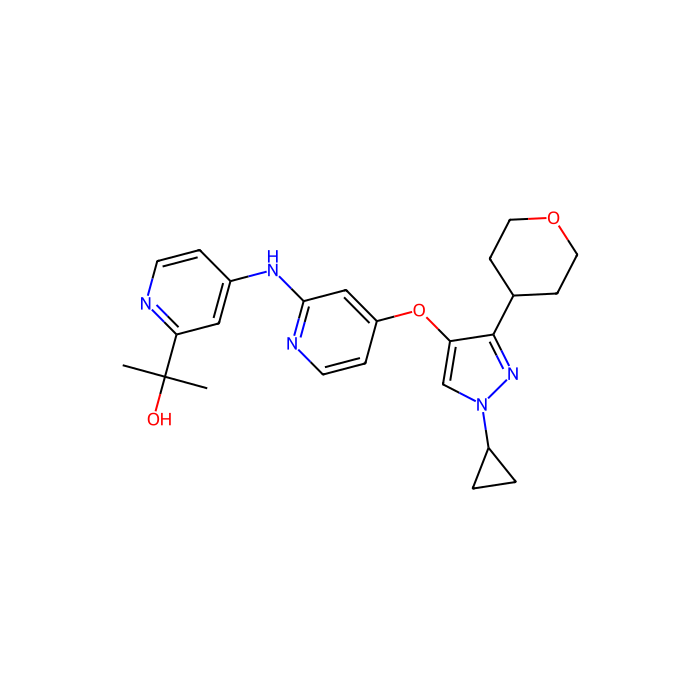
LY 3200882 is a potent, highly selective inhibitor ofTGF-β receptor type 1 (TGFβRI). It potently inhibits TGFβ mediated SMAD phosphorylation in vitro in tumor and immune cells and in vivo in subcutaneous tumors in a dose dependent fashion.
Targets
TGFβRI
In vitro
LY3200882 inhibits various pro-tumorigenic activities. LY3200882 potently inhibits TGFβ mediated SMAD phosphorylation in vitro in tumor and immune cells and in vivo in subcutaneous tumors in a dose dependent fashion. In in vitro immune suppression assays, LY3200882 has shown the ability to rescue TGFβ1 suppressed or T regulatory cell suppressed naïve T cell activity and restore proliferation. It acts as an immune modulatory agent.
In vivo
In preclinical tumor models, LY3200882 showed potent anti-tumor activity in the orthotopic 4T1-LP model of triple negative breast cancer and this activity correlated with enhanced tumor infiltrating lymphocytes in the tumor microenvironment. Durable tumor regressions in the orthotopic 4T1-LP model were observed and rechallenge of congenic tumors resulted in complete rejection in all mice. LY3200882 has shown anti-metastatic activity in an experimental metastasis tumor model (intravenous EMT6-LM2 model of triple negative breast cancer). In addition, LY3200882 shows combinatorial anti-tumor benefits with checkpoint inhibition (anti-PD-L1) in the syngeneic CT26 model.
LY 3200882 is a potent, highly selective inhibitor of TGF-β receptor type 1 (TGFβRI). It potently inhibits TGFβ mediated SMAD phosphorylation in vitro in tumor and immune cells and in vivo in subcutaneous tumors in a dose dependent fashion.
Condições de armazenamento de armazenamento
Store at -20°C
Enviado em
Ice chest + Ice pads
Este produto requer transporte de cadeia fria. Serviços terrestres e outros serviços econômicos não estão disponíveis.
This compound belongs to the class of organic compounds known as diarylethers. These are organic compounds containing the dialkyl ether functional group, with the formula ROR', where R and R' are aryl groups.
External Descriptors
Not available
1. Djoumbou Feunang Y, Eisner R, Knox C, Chepelev L, Hastings J, Owen G, Fahy E, Steinbeck C, Subramanian S, Bolton E, Greiner R, and Wishart DS. ClassyFire: Automated Chemical Classification With A Comprehensive, Computable Taxonomy. Journal of Cheminformatics, 2016, 8:61.
Determine the necessary mass, volume, or concentration for preparing a solution.
Dilution Calculator
Determine the dilution needed to prepare a stock solution.
Reconstitution Calculator
Revisões
Avaliações dos Clientes
Application Protocols
No validated application protocols are provided in the Product Data for this item. The following general practices are commonly used for small-molecule tool compounds; verify suitability experimentally.
General in vitro protocol (guidance):
Stock preparation: Dissolve at 10–50 mM in anhydrous DMSO. Vortex/sonicate gently if needed. Filter (0.22 μm PTFE) if particulate remains and if compatible.
Working solutions: Dilute into assay buffer or media immediately before use; maintain constant final DMSO across all wells (e.g., 0.1% v/v). Include vehicle controls and a concentration-response series (e.g., 10-point, 1:3 serial dilutions).
Readouts: Choose orthogonal assays (e.g., biochemical enzyme activity plus cellular phospho-protein or reporter) to confirm on-target activity.
General analytical check:
Verify concentration by UV or quantitative NMR where feasible; confirm purity by LC–MS before critical experiments.
These are general guidelines only. For any specific, validated protocol for this item, please refer to the CoA/Spec Sheet or internal lab SOPs.
Biological Roles
Item-specific biological targets are not provided in the Product Data for this catalog entry. The following context is based on literature for similarly designated LY-series small molecules used as pathway probes. This is general background only and not a specification for this item.
Kinase pathway modulation: LY-series small molecules are frequently reported as inhibitors of serine/threonine or tyrosine kinases implicated in cellular signaling cascades (literature). Modulating these pathways enables studies of proliferation, differentiation, extracellular matrix deposition, and immune signaling.
TGF-β/ALK5 context (literature background): Transforming growth factor-β (TGF-β) signals via type I/II receptors, with ALK5 (TGFBR1) catalyzing phosphorylation of receptor-regulated Smads (Smad2/3). Chemical inhibitors are used to interrogate EMT, fibrosis-related gene expression, and feedback regulation in cell models. Researchers assess pathway engagement via phospho-Smad blots, reporter assays (CAGA-luc), and qPCR of canonical targets (e.g., PAI-1, CTGF) in relevant cell lines.
Selectivity considerations: Tool compounds often display off-target activity at related kinases at higher concentrations (literature). Titration and orthogonal assays (biochemical vs cellular) are recommended to deconvolute on-target from off-target effects.
Important: For this specific catalog item, consult the CoA/Spec Sheet for any confirmed target data. Use internal controls to establish the biological activity profile under your laboratory conditions. No medical or clinical claims are made; for research use only.
Buffer Applications
This product is not a buffering agent and is not typically used to prepare pH-stabilizing solutions. Accordingly:
No item-specific buffer system, pKa, or buffering range is provided.
When used in biochemical or cell-based assays, it is commonly dosed from an organic stock solution (e.g., DMSO) into pre-made biological buffers (PBS, HEPES-buffered saline, culture media), keeping final organic solvent at minimal levels compatible with the biology.
For optimal performance, validate solubility and stability in your chosen buffer matrix and include vehicle-only controls.
Green Alternatives
As a small-molecule research tool, the compound itself is not readily substitutable without changing biological specificity. However, greener practices can be adopted in handling and formulation (general guidance):
Greener solvent strategy (general/literature):
Prefer water-rich vehicles when feasible (buffer + ≤0.1–0.5% DMSO) to minimize high-boiling polar aprotic solvents.
If organic co-solvents are required, consider ethanol or 2-propanol over DMF/NMP where solubility permits.
For chromatography, use water/acetonitrile with formic acid over halogenated eluents; evaluate acetonitrile-sparing gradients or MeOH substitutions when resolution allows.
Small comparison (general):
DMSO vs DMF/NMP: DMSO often provides equal/better solubility with a more favorable EHS profile than DMF/NMP.
Ethanol vs acetonitrile: Ethanol is greener but may reduce solubility or alter selectivity; acetonitrile offers lower viscosity and strong elution power.
Operational improvements:
Use micro-scale assays to reduce solvent volumes.
Aliquot stocks to reduce waste from repeated thawing and disposal.
Evaluate solid dispensing (acoustic or gravimetric micro-dosing) to minimize solvent use at the point of preparation.
Note: Changing the compound itself will alter target engagement; prioritize solvent/process substitution rather than “compound alternatives.”
Pharmaceutical Uses
No pharmacopeial status, excipient role, or cGMP manufacturing information is provided for this catalog item. It is supplied strictly for research use only.
General R&D formulation context (literature/guidance; not item-specific):
Preclinical tool compounds are often formulated for in vivo research with co-solvent systems such as DMSO/PEG400/saline or Captisol, or as suspensions in 0.5% methylcellulose + 0.1% Tween-80. Solubility and stability must be empirically established.
For parenteral research use in animals, sterile filtration and osmolality/vehicle tolerability are critical; adsorptive losses to plastics and precipitation upon dilution should be evaluated.
Important limitations:
Not intended for human or veterinary therapeutic use.
Do not infer safety, efficacy, or dosage from the catalog entry. Consult institutional IACUC guidelines and perform full compatibility/toxicity screening for any in vivo research.
Physical Properties
Item-specific specifications:
Appearance: Not specified for this item; refer to CoA/Spec Sheet.
Molecular weight: Not specified for this item; refer to CoA/Spec Sheet.
Molecular formula: Not specified for this item; refer to CoA/Spec Sheet.
Melting point (MP): Not specified for this item; refer to CoA/Spec Sheet.
Boiling point (BP): Not specified for this item; refer to CoA/Spec Sheet.
Density: Not specified for this item; refer to CoA/Spec Sheet.
Refractive index: Not applicable/Not specified for this solid small molecule; refer to CoA/Spec Sheet if available.
Solubility: Not specified for this item; refer to CoA/Spec Sheet.
LogP/logD, pKa: Not specified for this item; refer to CoA/Spec Sheet.
Literature/general expectations for similar small-molecule kinase research tools (not item-specific):
Many kinase inhibitors are sparingly soluble in water but dissolve in polar aprotic solvents such as DMSO and DMF; limited solubility may be observed in ethanol or methanol depending on substituents.
For analytical method development, LC–MS with gradient elution (water/acetonitrile + 0.1% formic acid) is commonly effective for related chemotypes; UV detection typically spans 210–300 nm for heteroaromatic pharmacophores (literature).
Solid-state properties (polymorph/solvate form) can influence dissolution and assay performance; verification by DSC/XRPD may be warranted when precise biophysical comparability is required (general guidance).
Important note:
Use the actual CoA/Spec Sheet for this specific lot to obtain authoritative physico-chemical parameters needed for quantitative formulation or QC release.
Quality and Grades
Item-specific status:
Grade/Purity: Not specified for this item; refer to CoA/Spec Sheet.
How to interpret common grades (general guidance):
Research grade: Suitable for discovery biology/chemistry workflows. Impurity profiles are controlled for research, not for clinical use.
≥98% purity (HPLC): Indicates organic purity by a defined HPLC method; does not specify identity of individual impurities or water content unless stated.
LC–MS confirmed: Confirms molecular ion but not full stereochemical or polymorph identity.
NMR verified: Confirms structural framework and gross purity; residual solvents and water can be quantified from the spectrum.
What to look for on the CoA/Spec Sheet:
Analytical method(s) used (HPLC/UPLC conditions, detector wavelength).
Identity confirmation (NMR, HRMS, IR) and acceptance criteria.
Residual solvents and water (KF) if applicable. If not listed: Not specified for this item; refer to CoA/Spec Sheet.
Metals/elemental analysis if relevant to your assay sensitivity.
Batch-specific notes (e.g., polymorph, counterion, amorphous vs crystalline).
Practical notes:
For quantitative biology, request chromatograms and spectra to understand baseline impurities.
For structure–activity studies, confirm lot-to-lot consistency via in-house orthogonal checks (e.g., UPLC and 1H NMR).
Reaction and Applications
This product is supplied as a ready-to-use small-molecule research tool rather than a synthetic reagent. Accordingly, synthetic reaction applications (e.g., coupling, reductions) are not the primary use case.
Research applications (literature/general context):
Cell signaling studies: LY-designated tool compounds are often employed to modulate specific kinase pathways in vitro to dissect downstream transcriptional responses (e.g., Smad-dependent signaling for TGF-β pathways, literature). Use appropriate positive/negative controls and pathway readouts (reporter assays, phospho-protein western blots).
Chemical biology: Time-course inhibition to map pathway kinetics; washout experiments to probe reversibility.
Assay development: Benchmark compound for assay validation—evaluate Z′-factor, dynamic range, and signal stability across DMSO concentrations.
ADME profiling: Solubility, microsomal stability, permeability (PAMPA/Caco-2), and protein binding characterization to contextualize in vitro potency vs. free concentration.
Practical considerations:
Prepare fresh working dilutions just before use to limit adsorption and degradation. Employ low-binding plastics or glass.
Confirm identity/purity by LC–MS prior to critical studies; track age, storage history, and freeze–thaw count.
Include vehicle controls (DMSO) and, when possible, orthogonal readouts (biochemical kinase assay vs. cellular phospho-signal).
Reaction Conditions
Not applicable. This catalog item is intended for use as a small-molecule research tool in biological or biochemical assays, not as a reagent in synthetic transformations.
If you plan to study its stability or reactivity (e.g., metabolic stability, chemical degradation kinetics), establish conditions empirically:
Solvent matrix: DMSO stock diluted into relevant buffers or media.
pH: Evaluate stability across assay-relevant pH (e.g., pH 6.5–7.8) using LC–MS to monitor degradation.
These are general study design notes and not item-specific reaction recommendations.
Safety and Handling
Authoritative safety information is provided in the product SDS. The following summarizes best practices given the absence of item-specific hazard statements in the current Product Data.
Item-specific hazard data:
GHS classification: Not specified for this item; refer to SDS.
Signal word: Not specified for this item; refer to SDS.
Hazard statements (H-codes): Not specified for this item; refer to SDS.
Pictograms: Not specified for this item; refer to SDS.
General laboratory precautions for small-molecule research compounds:
PPE: Wear lab coat, safety glasses, and appropriate chemically resistant gloves (e.g., nitrile). Handle powders in a fume hood to minimize inhalation and dust exposure.
Avoid ingestion, inhalation, and skin/eye contact. Wash thoroughly after handling.
Storage incompatibilities: Keep separate from strong oxidizers/acids/bases until compatibility is confirmed. Protect from moisture if hygroscopicity is unknown. Avoid light if the compound contains photo-labile motifs (confirm via SDS/CoA).
Spill/cleanup: Avoid dust formation. Collect with non-sparking tools; dispose according to institutional and local regulations.
First aid (overview): If inhaled—move to fresh air; if on skin—wash with soap and water; if in eyes—rinse cautiously with water for several minutes; if ingested—rinse mouth. Seek medical attention in all cases; provide SDS to responders.
Transport/temperature:
Shipped: Ice chest + ice pads (per Product Data).
Storage: Store at -20°C (per Product Data). Minimize freeze–thaw cycles by aliquoting upon first opening.
Solvent Selection
Item-specific solubility is not provided in the Product Data. Use the following decision framework, which reflects common behavior of small-molecule kinase research tools (literature/general):
Primary stock solvent: DMSO is typically preferred due to high solvating power for heteroaromatic and lipophilic scaffolds. Prepare concentrated stocks (e.g., 10–50 mM) and store aliquots at -20°C to limit freeze–thaw.
Secondary solvents: DMF and NMP often dissolve similar chemotypes; ethanol or methanol may be viable at lower concentrations; acetonitrile can assist in analytical sample prep.
Aqueous use: For biochemical/cellular assays, dilute DMSO stocks into buffered saline or culture media, keeping final DMSO ≤0.1–0.5% v/v where cells/enzymes are sensitive (optimize per assay).
Co-solvent systems: PEG400, Tween-80, cremophor, or Captisol can be considered in preclinical formulation research when higher exposure is required (literature). Validate compatibility with your biology.
DMF/NMP: Strong solvency; consider cytotoxicity and regulatory constraints in GLP settings.
Ethanol: Lower solvency, better biocompatibility at ≤1%.
Actionable tip:
Determine a solubility curve experimentally (serial dilution with visual and LC check). Record precipitation limits under assay-relevant conditions.
Storage and Reconstitution
Item-specific conditions (from Product Data):
Storage conditions: Store at -20°C.
Shipping conditions: Ice chest + ice pads.
General handling and reconstitution guidance for small-molecule tool compounds:
Upon receipt: Allow to equilibrate to room temperature in a desiccator before opening to avoid condensation. If supplied as a solid, promptly prepare aliquots of DMSO stock (e.g., 10–50 mM) under dry conditions.
Aliquoting: Divide into single-use volumes in inert vials or low-bind tubes to minimize freeze–thaw cycles and adsorption losses.
Light/moisture: If photolability or hygroscopicity is unknown, protect from light and moisture by storing in amber, tightly sealed containers with desiccant.
Stability: Absent item-specific data, re-assess purity by LC–MS after extended storage (>6 months) or multiple freeze–thaw events. Discard solutions showing precipitation, discoloration, or unexpected LC–MS peaks.
Thawing: Warm frozen DMSO stocks to room temperature and vortex to fully homogenize before dilution. Avoid repeated thawing; use fresh aliquots whenever possible.
Note: For exact shelf life, solution stability, and reconstitution solvents/concentrations validated for this specific item, refer to the CoA/Spec Sheet.
Structure and Identity
Brief overview: LY 3200882 is supplied as a research-use small molecule within Aladdin’s small-molecule library category.
SKU: L414169
Product name: LY 3200882
CAS: 1898283-02-7
PubChem CID: 121249291
InChIKey: Not specified for this item; refer to CoA/Spec Sheet. (Product data lists “282201,” which is not a complete InChIKey.)
SMILES: Not specified for this item; refer to CoA/Spec Sheet.
Molecular formula: Not specified for this item; refer to CoA/Spec Sheet.
Molecular weight: Not specified for this item; refer to CoA/Spec Sheet.
Structural features (general/literature context):
LY-series naming is commonly used for small-molecule kinase modulators in discovery research (literature). Without an explicit structure on this page, specific ring systems, heteroatoms, or stereochemistry cannot be confirmed for this catalog item. Consult the CoA/SDS or primary literature linked to the CAS/CID for definitive structural details.
2D structure description (general guidance):
Not provided in the current Product Data. If structure confirmation is required for method development (e.g., LC–MS or NMR ID), request the CoA/Spec Sheet or reference PubChem CID 121249291 (literature resource) to obtain a verified line structure and identifiers.
Synthetic Utility
This product is a finished small-molecule research tool and is not typically employed as a synthetic building block.
No reactive functional group or protecting-group strategy is specified in the Product Data; therefore, using it as a coupling partner or intermediate is not recommended or supported.
If derivatization or probe synthesis is desired (e.g., biotinylation, photoaffinity tagging), consult primary literature for the authenticated structure and identify positions amenable to modification without disrupting target engagement (general guidance). Any such chemistry should begin with structure-confirmed material and full analytical characterization.
For preparative chemistry or SAR campaigns, source or design appropriate precursors with known handles (e.g., aryl halides, amines, acids) rather than modifying the finished tool compound.
Target Specificity
Only information from Product Data may be listed here.
Confirmed target(s): Not specified for this item; refer to CoA/Spec Sheet.
Mode of action: Not specified for this item; refer to CoA/Spec Sheet.
Selectivity profile: Not specified for this item; refer to CoA/Spec Sheet.
Note: While literature may discuss specific targets for compounds of similar designation, no target data are provided for this catalog entry and therefore are not claimed here.
We use cookies to ensure the website functions properly and, where permitted, to improve your experience. You can manage your preferences at any time in Settings. Learn more in our Cookie Policy.
Shall we send you a message when we have discounts available?
Remind me later
Thank you! Please check your email inbox to confirm.
Products are supplied to verified businesses, institutions, and qualified professionals for research and development use only. Not for use in humans, animals, diagnosis, or therapy.

 I2623056